Together with its partners, UN FAO in Sri Lanka is addressing urgent food security needs, while improving the capacity of the fisheries and agriculture sectors to support Sri Lanka’s journey to becoming a food-secure nation.
In this endeavour the Food and Agriculture Organization of the United Nations (FAO) and the Ministry of Fisheries launched a modified multiday fishing vessel in Colombo to improve the quality of fish and reduce post-harvest loss in the Fisheries sector.
The FAO in a statement said that fish products are an important source of animal protein for Sri Lanka and the sector contributes about 1.1 percent to Sri Lanka’s GDP.
However, studies by the National Aquatic Resources Research and Development Agency (NARA) indicate that the fish quality loss in some harbours is at 60 – 70 percent.
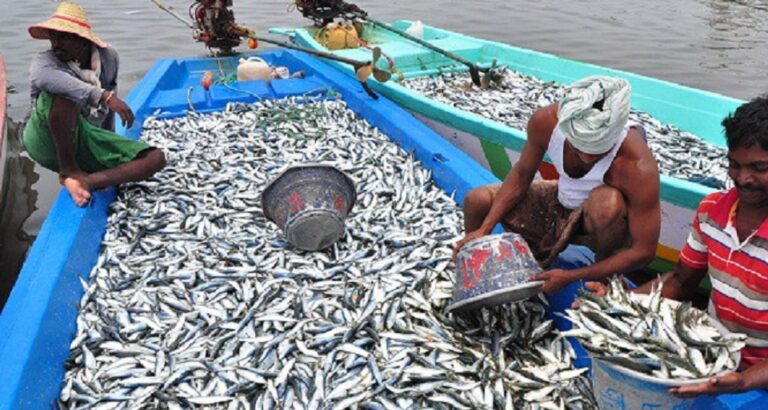
Some of the issues contributing to these losses include the lack of an adequate cooling system in multi-day fishing vessels that use weeks-old ice to maintain low temperatures and the captured harvest not being handled or stored properly by fishers, which reduces the quality of the overall harvest and damage the bottom layer of stored fish.
To address this issue FAO, together with the Ministry of Fisheries and NARA, modified the design of a multi-day fishing vessel as a pilot project to introduce new boat designs that provide an economically viable solution to minimize the quality loss of fish harvests.
By reducing the existing post-harvest losses, the investment for the proposed new design can be recovered within 3.5 years.
The modified multi-day vessel features a pilot coolant system in fish holds and storage as well as a modified fish holding facility to minimize the physical damage to fish due to overload.
The modified vessel was launched at an event in Colombo under the auspices of the Prime Minister Dinesh Gunawardena, the Minister of Fisheries, Douglas Devananda, State Minister of Fisheries, Piyal Nishantha de Silva, and the FAO Assistant Representative for Sri Lanka, Nalin Munasinghe.
The Prime Minister, Dinesh Gunawardena highlighted the potential of the project stating, “I’m thankful to the Ministry and FAO for the efforts taken to introduce innovative methods to protect the valuable harvests of the fisheries industry. This innovative design will bring multiple benefits for the fisheries community by enabling them to protect the quality of their harvest.”
The Minister of Fisheries, Douglas Devananda stated, “I thank FAO, NARA, NERD, and other fisheries organizations that supported us in this initiative. We’re committed to introducing innovative solutions to address the challenges faced by the Fisheries community today.”
Speaking on the initiative Assistant FAO Representative for Sri Lanka, Nalin Munasinghe stated “This initiative is an important step in introducing new technology to the Fisheries sector that will reduce losses, increase profits and improve the quality of fish available for consumers.
As FAO we are committed to supporting the sustainable integration of technology and innovation to strengthen Sri Lanka’s journey to becoming a food-secure nation.”
UN FAO to improve SL fisheries sector reducing post-harvest loss.
CBSL reveals monetary and financial sector policies for 2023 and beyond
Sri Lanka encountered the most challenging year in 2022 in the post-independence economy. Headwinds due to consecutive economic shocks in recent years, including the Easter Sunday attacks in 2019, the outbreak of COVID-19 in 2020, and its protracted impact on activity in the aftermath in 2021, the socioeconomic and political crisis in 2022 amidst catastrophic balance of payments (BOP) pressures, along with unprecedented policy tradeoffs, have severely affected economic activity, inflicting unimaginable hardships to individuals and businesses. Livelihoods were lost, while real incomes suffered the most. Structural economic impediments that existed across various spheres of the economy over decades were compounded by these economic shocks, along with ill-timed policy choices, thereby loosening the macroeconomic balance and resulting in a sudden and multipronged setback for the nation.
The Government and the Central Bank were compelled to implement painful, but unavoidable policy measures during 2022 aimed at restoring macroeconomic balance. Monetary policy was tightened by an unprecedented adjustment in interest rates to prevent inflationary pressures from worsening while arresting any adverse inflation expectations over the near to medium term. A temporary suspension of selected foreign debt was announced amidst the dire foreign exchange shortage while initiating measures to consolidate public debt with the envisaged support from an extended fund facility (EFF) arrangement from the International Monetary Fund (IMF). Foreign exchange outflows, which were spared due to the suspension of certain debt servicing, helped make the immediately required operational space to contain the burgeoning BOP pressures, along with inflows of foreign exchange from friendly nations and multilateral sources. Foreign exchange outflows were further contained by several other measures, including the prioritisation of imports. These measures ensured the availability of foreign exchange for essential imports, including fuel, coal, cooking gas, medicine, and food items, among others, thereby relieving socioeconomic unrest to a greater extent. Meanwhile, exchange rate stability was restored by a consultation process with market participants, following a significant overshooting in early 2022. Further measures were initiated to improve foreign exchange liquidity in the domestic foreign exchange market with the repatriation and conversion requirements of foreign exchange, thereby disincentivising activity in the grey market. Meanwhile, an array of measures was implemented to preserve stability in the financial system, thereby avoiding any far-reaching consequences on the entire socioeconomic structure. Further, the Government has embarked on long-overdue reforms to rectify structural deficiencies in fiscal operations, as well as other sectors of the economy, that are imperative in ensuring a sustained recovery of the economy.
FULL TEXT: https://www.cbsl.gov.lk/en/monetary-and-financial-sector-policies-2023
CBSL
Central Bank predicts Sri Lanka economic recovery in 2H 2023
The Central Bank has outlined its short to medium-term policy path and other measures that it intends to implement primarily to restore price stability and to maintain the financial system stability, as Sri Lanka struggles to emerge from the worst economic crisis since its independence.
Sri Lanka’s economy, which is projected to register a real contraction of around 8 percent in 2022, is expected to record a gradual recovery from the second half of 2023 and sustain the growth momentum beyond, the Central Bank says.
In a media release titled “Monetary and Financial Sector Policies for 2023 and Beyond”, the Central Bank laid out the major aspirations of its Monetary Board for regaining the macroeconomic stability in the country.
Speaking on the steps taken by the government to ride out the crisis situation, the Central Bank stated that in parallel with the implementation of near-term economic stabilisation measures, negotiations with the International Monetary Fund (IMF) for an EFF arrangement were initiated by the government and a staff-level agreement was reached in September 2022.
Meanwhile, measures are underway to secure financing assurances from official creditors for the debt restructuring process aimed at ensuring medium term public debt sustainability, the Central Bank said.
It has further added that, with significant progress being made at present in relation to the interaction with the Sri Lankan creditors, the envisaged IMF facility is expected to materialize in early 2023.
According to the Central Bank, Sri Lanka’s headline inflation is expected to move along a disinflationary path with a deceleration in the first half of 2023 and reaching the desired levels of inflation towards the end of 2023.
With regard to the monetary policy and interest rates, the Central Bank stated that the monetary policy would remain focused on ensuring stability over the medium term.
In the meantime the forthcoming Central Banking Act, of which the draft has already been green-lighted by the Cabinet of Ministers, will further strengthen the independence and accountability of the Central Bank, thus reinforcing its core objective of ensuring price stability within the flexible inflation targeting (FIT) framework.
The Central Bank went on to note that it would begin publishing a forward-looking monetary policy report to better inform the members of the public on the outlook of the economy, thereby further improving the transparency of monetary policy actions.
Meanwhile, the excessively high interest rates observed at present are expected to moderate in the period ahead as money market liquidity conditions improve and the risk premia attached to debt restructuring concern assuage.
With regard to the financial sector policies for 2023 and beyond, the Central Bank emphasized that ensuring system stability also remains at the forefront of its reform and stabilization plan.
It stated that the proposed Banking (Special Provisions) Act is expected to provide the required legal framework to ensure that the banks are adequately capitalized, and upgrade their resolution framework, safeguard the interests of depositors, and strengthen the regulatory powers of the Central Bank.
Change of prevailing dry weather expected: Met Dept

A change in prevailing dry weather condition is expected, leading to showers at times in Eastern and Uva provinces and in Polonnaruwa and Matale districts, said the Department of Meteorology in a statement today (05).
Fairly heavy showers about 50mm can be expected at some places in these areas.
Several spells of showers will occur in the Northern Province and in Anuradhapura district.
Showers or thundershowers will occur at a few places in Western, Sabaragamuwa and North-Western provinces and in Galle, Matara, Kandy and Nuwara-Eliya districts during the afternoon or night.
General public is kindly requested to take adequate precautions to minimise damages caused by temporary localised strong winds and lightning during thundershowers.
Marine Weather:
| Condition of Rain: |
| Showers or thundershowers will occur at times in the sea areas off the coast extending from Kankasanthurai to Pottuvil via Trincomalee and Batticaloa. |
| Winds: |
| Winds will be north-easterly and wind speed will be (25-35) kmph. It may increase up to (45-50) kmph at times over the sea areas off the coast extending from Kankasanthurai to Colombo via Mannar and Puttalam and from Hambantota to Pottuvil. |
| State of Sea: |
| Sea areas off the coast extending from Kankasanthurai to Colombo via Mannar and Puttalam and from Hambantota to Pottuvil will fairly rough at times. The other sea areas around the island will be slight to moderate. Temporarily strong gusty winds and very rough seas can be expected during thundershowers. |
MIAP
First Parliament sitting in 2023 today
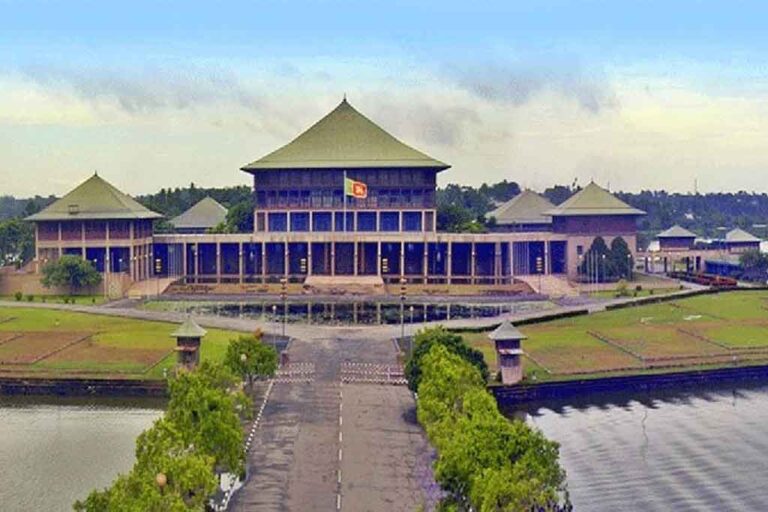
The first Parliament sitting in the year 2023 is set to convene today (05) at 9.30 am under the patronage of Speaker Mahinda Yapa Abeywardena.
Today’s sitting is expected to proceed with the second reading of the Bureau of Rehabilitation Bill and the Premises Repossession Bill.
The Parliament Committee on Public Enterprises (CoPA), the Parliament Committee on Public Finances (CoPF) and the Committee on High Posts are also set to convene today.
Meanwhile, all Ruling Party MPs have been informed to attend today’s Parliament sitting as a mandatory requirement, sources said.
MIAP
Container transport charges drop
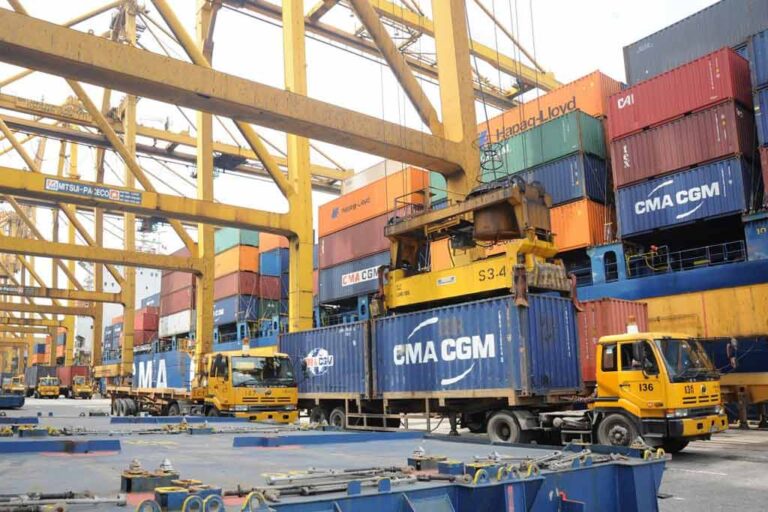
The container transport charges have dropped by 2.5 per cent effective from midnight yesterday (04), as per a decision by the United Lanka Container Transport Vehicle Owners Association.
The decision comes in following the government’s move of slashing the price of diesel.
MIAP
UN Delegation welcomes measure taken by President Wickremesinghe to resolve economic crisis
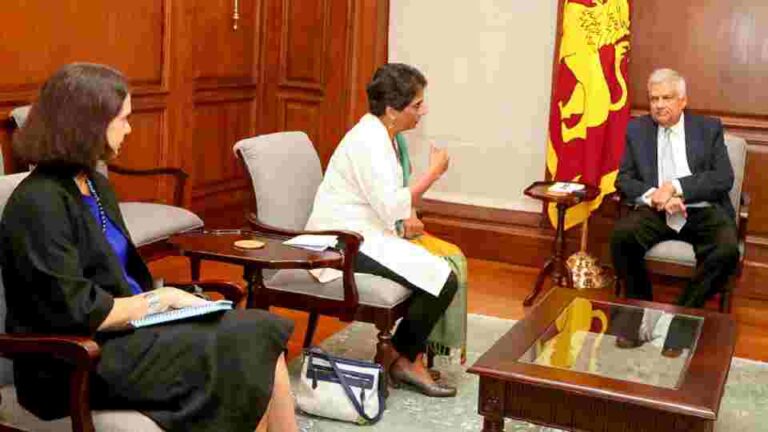
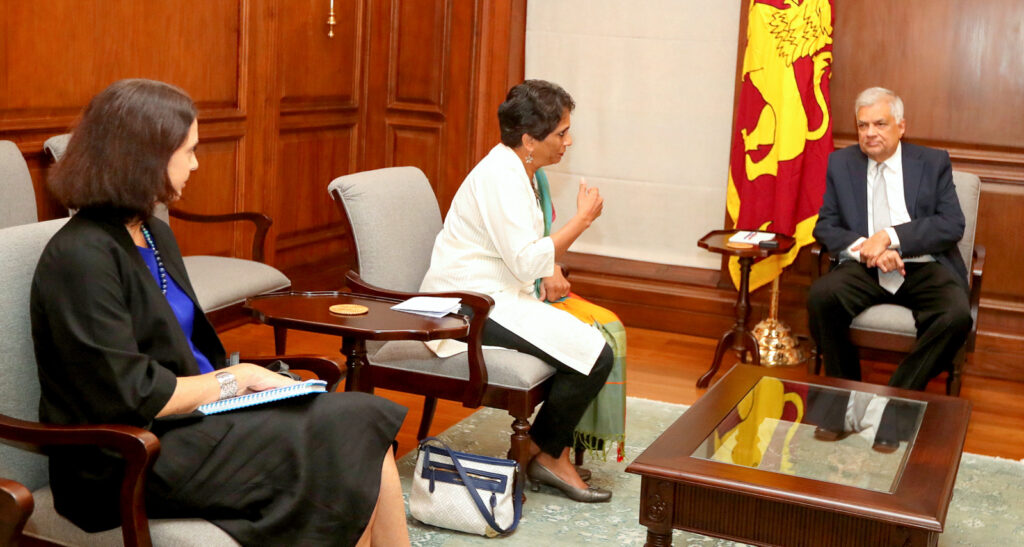
The Assistant Secretary-General of the United Nations (UN), Ms. Kanni Wignaraja who is currently in Sri Lanka, appreciated the efforts taken by President Ranil Wickremesinghe and his Government in resolving the economic crisis in the country. Ms. Wignaraja reiterated the U.N’s financial and technical support for Sri Lanka during this recovery period.
This was revealed at the meeting held between the President and the Delegation headed by Assistant Secretary-General of the UN at the Presidential Secretariat today (4).
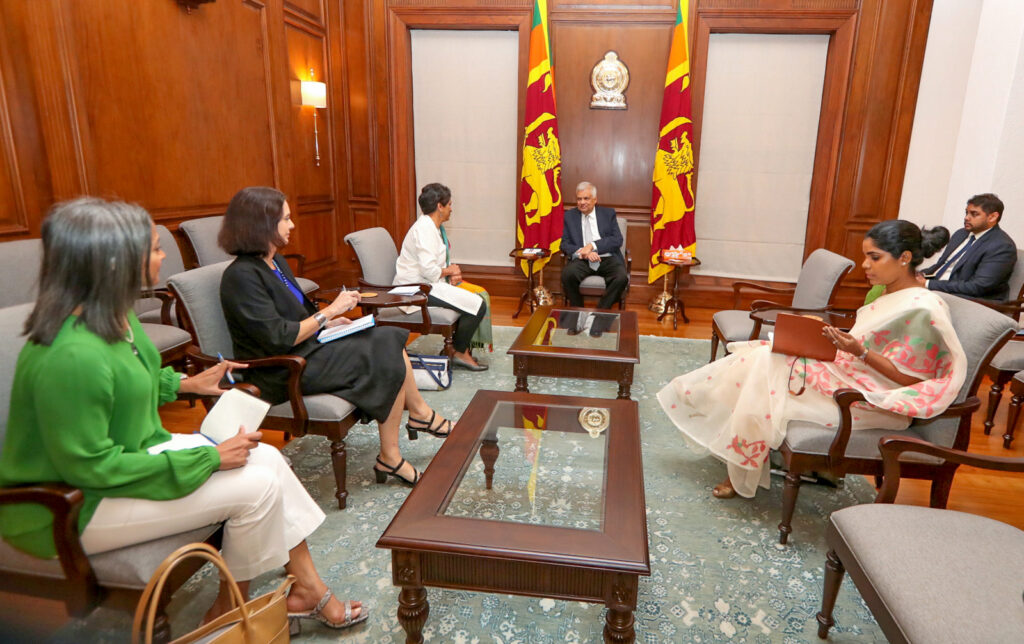
The discussions focused on the economic reforms, with the delegation recognizing that these difficult decisions would have to be taken in order to ensure long-term recovery and growth in the country.
The President also briefed the visiting delegation on the political reforms in the country, including the establishment of the Constitutional Council in Parliament and the ongoing discussions with the other political parties, regarding a resolution to the ethnic issues in Sri Lanka. The delegation welcomed the steps taken by the government.
President’s Chief of Staff and Senior Adviser on National Security Mr. Sagala Ratnayake, and Director of International Affairs, Mr. Dinouk Colombage were also present at the meeting.
Port City Colombo to be transformed as alternate to Singapore, Dubai
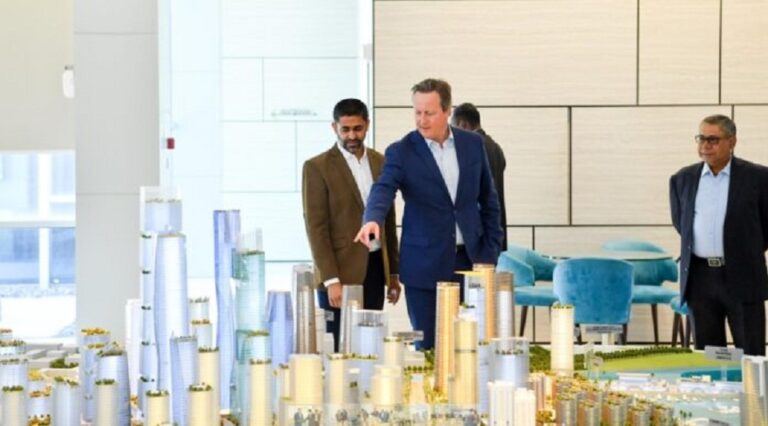
Colombo Port City, a shiny metropolis rising out of the water along the Sri Lankan capital’s seafront at Galle face with the huge expanse of sand reclaimed from the sea is being transformed into a high-tech city as an alternate to Singapore, Dubai, Monaco or Hong Kong
It will host an offshore international financial centre, residential areas and a marina – prompting comparisons with Dubai, Monaco or Hong Kong.
“This reclaimed land gives Sri Lanka a chance to redraw the map and to build a city of world class proportions and functionality as an alternate location to Singapore and Dubai with its cost competitiveness and attractive quality of living”, Thulci Aluwihare, Deputy Managing Director of CHEC Port City Colombo (pvt) Ltd said.
Former Prime Minister of the United Kingdom, David Cameron, visited Port City Colombo development project during a private trip to the island.
Cameron engaged in a discussion with Reyaz Mihular – Commission Member and Vindhya Weerasekera – Director Legal and Corporate Affairs of the Colombo Port City Economic Commission; Yang Lu – Managing Director of CHEC Port City Colombo (Pvt) Ltd. to understand aspects of the Public Private Partnership and catalytic role of the Project in transforming the economy. Renuka Weerakoon – Director General, BOI was also present at the meeting.
Briefing the former PM, Aluwihare explained that the ambition is to create a destination appeal for businesses to leverage Port City Colombo as a platform to access the region. Further, coupled with an attractive regulatory regime, Port City Colombo will be positioned as an alternate location to Singapore and Dubai with its cost competitiveness and attractive quality of living.
In response to Cameron’s inquiry on the USPs of the Project against similar destinations in South Asia, Mr. Aluwihare explained that Port City Colombo offers beyond a geographical advantage, with a comprehensive package of fiscal and non-fiscal incentives to enhance ease of doing business.
The Commission is a Single Window Investment Facilitator with the ability to implement dynamic regulations, liberal foreign exchange regime, an open labour market and attractive investment incentives.
In addition, as Sri Lanka’s first master planned city, Port City Colombo will create an attractive living environment focused on green and smart living.
Cameron’s visit to the Project Site was in view of fostering greater cooperation on promoting Port City Colombo to potential investors. He was also the first high-level delegate to visit the Port City Colombo development project in 2023.
IGP appoints Nilantha Jayawardena Snr. DIG Admin
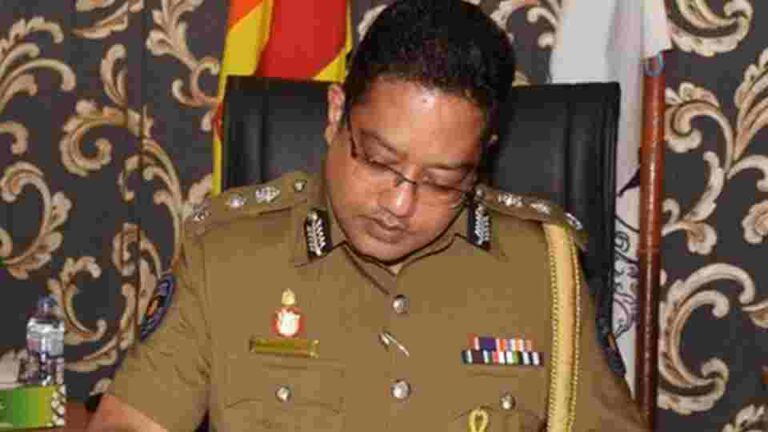
Inspector General of Police (IGP) C.D. Wickramaratne has appointed Senior Deputy Inspector General (SDIG) of Police Nilantha Jayawardena as the Senior DIG Administration.
His appointment comes in following the retirement of predecessor SDIG Nandana Munasinghe.
Jayawardena previously served as the SDIG of Auxiliary Services and as the SDIG of Northern, Eastern and Central Provinces. He also served as the Director of the State Intelligence Service and was an international intelligence analyst.
An alumnus of Nalanda College, Colombo, Jayawardena holds an Honours Degree in Accounting and Finance from Punjab University, Chandigarh, India. He collected his Masters in Business Administration from the University of Colombo and additionally holds diplomas in conflict resolution and international relations.
MIAP
Sri Lanka Original Narrative Summary: 05/01

- Elections Commission calls for nominations for Local Government Elections from 18th to 21st January 2023.
- President Ranil Wickremesinghe orders all state institutions to fly the National Flag at half-mast today as a mark of respect to late Pope Emeritus Benedict XVI, whose funeral is taking place.
- Central Bank says Headline inflation expected to decrease in 1H of 2023 and reach desired levels by end-2023: also says economy will contract by 8% in 2022 and a gradual recovery to take place from 2H of 2023: expects IMF facility to materialize in “early 2023”: previously, the CB Governor assured that the IMF facility would materialize by Q3 of 2022.
- Finance Ministry sources say the Japanese Contractor for the Katunayake Airport New Terminal Project has claimed a staggering Rs.8,000 mn as damages from the Govt for the termination of the contract: the contract had been terminated due to the Debt Default of 12th April 2022 leading to JICA withdrawing funding for the project.
- CB sources say the Monetary Board has enabled Central Bank staff to evade a part of the new taxes from Jan’23 onwards by paying the employees’ “unutilised leave encashment” on 30th Dec’22: Secretary Treasury Mahinda Siriwardene also said to be a beneficiary of that “tax evasion” measure: Siriwardene has been at the forefront in the effort to increase taxes and utility prices in the entire country.
- Cabinet approves the incorporation of a 100% Treasury-owned Holding Company to fast-track the re-structuring of SOEs.
- Minister Bandula Gunawardena confirms that 2 major loss-making SOEs (CPC and SriLankan Airlines) have paid bonuses to their employees despite the burden on taxpayers, while also ignoring Govt regulations.
- Hotels Association President M Shanthikumar warns many hotels will close if the debt moratorium is not extended for another year: also says the anticipated recovery remains elusive amidst rise in costs, especially electricity.
- Construction work of the Pentagon-styled Defence Headquarters building complex at Akuregoda, Battaramulla expected to be completed in 2023 after nearly 12 years of construction.
- UN Assistant Secretary General Kanni Wignaraja applauds Sri Lanka’s plans for social and political development: discusses “implementing necessary programs to achieve sustainable development goals, green economy, social harmony and social protection” with PM Dinesh Gunawardena: discusses debt crisis with State Finance Minister Shehan Semasinghe and assures “willingness to provide technical support in capacity building”