Sri Lanka is set to introduce National Policy for Digital Transformation of Education soon with the aim of effective use of emerging technologies in the education sector facilitating the learners to expand their learning possibilities, Education Ministry sources said.
Digital transformation is making a cogent impact in every sphere. One cannot neglect its influence on education.
The effective use of emerging technologies in the education sector would facilitate the learners to expand their learning possibilities, in a manner that is focused on fostering new skills and competencies, through greater accessibility, affordability and availability.
This could only be achieved through an education policy transformation that is focused on ensuring the facilitation of innovative learning opportunities, senior official of the Ministry opined.
Recognising the national importance of blending the country’s education system with technology, the Information and Communication Technology Agency (ICTA) of Sri Lanka together with the Ministry of Education organised a series of three workshops to create awareness on the need for a new policy.
The policy is the direct outcome of the opinions, views and ideas expressed during the workshop series with a special focus on the concerns prevalent in schools, universities, vocational institutions and other higher educational institutions and discovering ways to address them.
The policy document proposes nineteen key focus areas coupled with policy directives to achieve the expected digital transformation of education.
Some of the key areas highlighted in the policy include; the digital transformation of education, hands-on digital education.
This action has been taken keeping pace with the industry, creating a digitalised environment for students along with resources, self-learning, learning management systems, security in digital space and skills development of students, administrative staff, teachers and parents.
Issues with connectivity, content, capacity gaps, at present, have been identified as major obstacles in school education in the new normal, and will not be so for long.
The Ministry of Education high official emphasised the importance of equity and equality in education through digital technologies and the vision to create a sustainable ecosystem. He also highlighted the important role of a sustainable digital education policy in upcoming education reforms.
The intended policy aims at identifying major issues faced by the general. Vocational and Higher education sectors and through active participation also found solutions to some issues.
This three stage consultative workshop series will ensure that at the end of the series an actionable, time bound set of activities are set in place strengthened by a policy to push the broader vision of a digitally inclusive prosperous Sri Lanka.
In line with that a list of short-term initiatives have also been identified and to be implemented in collaboration with various stakeholders by the end of 2021. This list of initiatives is expected to make rapid development in the digital education sector.
Crizzpys frozen crispy chicken from New Anthoney’s Farms
New Anthoney’s Farms (Private) Ltd, one of the leading producers in the country’s poultry sector with an undisputed reputation of providing nutritious meat products for a healthier nation, is strengthening its foothold in the frozen crispy chicken market in Sri Lanka with an expansive distributor strategy, reaffirming its position as the pioneers in this category.
Marketed under the brand Crizzpys, beneath the golden breading of this snack food is its green acclaimed Haritha chicken which stands for the freshest and safest meat that is nutrient-rich and antibiotic-free.
‘We have seen a steady growth in our range of frozen chicken breaded products as consumers preference and shift towards ready-to-eat quality fast food is slowly making its way,’ said its CEO Neil Suraweera. Amidst the numerous challenges, New Anthoney’s Farms is optimistic and shares a rather positive sentiment on the situation.
The poultry producer has continued to exhibit a tremendous growth in the recent months, investing heavily in its production and supply chain capabilities in addition to setting ambitious plans in key international markets, having successfully performed in its export strategy.
Domestically, 2022 marks a milestone for New Anthoney’s Farms with various initiatives being taken despite volatile industry conditions. It introduced Anthoney’s Meatlery at Battaramulla, a spacious and modern meat supermarket which will evolve into a retail chain in time to come, and Dorakadapaliya, a one-of-its-kind online meat shop which also offers free island-wide delivery, and also moved to 100pct compostable packaging measures in the Haritha Hari chicken range.
With a continuous effort in meeting local tastes and exceeding customer expectations, its brands now include Haritha Hari, Crizzpys, Chico, Spicydycy, Anthoney’s Precut, and Chickenends in addition to a range of sausages, cold cuts, eggs, spices and home-made signature sauces.
New Anthoney’s Farms has some of the most stringent policies and practices throughout its entire supply chain, from sourcing raw materials to farming and preserving. It follows the animal welfare criteria set forth by the National Chicken Council (NCC) in the US. Other certifications include GMP, HACCP, ISO 22000, local and international halal accreditations. It is also the only poultry producer in the nation to meet the requirements of ISO 14064-1:2018 in terms of Green House Gas emissions and to pursue biodegradable packaging. Some of its other efforts include a zero-waste operation equipped with a high-end wastewater treatment facility.
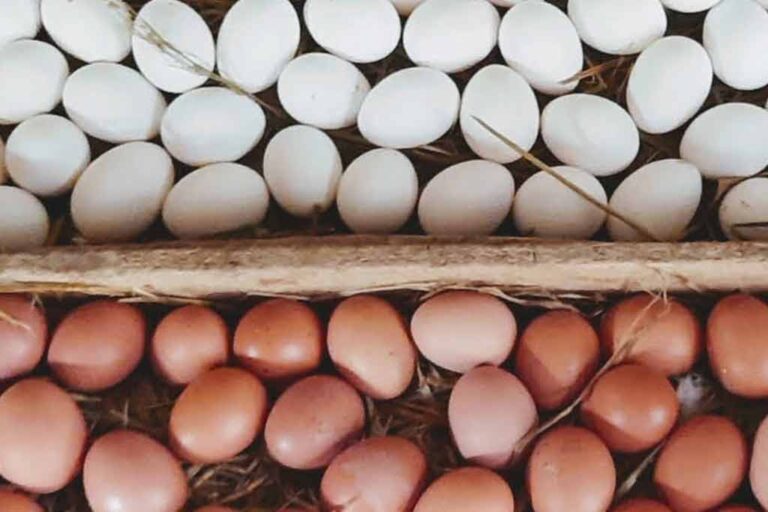
The Cabinet today (02) is set to pay its attention on the proposed move of importing eggs, following months of dispute over the price of eggs and the now occurring egg shortage in the market.
Accordingly, the Cabinet will be discussing on the measures to be taken over the rising egg prices and how to control them, according to Trade Minister Nalin Fernando.
The cash strapped Government has begun levying an indirect tax of Rs.1105 from a four member family per day with effect from yesterday January 01 2023, in accordance with budget 2023 tax proposals.
It has planned to recover an indirect tax revenue of Rs. 2218 billion per year from 2.2 million rich and the poor of this country increasing the per capita tax burden to Rs. 176 per day.
Therefore, the burden on indirect tax of Rs. 100,818 falls on a person per annum disproportionately on the low and high income earners.
However, the Central Bank has claimed that the growth isn’t much of an impediment when raising revenues through indirect taxes, although it may not be the best way to go about raising taxes.
This was in addition to the income tax hike to the maximum of 36 percent while removing concessions and exemptions, with a view to raise government revenues to fix the budget under an International Monetary Fund (IMF)-backed economic rescue programme.
Accordingly, the tax-free threshold applicable on an individual income has been brought down to Rs. 100,000 a month or Rs. 1.2 million a year, from an earlier Rs. 3.0 million, making every resident or non-resident Sri Lankan liable for personal income on taxable income in excess of Rs. 100,000 a month, effective from January 01, 2023.
The budget 2023 aims to raise Rs. 1763 billion in taxes on goods and services which is nearly double the amount the government is expecting to raise in 2022.
The indirect taxes account for 56 percent of total tax revenue and the share increases to 71 percent of total tax revenue when the taxes on external trade is also considered.
Meanwhile, a senior tax expert reiterated the need to remove the Value Added Tax (VAT) exemptions on over 100 items except for health and education, bringing down the VAT free threshold to further lower levels and imposition of withholding tax on deposit interest at 10 percent.
According to him, each of these proposals could rake in an additional Rs. 100 to Rs. 200 billion in revenues relatively easily.
Sri Lanka will phase out CESS, a para tariff in three years starting from January 2023. Ports and Airports Levy, another border tax will be phased out in five years.
Instead standard import duty will be raised from 0, 10 and 15 percent to 0, 15 and 20 percent.
Customs Import Duty on a total of 378 selected HS Codes will be revised under the Export Development Board Act, No.40 of 1979, effective from November 15, 2022.
A Surcharge Tax will be charged at the point of importation, on diesel, petrol and crude oil.
President Ranil Wickremesinghe says the country is looking at the New Year 2023 after having undergone the bleakest of times, immense hardships, as well as the uncertainties and hopelessness of the last year.
National Dangerous Drugs Control Board Chairman Shakya Nanayakkara says nearly 120,000 people use heroin in Sri Lanka: also says nearly 400,000 people use marijuana: further says the number of people using cigarettes and alcohol is decreasing while there is an increase in people using narcotics including ‘ICE’.
Urban Development Authority earns more than USD 500,000 via the sale of 11 middle-class housing units at the Viyathpura Housing Scheme under the scheme to sell UDA-built apartments for foreign currency to Sri Lankan migrant workers.
State Finance Minister says Govt will not rely on “money printing” by the Central Bank in the new year, as it hopes to meet govt finances from increased taxes: Sri Lanka has already increased taxes to boost the tax revenue by 70% in 2023: in the last 9 months of 2022, under Governor Weerasinghe, “money printing” was a staggering Rs.868 bn.
Notorious underworld gangster, Mohamed Najim Mohamed Imran, alias ‘Kanjipani’ Imran, sneaks into Rameswaram, India days after his release on bail by a Court in Sri Lanka: Tamil Nadu intelligence sounds alert to “mount a vigil along the coastal districts”.
CEB Union General Secretary Ranjan Jayalal says a hartal will be launched island-wide in 2023 over the increase in electricity tariffs and hours-long power outages.
People’s Bank appoints Clive Fonseka as Acting CEO/General Manager of the Bank with effect from 1st January 2023: Fonseka is a veteran banker with over 30 years of experience in local and global banks specialising in Treasury operations.
Govt to impose tax of Rs.2 on each beedi stick at the production level from today: Excise Dept estimates the move to generate an additional Rs.3 bn in revenue.
SLFP General Secretary Dayasiri Jayasekara says the SLFP is discussing with other centre-left parties in the Opposition, on the possibility of forming an alliance under the UPFA or forming a new alliance to contest the upcoming Local Govt election: also confirms his party is negotiating with independent SLPP MPs, including Dullas Alahapperuma as well.
Sri Lanka’s Women’s Fide Master and Fide Instructor Suneetha Wijesuriya honoured during the recently concluded 44th Chess Olympiad championship in Chennai, India: Suneetha becomes the only Sri Lankan from 48 Asian countries to be recognised at the ceremony.
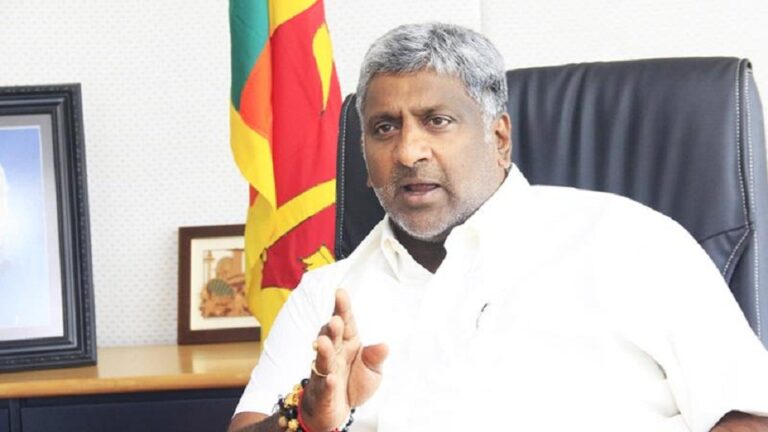
Urban Development and Housing Minister Prasanna Ranatunga has instructed the Urban Development Authority to continue the implementation of the housing projects initiated last year for low-income earners and artists.
Ranatunga has also instructed the relevant parties to mobilise resources to implement these projects without burdening the Treasury given that Sri Lanka is facing an economic crisis at the moment.
The initiative pending continuation is set to build 1,996 housing units under five housing projects for artists (108) and low income earners (1,888) in Peliyagoda, Maharagama, Moratuwa, Dematagoda and Kottawa early this year, and the projects are currently being undertaken under the loan assistance provided by the Chinese government.
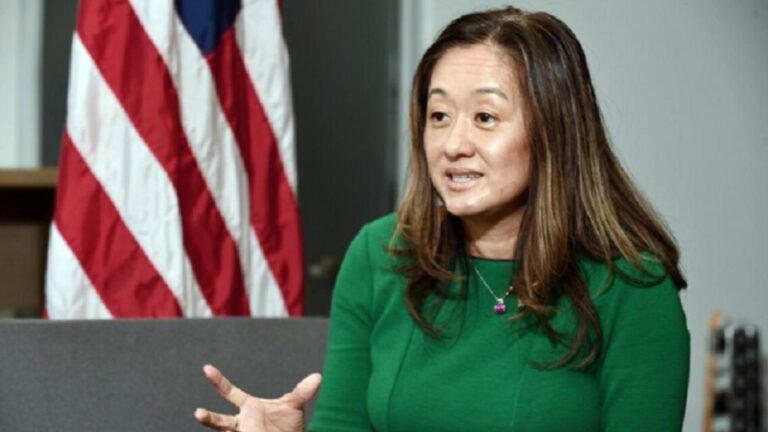
United States Ambassador to Sri Lanka Julie Chung has recalled the multitude of ways the US and Sri Lanka have come together in 2022 to make a difference.
“In 2022 alone, the United States has announced more than $240 million in new assistance to Sri Lanka”, taking to Twitter, the Ambassador said.
“That new assistance supports basic food security and addresses the needs of the most vulnerable communities, including funding for school lunches, fertilizer for small holder farmers, and cash assistance for new and expectant mothers,” she said.
As I reflect on 2022, I’m thinking about the multitude of ways that the US and SL have come together over the last year to make a difference. In 2022 alone, the United States has announced more than $240M in new assistance to Sri Lanka.
“We are also supporting loans, training & assistance for SMEs in Sri Lanka, as they face the heaviest burden in times of crisis. This assistance is on top of our existing development partnership working with government, the private sector, civil society, and the people of Sri Lanka,” she added.
“The relationship between the two countries, however, is much bigger than just about assistance. – It’s about partnership,” the Ambassador said.
2022 has been an unforgettable year and said she is hopeful that 2023 will bring economic recovery, lasting change, and new opportunities to the people of Sri Lanka, Ambassador Chung said.
Tamil Nadu intelligence issues alert saying the drug lord ‘Kanjipani’ Imran entered Rameswaram, asks senior police officers across the State to mount vigil along the coastal districts
Notorious underworld gangster Mohamed Najim Mohamed Imran alias ‘Kanjipani’ Imran sneaked into Rameswaram days after his release on bail by a court in Sri Lanka, police sources said on Saturday.
The Tamil Nadu intelligence has sounded an alert to senior police officers across the State to mount vigil along the coastal districts and look for him and his associate who landed along the Ramanathapuram district coast on December 25, 2022.
Imran, wanted by the Sri Lankan authorities for various offences, including murders and criminal intimidation, was arrested in Dubai in 2019 and deported to the Island Nation. He was in judicial custody till a local court granted him bail on payment of two sureties, each 5 million local currencies.
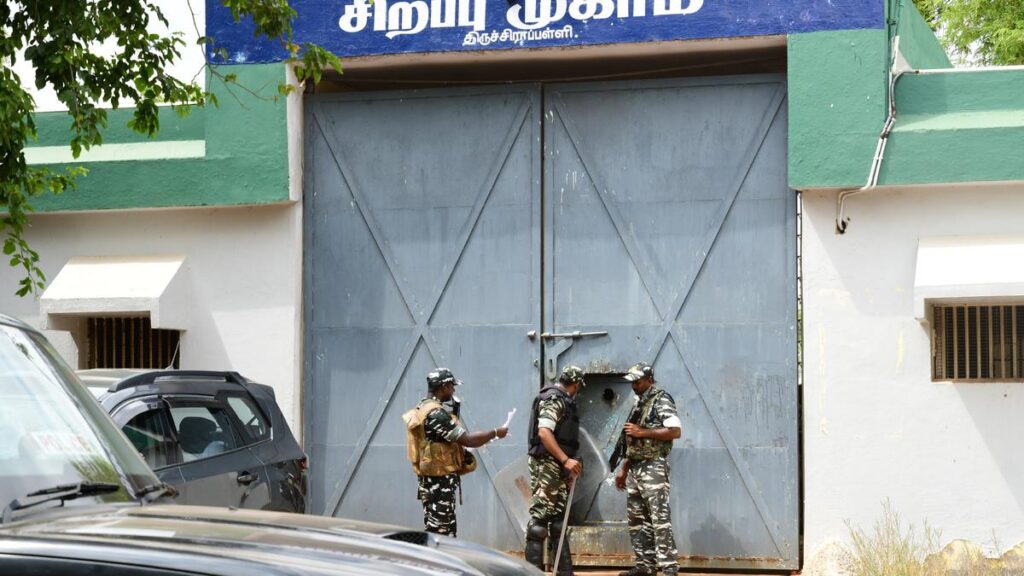
The entry of ‘Kanjipani’ Imran into Tamil Nadu gains significance in the backdrop of the National Investigation Agency exposing an international drug cartel involving Sri Lankan nationals operating from the Special Camp in Tiruchi that houses foreign nationals facing criminal charges. File | Photo Credit: The Hindu
Specific alert
The State intelligence had a specific input from central intelligence agencies and reliable sources that Imran was planning to enter India after his release on bail. The information was that he left the court in disguise and moved to Thalaimannar from where his associates were making arrangements for his infiltration into India, the sources said.
“Imran is a drug kingpin with strong connections with heroin and cocaine suppliers based out of Afghanistan and Pakistan. He is facing several cases in Sri Lanka. On information that Imran would attend a birthday function in Dubai, a special team arrested him there in 2019. His gang is actively involved in big time smuggling of drugs across maritime boundary lines,” a senior police officer told The Hindu on Saturday.
Though there is no formal communication from Sri Lanka on Imran escaping to India, intelligence agencies received credible input on his movement and issued the alert, the officer who did not want to be quoted said.
The entry of Imran into Tamil Nadu gains significance in the backdrop of the National Investigation Agency exposing an international drug cartel involving Sri Lankan nationals operating from the Special Camp in Tiruchi that houses foreign nationals facing criminal charges.
Commissioners/Superintendents of Police, particularly in the coastal districts, have been alerted to enhance surveillance at vulnerable locations and activate their intelligence machinery to trace the suspect.
Police sources said that the NIA was also tracking the movement and activities of Imran and his associates as investigators believed that he had close links with Haji Salim of Pakistan and Gunasekaran alias Gun, the prime suspect in the Vizhinjam drugs and arms trafficking case, where coastal security agencies seized 301 kg heroin, five AK 47 rifles and 1000 9-mm ammunition from six Sri Lankan nationals, who were found on vessel ‘Ravihansi’ off Vizhinjam on March 25, 2021.
When economies confront problems such as inflation, deflation, unemployment and recession, mainstream economists and policymakers refer to the situation as macroeconomic imbalance. They also provide reasons for the imbalance and propose various policy actions to stabilize the economy back to the balance.
In this analysis, macroeconomic imbalance is referred to the situation that the total supply of goods and services of the economy is not equal to its total demand. For example, central banks around the world state that present inflationary pressures are due to the demand in excess of the supply consequent to the stock of money expanded and supply bottlenecks during the pandemic time 2020-21.
The reasons they mostly cite for the expanded money stock are the money printing and bank credit created to fund the government budgets/spending on fiscal stimulus to fight the pandemic. Therefore, almost all central banks have started raising interest rates to reduce the monetary/credit growth in respective countries. In 2022, nearly every central bank has raised the policy interest rate by about 250 bps.
Meanwhile, the Central Bank of Sri Lanka blames the budget deficit singularly for the hyper-inflation as well as the present economic crisis confronted by the country. As this is a grave macroeconomic imbalance, the Central Bank has raised interest rates so far by 1,000 bps to stabilize the economy by bringing the demand back to the balance with the supply.
However, macroeconomic imbalances, underlying reasons and policy actions or stabilization policies are highly controversial subjects because they are based on various economic concepts that have not been proved by empirical studies.
Therefore, this article is to present the invalidity of mainstream economic conclusions underlying macroeconomic stabilization policies, mainly inflation, budget deficits and current account deficit (in the balance of payment -BOP), in modern monetary economies connected to the global economy.
The objective of the article is to help the policymakers to innovate monetary and fiscal policies in a new sectoral approach in the new year to recover living conditions back to the pre-pandemic levels.
Concept of Macroeconomic Balance
This is none other than the conventional national income identity taught to beginners of macroeconomics.
GNP = Y = E
Gross National Product = Gross National Income = Gross National Expenditure
This is known as the macroeconomic balance, that is, the aggregate supply in the economy is equal to the aggregate demand. This is not a theory, but a fact because the value of aggregate production or supply of a country will be its income and expenditure on income.
In this model, Y is the sum of income to factors of production, i.e., labor, landowners, capital owners (including financial capital) and entrepreneurs, in the form of wages, rent, interest and profit (W, R, It and Pt). Therefore,
Y = W + R + It + Pt ………………………………..(1)
Accordingly, the national income should be equal to the national expenditure (Y = E) derived as below as factors of production cannot spend more than their income in total.
Y = C + I + G – T + X – M ………………………..(2)
C and I are private sector consumption (C) and investment (I)
G is government spending (consumption and investment)
T is tax paid by the private sector. It is deducted as government spending is financed by tax paid by the private sector out of the income/production value.
X is exports of goods and services. Exports are added to domestic spending to reconcile with income as exports is a withdrawal from the country’s expenditure on production.
M is imports of goods and services. Imports are deducted from spending to reconcile with income as the private and government expenditure also contains imports.
In this concept, E or (C + I + G – T + X – M) is the demand side of the economy whereas the Y is the supply side.
Accordingly, equation (2) can be restated as follows.
Accordingly, terms in the equation (4) can be rearranged as below.
(G – T) = (S – I) + (M – X) ……………………….(5)
Budget Deficit = Private Net Savings + BOP Current Account
The equation (5) shows that although the economy is at balance (supply = demand), sectors of the economy can be at imbalance. Those sectors are the state, private and foreign. Budget, net savings and current account which show sectoral status can be at balance (that is zero) or at imbalance (deficit or surplus). Therefore, macroeconomic balance does not mean that economy is necessarily at sector-wise balance.
As the above model is not a rocket science, macroeconomists present it under various assumptions.
Concept of Macroeconomic Imbalance
Accordingly, this is the situation where Y < or > E which means the aggregate supply differs from the aggregate demand. However, in the concept, aggregate supply should always be equal to aggregate demand. If so, imbalances are interim conditions in dynamic economies as markets continuously adjust to various factors.
If so, how do economists detect macroeconomic imbalances? The approach central banks adopt is the change of inflation beyond their targets. Accordingly, any imbalance between the supply and demand will change the general price level and inflation. This is the application of market mechanism in economics.
For example, if the quantity of demand for a product for any level of supply is higher, the price of the product will rise to ensure that the demand falls to the level of its supply as the quantity of the supply is externally given. In opposite, if the demand is lower than the supply, the price will fall to ensure that the demand rises to the level of the supply.
When it comes to the economy as a whole, changes in prices of goods and services are reflected by inflation or deflation. In this approach, the supply is considered as externally given or static variable in the short-run.
Stabilization Policies
In the above model, stabilization policies are the state policies implemented to bring the economy back too balance (demand=supply) when there is an imbalance. Accordingly, mainstream economists propose fiscal and monetary policymakers to manage the demand side of the economy to match the given supply side. Therefore, stabilization policies are known as demand management policies by leaving the supply side externally given.
Accordingly, in the event of inflationary pressures, tight fiscal and monetary policies are proposed to reduce the demand because inflation is interpreted as excess demand situation. This is why central banks globally raise interest rates to reduce credit and discourage spending during inflationary periods.
In opposite, when economies confront recessionary/deflationary situations, i.e., demand less than supply, stabilization policies are the fiscal and monetary expansion policies.
However, fiscal authorities are not willing to curtail government spending during inflationary periods. Instead, they are willing to use fiscal instruments selectively such as consumer subsidies and indirect tax cuts on essential consumer goods to reduce the cost of living.
Therefore, central banks have no hesitation to raise interest rates, irrespective of macroeconomic outcomes of high interest rates. However, during recessionary times, both fiscal and monetary authorities follow the same course of expansion.
Policy Controversies in Real World Context
The conceptual model presented above is used by mainstream economists and policymakers to manage the economies with various targets such as inflation, growth, unemployment, BOP and wages through monetary and fiscal policies. Therefore, these policies fucus on adjustment of the demand side of the economy as a whole or on selected demand components.
Some of the major controversies on the model in real world context are highlighted below.
Demand management alone inappropriate
The model does not consider the direct or immediate impact of fiscal and monetary policy instruments on the supply side in present information technology-based economies. Selective tax and credit instruments can have an immediate impact on investments and productivity which will change the supply to match the existing demand without calling for demand control per se.
However, this view is not considered in the model as the supply is considered externally given where any present change in the demand will have a lagged effect on the supply. However, as the supply side is a result of factor markets, policies can directly focus on relevant factor markets to fix supply side issues that have caused economic imbalances. Therefore, the demand management approach is outdated now.
Inappropriate treatment on budget deficit on macroeconomic imbalances
Central banks and mainstream economists use equation (5) above to blame governments for macroeconomic imbalances. What they state is the culprit behind the private sector investment lower than saving (S-I) and the deficit of the country’s BOP current account (M-X) is the budget deficit (G-T). This interprets that if the government runs a budget deficit, private sector and external sector have to provide resources through net savings and current account deficit (or import of resources) to finance the deficit.
This is the reason why the IMF imposes conditions on countries confronted with BOP/foreign currency problems to reduce the budget deficit by cutting the expenditures and raising taxes if they are to receive IMF financial assistance. It is surprised that the followers of these conditionalities fail to understand that cutting the government expenditure is nothing but cutting the country’s production capacity as well as already contracted supply side.
However, they all forget that the equation (5) is true only if the economy remains at the balance or demand supply equilibrium. Therefore, budget deficit is only a sectoral imbalance, and it does not reflect a macroeconomic imbalance as defined in this model.
Further, equation (5) is only a mathematical solution. It does not interpret sectoral interactions and inter-relations. The equation also can be interpreted to blame the private sector for the budget deficit and current account deficit as shown in equation (6) below.
(S – I) = (G – T) + (X – M) …………………………(6)
Accordingly, the government has to run a high budget deficit if the private sector is not prepared to invest more than savings when the country runs a current account deficit.
In addition, if the equation (5) is accepted, it may be that the government runs a budget deficit to undertake infrastructure investment that the private sector is not prepared to take whereas the most part of current account deficit could be private sector imports not due to the budget deficit or government spending. Therefore, blaming the government for the current account deficit is baseless.
Further, the allegation of monetary financing, high interest rates and crowding out of private investments arising from budget deficits is not established in the model. Therefore, such allegations are arbitrary and stabilization policy based on fiscal sector tightening is baseless.
Factor market impact on supply and prices not captured or focused
When market mechanism is considered, the income and cost of production are determined by factor market forces. Therefore, prices can change because of changes in factor market prices (i.e., wages, rent, interest and profit margin) independently from the demand where the demand will adjust accordingly.
For example, the present global inflationary pressures are primarily a result of increases in costs and supply side bottlenecks. Sri Lankan inflation is a direct result of heavy currency depreciation, acute shortages of imports, higher interest rates and increased energy prices that have nothing to do with the demand side.
Therefore, the policy attempt to stabilize the economy by cutting the demand as a means to reduce inflation has no economic rationale. As the present high inflationary pressures around the world are mostly a supply side phenomenon, the correct policy approach should be policy actions to lift the relevant production and factor market sectors in the supply side.
Lack of information on the demand and sectoral imbalances
Policymakers do not have a mechanism to estimate the contemporary demand that causes imbalances. The data on demand are estimated within the production or supply side estimates (i.e., national accounts) made on the assumption of demand-supply equilibrium. Therefore, proxies such as retail sales statistics used for tracking the demand are highly unprofessional and ad hoc.
Further, standard national accounting statistics are received with lags of quarters. Therefore, macroeconomic imbalances are mostly detected from movements of consumer price index (CPI) to reflect the changes in general price level believed to be caused by demand supply imbalances.
Accordingly, stabilization policies are taken on the basis of information on movements of CPI. However, the CPI represents only a sub-set of consumer prices and, therefore, does not represent the macroeconomic general price level determined by the demand and supply in the model. As such, the inflation estimated from the CPI is only a statistical exercise which has no value to stability of living standards.
For example, Sri Lankan policymakers boast about inflation falling from 69.8% in September to 57.2% in December, last year. However, the general prices in December 2022 were 57.2% higher than general prices in December 2021 whereas the general price level in 2022 was 46.4% higher than that in 2021. Inflation figures are statistical results largely determined by so called base effect.
If you assume that the inflation in December 2023 falls to 5% to be within the inflation target of the government (4%-6%), the general price level as measured by the CPI will be 85% higher than that in December 2020 (i.e., the increase of the CPI from 138.0 to 255.4). Therefore, the boasted reduction in or control of inflation is meaningless in macroeconomics and living standards. Nobody will believe that the economy is stabilized if the general price level is at such a higher level unless the real income of the general public is raised to offset the higher price level. However, demand management advocates do not have a desire to think that way as they are illusioned by the statistical inflation rate phobia.
In that context, stabilization policies initiated on movements of CPI have no macroeconomic basis but they are exercises for intellectual satisfaction of those who believe in such policies like divine prescriptions.
Therefore, mandating public duties/objectives for central banks to secure economic and price stability and financial stability connected to the macroeconomic balance has no macroeconomic rationale as the standard demand management-based stabilization policies by central banks or by fiscal authorities are unable to secure such stabilization objectives.
In that context, central bank policy actions are nothing but conceptual monetary exercises that have no benefits to the economy and general public. That is evident even from developed countries that confront economic crises and high inflation cyclically from time to time despite central banks’ stability mandates.
Although equation (5) above shows sectoral positions/balances which are inter-related in the equation, actual data are gathered from different sources which are not reconciled in national income estimates. For example, current account deficit and budget deficit are compiled from trade data and public finance data which have no connection to the GDP data on supply and demand in the economy. Therefore, the sectoral equation is only a statistical concept and cannot be tested empirically for macroeconomic balances or imbalances or for stabilization policies as defined in the standard model.
Structural economic risks to macroeconomic balance not captured
Although the model focuses on demand-supply imbalances in aggregate, major imbalances or economic crises are caused by structural or systemic risks such as excessive, unhealthy concentrations involved in demand and supply sectors and markets. For example, the present economic crisis in Sri Lanka is a result of systemic risks that existed in the foreign currency market and foreign reserve of the Central Bank. These risks existed in the BOP capital account that was not a component in the demand management.
Therefore, the present economic crisis in the country is not a demand-driven crisis, but a crisis caused by certain sectors exposed to considerable degrees of structural macroeconomic risks. In fact, foreign debt and reserve which were not captured on the demand side were the main causes of the crisis. These were the transactions involved in huge systemic risks in the capital account of the BOP and, therefore, were not captured in the conventional demand management model.
However, the authorities only attempted to manage current account deficit in proportion to the country’s GDP and never figured out the systemic risks involved in movements of capital account. In fact, they were overwhelmed by foreign capital raised through sale of Sovereign Bonds and currency swaps where their rollover risks were never identified or assessed. Overall, the fundamental risk was the highly import dependent economy with consecutive current account deficits funded by government short-term foreign debt through the BOP capital account.
However, present macroeconomic management and stabilization approaches only focus on the demand side and do not have any regard to identification and management of structural economic risks that exist in sectors and markets. Therefore, raising interest rates to the sky high will not stabilize inflation-hit economies as such interest rate hikes will not fix the structural risks underlying high inflation or supply side bottlenecks.
Further, fancy mechanisms of financial stability and macroprudential surveillance with stress testing used by central banks to detect and manage such systemic risks in the financial sector have miserably failed because they are only bureaucratic, academic research on past data.
The present economic crisis in Sri Lanka is a result of mismanagement of foreign reserve and public debt by the Central Bank whose systemic risks should have been detected by macroprudential and financial stability techniques that were in place for years. In that context, the sugar high interest rate policy adopted under the standard demand management model to stabilize the economy from the crisis is only a baseless concept.
Monetary policy impact not identified empirically
Central banks across the world follow monetary policies, mainly interest rates, to stabilize economies when imbalances are reflected by movements of general prices or inflation. However, there is no empirical research to establish that the monetary policies carry intended impact on demand and prices. Even money-driven inflation is only a concept developed in primitive economies. However, modern economies are highly dynamic with modern markets and, therefore, monetary policy cannot fix markets that have caused imbalances in the economy.
For example, high interest rates adopted to control rising inflation have already shown strong signs of economic recession and rise in unemployment due to increase in cost of production. This seems to worsen macroeconomic imbalance through new imbalances in other sectors/markets rather than stabilization of the economy as claimed.
Demand management restricted by the economic globalization
Countries operate through direct and indirect links on trade of goods, services, factors and capital to the current global economy. Therefore, macroeconomic volatilities and policy changes in trade partner countries and developed countries will have impacts on other country economies.
For example, economic slowdowns and interest rates in the US and Europe will affect emerging market economies, irrespective of their demand management policies. Therefore, domestic policies in open economies are restrictive as demand supply imbalances are largely driven by global factors.
In that context, standard demand management policy model is a closed economy model with highly controlled merchandise trade. Therefore, this model fails to stabilize present economies linked to the global economy.
Overall Comment
The present fiscal and monetary tightening implemented by Sri Lankan authorities is presented as the only way to stabilize the economy from the current economic crisis. Authorities state that this tightening policy approach is followed in compliance with conditionalities imposed by the IMF to secure a 2.9 bn USD worth loan facility to be disbursed over a period of four years as a BOP support.
Therefore, the stabilization policy model followed by both Sri Lankan authorities and IMF is the old demand management approach presented above. However, the present economic crisis in the country is not a demand-driven crisis, but a supply side crisis caused by systemic risks in the BOP capital account.
Therefore, the present tightening policy stance and the conventional IMF financial/reserve facility will definitely fail to stabilize the economy in 2023 and beyond. The reason is the invalidity of the demand management model as highlighted above for stabilization of modern market economies where their failures, inclusive of IMF, are already known and well documented. Further, the core objective of the IMF model is to reactivate same risky foreign debt sector in the BOP capital account.
Therefore, it is proposed that relevant authorities immediately abandon this demand management model and implement a package of well coordinated fiscal and monetary instruments to fix sectoral imbalances that carry structural macroeconomic risks. However, this will not come from standard macroeconomic textbooks.
Therefore, those international economists who claim that they are prepared to take difficult, painful decisions to stabilize the economy will have to walk in the middle of the general public, find the root causes of the crisis from the sectoral grounds and invent policy instruments to fix them by leaving out brave talks in the political media like modern scientists and doctors.
This policy approach should focus on targets on sectoral developments and living standards with structural risks/concentrations minimized, unlike in the demand management model with statistical targets of inflation and GDP growth. This approach can be used to secure a material recovery of the economy in three months without any IMF support (by now 8 months have already lapsed in dreaming of the IMF without a definite time target) that will boost the public confidence in markets and policies with a new hope for the new year 2023. It is a simple fact that wars and crises cannot be won unless innovative techniques are adopted.
Therefore, if Sri Lankan policymakers continue to stay in their comfort zones of baseless, failed demand management policies by proposing new laws such inflation targeting and new monetary systems as part of the IMF 2.9 bn USD, the present economic crisis will drag the general public further for decades parallel to Zimbabwe, Sudan, Venezuela and Ghana while the young generation and professional community will end up in labour forces abroad. The resulting negative growth of the country’s population will anyway destroy the demand in the medium-term without any fiscal and monetary instruments such as high interest rates and tax hikes supported by the IMF.
Therefore, if the present government wishes the new year to be the macroeconomic stabilization year for their political agenda, it has to deploy a team of policymakers who are capable of inventing a new sectoral policy package as proposed above in place of the failed demand management policy model suitable for tribal economies.
Therefore, front-running religious leaders and political leaders must be careful when blessing the IMF and its followers on demand management policy models in the new year as they are not professionals knowledgeable on this subject.
I only can sincerely wish that those who are involved in macroeconomic management of the country at this historic crisis time take professional time to understand the important facets cited above if they are really hopeful of stabilizing the crisis-hit economy at least back to the pre-pandemic levels in the general public interest.
(This article is released in the interest of participating in the professional dialogue to find out solutions to present economic crisis confronted by the general public consequent to the global Corona pandemic, subsequent economic disruptions and shocks both local and global and policy failures.)
P Samarasiri
Former Deputy Governor, Central Bank of Sri Lanka
(Former Director of Bank Supervision, Assistant Governor, Secretary to the Monetary Board and Compliance Officer of the Central Bank, Former Chairman of the Sri Lanka Accounting and Auditing Standards Board and Credit Information Bureau, Former Chairman and Vice Chairman of the Institute of Bankers of Sri Lanka, Former Member of the Securities and Exchange Commission and Insurance Regulatory Commission and the Author of 10 Economics and Banking Books and a large number of articles publish.
The author holds BA Hons in Economics from University of Colombo, MA in Economics from University of Kansas, USA, and international training exposures in economic management and financial system regulation)
DP Education has now enabled you to study Japanese aiming your dream of seeking overseas employment, for free!
Yes, you read it right! DP Education, a free education platform founded by Dhammika and Priscilla Perera, offers you a comprehensive Japanese Language course for free of charge.
Despite going to Japan for either education or employment being a dream of many young people in Sri Lanka, mainly due to the high salaries and high living standards, obtaining visa to go to Japan is rather difficult due to the mandatory requirement of passing the Japanese language proficiency test.
But in this new year, DP Education has eased you from bearing that obstacle by offering a full package of Japanese Language for free of charge.