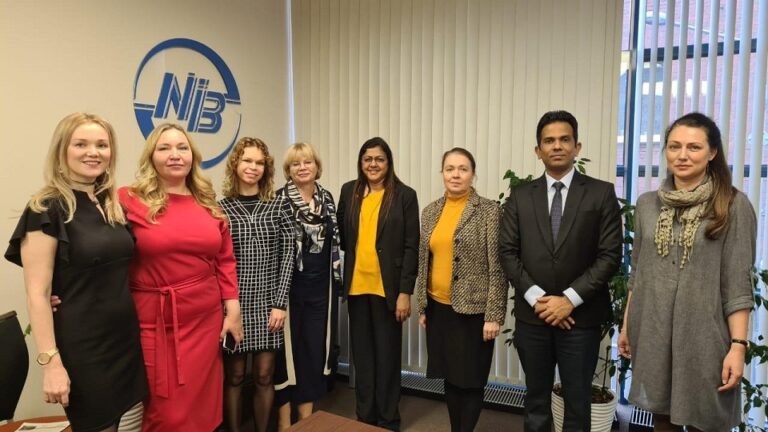
In the wake of ever increasing Russian tourist inflow, the Sri Lanka Embassy in Moscow has initiated a banking cooperation between People’s Bank in Sri Lanka and National Investment Industrial Bank in Russia (NIIB).
Accordingly measures will be taken to devise a platform for Russian tourists to make payments seamlessly in rupees with effect from 22 November.
Under this banking collaboration, Russian tourists will be able to remit funds to People’s Bank in Sri Lanka prior to their visits, in liaison with the National Investment Industrial Bank in Russia without having any intermediate banks involved.
Upon arrival in Sri Lanka, tourists will be issued Debit Cards (Visa/Master) which could be used to make payments in Sri Lanka.
Arrangements are also in place for Russian tourists to use these bank cards in other countries where Visa/Master cards are accepted.
This payment platform will be extremely beneficial to the Russian tourists to effect payments outside the territory of the Russian Federation flawlessly.
A considerable amount of foreign exchange is expected to flow into Sri Lanka through the proper financial channel with this project.
It will contribute to enhance the foreign exchange position of the country while boosting the attractiveness of Sri Lanka as one of the best and emerging tourism destinations for Russian tourists.
Russian tourists have dominated October arrivals revival, enabling Sri Lanka to bounce back by 41% to 42,026 from the lowest 29,802 in September and surpassing the 550,000 mark in the first 10 months.
The increase in arrivals was largely influenced by the resumption of Russian flag carrier – Aeroflot as well as the successful series of roadshows conducted in select cities of India last month.
Russia also emerged as the second biggest source market in October after India and relegated the UK to number three.
Arrivals in the first 10 months amounted to 568,258 (as against 22,771 in COVID-hit 2021) – a welcome development for the triple-hit tourism industry, but performance is still down by 73% compared to the same period in pre-COVID 2018.
In October, India topped the tourist traffic to Sri Lanka with 8,862 tourists reflecting 21% of the total arrivals, followed by Russia with 6,189 tourists (15%), the UK with 4,275 (10%), Germany with 2,881 (7%), and Australia with 2,106 (5%).
Tourism Minister Harin Fernando is hopeful of achieving 800,000 visitors and income of over $ 1.7 billion from the sector by the year-end, noting that the international rankings, resumption of more international airlines from this month as well as the promotions augur well to boost arrivals this winter season.
Russian tourist inflow to gain momentum via SL-Russia banking links
Sri Lanka’s road map for economic stabilization unveils soon.
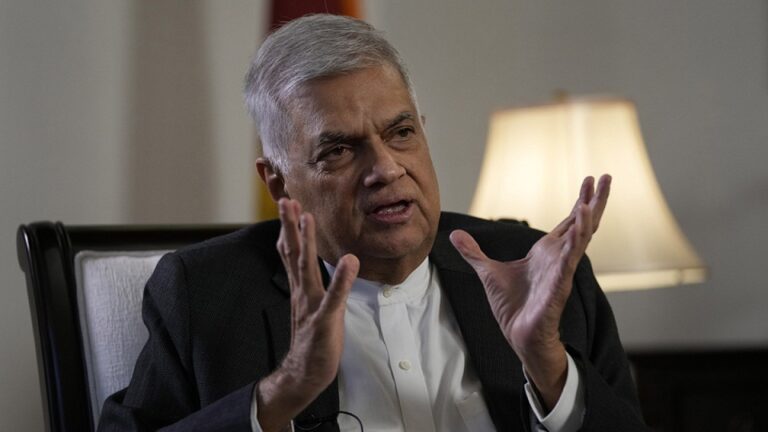
Sri Lanka’s road map with guidelines and work plan along with new development strategy for short medium and long term periods to achieve economic stabilization and recovery from the present fiscal crisis is to be unveiled at the end of next two weeks.
A group of top government officials and senior economic consultants is working on developing the road map according to the timelines to release the best final report relating to the country’s long term national economic policy.
According to presidential secretariat official sources It will also introduce new social market economic system with a strong safety net for the poor underprivileged and vulnerable groups while strengthening small and medium entrepreneurs.
Sri Lanka’s long term National Economic Policy will be formulated in accordance with the vision of President Ranil Wickremesinghe with the endorsement of parliament to make it stable and unchanged for the next 25 years.
The main aim of the national policy is to create a surplus in the primary budget by the year 2025 and raise the economic growth rate to a stable stage
Currently, public debt is 140 per cent of GDP and the government’s plan is to bring it down to less than 100 per cent by the year 2032.
It includes development policy operations, which provide direct budget support to successive governments for policy and institutional reforms aimed at achieving specific development results.
These operations are aimed at transforming Economic governance, enhancing growth and competitiveness and protecting the poor and vulnerable to provide rapid financial assistance to allow Sri Lanka to deal with actual or anticipated development financing requirements.
It will be enhancing oversights of State Owned Enterprises (SOEs), reducing the anti-export bias of national tariff policy eliminating barriers to foreign investment, making energy and transport sector less dependent on imported fuels and more climate-friendly, and strengthening social protection institutions and delivery systems.
Ceylon Chamber lauds Budget 2023 in right direction but doubting its outcome
Country’s premier private sector lobby the Ceylon Chamber of Commerce yesterday said that the National Budget for 2023 presented by President and Finance Minister Ranil Wickremesinghe contains many laudable reform proposals which, if implemented in a timely manner, will complement the on-going fiscal reforms outlined.
The Chamber in a statement said it is refreshing to see that the direction of the Budget is towards reforms as compared to unsustainable relief measures seen in past Budgets.
However, the Budget for 2023 falls short in outlining specific and concrete measures to curtail discretionary recurrent expenditure and provide greater accountability for Government spending, which the Chamber has highlighted in its recent statement in response to the proposed tax hikes.
The reduction in allocation towards discretionary expenditure could have also facilitated a greater allocation towards social protection programs.
The lack of implementation of Budget proposals in successive national Budgets has reduced the credibility of the national Budget process and limited the reform process only to the speech. The implementation of National Budget 2023 with set timelines and goals will provide credibility to the Budget process as well as the success of reforms.
“We hope the proposed Presidential Task Force established to monitor the implementation of Budget proposals will be proactive in sharing updates on a timely basis with the public providing accountability and transparency,” the Chamber said.
It acknowledged that the Budget aims to address many of the issues faced by entrepreneurs and investors related to land, labour, productivity and tariffs.
“The CCC welcomed the plans to establish several new economic zones to attract foreign investment and suggested that infrastructure development and management of these zones are entrusted to the private sector under a PPP framework.
Leasing out unutilized and unproductive land belonging to JEDB, SLSPC and LRC to grow exportable crops is also a positive move to release more land for economic activities that can boost forex inflows,” the Chamber said.
It pointed out that there is a significant focus on tax administration in line with the Chamber’s pre-Budget proposals such as the appointment of a Tax Ombudsman and introducing a Charter covering rights and obligations of taxpayers.
“We feel the output from the proposed Presidential Taxation Commission as recommended by the Chamber will assist in avoiding ad-hoc changes in taxation as seen in the last few years. Proposals on rationalizing the tariff structure including the phasing out of para tariffs will also be key in driving trade and investment,” the Chamber said.
The reiteration of the commitment made in the interim Budget to introduce a new, updated and unified labour law balancing the interests of both employers and employees is noteworthy.
The Chamber also welcomed the proposals to establish an unemployment insurance scheme and a health insurance scheme for private sector employees through the Employees Trust Fund. Reintroduction of paying wards in Government hospitals is also a step in the right direction.
The Chamber pointed out that the proposed growth of 64% in Government revenue will require economic activity to rebound and complement the improvement in tax administration and higher tax rates. “As such, proposals with a view of enabling growth to reach a sustainable path and improving capital formation would have been desirable in the Budget.”
As the premier body representing the private sector, the Ceylon Chamber of Commerce said it stands ready to assist the Government in driving a progressive reform agenda and engaging with the proposed Taskforce for implementation of the Budget.
SL surcharge tax on fuel imports to recover Rs700bn CPC instability loan
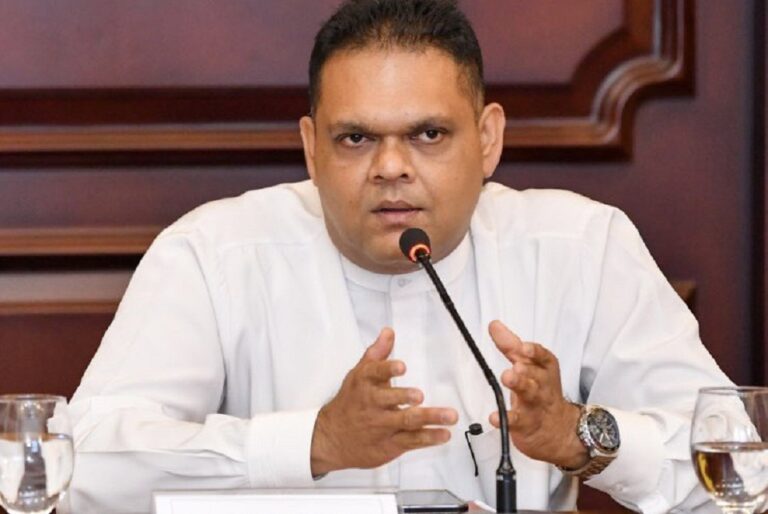
A new surcharge tax on fuel imports will be used to cover Rs 700 billion (2 billion US dollar) loan taken over from state-run Ceylon Petroleum Corporation, State Minister for Finance Shehan Semasinghe said.
“There are loans of 7rs 00 billion which are under a Treasury guarantee that will be taken over from CPC,” Shemasinghe said.“The surcharge tax will be used over 10 years to recover the money.”
The CPC was forced to borrow dollars from commercial banks each time the central bank printed money to mistarget interest rates and created foreign exchange shortages, going back several periods of currency crises.
A part of the loans were usually paid back after rates were hiked and monetary stability was restored such as in the year 2017.
However in the next currency crises triggered by liquidity injection tools CPC was forced to borrow from state banks again.
Bank of Ceylon and People’s Bank have loaned the CPC about 2.0 billion US dollar by the time the 2019 – 2022 currency ended.
In addition to the CPC loan the central government also borrowed dollars heavily as forex shortages came from liquidity tool employed to target an overnight rate in the middle of the policy corridor and longer term yields through term reverse repo injections and outright purchases and the country lost the ability to settle dollar loans from inflows.
A top CPC official pointed out that State enterprises such as the Ceylon Electricity Board (CEB) and the loss-making National Carrier SriLankan Airlines owed the fuel supplier millions of dollars in arrears.
He noted that had the monies owed been paid, the CPC would have been able to provide the banks with the necessary rupee equivalent to the dollar price of shipments, thereby securing Letters of Credit (LCs) to import crude oil, which would allow them to refine fuel locally.
The tanker nowunloading fuel is carrying approximately Rs. 28 billion ($ 80 million) worth of crude oil.
Sri Lankan Airlines has $ 300 million in arrears to the CPC. The power sector, the CEB, and Independent Power Producers (IPPs) owe the CPC approximately Rs. 100 billion.
If these state institutions fulfill their financial obligations then the CPC could settle payment of the lineup crude oil shipments to keep the refinery going for months.
The inability to squeeze the current account to repay financial outlflows, when liquidity is injected by a note issue bank, is generally called the ‘transfer problem’ by Keynesian macro-economists.
Sri Lanka Original Narrative Summary: 17/11
- Central Bank accepts a massive T-Bill “special issue” of Rs.130 bn on 15th November: “money printing” under Governor Dr Weerasinghe reaches a staggering Rs.840 billion: average “money printing” per day under Weerasinghe rises to Rs.3.8 bn: under Governors Lakshman and Cabraal it was Rs.2.2 bn.
- Elections Commission Chairman Nimal Punchihewa assures Opposition political parties that the Local Govt elections will be held prior to 20th March 2023.
- State Minister of Finance Ranjith Siyambalapitiya says Budget 2023 is not a futile document: rejects allegations that international influences shaped budget: says income tax files must be opened for all MPs.
- President Ranil Wickremesinghe instructs officials to implement the Singapore – Sri Lanka Free Trade Agreement immediately.
- National Council Sub Committee on Economic Stability Chairman Patali Champika Ranawaka says Sri Lanka has been too late to seek IMF assistance: previously, the Govt and Central Bank were confident of obtaining funds from IMF in about 6 months: now the expected date of disbursement is being shifted regularly.
- Cinnamon Gardens Police inform the Magistrate’s Court that former MP Hirunika Premachandra gives hugs to Police Officers during public protests as a tactic to make them uncomfortable: say they believe it is her ‘modus operandi’.
- Shares slip over 2% to their near 3-1/2 month low: brokers say investors seem to respond to impacts of Budget 2023 policies: less than expected quarterly earnings 3Q22 also dent bourse.
- FR petition filed requesting annulment of the promotion to Bimshani Jasin Arachchi as the first Police DIG in history: petition fixed for consideration on 18th May 2023 by the Supreme Court.
- Department of Immigration increases passport charges with immediate effect: new charges – Rs.5,000 for issue of passports under normal service and Rs.20,000 for one-day service.
- South African President Cyril Ramaphosa arrives in Sri Lanka for a short visit after attending the G20 Summit: meets with President Ranil Wickremesinghe at the Katunayake Air Force base: holds discussions on bilateral issues.
Non-Resident High Commissioner of Singapore calls on Minister of Foreign Affairs
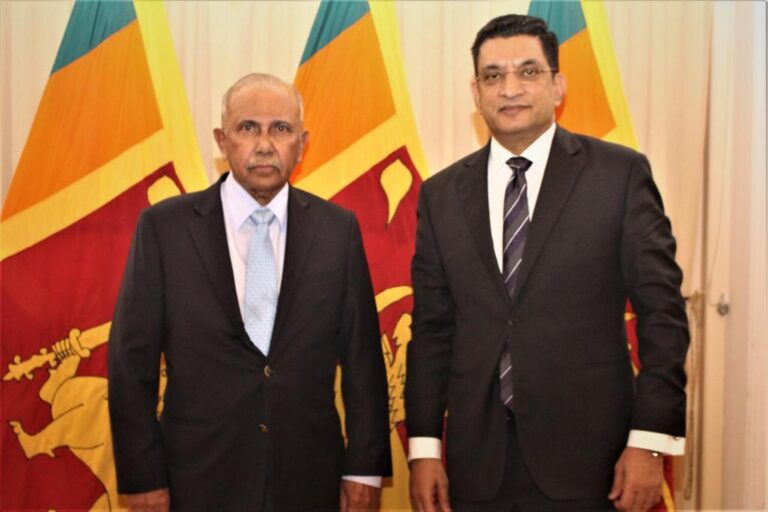
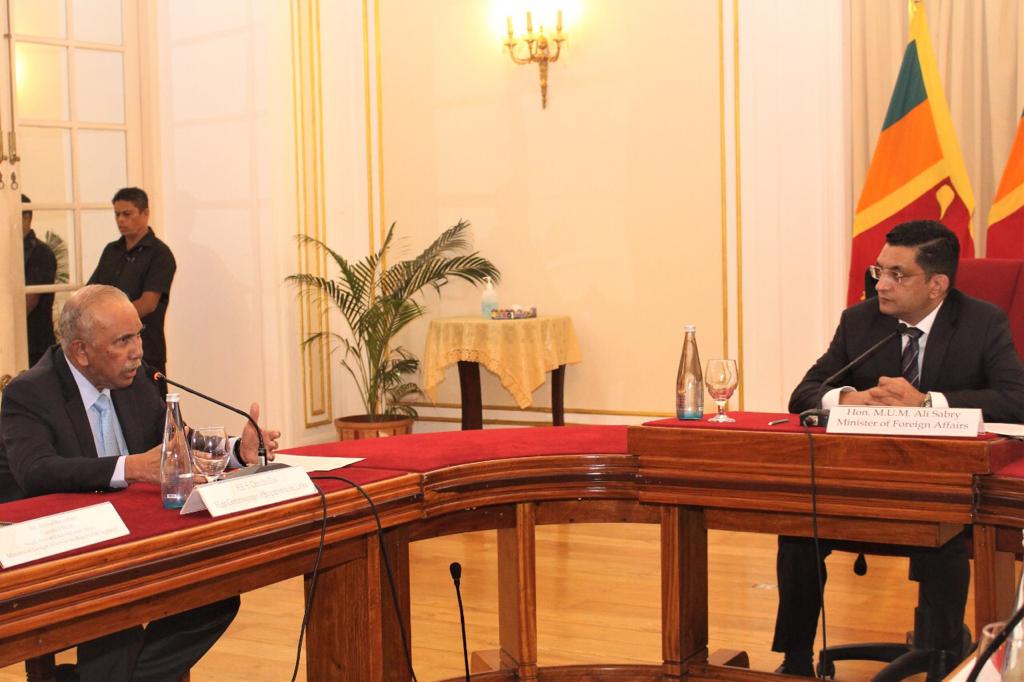
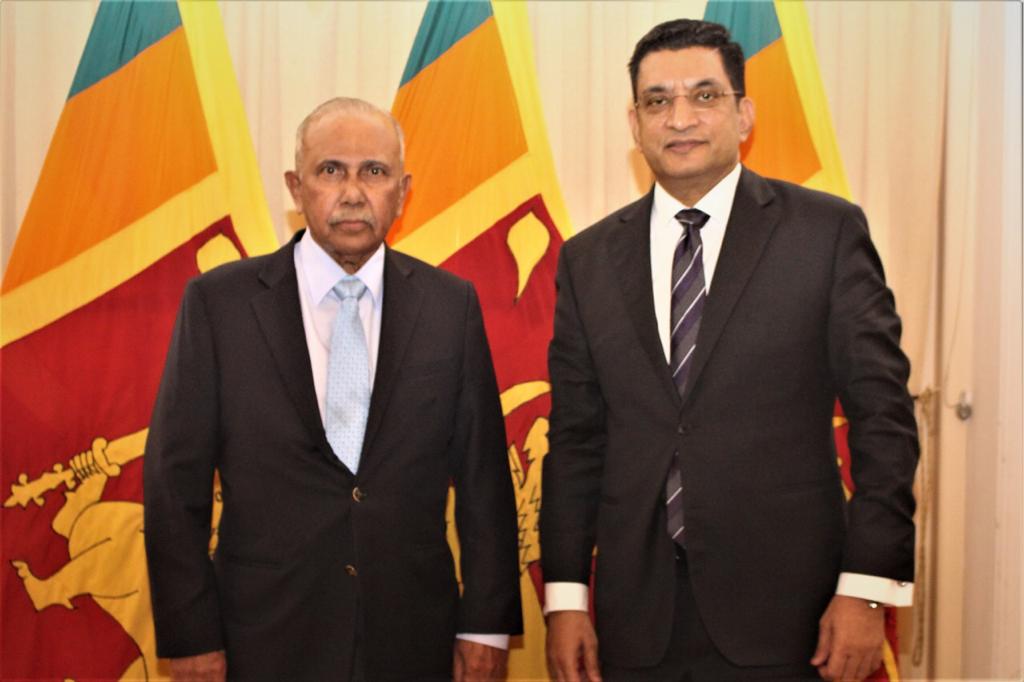
The Non-Resident High Commissioner of Singapore Chandra Das called on Minister of Foreign Affairs Ali Sabry on 15 November, 2022 at the Ministry of Foreign Affairs, during his official visit to Sri Lanka from 13 – 18 November, 2022.
Foreign Minister Sabry and High Commissioner Das held discussions on a wide range of issues related to enhancing bilateral cooperation between the two countries. The High Commissioner was accompanied by a business delegation from Singapore. The Minister briefed on areas and opportunities available for potential investment and business from Singapore.
High Commissioner Das also called on State Minister Tharaka Balasuriya and discussed issues related to finance, investment and tourism between the two countries.
High Commissioner Das would also call on the President, the Ministers of Trade, Commerce and Food Security and Health, as well as the Chairman of the Board of Investment and the Ceylon Chamber of Commerce, during his visit to Sri Lanka.
Ministry of Foreign Affairs
Colombo
16 November, 2022
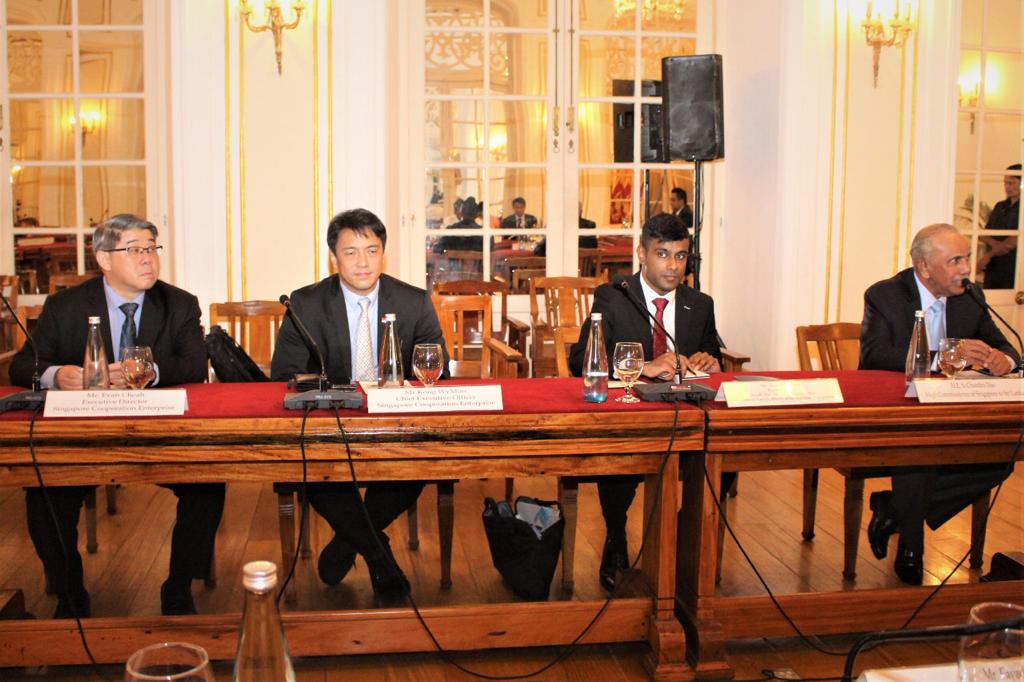
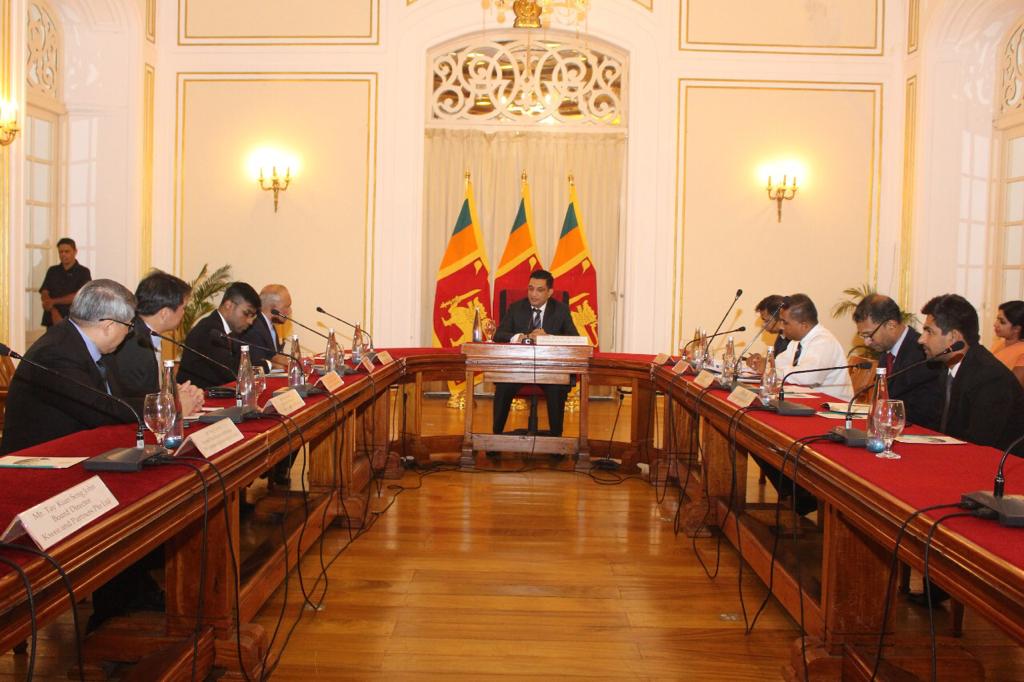
Sri Lanka to implement much delayed SL –Singapore FTA immediately
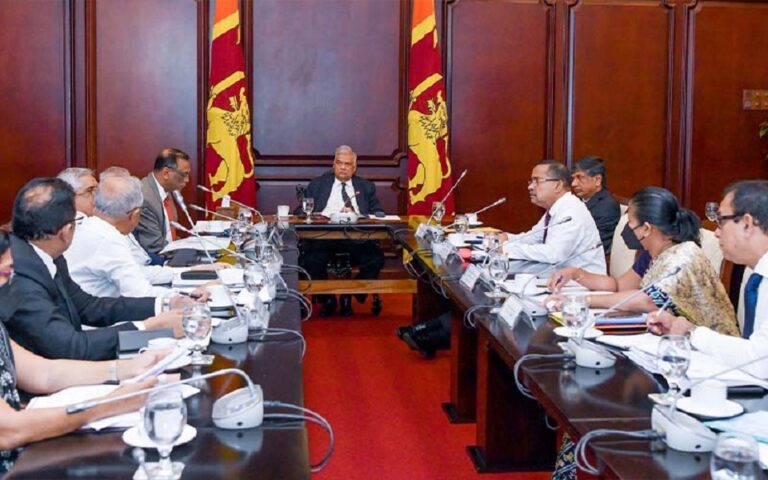
In an urgent priority move Government is set to implement the Singapore – Sri Lanka Free Trade Agreement (FTA) as soon as possible according highest priority to this task while expediting necessary official procedure towards this end, Presidential secretariat announced.
President Ranil Wickremesinghe instructed the relevant officials to implement the Singapore – Sri Lanka Free Trade Agreement (FTA) immediately.
The President issued these instructions during the discussion held at the Presidential Secretariat this morning (16) with a group of high officials on the implementation of the Free Trade Agreement.
President’s Secretary Mr. Saman Ekanayake, Senior Economic Advisor to the President Dr. R.H.S.Samaratunga, Attorney General Sanjaya Rajaratnam, Secretary to the Ministry of Trade, Commerce and Food Security S.T. Kodikara, and Heads of Line institutions were present at this discussion.
The existing problems in this regard were discussed at length and the President highlighted the need to provide quick solutions to all the existing problems.
The free trade pact signed in January 2018 was suspended because of objections from Sri Lankan opposition parties and professional bodies. Sri Lanka proposed more than a dozen amendments in May 2021 but talks have largely stalled.
President Ranil Wickremesinghe met with the Prime Minister of Singapore Lee Hsien Loong in Tokyo recently and their talks focused on the implentaion of the FTA SOON.
During the discussions President Wickremesinghe informed the Singaporean Prime Minister that an international trade office was being established in the President’s office. He also explained that his priority was to bring into effect the Free Trade Agreement with Singapore.
Prime Minister Lee Hsien Loong welcomed the news, and stated that Singapore was looking forward to investing in Sri Lanka once again.
.At that time of signing IN 2018 ,Sri Lanka was Singapore’s 36th-largest trading partner, according to Singapore’s Ministry of Trade and Industry, with bilateral trade amounting to Rs 352.4bn (US $2.2bn) in 2017.
This involved approximately RS326.3bn ($2.1bn) in exports from Singapore to Sri Lanka, with trade the other way registering around RS 23.2bn ($146.1m).
The agreement is the first comprehensive trade pact the government has signed beyond goods, covering services, investment, sanitary and phytosanitary measures, technical barriers to trade, trade remedies, dispute settlement, Customs cooperation, government procurement, e-commerce and intellectual property rights.
The SLSFTA is additionally important because it is part of the government’s broader push to “look east” in building new trade ties and reducing the country’s dependence on EU and US export markets. For Sri Lanka, the SLSFTA promised more investment, with government officials saying that it would further open trade and boost manufacturing and services.
Covering far more than Sri Lanka’s existing deals with India and Pakistan, the SLSFTA is forecast to eliminate tariffs on around 80% of Singapore’s exports over a 15-year period, while also allowing Singaporean companies to bid for projects run by Sri Lanka’s government and state-owned enterprises.
Further cementing ties between the two nations, the Singapore International Arbitration Centre was listed as the go-to institution for any disputes between investors and state authorities.
INDIA’S G20 PRESIDENCY – LAUNCH OF LOGO AND THEME
The Prime Minister of India Shri Narendra Modi is participating in the ongoing 17th G20 Summit meeting being held in Bali, Indonesia. Prime Minister addressed the food and energy security session today. He will also attend other key sessions on digital transformation and health. At the closing ceremony of the summit, President of Indonesia will hand over the G20 Presidency to the Prime Minister of India. India will officially assume the G20 Presidency from December 01, 2022 which will continue till November 30, 2023.
2. On November 08, 2022, Prime Minister launched the logo, theme, and website of India’s G20 Presidency. The theme of G20 Presidency “Vasudhaiva Kutumbakam” or “One Earth One Family One Future”- is drawn from the ancient Sanskrit text of the Maha Upanishad. The theme affirms the value of all life – human, animal, plant, and microorganisms – and their interconnectedness on the planet Earth and in the wider universe. It also spotlights LiFE (Lifestyle for Environment), with its associated, environmentally sustainable and responsible choices, both at the level of individual lifestyles as well as national development, leading to globally transformative actions resulting in a cleaner, greener and bluer future.
3. The G20 Logo draws inspiration from the vibrant colours of India’s national flag – saffron, white and green, and blue. It juxtaposes planet Earth with the lotus, India’s national flower that reflects growth amid challenges. The Earth reflects India’s pro-planet approach to life, one in perfect harmony with nature. Below the G20 logo is the word “Bharat”, written in the Devanagari script.
4. The logo and the theme together convey in clear and powerful terms the central focus of India’s G20 Presidency. The uniquely Indian approach to G20 Presidency will highlight living in harmony with the surrounding ecosystem and strive for just and equitable growth for all in the world, in a sustainable, holistic, responsible, and inclusive manner, as we navigate through these turbulent times.
5. The G20 Presidency offers an opportunity to India to contribute to the global agenda on pressing issues of international importance. For India, the G20 Presidency also marks the beginning of “Amritkaal”, the 25-year period beginning from the 75th anniversary of its Independence on 15 August 2022, leading up to the centenary of its Independence in 2047, towards a futuristic, prosperous, inclusive and developed society, distinguished by a human-centric approach at its core.
6. During the course of its G20 Presidency, India will hold about 200 meetings in 32 different sectors in multiple locations across India. The G20 Leaders’ Summit will be held in New Delhi on September 9-10, 2023. Bangladesh, Egypt, Mauritius, Netherlands, Nigeria, Oman, Singapore, Spain and the UAE will be invited as “guest countries”.
***
Colombo
November 15, 2022
SL Government burdened with unpaid bills of around Rs. 200 billion
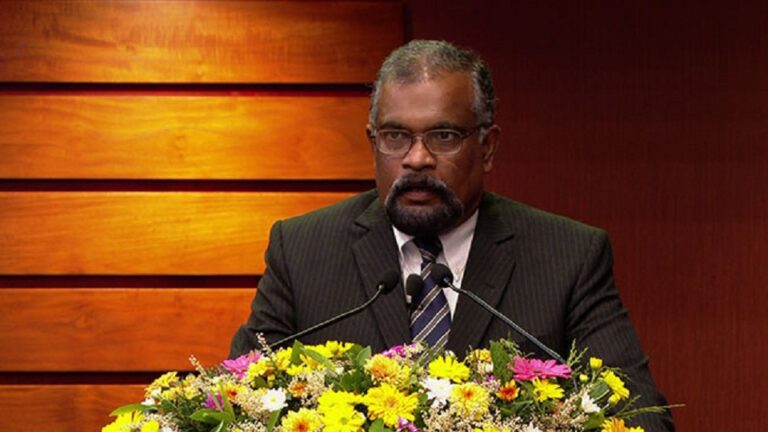
The government is compelled to settle unpaid bills of about Rs. 200 billion, mainly to the construction and various other institutions, says the Secretary to the Ministry of Finance Mahinda Siriwardana.
Finace Ministry is taking prompt action to pay the money owed to the public construction contractors in several phases, official sources said.
Accordingly, before the end of this year, an amount of Rs 20 billion rupees is expected to be disbursed and the government is currently working to pay all the remaining arrears in the first quarter of next year.
Sri Lankan government construction contractors numbering around 3000 are in an urgent need of funding for their survival as they have to recover Rs. 150 billion outstanding payment for the work completed in public construction projects including buildings and infrastructure facilities.
Mr Siriwardana stated that the government has come up with revenue and tax policies because the government is unable to pay those bills.
The Treasury Secretary disclosed these details s while speaking during a post-budget seminar on the 2023 budget, under the theme “Dissecting the Budget 2023”, at the Central Bank in Colombo yesterday (15).
“On day-to-day operations when you are maintaining the cash flow, I see how difficult it is. Because your revenue is not sufficient even to pay for your essential items like the salaries, wages, maybe subsidies and all sorts of things.”
“And as a result, I have indicated this earlier also, we have unpaid bills of about Rs. 200 billion and mainly those are to the construction and various other institutions. And as a result, I know the pain that these specific sectors are going through,” he said.
“But unfortunately the government is not in a position to pay those things. “However, he said that at the same time while paying all these essential items, the government has to manage the other things as well. “And at the same time, we have to contribute to the strengthening of stabilization process as well.”
The Finance Secretary said that the reduction of expenditure is again not an easy task. “That is where the government has come up with revenue policies and tax policies to increase the government revenue.”
“So you have to maintain the public sector and you have to continue the government machinery and at the same time you have to contribute the stabilization. So you have to maintain a balance between these two,” he added.
Siriwardana also said that stabilizing the economy remained a challenge and the private sector must perform its role in aiding the government in pulling the economy out of crisis.
He said the government was setting up a Presidential Committee to monitor and ensure timely implementation of budget proposals.
Sri Lanka Entrepreneurs to get insights on Transform Ideas into Action
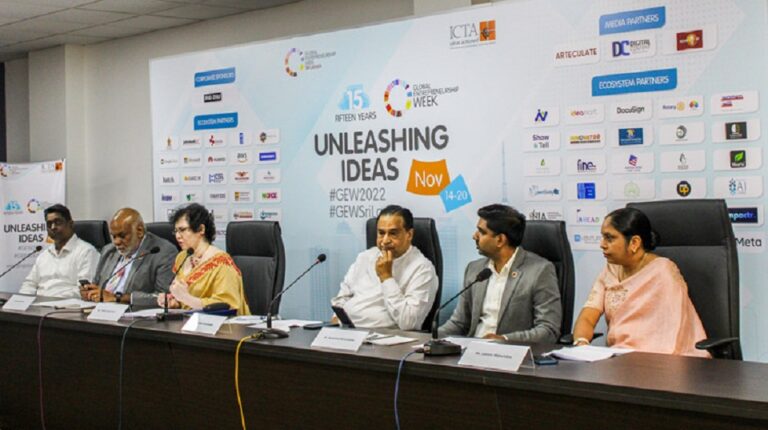
The Information and Communication Technology Agency (ICTA) of Sri Lanka and partner organizations will mark Global Entrepreneurship Week (GEW) from 14th -20th November 2022.
Over eighty events will be organized by fifty ecosystem enablers covering four themes; ecosystems, education, inclusion, and policy. In addition, a series of events will take place across the country to celebrate and empower entrepreneurs as a driving force in the economy.
Speaking at the launch. Acting Managing Director Global Entrepreneurship Network Sri Lank Suresh de Mel stated, “this November, Global Entrepreneurship Network will celebrate 15 years of helping millions of people unleash their ideas to start and scale new businesses through GEW.
The campaign began in 2008 with an emphasis on inspiring young people to make their mark and has quickly grown to become a comprehensive effort that engages entrepreneurs, investors, policymakers, researchers, support organizations and others collaborating to advance economic growth and innovation in more than 180+ countries around the world.,
GEW is an international movement dedicated to making it possible for anyone, anywhere to start and scale a company. It is an ideal platform for all aspiring individuals or institutions to connect, understand, support, and celebrate entrepreneurs globally”.
Throughout the GEW, informative and engaging discussions will take place to encourage entrepreneurs, stimulate economic expansion, and improve the welfare of individuals.
Apart from entrepreneurs, there will be activities for school students, university students, regional startup hubs and enablers, and aspiring entrepreneurs. Initiatives during the week include Bootcamps, Career Guidance sessions, entrepreneurs’ fair, virtual panel discussions, hackathons, and workshops.
In addition, topics such as ‘Challenge the Conventions’, ‘Pathways to Entrepreneurship in Japan, ‘Digital SME 101’, ‘Coding for Girls’, ‘Suhuruliya #SheMeansBusiness’, ‘Entrepreneurship policies and challenges in Digital Era’, ‘Bug Hunter Freelancer programs’, and ‘Investor Pitching’ will be covered through the activities.
Associate Chief Digital Economy Officer, ICTA, Sachindra Samararathne stated, “through the engagement of GEW, we hope to celebrate the entrepreneur journey, connect the support ecosystem with entrepreneurs and encourage budding entrepreneurs to start their venture contributing to the economic growth of our Country ”.
Secretary Ministry of Industries, Ms. Thilaka Jayasundara, stated, “as the key Ministry responsible for promoting industrial development in the country within the wide policy framework of the government, we believe entrepreneurs play a key role in driving the economy of the nation”.
Ms. Lakmini Wijesundara, Co-founder and Executive Director at IronOne Technologies & BoardPAC, shared her insights on how entrepreneurs should rise amidst challenges, especially in the context of female entrepreneurs in Sri Lanka, and discussed the immense potential the path of entrepreneurship offered for females.
The line up of activities coinciding with Global Entrepreneurship Week is made possible by the generous support of corporate sponsor Bug Zero, media partners, Digital Content (Private) Limited, Arteculate, and MTV News First, along with many ecosystem enablers.