Home Blog Page 1959

SLPP issues a press release regarding Gotabhaya’s resignation

0

The Sri Lanka Podujana Peramuna has issued a press release regarding Gotabaya Rajapaksa’s resignation from the presidency.

The announcement is below.

RW prepares to swear-in as the new President

0

The resignation of Gotabaya Rajapaksa has now been officially announced and due to this the position of the executive president of the country has become vacant.

It is reported that Prime Minister Ranil Wickremesinghe, who served as the acting president until now, is ready to take oath as the new president. He will soon be sworn in as the President before the Chief Justice.

Parliament to convene tomorrow for the process of appointing a new president

0

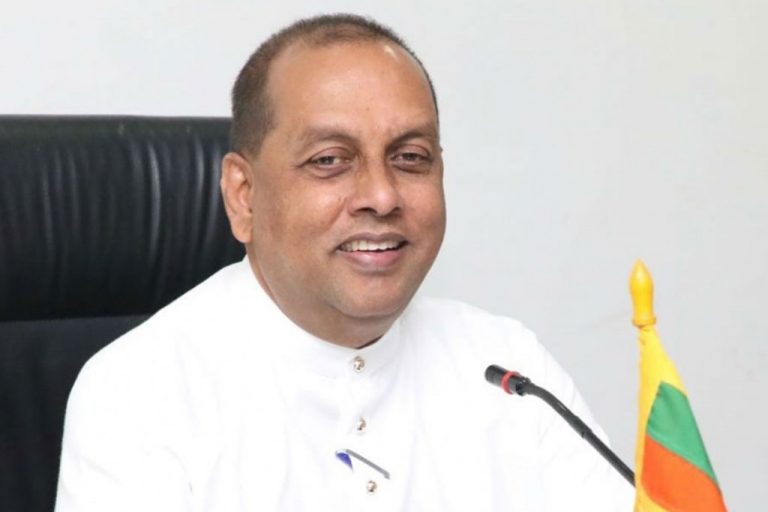
Speaker Mahinda Yapa Abeywardena says that Parliament will convene tomorrow (16) to start the constitutional process to appoint a new President.

Accordingly, he said that all members of parliament are requested to participate in the parliamentary meeting tomorrow.

When a President resigns, the Speaker must summon the Parliament within three days and notify the same and call for nominations to elect a new President through the Parliament.

Acceptance of nominations should be done within two days and voting in Parliament should be held within two days of acceptance of nominations.

Threads on Threads: An exhibition on textile heritage in Sri Lanka, 

0

PRESS RELEASE

South Asia and Europe

COLOMBO (11 July 2022): The European Union (EU) Delegation in Sri Lanka and the Maldives together with the Threads of History Museum presents “Threads on Threads: an exhibition on the textile heritage in Sri Lanka, South Asia and Europe”. The two-week exhibition is an initiative of the EU Cultural Heritage Series. 

Curated by Deshika Van Haght, the exhibition currently underway at Barefoot Gallery, with free walk-in entrance, primarily features Somanas and Chintz textiles, their making and their trade. The exhibition showcases the long standing trade relationship between Sri Lanka, South Asia and Europe.

EU ambassador to Sri Lanka and the Maldives, Denis Chaibi, said at the opening of the exhibition “Cultural heritage can be an important vector for peace, reconciliation, mutual understanding, intercultural dialogue and sustainable development. I am therefore happy to open the Threads on Threads exhibition that showcase Sri Lanka’s rich heritage and its linkages with Europe.”

Visitors can experience the history of modern day Sri Lanka’s textile heritage though exhibits consisting of 19th and 20th century fabrics made in Sri Lanka and India as well as European cotton textiles made for the Sri Lankan market, as well as text and high-resolution image panels.

These textiles are part of both the tangible and intangible heritage of Sri Lanka. Indeed, the cultural heritage of textiles does not end with the preservation and collection of costumes and other textiles in museums. It also includes living traditions inherited from past generations. 

The exhibition held from the 9th to 24th of July 2022 is showcased at Barefoot Gallery, 704 Galle Road, Colombo 3, from 10.00 am to 6.00 pm each day.

This will be followed by an international conference co-organised by Lanka Decorative Arts and Threads of History Museum scheduled to take place later this year. It will be a free event with pre-registration required. The conference will see art historians, ethnologists, museum curators, and designers from Sri Lanka, South Asia and Europe debating and discussing history of textiles, their preservation, links and influences, contemporary craftsmanship and the challenges of modern entrepreneurship.

Press contacts:

Le-Anne FERNANDO 

Political, Press and Information Section

Delegation of the European Union to Sri Lanka and the Maldives

Email: [email protected]

Tel: + 94 11 2674413-4

Midnight plane to Malé

0

Sri Lanka’s president flees, leaving the country in chaos

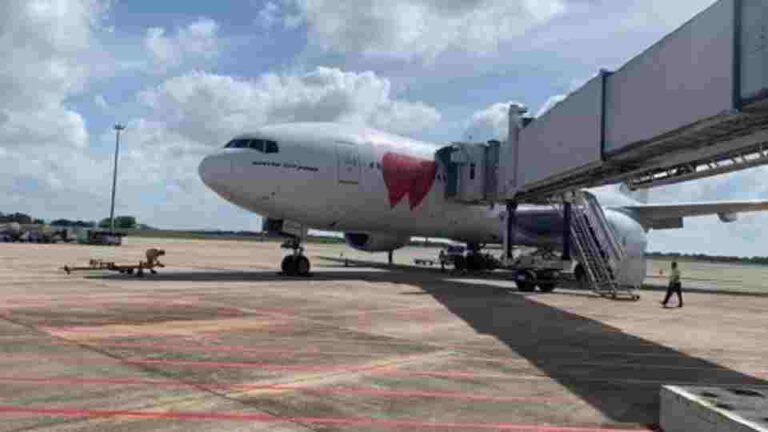
In the end the mighty ex-military man cut a pathetic figure. First Gotabaya Rajapaksa fled the official presidential residence before it was taken over (pictured) by tens of thousands of angry Sri Lankans who had come to Colombo on July 9th to chase him from office. Then he spent days in hiding to avoid their wrath. Finally, in the early hours of July 13th, the disgraced president was spirited out of the country on a military jet. Gota, as he is known, flew to Malé, the capital of the Maldives, though there were rumours that he wanted to travel on to another country. As The Economist went to press on July 14th, journalists in the Maldives were reporting that he was on his way to Singapore

Gota’s departure marks the end of his family’s two-decade domination of politics on the island of 22m people. Most Sri Lankans considered it long past time. But it also leaves the country with a political vacuum. Ranil Wickremesinghe, the prime minister who has taken charge in the president’s absence, is deeply unpopular and tainted by his association with the Rajapaksa clan. Calm seems unlikely to be restored while he remains in post.

The situation is complicated by the president’s unwillingness to relinquish power even from without. Gota used his executive powers to commandeer the plane that took him to the Maldives, and did not resign, or make arrangements for his resignation, before fleeing, presumably to avoid losing his immunity from prosecution. (He has been accused of corruption in presiding over Sri Lanka’s economic collapse and of crimes committed during the country’s 26-year civil war, both of which he denies.) He has not spoken in public since leaving his residence. A promise that he would resign by July 13th was relayed through the speaker of Parliament, a political ally. Mr Wickremesinghe had also promised to resign as prime minister once an agreement to form an all-party interim government was in place.

By the morning of July 14th, no resignations had been forthcoming. The previous afternoon Mr Wickremesinghe, now acting as president, imposed a national curfew. The speaker issued a statement that the president had appointed Mr Wickremesinghe to act in his stead while he was overseas, suggesting that Gota was not in fact planning to step down. Even though the speaker later assured the public that he would, the dithering did not go down well with Sri Lankans. Reports that the prime minister had taken over sparked anger on social media and on the streets. Protesters stormed Mr Wickremesinghe’s office and attempted to take over Parliament. At least one person died and dozens were injured in clashes with security forces, who met the protesters with tear gas and batons.

Later in the day, Mr Wickremesinghe said he had asked the speaker to nominate a prime minister who would be “acceptable” to both government and opposition parties. The new prime minister would lead an all-party interim government to run the country until elections can be held. That government would also manage negotiations on a bail-out with the imf, a matter of utmost urgency if the economy is to get back on its feet. Sri Lanka defaulted on its foreign debt in May. It has no foreign currency to pay for imports, resulting in an acute shortage of fuel, food and medicines. Fuel is being rationed to preserve essential services, and people are waiting days in queues at petrol pumps. There is still not enough to transport food to cities.

Yet the political stability needed to make progress on a deal remains elusive. A meeting of party leaders on July 13th failed to yield an agreement on how to form the new government. Unless the president resigns, Parliament cannot elect a new one on July 20th, as had been announced earlier in the week. The old guard’s insistence on clinging to power is radicalising the protest movement, where leftist former militants are becoming worryingly dominant. The Bar Association of Sri Lanka, which supports the protesters, called on them to respect the rule of law and stop their attacks on government buildings, warning of “lawlessness and anarchy”. Unless the impasse is resolved soon, that is what Mr Wickremesinghe may find himself presiding over.

This article appeared in the Asia section of the print edition under the headline “Gota goes”

THE ECONOMIST

Ruwan Wijewardena to be appointed as a Member of Parliament

0

It is reported that UNP Deputy Leader Ruwan Wijewardena is going to be appointed as a Member of Parliament.

According to sources, the appointment will be made next week after Mr. Ranil Wickramasinghe is sworn in as Acting President.

Dinesh Gunawardena to become the next PM?

0

Acting President Ranil Wickremesinghe had informed Speaker Mahinda Yapa Abeywardena to propose a person for the post of Prime Minister who both the ruling party and the opposition agree to form an all-party government.

According to political sources, Dinesh Gunawardena’s name will be suggested for that.

It is stated that this proposal will be presented because the Sri Lanka Podujana Peramuna has the majority power in the Parliament and a person who can work together with Ranil Wickramasinghe should become the Prime Minister.

Dinesh Gunawardena is an oldest friend who studied together at the Royal College of Colombo with Ranil Wickramasinghe.

An announcement from the President’s Office on the resignation letter circulating on social media

0

The President’s Office announces that the letter circulating on social media as the resignation letter of Gotabhaya Rajapaksa is fake.

RW to be sworn in as temporary President of SL tomorrow!

0

Ranil Wickremesinghe is set to be sworn in as the temporary President of Sri Lanka tomorrow morning. His swearing in is expected to take place after receiving President Gotabaya Rajapaksa’s letter of resignation confirming his official stepping down.

Despite reports on Rajapaksa’s willingness to step down from his position as the Head of State, no official declaration has been made to date.

MIAP

Singaporean authorities say they have no intention of providing security to Rajapaksa

0

Gotabaya Rajapaksa the Sri Lankan President arrived in Singapore for a private tour, said the Foreign Ministry of the Great Merlin’s Land.

Issuing a statement, the Singaporean Foreign Ministry emphasised that Rajapaksa made no request to provide him security, nor does the Singaporean government intend to provide him so.

Singapore does not approve of requests for asylum, it added.

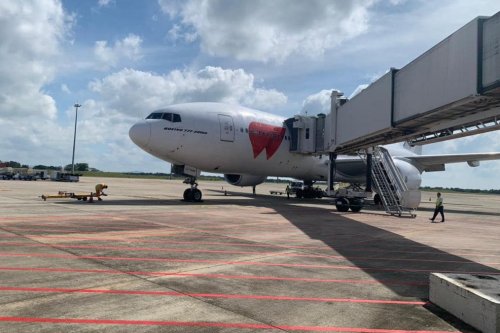
Following the historic uprising of the citizens of Sri Lanka against the President and the regime, Rajapaksa fled to Maldives and flew to Singapore thereafter on a VA788 flight belonging to Saudi Airlines. He is believed to leave for Saudi Arabia later.

MIAP