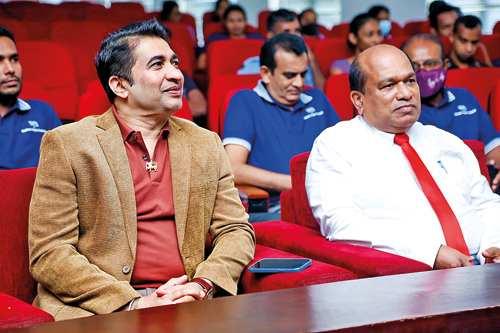
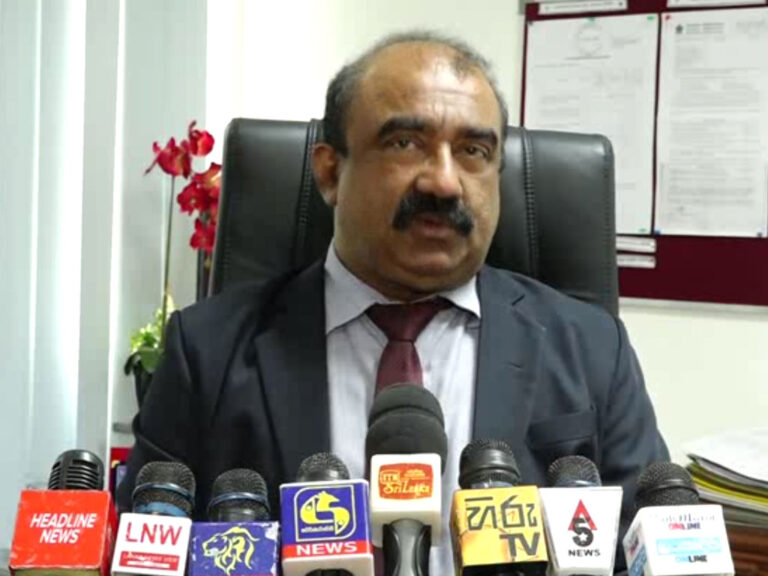
Borelle Sirisumana Thero, a Buddhist Monk whose name not very long ago swarmed across Social Media making headlines due to his self-proclamation of being a disciple possessing ‘a higher self’ (margaphala) in the path to ‘enlightenment’, has been arrested by the Criminal Investigation Department (CID) in connection with the probe into Thilini Priyamali.
According to Police Spokesman Nihal Thalduwa, the Thera was arrested based on findings of the probe into Priyamali, a businesswoman who was arrested in connection with a grand financial scandal.
Conservationists have welcomed an announcement by MSC, the world’s biggest container shipping line, that its ships will detour around a key feeding and nursing ground for blue whales off Sri Lanka’s southern coast.
Ship strikes are a leading cause of death for the large whales that frequent the waters around Sri Lanka, which also include to a lesser extent sperm whales and Bryde’s whales.
Marine conservationist Asha de Vos says other shipping lines should follow MSC’s lead, and has also called on the Sri Lankan government to propose making the shipping lane change permanent.
She also says whale deaths from ship strikes may be up to 10 times higher than recorded, given that current and wind conditions are more likely to wash carcasses out to sea than toward shore, making them less likely to be detected.
COLOMBO — When some of the biggest machines ever made meet the largest animals to ever live, it often doesn’t work out well for the latter. In March 2012, a container ship sailed into the port of Colombo, Sri Lanka, with the body of a blue whale snagged across its bow. Less than two weeks later, another blue whale carcass was found floating off the country’s southern coast, its tail almost severed in what could only have been a ship strike.
The waters off southern Sri Lanka are a rich feeding and nursing area for blue whales (Balaenoptera musculus). But they’re also an important shipping lane, which makes them a “collision hotspot,” according to Ranil Nanayakkara from the conservation outfit Biodiversity Education and Research (BEAR).
That could be about to change, however, thanks to an announcement in September by the Mediterranean Shipping Company, the world’s biggest container carrier, that it has begun ordering its ships to skirt the area and slow down. The new course runs 15 nautical miles (28 kilometers) further south, and the vessels will slow to a speed of 10 knots (18.5 km/h), MSC said in a statement.
A whale swims close to a whale-watching boat. Image courtesy of Ranil Nanayakkara.
The figure of 15 nautical miles is what experts have previously recommended. A 2015 study showed that this detour would slash the risk of blue whales being hit by ships by 95%.
That would be a huge win for the species, according to Nanayakkara, whose own study in 2017 showed that nearly half of all large whale deaths recorded in Sri Lankan water were from ship strikes. The study documented 14 such deaths between 2010 and 2014, after investigating more than 30 whale carcasses that washed up on beaches. These consisted of nine blue whales, two sperm whales (Physeter macrocephalus), one Bryde’s whale (Balaenoptera brydei), one Cuvier’s beaked whale (Ziphius cavirostris) and two unidentified baleen whales.
All 14 were assessed as victims of collision based on external or internal injuries, Nanayakkara told Mongabay.
A blue whale. Image courtesy of Oceanswell.
Bid for permanent shipping lane change
Asha de Vos, a marine biologist with the conservation and research outfit Oceanswell, who has studied the blue whales off southern Sri Lanka for more than a decade, has long campaigned for getting the shipping lane shifted permanently. She said MSC’s announcement marks a step in the right direction.
“We welcome the voluntary shifting of the MSC shipping [lane] but want the government to make the adjustment permanently,” de Vos told Mongabay, adding that other shipping lines should also follow MSC’s lead.
De Vos has also raised the issue with the International Whaling Commission. “In 2016, the IWC Scientific Committee agreed that the combined results of studies would support a proposal to the International Maritime Organization to move the shipping lanes should Sri Lanka wish to do so, but the Sri Lankan Government should initiate the process,” she said.
The IMO confirmed separately that Sri Lanka has not yet made a formal proposal to reroute the sea lane.
For the Sri Lankan government, currently mired in the worst economic crisis in the country’s history, keeping the sea lane where it is, about 5 nautical miles (9 km) off the whale-watching port of Mirissa, is an economic decision.
A whale dives near a busy shipping lane off southern Sri Lanka. Image courtesy of Oceanswell.
Maritime expert Ayesh Ranawaka said sending ships on a detour would have an immediate economic impact. The prospect of ships having to sail a longer distance will make it less likely that they will choose to dock in Sri Lanka for refueling and other services, he told Mongabay. And the revenue that ports like Hambantota would be missing out on wouldn’t be compensated for by the growth of the whale-watching industry in Mirissa, Ranawaka said.
He said there are other ways to prevent ship strikes, such as marking out on maritime charts the areas where whales are likely to occur, which would give crews time to slow down. Ranawaka also suggested the use of acoustic deterrent devices to keep whales away from ships, noting their use in other countries.
A blue whale lies dead, snagged on the bow of the CMA CGM Quartz container ship at the port of Colombo in March 2012. Image courtesy by Sopaka Karunasundara.
’10 times higher than observed’
The first formally documented ship strike in Sri Lanka was that of a sperm whale that washed ashore in Mannar district, on the island’s northwest coast, in 1889. But it wasn’t until 2004, when a container ship docked at the Colombo port with a Bryde’s whale draped across its bow, that most Sri Lankans became aware of this specific threat to the whales, Nanayakkara said.
Getting detailed records of whale-vessel collisions is difficult for several reasons. Crews often aren’t aware when their ship hits a whale, and when they are, they don’t always report it. Whales in Sri Lankan waters typically make short, shallow dives and spend a relatively high proportion of their time feeding, socializing and resting at the surface, making them more susceptible to ship strikes, Nanayakkara said.
The 15-nautical-mile (28-kilometer) detour that MSC has ordered its ships to take to avoid the areas frequented by whales. Image courtesy of the Mediterranean Shipping Company.
De Vos said the true scale of whale deaths is likely higher than what’s been documented.
“Vessel strike mortality in baleen whales may be 10 times higher than observed, as it is expected that most struck individuals go undetected and/or sink offshore without being documented,” she said. “For much of the year, surface currents and offshore winds are also likely to carry floating carcasses offshore [away from] southern Sri Lanka. This leaves a big chance that many carcasses go undetected.”
Citations:
Priyadarshana, T., Randage, S. M., Alling, A., Calderan, S., Gordon, J., Leaper, R., & Porter, L. (2016). Distribution patterns of blue whale (Balaenoptera musculus) and shipping off southern Sri Lanka. Regional Studies in Marine Science, 3, 181-188. doi:10.1016/j.rsma.2015.08.002
Nanayakkara, R. P., & Herath, H. M. (2017). Report on 14 large whales that died due to ship strikes off the coast of Sri Lanka, 2010-2014. Journal of Marine Biology, 2017, 1-7. doi:10.1155/2017/6235398
The State-Owned Enterprises Restructuring Unit, established under the Ministry of Finance will be assigned to study the methodology of restructuring the national carrier SriLankan Airlines and make recommendations to the Cabinet of Ministers.
This action has been taken following a revelation made by President Ranil Wickremasunghe that the Government was looking at raising $ 3-4 billion via sale of certain State-Owned Enterprises (SOEs) to boost foreign reserves.
He told the AGM of the Sri Lanka Tea Factory Owners Association on Sunday that a big public sector did not help Sri Lanka to grow fast, and the Government was looking at restructuring SOEs. .
The new unit, established under the Ministry of Finance, Economic Stabilization & National Policies, will be assigned to study the methodology of restructuring the national carrier SriLankan Airlines and make recommendations to the Cabinet of Ministers, the government said .
At its meeting held on Monday (Oct. 31), the Cabinet of Ministers decided to handover the responsibility of studying the methodology of restructuring SriLankan Airlines and making recommendations to the said unit.
The decision was reached after taking into consideration the resolutions furnished by the Minister of Port, Shipping & Aviation.
The government stated that it has recognized the need to restructure SriLankan Airlines and its subsidiary companies by handing over a considerable amount of shares and the management of the entity of SriLankan Airlines to investors selected through a transparent procurement process.
In an attempt to improve the overall performance of the State Owned Enterprises (SOEs), action has been taken to towards the establishment of a new unit to restructure troubled Government-operated agencies.
The move was an immediate realization of a proposal from the recently approved mini-Budget, for which the Government allocated a total of Rs. 200 million for the implementation of it.
It was proposed to re-activate the Statement of Corporate Intent (SCI) process for 50 key SOEs, excluding the Ceylon Electricity Board (CEB), the Ceylon Petroleum Corporation (CPC), and the national carrier— SriLankan Airlines, as they are under different efforts to restructure to closely monitor the set targets.
The objective of the new unit is to help to identify ways to reduce the financial burden on the Treasury and to provide necessary guidance and support in the restructuring process of the SOEs.
“The performance of State-owned commercial enterprises has not been satisfactory for a long time and some SOEs are incurring losses due to various reasons,” a statement of weekly Cabinet Decisions issued by the Government Information Department noted.
It also added that this situation has led to severe pressure on the Treasury, and thus an alternative mechanism should be introduced for the efficient and effective functioning of Government-operated businesses
The government is taking prompt action to pay the money owed to the public construction contractors in several phases Minister of Urban Development and Housing, Prasanna Ranatunga revealed.
Accordingly, before the end of this year, an amount of 20 billion rupees is expected to be given for that purpose. Mr. Ranatunga also says that the government is currently working to pay all the remaining arrears in the first quarter of next year.
In addition, a committee headed by the Secretary of the Ministry of Urban Development and Housing has also been appointed to look into the possibility of providing concessions to those in the construction industry. The Minister also said that the committee will meet soon and discuss the future measures at length.
Sri Lankan government construction contractors numbering around 3000 are in an urgent need of funding for their survival as they have to recover Rs. 150 billion outstanding payment for the work completed in public construction projects including buildings and infrastructure facilities.
This has resulted in widespread unemployment at present due to closing down of small and medium scale construction companies and if the delay in outstanding payments continues, it could affect the livelihoods of about 1.2 million people in the sector, Ministry of Housing and Development sources said.
President Ranil Wickremesinghe in his capacity as the Finance Minister has directed the Department of Treasury Operations to explore the possibility of making a payment of Rs.50 billion considering the dire straits of government contractors.
The Ministry has already suspended the development project work and the repayment of dues to contractors but it is making arrangements to pay at least Rs. 20 billion out of the total amount to them by the end of this year in accordance with cash availability, a senior Treasury official disclosed.
It is also considering releasing at least Rs. 500 million from the outstanding payments to the Provincial and District level projects, to provide some relief to small- and medium-scale construction companies.
The Ministry is to formally request for funding from the Central Bank by raising the relevant cash through Treasury bills and Treasury bonds to meet any urgent financial requirements, he said.
Some of these contractors have obtained loans by mortgaging their house and property to carry out the construction work and they are now in danger of losing their homes and assets to banks, several contractors complained.
In addition, the fuel shortages and power outages have affected the efficient production process of the industry, affecting all the stakeholders, from small and medium enterprises to the self-employed.
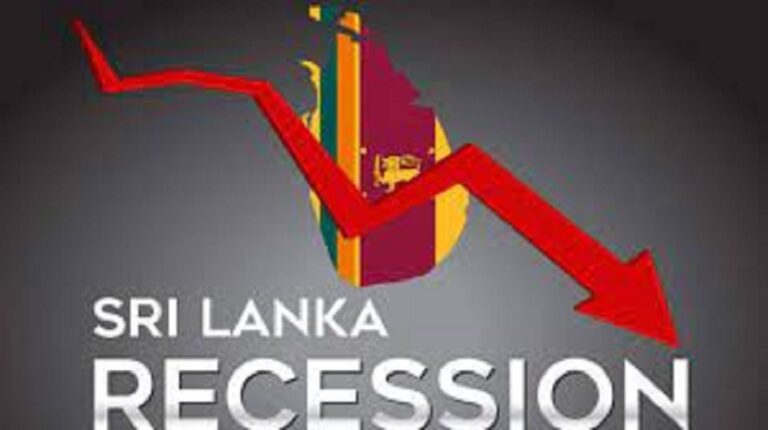
The overall rate of inflation as measured by the Colombo Consumer Price Index (CCPI) in October saw its point-to-point decreasing for the first time in 13 months to 66.0% against its previous month of 69.8% while its annualized average increased to 38.3% against 33.4%. Department of Census and Statistics announced.
This was an about turn in October, bringing an end to the current spell of runaway inflation, which set off more than a year ago when the global commodities prices started rising, caused by the surge in demand amid the supply chain bottlenecks and emergence of foreign currency shortages in the domestic market, economic analysts said.
The core inflation (Y-o-Y), which reflects the underlying inflation in the economy decreased to 49.7% in October 2022 from 50.2% in September 2022, while annual average core inflation increased to 27.8% in October 2022 from 24.1% in September 2022.
According to the Department of Census and Statistics, the Year on Year inflation of Food Group decreased to 85.6% in October 2022 from 94.9% in September 2022 and the Year on Year inflation of Non-Food Group also decreased to 56.3% in October 2022 from 57.6% in September 2022.
However, the current cost of living is not even nearly eased to some extent , as the country is still grappling with the runaway prices and its job will only be completed when the annual increase in inflation is brought down to its desired level of between 4 to 6 percent, which is expected to happen in 2024.
While the October inflation may have come as somewhat a consolation, it is unlikely to compel it to take its foot off the monetary brakes for some time until the evidence shows that the price decline is durable and comes down meaningfully towards its desired levels.
In the run up to the October inflation print, there were signs that the prices might have peaked in September, as the monthly prices, particularly in the food basket, showed some cooling.
The inflation measured by the Colombo Consumer Price Index, the authorities’ preferred inflation gauge, rose 66 percent in October from a year ago, from 69.8 percent through September, after the Central Bank raised the interest rates to sky high levels early this year, in its relentless pursuit to tame the prices through demand destruction policies.
The overall consumer prices declined 0.4 percent in October from a month earlier while the food prices also fell by 2.0 percent after decelerating for three consecutive months.
However, the annual food prices are still at hyperinflationary levels, with such prices having soared by 85.6 percent, coming off a peak of 94.9 percent reached in September, which caused a large majority to significantly cut down on their food intake while pushing the poor and vulnerable into starvation.
The earnings reports of companies for the September quarter showed a broad base softening in demand, due to the escalated cost of living and deep economic downturn.
However, in the last few weeks, there was some easing in the prices of certain essential goods, after the foreign currency conditions in the domestic market improved somewhat, enabling imports and the significantly dampened demand.
However, the prices still remain manifolds higher than where they were a year ago, after the rupee collapsed, shedding nearly 100 percent of its value
While aiming to reach a Free Trade Agreement with the European Union (EU), the Sri Lanka Government will strive to join the Organisation of African, Caribbean, and Pacific States (OACPS).
This was disclosed by Sri Lanka’s Presidential Envoy to Europe and the Commonwealth Niranjan de Silva Deva Aditya (Nirj Deva) in Brussels stating that he has started discussions for Sri Lanka to join the Organisation of African, Caribbean, and Pacific States (OACPS).
Nirj Deva, the former EU Parliamentarian and Vice President of the EU Parliament’s Development Committee for 15 years, called on the EU and the Sri Lankan Government to work together to boost ties between the two parties.
As a consequence of these discussions, a Free Trade Agreement (FTA) should and could be reached with the EU to coincide with the EU-India FTA, which has not yet been made public. Nirj Deva stated.
He disclosed that discussions were underway with the European Parliament (EU) about an expanded GSP+ that would include the five extra requirements that the EU wants.
Sri Lanka’s Ambassador to Belgium and the EU, Grace Asirwatham is doing a great job on this, even though she works alone in the Sri Lanka Embassy to our second largest trading partner,” he added.
He said that joining the OACPS has substantial environmental, social, and economic benefits for the country, as it seeks to strengthen ties between the island nation and African and Caribbean states.
Also, if Sri Lanka joins, it will have a better chance of receiving assistance from other organisations, such as the EU.
Formerly known as the African, Caribbean, and Pacific Group of States or ACP, OACPS was established in 1975 via the Georgetown Agreement.
The organisation’s primary goals are sustainable development and poverty reduction among its member nations.
It consists of 79 African, Caribbean, and Pacific governments, all of which, save Cuba, are parties to the Cotonou Agreement, commonly known as the “ACP-EC Partnership Agreement”.
There are 48 Sub-Saharan African nations, 16 Caribbean, and 15 Pacific.
During the discussions, Nirj Deva presented the Sri Lankan President’s report on the effects of a potential global famine and a lack of food and fertilizer on Sri Lanka to 64 of Parliament’s senior MPs, as well as measures to expand trade and investment with Sri Lanka.
To qualify for substantial funding from the UN Green Climate Fund and EU funds, Sri Lanka should request the EU to temporarily classify it as a low-income nation, he claimed.
“Whereas middle or lower middle-income country status, which Sri Lanka attained when her GDP was nearly Rs. 14 trillion and the dollar was Rs. 170, is now unsupportable when the economy has contracted to less than Rs. 11 trillion and the dollar has shot up to nearly Rs. 360, he added.
He said “A strong case should be made to temporarily assign Sri Lanka to Low Income Country (LIC) status when she can qualify for huge amounts of free grants and cheap concessionary loans (banned for middle income countries) including the EU’s Anything but Arms (EBA) free trade agreements which exist for LIC including Bangladesh.
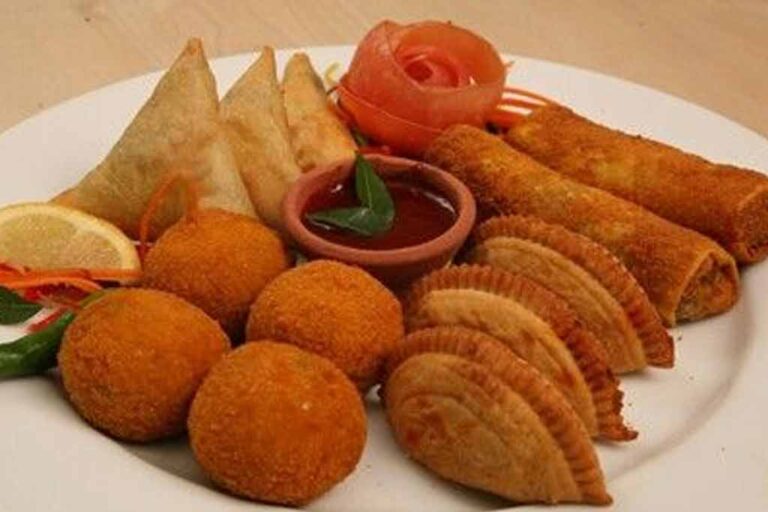
The prices of four types of food will be slashed from midnight today (01) revealed the All Ceylon Restaurant Owners’ Association.
Speaking to media Union President and Consumer Rights Activist Asela Sampath stated that accordingly, the price of Rolls, Parata, Egg Roti and Vegetable Roti will be slashed by Rs. 10.
Meanwhile, a plain tea will be sold for Rs. 30, and a milk tea for Rs. 100, he added.
On 31 October 2022, the Government of Malaysia has contributed medicine valued at RM288,610.00 (approximately Rs. 22.3 million) to the government of the Democratic Socialist Republic of Sri Lanka. The medicine was delivered to Colombo, Sri Lanka via SriLankan Airlines, with the cooperation of the High Commission of the Democratic Socialist Republic of Sri Lanka in Kuala Lumpur.
The consignment consisting of 1,000 vials of Amphotericin B Injection 50 mg to treat potentially life-threatening fungal infections; 20,000 vials of Heparin Injection 25,000 I.U/5 ml to decrease the clotting ability of the blood and help prevent harmful clots from forming in blood vessels; and 10,000 ampoules of Aminophylline 25 ml in 10 ml injection as a treatment of obstructive airway diseases was handed over by the Honourable Khairy Jamaluddin, Minister of Health to His Excellency Air Chief Marshal Sumangala Dias, High Commissioner of the Democratic Socialist Republic of Sri Lanka to Malaysia. The handing over ceremony was held at the Ministry of Health, Putrajaya and was witnessed by senior officials of the Ministry of Foreign Affairs and Ministry of Health.
The contribution symbolises the close relations and friendship between Malaysia and Sri Lanka to assist the latter’s recovery from its current socio-economic crisis. The people of Malaysia are with the people of Sri Lanka during this recovery period and hope that the contribution will assist the government of Sri Lanka in providing essential medical treatment and healthcare for the people of Sri Lanka.
CCPI based headline inflation recorded 66.0 per cent in October 2022, reversing its continued increasing trend observed since October 2021, said the Central Bank of Sri Lanka (CBSL) in a statement.
Headline inflation, as measured by the year-on-year (Y-o-Y) change in the Colombo Consumer Price Index (CCPI, 2013=100) which followed an increasing trend since October 2021, declined to 66.0 per cent in October 2022 from 69.8 per cent in September 2022.
Following a similar trend, the Food inflation (Y-o-Y) decreased to 85.6 per cent in October 2022 from 94.9 per cent in September 2022, while the Non-Food inflation (Y-o-Y) decreased to 56.3 per cent in October 2022 from 57.6 per cent in September 2022.
The change in the CCPI measured on month-on-month basis decreased by 0.35 per cent in October 2022 after seventeen consecutive months. This was mainly contributed by the monthly decrease of the prices of the items in the Food category, which amounted to 0.75 per cent.
Accordingly, within the Food category, significant decreases were observed in prices of Fresh Fish, Dry Fish and Rice. Nevertheless, the Non-food category recorded a monthly increase in October 2022 due to the price increases observed in Communication (Mobile, Fixed Phone and Internet Charges), Clothing and Footwear, Restaurant and Hotels sub-categories during the month.
However, Transport (Petrol and Diesel) sub-category decreased in October 2022 contributing to moderate the overall monthly increase in the Non-food category to a greater extent.