- SLPP General Secretary Sagara Kariyawasam says
SLPP is not in favour of the 22nd Amendment to the Constitution, as certain provisions have been introduced targeting specific persons and not for public benefit: cites example of “disqualifying dual-citizens” from contesting elections being introduced to target former Finance Minister Basil Rajapaksa. - Supreme Court directs petitioners in FR cases on “economic crisis” to add 2 members of the Monetary Board of the CB, Sanjeeva Jayawardena PC and Dr Ranee Jayamaha, as Respondents: reports emerge that the duo received over Rs.2.7 mn each, for attending MB meetings.
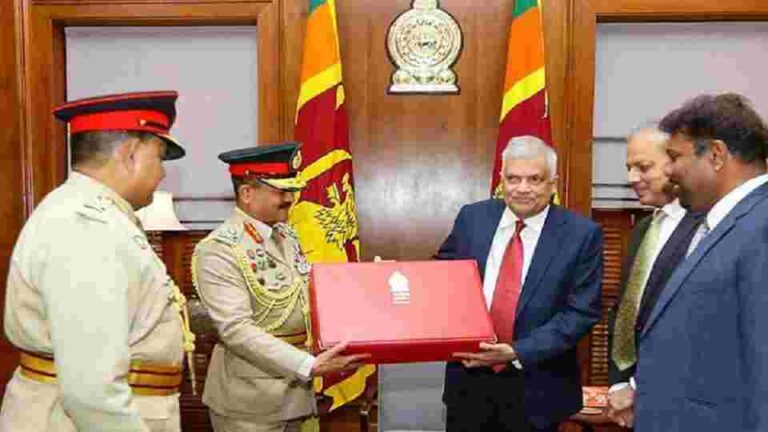
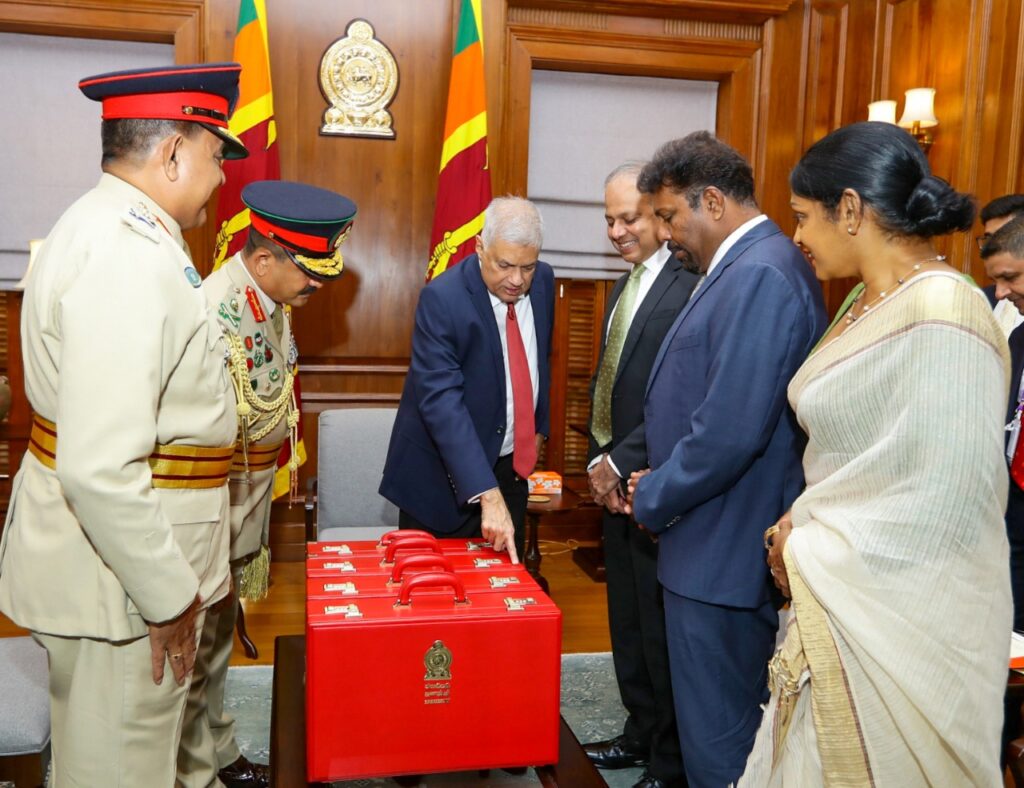
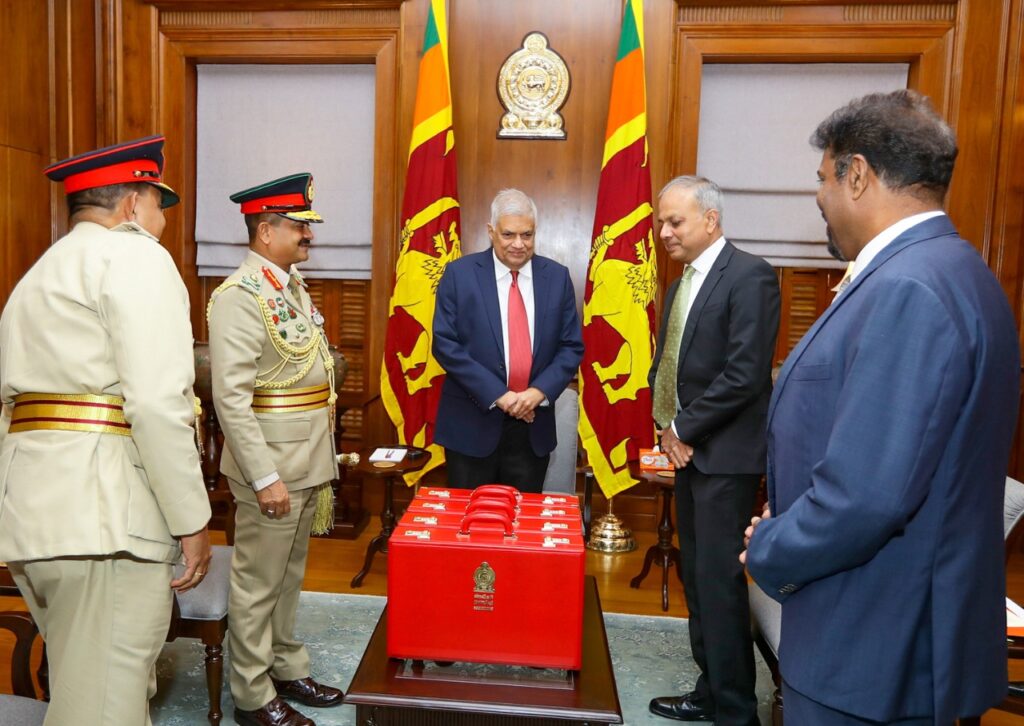
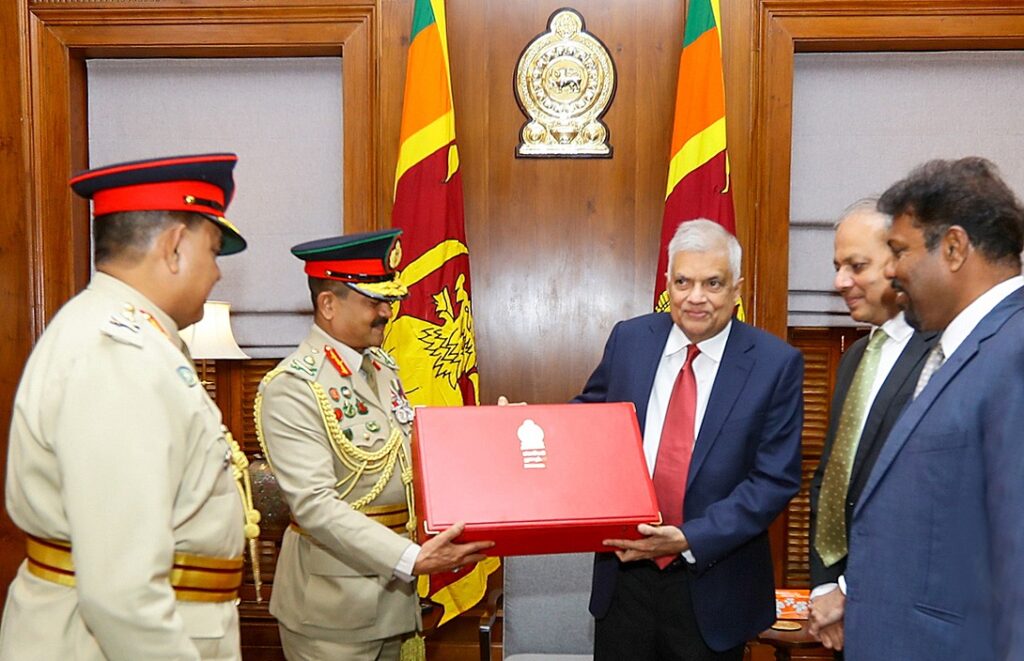
- Leader of the House Minister Susil Premajayanth presents Appropriation Bill for the year 2023: Cabinet also approves increase in Government’s credit limit by another Rs.663 bn.
- Ernst & Young Tax Partner Sulaiman Nishtar says amendments to the Tax Act will end the application of the 3-year concessionary rate of 14% to companies listed at the CSE: accordingly,
the rate will increase to 30% from 1st October 2022. - Energy Minister Kanchana Wijesekera says if any employee or trade union violates the essential services regulations and
disrupts services, they will face immediate legal and disciplinary action. - Cabinet extends doctors’ retirement age by 1 year: allows those who are 60, 61, or 62 years by the year’s end to work till 61, 62 & 63 respectively: those who are 59, to retire by 60.
- Navy re-establishes communication with its 6-crew Vessel engaged in surveillance activities on the Southern seas: it had previously lost contact for 31 days.
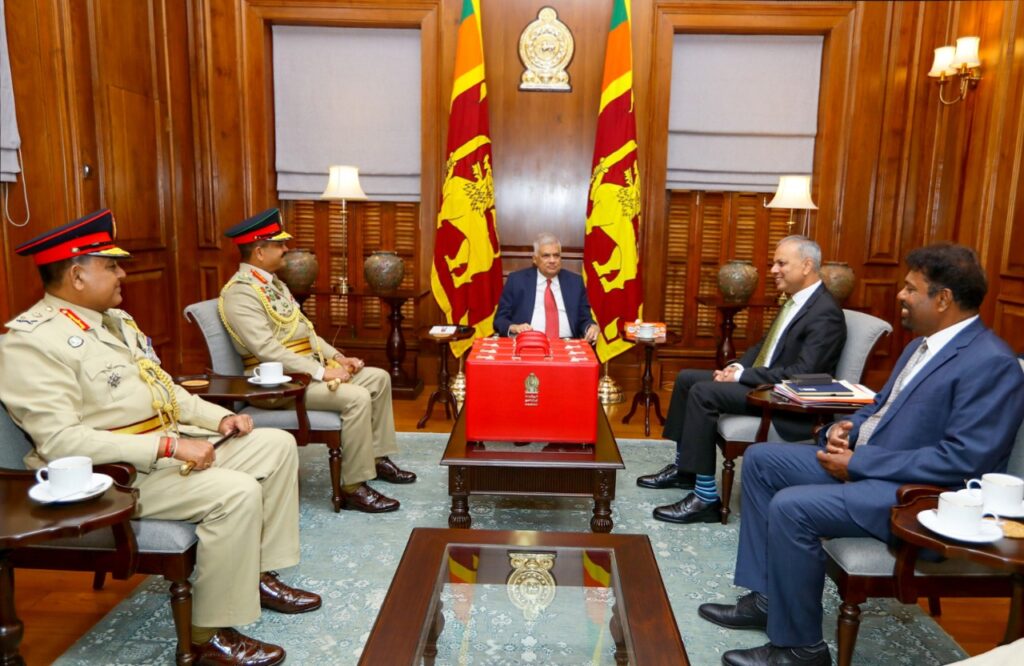
- Cabinet appoints a “Sub-committee on Reconciliation” chaired by the President: objective to promote reconciliation between the “various sections of the population” and propose solutions to the problems re. resettlement, land and missing persons.
- Energy Minister Kanchana Wijesekera says the Electricity Board anticipates a loss of Rs.152 bn in the next 4 months despite tariff increase in August 2022: also says the loss for the first 8 months of 2022 was Rs.108.6 bn: further says the reason for the losses is the delay in imposing “cost-reflective” pricing.
- Sri Lanka beats UAE by 79 runs in the ICC T20 World Cup Group “A” match played in Australia; SL 152/8 (20 overs): UAE 73 all out (17.1 overs): Man of the Match – Pathum Nissanka.
SRI LANKA ORIGINAL NARRATIVE SUMMARY: 19/10
Atamasthana Adhipathi Dr. Pallegama Sirinivasa Thero passes away
Most Venerable Dr. Pallegama Siriniwasa Nayaka Thero, Custodian and Chief Priest of Maha Bodhi, and Atamasthanadhipathi, has passed away at the age of 69.
Siriniwasa Nayaka Thero passed away last night (18th) while receiving treatment at a private hospital in Colombo.
Cremation arrangements will be announced later.
Mandatory retirement of government employees : A Different System for Doctors
The cabinet has decided to provide additional time for doctors’ retirement under the mandatory retirement of government employees who have completed the age of 60 by December 31st.
Cabinet Spokesman, Minister Bandula Gunawardena said that this decision was taken after considering the adverse effects that could be faced by the independent health service in Sri Lanka in a short period of time if a large number of doctors are retired at once.
Accordingly, the following method will be followed.
Retirement of doctors who have completed 63 years of age on 31st December
Retirement of doctors who have completed the age of 62 at the age of 63
Retirement of doctors who have completed the age of 61 at the age of 62
Retirement of doctors who have completed the age of 60 at the age of 61
Retirement of doctors who have reached the age of 59 at the age of 60
The minister stated that the recommended interim measures for the retirement of doctors should end on December 31, 2023, and thereafter other government officials as well as doctors should be retired on reaching the age of 60 years.
Former British junior Tanysha Dissanayake, who played against Emma Raducanu, retires aged 21 due to long Covid
Tanysha Dissanayake was once a promising British tennis player who competed at Wimbledon and played alongside Emma Raducanu at events. But she has been forced to retire from the sport at the age of 21 after being left bedbound by long Covid. Dissanayake last played in the summer of 2021 and has revealed how badly she has been impacted by Covid since.
By James Walker-Roberts
Former British junior Tanysha Dissanayake has retired from tennis at the age of 21 due to the effects of long Covid, saying she feels “a million years away” from being able to play again.
Dissanayake played alongside Emma Raducanu at a third-tier tournament in Sunderland before the Covid-19 pandemic struck in March 2020.
She was close to breaking into the top 1,000 in the world rankings at the time but did not compete again for another year.
On her return to action in 2021 she tested positive for Covid-19 following three weeks of competing in Greece and has been unable to play since.
Her last practice was in October 2021 and she has now announced her retirement.
“It’s been a crazy journey and I’d do it all again if I could but after over a year of being unwell, it is time to move on,” she wrote on Instagram.
“This was the hardest decision I’ve had to make and even harder to accept. I don’t know a life without tennis in it but this sport has taught me so much and I know that great things are in store.”
Dissanayake, whose idol was former world No. 1 Maria Sharapova, said as a junior she had hoped to reach the top 20 in the world and play at all four Grand Slams.
But now she says she doesn’t think she will “ever be fit enough” to return to the court as she has been largely been housebound for the last year.
“Deep down I knew that it would be nearly impossible to get back earlier on this year, but I kind of just wanted to hold on a little longer,” she told the Times.
“I just didn’t want to accept that my career was ending so soon because of Covid, because of a virus so out of my control, but I think eventually I got to a point where I was like, I’m 15 months in, I’m still housebound, still mostly bedbound, unable to do most basic things.
“To get back to playing the sport at a relatively high level day in day out, I don’t think I’ll ever be fit enough for that. But if I am, that’s a million years away.
“When I tried to go back to training, my heart rate shot up to 198 in eight minutes. I had barely even finished the warm-up at that point, and that should never have happened. I think that’s the moment when the gravity of the situation really hit me.”
Among Dissanayake’s career highlights was playing junior doubles at Wimbledon in 2018 against 2021 US Open runner-up Leylah Fernandez.
She also beat Raducanu, who overcame Fernandez in last year’s US Open final, as a junior.
“I’m so grateful that I got the opportunity to play at Wimbledon,” Dissanayake added.
“It was the moment of a lifetime, the moment I’ve been waiting for and training for since I was four or five years old. Just to be there at the front of Centre Court on the grass was a moment I can’t quite describe.
“I do wish I had another chance to be back there but at the same time I am very grateful that I had the opportunity that not so many people in the world get.”
So severely has Dissanayake been impacted by Covid that she now spends most of her time in bed.
“I rarely speak to people because even just the act of keeping up a conversation can take a toll on me the next few days. The act of having a shower is almost like doing a conditioning session for me.
“I haven’t read this year and I’m someone that loves to read and get to know more about different things. It was one of my passions. I love to study, I like my academic side of things, but I can’t read a paragraph. I can’t even finish the leftover doctor’s notes I get. I have to get my mum to read and fill out the doctor’s forms for me because I can’t do it myself.
“Just simple things that I never thought I would struggle with, especially at my age, have just become almost impossible.”
Dissanayake left her house in the summer to go on holiday to Portugal.
She says it took her weeks to prepare and to recover from the trip, for which she required a wheelchair.
“I didn’t leave my house for almost a month before so I can prepare and have enough energy for that trip,” Dissanayake says.
“I only left the villa two or three times despite the restaurants and everything being just around the corner. On top of that it took me three weeks to recover from that trip. That one five-day trip took seven weeks of my life. I didn’t do any moving, I didn’t walk, I didn’t hike, I didn’t do anything crazy and it still took that much.”
Petroleum Special Provisions Act Amendment passed in Parliament with a majority of 60 votes
Petroleum Special Provisions Act Amendment was passed in Parliament with a majority of 60 votes during its second reading today (18).
77 votes were cast in favour of the bill, while 17 votes were cast in objection.
MIAP
PRCA APAC findings shed light to the state of the PR industry in Sri Lanka
ASIA PACIFIC – 12th October, 2022 – The APAC chapter of the Public Relations and Communications Association (PRCA), the world’s largest and influential PR body, carried out a survey during October with the view of understanding and informing on the state of the PR industry in Sri Lanka. The survey was carried out among 33 leaders and senior executives from over local and multinational PR agencies.
97pct of the respondents stated that the PR industry has got competitive over the recent years, with pricing, industry connections and influence playing a key role instead of talent and innovation. 25 out of 33 professionals cited that their clients ‘somewhat’ understand the true potential and impact of PR, and that the pandemic and recent economic events have pushed companies to manage their reputation proactively.
‘The findings give a hint that despite being a niche industry, the PR profession and landscape in the country is poised for exponential growth given that some of the diverse challenges and suggestions are addressed timely. We at PRCA APAC will actively be involved in uplifting the standards together with the agencies and other stakeholders,’ said country representative Thanzyl Thajudeen MPRCA, who curated and led the initiative.
Print topped as the most preferred channel among clients (79pct), followed by online, social media, TV/radio, and others. However, 42pct mentioned their clients citing print PR as not effective at some point with 33pct strongly advocating that print is very much here. When it comes to which channels their agencies promote, online surpassed print slightly by 12pct.
Most of the clients were seen engaging with on-going PR activities, followed by reputation building, brand positioning, crisis response and mitigation, and internal communications. 88pct of those surveyed have been involved or encountered clients requesting crisis response PR strategies with 76pct mentioning internal communications plans.
The challenges their clients were facing include budget cuts (91pct), exchange rates (64pct), import ban (55pct), and retaining talent and finding customers (50pct). Agencies cited client budget cuts (94pct) as the biggest concern faced with the present volatile situation, followed by convincing clients the crucial role PR could play, payment delays, and employee turnover.
However, 67pct cited that proving and justifying ROI and value of PR is the greatest challenge with the need to have more measures, tools and insights in place.
Despite the many challenges and half of the respondents feeling a burnout in their role, the PR industry is very optimistic. 79pct stated that there are many new areas to learn within the discipline, citing that PR is becoming more social than digital and that it also requires an approach backed by analytics, accountability and ethics.
This was well reflected when asked as to why they work where they work. Learning (79pct) superseded all other factors such as agency reputation, networking, compensation, networking, job mobility, and workplace environment. 72pct have also taken up self-paced learning activities recently, including networking with other industry peers in the last 12 months.
The PR professionals cited that the industry needs to work more towards knowledge sharing, collaborations and partnerships, and talent and capacity building (73pct), with nearly half of them suggesting the need to uplift its ethical standards.
Many voiced the need to address and change the misconceptions among clients and society at large of what PR really is, going way beyond the traditional ‘media release’ sense, and that a solid educational or vocational framework is required to help aspiring students and professionals alike to comprehend and understand this lucrative profession in its right essence including ongoing knowledge transfer and training sessions among all agencies involved in the broader spectrum of communications.
ABOUT PRCA
The Public Relations and Communications Association (PRCA) is the world’s largest professional PR body.
We represent more than 35,000 PR professionals in 82 countries worldwide. With staff in London, Hong Kong, Dubai, Singapore, and Buenos Aires, we are a global advocate for excellence in public relations.
Our mission is to create a more professional, ethical, and prosperous PR industry. We champion – and enforce – professional standards around the world through our Professional Charter and Code of Conduct. The Code compels members to adhere to the highest standards of ethical practice.
We deliver exceptional training, authoritative industry data, and global networking, and development opportunities.
We also manage the International Communications Consultancy Organisation (ICCO) – the umbrella body for 41 PR associations and 3,000 agencies across the world, and LG Comms – the UK’s national body for local government communicators. Additionally, we support the delivery of the Motor Industry Communicators Association (MICA).
The Sri Lanka representative can be reached via [email protected].
Thanzyl Thajudeen,
Director
Isuru Bandara, business partner of Thilini Priyamali, remanded!
Isuru Bandara, who has been recognised as the business partner of Thilini Priyamali, an accused arrested over a large-scale financial fraud, has been remanded till tomorrow (19).
Bandara was arrested by the Financial Crimes Division No 02 yesterday (17).
MIAP
National People’s Council Secretariat formed to strengthen participatory democracy
Establishment of the National People’s Council Secretariat for the formation of the People’s Council to strengthen participatory democracy.
It has been revealed that due to the gap between the center of governance and the people of the periphery, the representative democratic structures that have been operating in Sri Lanka do not pay due attention to the public opinion sufficiently in the policy and decision-making process and since the people’s real issues are not adequately addressed, social criticism is arising in this regard.
Based on this, it has also been seen that opinions and objections against representative democracy are emerging in the society. Under that situation, the need for a strong mechanism where public officials and the public can discuss rural issues together, determine development priorities and rural people can participate in the decision-making process in an organizational structure where participatory democracy is practiced at the rural level has emerged.
It will be possible to effectively and efficiently prevent public oppression that may occur due to bureaucracy and arbitrary politicization through an organized mechanism that actively find public opinions for public policy formulation and implement those policies with community participation.
The National Movement for a Just Society has accordingly presented a concept paper on ” People’s Council System” with an independent institutional structure where public participation can be ensured for the formulation of public policies and the successful implementation of those policies. The concept paper also proposed the establishment of the “National People’ Council and “Village People’s Councils ” to cover every Grama Niladhari Division in the Island.
Accordingly the Cabinet of Ministers approved the proposal presented by the Hon. President to accept the proposed People’s Council system as an fundamental policy and to establish the “National People’s Council Secretariat” as the national level independent central institution for establishing the People’s Councils system
Japan to organize SL creditors’ meeting amidst Paris Club support
Japan is working to organize a meeting of Sri Lanka’s creditors by the end of this year in hopes of solving that country’s debt crisis, The Yomiuri Shimbun has learned.
The meeting, which will discuss such issues as finding ways to reduce debt payments, aims to curb China’s influence by helping Sri Lanka cope with its so-called debt traps, which arose after China provided huge loans to the country to fund infrastructure developments and other projects.
The Paris Club, an informal group of 22 official creditor nations, has assured its fullest support for Sri Lanka to overcome the current debt crisis.
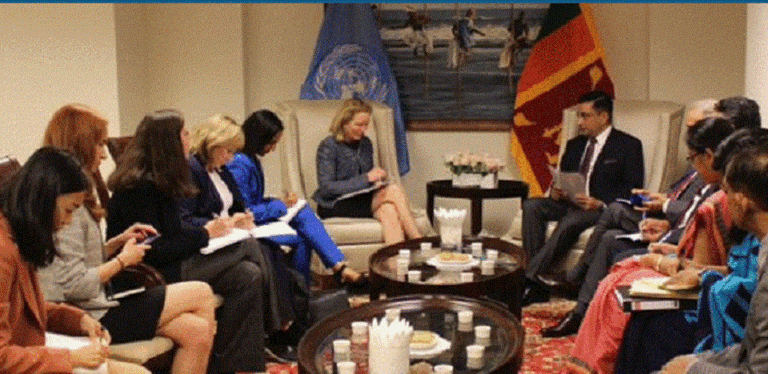
The assurance was given by the Co-Chairman of the Paris Club, William Roos in a meeting held with State Minister of Finance Shehan Semasinghe in Washington, during IMF/World Bank Annual Meetings.
“Mr. Roos assured The Paris Club’s fullest support for Sri Lanka’s ongoing efforts to find an early resolution to its debt crisis,” State Minister Semasinghe said in a tweet.
Sri Lankan President Ranil Wickremesinghe asked Japan for help during talks with Prime Minister Fumio Kishida and other people during a visit to Japan at the end of September to attend the funeral of former Prime Minister Shinzo Abe, according to Japanese government sources.
The meeting is expected to focus on measures to reduce debt payments and postpone repayment deadlines, among other related steps. Japan continues to urge other creditor countries to play a proactive role in dealing with the issue.
Sri Lanka’s economy has suffered due to sluggish tourism during the novel coronavirus pandemic and soaring food and resource prices following Russia’s invasion of Ukraine. In April, the Sri Lankan government introduced an emergency measure to suspend its repayment of external debts.
According to the Sri Lankan government, the nation’s external debt at the end of June stood at $46.6 billion, accounting for about 70% of its gross domestic product.
Sri Lanka has more than 20 creditors, with China topping the list at $7.3 billion, followed by Japan at $2.7 billion and India at $1.7 billion.
While struggling to repay its debts, Sri Lanka in 2017 effectively transferred to China the operating rights of one of its ports.
China — which has come under criticism from the international community for causing Sri Lanka’s economic collapse — will not play a leading role in restructuring Sri Lanka’s debts, and the Japanese government will have to tread carefully in its efforts to reach agreement among creditors in a manner acceptable to Beijing.
Govt seeks ILO help to set up digital database of workforce
The Government has sought assistance from the International Labour Organisation (ILO) to build a digital database of Sri Lanka’s workforce.
The request was made when ILO Country Director Simrin C. Singh and ILO Headquarters Senior Employment Specialist Sher Verick called on Prime Minister Dinesh Gunawardena yesterday.
Citing the initiatives taken by the Labour Ministry to create a thorough digitalised database of the workforce, Premier Gunawardena called on the ILO to facilitate to fast-track the process.
The Prime Minister informed on the overview of the economic impact post-pandemic and challenges on the workforce, as well as the Government’s short-term and long-term measures taken to rebuild the economy and assist employees, employers, whilst giving more attention to safeguard low-income workers.
Highlighting the Government’s strong desire to promote mobility in the labour force, Prime Minister Gunawardena provided an explanation of the numerous training initiatives that have been undertaken to advance skill sets. He believes that increasing the quality and quantity of work is the most effective way of lifting people out of poverty.
Despite some indications of encouraging trends, ILO Country Director Singh said most developing nations, including Sri Lanka, are struggling due to the global recession, budget constraints, issues with debt sustainability, and rising inflation.
Against this backdrop, she stated that these difficulties have led to a labour market crisis.
Employment Specialist Verick claimed the ILO’s founding principles were concerned not only with securing sources of income but also with providing a way for individuals to live a self-determined existence and fully participate as citizens in their communities.
Labour and Foreign Employment Minister Manusha Nanayakkara stressed that quality is the essence of the concept of decent work, which is defined by the ILO as chances for men and women to achieve productive work in conditions of freedom, equity, security and human dignity.
The ILO delegation pledged its full support to all of the Government’s initiatives for the welfare of the workers and steps to improve workforce skills.