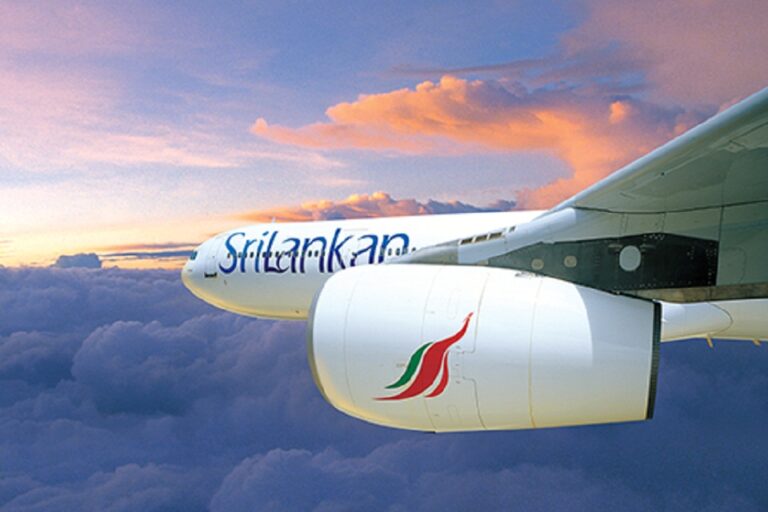
SriLankan Airlines is facing dearth of trained and experienced pilots, with 24 already left for foreign jobs and 40 more planning to leave next year putting the national carrier’s revival under pressure.
Most of them hold senior and consultant level positions and have accepted higher pay by foreign airlines. Some of those who have left had paid their bonds before resigning.
At least eight years to train an efficient pilot and sum of Rs 8 million will have to be spent for such purposes.
The national career has to recruit foreign pilots if the exodus of local pilots is continued in this manner, a senior official of the Aviation Ministry said adding that they will have to pay massive salaries pegged to dollar along with luxury houses motor vehicles and other perks.
In comparison to pre-COVID cadre of 318 pilots, and post-COVID it fell to 265 and the current team has been reduced to 235 with nearly 40 to follow suit in the coming months, informed official sources disclosed. .
At a recent media interaction when queried about the flight of pilots, SriLankan Airlines CEO Richard Nutall admitted that the matter was of concern.
“The number of people leaving is starting to go up. This is something which we are watching very carefully and discussing with the Board and the Ministry as well,” the CEO added.
He implied recruitment freeze in the State sector was a problem too. Sri Lankan has a fleet of 24 of which only 19 are in deployment.
The exodus of pilots was largely fueled by internal issues such as pegging the salaries at an artificially low US Dollar rate of Rs. 225 whereas its real value is Rs. 360-370 level and the 50 percent cut imposed on salaries following Covid19 outbreak.
The recommendation to revert to a realistic rate as opposed to a negative 60% difference hasn’t yielded a positive reaction from the management.
Its management is yet to agree to restore the pay, and the matter has aggravated due to its refusal to make payments in accordance with the dollar rates.
Pilot trade union members say they have to cover the maximum 100 flight hours per month due to a shortage of personnel.
If another 40 leave, the airline will have to recruit foreign pilots at a much higher pay, further burdening the airline, they warn.
This and the overall lower remuneration along with new higher income tax have prompted UL pilots to opt to seek new careers in competing Middle East airlines which are on a hiring spree.
For example, these airlines are also looking for Captains with first round harnessing First Officers.
The exit by pilots also comes at a time when tourist arrivals are picking up in the current winter season. Last week SriLankan CEO also announced plans to increase frequencies to London, Singapore, Bangkok, Kuala Lumpur, Seoul and Sydney.
The new Central Bank Act will soon pass through the Cabinet and Parliament as the final draft has been drafted as prior actions required to get the International Monetary Fund (IMF) board approval for US$2.9 loan package to to met the country’ current economic crisis.
The new Act will further strengthen the Central Bank independence and thereby will control monetary financing of the budget which is referred to as money printing while controlling inflation, Central Bank Governor Nandalal Weerasinghe said.
The enactment of the new Central Bank law has become an urgent priority which ha sto be fulfilled as most prior IMF commitments including revenue enhancing policies, market pricing of energy and the restructure loss making state-owned enterprises have been either already implemented or embarked upon.
“Almost all prior actions have been completed. Only thing remaining is the Central Bank Act which is waiting to be passed by the Cabinet,” the Central Bank Governor, Nandalal Weerasinghe said.
“The final draft is ready and I think once we get that we can submit it to Parliament after getting the Cabinet nod. I think we can do it within the next couple of weeks,” he told a media conference last week.
The process to reestablish Central Bank independence via a new Act was started many years ago but failed to see the light of day after the Rajapaksa administration which returned to power in 2019 abandoned the process
The previous Gotabaya Rajapksa regime has resorted to an alternative economic policy where the unrestrained fiscal deficits were funded through the Central Bank under what many referred to as the Modern Monetary Theory.
Weerasinghe said Parliament remains the ultimate authority over the fiscal policy, which takes decisions on how the revenue is raised and how that revenue is spent.
The Central Bank has to be independent in deciding on the monetary policy which affects the entire country and not just the government, he pointed out.
While there are provisions in the current Monetary Law Act which ensures the independence of the Central Bank, the instance where that could be compromised is when the Central Bank is compelled to fund unrestrained budget deficits run by governments, a condition referred to as fiscal dominance over the monetary policy.
However, Weerasinghe emphasised that while the Central Bank is required to remain independent, both monetary policy and the fiscal policy must be complementary for effective economic outcomes.
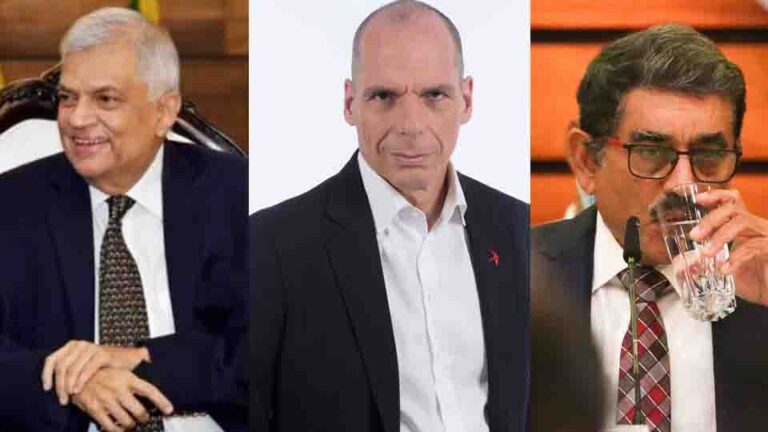
Sri Lanka shall not be in a position to swallow ‘toxic waste’ in the belief that it will cure the ongoing economic crisis, said Prof. Yanis Varoufakis, former Finance Minister of Greece, responding to the much-awaited and yet beat-around-the-bush-like assistance by the International Monetary Fund (IMF) to the island nation amidst its worst recession since independence.
In a recent (23) interview with ‘Ada Derana 24’, the former Finance Minister of Greece reminisced the multi-billion dollar financial assistance provided by the IMF to the Government of Argentina twenty years ago, in what he described it as a ‘crime’ against the people of Argentina, for their actions resorted to the conversion of the profits of the Argentinian oligarchs and some corporations from the local currency to US Dollars, paving the way for a handful of oligarchs to collect the money and take them out of the country just before the nation fell.
The IMF committed the same crime five years ago in the same country, only to make a simple apology, and in the backdrop, the IMF, in reality, resorting to apology for committing a crime against a nation means nothing to them, he emphasised, warning that the IMF’s current approach towards Sri Lanka amidst its economic crisis might end up the same way and the global lender might getaway under the logic of releasing their money to the creditor instead of the people of the country itself.
There is a fundamental difference between ‘bitter medicine’ and a ‘toxic drug’ that actually kills a patient, Varoufakis said, referring to the IMF’s toxic approach towards every country whom it lent money to, and suggested that Sri Lanka shall not believe that a loan from the IMF would be the sole solution to the recession the island nation is currently facing.
For every irresponsible borrower there is an irresponsible creditor, the ex-Finance Minister of Greece went on, and in a sharp response to the western or other world powers who point their fingers at the island nation accusing it of being a nation ethically responsible of borrowing a lot of money that cannot be repaid Varoufakis stressed that creditors shall be held accountable for the predatory loans they are giving away and that money being released to characters considered to be ‘shadowy’ on behalf of the people whom they claim to represent is a wrongful conduct from their end.
Accordingly, the creditors of Sri Lanka must bear a very significant proportion of the cost of the bankruptcy of the country, Prof. Varoufakis opined, pointing out that the IMF, who always takes the side of the creditors, has to be told by the Government of Sri Lanka that the first prerequisite for any debate or discussion between the island nation and the IMF should be a very significant ‘debt haircut’ upon the issuance of a loan, where creditors have to agree that they will not get their money back, but a small proportion of the money they lent.
He added that the second prerequisite prior to any discussion pertaining to a loan would be that there will be no austerity. The IMF should be reminded that Sri Lanka is not a ‘shop‘ to browse, that the logic of reducing the debt and the budget deficit based on spending cuts at a time when the Sri Lankan domestic Private Sector is massively reducing its expenditure under the crisis’s influence to introduce Public Sector spending cuts would be madness, he noted.
The size of the armed forces is a topic of perennial interest and debate, as each year Budget sets. The number of military personnel in each Service is directly related to how many units of various types they can deploy for use in operational missions. The number of military personnel also affects the cost of the military. More personnel require additional funding for their pay and benefits; combined into units, they require additional funding for training, operations, equipment, maintenance, and travel. The number of military personnel also have a long-term impact on the the countryʼs economy and tax payer.
The concept of military power that takes into account both the quantity of a stateʼs resources and itʼs level of economic development. Size of the Army is mainly determined by analyzing the internal and external threats the country is facing in addition to various other factors like natural and man made disasters, population density, size of the country, neighborhoods, foreign policy etc.The prime responsibility of the Army is to provide protection to the citizens and safeguard the territorial integrity and sovereignty. Taking into consideration the past experiences including the civil wars Country had to fight in the south and North and numerous factors, necessity of Sizable and effective Army is of utmost importance.
HISTORY OF ARMY
Sri Lanka Army born on 10th October 1949 as the Ceylon Army at the end of the Second World War and the dawn of independence to the country.
Ceylon was under three colonial powers: Portugal,Holland and Britain were responsible for the Defence of the country. The severing of the colonial connection brought this to an end to in 1948. That was the time, the founding fathers of the new nation state gave their minds to the Defence needs of the country.
Decolonization after world war 11 was taking place rapidly but communism was supplanting imperialism particularly in south East Asia. With this threat perception in mind, a decision was taken to raise professional armed forces to supplement the already existing Volunteer forces of the Army and the Navy. In the interim period of the build up of these forces to professional standards, a Defence pact with Britain was negotiated and signed in 1947. This pragmatic arrangement not only ensured Defence against external aggression or internal strife but also provided for the professional training of the personnel and the supply of equipment for the nascent forces. From then onwards there were numerous occasions in which the Army in particular was called out in aid to the civil authorities especially in 1956 with the promulgation of “Sinhala “only as the official language.
1971 JVP INSURRECTION
In 1971, there was a widespread youth unrest and for the first time the Army and the security forces had to face an Armed enemy who also used explosive devices in their operations. The Army was widely deployed and the Government had to request foreign assistance for manpower and equipment. The assistance requested from friendly nations was generously provided and the uprising was brought under the control in a few months.
1976 NON – ALIGNED SUMMIT CONFERENCE
In 1976, Non – Aligned Summit of over 90 Head of state or Government took place in Colombo. The Army was very much involved in this event which was perhaps the largest “ peace time “ operation carried out by the Army and other forces. The tremendous success of this conference and the arrangements made for it were a morale booster to the nation and the Army earned high encomiums.
1983 BLACK JULY
On 23 July 1983 at around 11`30 pm, the rebel group Liberation Tigers of Tamil Eelam (LTTE; also known as the Tamil Tigers) ambushed the military patrol in Thirunelveli, near Jaffna in northern Sri Lanka. A roadside bomb was detonated beneath a jeep that was leading the convoy, injuring at least two soldiers on board. Soldiers travelling in the truck behind the jeep then dismounted to help their fellow soldiers. Subsequently, they were ambushed by agroup of Tamil Tiger fighters who fired at them with automatic weapons and hurled grenades. In the ensuing clash, one officer and twelve soldiers were killed. A number of the rebels were also killed. (The writer at this time was a young officer in the rank of second Lieutenant served Sri Lanka Army Sinha Regiment as a platoon commander. The writer with his platoon carried out a night patrol previous night of the deadly ambush along the same route was lucky enough to survive as the terroristʼs ambush was not ready to launch.)
STRATEGIC MISTAKE MADE BY THE THEN PRESIDENT
The Army—including its commander, Tissa Weeratunga—decided that the funerals of those 13 soldiers killed in Jaffna shouldn’t be held in Jaffna because of the high likelihood of disturbances at multiple locations. The decision was made to hold the funerals, with full military honours, at Kanatte Cemetery, Colombo’s main burial ground, instead. Prime Minister Ranasinghe Premadasa, fearing violence, was against holding the funeral in Colombo, but was overruled by President J.R. Jayewardene. The president, the prime minister, and the rest of the cabinet were to attend the funeral, which was to take place at 5 pm on 24 July. This arrangement went against the standard procedure of handing over fallen soldiers to their families for burial in their home villages.
Preparations were made for the funeral, including putting the riot squad at the police station in nearby Borella on standby; but by 5 pm the bodies hadn’t arrived in Colombo. The soldiers’ families wanted the bodies handed over to them and to be buried according to tradition. Due to procedural issues, the bodies were still at Palali Army Camp near Jaffna. The bodies were eventually moved from Palali Air Force Base shortly after 6 pm. Whilst this was occurring, tensions were growing at Colombo General Cemetery because of the delay. A large crowd, including around 1000-1500 people started gathering at the cemetery, angered by news of the ambush, which was magnified by wild rumour.
The Avro plane carrying the bodies arrived at Ratmalana Airport at 7`20 pm, by which time the crowd at the cemetery had swollen to more than 5000, The crowd wanted the bodies to be handed over to the families rather than to be buried at the cemetery.
Violence broke out between the crowd and police, and the riot squad was summoned. The riot squad then fired tear gas at the crowd and baton-charged them before handing control of the situation over to the Army. The pilot who landed in Jaffna Fort rescue mission, Flying Officer Lasantha waidayaratna was one of the eye witnesses ofthe event.The president then decided to cancel the military funeral and hand the bodies over to the families.
However, initial wrong decision of the then President has been openly criticized by many intellectuals as it was identified as the the main reason to spark the series of incident of black July. As a result, hundreds of innocent Tamil Civilians were killed, The economic cost of the riots was estimated to be $300 million. The NGO International Commission of Jurists described the pogrom as a genocide in a report published in December 1983. Sri Lankan Tamils fled to other countries in the ensuing years, and a large number of Tamil youth joined militant groups. Black July is generally seen as the start of the Sri Lankan Civil War between the Tamil militants and the government of Sri Lanka.
LTTEʼs 26-YEAR BRUTAL WAR COST US$ 200 BILLION
The United Nations estimated a total of 80,000–100,000 deaths and hundreds of thousands of Sri Lankanʼs, mainly minority Tamils, displaced as refugees inside the country and abroad.
Sri Lankaʼs 26 year internal war had cost the country around US$ 200 billion according to Indiaʼs former National Security Adviser and Foreign Secretary, Shivshankar Menon. In his book Choices: Inside the Making of Indiaʼs Foreign Policy, Menon says that this estimate does not include the “opportunity cost” to Sri Lanka which was once the fastest growing and the most open economy in South Asia.
About deaths, the veteran Indian diplomat turned security expert says that between 1983 and 2009, 80,000 to 100,000 people, including combatants from both sides, lost their lives. Among them were 30,000 to 50,000 civilians, 27,693 LTTE cadres, 23,962 Sri Lankan army personnel, and 1,155 men of the Indian Peace Keeping Force (IPKF).
The final stages of the war had created a little over 300,000 refugees or Internally Displaced Persons (IDPs). The war had also left 1.6 million land mines in the Northern and Eastern Provinces. The socio economic impact of the unnecessary war was good enough to understand the price we as a nation had to pay due to wrong strategic decision of the then President.
I also should mention that LTTE lost the 26 year civil war mainly due to strategic mistakes Prabakaran as the leader made including killing of Indian former prime minister Rajiv Gandhi.
SRI LANKA ARMY- CITIZENS STILL RESPECT
In 2006, just before the start of the conflictʼs final phase, retired Indian Lieutenant General A.S. Kalkat in 2006 declared, “There is no armed resolution to the conflict. Sri Lanka Army cannot win the war against Lankan Tamil insurgents.”
The Sri Lanka Army, together with his sister services disproving General A.S. Kalkatʼs prediction, totally defeated the LTTE gaining control of the territory held by it and with the death of LTTE leader Velupillai Prabhakaran and capturing all the areas held by it. Since the start of Elam War 1 at Tirunelveli in Jaffna and itʼs end at Nandikadal, Sri Lanka Army played the most difficult and pivotal role. During the 26-year long civil war, 23,962 brave soldiers in Sri Lanka Army gave away their lives and one can understand the amount of sacrifices made by the soldiers. Army being the land force had to bear heavy casualties and the role played is unparalleled through the civil war.
They brought peace to this island and with the dawn of peace could be seen the glow of happiness and hope for the future on the faces of every citizen. The soldier has a special place in every citizensʼs heart in this country.
NAVY NEEDS NEW EQUIPMENTS
Sri Lanka being an island nation much emphasis should be paid to equip the Navy due to following justifications. It was evident that during separatist war, Tamil militants were using the sea to get their weapons from other countries. The Sri Lanka navy was given a chance to show itʼs value only during the last phase of the war in 2006-2009. Naval actions in this period had proved to be invaluable. Navy with limited resources sailed 4000kms deep into the International sea and completely destroyed 8 LTTE warehouses which carried 100,000 each of 122, 130 and 155mm Artillery Ammunition and 60mm and 81mm Mortar Ammunitions. This was the turn point of the war. Sri Lanka is yet to realise that threats to it are not from within its land area but come from the sea. Sri Lanka has no land border with any country. Terrorists, smugglers of drugs and humans, pirates and illegal fisher, the new threats, emanate from the sea. There is also a vast Exclusive Economic Zone to safeguard. But the navy is ill-equipped to face these threats, Navy should be equipped with long-range reconnaissance aircraft to carryout reconnaissance the vast ocean around the island in addition to long range radar system. Given the emergence of new forms of warfare, Sri Lanka has to reorient its thinking and put emphasis not on manpower so much but on the acquisition of new skills and equipment. The Indian army as well as China’s Peoples’ Liberation Army (PLA) have taken steps to make their forces “leaner and meaner.” The Indian Agnipath scheme for temporary recruitment and the modernization schemes envisaged by China’s Central Military Commission are geared to achieving that goal. It’s time Sri Lanka followed suit.
President Ranil Wickramasinghe has to take difficult decisions
ALLOCATION OF DEFENCE BUDGET
The Ministry of Defence has been allocated 410 billion rupees, with the army getting 209 billion rupees, Navy 75 billion rupees and Air Force 66 billion rupees and a multi-task force getting 9.8 billion rupees.
The Ministry of Public Security has been allocated 129 billion rupees with 116 billion going to the Police. The police and military have received 539 billion rupees. In an attempt to understand Sri Lankaʼs current economic crisis, some have pointed to Sri Lankaʼs high military spending as one cause of the countryʼs financial ruin.
As Sri Lanka embarks on this difficult economic recovery, it must rein in on military expenditure and address the more dire needs of a suffering population. Sri Lanka which ranks at 58 according to the size of its population and rank at 65 in terms of GDP, has the 17th largest military in the world. As a percentage of GDP, Sri Lanka spends nearly 2% on military expenses, an extraordinarily high amount for a country that does not face an existential security threat.
In addition, unlike other countries, Sri Lanka does not have a military industrial sector that produces weapons or ammunition, either for itself or for export. Therefore, much of the capital expenditure incurred by the military is primarily for imports that hardly create any economic activity within the country other than for commissions for a selected few.
Many intellectuals are of the opinion that, Even 13 years after the end of the separatist conflict, the military has not significantly reduced its numbers, nor restructured itself to suit the different challenges and realities of a post-conflict, democratic country. The Tri Forces and paramilitary groups such as the home guards total more than 350,000 according to publicly available data.
They further argued that As Sri Lanka faces its worst economic crisis in history, it is essential to drastically curtail military spending and prioritise expenditure to ease the burden on the public, by providing them essential welfare such as education and health and reducing the tax burden by reducing unnecessary spending. The 2023 Budget should have been more seriously considered the impacts of economic crisis and difficulties faced by majority.
SOME ARGUE THAT ARMY SIZE IS FAR TOO BIG
Scholars have pointed out that Sri Lanka has an Army far too big for its size and population, and has a military that is ill-suited to meet the new strategic needs. It is further noted that, despite this assessment, no meaningful steps have been taken to rationalise the size of the army which is bigger than British Army in size and the expenditure pattern. The evolution of a military doctrine suited to emerging threat scenarios is also not evident. Also the concerns is the size of the military in terms of the number of personnel, their salaries and pensions in light of the fact that the separatist war ended 13 years ago. Then there is the related issue of the militarization of the civilian administration that is raised by the civilian society.
If Sri Lanka is to be rescued from the economic morass it finds itself in through an International Monetary Fund (IMF) bailout, it needs to reduce its military spending, which stands at 410 Billion Rupees for the year 2023.
Sri Lanka needs to carryout a Strategic Defense and Security Review to reduce its military spending and remove the military from engaging in commercial activities, that Sri Lanka meets the criteria required for Generalized Scheme of Preferences Plus, and that Sri Lanka re-engages with the United Nations Human Rights Council process and fully implements resolution 30/1; “and calls upon the Government to implement targeted sanctions.
Sri Lankan politicians fear that even a significant reduction could trigger another insurgency which the country cannot afford. And traditionally, the armed forces have been used to aid the civil administration in Sri Lanka even in fuel rationing, de-hoarding, traffic control and tackling civil unrest. This is a factor militating against reducing the size of the forces. But there is a pressing need to reduce. Australian National University (ANU) National Security College Senior Research Fellow Dr. David Brewster told The Morning in September: “Sri Lanka’s armed forces are far too large and do not have the right focus or equipment. There are way too many soldiers, meaning that money is spent on personnel costs rather than equipment. “In order to modernise and refocus on current threats, the Sri Lankan armed forces (principally the Army) will need to be reduced in size, with much greater spending on the Navy and Air Force, with military personnel having much greater technical expertise. Sri Lanka is an island state, but its armed forces do not currently reflect this. Institute of South Asian Studies, National University of Singapore) points out that despite the end of Sri Lanka’s civil war, Lanka’s defense budget has not seen a significant decline or any major change in its composition. The budgets appear to have no relationship to the emerging strategic environment and risks, and it can be observed that Despite the radically altered strategic environment since the defeat of the LTTE in May 2009, defense expenditure keeps on rising Annually which is a burden to citizens especially at a time of economic crisis. The share of government pension expenditure accruing to military personnel has risen from 14.5 percent to over 17 percent in just three years. Sri Lanka spent around US$1 billion on pensions, so military pensions cost the taxpayer approximately US$170 million per year. In the entire Asian continent, only Nepal and Tajikistan spend a greater share of their defense spending on personnel. Another reason for the higher expenditure on personnel, according to scholars is that Sri Lanka does not have reserves.
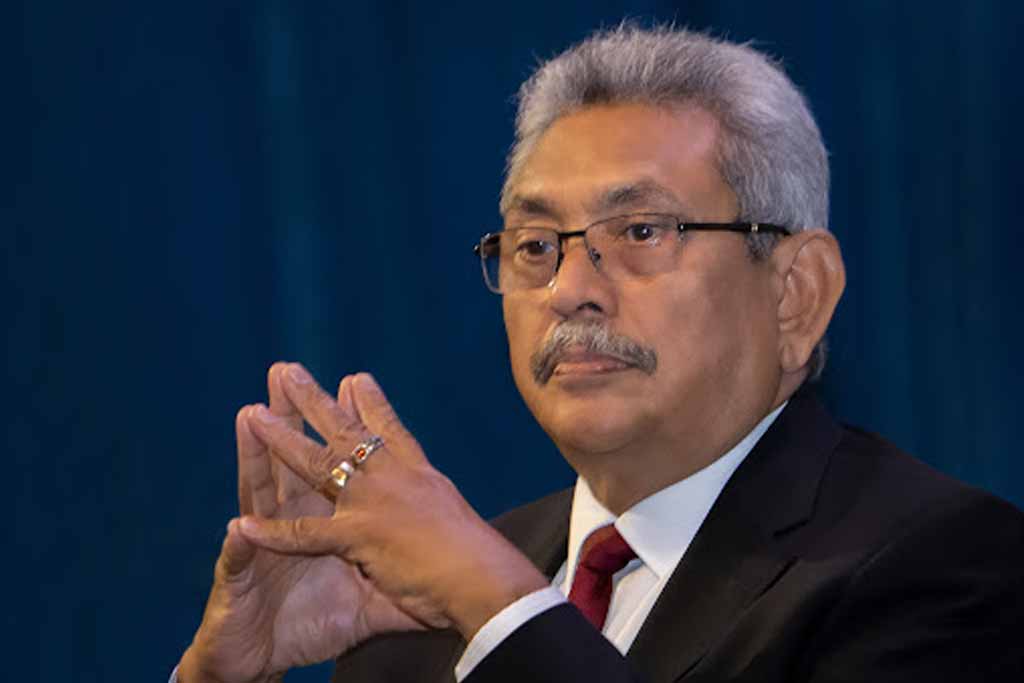
Former President Gotabaya Rajapakse
FORMER PRESIDENT GOTABAYAʼS UNWISE POLICIES DEEPENED THE ECONOMIC CRISIS.
Many policies of the administration of former President Gotabaya Rajapaksa led to the aggravation of theeconomic crisis. The tax cuts given in 2019, when Sri Lanka was already seeing low tax revenues, led to larger fiscal deficits, resulting in international ratings agencies downgrading Sri Lanka, effectively shutting the country out of international capital markets. The COVID-19 pandemic, which led to a fall in tourists and in remittance sent home by Sri Lankans working abroad, further exacerbated the situation. The chemical fertilizer ban was another mistake, as admitted by the former president himself, which led to agricultural output decreasing significantly.
Provision of 100000 jobs in the Government sector was another politically motivated but unwise decision by former president. Fixing the currency exchange rate at 203 Sri Lankan rupees to the U.S. dollar by using up foreign reserves and deferring engagement with the IMF led the economic crisis to spiral out of control. But a large share of the blame lies in the structural issues of the Sri Lankan economy. Macro risk factors, such as a 26-year-long civil war, cultural predispositions against foreign direct investment, public skepticism about privatization, populist policies, and low taxes have all led to where the country is at the moment.
WHAT NEEDS TO BE DONE ?
Key Economic Reforms Needed for Sri Lanka including right sizing the public sector including Armed Forces, Army in Particular.
According to Talal Rafi and Sirimal Aberatne, Sri Lanka requires wide-ranging economic reforms for long-term sustainable growth to service its debt obligations and to emerge from this crisis stronger. A stable monetary policy is important to keep macroeconomic stability and confidence in the local currency. The current economic crisis Sri Lanka is facing makes it very evident that an independent Central Bank is of the utmost importance. An independent Central Bank that can refuse to print money can force the Treasury to take fiscal consolidation seriously. Having more professionals in Central Bank committees and giving them a fixed term can allow them to make long-term policy decisions on interest rates and reserve requirements without political interference.
Tax reforms are essential for revenue-based fiscal consolidation, another prerequisite for economic sustainability.
Instead of merely increasing taxes, the government should widen the tax base and implement a system to efficiently collect taxes.
Reform is needed to rein in state expenditure as well. State-owned enterprises (SOEs) are a colossal drain on the state coffers. This has resulted in a deepening fiscal deficit. The management of state-owned enterprises is inefficient as the ruling parties use SOEs for short-term political gains, resulting in a loss of focus on a long termsustainable strategy for SOEs. As the chairperson and the Board of Directors of SOEs are appointed by the relevant government ministries, they tend to be political party loyalists. This leads to failures and Mal practices in almost all SOEs.
PUBLIC SECTOR
In Sri Lanka, just over one in six of the countryʼs total workforce is employed by the state. The total state sector workforce amounts to 1.4 million employees, which resulted in 86 percent of the governmentʼs tax revenue in 2021 going to paying the salaries of state sector employees. To make matters worse, a staggering 71 percent of government revenue goes to paying the interest on Sri Lankaʼs sovereign debts. Paying the salaries of state sector employees and interest costs alone result in a large fiscal deficit, which is managed by more borrowing and quantitative easing. This also leaves very little room for government investment in healthcare, education, and other development projects.
RIGHT SIZING THE PUBLIC SECTOR, ARMED FORCES AND ARMY IN PARTICULAR
Although, right sizing the Public sector, Armed Forces and Army in particular is a need of the hour, politicians are hesitant to openly discuss as it can raise controversial questions and is a matter of debate. Furthermore, it is not very practical now in view of the local Government election scheduled in March 2023.
The Peopleʼs Liberation Army planned to reduce of itʼs 2.3 million strong Army to two million and definitely to reform a leaner and mightier force. Indian Army too planned to size down in areas which are not of operational importance due to budgetary constraints. It was thought practical to not only increase the budget allocation but to right size the Indian Army.
The Sri Lanka Ministry of Defence needs to appoint a high level study to determine and recommend tooth to tail ratio, a military term that refers to the amount of military personnel it takes to supply and support (tail) each combat soldier (tooth).
The utmost important aspect of economic reform will be the right sizing of the 1.4 million public sector, the armed forces and army in particular within next 5-10 years without harming them and their families. It cannot be done hastily but need scientific approach. Without which economic reform will only be a distant dream and no one cannot prevent Sri Lankaʼs situation going from bad to worst.The writer being an International Research and writer carried out a research, analyzing the Defence expenditures and threat perspective in Japan, Sweden , Germany, United Kingdom, Australia, China, India, Bangladesh, and Israel to Sri Lanka. It was evident that Sri Lankaʼs defense expenditures was only second to Israel. But in terms of GDP Sri Lanka was at the bottom and threat perspective was very minimal at present other than uprising of local population against the Government due to economical hardship.
Finally, taking into consideration the factors and justifications given above the President Mr Ranil Wickramasinhe and the Government of Sri Lanka will have no other alternative or substitute other than right sizing the public sector, Armed Forces and Army in Particular.
The writer is the former Security Forces Commander (Wanni), the competent authority for internally-displaced persons in the North, the Colonel Commandant of Sri Lanka Sinha Regiment, world top-ten in National Defence Studies (China), a Doctor in Economics and Architect of Wanni Bogaswewa Resettlement Project with 36 years of active military service, presently working as an international writer and researcher. The writer being an infantryman fought the same war against the LTTE for more than 20 years.
The Food Policy Committee that met on the 24th has recommended to reduce the the Special Commodity Tax (SCL) rate, and accordingly, the move will increase the ability to purchase b-onions in the market helping to reduce the price of b-onions.
The national requirement for big onions is about 300,000 MT per annum which is mainly fulfilled by imports (86 per cent). Accordingly, the self-sufficient ratio amounts to 14 per cent.
The retail prices of imported b-onions varied between Rs. 290 – Rs.390 and the price of local b-onions varied between Rs. 340 – Rs. 400 per kg as of the third week of November. (Department of Census & Statistics November 3rd week Colombo Prices).
The average CIF of Imported b-onions was Rs. 95.3 per kg in the third week of November and it has only shown a relatively modest increase since mid-August 2022.
The government increased the applicable SCL on imported b-onions from Rs.10/- kg to Rs. 50/- kg from 22nd September 2022 onwards. Subsequently, the imports of b-onions started to fall drastically.
Imports fell from 27,889 MT in August to only 13,496 MT in November (till week 3). This drop in availability pushed up the price of imported b-onions from about Rs. 175/kg in August to Rs. 328/kg in week 3 of November.
Nevertheless, a sharp drop in price is evident from the 22nd of November to Rs 250/kg, however, prices still remain high compared to the period leading up to the SCL increase.
It is important to note that the CIF of imported b-onions has only increased slightly since August. Hence, the sudden hike in prices can be attributed to the increase in the SCL rate in September.
From the month of August, the import of large onions will be reduced by 1000 kg. The price (CIF value) has increased only marginally, and the reason for this sudden price increase may be the increase in the rate of SCL in September.
A preliminary discussion was held in Parliament pertaining to the future plan of getting support of the university academic staff through Vice-Chancellors for the purpose of formulating national policies, as per a decision by the National Council Sub-Committee on identifying short and medium-term programmes related to National Policy chaired by MP Rajapaksa.
The meeting was held with the presence of Prof. Sampath Amaratunge, Chairman of the University Grants Commission, and a group of lecturers including vice chancellors of universities across the country, and was able to thus arrive at a preliminary agreement regarding the basic structure identified by the sub-committee on identifying short and medium-term programs related to National Policy.
As a preamble to this program, Prof. Krishan Deheragoda gave an explanation to the Committee on the main areas where policy preparations should focus on. The university vice-chancellors and lecturers who were present at the occasion expressed their views on how policies should be prepared in this country.
Accordingly, it was decided to prepare basic structure identified by the sub-committee on identifying short and medium-term programs related to National Policy together with university professors in accordance with each identified field given the priority and to move ahead.
Committee Chairman MP Namal Rajapaksa said that they wish to propose to the National Council to establish a separate bureau for policy formulation in Sri Lanka and to implement the required legal changes through Parliament.
Dr. Naseer Ahmed, State Minister (Dr.) Suren Raghavan, MPs A.L.M. Athaullah, Pavithradevi Wanniarachchi, Wajira Abeywardana and Sagara Kariyawasam were present at the occasion.
Minister of Foreign Affairs Mohammed Ali Sabry is set to leave for the United States for an official tour, announced the Ministry. His departure will take place tomorrow (29).
During his visit, Sabry is set to meet with US State Secretary Antony Blinken and several other top federal figures.
It is said that the two parties are expected to pay focus on Sri Lanka’s economic crisis and the process of debt restructuring.
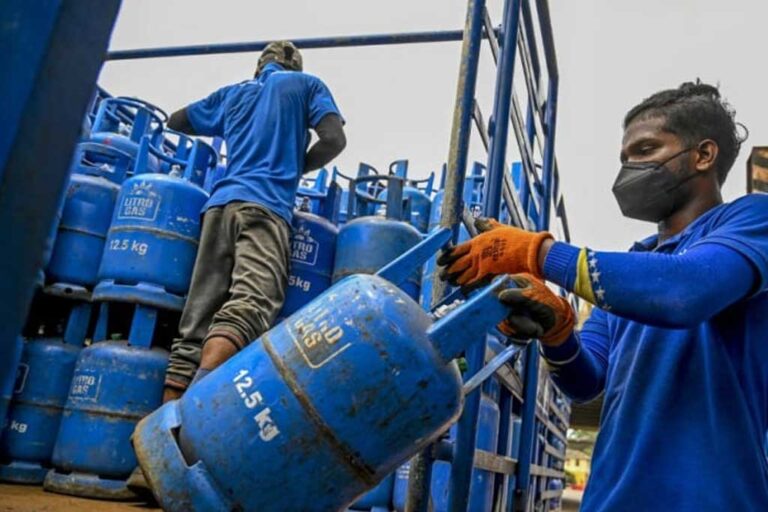
The issuance of domestic LP Gas cylinders to the market will be carried out in a restricted manner till Wednesday, Nov 30, 2022, due to the increased demand amidst the upcoming festive season and the delay in the arrival of a ship carrying gas, announced the state-run LITRO Gas Company.
Nevertheless, the issuance of LP Gas will continue as usual after the unloading of a new gas stock which is due to arrive in the island by Wednesday, said Company Chief Muditha Peiris.
“As the LITRO Gas Company, we do not see a shortage of gas. But we observe that with the festive season in December is an increased demand. Therefore, it was arranged to make 34,000 metric tonnes of gas orders for the month December. A portion of it is due to arrive in this country by Thursday. Thereafter, ships will continue to arrive till January. We issued about 42,000 cylinders to the market with restrictions. There may have been a shortage in some places, which is a result of our restricted issuance rather than a shortage,” Peiris said.
Showers or thundershowers will occur at several places in Uva, Sabaragamuwa, Central and Southern provinces, and showers or thundershowers may occur at a few places in Western, North-western, North-central and Eastern provinces during the afternoon or night, the Department of Meteorology said in a statement today (28).
Misty condition can be expected in Sabaragamuwa and Central provinces and in Galle and Matara districts during the morning.
General public is kindly requested to take adequate precautions to minimise damages caused by temporary localised strong winds and lightning during thundershowers.
Marine Weather:
Condition of Rain:
Several spells of light showers may occur in the sea areas off the coast extending from Mannar to Kankasanturai.
Winds:
Winds will be from north-easterly or variable direction and speed will be (20-30) kmph.
Former Finance Minister of Greece Yanis Varoufakis asks people of Sri Lanka to stop thinking of IMF as “your Saviour”: says IMF is “your potential destroyer”: explains there’s a difference between a “bitter medicine” and a “toxic drug” that kills a patient: urges Sri Lankans not to swallow toxic waste thinking it’s effective medicine.
National Audit Secretariat says over 989 people and 3,649 wild elephants and tuskers have died from 2016 to 2020 due to the human-elephant conflict.
State Minister of Higher Education Dr. Suren Raghavan says laws will be enacted soon to minimise overcrowding in university hostels due to some students overstaying: says the intention is to accommodate new student batches.
UN states 28% of the population faces food insecurity and that the poverty rate has doubled this year: also says Food price inflation is over 85% and acute shortages of Forex remain: previously, CB Governor Nandalal Weerasinghe had assured that Forex will be available for all imports when Forex debt is not paid.
Former CB Governor Ajith Nivard Cabraal says the announcement that Sri Lanka is “bankrupt” on 12th April 2022 was the biggest betrayal of Sri Lanka after independence: alleges the announcement of bankruptcy was a result of a conspiracy planned and executed by an organized group.
Head of India’s RAW Agency Samant Kumar Goel meets President Ranil Wickremesinghe for wide-ranging talks: President’s Senior National Security Advisor Sagala Ratnayake and SL’s High Commissioner in India Milinda Moragoda also participate at the discussion.
Tea Research Institute Director Dr Saman Hettiarchchi says the TRI will introduce “Tea Wine” to the global and local market early next year: also says TRI has done over 4 years of research before launching this product.
State Finance Minister Shehan Semasinghe says the 3rd meeting with external creditors has not been scheduled yet: also says Sri Lanka is facing a delay in debt restructuring and IMF loan approval.
Sports Minister Roshan Ranasinghe says when he receives the Report of the Committee led by former High Court Judge Kusala Sarojini Weerawardane on allegations that cricketers from a particular religious sect are selected to the national team, he would refer the matter to the CID.
Second Cricket ODI between Sri Lanka and Afghanistan called off due to rain: Afghanistan (228 all out), Sri Lanka (10/0 in 2.4 overs) when rain interrupted play.