The State-run Urban Development Authority (UDA) has joined the bandwagon to rake in foreign exchange in an effort to overcome the ongoing economic crisis.
The government programme to sell apartments built by the Urban Development Authority (UDA) for dollars to Sri Lankan Migrant Workers has commenced.
Two apartment complexes built for middle-income families by the UDA in Borella and Angoda consist of 608 and 500 houses each, respectively.
The UDA Board has approved a 10% discount for Sri Lankans living overseas and Sri Lankan migrant workers who use dollars to purchase houses in the two apartment complexes.
Under the programme, the first housing unit from the Viyathpura Housing Scheme has been sold for US$ 40,000 to a Sri Lankan migrant worker employed in Dubai, UAE.
Urban Development and Housing Minister Prasanna Ranatunga said three more housing units valued at around $ 143,700 were sold as part of the Government’s scheme to sell the UDA-built apartments for foreign currency to Sri Lankan migrant workers.
He made these remarks following a progress review meeting of the scheme held on Monday.
As per the Minister, the first house sold under the program was bought by a Sri Lankan living in Dubai on 27 September.
He said the applications have been submitted by Sri Lankan migrant workers in the US, Canada, Australia, the UAE, Britain, and Bangladesh.
The apartments are part of the Viyathpura Housing Scheme built by the UDA in the Pannipitiya, Kottawa, and Malabe areas.
“Already applications have been submitted for the purchase of another 10 houses at the apartment complexes built for middle-income families by the UDA,” he added.
He also said that they expect to achieve a target of $ 500,000 by the end of this year and $ 1.5 million via the project next year.
Sri Lankan migrant workers can receive a discount of 10% for outright payment of the full value or a discount of 5% for installment payment.
The first house sold under the program was bought by a Sri Lankan living in Dubai on 27 September.
UDA joins ongoing movement to rake in forex via apartment sales

Over 300 Sri Lankans stranded in Vietnam’s waters rescued
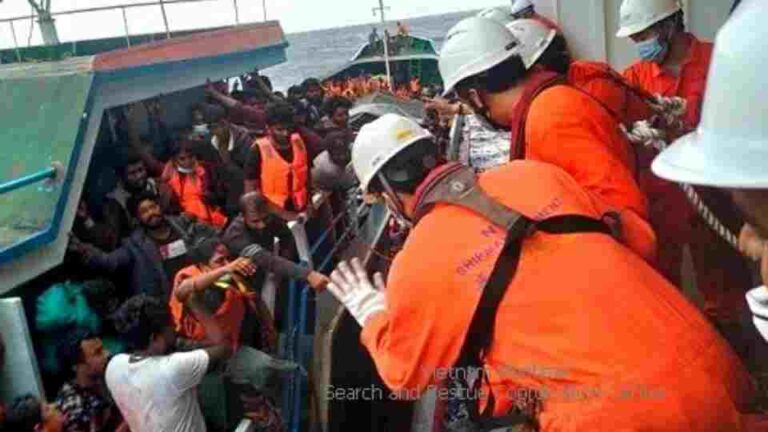
303 Sri Lankans who were stranded in the Vietnamese waters have been rescued by Japanese authorities.
The stranded Sri Lankans were discovered at sea off the Spratly Islands after their fishing boat was damaged and found adrift.
The story comes in following the Vietnam Maritime Search and Rescue Coordination Centre receiving information that the Myanmar-flagged ‘Lady R3’ with 303 Sri Lankans suspected to be headed for Canada was in trouble.
On Monday (07), the Japanese-flagged ‘Helios Leader’ was in the area and was requested by the Centre to make a detour and rescue the stranded vessel carrying the Sri Lankans.
The passengers on board the vessel were rescued and provided medical assistance immediately to whoever needed it.
Meanwhile, the Vietnam Maritime Search and Rescue Coordination Centre mobilised five other ships and instructed them to circle the area to provide support if needed.
Among the rescued were 264 men, 19 women and 20 children, according to reports.
MIAP
Public Security Minister Tiran Alles undertakes official visit to Singapore
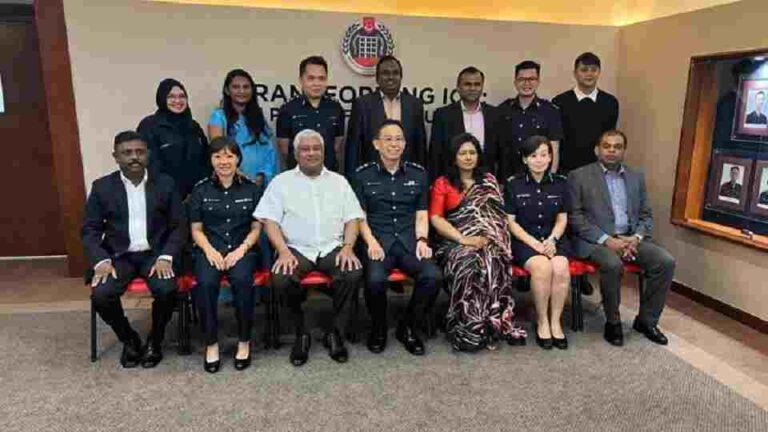
Minister of Public Security Tiran Alles undertook an official visit to Singapore at the invitation of Minister for Home Affairs and Minister for Law of Singapore K Shanmugam from 25-29 October, 2022.
The delegation participated in a briefing session, arranged by the Ministry of Home Affairs and the Central Narcotics Bureau (CNB) on Singapore’s legal frameworks in maintaining public order and combating drugs. Minister Shanmugam who joined the briefing provided an overview of the legal frameworks and the amendments introduced in recent years in both these areas. The two sides also had useful exchanges on lessons learnt in the operational aspects of the related legislation and amendments in a separate session which was joined by Minister of State for Home Affairs Sun Xueling and senior officials from the Singapore side.
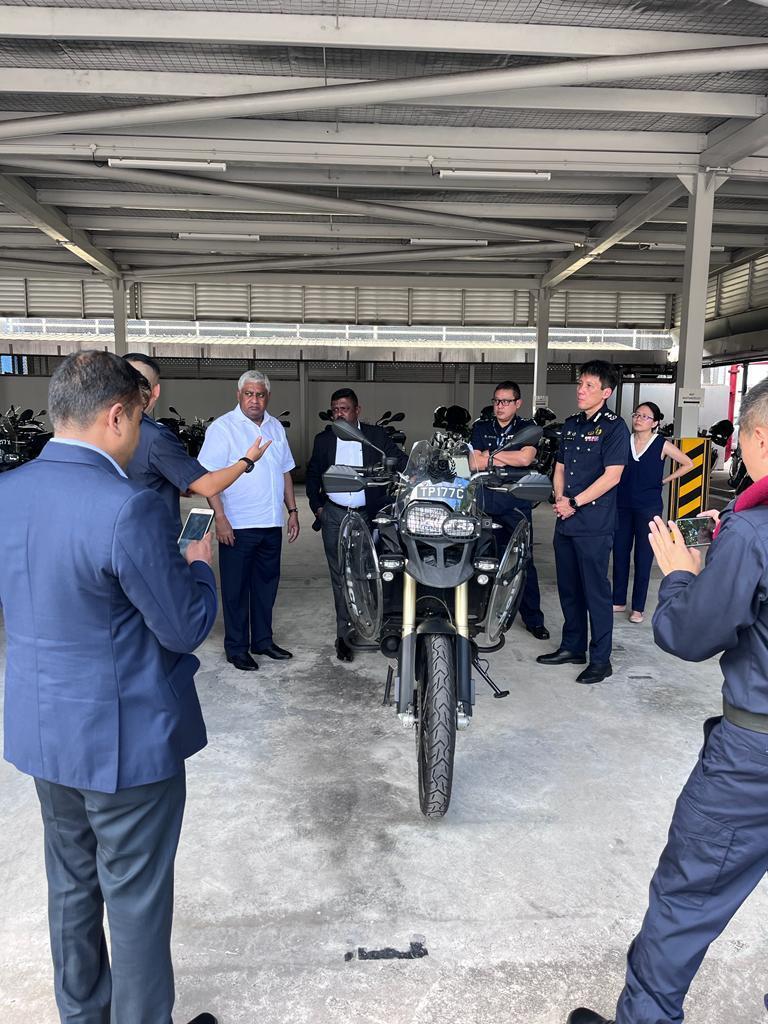
The Minister’s programme in Singapore also included an interaction with the officials of the Immigration and Checkpoints Authority (ICA) during which a briefing was provided on the transformation and digitalisation plans of ICA documentation and included a tour of the Identity Authentication and Documents Analysis (IADA) Lab. The two sides exchanged views on current measures being adopted at immigration checkpoints in Singapore and the process that was undertaken during the establishment of the ICA in 2003 to merge the Singapore Immigration & Registration (SIR) and the checkpoint operations of the Customs & Excise Department (CED to meet emerging security challenges.
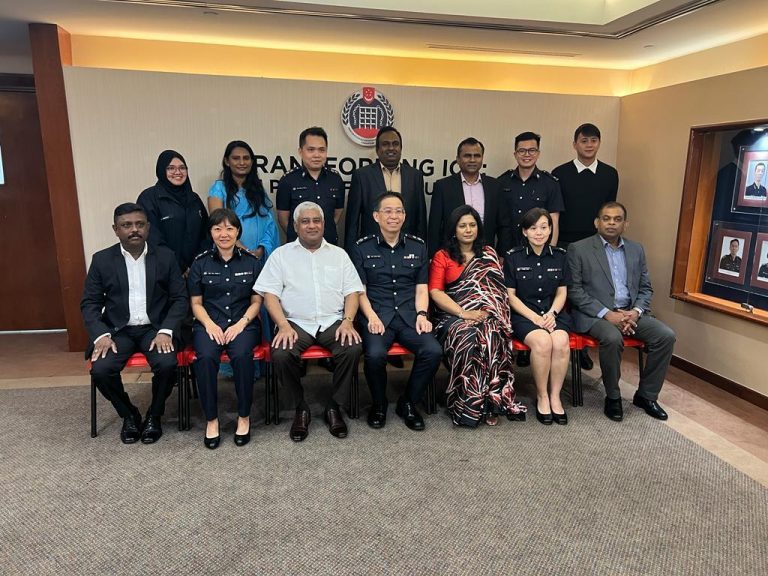
The Singapore Police Force officials provided a detailed overview of criminal investigation, intelligence, and operational aspects of their work including on the special operations command. A visit to Changi Airport was also conducted where a briefing was provided on Singapore’s latest border security measures.
Minister Shanmugam hosted Minister Alles and delegation to lunch at the conclusion of the visit where matters of mutual interest were discussed.
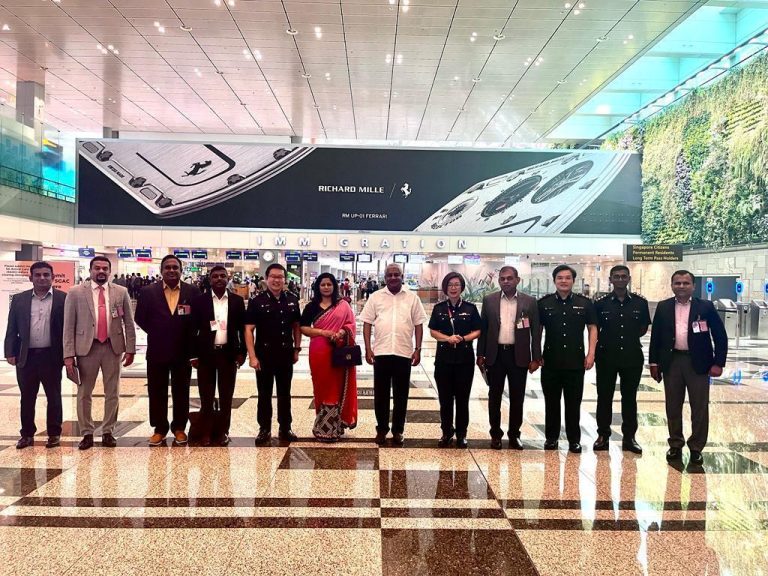
The delegation accompanying the Minister included the Controller General of Immigration and Emigration, senior officials from the Sri Lanka Police and Special Task Force, the High Commissioner of Sri Lanka to Singapore and senior officials of the High Commission.
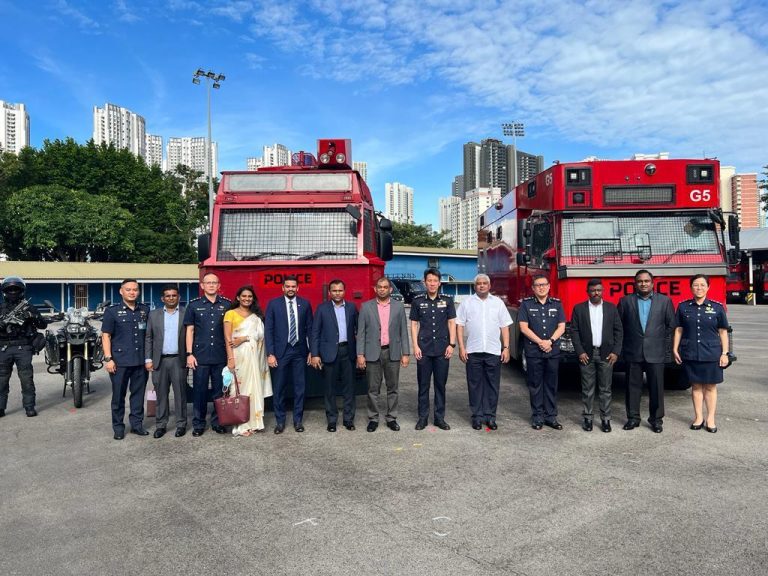
The High Commission of Sri Lanka in Singapore coordinated the visit with the support of the Ministries of Home Affairs and Foreign Affairs of Singapore, and the Ministry of Public Security of Sri Lanka.
High Commission of Sri Lanka
Singapore
04 November, 2022
SLC appoints committee to inquire into allegations against Danushka Gunathilaka

Sri Lanka Cricket (SLC) today (08) said it has appointed a three-member committee of inquiry to probe into the allegations levelled against Sri Lankan Cricketer Danushka Gunathilaka, who was accused of sexual assault against a woman during his tour for T20 World Cup in Australia.
The panel consists of High Court (retd) Judge Sisira Ratnayake, Attorney-at-Law Niroshan Perera and Attorney-at-Law Asela Rekawa, the SLC said in its statement.
It added that the committee will also focus the inquiry on various alleged events which are said to have allegedly taken place during the National Cricket Team’s stay in Australia.
The committee of inquiry appointed by the SLC will call for an immediate explanation from the Team Manager involving his conduct, with references to the occurrence of such incidents. Based on the findings, the Executive Committee of SLC will take stern disciplinary action against the players and or officials, in any event were the allegations of misconduct proven, it added.
MIAP
How car-park cricket in Lebanon gives Sri Lankan migrant workers an escape
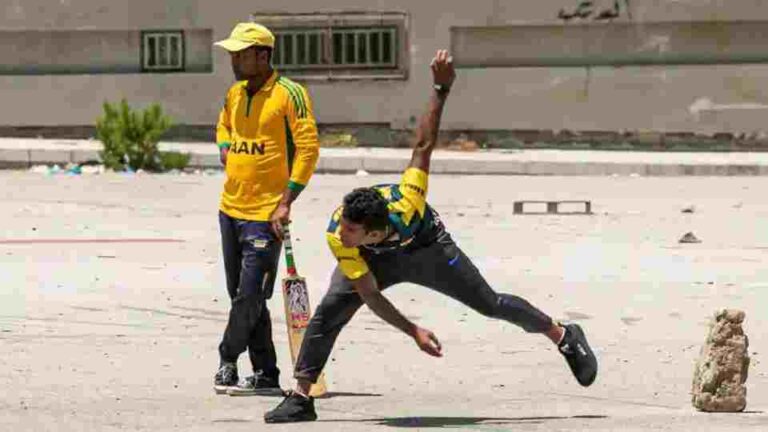
Sri Lankan workers and a women’s project at a Syrian refugee camp come together for games in an underground car park
When Fernando Sugath arrived in Lebanon in the mid-1990s, cricket was an underground sport. Literally. After living in Beirut for a year as one of the country’s 80,000 Sri Lankan migrant workers, a fellow countryman he met in a supermarket invited him to a game. “I had been looking for somewhere to play,” says Sugath. “Also, I didn’t have any friends.” He turned up at the address he was given to discover the players crammed into a tiny underground car park beneath an apartment building.
Sugath is a man used to improvising. “As kids we didn’t need a big playing area or good equipment to play,” he says. “We used plastic balls, the old base of a coconut leaf for a bat.” Within 10 years, he had founded Nomads CC, who played in another, open-air car park behind a Jesuit church. Sugath was the captain, star batter and organiser extraordinaire.
In 2005 they staged a tournament for migrant workers in the excavated foundations of a yet-to-be-built high-rise. The Sri Lankan ambassador was in attendance, but that didn’t prevent the Lebanese army surrounding the players with guns and demanding to see everyone’s papers. Of the 500 people present, 30 were detained for not having the correct documents; it cost the community $35,000 to bail out their friends and colleagues.
While attention is fixed on the football World Cup, and sport reckons with the treatment of migrant workers in Qatar, the far smaller-scale tale of cricket in Lebanon is worth considering. It is an upbeat one too, although it has not been without trials and setbacks. A few weeks ago, Sri Lankan migrant workers returned cricket to the streets of Beirut after a five-year ban – and in doing so, mounted a celebration of everything we want and hope sport to be.
The 36-team Sri Lankan Ambassador Trophy tournament that took place at the end of September transformed the car park behind the Jesuit church into a mini-festival site. There were DJs and dancing, a calypso band and all manner of stalls selling South Asian street-food. Most of the players were migrant workers, some were Syrian refugees; there were teams from the British and Australian embassies, others which had travelled from Damascus, and no fewer than four sides representing the Indian and Pakistani peacekeeping troops that serve on the Blue Line bordering Israel.
There had been such cricket gatherings in Beirut in the past, although none quite so big. The local rules are well known: if the tennis ball hits the wall behind the wicketkeeper, the batter gets a bye and swaps ends; if it goes into the trees behind the bowler’s arm, they can run for as long as it takes to re-emerge without fear of being caught. The five-over games went on all day; when Sugath was asked by a local reporter what it meant to see so many people enjoying the game, and each other’s company, he wept.
For 26 years, cricket has been the activity that ameliorates a hard life, thousands of miles from his family in Sri Lanka. He works 12 hours a day, six days a week, for a furniture depot. His employer treats him well; when Sugath first arrived he worked as a cleaner and now he is the boss’s PA. It is a rare example of personal development in the exploitative kafala system practised in the Gulf states, that gives employers control over their employees’ immigration status.
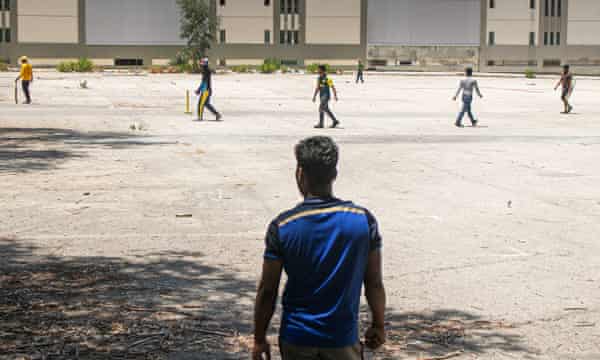
But the economic crisis in Lebanon has halved the value of Sugath’s monthly earnings and when he finishes his day job he returns to the small subterranean maids’ room – bed, toilet and gas hob almost abutting each other – where he has a second role as the building’s concierge. His sacrifices have enabled him to send home enough money to build a house for his parents, his brother and himself. But the light at the end of each week is cricket. “It makes my life here much easier to handle,” he says.
In 2017 the owners of the car park suddenly and unexpectedly refused permission to play cricket there, threatening to have anyone who showed up arrested. With a dearth of alternative venues, the scene threatened to wither and die. A new women’s project at a camp for Syrian refugees, Alsama Cricket, meant the game continued to be played in Lebanon – but not by the migrant workers.
It has taken five years to reinstate permission to use the car park – and when the game finally returned, it brought together the workers with the refugee players for the first time. “These two disparate communities have never had any interaction before,” says William Dobson, a Beirut bookshop owner from England who co-founded the September tournament with Sugath. “Now these teenage refugees who have only been playing for three years are turning up each week to learn from 50-year-old Sri Lankan guys.”
There were four teams of women at the tournament, including some who were playing for the first time. “After that we realised how excited women are to play cricket,” said Sugath. “Now we have 10 women’s teams practising every week.” He recalls how a woman called Pradeep told him: “For six days of the week I’m in Lebanon and I’m nobody. On Sunday I come to cricket and I’m back in Sri Lanka again.”
Dobson says: “In England it’s easy to take cricket for granted. But for a 50-year-old Sri Lankan woman who has lived in Beirut for 30 years, and hasn’t seen her family for two years, to be with other women in a similar situation and connecting to something from their homeland and their childhood – that’s something else.” Sugath has already arranged for a women’s tournament at the end of November. “When we’re at work, every one of us is counting the days til Sunday,” he says.
Navy seizes trawler smuggling over 300kg of heroin
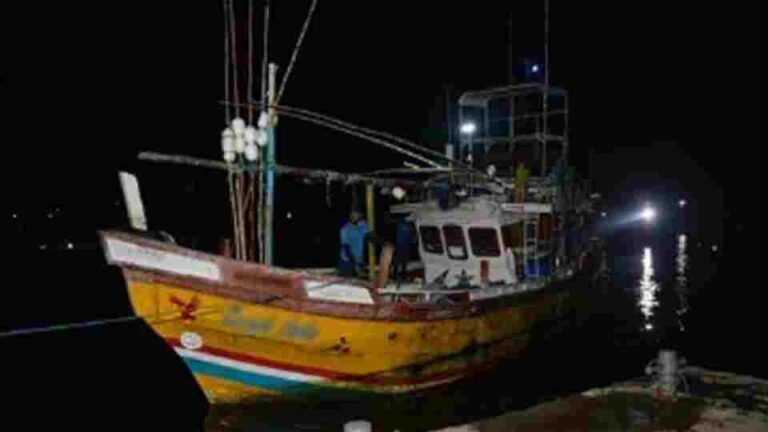
A special operation conducted by the Navy in coordination with the Police Special Task Force and Police Narcotics Bureau off Hambantota, led to the interception of a local fishing trawler carrying over 300kg of heroin (Including packages), worth approx. gross street value of over Rs. 6000 million and apprehension of 06 suspects on 05th November 2022.
The drug-carrying trawler and the suspects were brought to the Galle Harbour this morning (07th November). Meanwhile, Commander of the Navy Vice Admiral Nishantha Ulugetenne also arrived at the Galle Harbour to inspect the consignment.
The special operation was mounted by the Offshore Patrol Vessel SLNS Wickrama II, based on a coordinated intelligence operation of the Police Special Task Force, Police Narcotics Bureau and Navy Intelligence. Accordingly, the Navy’s sea unit deployed in this special mission intercepted a suspicious local fishing trawler in southern waters about 10 nautical miles (about 18km) off the Little Basses Reef Lighthouse.
Subsequent search led to the recovery of 300 packages of the substance stuffed in 12 sacks which had been concealed in the trawler. Thus, the Navy nabbed 06 locals aboard and the fishing trawler used for this illegal act on 05th November.
Moreover, the Navy, Police Narcotic Bureau and Police STF held a dinghy, which is suspected to have been made ready to fetch the stock of narcotics from mid-sea, and arrested 03 male and 01 female suspects involved in the land-network of this racket, in an operation mounted off Nillwella and its beach area on 06th November. Meanwhile, the Police Narcotic Bureau is conducting further operations in search of more suspects in connection to this illegal act.
The suspects held in this operation were identified as residents of Hambantota, Kottegoda, Dikwella and Mahamadala, who are from 31 to 62 years of age. Currently, the weight of the heroin stock is being measured. The haul of narcotics, multiday fishing trawler, dinghy and 10 suspects will be handed over to the Police Narcotic Bureau for onward legal action, after those proceedings.
With the mediation of the Defence Secretary General Kamal Gunaratne (Retd), a number of successful drug raids have been carried out, having mobilized intelligence services towards a common goal. In these efforts, the Sri Lanka Navy under the able leadership of Commander of the Navy, Vice Admiral Nishantha Ulugetenne has played a major role to thwart the influx of narcotics into the country.
Including the latest seizure, the Sri Lanka Navy has held drugs with a gross street value of over Rs. 22.5 billion during operations in 2022. Sri Lanka Navy – the country’s First Line of Defence is committed to coordinating with other law enforcement authorities, to carry out anti-drug operations of this nature in order to foil drug smuggling attempts being made in the guise of fishing.
SL Navy
Comprehensive report on this year’s fuel tenders tabled in Parliament today!
A comprehensive report on the fuel tenders submitted from January 01, 2022 to October 01, 2022 has been tabled in Parliament by Energy Minister Kanchana Wijesekara today (08).
The report consists of all information pertaining to the manner in which the tenders operated for fuel imports and the methods by which fuel were delivered outside the tender process, the Minister noted.
The report will be submitted as response to the continuous questioning by the Opposition with regard to fuel imports, he added.
MIAP
SL Businesses and people hope for the better seasons soon : Survey
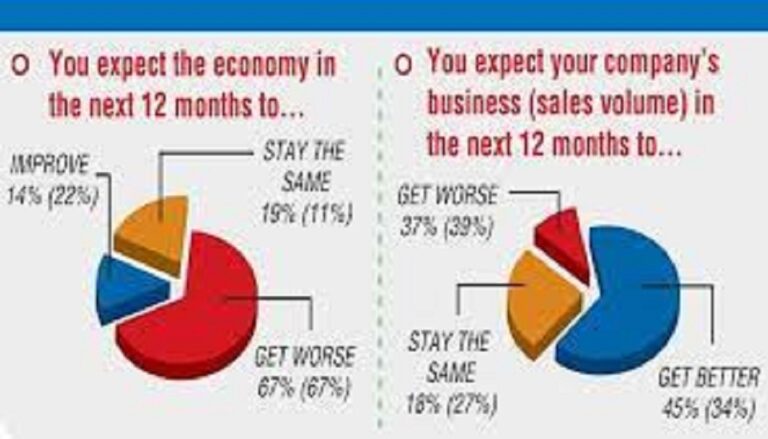
Businesses and people live in hope for better seasons to come, and both the LMD-NielsenIQ Business Confidence Index (BCI) and Consumer Confidence Index (CCI) reflect this sentiment.
NielsenIQ Director – Consumer Insights Therica Miyanadeniya said in the latest edition of leading business magazine LMD: “The pressure on businesses and consumers due to high inflation is phenomenal.
The BCI – though still at a relatively low range – has increased by 13 basis points to 89 – from 76 in September. The CCI has also gained 13 basis points from 25 in September to 38 in October,” she noted.
LMD reported: “Only 14% of respondents (drawn from the island’s corporates) to the exclusive BCI survey carried out in the first week of October say they expect the economy to improve in the 12 months to come (a dip in opinion from September’s 22%), and nearly two in 10 anticipate the economy will stagnate and ‘stay the same’.”
But despite the price hikes, 45% of business executives polled believed their sales volumes would increase in the next year, compared to only a third who felt this way in September, LMD observed.
“Executive opinion that there’s been an increase in business compared to the same time last year improved by five percentage points to 27 in October and 6% fewer reported a drop in sales volumes – i.e. 60% compared to 66% in September’s 66% – in a comparable period, at the time of the poll,” it added.
LMD also note that “optimism about an improvement in business prospects in the next quarter has also risen – perhaps in anticipation of the forthcoming festive season – to 28% from 11%; and businesses anticipating fewer sales have dropped further from 48% to 42%.”
Media Services, LMD’s publisher, said the latest edition of the magazine has been released. Its digital edition is also available on WhatsApp and the publisher’s social media platforms.
SL celebs summoned to CID in connection with probe into Thilini Priyamali Scandal

Veteran Actor and former politician Jeewan Kumaratunga and veteran actress Sangeetha Weeraratne were summoned to the Criminal Investigation Department (CID) for questioning in connection with the probe into businesswoman Thilini Priyamali, who was arrested several weeks ago involving a grand financial scandal.
Kumaratunga was questioned by the CID yesterday (07), and a statement was recorded from the actor in connection with the self-directed movie “Jeewa”, which is believed to have been funded by Priyamali.
Weeraratne was also questioned by the CID yesterday in connection with an alleged financial transaction between her and Priyamali.
MIAP
Parliament responds to President’s query on current status of implementation of far-reaching systematic changes

Parliament responds to President’s query on the current status of implementation of far-reaching systematic changes
Following President Ranil Wickremesinghe’s reminder to the Speaker Mahinda Yapa Abeywardena regarding the delay in the implementation of proposals to bring about far-reaching systematic changes, the Speaker has made a clarification regarding the current situation of the implementation of the resolutions of the Parliament of Sri Lanka.
According to the proposal brought to the Parliament by the Prime Minister on September 20, 2022, the Office of the Chief Organiser of the ruling party informs that the National Assembly of 34 members including the Speaker has been appointed and two sub-committees have been appointed under it.
The 13 member sub-committee has been appointed to identify the priorities for formulation of short, medium and long-term national policies headed by Mr. Namal Rajapaksa and its progress has been reported to the National Assembly.
The sub-committee for identifying short and medium-term programs related to economic stabilisation has been appointed with 12 members under the chairmanship of MP Patali Champika Ranawaka. The progress of this sub-committee has also been reported to the National Assembly.
The Parliament has approved the standing orders related to the appointment of sectoral monitoring committees on 2022-10-05, where 17 sectoral monitoring committees have been approved. Furthermore, for the appointment of 17 committees under Standing Orders 111, the Secretary General of the Parliament has called for nominations of 05 members of the ruling party and 03 members of the opposition through letter No. CO/9/3/COS/1 and dated 2022-10-26. However, the members have not been appointed so far.
Accordingly, 17 Sectoral Oversight Committees have been appointed which are : Economic Development, International Relations, National Security, Sustainable Development and Environment & Natural Resources, Women & Gender, Education & Human Resource Development, Health & Human Welfare, Social Empowerment, Transport & Communication, Agriculture & Lands, Legal Affairs (anti-corruption) & Media, Youth, Sports, Arts & Heritage, Business & Commerce, Energy
Manufacturing & Services, Internal Administration & Public Management, Reconciliation & North and East Reconstruction Committees under Standing Orders 119, 120 and 121 have been appointed so far. Mr. Kabir Hashim was elected as the Chairman of the Committee on Government Accounts, while Mr. Ranjith Bandara was appointed as the Chairman of the Committee on Public Enterprises and Dr. Harsha De Silva as the Chairman of the Committee on Government Finance.
The policy agreement related to the establishment of the Standing Committees namely the Committee on Economic Stabilisation, the Committee on Ways and Means, and the Committee on Banking & Financial Services has been given in the Committee on Parliamentary Affairs and the Party leaders have agreed to present their observations on the related standing orders. After the approval of the Committee on Standing Orders it has to be submitted to the Parliament. However, it has not been appointed so far.
The President has presented this Cabinet paper dated 2022-10-28. Accordingly, the approval of the Cabinet has been received to give instructions to the legal draftsman to finalise the draft for the establishment of the Parliamentary Budget Office, and to obtain the Governor’s certificate for submission to Parliament.
PMD