Home Blog Page 2064

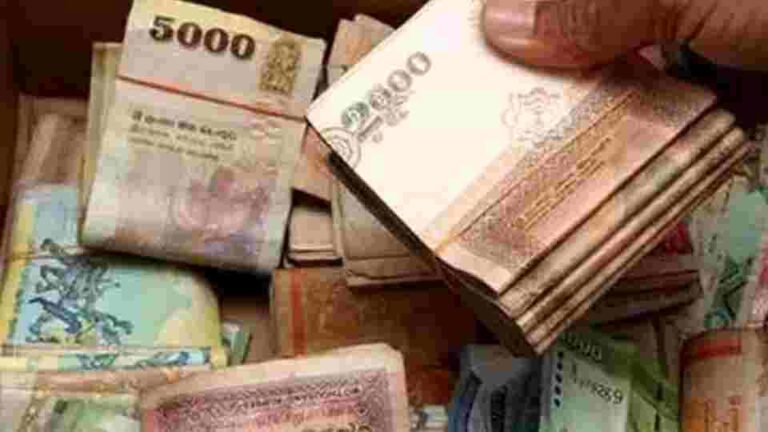
A 90,000 mn Treasury bill auction to be held next week

0

It is reported that a Treasury bill auction worth Rs. 90,000 million will be held on May 25.

Accordingly, bills of Rs. 45,000 million maturing in 91 days, Rs. 22,500 million in bills maturing in 182 days and Rs. 22,500 million in bills maturing in 364 days will be auctioned.

SL plans to introduce New budget replacing current budget

0

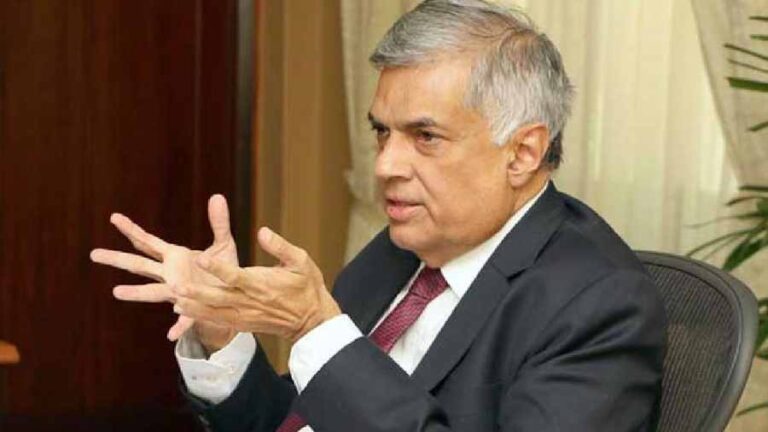
Sri Lanka’s new administration headed by Prime Minister Ranil Wickremesinghe is gearing up to present a new, relief-based budget, around next month, replacing budget 2022 – for the first time in history since independence.

The Finance Ministry will prepare the new relief budget as the previous budget for the fiscal year 2022 has become unrealistic and unproductive at this critical moment of economic crisis coupled with recession and social unrest, ministry sources said.

The economic mess and decrease in revenue as well as the drop in productive activity had been created as a result of the COVID-19 pandemic, subsequent lockdowns along with financial mismanagement and poor policies which affected economic growth, a former Treasury Secretary said.

An alternative budget is technically just like the full budget; it contains a complete set of accounts, including expenditure and revenue. The estimates are presented for the whole year like the full budget, he explained.

It can present revenue proposals and make major tax changes or introduce new taxes, he said adding that it is not constitutionally prohibited.

Almost all the budget estimates, revenue and expenditure proposals have become unrealistic and impossible to achieve under the present socio-economic crisis.

According to the details given in budget 2022, revenue is expected to grow by 46 per cent to Rs. 2.3 trillion in 2022. Several new taxes and tax increases in surcharge tax on profits, social security contribution, and financial VAT were proposed in this regard.

Even if the projected contribution from the new revenue measures (Rs. 333 billion) is considered realistic, the rest of the revenue base would need to grow by 24 per cent in 2022 – at least double the expected nominal GDP growth – to achieve the revenue target, a senior Treasury official disclosed.

Therefore this estimated revenue growth of 46 per cent was unrealistic and cannot be achieved under present man made economic crisis situation, he added.

It has now become a mission impossible to make relatively high allocations for defence, road development, and generally high levels of capital expenditure over allocations for education, healthcare and skills development proposed in the budget 2022, he said.

The expected real revenue forecast for this year is Rs.1.6 trillion compared to the estimated revenue of Rs.2.3 trillion in budget 2022, Finance Ministry data shows.

The new administration is taking action to increase the borrowing limit to Rs. 4 trillion from the present credit limit of Rs. 3.2 trillion. This proposal will be presented in parliament for its approval soon.

The former (Mahinda Rajapaksa) -led government has spent Rs. 1.95 trillion by the second week of May and the cash balance for the rest of the year is Rs. 1.25 trillion. It has been observed that budget 2022 has failed to focus on the management of external debt, the lack of a clear plan to regain access to international capital markets, and the related implications for dollar liquidity in the banking system.

GMOA freed from Padeniya’s control after 12 years!

0

It is reported that the Government Medical Officers’ Association (GMOA) will escape the control of the infamous Dr. Anuruddha Padeniya’s group after 12 years.

It is said that Padeniya and his team have informed that they will not contest the GMOA election this time, allowing for a new administration.

Sources said that they have decided not to contest the election as they know that they will face an utter defeat if an election is held.

During the tenure of Anuruddha Padeniya as President, the GMOA was heavily politicized and in recent times they have become visible to the public as a profession affiliated to the SLPP. At the same time, the GMOA was notorious for its arrogant activities.

The country also remembers the actions of Anuruddha Padeniya, the President of the Government Medical Officers’ Association, as one of the most powerful figures behind the ban on chemical fertilizers, which is wreaking havoc on the country.

However, some doctors who were part of the Padeniya group will also hold positions in the new administration, but doctors say there is hope for change.

Galle Face Attack: ‘Satha Nalaka’ arrested while hiding in Hokandara

0

Ashantha Nalaka alias Satha Nalaka was arrested by the CID yesterday (21) in connection with the May 09 attack on the Golf Face protest site.

The video of him assaulting a protester with an iron rod near the Galle Face Green was circulated on social media platforms.

He had earlier driven an army bus near the protest in front of the President’s Mirihana residence on March 31 and had blocked the road and later set the bus on fire.

He had also spoken out against the protestors during a protest in front of the Parliament entrance on the 5th.

The 43-year-old man was arrested by the CID while hiding in the Hokandara area and has been identified as a relative of an underworld gang member, police said.

World Bank, ADB & AIIB plan to provide emergency aid to Sri Lanka

0

The World Bank, the Asian Development Bank (ADB) and the Asian Infrastructure Investment Bank (AIIB) have jointly decided to support Sri Lanka’s response to the ongoing economic crisis.

The three institutions announced their decision in a statement issued after the first joint coordinated meeting held on the 19th of May.

The Sri Lanka Government is mobilizing is Asian Development Bank (ADB) of around US$1300 million consisting of around US$ 780 million in the form of loans obtained as Official Development Assistance (ODA).

Asum of USD 70.9 million is raised by way of ODA grants and technical assistance annually By entering into around 38-40 agreements with donor countries and international agencies, finance ministry data shows.

Aisdian Development leads the Official Development Assistance (ODA commitments amounting to US$ 568.0 million, followed by the World Bank (US$ 217.8 million) and Asian Infrastructure Investment Bank (AIIB) a considerable amount.

“All three institutions are adopting a coordinated approach to sustain basic services and livelihoods and to mitigate the impact of the economic crisis on the people of Sri Lanka.”

This includes access to essential items such as medicines, cash assistance, gas and fertilizer through the reallocation of resources from existing projects, the statement read further.

The Government is making arrangements to mobilize foreign financing of around US$ 1,300 million or more on avarege by entering into with foreign development partners and lending international donor agencies annully to support the public investment program.

This consists of around US$ 780 million in the form of loans obtained as Official Development Assistance (ODA) and USD 70.9 million was raised by way of ODA grants and technical assistance.

In addition to the funds raised from ODA development partners, around US 500 million was $ raised through term loan facilities extended by the China Development Bank during the period under review.

This was raised at a variable interest rate of London Interbank Offer Rate (LIBOR) at 6-month USD and 2.51 percent margin with a 10-year tenure.

Asian Development Bank (ADB) leads the ODA commitments during this period amounting to USD 568.0 million, followed by the World Bank (USD 217.8 million), European Union (USD 43.6 million), Germany (USD 12.5 million), Japan (USD 9.5 million), UN Agencies (USD 0.7 million). Commitments arranged to education and training was the highest among all the sectors which accounted for USD 400 million or 31 percent of the total followed by SME development (USD 165 million) and Disaster management (USD 129 million).

The Finance Ministry plans to obtain the approval of these countries and international financial agencies use part of their balance amount for the importation of fuel LP gas and other essential food commodities to overcome the present economic crisis as it has suspended development projects.

15 points on essential anti-corruption reforms to revive Sri Lanka 

0

2022 has so far been a tumultuous year for Sri Lanka. With the country teetering dangerously close to defaulting, economists have noted that the situation will only get worse before it can get better.

TISL maintains its stance that the prevailing crisis has been caused by decades of misuse and mismanagement of public resources, kleptocracy, systemic corruption and an overall lack of transparency and accountability in both governance as well as in the public service sector.

At this important juncture, the decisions taken and the action or inaction of the leaders of the country will determine the uplifting or complete breakdown of the economy, with direct consequences to the lives of citizens. Therefore, ensuring maximum transparency and accountability of decisions at the highest level and taking immediate action to curb ongoing and possible corruption are essential if the country is to effectively implement any economic recovery plan.  Hence, it is paramount that loopholes within the Constitution, national policies, laws, structures and systems are addressed in a manner that would minimize opportunities for corruption.

While a robust economic recovery plan is the need of the hour, if the people and systems that are entrusted with implementing such a plan are corrupt or perceived to be corrupt, there will be little to no acceptance from the people, who will have to bear the burden of this recovery plan.

In the light of the above, TISL hereby presents a set of recommendations that lays down the main anti-corruption reforms that are crucial immediately and in the medium / long terms, if Sri Lanka is to rise above the present crisis and bring about a real change:

1. Set the tone from the top – It is paramount that those who take leadership must have a clean track record that demonstrates their integrity and genuine commitment to serve the country, coupled with the required basic knowledge and expertise for their roles. A strong “zero-tolerance policy for corruption” needs to be adopted by the leaders, where they go beyond their word and reflect such principles in their action.

2. Ensure transparency of all decisions taken with regard to solving the present crisis –
Introduce an open digital platform to share all information related to the foreign donations and loans obtained, along with detailed information on how such funds are utilized and on decisions made by the Finance and other relevant Ministries and the Central Bank. It is essential to have frequent and regular press conferences to keep the people informed of the actions being taken on economic recovery and to conduct open consultations with relevant stakeholders prior to making important decisions.

 3. Repeal the 20th Amendment –
This amendment that removed essential accountability measures in governance should be repealed in order to bring back the checks and balances in governance that were brought in by the 19th Amendment.

4. Introduce provisions to strengthen Parliament’s oversight on Public Finance –
It is crucial to tighten the controls on public finance by converting the outdated financial regulations into a comprehensive Finance Law that will cater to the present times and ensure parliamentary oversight as well. In addition, Constitutional recognition and empowerment is required for watchdogs on public finance – the COPE (Committee on Public Enterprise), COPA (Committee on Public Accounts) and CPF (Committee on Public Finance), to enhance their effectiveness.

5. Introduce mandatory accountability measures on public procurement –
As public procurement is a process that is heavily targeted for grand corruption, it is essential to convert the existing National Procurement Guidelines to a law, and to establish mandatory procedures to follow in case of unsolicited proposals. Re-establishment and empowerment of the National Procurement Commission to oversee public procurement is also important.

6. Abolish the executive presidency –
The Executive Presidency as designed in our Constitution has proven to be an avenue that leads to the concentration of great power on one individual, often leading to the abuse of such entrusted power to the detriment of the country. Therefore, it is important to create a mechanism with a Prime Minister and Cabinet that is accountable to the parliament.

7. Empower the law enforcement authorities and ensure their independence, so that they can take action to end impunity, by fearlessly, proactively and vigorously pursuing the perpetrators of corruption, irrespective of their political power or social status.

8. Begin the process to de-politicize the public service, by introducing required Constitutional amendments that would enhance the independence of the public officials.

9. Act Immediately on the findings of COPE, COPA, COPF, which have continuously unraveled massive abuse of public resources within public institutions.

10. Conduct an immediate audit of all SOEs –
A financial audit and an overall review of all State-Owned Enterprises (SOEs) need to be conducted to ascertain losses and misuse of public resources and to take immediate action to stop ongoing corruption. These savings will help the Government to channel more public funds to secure essential goods and services.

 11. Recovery of stolen assets –
Law enforcement officials need to take steps to immediately commence investigations, asset tracing and the asset recovery process in relation to questionable assets of public representatives and public officials held within and outside of the country.

12. Show us the money – 
Political parties need to respect the call of the people to demonstrate their commitment to transparency and accountability and make relevant policy decisions to voluntarily disclose their Asset Declarations to the general public, thereby paving way for a social audit of their assets. Steps need to also be taken to Amend the law on Asset Declarations, making public disclosure of asset declarations mandatory and introducing provisions to centralize the record maintenance and for regular review and proactive investigations on discrepancies.

13. Hold the enablers accountable –
Public Officials, Big businesses, Banks and Financial Institutions, lawyers, accountants, real estate agents etc. are all part of the kleptocracy circle that pave way for, facilitate, support and benefit from grand corruption. Oversight entities such as the Public Service Commission, Financial Intelligence Unit of the Central Bank, the Chamber of Commerce, The Bar Association, Chartered Institute of Management Accountants etc. and the citizens need to act as watchdogs and demand greater transparency and accountability from these parties as well.

14. Introduce the proposed composite law on Proceeds of Crime –
Through this law Sri Lanka could establish an independent Asset Management Authority to manage recovered assets.  This law will deal with all matters relating to recovery of stolen assets held overseas.

15. Introduce legislation to regulate election campaign financing, which is a starting point of corruption of public representatives.

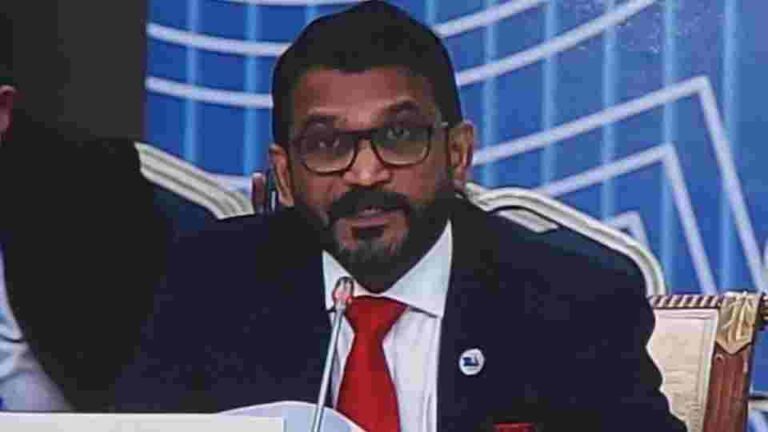
Commenting on the current situation, TISL’s Executive Director Nadishani Perera stated “We urge the citizens to continue to actively seek information and knowledge on the types and impact of corruption and to be informed of the essential systemic and cultural changes needed to uplift the country. We stand with the citizens in demanding accountability and corrective action from our public representatives in a peaceful manner. Together we can weather this storm and create the change we thought may not be possible in our lifetime.”

US lands top spot as world’s biggest enabler of financial secrecy in new index

0

The Tax Justice Network singled out lax trust laws as a major drawback to financial transparency reforms in its biennial report, calling on G-7 nations to commit to creating a global asset register.

By Nicole Sadek

The United States is the world’s largest enabler of financial secrecy, surpassing notorious tax havens like Switzerland, the Cayman Islands and Bermuda, according to an analysis by the Tax Justice Network released today.

For the first time, the U.S. tops the biennial Financial Secrecy Index, TJN’s global ranking that measures how much each country’s financial system promotes money laundering and the shielding of assets. Rounding out the top three in this year’s index are Switzerland and Singapore.

The U.S.’s refusal to share information about non-residents’ financial accounts with foreign tax authorities was a key factor in its high ranking. Countries that did not meet international standards for information-sharing were graded more harshly in this year’s index, the transparency advocacy group reported.

The U.S. financial services industry also increased the amount of services it provides to foreigners by 21% since 2020, the report states. Last year, a TJN study found that the U.S.’s friendly non-resident tax laws cost the rest of the world nearly $20 billion in lost tax revenue per year.

Alex Cobham, TJN chief executive, said on Tuesday that if the United Kingdom and all its dependent territories were combined, they would outrank the U.S. in fueling global financial secrecy, but the index ranks each jurisdiction separately.

The findings come as global advocates renew calls for beneficial ownership registers, which would reveal the true owners behind anonymous offshore companies, and just ahead of tomorrow’s G-7 meeting in Germany, where finance ministers of some of the world’s wealthiest democracies are expected to reinforce sanctions against Russian oligarchs whose luxury assets are hidden offshore.

Along with the U.S., five G-7 nations are responsible for slashing progress in financial secrecy reform by more than half: the United Kingdom, Japan, Germany and Italy, says TJN.

Meanwhile, the Cayman Islands, which ranked first in 2020, dramatically dropped to No. 14 in this year’s index, after disclosing new data on the financial services it provides to foreigners.

“The G7 must make clear where they stand in the fight against financial secrecy by committing to a global asset register,” Cobham said in a statement. A global asset register would combine public and private beneficial ownership databases to help law enforcement identify the owners behind hidden assets.

TJN determines each country’s rankings based on several measurements, including knowledge of and transparency on beneficial ownership, tax integrity, and international standards and cooperation. A higher ranking does not necessarily indicate that a country has worse financial secrecy laws but that it plays a larger role in fueling global secrecy.

Regulation of trusts

TJN singled out lax trust laws as a major drawback to financial reform in its report.

The U.S. received the worst possible score on trust transparency for its failure to make public information on trusts and other private foundations registered in the country.

Last year, ICIJ’s Pandora Papers investigation brought international attention to the U.S.’s rising role as a financial secrecy haven, revealing a sprawling network of trusts used to hide wealth in the country. Reporting by ICIJ and The Washington Post identified nearly 30 U.S.-based trusts that held assets linked to people or companies accused of fraud, bribery or human rights abuses. One Wyoming-based corporate service provider set up an anonymous trust for Russian oligarch Igor Makarov, who has since been sanctioned by Canada and Australia.

While the U.S. has made efforts to demystify corporate ownership and curb money laundering with the passage of the Corporate Transparency Act, advocates say the law is riddled with loopholes, including the exemption of certain types of trusts from a beneficial ownership registry.

Implementation and enforcement of the law has also hit several delays. A bipartisan group of seven U.S. senators urged officials to expedite rule-making in a letter last week, saying further delay would “undermine American efforts to respond to Russia’s war against Ukraine.”

U.S. lawmaker Carolyn Maloney, a Democrat representing New York who helped write the Corporate Transparency Act, said on a press call Tuesday that she asked the U.S. Treasury to use funding allocated to targeting Russian money laundering to expedite the process.

“I have privately and now publicly urged them to leverage this additional support to also implement this important law which will assist in their efforts,” Maloney said.

Progress in Cayman Islands, Switzerland

Meanwhile, some notorious tax havens, including the Cayman Islands, Switzerland and Luxembourg, have all improved their financial secrecy scores since 2020.

TJN reported that the Cayman Islands disclosed data for the first time that indicates the volume of financial services the British Overseas Territory provides to foreigners is far lower than once believed. The United Kingdom also extended two regulations that tackle corruption and the financing of terrorism to the island country, reducing its secrecy score.

But  another British territory, the British Virgin Islands, received the world’s worst “haven score,” which measures how much global corporate tax abuse it enables.

The BVI has featured prominently in ICIJ’s investigations on offshore secrecy. ICIJ found that it was the most popular jurisdiction linked to politicians identified in the Pandora Papers, and popular among hundreds of Russian nationals linked to companies in the leak.

Switzerland and Luxembourg have also decreased their financial secrecy scores, although they still rank highly in the index. Switzerland now requires country by country reporting on Swiss extractive companies, and Luxembourg has decreased the volume of financial services it provides to non-residents.

ICIJ

Police nab gas racket in Wellampitiya

0

A man was arrested in Wellampitiya in Kollonnawa for selling a domestic gas cylinder for Rs. 9260 during a raid on information received by the Colombo Crimes Division.

The gas stocks were sold at the Asian Bakery in Wellampitiya, Kolonnawa, and about 40 gas cylinders were seized during the operation. The arrest was made by the Police on the pretext of purchasing a cylinder.

The location was not even an agency selling gas, Police said. The operation was carried out under the direction of Officer in Charge of the CCC, Chief Inspector Ansalam De Silva.

MIAP

Details about fuel ships arrived in and about to arrive in SL

0

As of now, two ships carrying fuel have arrived in Sri Lanka and are unloading the stocks.

Tomorrow (22), another vessel carrying fuel will arrive in the island.

In addition, two more fuel ships are set to arrive in Sri Lanka on May 25 and June 01.

All of these vessels are carrying octane 92 petrol, octane 95 petrol and auto diesel.

MIAP

Police to raid on illegal possession of fuel

0

Police is set to launch an islandwide raid on petrol and diesel tomorrow (22), to seize those who are illegally keeping and reselling fuel.

MIAP