Cabinet spokesman Bandula Gunawardena said that the Cabinet of Ministers had granted approval for a proposal to downgrade Sri Lanka’s status from a middle-income country to a ‘low-income country.
He said that the downgrading will eventually be carried out by international rating agencies.The move comes after Sri Lanka suffered its worst economic crisis in history.
The downgrading will help Sri Lanka have more access to international financial assistance.
Sri Lanka to be downgraded from middle-income to low-income country
SL and IMF hold talks on facing country’s current challenges

State Minister of Finance Shehan Semasinghe and the Central Bank Governor had talks with the First Deputy Managing Director of the IMF Gita Gopinath in Washington.
The discussions focused on the challenges facing Sri Lanka and the steps being taken to address them.
“Had a productive discussion with First Deputy Managing Director of IMF Gita Gopinath
@GitaGopinath along with @CBSL Governor Nandalal Weerasinghe on economic reforms adopted to resolve challenges the country is experiencing and way forward with the assistance of IMF,” the State Minister tweeted.
Gita Gopinath tweeted saying she had an excellent discussion with Minister Shehan Semasinghe and the Governor on the extreme challenges the country faces and the concrete steps being taken to tackle them
Women MPs’ Caucus examines 22A from a GESI perspective!

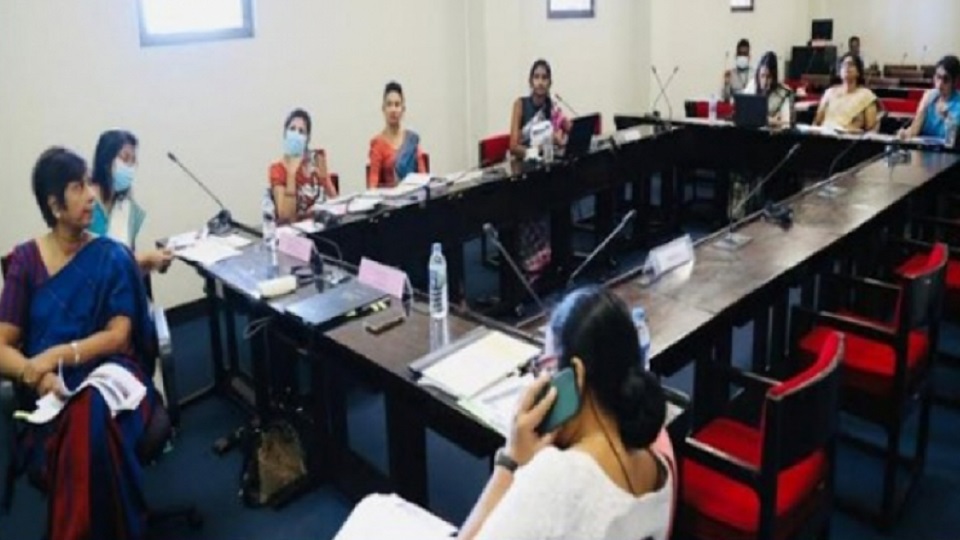
Women Parliamentarians’ Caucus held discussions regarding the matters related to the 22nd Amendment to the Constitution from a Gender Equality and Social Inclusion (GESI) perspective recently (06) in Parliament.
The discussion was held at a meeting of the Women Parliamentarians’ Caucus chaired by MP (Dr.) Sudarshani Fernandopulle.
Whilst highlighting the Salient features of the Bill, the Caucus was of the view that no Amendment has awarded any gender quota (in the form of a reserved seats or otherwise) to ensure female representation in the Constitutional Council and that the Bill does not expressly contain any substantial provisions aimed at ensuring Gender Equality or social Inclusion.
Accordingly, the Caucus was of the view that the Bill should be revised incorporating a gender quota in the Constitution allowing women to be included in decision-making entities including the Commissions and the Constitutional Council. It was also recommended to suggest a quota for a woman parliamentarian to be appointed to the post of Speaker or Deputy Speaker.
It is also recommended that Article 16 of the Constitution is amended to ensure that the provisions in the Fundamental Rights Chapter, particularly Article 12, overrides the restrictions arising from retaining old laws, including personal laws such as the MMDA and property rights of married women under Tesawalami law, that claw back of equality for women.
MPs Thalatha Athukorala, Rohini Wijeratne, Rajika Wickramasinghe, Manjula Dissanayake, and representatives of the National Democratic Institute (NDI) were present at the occasion.
Japan and SL enter agreement on JCM for Low Carbon Growth Partnership
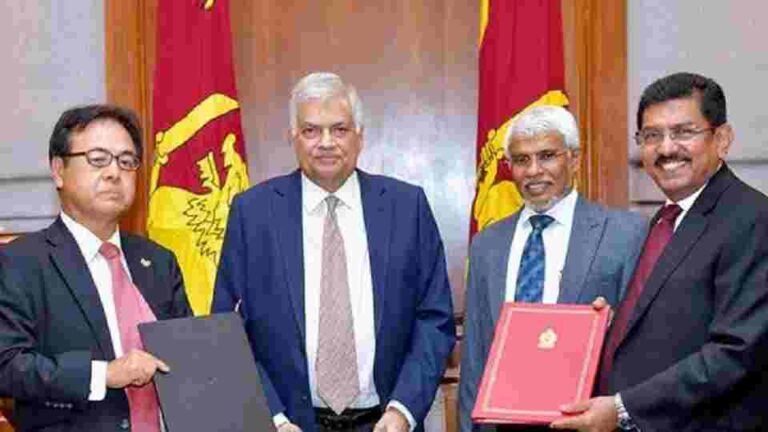
Japan and Sri Lanka sign Memorandum of Cooperation on the Joint Crediting Mechanism (JCM) for Low Carbon Growth Partnership.
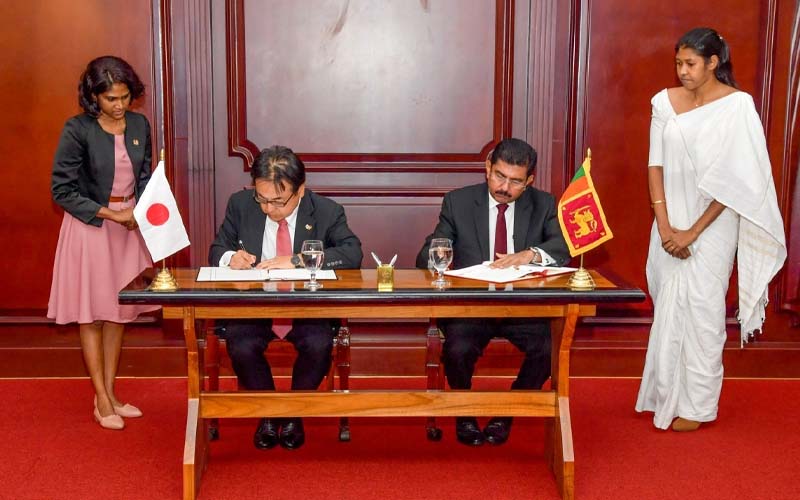
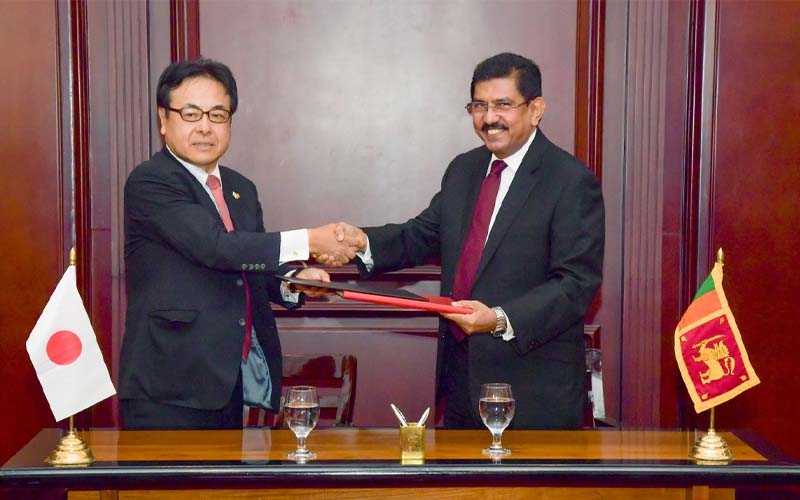
Japan and Sri Lanka signed a Memorandum of Cooperation on the Joint Crediting Mechanism (JCM) for Low Carbon Growth Partnership this afternoon (10) at the Presidential Secretariat.
The Memorandum of Cooperation on the JCM was signed by Dr. Anil Jasinghe, Secretary to the Ministry of Environment and Mr. Misukoshi Hideki, Japanese Ambassador to Sri Lanka. Thereafter, the Japanese Ambassador met with President Ranil Wickremesinghe and engaged in cordial discussion.
After its withdrawal from the Second Commitment Period of the Kyoto Protocol, Japan introduced the Joint Crediting Mechanism (JCM) in 2013 to contribute to the global effort of reducing greenhouse gas (GHG) emissions. This mechanism has been developed to reduce GHG emissions jointly with developing countries and share the greenhouse gas emissions reduced as the percentage between Japan and the agreed party country. Japan introduced this mechanism as agreed at the 21st Conference of Parties to the United Nations Convention on Climate Change to adopt the Paris Agreement to achieve the commitments of the Nationally Determined Contributions.
Japan is currently implementing projects under the JCM mechanism in 17 countries such as Mongolia, Bangladesh, Ethiopia, Kenya, Maldives, Vietnam, Laos, Indonesia, Costa Rica, Palau, Cambodia, Mexico, Saudi Arabia, Chile, Myanmar, Thailand and Philippines.
Through implementing the proposed projects under this mechanism the benefits such as introducing new technologies and technical expertise, capacity building, generation of green jobs and new infrastructure development could be achieved.
The Government of Japan and its private sector will provide technical assistance and part of the capital investment to implement this mechanism in developing countries. Under this mechanism, projects in energy, industry, transport, waste, forestry and agriculture sectors for reducing GHG emissions are expected to be implemented.
Moreover, Sri Lanka ratified the Paris Agreement on Climate Change on 21st September 2016. Sri Lanka also has submitted its Nationally Determined Contributions (NDCs) to the United Nations Framework Convention on Climate Change (UNFCCC). Therefore, the implementation of the Joint Crediting Mechanism in Sri Lanka will support achieving the GHG emission reduction targets under the Paris Agreement and contribute to the global effort of reaching the global temperature goal of the Paris Agreement.
Approval from the Ministry of Foreign Affairs and the Attorney General’s Department has been obtained for the implementation of the Joint Carbon Crediting Mechanism between Japan and Sri Lanka. Further, Cabinet approval has been received on 05 September 2022 for the implementation of the mechanism in Sri Lanka.
When implementing this mechanism in Sri Lanka, a Joint Committee co-chaired by the Governments of Japan and Sri Lanka and representatives of both countries will be established to approve the projects.
Speaking at the occasion Mr. Naseer Ahmed, the Minister of Environment, said that under the guidance of President Ranil Wickremesinghe, and on the special supervision of Mr. Sagala Ratnayake, the President’s Senior Adviser on National Security and the Chief of Staff, this program was made successful.
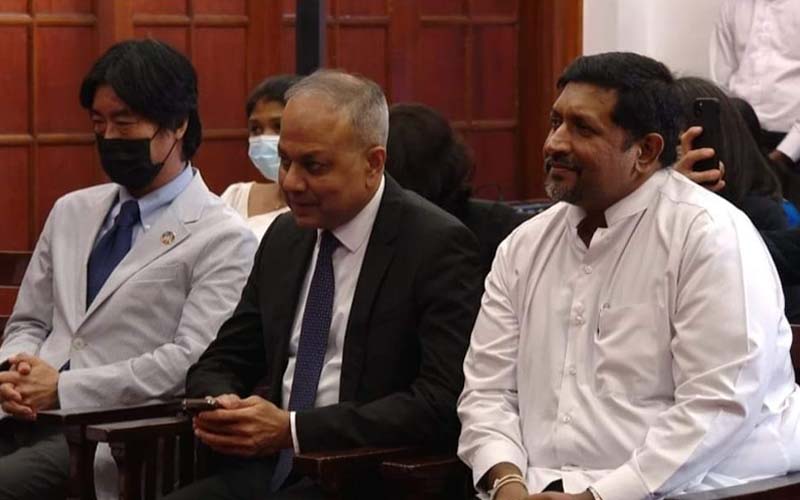
Minister of Environment Naseer Ahmed, Senior Adviser to the President on National Security and Chief of Presidential Staff Sagala Ratnayake, Presidential Adviser on Climate Change Ruwan Wijewardana and others attended the event.
Japan and Sri Lanka sign Memorandum of Cooperation on the Joint Crediting Mechanism (JCM) for Low Carbon Growth Partnership.
Japan and Sri Lanka signed a Memorandum of Cooperation on the Joint Crediting Mechanism (JCM) for Low Carbon Growth Partnership this afternoon (10) at the Presidential Secretariat.
The Memorandum of Cooperation on the JCM was signed by Dr. Anil Jasinghe, Secretary to the Ministry of Environment and Mr. Misukoshi Hideki, Japanese Ambassador to Sri Lanka. Thereafter, the Japanese Ambassador met with President Ranil Wickremesinghe and engaged in cordial discussion.
After its withdrawal from the Second Commitment Period of the Kyoto Protocol, Japan introduced the Joint Crediting Mechanism (JCM) in 2013 to contribute to the global effort of reducing greenhouse gas (GHG) emissions. This mechanism has been developed to reduce GHG emissions jointly with developing countries and share the greenhouse gas emissions reduced as the percentage between Japan and the agreed party country. Japan introduced this mechanism as agreed at the 21st Conference of Parties to the United Nations Convention on Climate Change to adopt the Paris Agreement to achieve the commitments of the Nationally Determined Contributions.
Japan is currently implementing projects under the JCM mechanism in 17 countries such as Mongolia, Bangladesh, Ethiopia, Kenya, Maldives, Vietnam, Laos, Indonesia, Costa Rica, Palau, Cambodia, Mexico, Saudi Arabia, Chile, Myanmar, Thailand and Philippines.
Through implementing the proposed projects under this mechanism the benefits such as introducing new technologies and technical expertise, capacity building, generation of green jobs and new infrastructure development could be achieved.
The Government of Japan and its private sector will provide technical assistance and part of the capital investment to implement this mechanism in developing countries. Under this mechanism, projects in energy, industry, transport, waste, forestry and agriculture sectors for reducing GHG emissions are expected to be implemented.
Moreover, Sri Lanka ratified the Paris Agreement on Climate Change on 21st September 2016. Sri Lanka also has submitted its Nationally Determined Contributions (NDCs) to the United Nations Framework Convention on Climate Change (UNFCCC). Therefore, the implementation of the Joint Crediting Mechanism in Sri Lanka will support achieving the GHG emission reduction targets under the Paris Agreement and contribute to the global effort of reaching the global temperature goal of the Paris Agreement.
Approval from the Ministry of Foreign Affairs and the Attorney General’s Department has been obtained for the implementation of the Joint Carbon Crediting Mechanism between Japan and Sri Lanka. Further, Cabinet approval has been received on 05 September 2022 for the implementation of the mechanism in Sri Lanka.
When implementing this mechanism in Sri Lanka, a Joint Committee co-chaired by the Governments of Japan and Sri Lanka and representatives of both countries will be established to approve the projects.
Speaking at the occasion Mr. Naseer Ahmed, the Minister of Environment, said that under the guidance of President Ranil Wickremesinghe, and on the special supervision of Mr. Sagala Ratnayake, the President’s Senior Adviser on National Security and the Chief of Staff, this program was made successful.
Minister of Environment Naseer Ahmed, Senior Adviser to the President on National Security and Chief of Presidential Staff Sagala Ratnayake, Presidential Adviser on Climate Change Ruwan Wijewardana and others attended the event.
PMD
Opposition Leader says anyone assaulting peaceful protests will be penalised under SJB govt (VIDEO)
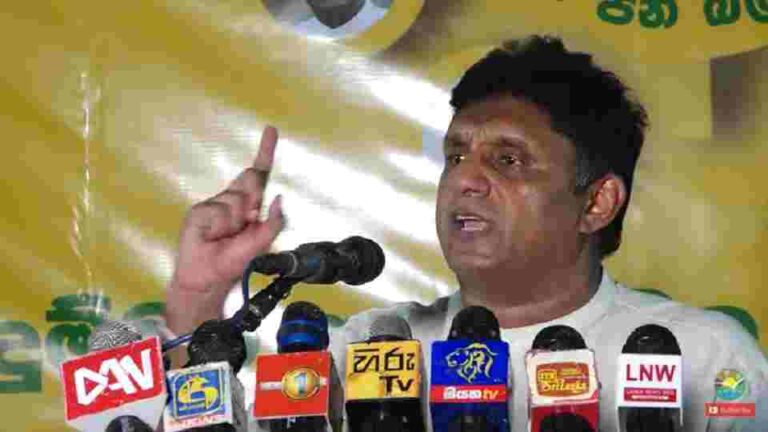
The corrupt regime that is ruling Sri Lanka at the moment is destroying the country and there will be no future without the holding of an election, said Leader of the Opposition Sajith Premadasa, addressing the Samagi Jana Balawegaya (SJB) Ududumbara Electorate Authority Board meeting organised by Counsel Sanath Bandara yesterday (10).
If the government denies the holding of an election, struggles will be taken to streets demanding one, the Opposition Leader noted, alleging that repression was unleashed by this regime against a peaceful protest held at Galle Face Green two days ago (09) in its fear of the people.
The government fails to bear the witnessing of even a peaceful demonstration by a mother and her child who hold hands together, he added, reminding that there is footage disclosing that the Police are forcibly separating the mother from her child and putting her in to the jeep.
Premadasa went on saying that the members of the government who forgot to mourn when people were dying in the queues, those who forgot to mourn when the farming community was sighing without fertiliser, and those who forgot to mourn when people were being killed by gas cylinder explosions are lamenting today.
He promised the audience that anyone obstructing those enjoying the democratic right to peaceful protests will be penalised under a SJB-government. State-sponsored terrorism and state brutality have no prolonged lifespan, for the history bears enough witness to prove it, he reminded.
MIAP
Romania offers jobs for SL skilled youth in construction, IT and tourism fields
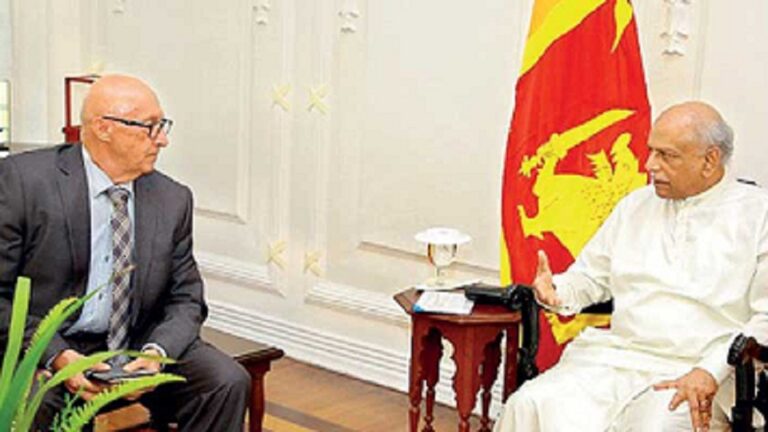
Romania has stepped into provide employment opportunities to Sri Lankan workers in that country as it is opening up 100,000 foreign jobs in the construction, IT and tourism sectors earlier this year.
Romanian Ambassador to Sri Lanka Victor Chiujdea said IT-skilled youth of Sri Lanka have the potential and opportunity to join companies and multinational corporations in Romania.
The Ambassador made these revelations when he called on Prime Minister Dinesh Gunawardena at Temple Trees recently.
The Prime Minister’s Office said they discussed the bilateral relations between the two countries and the steps Sri Lanka is taking to overcome the current economic crisis.
Romania has continued to issue work permits to skilled and semi skilled workers from Sri Lanka.
He stated that 1,500 new work permits have been issued recently . There are currently over 8,000 Sri Lankan workers in Romania employed predominantly in the apparel, hospitality and construction sectors, with more skilled job opportunities opening up in other fields such as IT.
Both sides agreed to revitalize and expand the bilateral trade and investment portfolio to fully avail of the EU GSP+ facility and access the wider markets in Central Europe and Asia, respectively.
Technical assistance in locomotive rehabilitation and production, capacity building to address skill gaps in the oil and gas sector and agri processing, were identified for further cooperation.
Ambassador Chiujdea said many leading multinationals are investing heavily in Romania and there will be many opportunities for skilled IT workers from Asian countries including Sri Lanka to find employment.
He also noted that there is potential to explore thousands of jobs for IT specialists in multinational companies as well as in Romanian companies.
“A group of Sri Lankan academics will shortly visit Romania to discuss cooperation in the field of higher education through an exchange visit supported by the European Union,” Ambassador Chiujdea added.
He disclosed that Romania would sign an agreement with Sri Lanka to avoid double taxation to facilitate trade between the two countries.
The Prime Minister extended his appreciation for Romania’s support to Sri Lanka and made a special mention of the Romanian railway compartments and rails provided to Sri Lanka.
Sri Lanka gets Japanese assistance to implement green projects
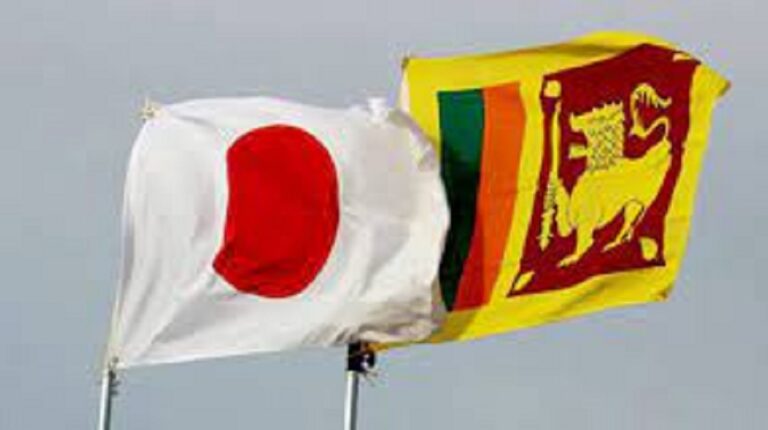
Sri Lanka in collaboration with Japan is gearing up for the implementation of the proposed projects under the Joint Crediting Mechanism (JCM) for Low Carbon Growth Partnership.
This mechanism will provide benefits such as introducing new technologies and technical expertise, capacity building, generation of green jobs and new infrastructure development that could be achieved, Environment Ministry sources said.
The Government of Japan and its private sector will provide technical assistance and part of the capital investment to implement this mechanism in developing countries.
Under this mechanism, projects in energy, industry, transport, waste, forestry and agriculture sectors for reducing GHG emissions are expected to be implemented.
Moreover, Sri Lanka ratified the Paris Agreement on Climate Change on 21st September 2016. Sri Lanka also has submitted its Nationally Determined Contributions (NDCs) to the United Nations Framework Convention on Climate Change (UNFCCC).
Therefore, the implementation of the Joint Crediting Mechanism in Sri Lanka will support achieving the GHG emission reduction targets under the Paris Agreement and contribute to the global effort of reaching the global temperature goal of the Paris Agreement.
Approval from the Ministry of Foreign Affairs and the Attorney General’s Department has been obtained for the implementation of the Joint Carbon Crediting Mechanism between Japan and Sri Lanka.
Further, Cabinet approval has been received on 05 September 2022 for the implementation of the mechanism in Sri Lanka.
When implementing this mechanism in Sri Lanka, a Joint Committee co-chaired by the Governments of Japan and Sri Lanka and representatives of both countries will be established to approve the projects
Japan and Sri Lanka signed a Memorandum of Cooperation on the Joint Crediting Mechanism (JCM) for Low Carbon Growth Partnership this afternoon (10) at the Presidential Secretariat.
The Memorandum of Cooperation on the JCM was signed by Dr Anil Jasinghe, Secretary to the Ministry of Environment and Mr Misukoshi Hideki, Japanese Ambassador to Sri Lanka.
Thereafter, the Japanese Ambassador met with President Ranil Wickremesinghe and engaged in a cordial discussion.
After its withdrawal from the Second Commitment Period of the Kyoto Protocol, Japan introduced the Joint Crediting Mechanism (JCM) in 2013 to contribute to the global effort of reducing greenhouse gas (GHG) emissions.
This mechanism has been developed to reduce GHG emissions jointly with developing countries and share the greenhouse gas emissions reduced as the percentage between Japan and the agreed party country.
Japan introduced this mechanism as agreed at the 21st Conference of Parties to the United Nations Convention on Climate Change to adopt the Paris Agreement to achieve the commitments of the Nationally Determined Contributions.
Japan is currently implementing projects under the JCM mechanism in 17 countries such as Mongolia, Bangladesh, Ethiopia, Kenya, Maldives, Vietnam, Laos, Indonesia, Costa Rica, Palau, Cambodia, Mexico, Saudi Arabia, Chile, Myanmar, Thailand and Philippines.
Duminda Dissanayake dropped from SLFP Electoral Organisers’ Meeting
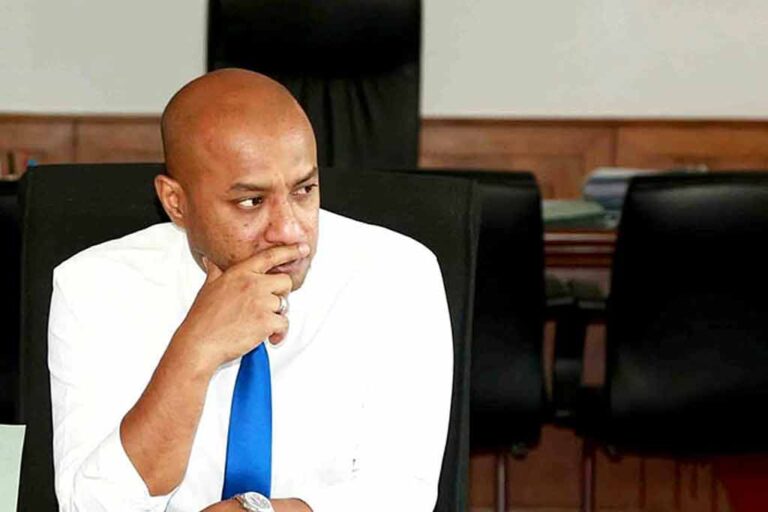
National Organiser of the Sri Lanka Freedom Party (SLFP) has reportedly been dropped from the Party Electoral and District Organisers’ meeting held yesterday (10).
Dissanayake has not been invited to the meeting, according to correspondents.
Early reports claimed the SLFP National Organiser is expecting a Cabinet Ministry of the RW-led Government very soon.
MIAP
Classes prohibited to more than 200 students at Ruhuna Medical Faculty over ragging
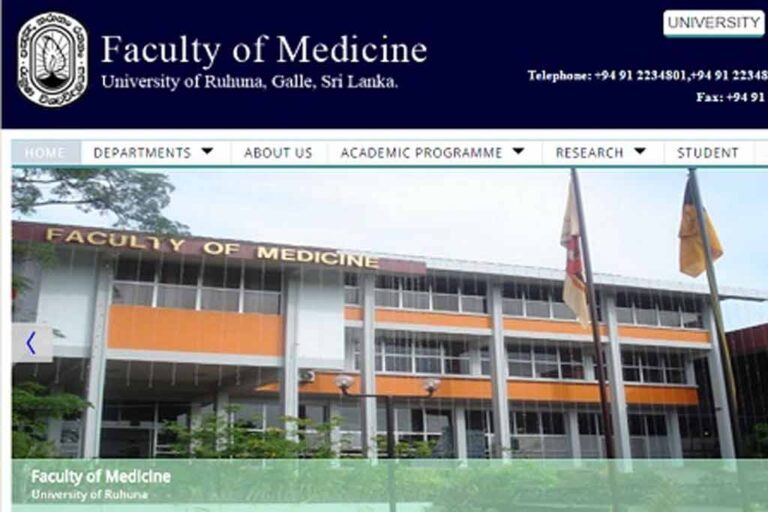
All second year students of the Faculty of Medicine of the University of Ruhuna have been imposed a class prohibition for committing initiation rituals alias ‘ragging’ on first year students.
The decision was taken by the University Administration.
Accordingly, more than 200 students will be subjugated to this class prohibition as per the Administration’s decision, said acting Dean of the Faculty Prof. Channa Yahathugoda.
MIAP
Central Bank suggests to infuse fresh capital to stop big bank rot

Certain Sri Lankan banks might have to be infused with fresh capital after the conclusion of what the officials call a “diagnostic study”, Central Bank Deputy Governor Yvette Fernando
The study was launched into big banks to assess the extent of the implications coming from higher provisions made for losses on foreign currency-denominated financial assets and the additional losses stemming from possible bad loans.
The Central Bank has imposed new capital controls some times back limiting the movement of foreign currency out of the country for six months.
The move came as Sri Lanka faces a depreciating currency, a fragile reserve position and an increasing risk of default. The CBSL’s monetary board had advised to impose the restrictions.
Although there aren’t any imminent concerns about their stability, Sri Lanka’s banks are currently undergoing their most painful stretch of combined stress coming from the worst economic crisis the country, she added.
For instance, cracks were already seen in their asset quality as scores of borrowers fell behind their loan payments amid soaring interest rates and runaway inflation, together with the provisions made entirely for the investment they held in the SL government bonds.
Meanwhile, the growth prospects are muted except for certain pockets in the loan portfolio such as the gold-backed loans as the economy is on course to shed nearly 9.0 percent of its size by the year’s end, reflecting how deep the cuts on consumption and investment spending by the economic actors.
“There is an effort to do a diagnostic study, especially on the big banks. And after that study, we will be doing an assessment. And based on that assessment if capital requirements are needed, we have to go for recapitalization also,” said Central Bank Deputy Governor Yvette Fernando.
Amid these concerns, the Central Bank has undertaken a diagnostic study of all big banks including the two State commercial lenders to identify any potential capital deficiencies arising out of the above shocks.
Separate reports on the matter have shown that nine systematically important banks, including Bank of Ceylon and People’s Bank, are subjected to the said study and would be conducted by an auditor, different from the bank’s present external auditor.
If there are any signs of wanting fresh capital, the Central Bank officials said they may have to go recapitalizations.
“There is an effort to do a diagnostic study, especially on the big banks. And after that study, we will be doing an assessment. And based on that assessment if capital requirements are needed, we have to go for recapitalization also,” said Central Bank Deputy Governor Yvette Fernando