Ready to intervene at any time to ensure food and economic security
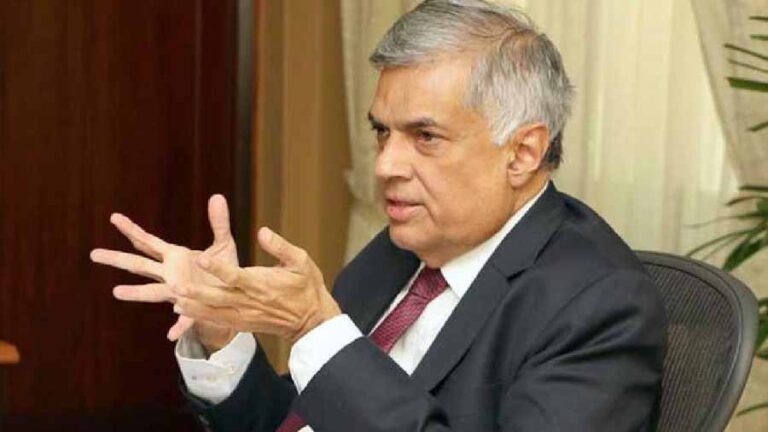
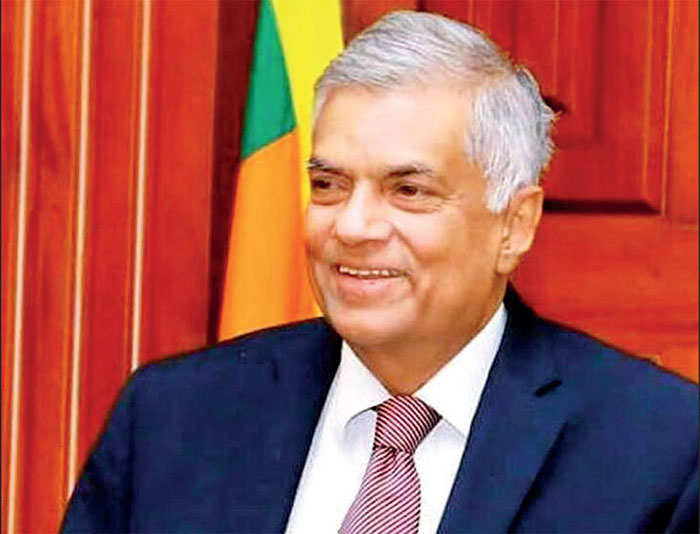
A country’s security is not only ensured militarily but is also secured through food and economic security, President Ranil Wickremesinghe emphasised.
The President said this during the progress review meeting of the National Food Security and Nutrition Assurance Program held at the Presidential Secretariat this morning (11).
Emphasizing that urgent measures should be taken to provide the country with fuel and food, the President said that if necessary, he could intervene through state security regulations.
The President also noted that if the implementation of the food security and nutrition assurance program is hampered due to the collapse of the state machinery, he is ready to intervene at any moment to resolve these issues.
President Ranil Wickremesinghe also pointed out the need to modernize agriculture and enact legislation on food security through this program.
The multi-sectoral joint mechanism to empower rural economic revitalization centres to ensure food security and nutrition was recently implemented across the island under the theme “No citizen should be allowed to starve due to the lack of food”, on the directives of President Ranil Wickremesinghe.
Also, the progress of the program at the district level was examined during this discussion and it was stated that rural economic revitalization committees have been established at the village level in all districts and programs have been initiated to ensure food security and nutrition.
Discussions also centred on the issues that could arise during the cultivation process in the relevant districts, while special attention was placed on the supply of fertilizer, land issues, unavailability of seeds and the crop damage caused by wild animals.
President Ranil Wickremesinghe stated that measures have been taken to solve these problems in consultation with the relevant institutions and instructed the authorities to expedite the process of resolving the issues that further remain to be resolved.
Having paid attention to the progress presented by the district secretaries about the implementation of the program in each district the President informed the officials to identify separately the crop cultivations done at the rural level to create food security and to identify the areas suffering from food shortages and submit a report on the matter immediately.
Based on this information, the President also directed the officials to implement a food bank and community kitchen programs to cover every district under the leadership of the District Secretaries.
Further, the President instructed the relevant departments to continue implementing this program until 2023, mustering the contribution of all the government officials, armed forces, civil defence force, government and non-governmental organizations, to ensure the nutritional needs of the people and to prepare for the world economic crisis that may occur in the future, through this programme. The President further stated that after 03 weeks, a report on the progress of this program should be sent to the Cabinet every week.
Speaking at this discussion, Prime Minister Dinesh Gunawardena pointed out the need to speed up the provision of land for new cultivators and follow a formal system for it.
He also noted that the upcoming rainy season is conducive to cultivation and highlighted the importance of educating the people at the rural level on engaging in agricultural activities without delay.
Cabinet and State Ministers including Prime Minister Dinesh Gunawardena, Senior Advisor to the President on National Security and Chief Staff of the President Sagala Ratnayake, Secretary to the President Saman Ekanayake, Senior Advisor to the President on Food Safety Dr Suren Batagoda and government officials including Secretaries of the line Ministries and District Secretaries participated in this discussion.
The government stated that Sri Lanka will remain a middle-income country.
Sri Lanka no longer qualifies for International Bank for Reconstruction and Development (IBRD) loans due to a downgrade of the country’s credit rating.
Therefore, the Cabinet approved a proposal yesterday (10) to request the World Bank to grant the country eligibility to obtain loans offered by the International Development Association (IDA). This is with the aim of obtaining concessionary funding from the International Development Association (IDA) — an arm of the World Bank that helps the world’s vulnerable countries. This facility is called “Gap”.
Twelve countries including Indonesia have availed themselves of this facility when they were facing economic downturn similar to Sri Lanka. The Government is pursuing a “reverse graduation” policy for a limited period of time.
Cabinet spokesman says Cabinet approved Sri Lanka’s “downgrade” from middle-income to a low-income country: President’s Office says Sri Lanka will remain a middle-income country, and that the Government is pursuing a temporary “reverse graduation” policy.
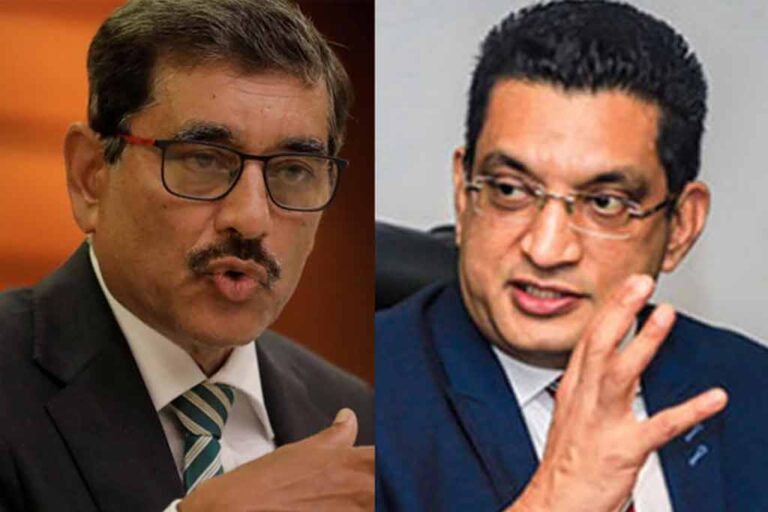
Foreign Minister Ali Sabry admits full responsibility for the “debt default” done when he was Finance Minister: says “world renowned experts” Indrajith Coomaraswamy, Shantha Devarajan and Shamalee Cooray advised President Gotabaya Rajapaksa and him to announce the default early, so that the default would then not be a “hard” default.
Permanent High Court at Bar orders release of former CB Governor Arjuna Mahendran and 9 others from charges in the first Treasury Bond case: states the charges cannot be continued under the Public Properties Act: majority verdict issued by Judges Sanjeewa Morais, Damith Thotawatte and Namal Ballale.
High profile business woman Thilini Priyamali accused of defrauding people and misappropriating millions of rupees, in a well publicised “fraud case” involving many famous persons.
Federation of Health Professionals warn of trade union action if the retirement age limit is extended only for one particular profession in the health service.
Rs.1 bn worth of cheques returned on a daily basis on average in 2Q22: rise of 30% compared to 1Q22, with the economy contracting by 8.4% in 2Q22.
Chamber of Construction Industry Sri Lanka Past President Engineer Ranjith Gunathilake states the construction industry will never move forward when interest rates are at 28-30%: also says people don’t use their money for development purposes and industry workers are out of work.
United Nations’ Development Programme estimates Sri Lanka and 53 other countries which account for more than half of the world’s poorest people, need immediate debt relief to avoid even more extreme poverty and heightened impacts of climate change.
Transport Minister Dr Bandula Gunawardane says “digital” driving licences will be issued due to lack of materials to print new driver’s licences: also says the situation will ease by the end of the year.
State Finance Minister Shehan Semasinghe and CB Governor Dr. Nandalal Weerasingh meet IMF Deputy MD Gita Gopinath in Washington: it’s now 7 months since Sri Lanka sought IMF assistance: during that period all bridging finance has also stopped completely.
President Ranil Wickramasinghe emphasized that the security of a country should be not only military but also food and economic.
Ranil Wickramasinghe stated this while attending the progress review meeting of the National Food Security and Nutrition Assurance Program held at the President’s Office yesterday (11) morning.
The President also stated that he is ready to intervene at any time to resolve the problems that have arisen in the implementation of the food security and nutrition assurance program, which are simply due to the collapse of the state machinery.
Wickramasinghe also pointed out the need to modernize agriculture and enact laws on food safety through this program.
With the theme “No citizen should starve due to lack of food”, the multi-sectoral joint mechanism to empower rural economic revitalization centers to ensure food security and nutrition was recently implemented throughout Dipa as per the instructions of President Ranil Wickramasinghe.
The progress of this program at the district level was examined and it was revealed that rural economic revitalization committees have been established at the village level in all the districts and programs have been started to ensure food security and nutrition.
There was also a discussion on the obstacles and problems in carrying out cultivation activities related to the respective districts and special attention was paid to fuel and fertilizer supply, land problems, shortage of seeds and damage to forestry by wild animals.
The President paid attention to the progress presented by the district secretaries in relation to the implementation of the program at the district level and informed the officers to identify separately the crop cultivations to be done at the rural level in order to create food security, and to identify the areas suffering from food shortage and submit a report on it promptly.
Based on this information, the President also instructed to plan to implement food bank and community kitchen programs to cover every district under the initiative of the district secretaries.
The President pointed out the possibility of all of them contributing to this program as there are more people than just the public service, and pointed out the importance of getting the support of the three armed forces, civil defense force, government and non-government organizations.
President Ranil Wickramasinghe also instructed to continue implementing the program until the year 2023 to confirm the nutritional needs of the people and to use this program to prepare for the world economic crisis that may occur in the future.
The President further stated that after 03 weeks, a report on the progress of this program should be sent to the cabinet once a week.
Cabinet and State Ministers, President’s Senior Advisor on National Security and Chief of Presidential Staff Sagala Ratnayake, President’s Secretary Saman Ekanayake, President’s Senior Advisor on Food Security Dr. Suren Batagoda and government officials including line ministry secretaries and district secretaries attended the discussion.
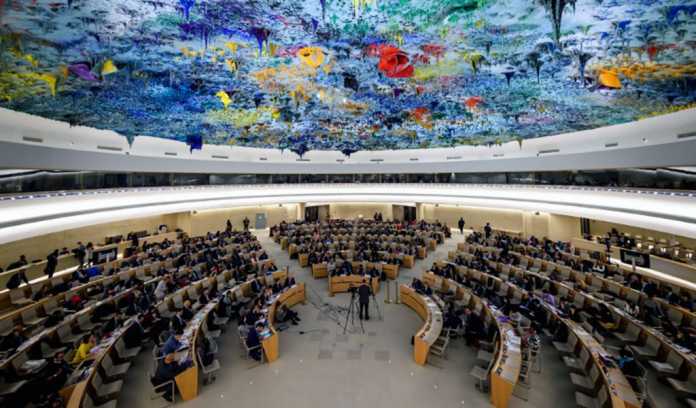
Abraham Lincoln once said: “You can please some of the people some of the time, all of the people some of the time, some of the people all of the time, but you can never please all of the people all of the time”. This was so evident in what the Core Group said on Thursday 6th October in the 51st session of the UN Human Rights Council – UNHRC, when they tabled the resolution on Sri Lanka.
Since J.R.Jeyawardena’s presidency, Sri Lanka has adopted the practice of using someone other than a Sinhala Buddhist as Foreign Minister or lobbyist, to manage international pressure. However, this idea proved useless in the 51st of the UN *HRC.
The late A.C.S. Hameed and Lakshman Kathirgamar were Foreign Ministers of Sri Lanka who worked hard to maintain the image of a spotless Sri Lanka. When Hameed was Foreign Minister, he was invited to speak on behalf of Sri Lanka in the UN General Assembly on 5th October 1978. A Tamil Lawyer from UK, the late Vaikunthavasan impersonated the Foreign Minister of Sri Lanka, addressing the UN General Assembly for two minutes, about the grievances of the Tamils in Sri Lanka, until the UN Security led him off the platform.
The late Lakshman Kathirgarmar contributed much in suppressing the armed struggle of the Tamils. However, when he was to be made Prime Minister, there was fierce opposition to his appointment, from Buddhist monks to many Southern politicians, especially Mahinda Rajapaksa. Government personnel, including Mahinda Rajapaksa eventually established an institute in memory of Kathirgamar, purely for their own benefits. There have been many occasions in the past, when Mahinda Rajapaksa used Rauff Hakeem as his lobbyist among Islamic countries.
Scapegoat
Now the latest scapegoat is Ali Sabry. To be frank, I personally feel sorry for him. I was told that he is a good lawyer who appeared for some important PTA cases. However, being a personal lawyer for Gotabahya Rajapaksa, he was forced into politics and is now getting the blame for what has gone wrong in the UNHRC.
Now everyone is aware of what happened to the resolution on Sri Lanka tabled by the Core Group which consists of the United Kingdom, USA, Canada, Germany, Montenegro, North Macedonia and Malawi. This resolution was co-sponsored by nearly forty countries. In my thirty-two years of experience participating in the UN Human Rights Forums, it has always been clear that when a resolution is tabled by seven countries and the number of co-sponsors increases to forty – there is no doubt that the particular resolution will go through. Sri Lankan diplomats have not realised this yet, and I do not know who is to be blamed!
What happened on 6th October in the UNHRC marks a really sad day for Sri Lanka. The representative of the United Kingdom smartly tabled the resolution and spoke. When member countries were invited to explain the way they would be voting, France and Republic of (South) Korea said that they would vote in favour of the resolution. This was followed by Pakistan, China and Venezuela saying that they would vote against it. Brazil and Japan said that their position was to abstain.
At this point India’s Permanent representative Mr. Indra Mani Pandey, took the floor and said the following : “In finding a lasting and effective solution for peace and reconciliation in Sri Lanka, India has always been guided by the two fundamental principles of support to the aspiration of the Tamils for equality, justice, dignity and peace and unity, territorial integrity and sovereignty of Sri Lanka……………Achieving prosperity for all Sri Lankans and realizing the legitimate aspirations of Tamils of Sri Lanka for prosperity, dignity and peace are two sides of the same coin….” . Since 2009, there have been nine resolutions on Sri Lanka in the UNHRC – India has voted in favour of three, and has abstained thrice. The other three resolutions were adopted without a vote – by consensus.
Standard text since 2012
Then, representing the ‘concerned country’, Sri Lankan Foreign Minister Ali Sabry was invited to speak. I wonder whether they have used a standard text since 2012, I mean the very first time a critical resolution on Sri Lanka was tabled and passed by the USA. In my observation, whenever there is a resolution against Sri Lanka, whether the representative is Ali Sabry, Dinesh Gunawardena, Mangala Samaraweera, Mahinda Samarasinghe or whoever it is, they read the same contents only changing the session number and the date. This shows that they have nothing new to add or justify. In other words, they use a smokescreen to cover the truth. This fooling has gone on since 1948.
Let’s consider Ali Sabry’s point about the financial implication of this resolution. What surprised me was that Ali Sabry does not realise that “charity begins at home”. Sri Lanka knew very well that this resolution would be passed without any hurdle, so why did they bring a jumbo team to Geneva from Colombo?
There were five parking spaces reserved for Sri Lanka in front of the UN building in Geneva, from Monday 3rd October. In other words, there were five vehicles in operation in Geneva. What was the cost of their flights, lodgings, travel locally and hosting other diplomats, etc? In other words, Ali Sabry who spoke about the financial implication of the resolution and severe financial situation in Sri Lanka should set an example to the citizens who are really facing extreme economic hardship in the country.
I always admire the speeches of a few pied-pipers for Sri Lanka. They are none other than Bolivia, China, Cuba, Pakistan, Uzebekstan and Venezuela. Their text is also standard. They talk about selectivity, partiality, pro-western agenda, double standards, interfering in the domestic affairs of a sovereign state, etc. Also, they say that Sri Lanka co-operates with all the UN mechanisms, so why is a resolution needed? This shows their ignorance. A resolution is tabled and passed because Sri Lanka doesn’t respect international treaties and mechanisms. Also, when resolutions were agreed by consensus in 2015, 2017 and 2019 they never implemented what they had co-sponsored. In such a situation, no states other than pied-pipers will support Sri Lanka.
Prof. G.L. Peiris, Foreign Minister of Sri Lanka on several occasions in the past, has defended Sri Lanka in the UNHRC. Yet last week he said that “Sri Lanka has had to face a resolution at the United Nations Human Rights Council, as Sri Lanka has failed to fulfil its pledges to the UNHRC on previous occasions”. It’s a pity that it has taken such a long time for Peiris to realise this fact. Hope he is not using this as a trump to get a ministerial post.
Surely this is another serious issue to make the international community lose any trust that it had in Sri Lanka before. Now G.L.Peiris has opened his mouth.
In the recent past, former Minister of Justice Rauff Hakeem and former Sri Lankan representative to the UN in Geneva, Dayan Jayatilka who justified the PTA in many platforms including in the UNHRC, spoke this time against it. Is this called hypocrisy or opportunism? If these three are offered government top positions again, will they reverse what they are uttering now?
The voting last Thursday 6th brought real shame to Sri Lanka. Anyone who looks at the past resolutions and the voting patterns can easily witness the downfall of Sri Lanka in the UNHRC. The table is given below for any sensible person to understand where Sri Lanka stands among the international community.
Slap on the face to Ranil
Last week’s resolution was a slap on the face to Ranil Wickremasinghe who is considered to be western-oriented. Also to Ali Sabry, who was appointed as the Foreign Minister to manage the voting through Islamic countries. Their entire bag of tricks failed in the UNHRC.
Since 2009 – the numbers of countries voting in favour of Sri Lanka are given below:
If we talk like a Sri Lankan politician, we should consider that forty out of forty-seven countries were against Sri Lanka in the last voting. The actual result was 20 in favour, 20 abstentions and 07 against (which was in favour of Sri Lanka). Abstaining countries must have presumed that it is not fair for them to humiliate Sri Lanka. Otherwise, they would have voted in favour of this resolution.
Presently who is a friend of Sri Lanka? None, is my reply. Soon after the resolution on Sri Lanka was passed by UNHRC, there was a resolution tabled by the USA against China on the subject of ‘Human rights situation in the Xinjiang Uyghur Autonomous region, China”. This resolution was defeated by China with a difference of two votes. If China is a real friend of Sri Lanka – in the same session, same members, the same day, why didn’t China help Sri Lanka? It is the same with India. India abstained during the resolutions against China as well as against Sri Lanka. If so, many are curious as to why, and ask the question ‘where do they stand?’
The International community is not going to tolerate the hypocrisy of the Sri Lankan politicians anymore. I will give a good example to show how Sri Lanka is cheating the international community.
In 2009 – UN Secretary General name was used!
During the peak hours of the war in Vanni, the Western countries called for a Special session in the UNHRC. But it was deliberately delayed by India, Cuba, China, Pakistan and others. Eventually that Special session took place only after the end of the war from 26th and 27 May 2009. In fact, Sri Lanka played a sneaky game making use of this Special session. With the help of India, China, Cuba, Pakistan and others, they tabled a resolution in their favour. The promises made by Sri Lanka and laid out in this resolution have still not been honoured. Please read the quotes given below:
Sri Lankan representative Dayan Jayatilleka said when introducing the draft resolution L.1/Rev.2 (S 11/1) on 27 May 2009:
”Operative paragraph 10 enshrined the entirety of the discussion between the Secretary-General of the United Nations and the President of Sri Lanka. There could be no more sincerity to the commitment of Sri Lanka and the co-sponsors. Sri Lanka, now ten days after the end of a 30-year war, had represented the best synthesis of the discussions taking place in the Council.”
”………..Draft resolution L.1/Rev.2 was not a blank check for the Government of Sri Lanka, it comprehended the totality of the agreement with the Secretary-General. But it was not a punitive measure either. It was not a manifesto for a lynch mob”.
Martin Ihoeghian Uhomoibhi, President of the Human Rights Council, in concluding remarks, on 27 May 2009, said that , “………The draft resolution endorsed the joint statement made by the Secretary-General of the United Nations and the Government of Sri Lanka”.
Since independence in 1948, whoever has been in power in Sri Lanka manages citizens with verbal and fake promises. What they sign on papers has no value or meaning. The same path or idea is not going to work with the international community. Globally there is ample evidence to prove that “cheating will end up in a disaster”.
Foreign Minister Mohammed Ali Sabry contributing to a political programme aired on Hiru TV disclosed that the move of Sri Lanka resorting to debt default was advised to former President Gotabaya Rajapaksa and him as the then Minister of Finance by ‘glorified advisors’ who are Dr. Indrajit Coomaraswamy, Shantha Devarajan and new Governor of the Central Bank of Sri Lanka (CBSL) Dr. Nandalal Weerasinghe. Sabry stressed that he takes the full responsibility of the decision to debt default.
His comments come in following criticism raised by a number of economic analysts, politicians and civil activists, who argued that the move would be extremely unlawful, irresponsible and even treasonous, had the decision to debt default been made without consulting the Monetary Board, the Attorney General, the Cabinet and Parliament, nor receiving any approval of the said bodies.
The parties that should be held accountable for this move are persons of foreign citizenship, the analysts argue, reminding that Gotabaya Rajapaksa is a US citizen, Dr. Coomaraswamy is a UK citizen, Devarajan a US citizen and Dr. Weerasinghe, an Australian citizen, in what they suggest as Sri Lanka being navigated into the depths of hell on the wishes of four foreign citizens.
Therefore, as to how such a treasonous move was made should be probed into and the reasonable doubt whether their conduct backed by Sabry was a behind-the-curtain operation by a foreign power shall also be looked upon, the analysts added.
The three-member Permanent High Court today (11) dropped ten charges against persons accused of involvement in a Bond issuance leading to controversy in 2015.
Accordingly, ten charges against Arjun Aloysius, Arjuna Mahendran, Geoffrey Aloysius and Kasun Palisena were dropped in connection with the case alleging that they had acted in a fraudulent manner in the issuance of bonds on February 27, 2015. That being said, the defendants have been acquitted of all charges from 05 to 14 in the lawsuit consisting of 14 charges total.
Lawyers appearing for the defendants of the CBSL Bond Case said they will lodge objections in the next Court session regarding the charges numbered from 01 to 04.
The event which was made public as the ‘Great Bond Scam,’ or the ‘Bond Fraud in Broad Daylight’ leading to a massive controversy on and off the political arena during the period of the Good Governance regime seven years ago, accordingly, has now taken rather a twisted turn, unravelling evidence to suggest that the entire saga was but an emotional political propaganda project lacking any legal basis implemented to attack certain parties.
President issues instructions to streamline the process of responding to letters, e-mails, phone calls addressed to government institutions.
President Ranil Wickremesinghe has issued instructions to streamline the process of responding to letters, emails and phone calls addressed to government institutions.
The president has focussed his attention on streamlining and expediting the process of responding to letters, emails and phone calls by the public instead of them having to waste their time, effort and money by having to come to these institutions personally to attend to their requirements.
Accordingly, a special letter signed by the Secretary of the Ministry of Public Administration, Home Affairs, Provincial Councils and Local Government, including provisions in replying to letters, e-mails and telephone calls addressed to government institutions, has been sent to all ministry secretaries, provincial chief secretaries and Heads of departments.
Priority should be given to general letters from the public to government institutions, and in case final replies cannot be sent immediately, an interim reply stating that the letter has been received should be sent within one week and a final reply should be sent within four (04) weeks.
In addition, for all official letters, the direct telephone number, fax number and e-mail address of the staff officer in charge of the subject should be mentioned below the signature of the relevant letter when sending reply letters.
Emails sent to public email addresses of relevant offices should be checked daily and a specific officer should be assigned for the purpose. Emails to staff officers’ email addresses should also be checked daily.
Efforts should be made to respond to emails the same day and if the relevant officer cannot answer them on the same day, they should send a reply stating that the letter was received and the time required to respond to it. In the same way, arrangements should be made to provide answers to the inquiry within a reasonable time/ before the notified date.
All phone calls to the office should be answered and if there are organizations/departments that receive many phone calls, a specific officer should be assigned to respond to those calls.
The relevant officer appointed to respond to these calls should make a note of the caller’s name, the purpose of the call and contact details on which a response could be forwarded.
In instances where an immediate response cannot be given, the relevant staff officers/officers in charge should take steps to respond to the caller’s query within a reasonable time frame.
The Court of Appeal today (11) ordered that Saruwa Liyanage alias ‘Saruwa Sunil,’ the ex Chairman of Akuressa Pradeshiya Sabha who was convicted for molesting a minor and sentenced to 15 years in prison, be acquitted from all charges.
Liyanage was accused of being a sex offender on a minor in 2012 and on January 17, 2020, the Colombo High Court declared that the ex Pradeshiya Sabha Chairman was guilty, sentencing him to 15 years of rigorous imprisonment with a fine of Rs. 25,000 and a compensation of Rs. 250,000.
In resentment to the High Court verdict, Liyanage petitioned for the Appeal Court claiming that the verdict was declared solely based on a video footage submitted to the National Child Protection Authority (NCPA) by the aggrieved girl. The convict demanded that he be acquitted in the event that the plaintiff failed to produce any other evidence substantiating the allegations raised through the video footage.
Declaring the verdict today, the Court of Appeal Bench comprising Justices P. Kumaran Ratnam and Sampath Abeykoon pronounced that Liyanage was acquitted and all charges against him were dropped.