Home Blog Page 2107

Parliament’s Public Gallery to be reopened from tomorrow

0

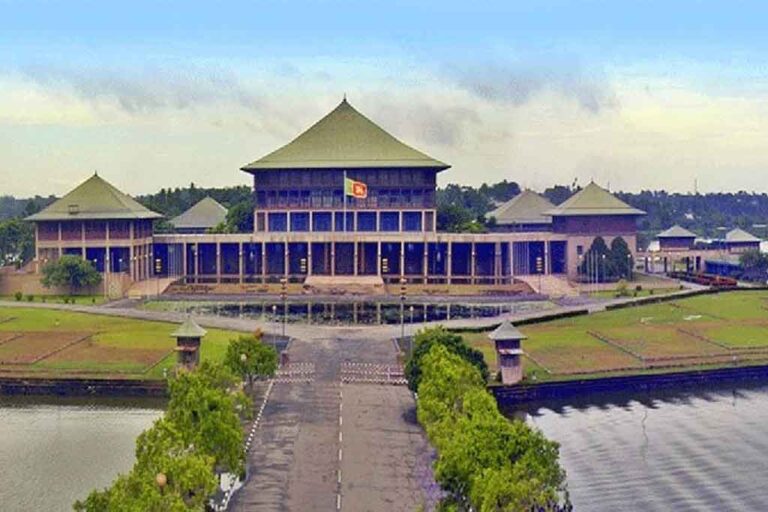
The Parliament Public Gallery, which had been closed for about two years due to the ongoing Covid-19 pandemic and for security reasons, will be reopened from tomorrow, making it possible for the public to view parliament sittings live, revealed Serjeant-at-Arms Narendra Fernando.

The Parliament Serjeant-at-Arms informed the Committee on Parliamentary Affairs of the need to relax the restrictions imposed on visiting the chambers, and accordingly, agreements made thereafter led to the reopening of the gallery for the public to view the sittings live from tomorrow.

The general public will be allowed to watch the Parliament complex from 09.30 am to 03.00 pm on days in which sittings are not taken place.

School authorities can apply for the purpose online through the official website of the Parliament of Sri Lanka www.parliament.lk and send a fax to 011 2 777 473 or 335, said the Department of Communications of Parliament.

The same facility can be provided to university student groups, state-approved higher education institutes and foreign tourists, added the Parliament Serjeant-at-Arms.

MIAP

S L infrastructure sectors get capacity building aid from UNDP /ADB

0

Sri Lanka will receive assistance from international donor agencies to build capacity in selected infrastructure sectors, so that appropriate disaster-resilient measures are defined and applied to pre-disaster preparation for recovery and post-disaster recovery efforts.

The effort will be rolled out by the United Nations Development Programme (UNDP) through its regional hub in Bangkok, with the financial support of the Asian Development Bank (ADB), under the freshly launched project ‘Resilient Infrastructure Through Enhanced Knowledge’.

The project embarked upon by the UN has recognised the necessity for greater investment in the planning process for disaster-resilient infrastructure across Asia and the Pacific.

Alongside Sri Lanka, receiving assistance under the project will also be Armenia, Cambodia and Fiji.
Considering the importance of water and food security, Sri Lanka has selected the irrigation sector to develop a comprehensive country-specific disaster recovery framework under this project, the UNDP said.

“The irrigation sector is one of the most important sectors in the country. Irrigation resilience is not only for water management but also provides inputs for agricultural expansion, facilitates technological change and helps increase sectoral productivity and the GDP of the country.

Introducing a disaster recovery framework will benefit the sector, as it ensures recovery to build back faster and better,” said Disaster Management Centre (DMC) Mitigation Research and Development Director Anoja Seneviratne.

The activities will concentrate on supporting Post-Disaster Needs Assessment (PDNA) training to government officials, utilising contingency and recovery tools and plans, improve financial preparedness planning, which will help to meet the resources required for disaster recovery and cover the additional costs of building forward better.

The project is implemented in collaboration with the DMC, National Planning Department, National Budget Department and all stakeholder agencies in the irrigation sector, including the Irrigation Department, Agrarian Development Department, nine Provincial Departments of Irrigation and Mahaweli Authority of Sri Lanka.

The first training on PDNA and disaster recovery planning took place in Colombo recently, with over 63 participants from across the above stakeholders, including engineers, planners and accountants.

Sri Lanka eyes for further trade links with East Asian countries

0

Sri Lanka is in search of stronger hyperlinks with the Mekong area, with bilateral commerce already on a progress path, officers have stated, because the nation faces the worst forex disaster within the historical past of its monetary authority, the central bank.

“We are facing an economic crisis in Sri Lanka resulting in a shortage of basic requirements like food, medicine, gas,” S.M.D. Suriyakumara, Sri Lanka head of Greater Mekong Business Council of the Ceylon Chamber of Commerce, said at the council’s 11th Annual General Meeting.

“Many Sri Lankans are getting used to changing their lifestyle and finding new ways of living and earning.

“As a council, if we can bring contributions through investments, and opportunities encouraging tourism, that is what as a Council we can do at this moment since it is what the country needs.”he added.

The Greater Mekong Chambers deals with East Asian countries.Sri Lanka had imported 2.3 million dollars and exported 7.5 million dollars, Suriyakumar said.

From Thailand, Sri Lanka has imported 397 million US dollars and exported 51.6 million US dollars.From Cambodia, Sri Lanka has imported 2.84 million dollars and exported 3.14 million dollars.

From Vietnam, it has imported 62.88 million dollars and exported 397 million dollars. From Laos, we have imported 1.43 million dollars and exported 0.14 million dollars worth of goods, he revealed.

“We must try to narrow down that gap in exports and imports. That’s what the solution we can contribute as a Council,” Suriyakumar had said.

Suriyakumar was addressing the 11 annual general meeting of the chamber attended by the Ambassador of Vietnam Ho Thi Thanh Truc, and Minister Counselor of Royal Thai Embassy in Sri Lanka Arthit Prasartkul

Vietnam Ambassador Truc said Sri Lanka and her country were both at a location which had attracted the attention of world power and was advocating private sector empowerment.

“In terms of trade and investment, Vietnam and Sri Lanka have many similarities that create a favourable environment for business people of both countries,” she said.

“Because of our strategic locations in each region, both countries have attracted the attention of the world’s major powers.

Both governments, on the other hand, advocate for private sector empowerment and a public-private partnership model for mutual development.

Sri Lanka has also signed bilateral investment treaties with 28 countries and double taxation treaties with 38 countries, including Vietnam”.

Govt revenue crosses Rs. 900 billion mark in the first half this year.

0

Government revenue in the first half of this year has crossed the Rs. 900 billion mark to Rs. 918.5 billion, up from Rs. 714.5 billion in the corresponding period of last year according to the Central Bank.

As at end May 2022 revenue was Rs. 812 billion and Rs. 631 billion in April.Total expenditure and net lending in the first half rose to Rs. 1.82 trillion compared to Rs. 1.5 trillion from a year ago. In May 2022 it stood at Rs. 1.5 trillion and Rs. 1.15 trillion by April.

The Overall budget deficit increased to Rs. 902.7 billion compared to Rs. 780.2 billion recorded in the corresponding period of 2021.

As such, the Government’s fiscal strategy is a balance between stimulating growth, in the course of achieving the target as established in the Fiscal Management (Responsibility) Act, No. 3 of 2003, the Finance Ministry announced .

It is also structured to support private sector led economic growth through both a robust public investment strategy complemented by a tax policy that hinges on low rate, simplicity and consistency.

In this context, the Government’s tax policy is expected to remain within the broad parameters in keeping with its decision to maintain consistency while providing a stable environment for businesses

In particular to plan their activities, specially at a time of a pandemic that has created significant uncertainties.

However, focus is also on to aggressively improve the tax administration making use of technological advancements including Artificial Intelligence (AI) and big data analytics, while continuously introducing mechanisms to make tax payments more taxpayer friendly.

Systems will also be geared to minimize tax evasion and thereby broadening the tax base including the introduction of online payment modalities and e-signatures. As a measure of further simplification of the tax structure, a composite single tax will come into effect from early 2022 Finance Ministry disclosed. .

Measures will also be taken to enhance non tax revenue through including the introduction of auctioning of licenses, increased dividends and levies, with the improved performance of the State Owned Enterprises (SOEs).

Expenditure management is strongly advocated requiring every spending agency to prioritize their activities after having followed a stringent process, especially in managing recurrent expenditures while assuring the efficiency and quality of such spending and an improved service delivery while ensuring that the vulnerable in society are protected through a strong social safety network.

The Government is also keen to move toward a targeted delivery of subsidies. Public investment will focus on priority areas such as water, irrigation, roads, health and education, rural village development, food security, housing, infrastructure, the Finance Ministry said.

Sri Lanka begins engaging creditors on debt restructuring process soon

0

Sri Lanka will soon begin the process of engaging external creditors and sharing information with them on debt restructuring with weak bargaining power under post default scenarios,informed sources connected to IMF negotiations disclosed.

It will make a virtual presentation to external creditors on September 23 updating them on a deal agreed with the International Monetary Fund and recent economic developments, advisors Clifford Chance said.

Sri Lanka authorities will update creditors on more recent macroeconomic developments, main objectives of the reform package with the IMF and the next steps of the debt restructuring process on a virtual event.

The island nation defaulted on its external debt in April 2022 after two years of money printed to suppress interest rates and target an output gap (stimulus) which triggered foreign reserves losses, downgrades, and bondholders were no longer willing to roll-over debt.

Sri Lanka in April allowed interest rates to go up after a failed float, eventually reducing domestic private credit and outflows. Sri Lanka has since raised some taxes and struck a staff level deal with the International Monetary Fund and is seeking to restructure its debt.

“After the presentation of external creditors , the authorities will also participate in an interactive session where participants will be given the opportunity to ask their questions,” the statement said.

“The presentation as well as a comprehensive Q&A document will be published on the Ministry’s website after the event.”

It will be held on Friday, September 23, 2022 at 5.30pm Sri Lanka time which 8:00am New York (EDT) / 1:00pm London (BST)

Sri Lanka has to get assurances from creditors about their willingness to restructure debt for the International Monetary Fund to unlock credit from the agency and others and make the debt ‘sustainable’ according to an analytical methodology developed by the agency.

The country has to make reasonable progress on sovereign debt restructuring negotiations quickly – with private creditors (holders of International Sovereign Bonds and commercial loans) as well as bilateral creditors like Japan, China, and India

Annual foreign debt servicing has increased to $4.1 billion in 2020 from $1.3 billion in 2009 with Sri Lanka owing approximately $12.3 billion to private creditors, the largest external credit source, who hold International Sovereign Bonds (ISBs), Sri Lanka Development Bonds, and some of the syndicated loans.

Another $9 billion is owed to multilaterals and $5.6 billion to bilateral creditors , with a further $5 billion to China, and $3.5 billion to Japan.

Government authorities are going for debt restructuring negotiations on the back of China rejecting a request (made by the Sri Lankan government in March 2022) to reschedule its loans. China instead offered refinancing – a new $1 billion loan to help repay part of the existing loans.

The United States (US) Secretary of the Treasury, Janet Yellen, has informed that the US as a creditor country, will participate in restructuring Sri Lanka’s debt, presidential secretariat announced. .

The critical need for full cooperation of all official creditors in debt negotiations and restructuring through timely participation and equal burden sharing have been outlined.

The US Treasury welcoming President Ranil Wickremesinghe’s proposal for a Coordination Platform for Sri Lanka’s official bilateral creditors has urged engagement in this regard.

Sharing the common goal with Sri Lanka of expediting financing assurances, the US has expressed readiness to join other Paris Club members in this process, in keeping with its principles.

Further, the US Treasury has pledged to continue to engage with their other government agencies, as well as the World Bank and Asian Development Bank, to assist the people of Sri Lanka.

President instructs to expedite programme to ensure food security and nutrition

0

A discussion to inform district secretaries and divisional secretaries, on September 16, was held at the President’s Media Division in parallel to the implementation of the Multi-sector Combined Mechanism for empowering of Rural Economic Revitalisation Centres to ensure food security and nutrition introduced under the patronage of President Ranil Wickremesinghe on September 13.

During this discussion held on-line headed by Presidential Adviser on National Food Security Dr. Suren Batagoda, implementation of the Multi-sector Combined Mechanism to ensure food security at the rural level, the issues that arise in the implementation of the mechanism and solutions for them were discussed comprehensively.

He instructed the divisional secretaries to gather required data to implement the programme, going from door to door within the next week. He also informed the officials could gather data on-line. He also instructed them to implement the programme with the intention of ensuring that all those deprived have access to food.

During the discussion the issues that arise in establishment of Rural Economic Revitalisation Centres, many issues faced by the farmers such as lack of sufficient fertiliser for cultivation, shortage of seeds, lack of fuel to operate agricultural machinery, lack of pesticides, animal damage to crops and difficulties in marketing the surplus harvest were also discussed.

Dr. Suren Batagoda further pointed out that measures have already been taken to provide immediate solutions to these issues, and measures have already been taken to import fertilisers and insecticides, and necessary arrangements have been made to provide a fuel quota under QR code for fuel.

Dr. Suren Batagoda further assured that locally scarce seeds would be imported, and by way of combining all the national revitalisation centres established under this programme an opportunity will be provided to sell excess products at a reasonable price by making them available at the economic revitalisation centres which experience deficit of such products.


Following statement was also made by Presidential Adviser Dr Suren Batagoda:

A food crisis has arisen in the country due to the failure of the cultivation in the last Yala season. The available data reports that about 60 percent of the population has reduced their food intake due to food shortage in the country. Based on the same fact, the provision of food to low-income people has become one of our leading programmes.

The President’s instruction is not to let anyone starve. Therefore, we have planned to provide food to the needy through a program called Community Kitchen. Accordingly, it is hoped to strengthen household units and gather data to implement cultivating plans in the upcoming season. Food can be provided to the people in the country without any shortage provided that this programme is implemented continuously. By one hand, the government officials should be held responsible for the food crisis. As government officials, we should also intervene in the programme to address the food crisis. We hope to implement food and cultivation programmes through this economic hub.

Presidential Additional Secretaries L. P. Jayampathie and Dr Sulakshana Jayawardena and directors of the Food Security and Nutrition Committee Yasantha Munasinghe and P. M. S. Jayathilake also participated at the event.

PMD
Special awareness programme on debt restructuring in SL on Sep 23

0

LONDON, Sept 18 (Reuters) – Crisis-hit Sri Lanka will make a presentation to its
international creditors on Friday, laying out the full extent of its economic troubles and plans for a debt restructuring and multi-billion dollar International Monetary Fund bailout.

Years of economic mismanagement combined with the COVID-19 pandemic have left Sri Lanka in its worst economic crisis since independence from Britain in 1948, causing it to default on its sovereign debt.

The country’s Ministry of Finance said in a statement via legal firm Clifford Chance that an online call on Sept. 23 would be open to all its external creditors and be “an interactive session” in which participants can ask questions.

Sri Lanka’s woes came to a head in July when then-President Gotabaya Rajapaksa fled the country and resigned after violent public protests.

His replacement Ranil Wickremesinghe has managed to reach a preliminary deal with the IMF that if formalised would provide the country $2.9 billion in loans over four years.

“Authorities intend to update their external creditors on the most recent macroeconomic developments, the main objectives of the reform package agreed with the IMF … and the next steps of the debt restructuring process,” the statement dated Sept. 17 said.

Debt crisis veterans cite uniquely difficult elements in Sri Lanka.

The impoverished population that forced Rajapaksa to flee still needs to accept
Wickremesinghe, seen by many as of the same political ilk, and who faces a bristling opposition.

The country’s borrowings are so complex that estimates of the total range from $85 billion to well over $100 billion. Perhaps most challenging of all, competing regional powers China, India and Japan must also find common ground on how to reduce debt they are owed by Colombo.

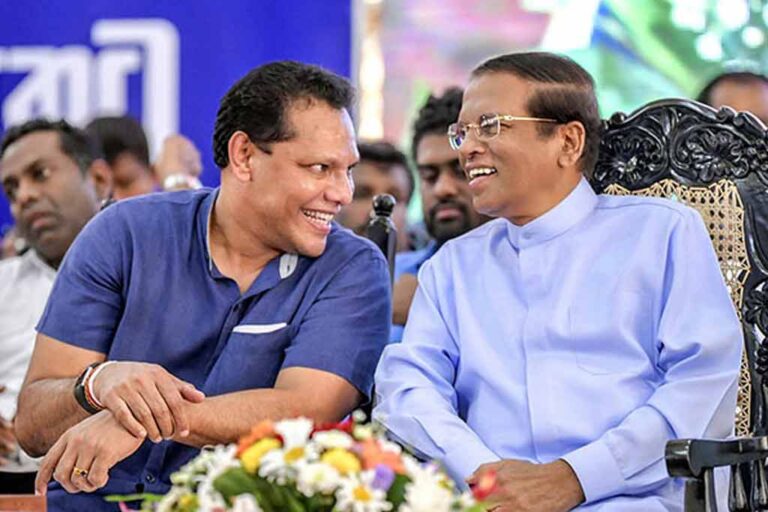
Sirisena says SLFP wishes no disciplinary inquiry into members sworn in as ministers (VIDEO)

0

Leader of the Sri Lanka Freedom Party (SLFP), Former President MP Maithripala Sirisena responding to reporters after a Party meeting in Colombo yesterday (18) said he does not wish to hold an immediate disciplinary inquiry into the party members who accepted ministries in the government.

The priority should be given to the problems currently facing the country and to find solutions, and other affairs, therefore, are of no interest to the party at the moment, the SLFP Leader told the reporters.

However, Sirisena did not respond to a query by a reporter on what actions should the party be taking, were the rest of the SLFP members taken in as government ministers as well.

MIAP

Children suffer from malnutrition, but govt cuts path to hypernutrition for itself: Opposition Leader

0

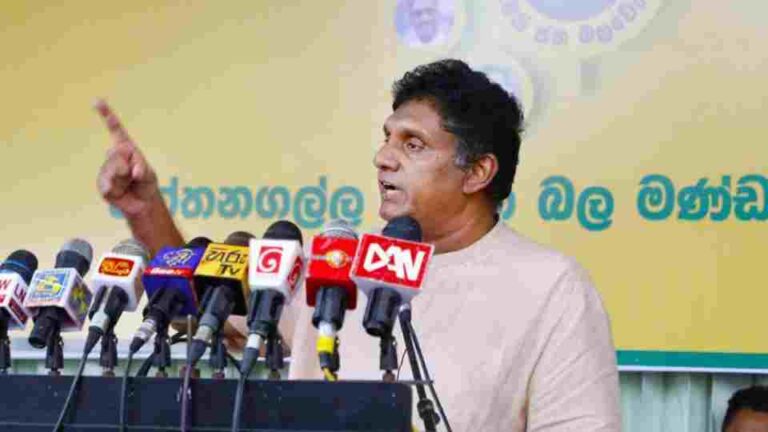
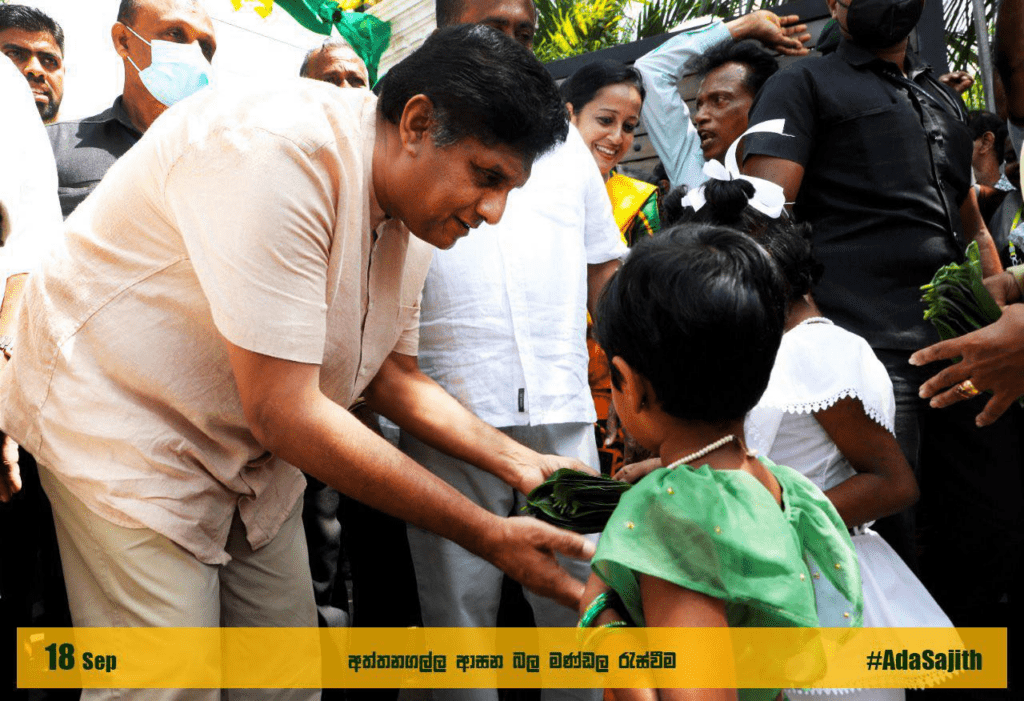
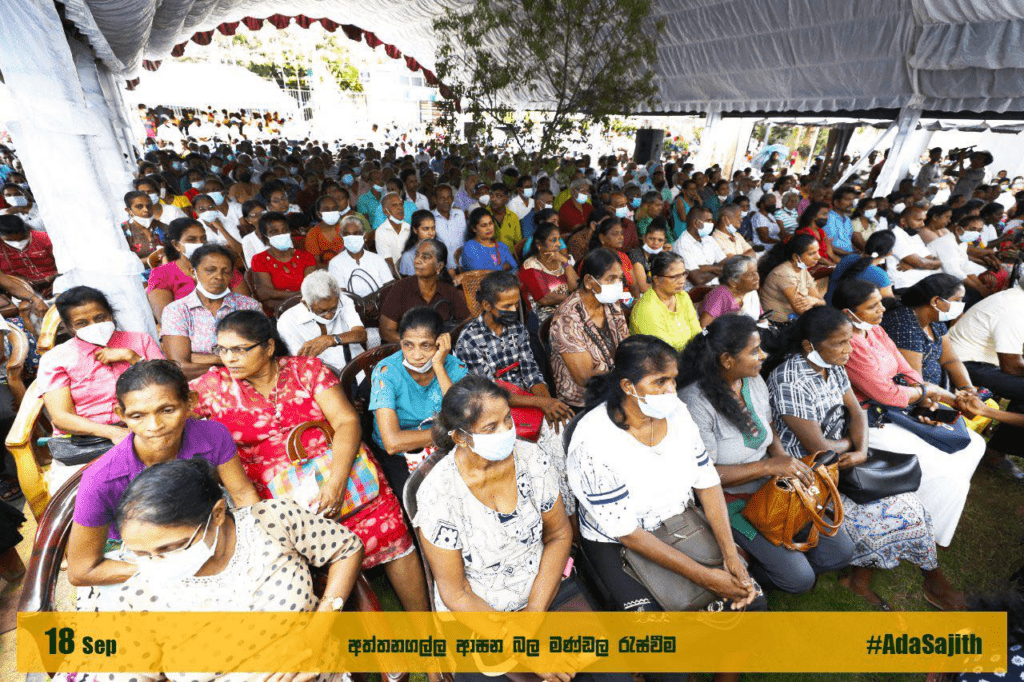
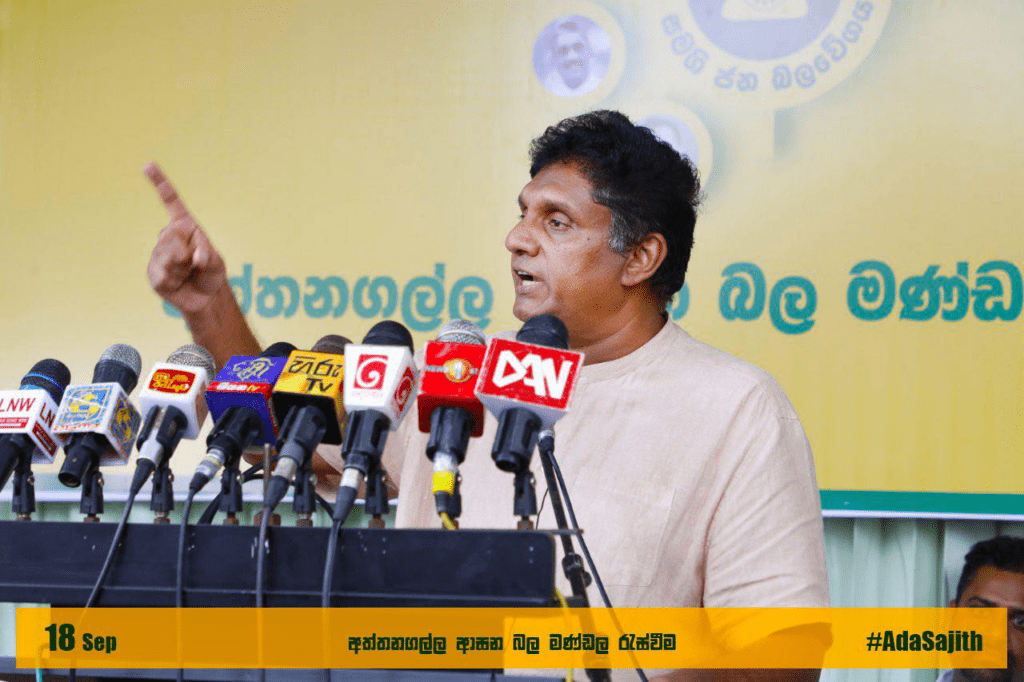
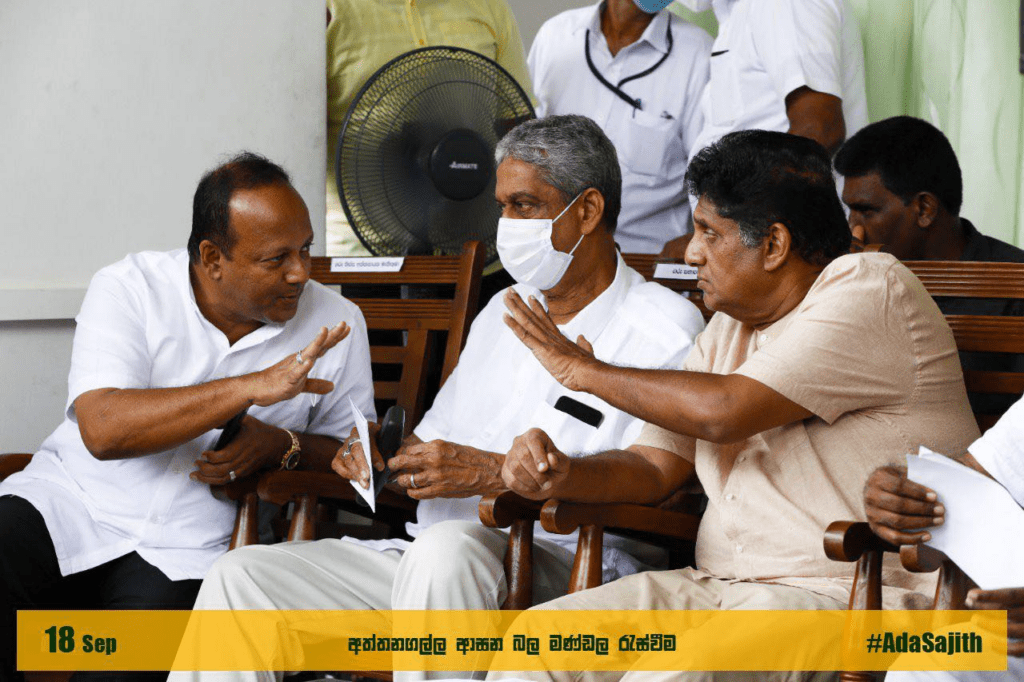
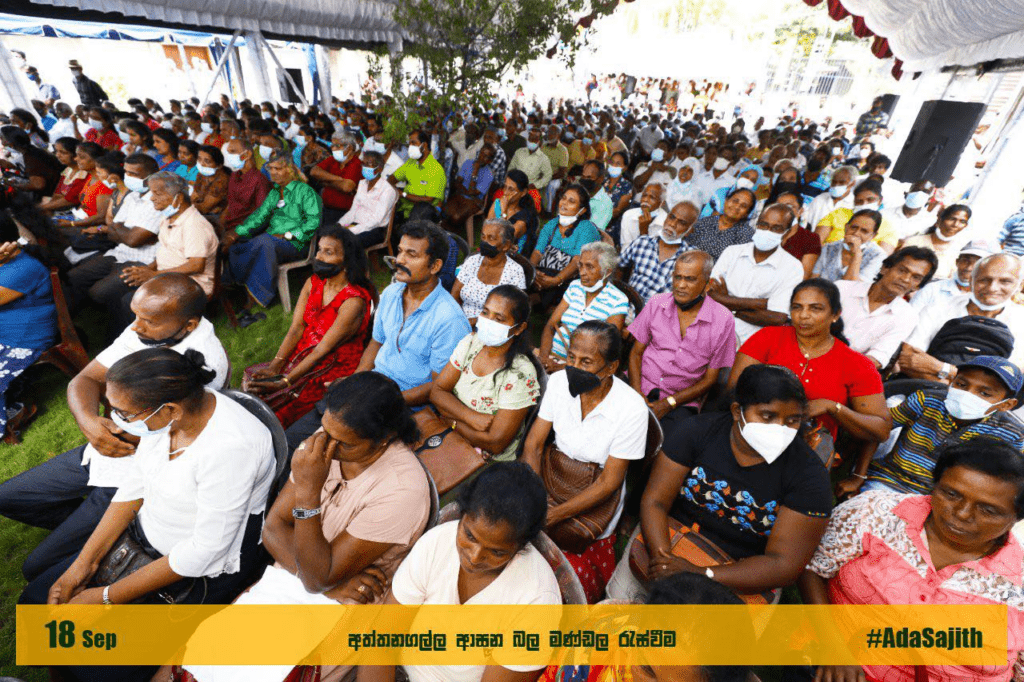
The government that came to power babbling about a land of prosperity gave one with malnutrition while cutting a path to hypernutrition for itself, alleged Leader of the Opposition Sajith Premadasa, speaking to the Samagi Jana Balawegaya (SJB) Authority Board Meeting in Attanagalle, Gampaha yesterday (18).

The current head of state in his coming declared that he would commit himself to fulfilling his duties to all those who were wronged at the time, but the duties he is fulfilling are against those who are accused of undermining the United National Party (UNP), the Opposition Leader pointed out, adding that the President is working to appease his opponents anointing them as ministers.

Premadasa went on reminding that as of now, the entire international community has signaled a warning to the government of Sri Lanka and even India has declared that it will not be further providing credit facilities to the island.

The international organisations have also declared that no support will be extended to Sri Lanka until the assurance of human rights and democracy is demonstrated, he added.

MIAP

Sri Lanka Original Narrative Summary: 19/09

0
  1. Presidential Advisor on National Food Security, Dr. Suren Batagoda, says the amount of food consumed by Sri Lankans has reduced by about 60% due to the prevailing food shortage in the country: asserts the President has instructed that no one in Sri Lanka should go hungry.
  2. Minister of Transport Bandula Gunawardena says Sri Lankan authorities are continuing negotiations with Russia on the provision of a loan to buy Russian fuel: also says Sri Lanka is slowly recovering from the economic and foreign exchange crisis.
  3. Finance Ministry says Sri Lanka will make a presentation to its international creditors on debt restructuring & IMF bailout plans: presentation to be open to all external creditors in an interactive session.
  4. Draft resolution before the UNHRC in Geneva, handed in by the UK, said to be the strongest since 2009: Sri Lankan Government set to reject resolution, titled 51/1: Foreign Minister Ali Sabry says the resolution is unnecessary and divisive and that it will be resisted by the Government.
  5. Foreign Minister Ali Sabry’s speech at Geneva’s UNHRC indicates Sri Lanka is not ready to accept a hybrid tribunal of foreign and local judges to inquire into alleged war crimes and other human rights violations.
  6. Books at the Colombo International Book Fair 2022 at the BMICH, priced much higher than in previous years.
  7. Colombo Port records drop of 2.2% in volume for the first 8 months of 2022 amounting to a loss of 106,760 TEUs: fall due to domestic volumes reduction of 10.39% year-on-year on the back of economic woes.
  8. President Ranil Wickremesinghe pays his respects to the late Queen Elizabeth II at Westminster Hall in London.
  9. Auditor General Chulantha Wickramaratne calls for investigation into the process of obtaining compensation for environmental damage caused by the sinking of the X-Press Pearl MV last year: Environmental Scientist Hemantha Withanage says damages claim could be as much as USD 10 billion.
  10. Poultry Manufacturers Association says unless VAT on imported poultry food and vitamins is reduced, the price of chicken and eggs will have to be increased by 40% during the forthcoming Christmas and New year seasons.