Home Blog Page 212

Economic Engines Slow but Stay Resilient in November

0

Sri Lanka’s manufacturing and services sectors maintained expansion in November, reinforcing their role as key drivers of economic activity, even as growth softened from the previous month, Central Bank data show.

The Manufacturing PMI eased to 55.5 in November from 61 in October, reflecting slower but sustained expansion. Analysts view this moderation as a natural adjustment following strong October performance rather than a sign of weakening fundamentals. The manufacturing sector continues to support employment, exports, and domestic supply chains, particularly through food processing and apparel manufacturing.

 CBSL reported that new orders expanded across the sector, largely driven by increased demand for food and beverage products and textiles and apparel ahead of the festive season. While production remained at neutral levels, firms increased hiring and purchases of raw materials, signalling confidence in near-term demand.

Extended supplier delivery times pointed to persistent input demand, suggesting that manufacturing activity remains resilient despite logistical and weather-related challenges. Importantly, business expectations for the next three months remain positive, with seasonal demand expected to offset recent disruptions.

In contrast, the services sector experienced a sharper slowdown. The Services PMI declined to 50.5 in November from 66 in October, indicating marginal growth. Adverse weather conditions disrupted transport, tourism, and retail activity, particularly towards the end of the month.

Nonetheless, accommodation, food, and beverage services continued to expand, reflecting sustained tourism-linked activity and domestic consumption. Financial services also strengthened further, supported by increased lending, underscoring the sector’s contribution to investment flows and credit-driven economic recovery.

New business formation increased, supported by financial services and wholesale and retail trade, while employment growth continued as firms hired to meet seasonal demand. The increase in backlogs of work, after several months of decline, suggests rising operational pressure as activity stabilises.

CBSL noted that expectations for business activity over the next quarter remain favourable, though at a moderated pace. While weather-related risks and demand volatility remain concerns, relatively stable macroeconomic conditions and expected festive spending continue to underpin confidence across both sectors.

Taken together, November PMI data suggest that while momentum has slowed, Sri Lanka’s manufacturing and services sectors remain on a recovery path, continuing to support growth, jobs, and economic stability as the year draws to a close.
Foreign Aid Dries Up Amid Diplomatic Communication Breakdown

0

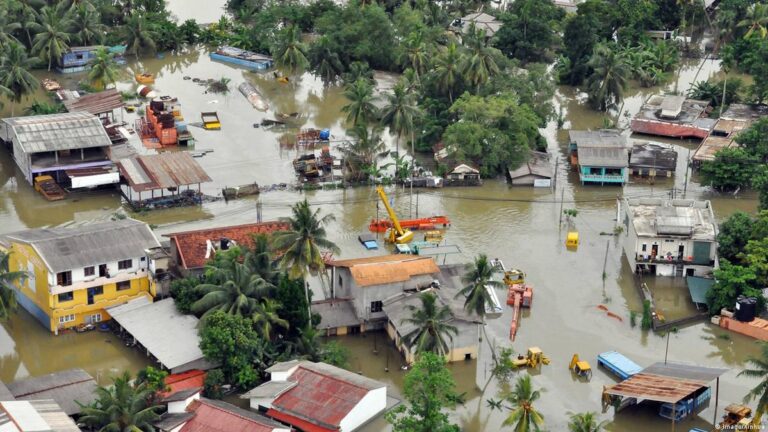
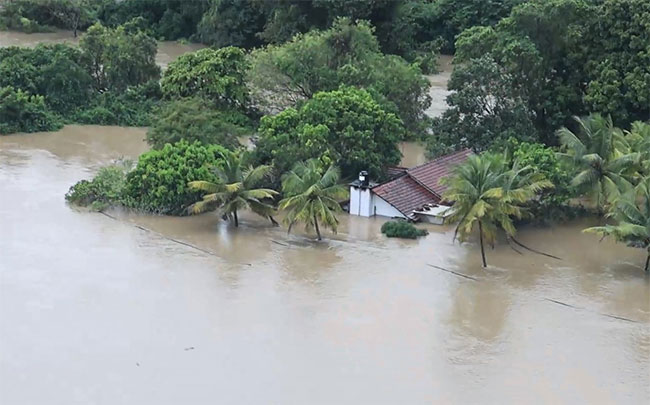
Sri Lanka’s post-cyclone recovery effort is increasingly overshadowed by concerns that weak diplomatic communication and inconsistent messaging have undermined international confidence. Despite repeated assurances from the government, foreign assistance secured so far represents only a fraction of the US$6.5–7 billion required to rebuild after Cyclone Ditwah’s devastation.

As of December 13, total foreign funding commitments and disbursements stood at approximately US$170 million, most of it tied to emergency relief rather than reconstruction. This shortfall has intensified scrutiny of the government’s crisis diplomacy, particularly its ability to articulate needs, prioritise projects, and reassure donors about accountability mechanisms.

The planned international donor conference is now being positioned as a corrective measure. However, analysts note that donor conferences are not automatic solutions; they succeed only when governments demonstrate preparedness, credibility, and strategic clarity. At present, Sri Lanka appears to be struggling on all three fronts.

While several countries including India, the US, China, Japan, Australia, Russia, and Pakistan—responded promptly with emergency aid, few have indicated readiness to commit large-scale reconstruction funding. Diplomatic sources suggest that donors remain cautious, citing uncertainty over implementation capacity and the absence of a compelling recovery narrative from Colombo.

The contrast with past disaster responses is stark. Following the 2004 tsunami, Sri Lanka leveraged strong diplomatic leadership to secure rapid and generous global backing. Today, despite louder public statements, engagement appears weaker. Communication from the Foreign Ministry has been reactive rather than strategic, failing to translate sympathy into sustained financial commitments.

The Rebuilding Sri Lanka Fund, though symbolically important, has raised only Rs. 3.4 billion, underscoring the limits of domestic fundraising. Meanwhile, the UN-backed Humanitarian Priorities Plan, seeking US$35.3 million, addresses immediate survival needs but does little to close the vast reconstruction financing gap.

There remains potential for increased aid flows under the current government, particularly if the donor conference is used to present a transparent, data-driven recovery plan linked to governance reforms and monitoring mechanisms. Yet this window may narrow quickly if communication failures persist.

Ultimately, Sri Lanka’s recovery will depend not on headline announcements but on disciplined diplomacy. Without a marked improvement in international engagement and messaging, the donor conference risks exposing, rather than resolving, the government’s inability to convert goodwill into meaningful support.

Cabinet Approves Legal Framework to Ratify ILO Convention on Workplace Violence and Harassment

0

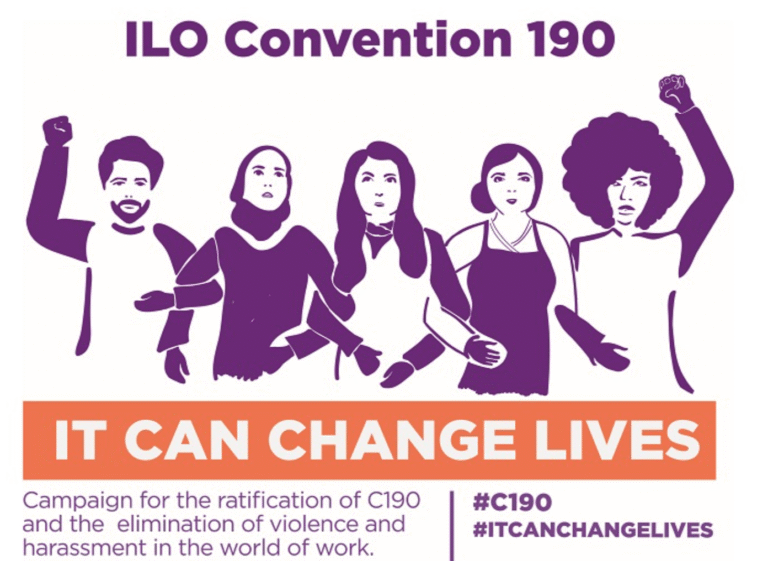
The Cabinet of Ministers has approved a resolution to introduce the necessary legal provisions to enable Sri Lanka to ratify and implement the International Labour Organization (ILO) Convention on Eradicating Violence and Harassment in the World of Work (Convention No. 190).

Adopted at the 108th Session of the International Labour Conference in 2019, Convention 190 is the first international labour standard to specifically address violence and harassment in the workplace.

The convention was presented to Parliament in May 2021, following a Cabinet decision taken earlier that year.

According to the government, ratification and implementation of the convention will contribute to the elimination of violence and harassment in both the formal and informal sectors, promote safer and more secure working environments, and encourage greater participation of women in the workforce.

Accordingly, the Cabinet of Ministers approved the proposal submitted by the Minister of Labour to take the necessary steps to introduce the required legal provisions for the ratification and implementation of the ILO Convention.

Govt Warns Media Against Unverified Reporting on Cyclone Ditwah

0

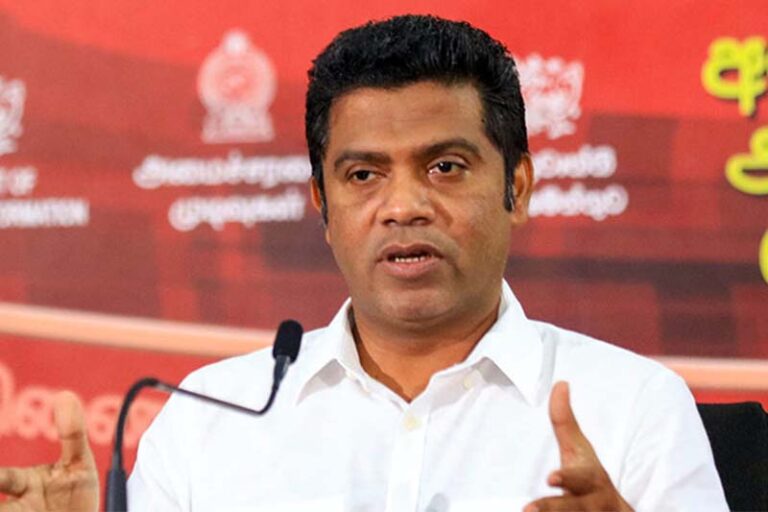
Cabinet Spokesman and Minister of Mass Media Nalinda Jayathissa on Tuesday cautioned media institutions against disseminating unverified information, as the government rejected allegations that it failed to act on early warnings related to severe weather conditions caused by Cyclone Ditwah.

Speaking at a media briefing following Cabinet decisions taken on December 15, Jayathissa defended the accuracy of official information released to the public and dismissed opposition calls for a parliamentary select committee to investigate the matter.

“They are free to go to court if necessary. Then we can demonstrate how certain media institutions edited and distorted these clips,” he said.

Jayathissa said the government had already provided detailed explanations through multiple television discussions and a comprehensive statement in Parliament, maintaining that allegations circulating in sections of the media were misleading and inaccurate.

He reiterated that the Department of Meteorology formally issued information on critical weather conditions on November 25, rejecting claims that authorities were alerted significantly earlier.

The minister dismissed allegations broadcast by some television channels that the government had received information about the cyclone as early as November 12, describing such claims as false and irresponsible.

“These are completely false allegations,” Jayathissa said.

Responding to claims that authorities were informed through 23 red notices, Jayathissa said official records showed that 19 of those notices were issued after November 27, a timeline he said could be verified via the Disaster Management Centre’s website.

He also criticised reports based on an article published by India’s Indian Express, which some Sri Lankan media outlets cited as evidence that Indian meteorological authorities had warned of the cyclone from November 12. Jayathissa said the Ministry of Foreign Affairs, in coordination with the Ministry of Defence, had sought clarification on the issue.

Jayathissa said Sri Lanka’s Department of Meteorology confirmed on the morning of November 25 that the weather system had weakened into a deep depression, and stated only on November 27 that it had the potential to develop into a cyclone.

“All of this can be verified through archives and online sources,” he said, adding that repeatedly revisiting the issue was unnecessary.

The minister warned that the government would not hesitate to take action if false reporting continued, cautioning that misinformation could lead to public unrest, social conflict and threats to national security.

Seven Sri Lankan Cricketers to Feature in IPL 2026

0

Seven Sri Lankan cricketers will take part in the Indian Premier League (IPL) 2026 season, with three players securing contracts at Tuesday’s mini-auction, while the remaining four were retained by their respective franchises.

At the auction, Pathum Nissanka was signed by Delhi Capitals, while Wanindu Hasaranga was picked up by Lucknow Super Giants. Fast bowler Matheesha Pathirana was also bought at the auction, with Kolkata Knight Riders securing his services.

The other four Sri Lankan players will return to the tournament after being retained by their teams. Delhi Capitalsretained Dushmantha Chameera, while Royal Challengers Bengaluru opted to retain Nuwan Thushara.

Meanwhile, Sunrisers Hyderabad retained two Sri Lankan players — Kamindu Mendis and Eshan Malinga — continuing the franchise’s confidence in Sri Lankan talent ahead of the upcoming season.

Japan Extends $2.5 Million Emergency Grant to Cyclone-Hit Sri Lanka

0

The Japanese government has decided to provide an emergency grant of US$2.5 million to Sri Lanka in response to the severe humanitarian situation caused by recent cyclone-related disasters, Japanese Foreign Minister Toshimitsu Motegiannounced on Tuesday.

The grant will be channeled through international aid agencies to support humanitarian assistance efforts, including the provision of food, daily necessities and other essential relief items for affected communities.

Landslides and flooding triggered by a cyclone that struck Sri Lanka in late November have resulted in the deaths of more than 600 people, causing widespread damage and displacement across several parts of the country.

Speaking at a press conference, Minister Motegi said Japan would continue to extend “seamless support to our long-time friend, Sri Lanka” to ensure the earliest possible recovery and reconstruction of the disaster-affected areas.

He also noted that a Japanese disaster relief medical team returned home earlier on Tuesday after providing approximately 1,250 medical treatments over a period of about two weeks in Sri Lanka.

RDA Suffers Rs. 75 Billion Loss Due to Disaster Damage; Rs. 190 Billion Needed for Rehabilitation

0

Sri Lanka’s Road Development Authority (RDA) has incurred an estimated loss of Rs. 75 billion following widespread damage to roads and bridges caused by recent disaster conditions across the country, officials revealed before a parliamentary committee.

Officials from the Ministry of Transport and Highways and Urban Development informed the Sectoral Oversight Committee on Infrastructure and Strategic Development that preliminary assessments show damage to 316 roads and 40 bridges under the RDA’s authority. They said approximately Rs. 190 billion would be required to fully rehabilitate the affected infrastructure.

The disclosures were made at a committee meeting held on December 11 at Parliament, chaired by MP S.M. Marikkar, which focused on reviewing the disaster’s social, economic and environmental impacts.

The committee chair noted that assessments of damage to railway lines and regional roads are yet to be completed and stressed the need for the ministry to take the lead in establishing a proper mechanism to allocate funds for the rehabilitation of regional road networks.

Officials also said plans are underway to secure a Rs. 2 billion loan from the World Bank, with additional funding expected from other institutions to support recovery efforts.

Meanwhile, the Ceylon Electricity Board (CEB) reported losses of around Rs. 20 billion due to disaster-related damage. CEB officials said discussions are ongoing with the World Bank to obtain funding assistance. However, the committee chair urged the board to seek grant funding instead of loans, warning that borrowing could eventually lead to increased electricity tariffs.

The Lanka Electricity Company (Pvt) Ltd. reported losses of approximately Rs. 252 million, stating that repair costs could be met through existing budgetary allocations without the need for additional external funding.

The National Water Supply and Drainage Board estimated losses at around Rs. 5.6 billion, with damage reported to 156 water supply schemes. Officials said all affected schemes have since been restored following maintenance work. The Ministry of Housing, Construction and Water Supply added that efforts are underway to obtain grant assistance from the Asian Development Bank for rehabilitation work.

Emphasizing the importance of disaster preparedness, the committee chair said the Sectoral Oversight Committee remains ready to support relevant ministries and institutions in strengthening resilience against future disasters.

The meeting was attended by MPs Nalin Bandara Jayamaha, Ajith P. Perera and Asitha Niroshana Egoda Vithana, along with senior government officials.

WEATHER FORECAST FOR 17 DECEMBER 2025

0

Under the influence of the Easterly wave, the prevailing showery conditions over the Northern and Eastern parts of the island are expected to continue further during the next few days.

Showers will occur at times in Northern, North-Central, Eastern, Uva and Central provinces. Heavy falls above 100 mm are likely at some places in Eastern and Central provinces and in Badulla and Polonnaruwa districts.

Showers or thundershowers may occur at several places in the other areas of the island after 1.00 p.m. Fairly heavy falls above 75 mm are likely at some places in these areas.

Strong winds of about (40-50) kmph can be expected at times over Eastern slopes of the central hills, Northern, North-central and North-western provinces and in Trincomalee, Hambantota and Monaragala districts.

Misty conditions can be expected at some places in Sabaragamuwa and Central provinces and in Galle and Matara districts during the early hours of the morning.

More Visitors, Less Value: Tourism’s Earnings Dilemma Deepens

0

By: Staff Writer

December 16, Colombo (LNW): Sri Lanka’s inbound tourism sector is recording steady gains in arrivals, but provisional November–December 2025 data suggests the industry remains caught in a structural earnings dilemma. Despite a visible post-crisis recovery in visitor numbers, foreign exchange inflows are struggling to regain the momentum seen before 2020.

SLTDA provisional estimates show that total arrivals for the final two months of 2025 exceeded 465,000, marking a modest improvement over the same period in 2024. Europe, Russia and India remain the dominant source markets, while long-stay travellers continue to account for a growing share of arrivals.

Yet tourism earnings for the period are estimated at US$ 760–800 million, only marginally higher than last year and well below pre-crisis seasonal benchmarks. Central Bank trend data indicates that this gap is largely driven by declining per-visitor spending rather than demand weakness.

The average tourist now spends approximately US$ 148 per day, reflecting a shift toward backpackers, regional travellers and remote workers who prioritise affordability and lifestyle experiences. While this demographic supports occupancy and length of stay, it compresses margins for operators and limits tax and foreign exchange yields for the economy.

Geographically, spending patterns are shifting decisively. Colombo’s dominance as the primary tourism transaction hub has eroded, while leisure destinations particularly in the south are capturing a rising share of visitor expenditure. Ella has emerged as the second-largest tourism spending hub, while Ahangama and Weligama have recorded some of the fastest growth rates nationally.

This decentralisation has accelerated in the aftermath of the 2025 cyclone and floods, which disrupted parts of the southern coastline. Rather than deterring travellers long-term, the disaster prompted a reorientation toward sustainable and community-led tourism. Small operators leveraged social media, flexible pricing and experience-based packages to restore demand within weeks.

Economists argue that this trend presents both opportunity and risk. On one hand, the spread of tourism income beyond Colombo supports small businesses, rural employment and external stability. On the other, the continued erosion of spending power raises questions about the sector’s ability to finance infrastructure, debt servicing and climate adaptation.

To address this imbalance, industry stakeholders advocate a recalibration of promotion strategies. Instead of focusing primarily on arrival targets, Sri Lanka must reposition itself as a value-dense destination, promoting premium wellness tourism, curated nature trails and heritage-based experiences with higher pricing power.

With GDP growth forecast to ease in 2026, tourism remains a key buffer for the balance of payments. Whether it can deliver meaningful economic returns will depend not on how many visitors arrive but on how much value each visitor brings.

Beyond Aid: India’s Sri Lanka Relief as Strategic Neighbourhood Policy

0

By: Staff Writer

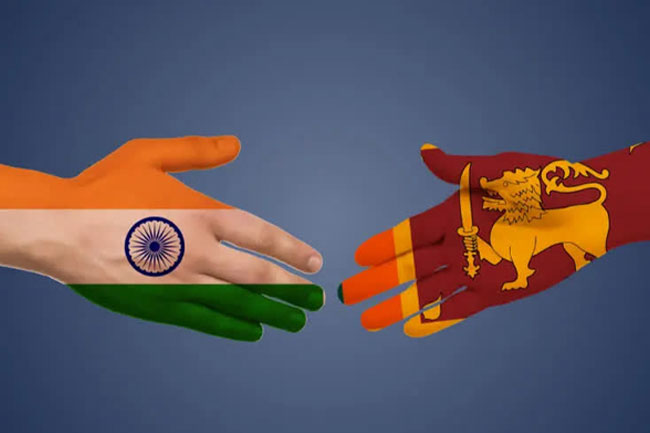
December 16, Colombo (LNW): India’s swift disaster relief operation in Sri Lanka following Cyclone Ditwah illustrates how humanitarian assistance has become a cornerstone of New Delhi’s regional strategy. While the medical and material support delivered under Operation Sagar Bandhu addressed urgent needs, the operation also signalled India’s intent to institutionalise its role as South Asia’s primary crisis responder.

The centrepiece of the mission was the deployment of a full-fledged mobile field hospital with a 78-member Indian Army medical and logistics team to Mahiyanganaya. Equipped to function independently, the hospital filled a critical gap as local facilities struggled with patient surges, damaged infrastructure, and supply shortages. The Indian High Commission noted that the hospital was configured to deliver rapid, high-volume care in disaster-hit zones, reflecting lessons drawn from earlier regional emergencies.

The medical outcomes were significant: over 7,000 patients treated, hundreds of procedures completed, and complex surgeries performed in a temporary setup. Yet the operation’s broader significance lay in its integration of medical, logistical, and technical assistance. The repair of Sri Lanka’s damaged fibre-optic backbone by Indian Army specialists restored communication links essential for emergency coordination, governance, and economic activity.

India’s decision to combine personnel withdrawal with the delivery of 25 tonnes of relief supplies including medicines and dry rations highlighted a layered assistance model that prioritises continuity even after frontline teams depart. Sri Lankan authorities publicly acknowledged the scale and efficiency of the support, reinforcing perceptions of India as a dependable partner rather than a transactional donor.

From a geopolitical perspective, the operation aligns with India’s “Neighbourhood First” and “Security and Growth for All in the Region (SAGAR)” doctrines. In a region increasingly shaped by strategic competition, disaster response has emerged as a soft-power instrument that builds influence through trust and responsiveness rather than financial leverage alone.

For Sri Lanka, the assistance provided immediate relief at a time of fiscal stress and climate vulnerability. For India, it reinforced strategic depth in the Indian Ocean and demonstrated operational readiness unmatched by other regional actors. As extreme weather events become more frequent, such interventions may increasingly define regional leadership not through rhetoric, but through boots, beds, and bandwidth delivered when it matters most.