Sri Lanka’s manufacturing and services sectors are already seeing widespread layoffs, non-renewal of employment contracts, and hiring freezes as businesses are downsizing their operations amid the worst economic crisis, which is on course to trim the country’s output by at least 8 percent by the end of this year, a survey found.
A monthly survey carried out by the Central Bank on both manufacturing and services sectors of the country found that employment declined in both sectors at a rapid pace through July as employers are trimming their staff strength as they attempt to stay lean.
While the soaring inflation and demand destructive policies have weighed on top lines of companies, the exponentially higher interest rates and cost inflation have squeezed their bottom lines, casting a long dark shadow over the business outlook.
“Employment also declined, particularly in the manufacture of food & beverage sector, mainly due to the discontinuation of casual employees,” the Central Bank said in its survey findings.
While certain leading export-oriented manufacturing sectors such as textiles and garments are still holding up, others, especially the micro, small and medium-sized enterprises are struggling to stay afloat.
Meanwhile, the survey also found that employment had continued to fall in the services sector through July due to freeze in recruitment and non-renewal of existing employment contracts amid subdued business activities.
The private sector accounts for 42.7 percent of employees and 2.5 percent of employers contributing to the Sri Lankan economy (Labour Force Survey, 2020).
Therefore, the Department of Labour has decided to identify the labour demand required to meet the private sector targets for the coming year and to explore the new directions regarding the country’s labour interests in the future with the aim of restrengthening the Sri Lanka economy.
The e- survey was planned and conducted in July 2021 and extended up to September 2021.
Out of the companies that responded, 45 percent recorded labour need for 2022.
Out of these, nearly half of the companies are situated in Colombo district while Western province covered three fourth of them.
The highest demand of labour is requested by the large companies with current employment of more than 100.
When look at the labour requests by economic activities, 69 percent were recorded to the Manufacturing sector while Trade sector reports 15 percent.
Sri Lanka Private firms reduce staff while halting new recruitments
IMF remains hopeful in Sri Lanka debt restructure
The International Monetary Fund (IMF) expressed the hope of Sri Lanka obtaining consent of creditors specially, Japan, India and China for debt restructure as the country has been severely affected by an economic crisis.
Financial advisory group Lazard has started talks with India, China and Japan on restructuring Sri Lanka’s debt, a spokesman for the Sri Lanka government Minister Ramesh Pathirana said on Tuesday, as the crisis-hit island nation seeks an International Monetary Fund (IMF) bailout.
Lazard was hired by Sri Lanka in May, along with international lawyers Clifford Chance, to guide the government through the process of restructuring its debt, for which estimates range from $85 billion to well over $100 billion.
IMF Managing Director, Kristalina Georgieva briefly mentioned the issue in Sri Lanka during a discussion with Centre for Global Development President, Masood Ahmed.
“So, on Sri Lanka, there are three large creditors, Japan, India, China. We are very hopeful to see an engagement from the public side that comes quickly. And then, of course, looking at all the parameters, bringing the private sector on board,” Georgieva said.
The IMF staff and the Sri Lankan authorities recently reached a staff-level agreement to support Sri Lanka’s economic policies with a 48-month arrangement under the Extended Fund Facility (EFF) of about US$2.9 billion.
Members of the ParisClub of mainly Western creditors said they are ready to talk with Sri Lanka on restructuring debt after the country concluded a staff level agreement with the International Monetary Fund.
“We note the IMF’s assessment for the need for a debt treatment in the context of the IMF program,” the organization secretariat said in a statement.
“The Paris Club is ready to start the debt treatment process and reiterates its willingness to coordinate with non-Paris Club official bilateral creditors to provide the necessary financing assurances in a timely manner and ensure fair burden sharing, as already proposed to the largest other official bilateral creditors.
“The Paris Club remains at the disposal of Sri Lankan authorities and non-Paris Club official bilateral creditors to further discuss the next steps of the debt treatment process.”
Sri Lanka’s bi-lateral creditors include China and India who are not full members of the grouping.
Sri Lanka defaulted on its debt in April 2012 after its foreign debt started to climb and growth slowed after the end of a war due to increased monetary instability coming from lower interest rates maintained under flexible inflation targeting which triggered three currency crises over seven years.
The objectives of Sri Lanka’s new Fund-supported program are to restore macroeconomic stability and debt sustainability, while safeguarding financial stability, protecting the vulnerable, and stepping up structural reforms to address corruption vulnerabilities and unlock Sri Lanka’s growth potential.
Debt relief from Sri Lanka’s creditors and additional financing from multilateral partners will be required to help ensure debt sustainability and close financing gaps.
Dialog Enterprise unveils a new fuel-monitoring system

Dialog Enterprise recently unveiled a timely technological solution for monitoring and measuring fuel and energy consumption with precision. Developed in partnership with the University of Moratuwa Research Laboratory and rigorously tested and used on Dialog’s own base stations, the solution was released ahead of schedule to help organisations efficiently manage their fuel usage and consumption.
Based on the Internet of Things (IoT) technology, this solution uses multiple sensor types to record and showcase information in systems in real time, 24/7 and alerts the users via SMS, email, or the web when critical thresholds are reached.
The solution also offers users a wide range of options to trigger alerts based on their security clearance and allows them to view the status of all their currently operational vehicles on one dashboard, the company said.
Dialog has successfully used this IoT solution at locations where its towers are placed which brought about several benefits including reductions in maintenance and manpower cost, the elimination of fuel fraud, better visibility of energy consumed, improved overall efficiency and reductions in waste.
The data gathered from this solution also proved to be beneficial in future planning.It said this futuristic fuel and energy consumption monitoring solution has been developed in line with Environmental, Social and Governance (ESG) compliance.
It has greatly helped Dialog engineers to overcome their day-to-day struggles in maintaining uninterrupted power and connectivity during times of fuel shortage.
The proven results of this solution and its relevance to a large cross section of the economy means that it can be quickly and easily adapted to meet the specific needs of other industries, especially in terms of monitoring and managing large-capacity generators and fuel depots.
The company is confident that using an infinitely scalable solution such as this will bring about greater cost savings and reduce unnecessary wastage while showcasing trends and providing valuable data to help make informed decisions in future business planning,” said Pradeep De Almeida, Group Chief Technology Officer, Dialog Axiata PLC.
With many years of experience in remote monitoring systems development at the Dialog-University of Moratuwa Mobile Communications Research Laboratory, this technology has proved useful during a critical time in our country.
Sri Lankan enterprises to the forefront, thereby ensuring Sri Lanka’s place as a significant one in the challenging and evolving world of mobile technology,” said Prof. Dileeka Dias, Director, Dialog – University of Moratuwa Mobile Communications Research Laboratory
Multi-sector combined mechanism on SL food security gets underway
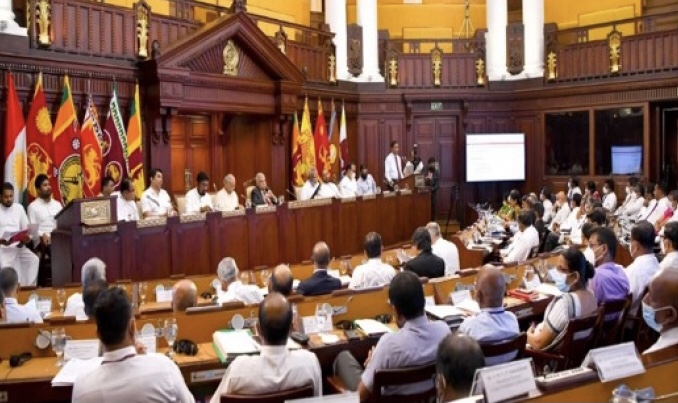
The multi-sector mechanism to empower rural economic revitalization centres to ensure food security and nutrition was initiated under the patronage of President Ranil Wickremesinghe yesterday13.
The aim of the Food Security Programme of the Government is to ensure every citizen has access to enough food at a reasonable price to lead an active and healthy life, at any given situation of the country, the President’s Media Division said.
The government has initiated this program with the view of achieving dual objectives of ensuring that no citizen of the country should starve due to lack of food and no child should be a victim of malnutrition.
In order to achieve these dual objectives, it is required to protect all families in the country from being victims of poverty, the PMD release added.
The relevant mechanism has been implemented through seven committees while the National Food Security and Nutrition Council will function under the chairmanship of the President.
The National Combined Mechanism on Food Security and Nutrition will function under the Chairmanship of the President’s Secretary whereas the Technical Advisory Committee on Food Security and Nutrition will be chaired by the Prime Minister’s Secretary.
The Provincial Combined Mechanism on Food Security and Nutrition will function under the chairmanship of the Provincial Governors while the District Combined Mechanism on Food Security and Nutrition will be chaired by the District Secretaries.
The Combined Regional Mechanism on Food Security and Nutrition is to be implemented under the chairmanship of the Divisional Secretaries.
Rural Economic Revitalization Centers will comprise Grama Niladhari, Development Officer, Agriculture Research and Production Assistant, Samurdhi Niyamaka Niladhari, Midwife, principle of the closest school and two representatives of the local government institution.
This program will function under the leadership of President Ranil Wickremesinghe under the instructions of the President’s Adviser on Food Security Dr. Suren Batagoda, joined by the entire government machinery, from the Prime Minister and the President’s Secretary to the Grama Niladari level, the private sector, non-governmental organizations, professionals and religious leaders.
It is planned to produce 3.6 million metric tons of the total rice requirement of the country, 50% of the annual onion requirement and 35% of the potato requirement, locally.
It is also planned to produce 20% of the annual soy requirement of 250,000 metric tons in the country by 2025, 20% of the dry chili requirement to be produced locally by 2025, and the entire requirement of cowpeas, green beans, peas, sesame seeds and groundnuts to be produced locally by 2025.
It is planned to produce 80% of the 650,000 metric tons of maize required annually for the development of livestock such as eggs and poultry meat this year. By 2025, Sri Lanka is expected to grow its entire requirement of maize, locally.
Currently, steps have been taken to import 230,000 metric tons of urea, 100,000 metric tons of TSP and 182,000 metric tons of MOP required for the production of wheat and maize in the Maha season under the World Bank, Asian Development Bank and Indian credit line and to import fertilizer required for the production of other food crops with the contribution of the private sector.
Qatar Airways to recruit significant number of Lankans for global operations

Qatar Airways Group says it is looking to onboard a significant number of new employees from Sri Lanka to support its global operations and enhance customer experience over the coming months.
Starting from 15 September, the network will start accepting applications from Sri Lankan citizens for various roles across divisions.
As the company looks to rebuild the workforce and fuel expansion, the Sri Lankan recruitment drive is part of the group’s global recruitment drive – the biggest talent acquisition in the history of the airline industry.
In the island country, the group is targeting to hire staff for its various divisions ranging from Qatar Airways, Qatar Duty Free, Qatar Aviation Services, Qatar Airways Catering Company, Qatar Distribution Company to the Dhiafatina Hotels.
With a major focus towards growing the Customer Experience team, the group plans to hire a substantial number of staff for various roles such as Culinary, Corporate and Commercial, Management, Cargo, Customer Service, Engineering, Flight Operations, Ground Services, Safety and Security, Digital, Front of House, Administration, as well as Sales and Finance.
Qatar Airways’ recruitment drive in the country will be held in Colombo on 15 and 16 September and interested applicants can start applying for roles online via Qatar Airways career page: qatarairways.com/recruitment.
Apart from being a part of the only airline in the world that has won the World’s Best Airline six times, selected candidates will also be able to take advantage of the competitive tax-free income, including accommodation and allowances.
Qatar Airways Group CEO Akbar Al Baker said: “We are committed to bolstering our team and further strengthening the customer experience for travellers, while we boost our operational capabilities by seeking the right people.
Qatar Airways has always had a special bond with the island nation of Sri Lanka and with this recruitment drive, we are reiterating our commitment to the market.
“As the World’s Best Airline, we take immense pride in our efforts to create a memorable experience for flyers and it is only possible with the constant dedication and discipline of our workforce. Keeping the spirit high, we invite applications from the talented pool of Sri Lankans who aspire to be a part of the Qatar Airways family.
“Working with Qatar Airways provides the opportunity to explore the world, and live in the vibrant cosmopolitan city of Doha, home to the FIFA World Cup 2022, offering world-class shopping, beautiful beaches and a thriving arts and culture scene.”
As the group gears up for the highly anticipated FIFA World Cup Qatar 2022 tournament, the global recruitment drive is another testament of Qatar Airways’ role at the forefront of the ongoing recovery of the global aviation sector.
As travel restrictions ease, the national carrier of the State of Qatar continues to rebuild its network, which currently stands at over 150 destinations. With more frequencies being added to key hubs, Qatar Airways offers unrivalled connectivity to passengers, making it easy for them to change their travel dates or destination if they need to.
SL begins uphill task of convincing India, China and Japan on debt restructure
Sri Lanka is likely to face an uphill task to reach consensus on debt restructure with creditors on a repayment plan amidst severe economic crisis and preemptive debt default, several economic experts warned.
Financial advisory group Lazard has started talks with India, China and Japan on restructuring Sri Lanka’s debt, a spokesman for the government said on Tuesday, as the crisis-hit island nation seeks an International Monetary Fund (IMF) bailout.
Lazard was hired by Sri Lanka in May, along with international lawyers Clifford Chance, to guide the government through the process of restructuring its debt, for which estimates range from $85 billion to well over $100 billion.
Earlier this month, the IMF said it had reached a preliminary agreement with Sri Lanka for a loan of about $2.9 billion. But for the deal to go through, the country will require debt relief from China, India and Japan, its three main international lenders.
“They are in the process of speaking to India, China, Japan, mainly to ensure we come to some sort of consensus,” acting cabinet spokesperson Ramesh Pathirana told reporters, referring to Lazard.
“We will keep our fingers crossed that we will be able to come to an agreement.” The three countries hold about $13 billion of Sri Lanka’s debt, while China is Sri Lanka’s largest bilateral creditor.
Sri Lanka is also expected to formally reach out to private creditors who hold about $12 billion in bonds later this week, a government source told media .
“The government is planning to start talks with the ambassadors of China, U.S., Japan and India next week on debt restructuring,” the source said, declining to be named as he was not authorized to speak to media.
Sri Lanka is likely to face an uphill task to reach the ambitious primary surplus target set out by the International Monetary Fund (IMF), which requires a significant increase in State revenue through revenue-based fiscal consolidated measures, according to a top economist.
“The IMF is asking Sri Lanka to reach a primary surplus of 2.3 percent of GDP by 2025. It requires a huge effort even by the standards of large fiscal adjustments in EM. Improvements of more than 4 percent of GDP aren’t common.
Sri Lanka is aiming for more than 6 percent,” Deputy Chief Economist at Institute of International Finance (IIF) and former IMF economist Sergi Lanau said in a recent tweet.
Emphasising the need of enter in to consensus with creditors on debt restructuring, IMF mission chief Peter Breuer said that all those creditors should agree to ensure debt sustainability but if a single creditor is disagreed with the on going process, Sri Lanka’s economic crisis would deepen.
The assurance of all creditors including China on debt restructuring is essential prerequisite for the IMF to get the Executive Board endorsement and begin the disbursement of tranches of four year Extended Fund Facility of US$ 2.9 billion, he explained.
Sri Lanka’s bargaining power will be weakened by the new court case against it. If the New York Federal Court delivers its judgement in favour of Hamilton Reserve, Sri Lanka will have to make the full payment . If it does so, the other creditors will also ask for the same treatment on the principle of equal treatment.
Then, the debt restructuring plan will come to a standstill. If it does not pay, it will amount to a default and the country runs the risk of its assets within the jurisdiction of the court being confiscated to recover the debt.
An emergency parliamentary meeting to be held on the 16th to express condolences to the Queen

A decision has been reached at the meeting of the party leaders to present a condolence proposal to the Parliament for Queen Elizabeth II, who passed away recently. The relevant proposal will be submitted to the Parliament tomorrow (16).
The parliamentary meetings were scheduled to start next week, but an emergency parliamentary meeting will be held on the 16th to express condolences to the Queen.
The 19th, when the last rites of the Queen will be performed, has already been declared as a national day of mourning and that day has also been made a special government holiday.
The resolution to express condolences to Polonnaruwa District Member of Parliament Amarakirthi Athukorala, who was shot dead during the unrest on May 09, was scheduled to be debated last Friday and a group of family members of the former Member of Parliament were also present at the Parliament. However, due to insufficient number of members present at the Parliament, the presentation of the relevant proposal had to be postponed.
Many countries are afraid of Ranil Wickramasinghe – Vajira
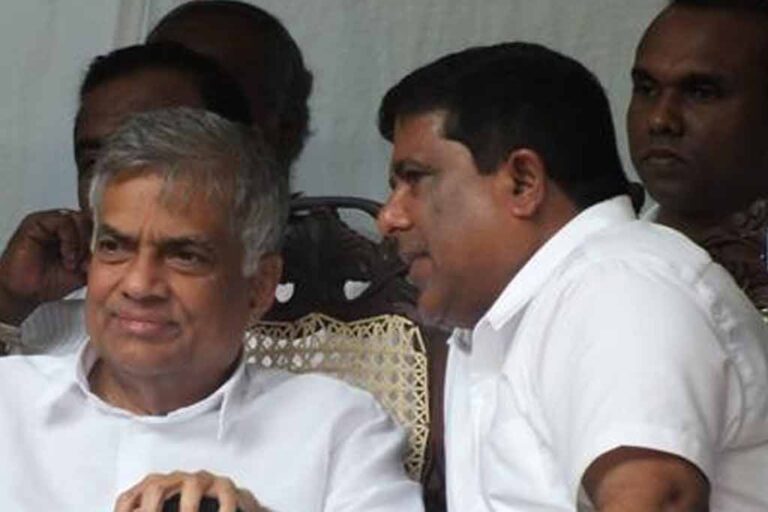
United National Party Member of Parliament Vajira Abeywardena says that all Sri Lankans should come together to defeat the pressures from international organizations. Therefore, the MP points out that all political parties should put aside all political debates and support the President.
Vajira Abeywardena points out that it is always the expectation of powerful countries that weak leaders come to power in countries like Sri Lanka, and it has been a problem for those countries to have a person with experience and understanding of politics and international relations like Ranil Wickramasinghe become the leader of the country. The MP also mentions that it can be assumed that many countries are afraid because of Ranil Wickramasinghe.
Because of this, Abeywardena says that it is the public’s responsibility to prevent the country from falling into the hands of weak leadership again and that the public should put pressure on all political parties to support the President.
The MP emphasizes that the only hope of President Wickremesinghe is to make Sri Lanka a developed state by 2048, and that such a visionary politician became the country’s leader is fortunate for the country and the entire public.
Maithri prepares to take disciplinary action against the MPs who took the ministerial posts
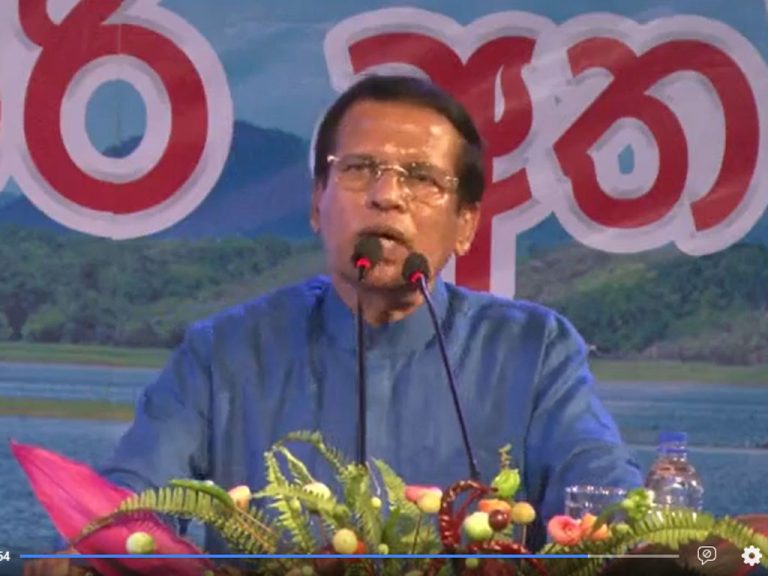
The Sri Lanka Freedom Party Central Committee has reached a unanimous decision not to hold ministerial positions in any government other than an all-party government, but the Sri Lankan National Party President Maithripala Sirisena has decided to take disciplinary action against the members of the Sri Lankan National Party who have taken cabinet and state ministerial posts.
Sri Lanka National Party Senior Vice President, Prof. Rohana Lakshman Piyadasa says that in accordance with the powers given to the chairman by the party constitution, disciplinary investigations will be started in the coming days.
After Ranil Wickramasinghe assumed the position of President, Nimal Siripala de Silva and Mahinda Amaraweera of the Sri Lankan National Party (SLNP) were appointed as Cabinet Ministers. After that, recently Ranjith Siyambalapitiya, Chamara Sampath Dasanayake, Lasantha Alagiyawanna, Jagath Pushpakumara, Shantha Bandara, Suren Raghavan got the posts of state ministers.
Nimal Siripala de Silva, who was sworn in as a minister, filed a case before the Colombo District Court asking for an order to be issued against him as the SLFP is preparing to take disciplinary action against him.
The SLFP Secretary had informed the court that no disciplinary action would be taken against Mr. Nimal Siripala.
In the meantime, there are media reports that Duminda Dissanayake of the Sri Lankan Party is also preparing to join the government and take up a ministerial position in the cabinet reshuffle to be held in the future.
If that happens, only Secretary Dayasiri Jayasekara and Angajan Ramanathan, Shan Vijayalal de Silva and Dushmantha Mitrapala will become the MPs who will continue to defend the decision not to accept the post of minister along with the SLFP President.
Mahinda assassination conspiracy case heard before the Colombo High Court
Yesterday (13) the case filed against 04 suspects including former Superintendent of Police Lakshman Kure for conspiring to assassinate former President Mahinda Rajapaksa was summoned before the Colombo High Court. That was before High Court Judge Mahen Weeraman.
Charges have been filed in this case under the Prevention of Racism Act and the charge sheets were handed over to the suspects yesterday.
The lawyers who appeared before the High Court on behalf of the defendants, including the former Superintendent of Police, pointed out that the defendants, in this case, have been remanded for over 13 years. The lawyers demanded that they should be granted bail, considering it a special case to be in jail for such a long time.
However, the government lawyer who appeared for the complaint strongly objected to it.
The High Court Judge, who considered the facts, adjourned the case till October 17 and postponed the decision on the bail request till that date.