Home Blog Page 2118

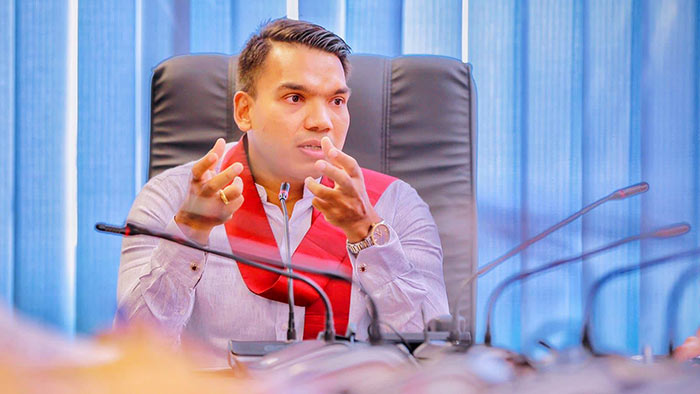
83 institutions gazetted under Minister Mohamed Ali Sabry

0

83 Departments, Statutory Institutions and Public Corporations have been gazetted under the Minister of Finance and Justice Mohamed Ali Sabry.

These institutions have been transferred by the latest gazette notification issued by the President regarding the scope and functions of the Ministries.

These institutions are as follows:

Ministry of Finance

Ministry of Justice

Sri Lanka identifies 7 essential goods categories for imports from India

0

Crisis-ridden Sri Lanka has zeroed in on seven categories of goods, apart from petroleum products, for sourcing from India this year, utilizing the lines of credit that New Delhi has extended to Colombo, sources told FE. These products include essential food items, medicines, cement, textiles, animal fodder, raw materials for key industries and fertilizers.

Lankan importers are placing their goods requirements accordingly with suppliers here. Indian exporters are required to approach State Bank of India, which has signed an agreement to extend $ 1-billion credit line to the island nation, for payment, one of the sources said.

Given that Sri Lanka has been facing its worst economic turmoil since 1948, triggered by a foreign exchange crisis, it wants to restrict imports to only essential products.

The island nation has been seeking an additional $ 2 billion line of credit to tide over the crisis. India has already provided $ 1.5-billion lines of credit to it since January. These include $ 1 billion for imports of food, medicine and essential items and another $ 500 million for petroleum products. On top of these, India’s assistance also includes a $ 400-million RBI currency swap and a deferral of a $ 500-million loan repayment.

Domestic exporters are already apprehending a sharp drop in supplies to Sri Lanka in FY23 from a record $ 5.7 billion in the last fiscal, as authorities there have resorted to import curbs.

New Delhi’s major exports to Columbo include petroleum products, pharmaceuticals, steel, textiles (mainly fabric and yarn), food products and automobiles. Exports of many of these products to Sri Lanka are going to ease in FY23.

While any potential fall in India’s exports to Sri Lanka and Nepal (the latter, too, has imposed limited import curbs to preserve foreign exchange reserves), given the limited trade value, they, nevertheless, add to an array of external headwinds for Indian exporters , most notably the massive supply-chain disruption in the wake of the Ukraine crisis. Moreover, the crises come at a time when India is seeking to build on its robust export performance in FY22.

Sri Lanka and Nepal imported merchandise worth $ 15 billion from India in FY22, up about 50% from the pandemic year of FY21. India was the largest exporter of goods to both Nepal and Sri Lanka in FY22.

Much depends on further assistance by India and Sri Lanka’s discussion with the IMF for a bailout package, exporters have said. 

Sri Lanka’s GDP contracted by a record 3.6% in 2020 and its foreign exchange reserves crashed by 70% in the last two years to about $ 2.31 billion by February, leading to a sharp depreciation of its currency. Meanwhile, its debt has swelled to $ 51 billion.

JNEWS

Humanitarian assistance programmes by Government of India

0

Complementing Government of India’s people-centric projects in Sri Lanka through development cooperation partnership, India is also directly reaching out to needy sections of Sri Lanka and addressing their necessities through various humanitarian assistance programmes. 

2.       Second Secretary Ashok Kumar distributed dry ration packs to widows and other needy families of Kalmunai in Ampara District on 27 April 2022. This special drive, held in collaboration with Young Women’s Muslim Association, was aimed at providing necessary materials to the beneficiaries ahead of E’id-ul-Fitr Festival. 

3.        It may be recalled that Dr. Rewant Vikram Singh, Director Swami Vivekananda Cultural Center had distributed dry rations to families of the congregation at St. Anne’s Church Weligampitiya on Easter Sunday on 17 April 2022. This followed similar such initiatives in 6 villages of Binigiriya in Kurunegala District and Madawewa and Kirimetiyawa villages in the sacred city of Anuradhapura, ahead of Avurudu. 

4.      The special humanitarian drive was launched by High Commissioner Gopal Baglay in Jaffna on 13 March 2022. Food and other essential materials were handed over by the High Commissioner along with Hon’ble Douglas Devananda, Minister of Fisheries to 600 fishermen and their families during the inauguration. Subsequently, dry ration packs were also distributed among fishermen in Mullativu, Kilinochchi and Mannar. 

5.        Assistant High Commission of India in Kandy, Consulate General of India in Jaffna and Consulate General of India in Hambantota have also been undertaking such initiatives to make a palpable impact on daily lives of needy groups in Sri Lanka by providing food and other goods for daily sustenance. 

Exporters urge the Government to ensure prudent fiscal policy

0

The National Chamber of Exporters (NCE) is urging the Government to ensure prudent fiscal policy amidst the current economic and political crises as well as simplifying export regulations to increase the flow of dollars to the country.

In a statement NCE said Sri Lanka is in a complete socio-economic turmoil with the embattled ruling party being accused of mismanagement and high cost of living hurting its people. The political corruption that prevailed over a prolonged period has crippled the economy.

The responsible decision makers are looking to the IMF for immediate bail out, the Cabinet has been expanded amidst protests by people demanding solutions.

The question remains whether the newly appointed Cabinet will be able to steer the country towards recovery through this challenging era.

A severe shortage of foreign exchange has created a vacuum in fuel, domestic gas, medicine, and raw materials which has also led to social unrest.

It is worsened due to the emergence of the grey market and many imports are now taking place external to the country’s banking system. Anticipating a further devaluation of the rupee, most export proceeds are not being brought back to the country.

The NCE emphasises the importance of introducing proper mechanisms to maximise tax revenue of the country.

It is mandatory to have robust policies in place to help the country stand up and move forward. The NCE urges the Government to facilitate the Department of Inland Revenue to encourage all citizens to declare their wealth and exercise the existing laws related to collection of tax revenue.

According to records, the total tax files are around 250,000 in a population of 21 plus millions and six million households approx.

Even though there is a law enforced on Parliamentarians to declare assets, it is stated that less than 10 of them have consented so far. This process must begin from the country’s first citizen.

Tangible mechanisms must be introduced and implemented to investigate and apprehend potential taxpayers who maintain assets overseas.

All monetary transactions within the country should be monitored by revenue authorities. Granting of ad-hoc tax holidays should be avoided and a comprehensive investment relief system to boost investments must be introduced.

Export regulations should be revised to increase the flow of dollars to the country exporterschamber sugested

The earlier regulation on remitting export proceeds within 180 days has been dormant and it is noted statistics published by Central Bank and Department of Customs do not portray the actual value due to non-availability of a monitoring and tracking system.

Regulations should be enforced to ensure foreign remittance is received through the banking system, and the country’s balance of payment is not further affected.

The NCE proposes all foreign remittances an incentive rate of 30% more than the parity rate matching the rates by the grey market.

The additional value to be invested in a rupee time deposit of over 12 months, earning a higher rate of interest. Further, the additional incentive proceeds to be allowed through a time deposit and to be utilised for capital investments only, thereby contributing to the national GDP.

The NCE states that importing any item/s under an open account should be further evaluated and streamlined.

All commercial importers to be duly registered with the Department of Imports and must open tax files obtaining TIN number which is to be highlighted in all documentation related to imports entered in all import documents enabling Sri Lanka Customs and IRD to monitor establishments.

Ali Sabri meets Ranil at an Iftar function – Discussions held on the current economic situation

0

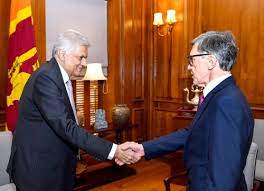
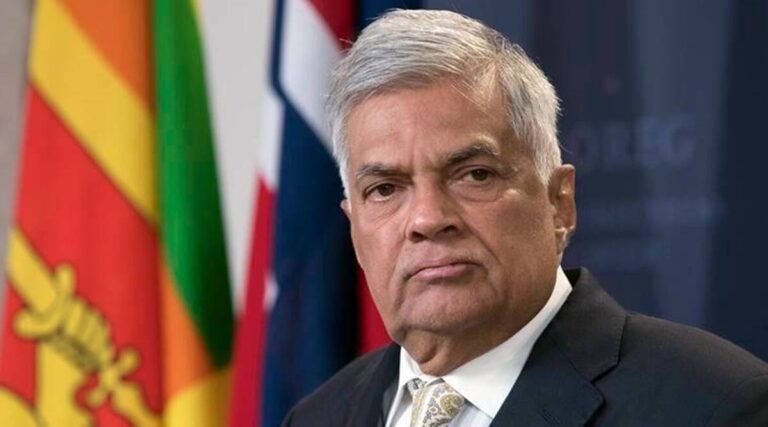
Former Prime Minister Ranil Wickremesinghe and current Finance Minister Mohamed Ali Sabri met at an Iftar function at a school lane in Colombo yesterday (29).

The Iftar has held at No. 80, School Lane – where Ranil Wickremesinghe’s House is situated. Ranil Wickremesinghe attended the function as the Chief Guest. Minister of Finance Mohamed Ali Sabri, Members of Parliament Faizer Qasim, Faizer Mustafa, SM Marikkar, Susil Premajayantha, Uva Governor AJM Muzammil, UNP Deputy Leader Ruwan Wijewardena and Sagala Ratnayake were also present at the occasion.

Sources said that Ranil Wickremesinghe had become the ‘political star’ of the Iftar event organized by The Forum 5th.

Many people had asked Wickremasinghe about the current economic situation in the country and the conditions that may arise in the future and he also clarified the facts.

It is said that the Minister of Finance Ali Sabri has also met with Wickremasinghe to discuss a program with the International Monetary Fund and solutions to the current economic crisis.

According to sources, Wickremasinghe has pointed out that the first thing to be done at this juncture is for the politicians who are the pioneers of the economic issues of all political parties to come together and discuss the economic situation of the country and find a solution.

Wickremesinghe also warned that the situation in Sri Lanka could be “extremely dire” by August, as a global food crisis is inevitable due to the Russia-Ukraine war.

Sources said that he had pointed out that the light rail project provided by the Japanese government should be restarted as a solution to the existing foreign exchange problem. The light rail project, which was to be funded by the Government of Japan, was suspended as soon as the current Government came into power, which even adversely affected diplomatic relations between Japan and Sri Lanka. Wickremasinghe has pointed out to Ali Sabri that if such a massive development project could be taken back to the country at this moment, the US $ 2500 million it would receive would be a huge boost to the country’s economy.

In response, Ali Sabri has said that no one in the current cabinet understands the real depth of the crisis and that former Secretary to the President PB Jayasundara and former Central Bank Governor Ajith Nivard Cabraal are responsible for all these issues.

In addition, commenting on the interim all-party government proposal, Wickremesinghe has stated that in order for such an endeavor to be successful, first of all, as mentioned earlier, the leaders of the economics of all political parties should hold a discussion on the current economic situation in the country and understand the situation. He has pointed out that there is no possibility of the formation of an all party government in a background where such a thing does not happen.

The former prime minister has said that nothing is happening at present and that the opposition political parties are now waiting for the situation to escalate and gain power, but if the problem persists until August, the country will not be able to cope with the global food crisis. Sources said that the party has been warned that a situation will arise where it will not be able to form a government.

Central Bank bans the inward and outward remittances from illegal channels

0

The Central Bank has taken new measures to improve the domestic foreign exchange market to present forex liquidity in local banks .

Finance Ministry will issue a new gazette notification under the Import and Export Control Act, making all payments on imports to Sri Lanka through a banking system compulsory, says the Central Bank Governor. Dr. Nandalal Weerasinghe

Addressing a special media briefing on Friday 29 , Dr. Nandalal Weerasinghe said several measures will be taken by the Finance Ministry and the Central Bank to curb the transactions in foreign exchange outside the banking system.

He noted that the reason for the foreign exchange shortage in the local banking system is the remittance of funds through informal transfer systems such as Hawala and Undiyal.

As the first step against informal fund transfer methods, a gazette notification is expected to be issued either today or tomorrow to make it mandatory that all payments for imports to the island are made through the banking system.

He also assured that the Central Bank would give its best to minimize these informal fund transfers and demand for such transfers.

If the payments are not made through the banking system, the imported items will not be cleared by the Customs, the Central Bank governor added.

He noted that going forward imports will be allowed only on the basis of Letters of Credit (LCs), Documents against Payment (DP) or Documents against Acceptance (DA) terms. Any imports other than these three methods will not be cleared by the Customs. About 20% of imports come via Open Account terms.

The move, according to the Governor, will help curtail the grey forex market as well as unofficial remittance channels such as Hawala or Undiyal which is a source to finance imports made in Open Account method.

It was pointed out that given the demand for forex by those engaged in Open Account imports, the grey market thrived with help from Hawala/Undiyal channels. This also encourages a higher premium for foreign currency via this option.

Whilst noting that the premium or the gap between rates offered by formal banking channels and grey market is reducing, Dr. Weerasinghe said the latest measure will minimise it further.

More importantly, ban of Open Account transactions will also help reduce unnecessary imports. Due to ongoing initiatives, imports in March had reduced to $ 1.7 billion from $ 2 billion in December whilst the Central Bank hopes new measures will help it to be reduced to $ 1.5 billion.

Though noting that there was a degree of overshooting of the currency or that it is overvalued, CBSL Chief urged migrant workers to channel their remittances via official banking channels.

“He recalled that the country used to get $ 500 million monthly and $ 7 billion annually in the past in the form of workers’ remittances and helping the Balance of Payments.

He dismissed the perceptions that sending money via official channels gets squandered by the Government and stressed that such a course will only help their families whilst benefiting the nation.

In response to a question on the mandatory foreign currency conversion by tourists in order to obtain goods and services, Dr. Weerasinghe said the Central Bank will look into relaxing the directive to encourage all foreign currency remittances to be routed through the banking system.

This is not good for the tourism industry and it is an inconvenience for the tourists, he added.

Meanwhile, with regard to the recruitment of debt advisors, Dr. Weerasinghe said the process is in progress and that the Central Bank expects to submit its proposals to the Cabinet of Ministers within a period of one or two weeks.

An Extraordinary Gazette Notification issued increasing the prices of 60 drugs by 40%

0

An Extraordinary Gazette Notification has been issued increasing the prices of 60 drugs by 40%.

The gazette notification was issued by the Minister of Health Channa Jayasumana yesterday (29).

VIEW THE FULL GAZETTE

Govt  to reverse present taxation system back to previous system in 2019 

0

Sri Lanka government is set to reverse the present tax structure back to the previous  taxation system prevailing in 2019.

The ruling party  has introduced  the present system soon after coming in to power in 2019.   abolishing and reducing income generating taxes for the benefit of a few under the cover of an economic stimulus package incurring  heavy loss of revenue for the treasury.

The Finance Ministry will introduce relevant tax revisions as the present taxation has failed to bring expected results , Central Bank Governor Dr Nanadalal Weerasinghe told a media conference in Colombo oN Friday 29..

He added that the Central Bank will be taking necessary action to tighten the monetary policy while the Finance Ministry is to introduce policies and systems to generate revenue while placing  social security nets.

Asa first step, the Finance Ministry will increase sales taxes as an immediate action to raise tax revenue as it has become a very difficult gigantic task after the present government’s action in 2019 to do away with a range of taxes .

The country has lost more than Rs.1 trillion in tax revenue with 33.5 percent  decline in the number of registered taxpayers (corporate and individual) in the country during the past two years  .

Finance Minister Ali Sabri noted that he has no choice but to hike the country’s sales tax as it faces its worst-ever economic crisis.

In an exclusive interview, Ali Sabry conceded the government made a mistake when it almost halved the rate of value-added tax (VAT) to 8% in 2019.

Mr Sabry says the nation needs $4bn (£3.2bn) over the next eight months to pay for imports of daily essentials.

 He added that the current level of VAT is “definitely not sustainable” for a country like Sri Lanka that is dependent on the imports of essentials and said the rate should be raised to 13% or 14%.

He also admitted that a move to cut taxes in 2019 soon after Gotabaya Rajapaksa became president was wrong, adding that the government had waited too long before calling on the IMF for help.

Mr Sabry was also cautiously optimistic that the country will be able to start paying its international creditors again by next year, 

Earlier this month, the Sri Lankan government said it would temporarily default on $35.5bn (£27.3bn) in foreign debt  to make payments to overseas creditors.

Meanwhile, India has offered a $1.5bn credit line for fuel supplies and Mr Sabry said India has agreed to another $500m credit line in principle.

Sri Lanka is set to receive $400m-$600m from the World Bank immediately, which could be used for “cash transfers and building a social safety net for the vulnerable,” Mr Sabry added.

Handing over of drugs and medical supplies

0

High Commissioner Gopal Baglay handed over a large consignment of drugs and other medical supplies to Hon’ble Channa Jayasumana, Minister of Health in Colombo on 29 April 2022. Indian Naval Ship Ghariyal was specially deployed for ensuring expeditious delivery of the medical consignment, a gift from the people of India. 

2.     These medical supplies are in response to the request from Teaching Hospital, Peradeniya. Shortage of essential supplies in the Teaching Hospitalwas noted by External Affairs Minister Dr. S. Jaishankar during his visit to Sri Lanka in March 2022.

3.     More medical consignments in response to specific requests by various medical entities operating in all parts of Sri Lanka are also being scheduled from India. In addition, USD 200 million has been earmarked for the supply of medical supplies under the USD 1 billion credit line for essential commodities like food, medicine etc. 

4.     India has been extending expeditious support to Sri Lanka in the recent past. Overall economic assistance which stands close to USD 3 billion in 2022 alone has been of various kinds – USD 1 billion credit line for essentials; USD 500 million credit line for purchase of petroleum products; USD 400 million bilateral currency swap; and over USD 1 billion under the Asian Clearing Union Framework.  The USD 1 billion credit line is operational and 16,000 MT of rice has already reached Sri Lanka, inter alia other items, under this credit line.

A meeting between Mahinda and Ranil amidst the political crisis

0

It is reported that a meeting between the Prime Minister Mahinda Rajapaksa and the former Prime Minister, UNP Leader Ranil Wickremesinghe was held yesterday (29) morning.

The two had met in Colombo and discussed the matter, but the details of what was discussed have not yet been revealed.

After the meeting, Mahinda Rajapaksa had left for Carlton House, Tangalle to spend the weekend.