Home Blog Page 2132

Sri Lanka’s inflation hit 119%: Hanke’s Inflation Dashboard

0

As of April 21, 2022, the annual inflation in Sri Lanka is at a sky-high of 119 percent, revealed Hanke’s Inflation Dashboard by Prof. Steve Hanke, an economist at the Johns Hopkins University in the United States.

Accordingly, Sri Lanka has the third highest inflation in the world, while Zimbabwe marks an annual inflation of 207% ranking first and Lebanon an annual inflation of 150% ranking second.

Prof. Hanke said in a tweet that Sri Lanka needs to establish a currency board as it had from 1884 until 1950 to crush inflation and save the value of the Rupee.

However, certain economic analysts in Sri Lanka disagree with the statistics revealed in the Hanke’s Inflation Dashboard, questioning its parameters.

MIAP

Milk powder price to soar next week. 400g packet likely to soar over Rs. 1000

0

The price of imported milk powder will increase again by the end of the week warned the Milk Powder Importers’ Association.

The price of imported milk powder may be increased as per the discretion of the importers given that the government has lifted the control price imposed on milk powder, said Union Spokesman Asoka Bandara, adding that up to which extent should the price be soared, nevertheless, cannot be predicted at this moment.

However, market sources claimed that any soaring of milk powder price will exceed the price of a 400g milk powder packet over Rs. 1000.

MIAP

Power cut plan for 25 – 27th April revealed

0

The demand management schedule for power in the country from April 25 to April 27 has been released.

Accordingly, a power cut of three hours is likely to occur in many areas of the country.

MIAP

No photo description available.

No Confidence Motion: Agreement made with Independent Group, we’ll form new government, says Rajitha

0

Samagi Jana Balawegaya (SJB) MP Dr. Rajitha Senaratne speaking to a SJB rally yesterday (24) stated that an initial agreement was made with the MP group who claims themselves to have left the government and become independent regarding the no confidence motion.

“They have become so vulnerable that even the meeting called in by the Prime Minister himself to support him was attended by only 88 MPs. About 70 MPs did not even bother to attend the meeting to support the Prime Minister. That is the situation now. Now, a no-confidence motion will be tabled in Parliament against this government. We talked to the parties independent of the government and agreed to the final draft yesterday. We have more than 113 signatures. Therefore, this government will stay in power only for a few days. When I see you again, we have already formed a government, may you keep that in mind. Our initial stance was that although we give in to overthrowing the governments, we make no involvement in forming a government. Because it might have not been possible to form a government with these people of diverse opinions. But finally we are reaching a common ground where we can contribute to forming a government. Because they say that they will not involve otherwise. Therefore, they say that we should form a government after this event.”

MIAP

MR’s attempt to measure Majority in Parliament reveals less than 113 signatures

0

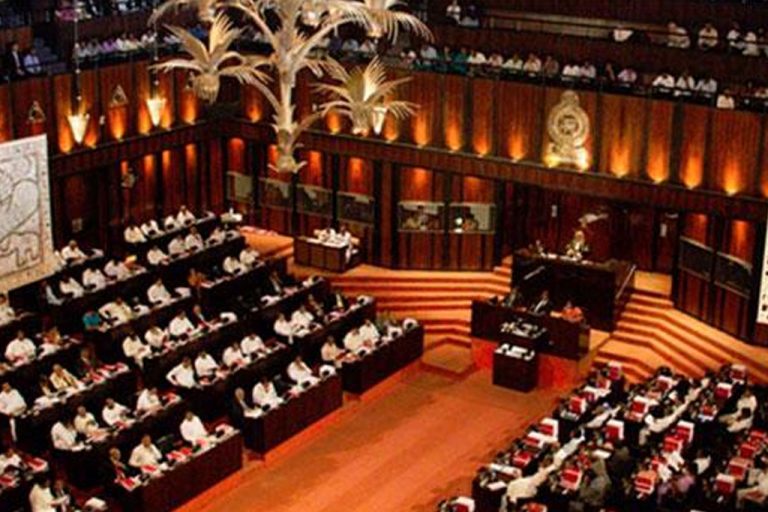
Prime Minister has reportedly launched a programme to measure the 113-majority in Parliament by collecting signatures of MPs favouring the Ruling Party.

The programme was undertaken at the Sri Lanka Podujana Peramuna (SLPP) Headquarters in Nelum Mawatha, Baththaramulla since yesterday (24) morning.

However, he has managed to collect less than 113 signatures, sources said.

A previous meeting attended by the Ruling Party MPs to unanimously approve a motion to support Mahinda Rajapaksa managed to collect only 88 MPs.

MIAP

Youth voice very important in seeking solutions to economic crisis: Ranil

0

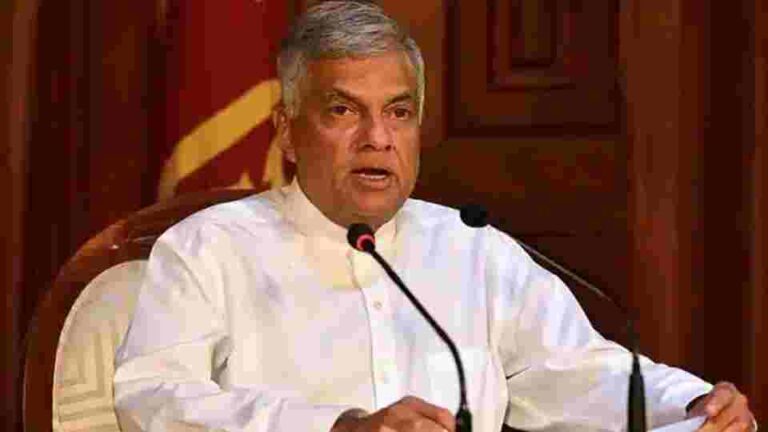
Former Prime Minister and Leader of the United National Party (UNP) Ranil Wickremesinghe speaking to media yesterday (24) said the contribution of the youth of this country would be very important in seeking solutions to the prevailing economic crisis.

“This matter should be resolved within Parliament itself. Parliament should take the fiscal power and six working committees should be appointed to carry this out. These six committees should invite three youths each, an assembly of 200 – 300 members from youth organisations should be formed, that assembly should be convened once every three months, and that youth voice should be given the opportunity to decide the method in which that youth membership is elected. Having those ideas, the decisions can be made in Parliament.”

MIAP

Emmanuel Macron has won the election

0

France’s presidential election: The second round in detail

mmanuel macron won the second and final round of France’s presidential election on April 24th, taking a projected 59% of the vote against Marine Le Pen’s 41%. He is the country’s first leader to be re-elected since Jacques Chirac, a Gaullist, in 2002, and the first to have governed with a parliamentary majority in his first term and then to win re-election since the fifth republic was established by Charles De Gaulle in 1958.
The result represents another repudiation of Ms Le Pen’s nationalist populism. The margin of victory, however, is smaller than in 2017, when the two also went head-to-head and Mr Macron triumphed with 66% of the vote.

Round two results by commune

Mr Macron’s votes were again concentrated in urban areas: he won landslides in cities including Lyon, Paris and Toulouse, and also did well in the north-west. He picked up support from left-leaning cities, even those in the south-west that had supported the radical-left Jean-Luc Mélenchon in the first round. Ms Le Pen performed strongly in poorer, more rural areas and in regions of industrial decline in the north and east, as well as in her party’s traditional stronghold in the south-east, where worries about immigration are strong and a large retired population tends to vote on the right.

Sri Lanka’s food imports put on hold as no money from Indian credit line

0

Sri Lanka’s essential food importers are still waiting for money from the Indian credit lines, and industry officials said as banks were short of dollars due to money printing and high domestic credit.

The  country is facing a shortage of essential commodities such as Rice, Sugar, Dhall, Chickpeas, Coriander etc as imported stocks are stuck in the Port of Colombo  for not being able to clear it in the current foreign exchange crisis, commodity importers complained. 

They noted that Port rent and container demurrages are being accumulating on a daily basis (in some instances the cost per Kg was Rs 35-40), they pointed out.

Members of the Essential Food Commodities Importers and Traders Association have also imported and distributed food items such as Dhall and Rice on “Suppliers Credit” (DA terms) which are overdue for settlement and some suppliers requesting for payment..

This issue has been brought to the notice of the President in a letter dated March 1 2022, P.M. Abeysekera, consultant of Essential Food Commodities Importers and Traders Association  disclosed. 

He added that there was a serious threat for food security in the country as most suppliers are reluctant to ship goods to Sri Lanka unless paid in advance.

“Several rounds of discussion have been held with the Trade Ministry,” Essential Food Importers and Traders Association (EFITA) Spokesperson Nihal Seneviratne said, adding that “They are trying but so far no money has come.”

The Association represents about 90 percent of the essential food importers of the country, he told reporters earlier in April at a forum of joint chambers.

Sri Lanka needs 200 million dollars a month for food imports, he said. After 1978 almost all the foods are imported to the country by the private sector.

Other than milk powder most items were available up to now though prices are rising, he said.

Food importers had brought goods to feed the people on credit since banks were not giving enough dollars and many companies were in trouble after the rupee fell in March in a botched float.

“The suppliers just trust us and send the goods to Sri Lanka (without LCs),” Senevirtne said. “That has been hampered for the last six months and there is a problem of continued supply.”

He said suppliers are reluctant to ship and are asking for money upfront.

“We can do it up to a certain extent. But there is a crisis. Other than milk powder we have managed to bring food.”

He said firms which imported goods under credit were facing massive losses after the rupee fell in March.

“Some will even bring under credit terms. What we brought under credit terms, has already been sold, calculating the dollar at 203 rupees.

“Now importers are faced with 50 million dollars (of supplies credit) which we have already sold. So they are facing bankruptcy.”

SL biz community urges repeal of 20th amendment

0

Amidst growing protests and a shortage of fuel, the Joint Chambers of Commerce and Industry has urged President Gotabaya Rajapaksa to immediately initiate legislative action to repeal the 20th amendment to the Constitution.

“The Joint Chambers urge Your Excellency, as President, to immediately initiate legislative action to repeal the 20th amendment to the constitution which contributed to the present situation.

This will be viewed as a historic positive development for this country both from a political and economic perspective,” it said in a letter to the President on Tuesday.

They noted that it was concerned that the current political deadlock coupled with growing public unrest could potentially derail the actions being taken to resolve the serious economic crisis faced by the country.

The absence of political stability could significantly disrupt the successful and speedy completion of initiatives taken thus far, the letter said.

The chambers were confident the repeal of the 20th amendment will ensure a better balance of power between the Executive and the Legislature along with the reintroduction of the Constitutional Council and other independent Commissions that will lead to a more acceptable political framework that could help resolve the current impasse.

Meanwhile several companies issued statements this week on the public unrest in the country with some supporting the protests and a regime change.

Hemas Group said it ‘continues’ to support the people in its demand for systemic change. “We call upon our nation’s leaders to hear the cry of the people and come together to immediately undertake the necessary political reforms and set our country on the right path.

It should be based on the principles of good governance, free of corruption and ethnic divisions,” it said in a statement. It said it was supporting the rights of their staff to freely express themselves in a non-violent manner.

MAS Holdings said: “As a responsible organisation, we unconditionally support the call for change and good governance, and earnestly request the nation’s leaders to heed the voice of the people and act on it, whilst respecting legal and Constitutional due process.”

The statement added that given the ensuing events, MAS reiterates the need for immediate and decisive action to resolve the current economic and social crisis, in a peaceful and sustainable manner.

Govt. continues money printing despite pledges to curtail it.

0

Sri Lanka is planning to strengthen public finances and reduce money printing to stabilize the economy, Treasury Secretary Mahinda Siriwardene said ahead of discussions with the International Monetary Fund.

Secretary Siriwardene said a circular to cut current spending will be issued immediately.

However In April, 125 billion rupees was printed taking the Central Bank’s outright Treasury bill stock to 1,853 billion rupees, from 1727 billion rupees at the end of March.

The government has paid Rs 123 billion not only the salaries but also the festival advance (of state workers) to protect the country, Finance Ministry sources revealed.

The present administration has stepped up money printing at a time of civil unrest demanding essential commodities, fuel and cooking gas at a reasonable price amidst economic crisis triggered by dollar scarcity, massive external debt and balance of payment issues, with the Central Bank (CB) printing a sum of Rs. 20.28 billion on April 18 and 19.

It printed Rs 1.22 billion on April 18 and Rs.19.06 billion on April 19, the day a protestor was shot dead and 24 others injured when police opened fire to disperse angry crowds in Rambukkana who demanded fuel for reduced prices following a massive hike in petrol and diesel on the previous night.

Several protests have been witnessed this week in Kandy, Galle, Gampola, Mathugama, Baddegama, Avissawella, Kegalle, Hingurakgoda, and Madampe and buses were unable to proceed on their journeys on the Chilaw-Colombo main road as protestors thronged the road.

The CB has printed Rs.1.79 trillion during the period of January 2020 to April 19, 2022, official data showed. CB Governor Dr. Nandalal Weerasighe told a recent media briefing that the bank will curtail money printing while refusing to divulge details of money printed in 2021 and 2022 stating that anyone can find it from the CB web site.

However a sum of Rs 19.06 billion was printed two weeks after his assumption of office, and while he was away attending IMF meetings in Washington.

The CB had printed a massive sum of Rs. 130 billion in October 2021 alone. According to the available data, from December 2019 to October 2021, the CB has printed Rs. 2.8 trillion.

Sri Lanka printed nearly money amounted to Rs 1.4 trillion in year 2021.Earlier this week, former Governor Ajith Nivard Cabraal admitted that certain issues can arise owing to printing money and the CBSL is reducing the amount of money being printed at present.He said that the practice of printing money is not a new phenomenon.

Sri Lanka’s inflation increased to 18.8 per cent in March 2022 from 15.1 per cent in February as the Central Bank printed money to keep interest rates low and the depreciation of currency rupee float, Census and Statistics Department data shows.

Colombo University Professor in Economics Sirimal Abeyratne said that there was a limit for the money printing especially during a recession, as aggregate demand, consumer demand, business demand and international trade gets disruptive.

He noted that Sri Lanka is facing commodity shortage and inflationary pressure, so it is opportune to contain the money printing otherwise “we will end up aggravating our inflationary pressure”.

“Sri Lanka will have to increase investments and exports taking prudent policy decisions at this critical moment but resorting to money printing will definitely affect the economy,” he warned.