By: Roger Srivasan
Standfirst: When discarded politicians resort to prophecy and theatrics, it is not strength but desperation that speaks.
A handful of disingenuous and long-discarded venal politicians now find themselves stranded at a cul-de-sac of relevance. After decades spent practising the traditional political art of tergiversation, they linger uneasily as accountability closes in — with prison doors no longer a distant abstraction but an increasingly proximate reality. Udaya Gammanpila, Wimal Weerawansa, and their fellow travellers are emblematic of this fading political order.
Stripped of credibility, substance, and public trust, they have turned to noise. Policy has given way to theatrics; persuasion has been replaced by prophecy. It is the predictable reflex of those who sense that the political ground beneath them has irrevocably shifted.
Gammanpila, in particular — an imbecilic stand-up comedian masquerading as a statesman — has recently embraced political fortune-telling. With performative certainty, he predicts that President Anura Kumara Dissanayake will “languish behind bars” once Namal Rajapaksa supposedly ascends to the presidency in 2029, with prison terms conveniently mapped out from 2030 to 2035.
Such utterances are not analysis; they are cheap political grandstanding. They belong less to the domain of governance than to the theatre of farce. Far from unsettling the nation, they merely expose the intellectual vacuity and mounting desperation of their author and his cohort.
Anura Kumara Dissanayake is a man of indomitable spirit. His political life has been forged in resistance, not privilege; tested by adversity, not insulated by impunity. Theatrical threats and nostalgic fantasies of dynastic restoration neither intimidate him nor deceive an electorate that has grown weary of deception and decay.
As the net of accountability tightens, the decibel level predictably rises. At the cul-de-sac of politics, noise becomes the last refuge of the politically spent. But noise cannot halt justice, nor can grandstanding reverse the verdict of a people determined to move forward.
History, unlike political prophecy, is not amused.
At the Cul-de-Sac of Politics, the Noise Only Grows Louder

NBRO Says Landslide Threat Has Eased After Cyclone Rains

December 16, Colombo (LNW): The National Building Research Organisation has announced that areas previously flagged as vulnerable to landslides and rockfalls have now returned to stable conditions following the severe weather triggered by Cyclone Ditwa.
NBRO Director General Eng. Dr Asiri Karunawardena said more than 1,200 locations across the Central, Sabaragamuwa and Kurunegala provinces were classified as high risk during the period of intense rainfall. He confirmed that those sites have since stabilised and no longer pose an immediate danger.
With the situation improving, the organisation has shifted its attention to surveying fresh locations that could become hazardous if weather patterns change. As a precaution, teams have already begun clearing unstable rocks from slopes known to be prone to falling debris.
Monitoring remains active in districts such as Kandy, Badulla, Nuwara Eliya, Matale, Kegalle and Kurunegala, where ground conditions are being closely observed.
Dr Karunawardena stressed that although the immediate threat has diminished, continued surveillance and early intervention are vital to minimise the risk of future geological incidents.
Special Leave Approved for Public Servants Affected by Recent Disasters

December 16, Colombo (LNW): The Government has authorised a special leave arrangement for public sector employees who were unable to attend work as a result of flooding, landslides and transport disruptions caused by recent adverse weather.
A circular issued on Monday by the Secretary to the Ministry of Public Administration, Provincial Councils and Local Government has been sent to ministry secretaries, provincial chief secretaries and heads of government institutions outlining the decision.
Under the directive, state employees who could not report for duty due to the breakdown of public transport links, blocked roads or other disaster-related obstacles linked to Cyclone Ditwah will be eligible for this concession.
Affected officers must submit a written application to the head of their institution explaining the reason for their absence. The request should be supported by a recommendation from the relevant Grama Niladhari and endorsed by the Divisional Secretary.
Institutional heads have been instructed to carefully review each application and, if satisfied with its validity, forward it to the respective head of department for approval covering the actual period of absence.
The Ministry clarified that this special leave facility will be limited to absences recorded during November and December only, and will not extend beyond this timeframe.
Education Ministry Reaffirms Ban on Third-Term Exams for Middle Grades
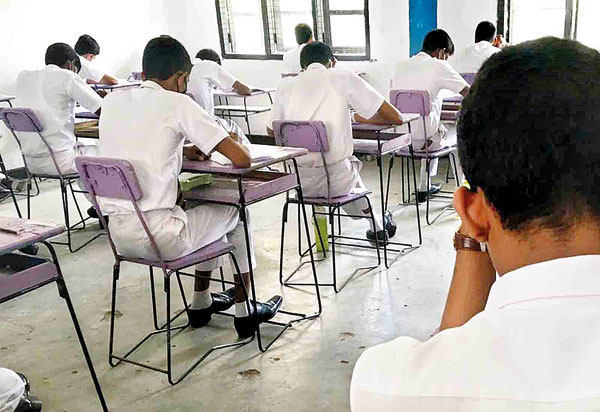
December 16, Colombo (LNW): The Ministry of Education, Higher Education and Vocational Education has once again underlined that schools must not hold third-term examinations for students in Grades 6 to 10 during the 2025 academic year.
In a fresh communication circulated to provincial authorities and school heads, the Ministry stressed that this decision is not optional and must be enforced uniformly across all schools.
Officials were reminded that earlier guidelines on the matter remain fully in force and that any deviation from them will not be permitted.
Rainy weather influenced by easterly wave to persist: Fairly heavy falls above 50 mm expected (Dec 16)

December 16, Colombo (LNW): Under the influence of the Easterly wave flow affecting the weather over the island, the prevailing showery conditions over the Northern and Eastern provinces are expected to continue during the next few days, the Department of Meteorology said in its daily weather forecast today (16).
Showers will occur at times in Northern, North-Central, Eastern, Uva and Central provinces. Fairly heavy falls above 50 mm are likely at some places in Northern and Eastern provinces and in Polonnaruwa district.
Showers or thundershowers may occur at several places in the other areas of the island after 1.00 p.m.
Fairly strong winds of about (30-40) kmph can be expected at times over Eastern slopes of the central hills, Northern, North-central and North-western provinces and in Trincomalee, Hambantota and Monaragala districts.
Misty conditions can be expected at some places in Sabaragamuwa, Central provinces and in Galle and Matara districts during the early hours of the morning.
The general public is kindly requested to take adequate precautions to minimise damages caused by temporary localised strong winds and lightning during thundershowers.
Marine Weather:
Condition of Rain:
Showers will occur at several places in the sea areas off the coast extending from Kankasanthurai to Pottuvil via Trincomalee.
Showers or thundershowers may occur at a few places in the other sea areas around the island during the evening or night.
Winds:
Winds will be north-easterly. Wind speed will be (30-40) kmph.
Wind speed can increase up to (50-55) kmph at times in the sea areas off the coast extending from Chilaw to Kankasanthurai via Puttalam and from Hambantota to Pottuvil.
State of Sea:
The sea areas off the coast extending from Chilaw to Kankasanthurai via Puttalam and from Hambantota to Pottuvil will be rough at times.
The other sea areas around the island will be moderate.
Temporarily strong gusty winds and very rough seas can be expected during thundershowers.
Rank Container Terminal (Pvt) Ltd and Senura Civil Engineering (Pvt) Ltd Boost ‘Rebuilding Sri Lanka’ Effort with Rs. 50 Mn Contribution
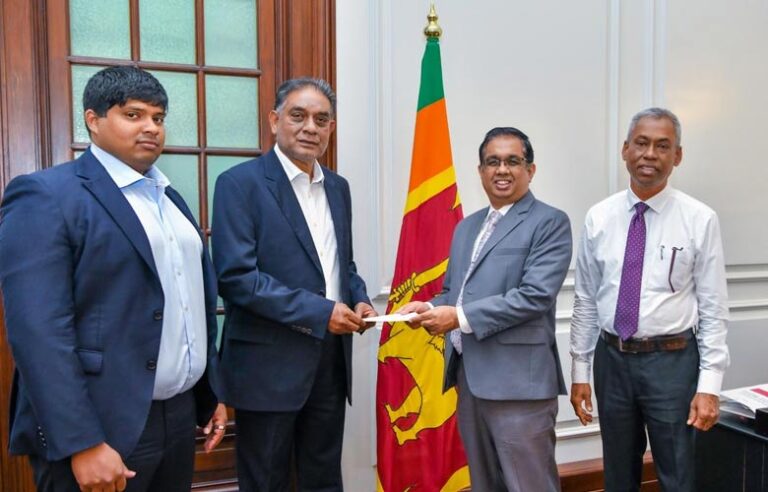
December 15, Colombo (LNW): The ‘Rebuilding Sri Lanka’ fund, established to restore livelihoods and support national recovery following the devastation caused by Cyclone Ditvah, continues to attract steady financial support from both domestic and international donors, including leading companies, entrepreneurs and well-known philanthropists.
Further strengthening this nationwide initiative, Senura Civil Engineering (Pvt) Ltd and Rank Container Terminal (Pvt) Ltd made a combined contribution of Rs. 50 million today (15). Each company pledged Rs. 25 million, underscoring private sector confidence in the programme’s mission and its long-term impact on the country’s recovery.
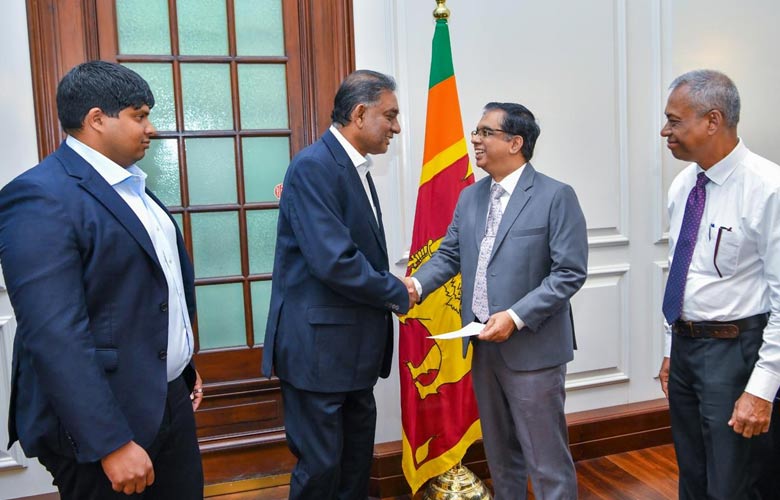
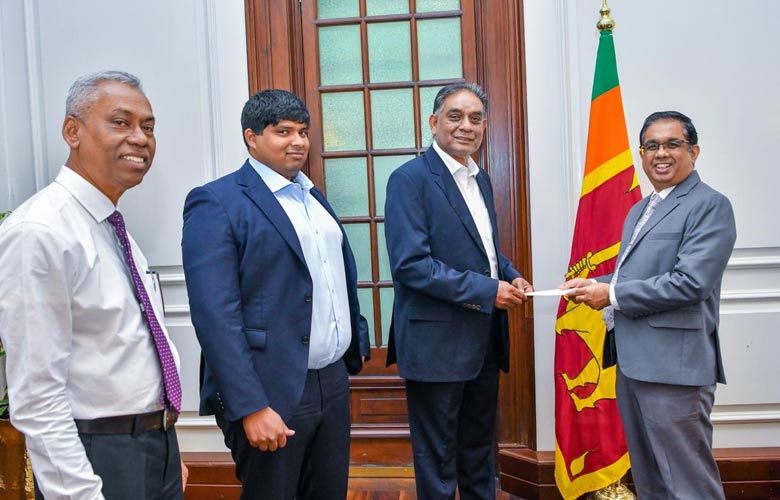
The cheques were formally handed over to the Secretary to the President, Dr. Nandika Sanath Kumanayake, during a ceremony held at the Presidential Secretariat. Representing the two donor institutions at the occasion were Mr. Ravi Wijeratne, Mr. Shahen Wijeratne and Mr. Shantha Ilangamudali.
Rank Container Terminal operates under the ownership of Rank Holdings, a diversified conglomerate chaired by billionaire businessman Ravi Wijeratne. The group plays a significant role in Sri Lanka’s economy through its management of the RCT Container Terminal, alongside wide-ranging interests spanning the hotel and entertainment sector, energy, construction, and pharmaceutical manufacturing. Through this latest contribution, Rank Holdings and its affiliates reaffirm their commitment to national development and post-disaster rehabilitation efforts.
Kollupitiya Prime Land Lease Faces Controversy after Cancellation
By: Staff Writer
December 15, Colombo (LNW): The re-tendering of prime land on Perahera Mawatha, Colombo 3, has raised questions about transparency and decision-making in Sri Lanka’s urban development landscape. The parcel, Assessment No. 135, initially leased to Global Leasing Limited in September 2024 for a mixed-use development, has been reclaimed by the government after the investor reportedly failed to meet contractual obligations.
Global Leasing Limited, a well-established developer, has a track record of urban and mixed-use projects in Colombo and other urban centers, combining residential towers, commercial spaces, and hospitality ventures.
Under previous regimes, the company successfully delivered several high-profile projects, navigating complex regulatory and planning environments. The Kollupitiya project, however, remained incomplete, prompting the Standing Negotiations Committee to recommend termination.
Despite official statements citing contractual non-compliance, details of the unmet obligations remain vague. Industry insiders point to possible delays in construction approvals, financing challenges, or shifting government directives as contributing factors issues not publicly clarified by authorities.
In September 2025, the Urban Development Authority (UDA) Board authorised a fresh call for proposals to prevent the land from lying idle. A cabinet-appointed committee overseeing UDA land disposal has now endorsed a new tender prioritising hotel or commercial development, while allowing up to 50 percent residential use.
The revised lease will be executed under International Competitive Procurement for 99 years, based on a valuation by the Government Chief Assessor.
Urban Development Minister Bimal Rathnayake stated that the re-tender is intended to attract credible investors capable of completing a high-value project in one of Colombo’s most sought-after urban locations.
But the absence of public clarification on why Global Leasing Limited’s lease was terminated has sparked debate, with analysts warning that inconsistent policy decisions may undermine investor confidence.
While the new tender may ultimately generate high-quality development, the episode highlights the need for transparency in managing public land and balancing contractual enforcement with practical challenges in complex urban projects
Cyclone Diwah Exposes Chronic Failure to Protect MSMEs

By: Staff Writer
December 15, Colombo (LNW): Sri Lanka’s micro, small and medium enterprises (MSMEs) once again find themselves paying the highest price for a natural disaster, as Cyclone Diwah and the accompanying floods battered nearly one-fifth of the island, crippling businesses already weakened by years of economic turmoil. While the Government has now announced a new loan scheme to revive disaster-hit enterprises, the devastation has exposed a deeper, long-standing failure by successive administrations to build an effective financial safety net for the backbone of the economy.
According to complaints received by a special support centre set up by the Ministry of Industries, at least 13,698 businesses have been affected so far. The breakdown highlights the scale of vulnerability: 5,639 micro enterprises, 4,636 small businesses, 2,986 medium-scale firms, and 437 large businesses reported damage. Many of these enterprises are concentrated in flood-prone districts, where workshops, retail outlets, food processors, and small manufacturing units were inundated for days, destroying machinery, raw materials, and inventories.
For micro and small operators’ street vendors, cottage industries, repair shops, and family-run factories the losses are existential. Most operate on thin margins, with limited insurance coverage and little access to formal credit. Medium-scale industries, particularly in agro-processing and light manufacturing, face production halts and broken supply chains, further threatening employment in already fragile local economies.
The human toll of the disaster was equally severe. Cyclone Diwah inundated around 20 percent of the country, leaving 834 people dead or missing, with several areas hit by devastating debris avalanches that wiped out entire communities. For businesses, the tragedy translated into closed markets, displaced workers, and prolonged uncertainty.
Against this backdrop, the Government has unveiled RE-MSME PLUS, a new loan scheme to be implemented from 2026, aimed at reviving disaster-affected enterprises. The scheme offers three-year loans at a concessional 3 percent interest rate, with a six-month grace period.
Micro enterprises will be eligible for loans of up to Rs. 250,000, while small and medium enterprises can access up to Rs. 1 million. Several existing schemes including SMILE Phase III, eco-friendly financing, E-FRIEND II, and the earlier RE-MSME loan scheme are to be consolidated under this single framework, subject to Cabinet approval.
While the announcement signals policy intent, critics note a familiar pattern: relief arrives late, is debt-based, and often fails to reach the most vulnerable. During previous floods, landslides, and even the recent economic crisis, MSMEs complained of complex application processes, slow disbursement, and inadequate loan sizes that did little to restore operations. Many fear that by 2026, thousands of today’s affected businesses may no longer exist.
Cyclone Diwah has once again underscored a hard truth: without timely grants, insurance mechanisms, and rapid-response financing, Sri Lanka’s MSMEs remain trapped in a cycle of disaster, debt, and decline.
Tender Manipulation Web Tightens Grip on Fisheries Harbours
By: Staff Writer
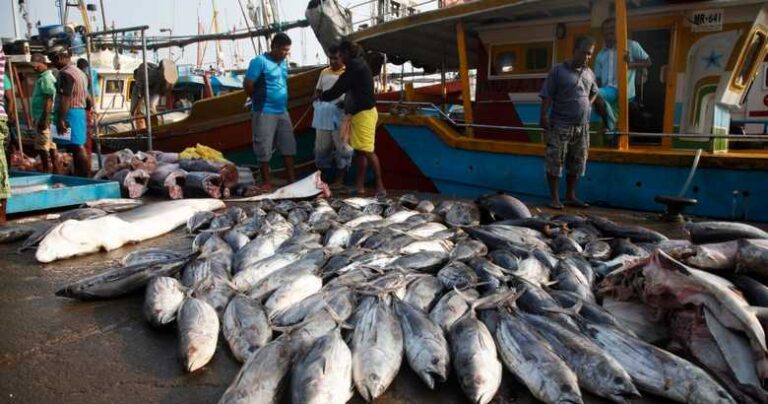
December 15, Colombo (LNW): Sri Lanka’s fisheries harbour construction sector is once again under scrutiny amid mounting allegations of systematic tender manipulation, official collusion and large-scale misuse of public funds within the Lanka Fisheries Harbours Corporation (LFHC) and the Ministry of Fisheries. Multiple incidents over several years suggest that weaknesses in procurement systems have been deliberately exploited by a small group of officials working in tandem with favoured private contractors.
The most troubling pattern, according to industry analysts and internal sources, is that nearly all major construction projects of the LFHC have, for a prolonged period, been awarded to a single private company. This concentration has raised serious red flags, particularly because the bids submitted by this company consistently fall within about 95% of the official cost estimates prepared by the Corporation itself.
Experts argue that such precision cannot be coincidental. They point to two highly concerning possibilities: either confidential cost estimates are being unlawfully leaked to the bidder, or the technical specifications or pricing frameworks for tenders are effectively being drafted with the involvement of the same company, then circulated through engineers within the authority who allegedly maintain close personal links with it.
These suspicions are reinforced by claims that loopholes in government procurement procedures have been systematically manipulated with the tacit support of certain senior officials. The Beruwala slipway tender has been cited as a notable example. Although the contract was not formally awarded to the controversial firm, it was allegedly later compensated through a 5% discount, raising questions about the integrity of the evaluation process.
Insiders further allege that external influence networks are deeply embedded within the fisheries harbour system. It is widely known among employees that one senior engineer has, for years, been provided with a vehicle, fuel and a driver by the same company. Several other engineers allegedly linked to this network are said to sit on tender boards, undermining impartial decision-making.
Financial losses linked to these practices are substantial. At the Gandara Fisheries Harbour, delayed bill settlements and variation payments reportedly enabled the contractor to extract over Rs. 500 million in additional public funds. Meanwhile, the Wella Mankara harbour project revealed structural defects and deficiencies even at the opening stage, highlighting serious failures in supervision and quality control.
These concerns are not isolated. The arrest of a former LFHC Chairman in June 2025 over an unsolicited sand mining proposal, inflated consultancy fees linked to politically connected firms, irregular leasing of harbour premises, unauthorized procurement of equipment, and the widely criticised Oluvil Harbour project together point to entrenched governance failures
Government’s Relief Promises Tested as Cyclone Costs Mount Nationwide
By: Staff Writer
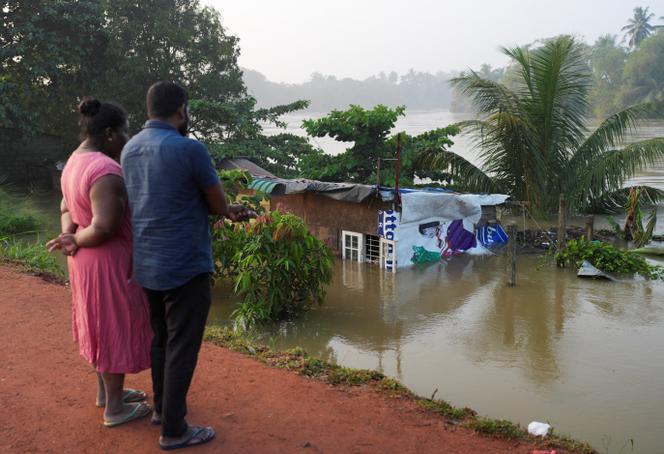
December 15, Colombo (LNW): The cyclone’s devastation has triggered a critical policy debate in Sri Lanka: whether relief commitments can keep pace with economic reality. While government officials insist that funding mechanisms are in place, opposition voices warn that compensation costs may spiral beyond manageable limits.
A senior Treasury official has outlined preliminary estimates showing that post-cyclone compensation could exceed Rs. 100 billion, even before infrastructure reconstruction costs are fully accounted for. These figures highlight a growing tension between fiscal discipline and social responsibility.
The total expenditure comes up to Rs 103 billion to be spent to pay compensation for damges and lively hood support for cyclone and flood victims.
At the household level, relief commitments appear modest but accumulate rapidly. Cleaning grants for damaged homes amount to Rs. 1.8 billion, while essential household assistance raises the bill beyond Rs. 5 billion. Temporary relocation support further adds Rs. 312 million, with the risk of escalation if displacement continues.
Rural recovery presents an even steeper challenge. Crop damage compensation alone is estimated at Rs. 7 billion, while losses to vegetable cultivation and livestock add Rs. 40 billion combined. These sectors support millions of livelihoods, making delayed compensation economically and politically risky.
Income restoration remains the single largest cost. Treasury projections indicate Rs. 44 billion would be required to assist families who lost livelihoods. Business recovery costs—including Rs. 200 million for SME rebuilding and Rs. 5 billion for destroyed commercial properties—underscore the long-term economic disruption caused by the disaster.
To bridge immediate gaps, the government has released Rs. 550 million in additional relief funding, sourced from the Rs. 30 billion disaster management budget. Officials maintain that comprehensive guidelines are in place and disbursement has already begun.
Beyond domestic funding, the United Nations has launched a Humanitarian Priorities Plan, aiming to raise USD 35 million to support 658,000 of the most vulnerable people, complementing state-led efforts. Insurance regulators have also coordinated with insurers to fast-track compensation, with minor claims already being settled.
While some opposition parties have criticized early preparedness, multiple sources confirm that relief systems are operational. Still, the cyclone has exposed a structural dilemma: Sri Lanka’s disaster response now hinges not only on speed and compassion, but on sustained fiscal resilience.