January 01, Colombo (LNW): Showers or thundershowers will occur at times in Eastern, Central, North-central and Uva provinces, the Department of Meteorology said in its debut broadcast for the year 2026 this (01) morning.
Fairly heavy falls about 75 mm are likely at some places in Central and Uva provinces and in Batticaloa and Ampara districts.
Several spells of showers will occur at Northern and North-western provinces.
Showers or thundershowers may occur at several places elsewhere after 2.00 p.m.
Misty conditions can be expected at some places in Sabaragamuwa and Central provinces and in Galle and Matara districts during the early hours of the morning.
The general public is kindly requested to take adequate precautions to minimise damages caused by temporary localised strong winds and lightning during thundershowers.
Marine Weather:
Condition of Rain:
Showers may occur at several places in the sea areas off the coast extending from Mannar to Colombo via Puttalam and Trincomalee to Hambantota via Batticaloa.
Showers or thundershowers may occur at a few places in the other sea areas around the island.
Winds:
Winds will be northerly to north-easterly and wind speed will be (30-40) kmph.
Wind speed can increase up to 45 kmph at times in the sea areas off the coast extending from Beruwala to Matara via Galle and Batticaloa to Pottuvil.
State of Sea:
The sea areas off the coast extending from Beruwala to Matara via Galle and Batticaloa to Pottuvil will be fairly rough at times. The other sea areas around the island will be moderate.
Temporarily strong gusty winds and very rough seas can be expected during thundershowers.
Showers, thundershowers may continue, Met Dept says in its debut weather report for 2026

Neglected Online Safety: The Need for an Active Online Safety Commission in Sri Lanka

By Nalinda Indatissa, President’s Counsel.
In the digital age, the internet has become a central platform for communication, information sharing, and public discourse. However, this convenience comes with risks—false statements, harmful content, and publications that undermine the authority of the judiciary can spread rapidly. To address these challenges, the Online Safety Act, No. 9 of 2024 created the Online Safety Commission, entrusting it with powers to regulate online content, protect citizens, and uphold the law.
The Commission is empowered to:
Direct individuals, internet service providers, and intermediaries to allow affected persons to respond to harmful statements.
Stop the communication of prohibited statements and disable access to online content that violates the law.
Refer online communications that are contemptuous of court or prejudicial to judicial authority to the courts.
Investigate online offenses, issue codes of practice, advise the government, and ensure compliance by service providers.
Despite these clear powers, the Commission has yet to be appointed. This non-appointment has serious consequences for law-abiding citizens and the judicial system:
Rights of Citizens Are Neglected
Without the Commission, individuals affected by false or harmful online statements have no statutory mechanism to respond or seek redress. Prohibited statements may continue to circulate unchecked, leaving citizens vulnerable to reputational and personal harm.
Contemptuous Online Publications Go Unchecked
Online content that undermines the authority or impartiality of the judiciary can remain unaddressed, weakening public confidence in the courts and potentially obstructing justice.
Accountability Gaps in Online Communication
Internet service providers and intermediaries may not feel obligated to remove harmful content, as there is no active regulatory body to oversee compliance.
The absence of the Online Safety Commission represents a critical gap in the enforcement of online law. Law-abiding citizens are left unprotected, and the judiciary’s authority may be compromised. It is imperative that the government appoints and activates the Commission without delay to ensure that online safety, accountability, and the rule of law are upheld in Sri Lanka
Why talk about a Director of Public Prosecutions (DPP) — and how this compares with the Attorney General (AG)?

By Nalinda Indatissa, President’s Counsel.
In every country, someone must decide who should be taken to court for a crime. These decisions must be fair, careful, and free from political influence.
In Sri Lanka, prosecutions have been handled for centuries by the Attorney General (AG). A common complaint against AG is that instructions take an unreasonably long time to come to court, prosecution quality is poor, witnesses and evidence is not available by the time some prosecutions are taken up for trial and time of court is wasted by flogging dead horses. Attorney General’s department blames it on Lack of staff and non availability of modern technology, facilities and systems. These delays keep people worried and unsure of what will happen.
Some people also believe the AG’s role does not “feel” fully independent. This is because the AG both advises the Government and also decides whom to prosecute. So there is a public feeling that politics may sometimes come into the picture, even if the AG acts honestly. Because of these concerns, many people have asked whether Sri Lanka should create a DPP or simply improve the AG’s office.
A DPP is meant to make prosecution work more independent, more efficient, and more transparent. The DPP uses written rules to decide when to charge someone, when not to charge, when to stop a case, and when a plea deal may be acceptable. This turns prosecution from a “black box” into a “rule-based system.” A “black box” means people outside cannot see what is happening or why decisions are made. A “rule-based system” means there are clear, public rules, and everyone can understand the reasons.
In the UK and other countries, prosecutors always ask two simple questions: first, whether there is enough evidence — meaning whether there is a real chance a court will convict — and second, whether it is in the public interest to prosecute — meaning whether taking the case to court helps society, or whether another fair solution is better. This is called the public interest test. It is written down clearly and is open to the public.
The Attorney General in Sri Lanka also uses judgment and discretion. Courts have said the AG’s power is not unlimited and must be fair and lawful. But our rules are not always clearly written, published, or easy for the public to read. A DPP system tries to make these rules clearer and more visible.
In many countries, the DPP must also give annual reports to Parliament. This allows Parliament to see how many cases were filed, how decisions were made, whether rules were followed, and how money was used. At the same time, the Attorney General often answers questions in Parliament about the work of the prosecution service. This does not create confusing double control. Instead, the DPP follows the rules, Parliament checks whether rules are being followed, and the Attorney General explains matters to Parliament but does not direct individual DPP cases. This creates openness without political interference.
In many countries, trying to interfere with prosecutors is taken very seriously, and in some places it can even be an offence. Including such a rule in Sri Lanka would help because it sends a strong message that prosecutors must decide cases by law, not by pressure. This can build public trust.
To protect independence further, many countries appoint the DPP through a transparent, merit-based process, give the DPP a fixed term, allow removal only for proven misconduct, and prohibit the DPP from taking another government job immediately after leaving office. These rules help prevent fear, favour, or reward from influencing decisions.
Independence also depends on money and resources.
Many countries give the DPP a separate budget approved by Parliament, power to manage staff, proper technology, and training. If the DPP has too little staff, weak systems, slow methods, or no technology, the same delays and problems found in the AG’s office could still happen. Independence without capacity does not work.
In some countries, AG offices also have financial protections, but sometimes they are closer to the Government budget, which may create pressure.
A very important question is whether the AG can simply be made more rule-guided instead of creating a DPP. The answer is yes. The AG can be guided by published prosecution guidelines, annual reporting, integrity systems, transparency rules, and judicial review for unreasonable decisions. Courts in Sri Lanka have already said that the AG’s power is not absolute and must be fair and based on evidence. So reform is possible even without a DPP.
Still, some countries create a DPP because they want one office focused only on prosecutions, clearer separation from government advice, public rules, and stronger public trust. In the UK, the DPP follows the Code for Crown Prosecutors and Charging Guidance, and people can read these documents online, so decisions do not feel mysterious. But many experts warn that if the DPP is weak, under-staffed, or poorly managed, the same problems return. So the issue is not the name of the office. What matters are rules, people, systems, training, technology, and culture.
Sri Lanka could also make interference with the AG’s prosecutorial work an offence. This would help protect independence in both systems. Reform does not depend only on creating a DPP.
The fair conclusion is simple. A DPP can help make prosecution clearer, more open, and more trusted. But a DPP alone is not magic. If there is not enough staff, poor systems, weak planning, or slow technology, delays and mistrust will continue. It is also fully possible to improve the Attorney General’s office with clearer rules, stronger reporting, ethical safeguards, technology, and protection from interference. So the real question is not simply “DPP or AG?” The real question is: how do we make prosecution fair, fast, honest, and independent — whichever model we choose?
The War Inside: How Sri Lanka’s Three-Decade Conflict Shaped a Generation’s Mind
By: Isuru Parakrama
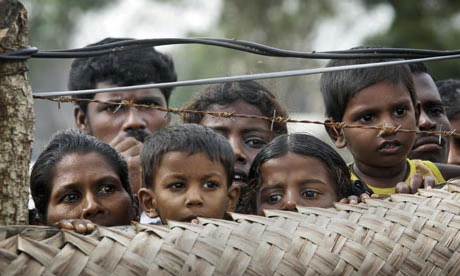
December 31, Colombo (LNW): For nearly three decades, Sri Lanka – the pearl of the Indian ocean – lived under the shadow of a bitter civil war that tore families and communities apart, and left an indelible mark on the lives of its youngest citizens. With much being written about the political and physical devastation of that conflict, we are only now beginning to fully comprehend the deep and lasting impact it has had on children’s brains and futures.
The psychological wounds inflicted by prolonged exposure to violence are not just personal – they ripple through society, shaping behaviour, learning, relationship-building and, ultimately, the prospects of the nation itself.
Scientific research across conflict zones around the world has shown that growing up amidst war does more than frighten a child in the moment — it can actually alter the architecture of the developing brain. Children exposed to chronic stress and trauma experience “toxic stress”, a state in which the brain’s threat response system is constantly activated.
When this system remains switched on, chemicals such as cortisol and adrenaline flood the body for prolonged periods, weakening immune responses and impairing brain regions responsible for learning, memory, emotional regulation and impulse control. These effects are not hypothetical – they have been observed in many war-affected populations. Prolonged activation of stress pathways can leave children more susceptible to anxiety, depression and behavioural disorders, long after the sounds of battle have faded.
In Sri Lanka, studies conducted in the post-war years reveal the depth of this impact. Surveys of school children exposed to decades of conflict found alarmingly high rates of traumatic experiences such as bombings, combat exposure and the death of loved ones, with one study reporting that nearly all children surveyed had lived through severely traumatising events and about a quarter met criteria for post-traumatic stress disorder (PTSD).
These traumatic experiences were linked not only to psychological symptoms but to poorer memory performance, lower school achievement and social withdrawal.
The war also disrupted the very foundations that nurture healthy brain development. The conflict forced schools to close repeatedly, interrupted education for thousands of young people, and fractured the routines that give children a sense of safety and predictability — routines that are crucial for healthy emotional and cognitive growth.
Early childhood, when the brain is most malleable, relies on stable environments, nurturing caregivers and regular social interaction. In war-torn communities, these stabilising influences were often absent or severely compromised, with long-term consequences for children’s ability to concentrate, form relationships and trust others.
There is also jaw-dropping evidence that the effects of trauma can extend beyond the immediate psychological impact. Research into epigenetics — the study in which the possibility of gene expression is modified by experiences without altering DNA sequences is explored — suggests that severe stress and trauma can leave chemical markers on genes involved in stress response and brain development. These changes have been observed in studies of children exposed to war, with possible implications for how future generations cope with stress and mental health challenges.
Yet it is important to understand that not all children respond to trauma in the same way. Protective factors such as the presence of caring, stable adults, continued access to education, social support networks and safe environments can buffer against the worst effects of conflict.
Children who were shielded by strong family bonds and community support were more likely to develop resilience and adjust better in later life. This difference underscores the crucial role of social and familial context in shaping outcomes.
For Sri Lanka, recognising the psychological legacy of the civil war is essential to healing and nation-building. Many children who lived through the conflict are now adults, carrying forward the hidden scars of their experiences.
If unacknowledged, these scars can manifest in difficulties with relationships, employment, substance misuse, and mental health disorders, creating intergenerational cycles of distress that hinder both individual fulfilment and collective progress.
Addressing this legacy demands more than remembrance – it requires sustained investment in mental health services, community-based support, trauma-informed education and opportunities for young people to reclaim a sense of agency over their lives. Initiatives such as counselling programmes, peer support groups and creative community activities have been shown to help children and adults process trauma and build resilience.
The story of Sri Lanka’s civil war cannot be told without the stories of the children who lived through it. Their brains, hearts and futures were shaped by years of conflict, yet within the science of trauma lies a hopeful message: with understanding, support and compassion, the wounds of war can be tended, and a generation can still flourish.
The future of the country depends not just on peace, but on the healing of its youngest minds!
RTSL Leads Swift Flood Relief after Cyclone Ditwah
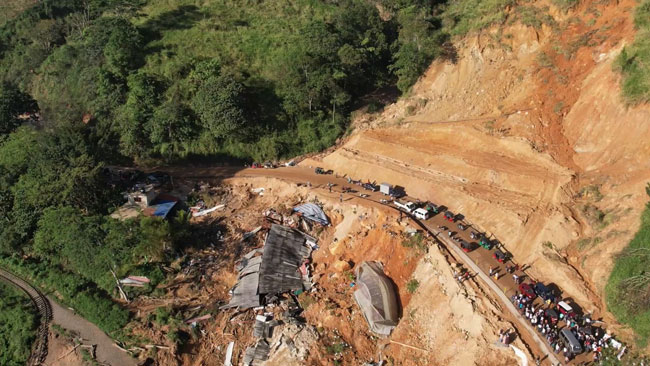
In the wake of devastating floods triggered by Cyclone Ditwah across Sri Lanka’s Western Province, Round Table Sri Lanka (RTSL) has taken a leading role in emergency humanitarian relief, earning recognition for one of the fastest response efforts seen during the crisis.
As floodwaters submerged entire neighbourhoods and cut off road access, RTSL launched its first large-scale relief mission in Welampitiya. Families stranded for several days received emergency food parcels, dry rations, medicines, and bedsheets, offering immediate relief amid worsening conditions. With waters continuing to rise, RTSL rapidly expanded its operations to reach flood-hit communities across multiple districts.
Despite submerged roads and hazardous terrain, volunteer teams manoeuvred through difficult conditions to ensure aid reached the most vulnerable. By 2 December 2025, RTSL had distributed over 10,000 food parcels and more than 1,000 dry ration packs. In addition, the organisation coordinated and assisted in over 100 rescue operations, helping evacuate residents trapped by floodwaters.
Recognising that many areas were entirely inaccessible by land, RTSL initiated airlift operations to deliver essential supplies. Working in partnership with Yahaguna Padanama and with logistical support from Expolanka, dry rations and food parcels were transported via Air Force helicopters to isolated communities, ensuring uninterrupted assistance where conventional relief routes had failed. Fundraising efforts remain ongoing to sustain food distribution, rescue logistics, and airlift operations.
RTSL attributes the success of its relief mission to the dedication of its volunteer force. Teams have worked extended hours in waterlogged and high-risk environments, maintaining safety while delivering life-saving assistance. Their commitment has reinforced RTSL’s reputation for speed, reliability, and compassion during national emergencies.
The relief initiative has been spearheaded by RTSL Chairman Avanka William, whose leadership played a decisive role in the rapid mobilisation. William coordinated frontline logistics, organised both local and international fundraising campaigns, and personally entered high-risk flood zones to oversee the delivery of food, medication, and essential supplies. His visible presence on the ground helped galvanise public support and donations nationwide.
Operational coordination has been led by Randhike Cooray, who managed dispatch operations, volunteer deployment, resource movement, and ground-level logistics. His oversight ensured relief operations were carried out efficiently and safely, even under constantly changing conditions.
RTSL also acknowledged the vital support extended by its partner organisations, including Ladies Circle Sri Lanka, 41er’s Club Sri Lanka, Tangent Sri Lanka, and the wider Round Table International family. Their contributions ranging from financial assistance to volunteer manpower significantly expanded the reach and impact of relief operations.
As Sri Lanka transitions from emergency response to recovery, RTSL confirmed that it will continue ration distributions, coordinate further airlift missions, assist displaced families, and remain engaged in long-term rehabilitation efforts.
Apparel Industry Caught in Policy Drift and Tariff Shock
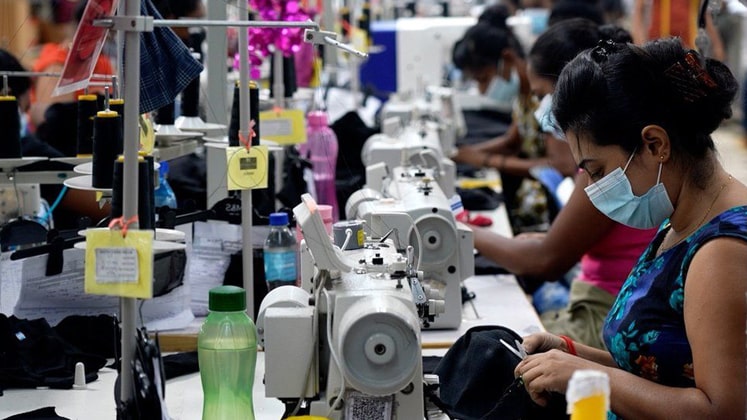
Sri Lanka’s apparel industry, the country’s largest export earner and private-sector employer is facing its most serious sustainability crisis in decades, as policy inconsistency under the National People’s Power (NPP) government collides with renewed pressure from US tariffs and weak state intervention.
Employing over 350,000 workers directly, mostly women, and accounting for nearly 40 percent of total merchandise exports, apparel remains the backbone of Sri Lanka’s industrial economy. Yet manufacturers warn that contradictory signals from policymakers, combined with rising global protectionism, are eroding competitiveness at an alarming pace.
The industry is already operating under thin margins following years of economic instability, currency volatility, and rising energy and logistics costs. The re-emergence of higher effective US tariffs Sri Lanka’s largest apparel export market — has further tightened conditions, making Sri Lankan products less competitive against rivals such as Vietnam and Bangladesh.
Industry stakeholders say the NPP government has failed to respond with urgency. While officials speak of value-addition, sustainability branding, and ethical manufacturing, exporters complain that policy clarity is absent, particularly on taxation, labour regulation, and trade negotiations.
Manufacturers point to sudden changes in import duties on raw materials, delays in VAT refunds, and uncertainty over labour reforms as evidence of a government still finding its footing. “We are planning production cycles six to twelve months ahead, but policy changes arrive without warning,” one senior exporter said.
Despite repeated appeals from industry associations, there has been no targeted rescue package, no temporary tariff relief strategy, and no accelerated diplomatic push to mitigate the impact of US trade barriers. Smaller and medium-scale factories, especially outside export processing zones, are the most vulnerable, with several already reducing shifts or freezing recruitment.
Workers ultimately bear the cost. Reduced orders translate into shorter workweeks, income instability, and rising job insecurity threatening the livelihoods of thousands of households.
The apparel sector does not demand protectionism, but predictability. Without coherent industrial policy and swift engagement with key export markets, Sri Lanka risks losing hard-won global supply chain positions.
What is unfolding is not a sudden collapse, but a slow bleed one driven less by global forces alone, and more by domestic hesitation at a critical moment.
Digital EPF: Reform for Workers or System for Control?

Sri Lanka’s National People’s Power (NPP)–led government has launched the long-awaited digitalisation of Employees’ Provident Fund (EPF) services, claiming it as a breakthrough for efficiency, transparency, and worker convenience. But beneath the promises of online access and paperless processing lies a deeper policy debate: who ultimately benefits from this reform — private-sector employees or the State’s fiscal agenda shaped by IMF-backed restructuring?
The digital EPF programme, launched in late December 2025, enables online registration of employers and employees, electronic submission of contribution data, unified EPF-ETF payments, and member access to balances via web or SMS. For Sri Lanka’s over 2.9 million active EPF members, most of them private-sector workers, the reform promises faster service delivery and fewer administrative delays.
The EPF, managed by the Central Bank of Sri Lanka, is the country’s largest retirement fund, with assets exceeding Rs. 4.3 trillion by end-2024. Yet for decades, contributors have faced missing records, delayed settlements, and weak accountability. Digitalisation, in theory, directly addresses these failures.
However, the timing and structure of the reform raise legitimate questions. Sri Lanka’s IMF-supported Extended Fund Facility (EFF) programme strongly emphasises public sector digitalisation, fiscal transparency, and data integration. While IMF documents do not explicitly instruct Sri Lanka to digitise the EPF, they consistently call for stronger public financial management, better monitoring of large public funds, and reduction of administrative inefficiencies.
Government officials insist the reform is worker-centric. Labour Minister Dr. Anil Jayantha Fernando has described the initiative as part of a broader plan to integrate all state institutions into a real-time digital platform. Deputy Minister Mahinda Jayasinghe argues that digitalisation will reduce the thousands of EPF-related complaints received annually.
Yet critics point out that digital integration also gives the State unprecedented visibility and control over worker savings, at a time when pension funds have increasingly been drawn into government debt restructuring and domestic financing strategies.
Private-sector unions caution that transparency must be mutual. While workers can now see balances online, they still have limited insight into how EPF funds are invested, how risks are managed, or how policy decisions affect long-term returns.
Digital EPF is not inherently anti-worker. But without strong legal safeguards, independent oversight, and clear communication, a reform sold as “convenience” could quietly become a tool of centralised financial control.
For Sri Lanka’s private-sector workforce, the real test will not be logging in but whether their lifelong savings remain secure, fairly managed, and truly protected.
Colombo Dockyard’s SGIP Shipbuilding Drive Reshapes Maritime Economy
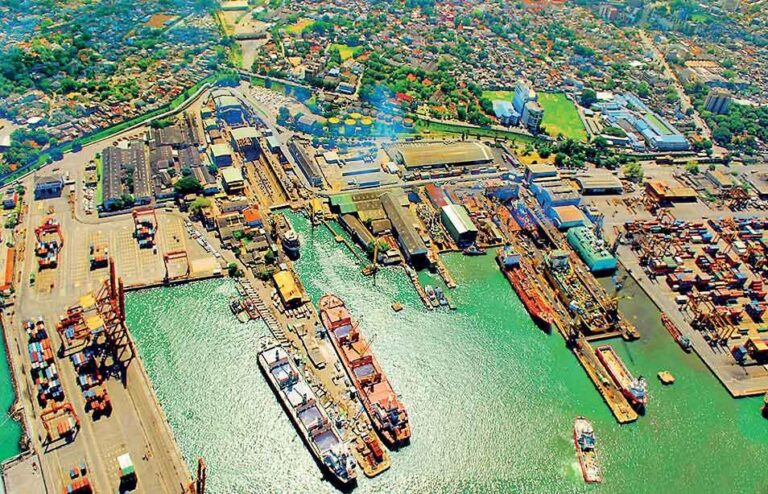
Colombo Dockyard PLC (CDPLC), one of Sri Lanka’s most established heavy engineering and shipbuilding enterprises, is quietly transforming the regional maritime economy through its Strategic Growth and Innovation Programme (SGIP).
With over five decades of experience, the state-linked dockyard has expanded well beyond conventional ship repair and construction, positioning itself as a niche engineering solutions provider with a growing international footprint particularly in the Maldives.
Traditionally known for shipbuilding and repair, CDPLC’s recent focus on specialized marine infrastructure reflects a strategic shift toward higher-value projects. Under SGIP, the dockyard has ventured into underwater structures, a technically demanding and capital-intensive segment rarely attempted in South Asia. This move has not only diversified revenue streams but also strengthened Sri Lanka’s reputation in advanced marine engineering.
A landmark project was completed in 2018 with the construction of an underwater restaurant structure for the “You and Me” resort in the Maldives. This breakthrough demonstrated CDPLC’s ability to deliver complex, customized structures under stringent environmental and safety standards.
The success was followed in 2022 by the completion of a 50-seat underwater restaurant for the OBLU Resort in Ailafushi the largest of its kind in the Maldives at the time.
In 2025, Colombo Dockyard further consolidated its dominance by delivering two additional underwater structures, including galleries and restaurants for high-end Maldivian resorts. Among them was the “Bubble Underwater Restaurant,” a 12-seater attraction opened in December 2025, adding to the Maldives’ growing portfolio of luxury tourism infrastructure.
The economic implications of this expansion are significant. Export-oriented engineering projects generate foreign exchange, sustain high-skilled employment, and reduce Sri Lanka’s reliance on traditional maritime services. Moreover, these projects create backward linkages across steel fabrication, logistics, design engineering, and marine installation services.
However, the SGIP-driven expansion also exposes structural challenges. Large-scale overseas projects demand substantial upfront capital, extended project timelines, and exposure to foreign market volatility. Any delays or cost overruns could strain the dockyard’s financial stability, especially given its public-sector ownership structure.
Despite these risks, CDPLC’s entry into underwater construction highlights a broader industrial opportunity for Sri Lanka: moving up the maritime value chain. If managed prudently, SGIP-led shipbuilding and engineering diversification could serve as a catalyst for long-term industrial growth, technological capability, and regional competitiveness in the global maritime economy.
Deadline Extended for Renewal of Firearms Licences for 2026

The Ministry of Defence has issued a statement regarding the renewal of firearms licences for individuals and institutions for the year 2026.
The Ministry noted that the period granted for renewing firearms licences for next year, which commenced on September 1, 2025, was originally scheduled to conclude on December 31, 2025. However, in view of the prevailing disaster situation in the country, the deadline has been extended.
Accordingly, the Ministry of Defence said the timeframe for renewing firearms licences for 2026 has now been extended until January 31, 2026.
Over 87% of Cyclone Ditwah Relief Payments Disbursed – Defence Ministry

More than 87 per cent of families affected by Cyclone Ditwah and eligible for the government’s compensation scheme have already received the Rs. 25,000 relief payment, the Ministry of Defence has announced.
The Ministry said the payments are being disbursed through District and Divisional Secretariats, adding that arrangements are in place to complete the remaining payments by tomorrow (31).
Under the compensation scheme introduced for those impacted by Cyclone Ditwah, relief payments have been completed for 87.4 per cent of the 450,225 families identified as eligible for the Rs. 25,000 allowance.
In addition, the Ministry confirmed that 8.63 per cent of the 153,593 families eligible for the Rs. 50,000 compensation payment have so far received the funds.
Regarding assistance for affected schoolchildren, the Ministry said 14.9 per cent of the 216,142 students eligible for the Rs. 15,000 educational assistance allowance have already been paid.