Home Blog Page 2147

CB issues “broad guidance” to banks on concessions to crisis-hit borrowers

0

The Central Bank (CB) yesterday has provided the banking sector with a broad guidance” to grant concessions for the next six months to borrowers hit by the on-going economic crisis while a similar guidance is expected to be issued to non-banking financial institutions (NBFIs) shortly.
The CB has provided a broad guidance as to how to address loan repayments of borrowers who have come under financial strain including those who were under previously granted moratoria, especially in the SME and tourism sectors.
The banks have given the discretion to discuss with the borrowers in order to reach an agreement on a suitable repayment arrangement based on the new repayment capacity of each borrower,” CB Deputy Governor Yvette Fernando said.
Unlike the blanket moratoria implemented earlier, she highlighted that these concessions are to be considered on a case-by-case basis by banks, which are not limited to one particular sector or sectors.
In addition to the economic crisis, borrowers are also faced with rising finance costs following the significant monetary policy tightening measures of the CB.
Commenting on repeated requests from the tourism sector on extending the loan moratorium granted to the sector which expired last month, she pointed out that it would be unfair for others in particular for the SME sector to further extend the moratorium which has been originally granted following the Easter Sunday deadly bomb attacks in 2019.

According to the circular issued by the CB, banks have been encouraged to provide a six-month grace period on loan repayments, which could be on capital or both capital and interest payments of performing loans.

For non-performing loans, banks have been recommended to delay initiating the loan recovery process until the end of the year while rescheduling loan repayments over a longer stretch of time based on the borrowers’ repayment capacity.Banks are also advised to consider implementing these concessions through Covid-19 revival units already been set up.

Amid concerns of food security, the CB requested banks to suspend all recovery action against non-performing credit facilitates of paddy millers until the end of the year after coming up with a mutually agreed mechanism to divert sales proceeds of upcoming harvesting season to recover outstanding credit amounts.The CB has also imposed a maximum rate cap of 15.5 percent or contracted rate of interest (whichever is higher) during this concessionary period (including the recovery period), which is to be charged only on the amount considered for the concession.

In addition, banks have also been advised to not to reject new loan applications from borrowers solely based on adverse CRIB reports due to the on-going economic crisis.Borrowers are required to apply for these concessions on or before 31st of July. If the borrower and the bank fail to reach an agreement, Fernando noted that the borrower has an opportunity to appeal to CB’s Director of Financial Consumer Relation Department.

“..licenced banks shall inform the borrower the reasons of such rejections and shall advise the borrower by and through the same letter that there’s an opportunity for the borrower to appeal against such rejection to Director of Financial Consumer Relation Department,” the CB said..

The Central Bank (CB) yesterday has provided the banking sector with a broad guidance” to grant concessions for the next six months to borrowers hit by the on-going economic crisis while a similar guidance is expected to be issued to non-banking financial institutions (NBFIs) shortly.
The CB has provided a broad guidance as to how to address loan repayments of borrowers who have come under financial strain including those who were under previously granted moratoria, especially in the SME and tourism sectors.
The banks have given the discretion to discuss with the borrowers in order to reach an agreement on a suitable repayment arrangement based on the new repayment capacity of each borrower,” CB Deputy Governor Yvette Fernando said.
Unlike the blanket moratoria implemented earlier, she highlighted that these concessions are to be considered on a case-by-case basis by banks, which are not limited to one particular sector or sectors.
In addition to the economic crisis, borrowers are also faced with rising finance costs following the significant monetary policy tightening measures of the CB.
Commenting on repeated requests from the tourism sector on extending the loan moratorium granted to the sector which expired last month, she pointed out that it would be unfair for others in particular for the SME sector to further extend the moratorium which has been originally granted following the Easter Sunday deadly bomb attacks in 2019.

According to the circular issued by the CB, banks have been encouraged to provide a six-month grace period on loan repayments, which could be on capital or both capital and interest payments of performing loans.

For non-performing loans, banks have been recommended to delay initiating the loan recovery process until the end of the year while rescheduling loan repayments over a longer stretch of time based on the borrowers’ repayment capacity.Banks are also advised to consider implementing these concessions through Covid-19 revival units already been set up.

Amid concerns of food security, the CB requested banks to suspend all recovery action against non-performing credit facilitates of paddy millers until the end of the year after coming up with a mutually agreed mechanism to divert sales proceeds of upcoming harvesting season to recover outstanding credit amounts.The CB has also imposed a maximum rate cap of 15.5 percent or contracted rate of interest (whichever is higher) during this concessionary period (including the recovery period), which is to be charged only on the amount considered for the concession.

In addition, banks have also been advised to not to reject new loan applications from borrowers solely based on adverse CRIB reports due to the on-going economic crisis.Borrowers are required to apply for these concessions on or before 31st of July. If the borrower and the bank fail to reach an agreement, Fernando noted that the borrower has an opportunity to appeal to CB’s Director of Financial Consumer Relation Department.

“..licenced banks shall inform the borrower the reasons of such rejections and shall advise the borrower by and through the same letter that there’s an opportunity for the borrower to appeal against such rejection to Director of Financial Consumer Relation Department,” the CB said.

FUTA condemns the decision of the government to declare a police curfew to suppress the legitimate right to protest

0

The Federation of University Teachers’ Associations (FUTA) vehemently condemns the illegal move by the government to impose a so-called police curfew with the intention of obstructing the peaceful protests organized by the general public. The curfew notice, transmitted to the public through a press statement by the Inspector General of Police, clearly aims to prevent people from taking part in the citizens’ demonstration which is scheduled to be held tomorrow (July 9th) in Colombo. The demonstration, convened by various citizen groups, is organized to protest the unaccountable conduct of the government that has taken the country into ruins due to mismanagement of the economy and rampant corruption. 

Freedom of expression and peaceful assembly are fundamental rights of all citizens recognized by the constitution of the country. The Inspector-General of Police has no legitimate authority to declare a curfew through a press statement. This decision is a blatant violation of the fundamental rights of the citizenry. It is regretful to see that the government, which has failed the nation by dragging the country into the most severe economic crisis in its history — and has unheeded the call of the people demanding accountability — has resorted to repressive measures denying the most basic rights of citizens.

FUTA has always been at the forefront of the people’s struggle, demanding the resignation of the incumbent president and the government that has neglected the concerns of the masses in the most callous manner. While condemning the decision to declare a curfew unlawfully, we demand that this declaration be withdrawn with immediate effect. Furthermore, we urge all the law-abiding citizens in the country to come forward to protest the anti-democratic conduct of the government.– 
Rohan Laksiri

General Secretary
Federation of University Teachers’ Associations (FUTA). 
~~~~~~~~~~~~~~~~~~~~~~~~~~~~~~~~~~~~

Govt to present new budget to meet IMF expectations

0

The Government is preparing a new budget taking into account the measures proposed by the International Monetary Fund (IMF) to restore debt sustainability in Sri Lanka.

Foreign Minister, Prof. G.L. Peiris said this during talks with the United Nations Resident Coordinator Hanna Singer-Hamdy at the Ministry of Foreign Affairs.

During the discussion, Minister Peiris briefed the Resident Coordinator on the current situation in the country, particularly with regard to fuel, food and pharmaceutical shortage.

He expressed deep appreciation for the humanitarian assistance being received from bilateral and multilateral donors.

The Resident Coordinator explained the current status of the humanitarian assistance from the United Nations and its agencies.

She stated that the immediate assistance extended by the UN for Sri Lanka includes urea for the Maha season, pharmaceuticals, seeds and a school feeding programme, in addition to other on-going assistance programmes.

Minister Peiris also elaborated on the progress of the IMF talks and stated that the Government is in process of preparing a new budget, taking into account the measures proposed by the IMF to restore debt sustainability in Sri Lanka.

Government plans to tap Indian tourists to revive tourism

0

Sri Lanka plans to tap Indian tourists to revive the South Asian island’s battered tourism sector and shore up its depleted foreign exchange reserves.

Authorities will hold roadshows starting next month in five Indian cities to attract travelers seeking “wellness, leisure, and Ramayana-trail,” tours, corporate functions and destination weddings, said Harin Fernando, the South Asian island’s tourism minister. Ramayana is the mythological life story of the Hindu god Ram.

“We believe that Indian tourists will be very important for us in the short term,” he said in a virtual conference with reporters Wednesday.

The worst economic meltdown since independence, coupled with political turmoil, has hurt the nation’s tourism sector, that’s been a key driver of foreign currency inflows. Sri Lanka’s forex pile has dwindled to a meager $1.89 billion in May even as it needs nearly $6 billion in the next few months to tackle shortages and support its currency.

The South Asian nation is banking heavily on multilateral institutions, including the International Monetary Fund, and friendly countries, for aid to tide over the crisis. Neighboring India, so far, has extended $3.5 billion of support in the last few months.

Chennai, Bangalore, Hyderabad, Mumbai, and New Delhi have been picked for the roadshows, Fernando said, adding that the bankrupt nation hopes to attract about 1 million tourists in 2022. Sri Lanka welcomed a peak of around 2.5 million tourists in 2018 before the Easter Sunday terror attacks dried up arrivals.

The government was scheduled to secure more oil supplies by next week, including adequate jet fuel to ensure international airlines continue to fly to the nation, and hoped that it may also prompt the UK government to reverse a recent travel advisory on Sri Lanka, Fernando said.

Sri Lanka’s headline inflation to hit 70% in coming months

0

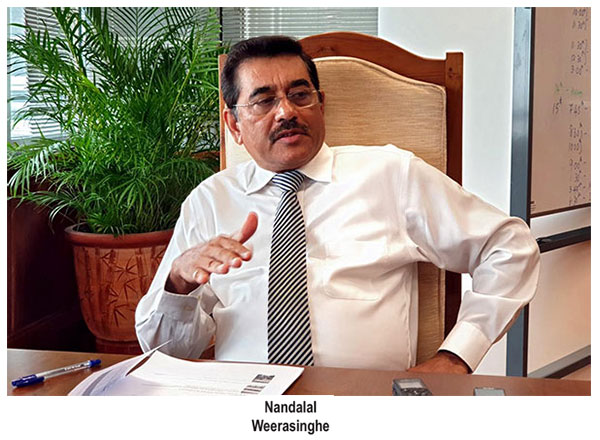
Sri Lanka’s headline inflation is expected to rise to 70 per cent in the coming months from the current level of 50%, the Governor of the Central Bank of Sri Lanka, Dr. Nandalal Weerasinghe says.

His remarks came during a media briefing convened in Colombo to announce the Central Bank’s 5th monetary policy review for the year 2022.

The major concern and priority, from the Central Bank’s point of view, is to address inflation and inflation expectations going forward and bring it down to a reasonable level as soon as possible, Dr. Weerasinghe said. “If you look at the impact of inflation on segments of people, the first and hardest hit would be the poor and vulnerable.”

If inflation goes beyond control, to a hyperinflation situation, no one will be able to continue businesses, he added.

On Wednesday (July 06), the Monetary Board of the Central Bank further increased its policy interest rates with the aim of containing inflation pressures while ensuring macroeconomic stability in the period ahead.

Accordingly, the Standing Deposit Facility Rate (SDFR) and the Standing Lending Facility Rate (SLFR) were increased by 100 basis points 14.50 points and 15.50 per cent, respectively.

In arriving at that decision, the Monetary Board weighed the impact of tighter monetary conditions on overall economic activity including the micro-, small- and medium-scale enterprises and the financial sector performance among others against far-reaching adverse consequences of any escalation of price pressures across all sectors of the economy in the near term.

According to the Central Bank, in June headline inflation was at a record high of 54.6 per cent, driven mainly by inflation in groups such as transport, restaurant and hotel, food and non-alcoholic beverages. In the month of June, overall food inflation was recorded at 80.1 per cent, while non-food inflation was at 42.4 per cent.

The Central Bank noted that the major factors that contributed to the unprecedented high-level acceleration in headline inflation were the global energy and food price hikes and associated passthrough to domestic prices, domestic supply side disruptions along with the impact of the depreciation of the rupee, tax adjustments and the lagged impact of monetary accommodation.

In the near term, there will be some acceleration in headline inflation until the end of this year, the CBSL said, adding that however, a significant deceleration is expected starting from the beginning of the year 2023. Headline inflation will reach the medium-term level of 46 per cent range by 2025.

This will be facilitated by both global and domestic developments. Major global developments will include a downward trend of food inflation and oil prices, the Central Bank said further. This has to be supported by appropriate policy measures form the local authorities including monetary and fiscal tightening that will subdue aggregate demand pressures in the period ahead, it added

PM Ranil should not be the fall guy for putting his neck out

0

Has China got hostile towards SL? What is the PM doing?

Sri Lanka is facing its worst performing cultivation season in more than a decade during the ongoing Yala season and there is a possibility of a looming food crisis in the coming months. This is largely due to the President’s failed fertilizer experiment. Today the country has no USD to even import the minimum fuel and gas required to meet the demands of the public. The Diesel shipments are slowly falling into place with the partial liberalization, but may take months to bring it back to some normalcy. The petrol supply has gone from bad to worse. Whilst CPC is begging from all the banks for liquidity.

LANKA IOC is constrained because the country has no forex liquidity to give them to import. The prime minister who took over the responsibility of brining some normalcy back, has become the fall guy for the opposition. Meanwhile no one knows how the JVP or Premadasa is going to resurrect the dying economy, that needs a $ 300 Million monthly infusion from overseas . Some analysts say the Chinese have promised that if there is a regime change they will assist with bridge finance.

Questions are being asked as to who is funding the JVP protests and if it is to derail the IMF program? Perhaps this is the reason the US Ambassador said in a statement that the US and the international community is fully focused on assisting people of Sri Lanka irrespective of who is President or Prime Minister or which party is governing.

CBSL Screwups

It is very obvious to the writer that the country was run to the ground due to the incompetence of the Central bank . The CBSL made the cardinal mistake of defending the LKR and wasted nearly 5 Billion USD importing non essentials . Next they stopped the ongoing IMF program . Knowing very well tourism income of $4.5
Billion had almost disappeared due to the pandemic , neither did they reach out for the IMF emergency financial assistance.

Next the CBSL floated the LKR resulting in the lKR losing 50 % of the value overnight causing economic mayhem. The new Governor who was in the CBSL for over 30 years who is part of all these problems made bridge financing near impossible by defaulting on a paltry $78 million knowing very well the government was negotiating a SWAP deal of over 1 Billion USD . This was not to the liking of the Chinese government. Further the CBSL increased interest rates by 100% , wrongly assuming LKR was driving up inflation . When it was the USD illiquidity that was driving up inflation . As someone pointed out Nandalal Weerasinghe is running the economy using an AL economic text book . The Prime Minister in frustration said the CBSL was making Sri Lanka the next North Korea. It is the President who insisted and appointed Nandalal as Governor and gave him a six year term. The Prime minister unfortunately has to now carry the dead weight of the CBSL and face the consequences of their decisions . The CBSL claims our reserves are $1.8 Billion .

However our usable reserves are around $300 million. Educated people are now saying if the Central Bank is shut down for six months the country will recover very much faster and Businesses are saying the CBSL has become an impediment for recovery . By further tightening the monetary policy by jacking up interest rates the CBSL will destroy the livelihoods of 4.5 million people , because no business can make profits servicing interest of over 25% . Analyst say the monetary board lacks proper expertise or industry exposure. Unfortunately the Aragalya stalwarts say the Prime Minster has no plan and he must resign .

On the other hand Businessman Dhamika Perera also wants him to resign, because he delayed a Cabinet paper of his ministry . Businessman Perera is yet to learn how fast the government works. The reality is even if god takes over tomorrow, unless a magic wand is waved the Sri Lankan people will have to stomach a lot of pain and sallow several bitter pills for the economic mismanagement of Dr PB Jayasundara and SR Attygalle, ably led by President Gotabaya who always claimed he was doing a marvelous job . Both Jayasundara and Attygalle still remain at large with no action being taken against them. Why is the opposition protecting them? Ranil Wickramasinghe the last man standing on the deck is taking the flack for speaking the truth and for not fixing the economy in 4 weeks, when even the experts say country needs a minimum of 2 years to bring it back any kind of stability . The Prime Minister is not the most popular man, however we would still put our bets on the man provided he is given the room to take decisions and does not surround himself with the wrong people and crony businessmen.

Adolf

‘The world is bloody messy’: Jacinda Ardern urges end to ‘black-and-white’ view of global conflict 

0

The world is “bloody messy” but must take a step back from polarisation and black-and-white approaches to conflict, Jacinda Ardernhas said in a wide-ranging speech in which she addressed the war in Ukraine and rising tensions with China.

In a speech to foreign policy thinktank the Lowy Institute in Sydney, the New Zealand prime minister decried Russia’s “morally bankrupt” war in Ukraine – but also argued against the hardening of alliances, saying that the war should not be presented as a conflict of “democracy v autocracy” or be seen as an inevitable direction for other tensions between competing nations.

“In taking every possible action to respond to Russia’s aggression and to hold it to account, we must remember that fundamentally this is Russia’s war,” she said.West must stand firm as China challenges ‘rules and norms’, Ardern tells Nato

“And while there are those who have shown overt and direct support … who must also see consequences for their role, let us not otherwise characterise this as a war of the west vs Russia. Or democracy v autocracy. It is not.

“Nor should we naturally assume it is a demonstration of the inevitable trajectory in other areas of geostrategic contest.”

While Ardern cited Belarus as an example of a country that had shown Russia support, her comments also gestured at China’s failure to condemn Russian aggression, and the prime minister dedicated much of her speech to the question of China’s role in the Indo-Pacific, again arguing against hardening alliances, and calling for dialogue and cooperation.

“In the wake of the tensions we see rising, including in our Indo-Pacific region, diplomacy must become the strongest tool and de-escalation the loudest call. That won’t succeed, however, if those parties we endeavour to seek to engage with are increasingly isolated and the region we inhabit becomes increasingly divided and polarised,” Ardern said.

Over the past year, New Zealand has come under pressure to clarify its position on China’s increasingly muscular presencein the Pacific, particularly after Beijing signed a secretive bilateral security pact with Solomon Islands, and sought a regional agreement with other Pacific nations.

New Zealand has made some incremental shifts toward its harder-line western partners, including joining the US-driven Blue Pacific pact, and joining UK military exercises in the South China Sea. But New Zealand – which is heavily reliant on China for trade – is still trying to walk a middle road, with Ardern saying it would seek to cooperate with Beijing on shared interests, and emphasising Pacific nations’ right to make autonomous decisions on their partners and allies.

“Even as China becomes more assertive in the pursuit of its interests, there are still shared interests in which we can and should seek to cooperate,” she said.

“The honest reality is that the world is bloody messy. And yet, amongst all the complexity, we still often see issues portrayed in a black and white way,” she said. “We must not allow the risk of a self-fulfilling prophecy to become an inevitable outcome for our region.”

She also called for countries not to become myopically focused on military security, and miss the major threat that climate change and economic fragility posed to the Pacific.

“While we all have a concern – and rightly so – about any moves towards militarisation of our region, that must surely be matched by concern for those who experienced the violence of climate change,” she said.

“What happens in the Indo-Pacific Region impacts our entire neighbourhood. It follows that we must strengthen the resilience of the Indo-Pacific through relationships, and importantly, economic architecture.”

As she charted New Zealand’s approach to trying to pursue “independent foreign policy” as a small player in an intensely pressured environment, Ardern re-articulated the country’s commitment to multilateral institutions – but also reflected on their recent failures. There was “no better example of that than the failure of the UN to appropriately respond to the war in Ukraine because of the position taken by Russia in the security council”, she said, describing it as “a morally bankrupt position on their part, in the wake of a morally bankrupt and illegal war”.

Ardern is visiting Australia on the tail end of a trip to Europe, where she spoke at the Nato summit, finalised a free trade agreement with the EU and held a series of bilateral talks with leaders including Boris Johnson. In Australia, she will hold further talks with her counterpart Anthony Albanese that are expected to include conversations about China, the challenge of climate change in the Pacific, trade between the two countries and the rights of New Zealand citizens residing in Australia.

Uganda finds 31 mt of gold ready to be mined; signs up Chinese firm

0

In a move that could overhaul its economy, Uganda has discovered 31 million tonnes of gold following a series of surveys. The gold can be mined with immediate effect. The country now looks forward to attracting gold miners and investors.

The Ugandan government has already licensed Chinese firm Wagagai Gold Mining Company to start production in Busia district.

A tweet posted by the Uganda Investment Authority read: “Ground breaking ceremony of Busia’s gold mine project, largest gold deposit so far quantified in Uganda estimated @ 12.5 tonnes of mineable gold, investor Wagagai’s initial investment is USD50 million, 3,000 direct jobs.”

Over 3,000 jobs to be generated

According to the Ugandan government, the value of 31 million tonnes of gold ore stands at $12.8 trillion. The tweet said refining gold locally can lead to the generation of 3,000 direct jobs and other opportunities. The government predicts that local mining can boost the country’s economy in a big way.

Also Read: India recycled 75 tonnes of gold in 2021, China world’s top recycler

As per reports, Ugandan President Yoweri Museveni has called for the local refinement of the discovered gold, calling any external refinery ‘criminal’.

The President said: “It is criminal for anybody to argue for the continued exports of raw materials in Africa when there is 90% more value in that product that you are giving to the outsiders.”

Quoting the general manager of Wagagai, media reports said the company’s investment has reached $60 million. The company faced a delay in construction as it needed two licences – a gold production license it obtained in March and a 21-year lease to mine gold in the country.

Chinese firm begins work

As per reports, the Chinese firm has invested $200 million in constructing a refining facility. According to the spokesperson of the Ministry of Energy and Mineral Development, Solomon Muyita, the Chinese-run firm expects to mine and start refining around 5,000 kg of gold a day in Busia by the end of the year.

Uganda’s gold exports have reportedly been on the rise since the opening of the Africa Gold Refinery in Entebbe. Pointing to six local gold refineries, the President has said that the time for Uganda to ship unprocessed raw gold exports is at its end. The Africa Gold Refinery in Entebbe was sanctioned by the US over alleged illicit gold sourcing.

THE FEDERAL

6292 police officers summoned to Colombo

0

Tomorrow is the decisive day of the protest that has started demanding the resignation of the President and the government. Thousands of people who support the nationwide protest for that are already ready to come to Colombo.

Meanwhile, the police have started a special security program in the city of Colombo from tonight. For that, 6292 police officers have been called to Colombo.

According to a letter sent by the Inspector General of Police to the Deputy Inspector General of Colombo District, this police battalion operates under 08 Deputy Inspector Generals. It includes 24 Senior Superintendents of Police, 86 Superintendents of Police, 392 Chief Inspectors/Inspectors/Sub-Inspectors. 200 female police constables have also been called for security purposes.

In addition, it is reported that a thousand soldiers of the Civil Defense Force and military teams have also been called.

Shinzo Abe: former Japan prime minister confirmed dead after being shot

0

Japan’s former prime minister Shinzo Abe has died in hospital after he was shot at a political campaign event, say local media.

Mr Abe was shot at twice while he was giving a speech in the southern city of Nara on Friday morning.

He immediately collapsed and was rushed to the nearest hospital. Pictures taken at the scene showed him bleeding.

Security officials at the scene tackled the gunman, and the 41-year-old suspect is now in police custody.

In an emotional press conference earlier, prime minister Fumio Kishida told reporters that Mr Abe was in a “very grave condition”.