Home Blog Page 2148

In many ways, Pakistan is following in the footsteps of bankrupt Sri Lanka

0

Pakistan’s current economic struggles exemplify the little fires everywhere set alight across the global economy by a war during a pandemic. Like others in countries dependent on imported commodities – for example, Ghana and Sri Lanka – Pakistanis are seeing food and fuel prices soar. Foreign exchange reserves – used to pay for imports such as food and fuel – have shrunk.

Pakistan is using up its foreign exchange reserves more quickly than previously anticipated because prices of foreign goods are going up. If the situation does not change, the country faces bankruptcy.

In April, a litre of petrol cost about 150 Pakistani rupees, but by July 1 the price had risen to nearly 250 Pakistani rupees. And the price of cooking oil increased by 40% just between May and June. At present, the country has only enough foreign currency to pay for five weeks of imports. Pakistan is heavily dependent on imported fuel and cooking oil, but also on machinery and food grains from overseas.

All of this has made day-to-day activities more challenging. Power outages are not uncommon in the country, even when the economy is strong – they become frequent and long when the economy is under duress. 

This happens because energy companies struggle to operate when the costs of power generation are higher than the revenue they collect. Over the past few weeks, residents of major cities have had to go without electricity in their homes for as much as 10 hours a day – in rural areas for even more. The discomfort of the public is compounded by an intense heatwave in many parts of South Asia that has caused temperatures in some places to hit 51 degrees Celsius.

Relying on imports

Foreign exchange reserves with the Pakistan central bank currently stand at $10.3 billion. This is a sharp drop from $16.6 billion in January. Though recently bolstered by Chinese bank lending, reserve levels have been volatile since late April, when a political crisis resulted in the ousting of Prime Minister Imran Khan.

In Pakistan, imports are far higher than exports. To preserve foreign currency, an early measure taken by the newly appointed government in May was to ban many types of imported goods deemed non-essential luxury items. 

The list included chocolate, nappies, pet food and tampons, but has been amended. Initially, there were concerns that pets and livestock would be malnourished because of this ban, and that chocolate would be confiscated at international airports. And that menstruating womenwould not have access to sanitary pads. 

Because of public pressure, the list has been amended and clarified. Chocolate is no longer being seized, pet food taken off the list and sanitary pads are being manufactured domestically.

Imran Khan was voted out of office as an economic crisis hit Pakistan. Photo credit: Asif Hassan / AFP

A more recent intervention, intended as a placid nudge but widely derided, is a cabinet minister’s suggestion that individuals should drink fewer cups of tea. The drink is ubiquitous in Pakistan, which is the largest global importer of tea by a considerable margin. It is considered one of life’s simple pleasures in a country troubled by power outages and expensive basic food items.

Consternation over the petty politics of “austeri-tea” can deflect from larger, more compelling issues. These are recurrent and arise from the position of Pakistan, and other fragile, externally indebted economies in a global system of currency hierarchies.

Poor countries cannot borrow in their own currency, but need to use one of the major currencies being traded on the international exchanges. The US dollar is the most used currency, while other dominant currencies include the British pound and the euro. 

These “hard” currencies are those which indebted countries must regularly purchase to pay for imports and to repay and service the loans they owe to private bondholders, international financial institutions and lenders.

Before he was ousted, Khan tried to retain public support as prime minister by resisting demands from the International Monetary Fund to increases taxes and remove subsidies. So, by not taking steps such as making fuel more expensive, the Khan government delayed inflows of external finance. This weakened Pakistan’s reserves and made it difficult to maintain the value of the Pakistani rupee. As the chasm between the dollar and rupee grew, the popularity of the government fell.

Global sanctions on Russia and Iran complicate Pakistan’s economic situation. Khan was frustrated at not being able to use a supply of relatively cheap Russian oil because of international pressure over Ukraine. Given the need for drastic measures, Pakistan’s government may now follow in the footsteps of Sri Lanka and turn to Russia for cheap fuel.

International tensions

Pakistan has also refrained from importing oil from neighbouring Iran. Smuggled Iranian oil remains attractive to those living near the border. Fuel and energy cooperation between Pakistan and Iran is an especially prickly issue given opposition from the US and Saudi Arabia, another nation that has often financially assisted Pakistan.

To avert bankruptcy – and to continue buying food and fuel – Pakistan is now awaiting assistance from the International Monetary Fund. This Washington DC-based institution has rescued crisis-ridden economies on many occasions. In exchange, recipient governments must commit to policy reforms, that are often unpopular with the public.

Over the next few weeks, the IMF is likely to step in and commit to a bailout of approximately $1.85 billion. If, and when, this happens, the exchange rate between the Pakistan rupee and the US dollar will stabilise. 

Given that the dollar has risen more than 15% against the Pakistani rupee since January policy makers will welcome a stronger Pakistani currency to calm surging prices.

But the heavy costs of a deal with the IMF have already driven a cost-of-living crisis as fuel subsidies have been sharply withdrawn and made food and transport unaffordable for many. Tax increases have also added to day-to-day pressures.

Currency issues and cost-of-living crises in Pakistan are inextricably linked. A more expensive dollar makes fuel more expensive, and these price increases are quickly reflected in daily essentials. Given that Pakistanis spend more than 40% of their income on food, inflation makes large segments of the population marginalised and vulnerable.

Unless exports drastically increase in the coming years, Pakistan’s economy will remain precarious and high prices will remain a threat. Given this situation, financial assistance is the only way to overcome crises. Unfortunately, this tends to come with financial or political strings attached.

Sri Lanka crisis: Daily heartbreak of life in a country gone bankrupt

0

In Sri Lanka right now, before you’ve woken up, you’re losing. 

Power cuts that run late into the sweltering nights steal hours of sleep as the fans cease; whole families waking up sapped from the months-long trial of shuffling their lives around daily blackouts after the country went bankrupt and essentially ran out of fuel. 

There are long days to be lived; work days, errands to be run, daily essentials to be bought at twice the price they had been last month. 

All this, you’re starting a little more broken than you were last week. 

Once you’ve had breakfast – eating less than you used to, or perhaps nothing at all – the battle to find transport beckons. 

Three-wheelers queue to buy petrol due to fuel shortage, amid the country"s economic crisis, in Colombo, Sri Lanka, July 5 2022.
Image caption, There have been long queues for fuel for months – now it’s all but run out

In the cities, fuel queues curl around entire suburbs like gargantuan metal pythons, growing longer and fatter by the day, choking roads and crushing livelihoods. 

Tuk-tuk drivers with their eight-litre tanks are forced to spend days lining up before they can run hires again, for 48 hours perhaps, before they are forced to rejoin the queue, bringing pillows, changes of clothes and water to see them through the ordeal.

Auto-rickshaw drivers wait in a queue to get fuel from a gas station amid a fuel shortage in Colombo, Sri Lanka, 27 June 2022.
Image caption, Drivers have taken to sleeping in their vehicles as they wait

For a while, middle- and upper-class folk had brought meal packets and soft drinks for those queuing in their neighbourhoods. 

Lately, the cost of food, of cooking gas, of clothes, transport, and even what electricity the state will allow you to have, has sky-rocketed so egregiously as the rupee’s value plummeted, that even largesse from the moneyed has been in short supply. 

People wait in a line on a pavement near a distributor to buy kerosene oil for their cookers due to domestic gas shortage, amid the country"s economic crisis, in Colombo, Sri Lanka, May 24, 2022.
Image caption, People here are waiting in line in Colombo for kerosene to cook with

In working-class neighbourhoods, families have begun to band together around wood fire stoves, to prepare the simplest of meals – rice, and coconut sambol. 

Even dhal, a staple of the diet all over South Asia, has become a luxury. Meat? At three times the price it used to be? Forget it. 

Fresh fish was once abundant and affordable. Now, boats can’t go out to sea, because there is no diesel. The fishermen that can go out sell their catch at vastly inflated rates to hotels and restaurants out of reach to most. 

A woman cooks a family lunch using firewood, an alternative to LP gas which is currently in short supply due to the economic crisis in Sri Lanka. January 9, 2022 (Photo by Akila Jayawardana/NurPhoto via Getty Images)
Image caption, Many others have taken to using firewood as an alternative to gas
line

Sri Lanka: The basics

  • Sri Lanka is an island nation off southern India: It won independence from British rule in 1948. Three ethnic groups – Sinhalese, Tamil and Muslim – make up 99% of the country’s 22 million population.
  • One family of brothers has dominated for years: Mahindra Rajapaksa became a hero among the majority Sinhalese in 2009 when his government defeated Tamil separatist rebels after years of bitter and bloody civil war. His brother Gotabaya, who was defence secretary at the time, is now president.
  • Now an economic crisis has led to fury on the streets: Soaring inflation has meant some foods, medication and fuel are in short supply, there are rolling blackouts and ordinary people have taken to the streets in anger with many blaming the Rajapaksa family and their government for the situation.
line

A majority of Sri Lankan children have now been forced to subsist on a diet with almost no protein. This is a crisis that has hit on every level from the macroeconomic to the molecular. 

Are children’s brains, their organs, their muscles, their bones, getting what is required? Milk powder, most of which is imported, has barely been seen on market shelves for months. 

The UN is now warning of malnutrition and a humanitarian crisis. For many here, the crisis has been roiling for months. 

Passengers board an engine compartment of an overcrowded train amid a fuel shortage, in Colombo, Sri Lanka, 06 July 2022. The Sri Lankan government suspended nationwide fuel sales for private vehicles for two weeks due to the worsening fuel shortage in the country. The Indian Oceans Islands nation is facing its worst economic crisis in decades due to the lack of foreign exchange, resulting in severe shortages in food, fuel, medicine, and imported goods. EPA/CHAMILA KARUNARATHNE
Image caption, Trains are more and more crowded – but getting on them is a nightmare…

Those who can find rides generally commute on buses and train carriages bursting with evermore passengers. 

Young men cling for their lives on the footboards, while the mashed throng inside gasps for air. 

Passenger are helped by others to get to the engine compartment of an overcrowded train as other public transports are being disturbed due to major fuel shortage, amid the country"s economic crisis, in Colombo, Sri Lanka, July 6, 2022.
Image caption, … many cling on outside

For decades Sri Lanka has failed to invest appropriately in its public transport, while the island’s wealthier residents continued to complain about the indiscipline of bus and trishaw drivers.

There is a growing view that it’s this perceived disdain for regular people from both the political and financial elites that has brought the nation to its knees. And yet it’s the lower-middle and working classes that must bear the worst of the economic collapse. 

Private hospitals continue to function, albeit less well than they used to. In North Central Anuradhapura, a 16-year old who had suffered a snakebite died as his father rushed desperately from pharmacy to pharmacy to look for the anti-venom the public hospital had run out of. 

The healthcare sector can no longer afford many lifesaving medicines. In May, a jaundiced two-day-old died after her parents could not find a trishaw to take her to hospital. 

Graph showing rising fuel prices in Sri Lanka

As economists have pointed out, it is the sweeping tax cuts of 2019 – lobbied for and cheered on by many corporate and professional groups – that contributed to emptying Sri Lanka’s coffers, and helped bring the nation to this brink. 

On the black market, fuel can still be bought at vastly inflated prices, some of it to run the larger private vehicles, and home electricity generators. 

Lower down the economic ladder, people attempt to buy bicycles to make trips into work, and find the exchange rate has put even that form of transport out of reach.

A Sri Lankan man rides a bicycle while he carries an empty cooking gas cylinder on a deserted road amid a fuel shortage in Colombo, Sri Lanka, 29 June 2022
Image caption, A man on a bicycle carries an empty cooking gas cylinder – Colombo’s roads are almost deserted

It had been the worst of the power cuts that set off Colombo’s major protests, late in March. Back then, the 13-hour daily outages had left a nation exhausted in the hottest weeks of the year. 

That fatigue had sparked widespread fury, and a crowd of thousands descended on the eastern Colombo suburb of Mirihana, where the president resides. 

Of all the demonstrations in the country over the past year, this was perhaps the most visceral. A man in a motorcycle helmet made a speech railing at the political forces, clergy and media that had delivered the nation into the hands of what was now widely perceived as simultaneously the most self-serving and inept government here in generations. 

Later, that man, Sudara Nadeesh, was beaten brutally by the police and arrested, along with several dozen others who suffered the same violent fate. 

Sri Lanka had been strung up in a 26-year civil war, but even through that unspeakably violent stretch, the island has never had a president so close to the military’s top brass as former defence secretary Gotabaya Rajapaksa. 

The south has found out in the past few months, what northerners have known for decades: dissent is routinely met with state violence. 

In recent months largely peaceful protesters have had live rounds shot into their midst, tear gas has been indiscriminately fired at crowds in which small children were present. In queues for essentials, the mildest shows of displeasure have been met with brutal beatings. 

Police officers try to disperse demonstrators using tear gas during a protest outside the Sri Lanka"s police headquarters, amid the country"s economic crisis, in Colombo, Sri Lanka, June 9, 2022.
Image caption, The police have been criticised for using disproportionate force against largely peaceful protests

Police say some officers suffered injuries when stones were thrown, but as protesters have lost lives, or ended up in hospital, the police response has been viewed as being wildly disproportionate. 

On social media, politicians offer sympathy, posting photos of the public’s hardship while asking for change. This has mostly only inspired more outrage. Was it not the politicians who led us here?

And yet, while nationwide protests have called for the removal of the president and his cohort, they remain obstinately in place, their perceived disdain for the public’s will evident in the backroom deals that many feel continue to poison the island’s politics. 

The same leaders accused of crashing Sri Lanka into this ravine insist that only they can lift the island out again, and the policies they devise are met with sharp criticism. 

There is now a concerted push, for example, to send more Sri Lankans overseas to work as housemaids, drivers and mechanics in the Middle East, with those emigrants expected to send their earnings home. 

This may only deepen the hardship of many of its most vulnerable citizens, as poor Sri Lankans with no hope of finding local employment are forced to leave their families for nations in which they have few protections and little agency. One anthropologist online described this vision for Sri Lanka in stark terms: “the vampire state”. 

Children holding placards are carried by their guardians as they take part during the protest against Sri Lankan President Gotabaya Rajapaksa, near the Presidential Secretariat, amid the country"s economic crisis, in Colombo, Sri Lanka, April 15, 2022.
Image caption, What the future holds for Sri Lanka – no one can say with certainty

By evening in Sri Lanka’s crisis, you’re drained beyond imagination. Beyond the almost impossible commute because of the lack of petrol and diesel, the everyday functioning of a workplace has itself become a relentless onslaught of crises, with supply chains having broken down, most potential customers having long since refused to spend on anything but essentials, and staff failing to show up. 

Then late-night power cuts come again, and you survive on lighter evening meals with each passing week, unable to buy enough food for your home, unable to cook what little you’ve bought, unable to give your parents their medication, or your children the education they deserve. 

Schools are presently shut, as there is no fuel to take them. Classes are online for the third year running. 

The government continually fails to deliver what little it’s promised, relatives and neighbours call to ask for money you don’t have to spare, the police and military bear down on what little hope remains, and through all this you’re still grateful, because many around you have it so much worse. 

Last week, a mother threw herself and her two children into a river.

Every day, a fresh heartbreak.

Andrew Fidel Fernando is an award-winning author and journalist, based in Sri Lanka.

Train fares to increase from Tuesday – minimum fare is Rs 20

0

It is reported that it has been decided to increase the railway fares from next Tuesday. Railway department sources say that the related legal procedure is currently being prepared and the work will be completed by Sunday.

The rail fares will be revised up to half of the current regular passenger bus fare and the minimum fare will be increased to Rs.20.

The railway department proposed on several occasions to increase the train fares as the fuel prices have gone up, but it was not approved.

By now the bus fares have increased to the level that the people cannot bear and therefore the number of passengers using the train has increased. They will face further hardship through hike in railway fares.

Tamil Nadu Police sets up a special fund to help the Sri Lankan people

0

The Tamil Nadu Police of India has arranged to donate an amount of one crore and forty lakh Indian rupees to the people of Sri Lanka. The concerned amount has recently been handed over to Tamil Nadu Chief Minister MK Stalin by DIG Sailendra Babu, the Chief of Tamil Nadu Police.

M.K. Stalin has set up a special fund to help the Sri Lankan people and so far crores of rupees have been collected.

The Indian Defense Services Association had also recently donated an amount of six crore sixty three lakh Indian rupees.

Litro denies false media claims regarding contract on gas imports

0

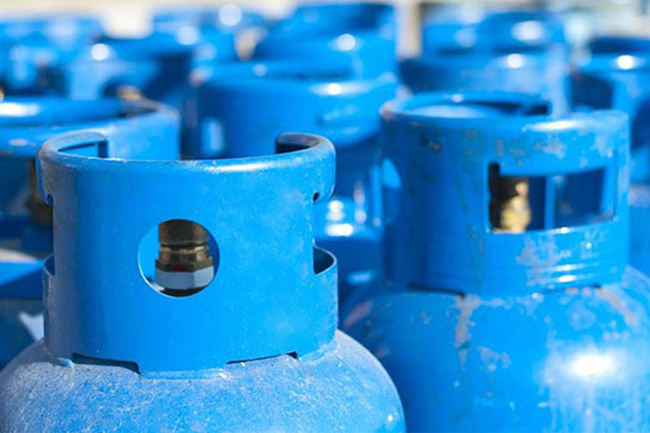
Litro Gas Company has issued a press release regarding recent media reports on a gas import contract and the international purchase of Litro Gas Lanka Company, calling them to be false.

Clarification of Litro Gas Lanka Company regarding the false statements made by the media regarding the gas import contract and international purchase of Litro Gas Lanka Company.

Litro Gas Lanka Company strongly denies the media reports that the company has misled the Cabinet and the Litro Company engaged in financial misappropriation. It says that Litro Gas Company’s Board of Directors is bound to implement cabinet decisions as a government subsidiary.

Also, Litro Gas Lanka Company said that failure of the state treasury, local or international financial institutions to provide 37M$ standby debenture letter (SBLC) to Siam Gas, the low bidder in the 2022-2023 Litro Gas international tender and because Siam Gas Company refused to provide gas without SBLC, the gas supply tender was stopped on the decision of the cabinet.

The Oman trading company was selected for the supply of 100,000 metric tons of gas under the World Bank financial facility. In calling for prices for short-term purchase, Siam Gas Company, which quoted the lowest price, has informed Litro Gas that the company cannot supply the required amount of gas at the same time for the current high demand in the market.

In the short-term call for 15,000 metric tons of gas, Siam Gas company offered a price of $112 USD per one metric ton of gas, but the company denies media reports that the price offered by Siam gas company was $96 USD.

Litro Gas Lanka Company also denies the false statement that Litro Gas Lanka Company has not imported any gas for the month of June 2022. The company insists that it has imported 6976 metric tons of gas for the month of June and for that the company has paid US$ 105 per metric ton of gas.

Shinzo Abe shot while making election speech in Japan

0

Japanese former Prime Minister Shinzo Abe was shot on Friday while campaigning in the city of Nara, a government spokesman said, with public broadcaster NHK saying he appeared to have been shot from behind by a man with a shotgun.

Chief Cabinet Secretary Hirokazu Matsuno said he did not know Abe’s condition. Authorities have arrested a 42-year-old man who appeared to have shot Abe, media reported.

Kyodo news agency and NHK said Abe, 67, appeared to be in a state of cardiac arrest when taken to hospital, after having initially been conscious and responsive.

Probe the huge profit margins CPC makes on imports, sales of fuel: PUCSL Head

0

The Public Utilities Commission of Sri Lanka (PUCSL) Chairman, Janaka Rathnayake, today urged the government to investigate the Ceylon Petroleum Corporation (CPC) for making huge profit margins on fuel imports and sales.

While addressing the media, he said the revenue after importing and selling fuel not gone to the government or to the treasury but to the CPC where they had huge financial burdens.

The chairman referred to the CPC as a ‘dark hole’ and said the revenue after importing and selling fuel is sucked into the CPC and nobody sees anything. Even though the CPC is charging higher prices, they don’t have the funds to buy fuel.

However, there were two fuel price revisions during the last 45 days in May and June.

Rathnayake said based on the fuel formula that came out through the Power and Energy Ministry, it had mentioned exorbitant prices on imports of all these fuel varieties into the country.

According to the latest revision, a barrel of octane 92 petrol was imported at US$157, octane 95 at US$158, diesel at US$174 per barrel, super diesel at US$176 per barrel and a barrel of kerosene at US$171, he said.

As per the information received from the Sri Lanka Customs Department (SLCD) a month ago, a barrel of kerosene was imported at US$105. A barrel of diesel was sold at US$ 111, a barrel of furnace oil was imported at US$ 75, and a barrel of petrol was imported at US$ 100.

However, according to the fuel formula which the CPC came up with, the price was almost US$50 per barrel, and they arrived at a huge cost figure. The CPC had determined the fuel price based on the latest fuel price revision.

Moreover, the government is charging lesser than Rs.50 as taxation for the above fuel imports per litre. Therefore, the CPC is having that opportunity to make a huge amount of profits ranging from Rs.171 to around Rs. 258 per litre on these imports and selling fuel.

This is the plight of these large organisations where the financial disciplines are not in proper order, he said.

Therefore, the PUCSL chairman urged the political hierarchy, Ministries, Ministers or any interested parliamentarians, treasury, central Bank, local banks to look into the matter to ensure that the pricing is done properly.

Sajin Vas Gunawardena’s travel ban lifted

0

The Colombo High Court yesterday (07) ordered the temporary lifting of the foreign travel ban imposed against former Member of Parliament Sajin Vas Gunawardena, who was a controversial figure during the last Mahinda Rajapaksa regime.

A case filed against him under the Prevention of Money Laundering Act was called yesterday through a motion, where his lawyer informed the court that between July 08-25, his client wants to go to India for a business purpose, so that permission should be granted.

Accordingly, Colombo High Court Judge Damith Totawatta granted the relevant permission and ordered the case to be called again on July 26.

The toxicity of Boris Johnson

0

Every good disaster movie has a scene in which the characters realise that they are in mortal peril, that the threat they all fear is much closer than anyone had thought. The shark is in the water, the caller is in the house, the virus is airborne. Footage of a cabinet meeting on July 5th—taken before the watershed resignations of Rishi Sunak, the chancellor of the exchequer, and Sajid Javid, the health secretary—provided an equivalent moment in Westminster’s current horror show. The faces of Britain’s most senior politicians are ashen, the mood is palpably grim. A deadly toxin menaces them and their party, and it is chairing the meeting.

The fact that Boris Johnson is a serial liar and lacks the self-discipline to apply himself to hard problems was well-known. One of those grey-faced cabinet ministers, Michael Gove, said that Mr Johnson was not up to the task of leadership in 2016. (Mr Gove himself was sacked on July 6th, a day before the prime minister said he would resign.) But the extent to which Mr Johnson has poisoned the reputations of those he works with seems to have been less appreciated. This toxicity is not just a personal characteristic. It also says something about the political system he sat atop.

Take a moment to consider some of the people tarnished by exposure to Mr Johnson. Many were politicians, sent out to defend the prime minister’s integrity only to find their own impugned as a result. The end of the Johnson era was sparked by the demise of Chris Pincher, who resigned as deputy chief whip on June 30th after being accused of drunkenly groping two men. Ministers dutifully told interviewers that Mr Johnson had not been aware of prior allegations about Mr Pincher’s behaviour, and quickly found out this was untrue. At best such politicians looked like idiots, at worst as slippery as their boss.

Reputations for competence as well as honesty were also irradiated by Mr Johnson. Steve Barclay was brought in as his chief of staff in February to help shake up Number 10 in the wake of Partygate, a series of gatherings in Downing Street which broke covid-era lockdown rules. Mr Barclay was feted as a fearsomely efficient manager. A matter of weeks in proximity to Mr Johnson, and he seemed to have as much grip as a tea tray on a ski jump. His elevation this week to replace Mr Javid placed him in the category of Johnsonian flunkey rather than besuited machine.

But the real victims of Mr Johnson’s toxicity have been non-politicians. A parade of people with distinguished reputations and an alphabet’s worth of honours after their names were infected. Taking the position of independent ethics adviser to the prime minister sounds like a nice way to top off a distinguished career of public service. Under Mr Johnson it was anything but.

Sir Alex Allan held the role for nearly eight quietish years under David Cameron and Theresa May, but lasted for just over a year under Mr Johnson; he quit after the prime minister ignored his finding that Priti Patel, the home secretary, had been bullying civil servants. His successor was Sir Christopher Geidt (gcbgcvoobeqso), who resigned in June after cutting an increasingly sad figure. He found that the prime minister had acted “unwisely” over a donor-funded refurbishment of his flat. His discomfort over Partygate was painful to watch. The post remains vacant: at some point it isn’t ethical to advise someone without ethics on ethics.

Sue Gray, a civil servant who wrote a report on Partygate, was lauded by all and sundry for her steely independence, only to be accused of pulling her punches when she failed to look into every drunken bash. Simon Case, the head of the civil service, is meant to be the brightest and the best of his generation. Now he’s just that guy with the beard who partied with Boris when everyone else was isolating at home.

Mr Johnson’s character flaws have not always corroded those around him. He was a lazy, selfish dilettante when he was mayor of London, and the people who worked with him then did not all suffer. But the position of prime minister is not simply different from mayor in its importance and in its nature: less cheer and more leader. The prime minister is also central to the entire system of government. In several respects, the position is peculiarly designed to spread poison if the person in charge is toxic.

Blond Chernobyl

Most obviously, standards in British public life depend on the person at the top. The ministerial code says that the prime minister is the ultimate judge of what constitutes acceptable behaviour. When the wrongdoer is the prime minister, he judges himself. Mr Johnson’s own misconduct, and his tolerance of it in others, leached straight into the body politic.

Second, the cabinet is bound by a system of collective responsibility. Defending the prime minister’s behaviour on the broadcast rounds is an act of loyalty. Private differences over policy are papered over in the name of unity. That works when a government is led by someone who is competent and trustworthy. But in Mr Johnson’s case, it served to make colleagues complicit in his failures. Mr Sunak says he fell into line repeatedly, until his disagreements with his boss became too great to sustain. Mr Javid told Parliament on July 6th that “treading the tightrope between loyalty and integrity has become impossible”.

Finally, the civil service is particularly exposed to a virulent pm. Although civil servants are impartial and independent, the prime minister is still their ultimate boss. They are meant to work hand in glove with ministers; Mr Case sits in cabinet, a literal right-hand man to Mr Johnson. When they appear before mps they represent the views of their elected masters. And when the prime minister is toxic, they have no immune system to protect them.

Mr Johnson is not the cause of all that ails Britain. He has brio and charm. But the dangers of sitting around that cabinet table with him were real. His flaws tarnished good people. They poisoned the government—and by extension, the country.

THE ECONOMIST

One person died in a clash in a fuel queue. Three injured!

0

It is reported that one person died and three others were injured in a fight in a queue near a petrol station in Magalla, Galle last night (07).

A person from Bataduwa area who came to the respective filling station last night to get fuel tried to enter his car in the queue from a place in front of his friend’s shop and the people behind the queue protested.

It is said that there is some conflict there and he has informed a group of his friends about it.

After that, a group of people who came there started attacking those who had clashed with the mentioned person from Bataduwa area, and three people who were in the queue and one of the group who came to attack were also seriously injured.

One of the injured died after being admitted to the Karapitiya Hospital, and the deceased was a 25-year-old resident of Yatagala, Habaraduwa.