Home Blog Page 216

Massive nationwide sweep nets over 1,100 drug suspects in coordinated security operation

0

July 28, Colombo (LNW): A large-scale security operation spanning the entire island has led to the arrest of 1,182 individuals for drug-related offences, according to Sri Lankan law enforcement authorities.

The coordinated effort, which took place on July 26, involved officers from the Sri Lanka Police, the Special Task Force (STF), and personnel from the Army, Navy, and Air Force.

The multi-agency crackdown targeted both narcotics trafficking and broader criminal networks. During the intensive 24-hour operation, authorities confiscated significant quantities of illicit substances, including over 230 grammes of crystal methamphetamine (commonly known as ‘Ice’) and more than 220 grammes of heroin.

These seizures mark a notable escalation in the fight against the distribution of hard drugs in urban and rural areas alike.

In addition to narcotics arrests, 20 individuals identified as having direct links to organised crime were taken into custody. The operation also led to the apprehension of 410 people with active arrest warrants for various offences, underscoring the breadth of the sweep.

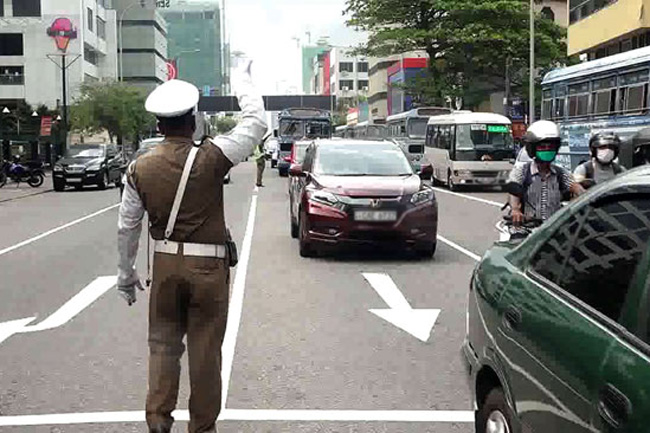
Security forces inspected more than 24,000 individuals during roadside and community checks, while nearly 10,000 vehicles—including over 7,000 motorcycles—were stopped and examined. Four unlicensed firearms were also recovered, adding a new layer of concern about the illegal weapons trade operating in tandem with drug distribution.

More than 7,600 personnel from across the country’s security apparatus were deployed for the operation, which is being described by officials as one of the most extensive single-day enforcement actions in recent years.

Authorities have urged the public to support these initiatives by providing information about suspicious activity, while reaffirming their commitment to dismantling networks that threaten public safety and undermine the rule of law.

Prime Minister calls for deep systemic overhaul of education, urges public to join national dialogue

0

July 28, Colombo (LNW): Prime Minister Dr Harini Amarasuriya has called for sweeping changes to Sri Lanka’s education system, stressing that true reform requires more than just updated learning materials—it demands a rethinking of the entire structure and purpose of education in the country.

Speaking at a panel discussion held on 26 July at the Ratnapura Town Hall, organised by the Ratnapura District Women’s Collective of the National People’s Power (NPP), Dr Amarasuriya highlighted the deep-rooted challenges currently facing students, parents, and educators alike. The event, themed “For a Prosperous Nation – Let’s Unite as Women”, brought together a wide cross-section of political representatives and grassroots activists.

The Prime Minister pointed to the overemphasis on examinations as a central issue, arguing that the current model puts immense pressure on children and fuels an unhealthy level of competition, which in turn burdens families and distorts the broader goals of education. “We have long advocated for a system that nurtures rather than oppresses, that promotes learning instead of merely testing,” she stated.

Dr Amarasuriya also criticised the legacy of politically driven educational decisions made by previous administrations. Citing the Ratnapura District as an example, she observed that numerous schools were hastily rebranded as ‘National Schools’ without any meaningful improvements in infrastructure, resources, or teaching standards. “There’s a long-standing habit of launching buildings with grand plaques bearing politicians’ names, while the quality of education within those walls continues to decline,” she remarked.

She further condemned the historical trend of cutting national education funding, saying it forced families to shoulder increasing costs and eroded the professional stature of teachers and education officials. “Past governments talked at length about reform, but the political culture they upheld consistently obstructed genuine change. They failed to provide the resources, personnel, and long-term vision required to make transformation possible,” she said.

In response, Dr Amarasuriya outlined her government’s new approach—rooted in inclusive policy-making, public consultation, and a clear commitment to social equity. “We are not just adjusting the curriculum. We are creating the groundwork for long-term social progress by investing in people, not just infrastructure,” she said.

She urged the public to become active participants in what she described as a national conversation on the future of education. “We are shaping a future where education prepares our young people not only for exams, but for life, for responsible citizenship, and for global competitiveness. This is a collective effort—and every voice matters,” she told the audience.

Calling on members of the Ratnapura Women’s Collective and other attendees to spread this message across their communities, the Prime Minister framed the reform initiative as part of a larger vision to build a knowledgeable, ethical, and economically resilient society.

The event was attended by several prominent figures from the National People’s Power movement, including Ratnapura District MP Nilusha Lakmali, Mayor Indrajith Katugampola, and numerous local councillors and activists, all of whom pledged support for the ongoing reform agenda.

Several districts to further witness showery conditions (Jul 28)

0

July 28, Colombo (LNW): Several spells of light showers will occur in Western and Sabaragamuwa provinces and in Nuwara-Eliya, Kandy, Galle and Matara districts.

Fairly strong winds of about 40 kmph can be expected at times over Western slopes of the central hills and in North-central and North-western provinces and in Hambantota district.

Marine Weather:

Condition of Rain:
Light showers may occur in the sea areas off the coast extending from Colombo to Matara via Galle.

Winds:
Winds will be westerly to south-westerly and wind speed will be (30-40) kmph.

Wind speed can increase up to 50 kmph at times in the sea areas off the coast extending from Matara to Pottuvil via Hambantota and from Chilaw to Kankasanthurai via Kalpitiya and Mannar.

State of Sea:
The sea areas off the coast extending from Matara to Pottuvil via Hambantota and from Chilaw to Kankasanthurai via Kalpitiya and Mannar may be fairly rough at times.

Queer Love Is Not a Threat to Humanity: Why Cardinal Malcolm Ranjith Is Wrong

0

By: Isuru Parakrama

July 28, Colombo (LNW): In a recent speech at St. Anne’s Church in Beruwala, the Archbishop of Colombo, Cardinal Malcolm Ranjith, made a series of remarks that were not only deeply troubling but also fundamentally flawed in their moral, theological, and logical underpinnings.

Speaking against same-sex marriage, the Cardinal described it as a “corrupt ideology” and claimed it undermines traditional family values. Such statements, though perhaps cloaked in concern for moral order, betray a regressive worldview that fails to grasp both the dignity of queer lives and the evolving understanding of human rights.

To begin with, the Cardinal’s assertion that same-sex marriage is “not a human right” is patently false. The Universal Declaration of Human Rights (UDHR) does not list every specific right by name, but it does affirm the right to marry and to found a family. International human rights law, over the past few decades, has grown to recognise that these rights must be afforded equally to all people, regardless of sexual orientation or gender identity.

Numerous courts and human rights bodies across the globe have affirmed that denying same-sex couples the right-to-marry is a form of unjust discrimination. If marriage is a human right for heterosexuals, it must also be so for everyone else.

Cardinal Ranjith cannot have it both ways. In previous statements, he rightly affirmed that people of diverse SOGIESC (sexual orientation, gender identity and expression, and sex characteristics) should not be discriminated against. But by opposing marriage equality and framing same-sex love as a threat to society, he is doing exactly that—perpetuating a form of systemic exclusion.

Article 12 (1) and (2) of the Constitution of Sri Lanka, as reiterated multiple times by the Attorney General’s Department throughout the past decade, guarantees safe passageway to the rights of SOGIESC people, and any law criminalising their behaviour, therefore, would be unconstitutional. Moreover, the Supreme Court of Sri Lanka has produced a very clear determination that consensual same-sex sexual relations between adults neither violate the Constitution, nor would have an adverse impact on national security by destroying individuals, families, communities, economic and socio-political institutions, and any law decrminalising them, therefore, can be passed into law via a simple majority in Parliament.

The suggestion that queer people be afforded dignity, so long as they do not seek public recognition of their love or families, is not acceptance. It is conditional tolerance, the kind that keeps queer people in the shadows, in fear, and in shame. In essence, it is a call to live in secrecy, to love behind closed doors, and to be silent in the face of moral judgement from a pulpit of supposed compassion.

Moreover, his rhetorical question—“How can two men build a family?”—reveals a wilful ignorance of the many ways in which love, care, and commitment are expressed in modern families. Same-sex couples around the world are raising children with love, patience, and resilience—often in the face of hostility from those very institutions that claim to uphold family values. If a family is defined by nurture, mutual respect, and stability, then surely it is those principles that matter, not the gender configuration of the parents.

The claim that traditional marriages were inherently more stable because they were arranged and guided by elders also falls apart under scrutiny. Marital stability cannot and should not be conflated with marital success or happiness.

Many traditional marriages, especially those brokered without the full consent or understanding of the individuals involved, were (and still are) fraught with power imbalances, abuse, and lifelong dissatisfaction. That they “lasted” says little about their moral superiority and much about the social and economic pressures that made leaving them impossible.

The Cardinal’s comments also perpetuate a false narrative about the struggles faced by SOGIESC communities in Sri Lanka. None of the movements advocating for queer rights demand the right-to-marry. This is mainly because being queer in Sri Lanka is deemed a criminal offence in itself, and the slogan is very clear that decriminalisation of consensual same-sex relations between adults would be necessary for the safeguarding of rights. Whether Cardinal Ranjith understands the difference between the right-to-life and the right-to-marry is, without doubt, in question.

The real issue here is that Cardinal Ranjith is clinging to a narrow, static vision of human society in a world that is increasingly diverse, open, and complex. He invokes “moral and spiritual understanding” without acknowledging that morality must be rooted in compassion, justice, and respect for the dignity of all people. Spirituality cannot be authentic if it demands the erasure of people’s identities or forces them into lives of secrecy and pain.

There is nothing morally righteous about denying love. There is nothing holy about excluding people from one of the most fundamental human experiences—building a life with another person. And there is nothing “corrupt” about two people of the same gender choosing to stand up and declare their commitment to one another in the face of so much adversity.

The Cardinal’s comments are not just misguided—they are dangerous. They give moral cover to discrimination, embolden bigotry, and alienate vulnerable people from the very institutions that claim to be sources of comfort and guidance. At a time when queer people in Sri Lanka and across the world are still fighting for legal protection, social acceptance, and safety, such rhetoric pushes them further into the margins.

If the Church is to have any relevance in the modern world, it must open its heart, not tighten its grip on outdated dogma. Love—real, mutual, committed love—is not the enemy of tradition. It is its evolution. And the sooner religious leaders recognise that, the closer they will be to the true message of the faith they profess to uphold.

Private Sector Sparks Solar Revolution amid Energy Struggles in Sri Lanka

0

By: Staff Writer

July 27, Colombo (LNW): As Sri Lanka grapples with mounting energy challenges and increasing dependence on costly fossil fuel imports, the country’s solar energy drive is gaining renewed urgency. Despite ambitious renewable energy targets, progress has slowed due to financial constraints, regulatory delays, and limited public investment.

In this environment, private sector players are stepping up to fill the gap, with companies like WindForce PLC and Vidullanka PLC taking the lead in advancing clean energy solutions.

In a major boost to Sri Lanka’s solar power ambitions, WindForce and Vidullanka recently announced the successful commissioning of the 10 MW Sooryashakthi Solar Power Project in Vavunativu, Batticaloa. Energy Minister Eng. Kumara Jayakody graced the inauguration, highlighting the state’s endorsement of private-sector-led renewable ventures.

This initiative builds on the success of the Solar Universe project—another 10 MW solar plant co-developed by the same duo in 2022 during the peak of the country’s economic crisis. Now, with Sooryashakthi operational, both companies hold equal stakes, continuing their collaborative commitment to green energy expansion.

The project stands out for its innovative use of 27 acres of high-salinity land, previously deemed unfit for agriculture. Spearheaded by WindForce’s engineering, procurement, and construction (EPC) division, the site was transformed into a productive clean energy source. Despite facing significant challenges—including seasonal flooding and poor soil conditions—the plant was completed on schedule thanks to strong inter-agency coordination and community support.

Equipped with 22,048 photovoltaic modules and 34 high-efficiency string inverters, the plant will contribute 19.5 GWh annually to the national grid. Its proximity to the Solar Universe facility allowed the team to use a short 330-metre transmission line, enabling fast and low-loss connectivity to the grid.

Sooryashakthi is more than just a power plant—it represents a resilient model for future development. It is the fourth successful collaboration between WindForce and Vidullanka, which also includes two mini-hydro projects in Ganthuna and Madugeta, with a combined capacity of 3.7 MW.

With the support of the Ministry of Power and Energy, the Ceylon Electricity Board, the Sri Lanka Sustainable Energy Authority, PUCSL, and environmental agencies, the project underscores the potential of public-private partnerships in revitalizing the nation’s energy sector.

At a time when Sri Lanka’s energy security is at risk, Sooryashakthi symbolizes hope and direction. As the country works toward a cleaner and more sustainable future, the role of the private sector remains vital in turning policy promises into real-world impact.

Cybercrime Rises Sharply in Sri Lanka amid Surge in Social Media and AI Exploits

0

By: Staff Writer

July 27, Colombo (LNW): Sri Lanka is facing an alarming spike in cybercrime incidents in 2025, underscoring the country’s growing vulnerability in the digital era.

The Sri Lanka Computer Emergency Readiness Team (SLCERT) has reported over 5,400 cybercrime complaints so far this year—a significant surge that signals the urgent need for stronger cybersecurity measures and public awareness.

The vast majority of these cyber incidents are tied to social media misuse, with Facebook accounting for nearly 90% of reported cases. Other platforms such as WhatsApp, Instagram, TikTok, and Snapchat have also become common venues for malicious activity.

 Experts note a sharp increase in crimes facilitated by artificial intelligence (AI), including AI-generated malware, deepfakes, and phishing scams, which are now being used not only for financial theft but also for harassment and misinformation.

Sri Lanka’s digital landscape—with over 7 million internet users and widespread use of social media—has become fertile ground for cybercriminals.

Fake profiles, hacked accounts, and hijacked messaging platforms like WhatsApp have become rampant. Cyberattacks are increasingly targeting not only individuals but also key institutions, raising concerns over national digital infrastructure resilience.

In March, several banks were hit by ransomware attacks, leading to the leak of nearly 1.9 terabytes of sensitive data, including national ID images and financial records.

In June, the National Water Supply and Drainage Board’s SMS gateway was compromised, with customers receiving ransom demands via the agency’s official shortcode—a breach that highlighted serious flaws in public sector digital defenses.

The Sri Lanka Police and Criminal Investigation Department (CID) have issued multiple warnings about the escalation of crimes using encrypted apps like Telegram, Skype, and WeChat.

Authorities say many cases involve sophisticated online financial fraud, where scammers trick victims using fake investment returns or fraudulent remote job offers. Often, victims are manipulated into sharing personal data or laundering money unwittingly.

Even more alarming is the rise in cyber-enabled human trafficking. Young Sri Lankans are being lured overseas with fake employment opportunities, only to be forced into online scam operations under duress.

Law enforcement and cybersecurity agencies are now ramping up public awareness efforts. SLCERT and the Police urge users to avoid suspicious links, protect passwords and OTPs, activate two-factor authentication, and review privacy settings regularly. They also advise against transferring money received from unknown sources or sharing banking details online.

As Sri Lanka’s digital footprint expands, experts stress that proactive cyber hygiene, public vigilance, and stronger institutional safeguards are essential to contain this rising wave of cybercrime.

Sri Lanka Boosts Sustainable Business Drive with Apparel Sector Overhaul

0

By: Staff Writer

July 27, Colombo (LNW): As Sri Lanka’s traditional export pillars—apparel, tea, and rubber—face growing pressure from evolving global trade regulations and punitive taxes, especially from key markets like the United States, the need for resilient, sustainable, and transparent business practices has never been more urgent.

U.S. tariffs and environmental scrutiny have begun to weigh on Sri Lanka’s export competitiveness, particularly affecting labor-intensive sectors such as garments and plantations, where ethical sourcing and sustainability are becoming prerequisites rather than options.

In this context, the launch of the Improving Transparency for Sustainable Business (ITSB) programme offers a timely strategic boost to Sri Lanka’s apparel sector, helping it align with global Environmental, Social, and Governance (ESG) standards.

Spearheaded by the Global Reporting Initiative (GRI) South Asia, in collaboration with the Sustainable Development Council (SDC) of Sri Lanka, the Export Development Board (EDB), and the Joint Apparel Association Forum (JAAF), the initiative is supported by funding from the Swedish International Development Cooperation Agency (SIDA).

The programme aims to embed globally accepted sustainability reporting standards into the operations of Sri Lankan apparel exporters.

According to Rahul Singh, Senior Manager for GRI South Asia, “ITSB is designed to elevate sustainability practices and transparency across South Asia’s textile and apparel sector, positioning it for long-term resilience, profitability, and global leadership.”

By adopting the GRI Standards—the world’s most widely used framework for sustainability reporting—Sri Lankan businesses stand to improve investor confidence, comply with stricter global regulations such as the EU’s Corporate Sustainability Due Diligence Directive (CSDDD), and maintain relevance in markets where traceability and ethical sourcing are now non-negotiable.

JAAF emphasized that the ITSB programme is not just about compliance but about capacity building. Participating apparel companies will receive training to report on key sustainability metrics such as labour practices, energy and water consumption, climate impact, and waste management.

These factors are increasingly being monitored by global buyers and regulators when determining supply chain viability.The programme also includes collaboration with a broader network of stakeholders, including regulators, worker groups, industry bodies, academics, and the media, ensuring that the sustainability transformation is comprehensive and inclusive.

 Given that apparel contributes more than 40% of Sri Lanka’s export revenue and provides direct employment to over 350,000 people, JAAF notes that the ITSB programme marks a critical pivot toward a more competitive and future-ready industry

As global markets evolve and trade barriers rise, initiatives like ITSB are essential to safeguard Sri Lanka’s export resilience while promoting responsible business practices that meet international expectations.

Port City Tax Exemptions Spark Fiscal Policy Concerns

0

By: Staff Writer

July 27, Colombo (LNW): Sri Lanka’s move to grant sweeping tax exemptions to four companies developing major projects in the Colombo Port City has drawn attention amid commitments made to the International Monetary Fund (IMF) to reform the country’s investment incentive framework.

Under Extraordinary Gazette notifications dated July 14, 2025 (Nos. 2445/2 to 2445/5), the four firms were designated as “Authorised Persons” and their developments labeled “Businesses of Strategic Importance” under the Colombo Port City Economic Commission Act. This designation qualifies them for generous tax concessions spanning up to 35 years, raising concerns over consistency with fiscal reforms pledged under Sri Lanka’s ongoing IMF program.

The Scope of Tax BenefitsAll four companies will enjoy full exemptions from:

Corporate Income Tax, Withholding Tax, and Dividends Tax for 25 years

VAT, Customs Duties, Excise Duties, PAL, and other import/export levies for 25 years

A reduced income tax rate of 50% for the following 10 years

Exemptions from employment-related levies and exchange control laws

The tax holidays under the Inland Revenue Act are valid until July 2060, while others extend until 2050.

Projects and Local Collaborations

1. Ceylon Real Estate Holdings (Pvt) Ltd

A subsidiary of Browns Investments PLC (under LOLC Group), this company will develop a USD 411 million mixed-use business and residential hub on Plot 1-02-01, including office towers, retail areas, and luxury apartments. Land cost alone totals LKR 32.15 billion. It expects to generate thousands of jobs and host global service industries.

2. Clothespin Management and Development (Pvt) Ltd

A Sri Lankan-incorporated entity believed to be connected to Middle Eastern investors, it will develop the iconic “Clothespin Towers” on Plot 2-01-11. The USD 540 million twin-tower development will feature a seven-star hotel, upscale residences, and what is promoted as the world’s largest art gallery.

3. IFC Colombo (Pvt) Ltd

Fully owned by CHEC Port City Colombo (Pvt) Ltd, a subsidiary of China Harbour Engineering Company (CHEC), this entity will build a USD 142 million mixed-use complex on Plot 1-01-02. CHEC is a state-owned Chinese firm and the primary investor in Port City infrastructure.

4. ICC Port City (Pvt) Ltd

This company is affiliated with the International Construction Consortium (ICC), a top local construction firm. It will invest USD 66 million and LKR 13.8 billion in a luxury residential project on Plot 1-02-05, targeting high-net-worth investors and expatriates.

IMF Oversight and Policy Contradictions

While these projects are positioned as strategic investments, the IMF has repeatedly warned against granting unilateral tax holidays without proper oversight. In its July 2025 Fourth Review Report, the IMF highlighted the need to end discretionary tax exemptions, citing risks to transparency, revenue stability, and investor confidence.

Sri Lanka has pledged not to grant fresh exemptions under the Port City and Strategic Development Projects (SDP) Acts until a revised, rule-based legal framework is enacted later this year. Despite this, in its recent Memorandum of Economic and Financial Policies (MEFP) to the IMF, the government admitted that 24 companies, including the four above, had already received tax concessions without prior IMF consultation.

Looking Ahead

These projects are expected to boost Sri Lanka’s appeal as a hub for real estate, tourism, and financial services. However, economists and analysts stress the need for greater transparency in awarding incentives and alignment with macroeconomic goals. Upcoming legislative amendments to the Port City and SDP Acts—due by October 2025—will likely define how Sri Lanka balances investment promotion with fiscal prudence going forward.

Call for Sri Lankan President to mediate in Thailand–Cambodia dispute gains support from Buddhist clergy

0

July 27, Colombo (LNW): Venerable Omalpe Sobhitha Thera has publicly urged President Anura Kumara Dissanayake to step forward as a neutral mediator in the escalating tensions between Thailand and Cambodia, calling for a peaceful resolution grounded in shared cultural and spiritual heritage.

Speaking on behalf of the Maha Sangha, Ven. Sobhitha Thera emphasised that the President holds full constitutional authority to engage in such diplomatic efforts and highlighted the urgency of initiating dialogue with leaders from both nations.

He suggested that any talks be held with the active participation of Buddhist monastic representatives, framing the dispute within a context of compassion and centuries-old religious ties.

The request follows the unanimous approval of a formal resolution by the Supreme Council of the Sangha, backing Sri Lanka’s potential role as a peace envoy in the regional conflict. The Thera underlined the importance of both Thailand and Cambodia—countries with deep-rooted Buddhist traditions—approaching the situation with restraint and mutual respect, mindful of the cultural and spiritual legacy they have preserved over generations.

“Sri Lanka has long stood as a centre of Theravāda Buddhism. In moments like these, we have a responsibility to offer leadership rooted in our values,” Ven. Sobhitha Thera said. He called upon both state authorities and religious communities across Sri Lanka, regardless of faith, to support a collective effort to initiate dialogue and contribute to a peaceful settlement.

BYD Vehicle Tax Discrepancy Sparks Controversy amid SL’s Green Mobility Push

0

By: Staff Writer

July 27, Colombo (LNW): Sri Lanka’s push toward a greener transport future has hit a roadblock with serious concerns raised over tax discrepancies in the importation of New Energy Vehicles (NEVs), particularly models from global EV giant BYD. Allegations of irregularities have sparked debate in Parliament and drawn concern from industry stakeholders.

Samagi Jana Balawegaya (SJB) MP Mujibur Rahuman has accused authorities of facilitating a potential tax evasion scheme involving the importation of BYD vehicles. Speaking in Parliament, he cited a stark difference in taxation between brand-new and used models of the BYD ATTO 3.

According to Rahuman, a brand-new ATTO 3 vehicle, declared with a 100 kW battery, was taxed Rs. 5.5 million. In contrast, a used ATTO 3 model, allegedly registered as 150 kW, was taxed at Rs. 10 million. “The used vehicle is being registered with a higher kilowatt capacity than the new one, leading to a Rs. 4.5 million tax discrepancy,” he claimed. The implication, he warned, is the possible under-declaration of vehicle specifications for tax avoidance.

The allegations have prompted multiple vehicle importer associations and car trader groups to urge the Ministry of Finance to investigate the issue immediately. They warn that such discrepancies not only undermine fair competition but also risk significant losses in government tax revenue.

The controversy comes just months after Sri Lanka lifted its long-standing vehicle import ban in January 2025. The move allowed BYD — the world’s leading NEV brand — to officially enter the Sri Lankan market. The first shipment of BYD vehicles, including the SEALION 6, ATTO 3, and DOLPHIN models, arrived on March 14. These imports were hailed as a milestone in the country’s transition to sustainable mobility.

BYD’s entry was expected to significantly boost Sri Lanka’s NEV landscape, with the importing firm aiming to create a model for green transport adoption in the region. The initial delivery marked the culmination of years of groundwork and regulatory advocacy, paving the way for advanced, environmentally friendly transport solutions for Sri Lankan consumers.

Industry observers note that the BYD launch was meant to be a cornerstone of Sri Lanka’s NEV strategy, providing access to cutting-edge electric vehicle technology. However, the recent tax discrepancy allegations could tarnish that progress unless addressed promptly.

With further shipments of BYD models expected in the coming months, stakeholders now look to authorities to ensure transparency and proper enforcement of customs regulations. Resolving these concerns is seen as vital not only for public trust but also for maintaining momentum in the nation’s green mobility ambitions.