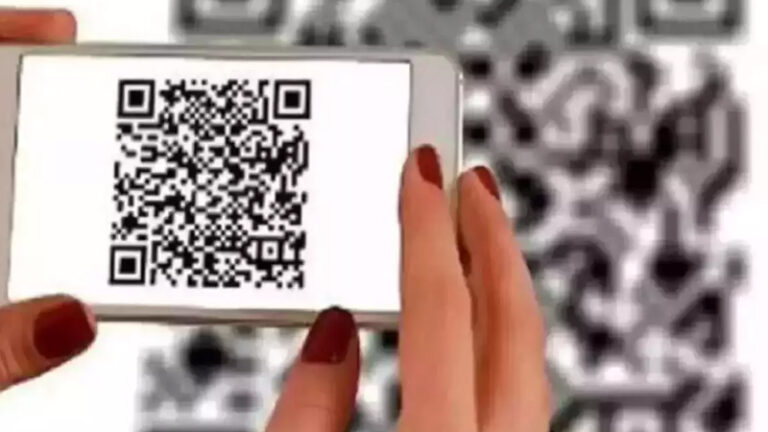
The Ceylon Petroleum Corporation has decided to dispense limited volumes of fuel from Ceypetco filling stations to vehicles starting from today July 25, based on the last digit of the vehicle number plate and QR code system, Ceypetco sources said.
Fuel pumping at 1236 Ceylon Petroleum Corporation fuel filling stations countrywide will begin today using the new system a high ranking CPC official said.
Over 1 million motorists have already registered with the new system which will take several days for the proper operation of the system in a streamlined manner , he revealed.
According to the Ministry of Energy, Ceypetco filling stations will only pump fuel worth Rs. 1,500 for motorcycles at a single time.
For three-wheelers, the limit has been set at Rs. 2,000 worth of fuel. The maximum amount of fuel allowed to be dispensed to other vehicles stands at Rs. 7,000.
At present the Ceylon Petrolium Corportraion Terminal Limited(CPSTL) is distributing 3000MT of petrol and4000 MT of diselt to furl filling stations countrywide.
CPC has no money to import fuel from next month and the treasury or the Central Bank cannot pump money due to dollar shortage.
Therefore only a limited supply to prol sheds will be continuing making the numbering system and QR code ineffective in controlling large numbers of motorists in queues for fuel , CPC official sources said.
Sri Lanka will receive one more fuel consignment this month and another in August, the Chairman of Lanka IOC Manoj Gupta , said adding that it will provide much-needed relief to the people facing an unprecedented economic crisis and acute fuel shortages.
Two consignments of fuel (petrol and diesel) have already arrived on July 13 or 14, and another shipment will arrive sometime between July 28 to 30. Each vessel will be carrying 30,000 metric tonnes of fuel, he revealed.
Another consignment is also scheduled to arrive on August 10, Gupta said adding that these shipments will be arriving from Singapore and the UAE.
Last week, Ceylon Petroleum Corporation (CPC) informed the Sri Lankan government that there will be an indefinite delay in the arrival of fuel shipments due to banking and logistical reasons, with existing stocks being prioritized for public transport, power generation and industries.
Meanwhile the power supply in the country is also in critical condition. Kelanitiss combined cycle power plant has closed down since Friday and other thermalwerplants will have to shut down due to lack of diesel ,naptha and furnace oil.
Under this set up 40 percent of the country’s power demand is being met by hydropower plants 34 percent by Norochcholai coal power plant and the balance by renewable energy sources, Ceylon Electricity Board spokesman Andrew Navamini disclosed.
New QR and vehicle number system begins for fuel pumping
President to present Interim Budget next month providing relief for poor
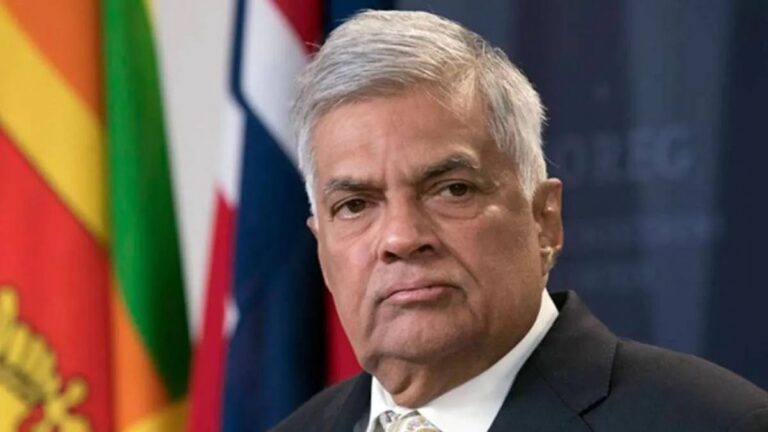
The stage is set to present the interim budget 2022 of the present administration headed by President Ranil Wickremasinghe in parliament next month as the initial step of resetting the governing system, Finance Ministry sources confirmed.
An Amendment Bill to the Appropriation Act 2022 has now been devised and the Legal Draftsman is now drafting this relevant bill using the inputs of the Ministry of Finance.
Under the previous Appropriation Act for 2022, the total expenditure estimated for 2022 was around Rs. 4 trillion, a slight drop of around Rs. 30 billion from the approved allocations for 2021
The estimated expenditure in the Interim budget for the last four months will be Rs 1. 21 trillion The Government does not have sufficient inflows to the Treasury to pay even the salaries of the bloated public service, according to the Prime Minister and Minister of Finance.
He, therefore, wants the Central Bank to lend him Rs. 1 trillion over the next six-month period. Already the Central Bank has accommodated the Government’s funding requirements up to Rs. 2.2 trillion.
Though this is a huge expansion of the reserve money base, the Central Bank has been saved on the domestic side by the outflow of funds from the country due to its having a net negative position in foreign reserves.
As such, the reserve money base has increased marginally from Rs. 932 billion at end-2019 to Rs. 1,454 billion as at the first week of July 2022.and the revenue Rs 634 billion, provisional data shows.
Economic Stabilisation Committee Head and former Treasury Secretary Dr. R.H.S. Samaratunga said the pre-2019 tax structure would be re-introduced with the aim of increasing government revenue.
The Interim budget basically aimed at providing relief for the low income families and vulnerable community will lay the foundation for the country’s economy, allowing it to stabilise and recover within a short period.
It will allocate considerable financial facilities for essential public services and relief for the poorest of the poor establishing asocial security net for their survival.
The pension payment of retirees will be increased to Rs. 255 billion or Rs 270 billion from Rs 210 billion while increasing Samurdhi relief to around Rs 350 billion from Rs100 billion at present under interim budget proposal of the President, senior Finance Ministry official said
It has also proposed to allocate Rs. 200 billion as incentives to low- income families as well as the Small and Medium sector.
Agricultural loans to farmers who have land below two hectares will be written off he said adding that the ownership of state urban housing units will be given to occupants who are now residing in these housing units on monthly rent.
TATA Memorial Hospital in Mumbai Donates Urgently Required Cancer Medicines to Sri Lanka
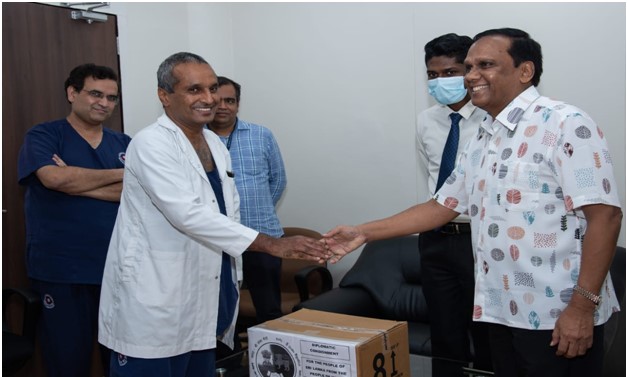
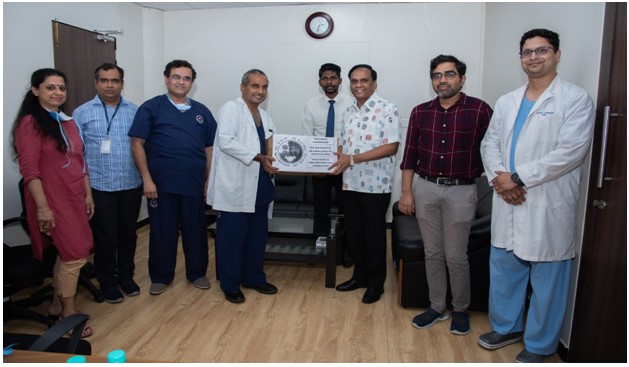
TATA Memorial Hospital (TMH) in Mumbai donated urgently required cancer medicines worth of LKR 20 Million to Sri Lanka on 15th July 2022. The donation contains temperature controlled cancer treatment medicines required by Apeksha Cancer Hospital in Maharagama to treat cancer patients awaiting urgent lifesaving medicines. Consulate General of Sri Lanka in Mumbai coordinated with the donor and the relevant Sri Lankan& Indian authorities to facilitate the necessary approvals and clearances to airlift the medical consignment to Sri Lanka on 16th July 2022.
The handing over ceremony was attended by following officials from TATA memorial hospital who organized the donation; Director/ TMH Dr. C.S. Pramesh, , Professor & Head of Division of Pediatric Oncology/ TMH Prof. Dr. Girish Chinnaswamy, Assistant Medical Superintendent /TMH Dr. Vinit Samant, Assistant Professor, Medical Oncology/TMH Dr. Venkata Rama Mohan Gollamudi, General Manager (CSR)/ TMH Sunita Rao, Pharmacist/ TMH Vonod Nair Consul General of Sri Lanka in Mumbai Dr. Valsan Vethody and Consul (Commercial) Sandun Sameera attended the handing over ceremony to accept the donation. While appreciating the invaluable donation made by the TMH at this hour of need for Sri Lanka, Consul General requested further collaboration between TATA Memorial Center and cancer treatment institutes in Sri Lanka to exchange cancer treatment know-how and expertise to uplift the cancer treatments.
Tata Memorial Hospital is amongst the oldest and largest cancer centers in the world, with over 75 years of exceptional patient care, high-quality training and innovative cancer research and is at the forefront of national and global cancer control efforts. It is the national comprehensive cancer center for the prevention, treatment and research on cancer in India
Tata Memorial Centre is a world leader in basic, translational, epidemiologic and clinical cancer research. Research at TMC includes studies to understand cancer biology, large community based screening trials for common cancers and cohort studies, neo adjuvant and adjuvant treatment, perioperative interventions, surgical trials, repurposing drugs and qualitative research to understand the patient journey. In addition, training and education also form a major focus area for TMC which remains the most sought after institution for oncology training in India
Consulate General of Sri Lanka
Mumbai
22 July, 2022
Media release
Sri Lanka High Commission in South Africa Participates in Nelson Mandela International Day Activities.
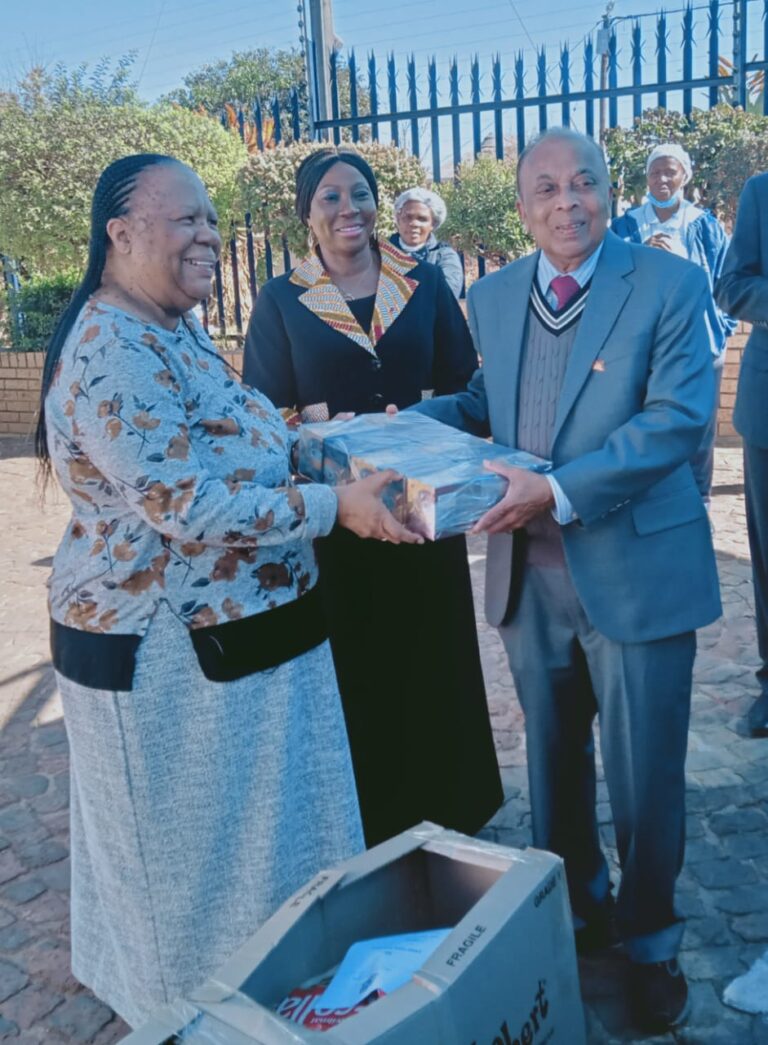
Sri Lanka High Commission in South Africa actively participated in the community service activities led by Minister of Foreign Affairs of South Africa Dr.Naledi Pandor at Leratong Hospice in Atteridgeville on 18 July 2022.
The High Commissioner Prof. Gamini Gunawardane joined several other diplomats and spent time providing voluntary services assisting the staff of the 18 terminally ill patient hospice. Additionally, he also donated, on behalf of Sri Lanka, a stock of Ceylon Tea and a stock of toiletries for the patients.
Nelson Mandela International Day was established by the UN General Assembly (UN Resolution A/RES/64/13) in 2009 in recognition of the former South African President’s dedication to the service of humanity in conflict resolution, race relations, promotion and protection of human rights, gender equality, rights of children and other vulnerable groups, fight against poverty and promotion of social justice. It is celebrated annually on 18 July, Mandela’s birthday.
As in previous years, the South African Department of International Relations and Cooperation (DIRCO, the equivalent of the Ministry of Foreign Affairs in Sri Lanka) led the 2022 Nelson Mandela International Day events encouraging people to use at least 67 minutes of their time to support a chosen charity or serve in their local community. The 67 minutes symbolically represents the number of years the former President fought for human rights and the abolition of apartheid.
The theme of the 2022 Nelson Mandela International Day was a quotation by Nelson Mandela: “Do what you can, with what you have, where you are”.
Sri Lanka High Commission
Pretoria
22 July, 2022
Public Diplomacy Division
media release
40-year existing conflict land, cooperation between local citizens and HWPL starts to bearing fruit
The Chairman Lee, who turned 92 years old this year, has delivered messages on sustainable peace to governments and civil societies from about 100 countries under the slogan “Let’s achieve peace world without wars to leave it as a lasting legacy to future generations.”
To resolve conflicts stage by stage and cease wars, HWPL emphasizes the introduction of international peace law, the harmony between religions, and peace education for future generations. Based on these initiatives, Chairman Lee visited Mindanao and his Peace Tour triggered the settlement of the conflicts in Mindanao. The process of resolving conflicts in Mindanao is considered one of achievements by HWPL’s Peace Tour.
Mindanao, one of the islands in Philippines, used to be known for its decades of conflict and over 120,000 lives sacrificed and be considered a place far from peace. Despite unfavorable environments, HWPL held various events and activities in the Philippines since June 2013, including bringing relief for the slums, holding conversations with religious leaders for interfaith harmony, and establishing a youth network for peace.
We, as one family in peace, have to urge people to participate in all peace activities and gather all our effort to establish world peace.
HWPL Press GB
Sri Lanka Tourism shows signs of revival due to survival plan
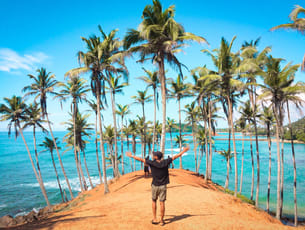
The hard-hit Sri Lanka tourism sector’s ‘Revival for Survival’ plan is now enforced to support the industry through the ongoing economic crisis and move towards a positive work trajectory at the earliest.
With the implementation of this plan the tourism industry shows signs of revival with the current changes towards the political stability even amidst economic crisis and ongoing peoples protests.
This was indicated with the arrivals of 28,733 tourists for the first 19 days of July, bringing the total number of international visitors entering the country for the year starting January 01 to 440,110.
Data from the Sri Lanka Tourism Development Authority (SLTDA) show a reduced but steady flow of tourists into the country, which indicates that despite the ongoing political and economic turmoil in the country, interest in destination Sri Lanka still remains.
The country-wise breakdown of the key contributors to the country’s tourist traffic for July shows that the UK ranks as the largest source market for Sri Lanka tourism. For the first 19 days of July, the UK accounted for 4,714 of the total arrivals.
Ranking as the second largest contributor to tourist traffic is India, which brought in 3,375 tourists; Germany emerged as the third largest source market, accounting for 2,322 international visitors.
Other notable markets for the month of July include Canada, France, Switzerland and Australia.
The cumulative analysis of the total arrivals for the year ending on July 19 shows that India tops the list as the largest contributor to the tourist traffic of destination Sri Lanka, with 72,136 visitors arriving from that country.
The UK ranks second with 54,336 visitors and the Russian Federation ranks third with 47,412 visitors.
the top three priorities for the industry were identified as lobby with foreign governments to reverse the negative travel advisories currently in place, prioritise supply of fuel, gas and electricity to the hotels and DMCs providing services for tourists and carry out marketing effort, targeting risk-averse markets such as India, the Middle East, Russia/CIS and Eastern Europe.
Identifying India as the source market to boost tourist arrivals to the country, the stakeholders stressed the need to carry out road shows that target the Indian market. Within that market, the three key segments that would help improve the tourist traffic to Sri Lanka were identified as Delhi and Mumbai.
The stakeholders also stressed the need to prioritise the twice postponed Travel Agents Association of India (TAAI) that would highlight destination Sri Lanka and its offering to Indian tourists.
To improve the convenience of Indian tourists visiting the island nation, the associations proposed the option of accepting payments in Indian rupees. Approval for the acceptance of the Indian rupee for payments in the island nation will be sought from the Central Bank of Sri Lanka (CBSL).
Another key concern expressed during the meeting with the minister was the participation of Sri Lanka Tourism in international travel and tourism conventions.
The 17-point plan called for the revoking of the decision taken by the SLTPB board to not attend any international travel fairs for the remainder of 2022 and select the important travel fairs such as WTM with approval.
European Union reminds Sri Lanka of compliance with GSP+ commitments.
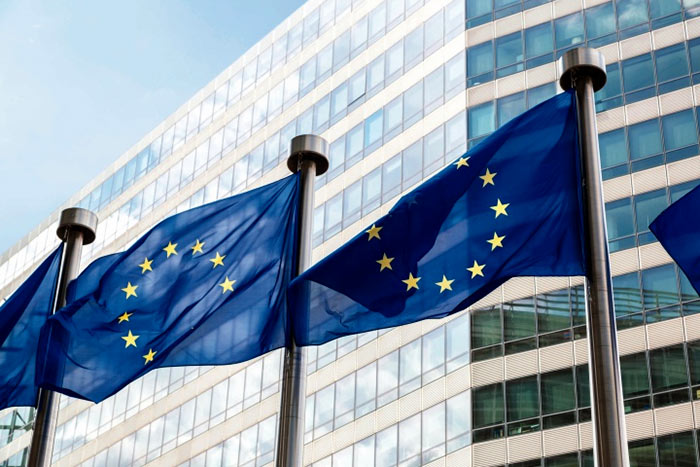
The European Union (EU) has reminded Sri Lanka on the need to work in full compliance with its GSP+ commitments.
Issuing a statement, the EU said that following Sri Lanka’s Parliament swift action to elect Ranil Wickremesinghe as new President of the country in the wake of President Gotabaya Rajapaksa’s resignation, the EU underlines the need of upholding freedom of opinion and expression and individual rights of Sri Lankan citizens in the process of a democratic, peaceful and orderly transition.
In the light of reports of unnecessary violence against protestors, the EU stressed the importance of the right to freedom of peaceful assembly and association and condemns the unwarranted use of force against peaceful demonstrators.
The EU said that the urgency of the domestic situation requires the swift establishment and implementation of a structured plan of reforms in order to return the country’s economy back onto a sustainable path.
In this context, it is essential to safeguard human rights and the rule of law while fostering good and inclusive governance and promoting reconciliation efforts.
The EU will continue to support all efforts in favour of Sri Lankan people, aimed at returning to more stability and economic recovery and advancing reconciliation agenda, in full respect of democratic values.
Over the years, the EU and its member states have provided more than EUR 1billion in assistance to the Sri Lankan people.
The re-introduction in 2017 of preferential access to the European Single Market under the GSP+ scheme has been essential for Sri Lanka’s economic development.
The EU expects the new Government to work in full compliance with its GSP+ commitments. Current and future cooperation programmes (EUR 70 million) are being aligned with Sri Lanka’s most pressing needs.
In addition to delivering medicines through the EU’s Joint Civil Protection Mechanism, member states and the EU are closely monitoring food security on the island in order to fund actions targeting the most vulnerable communities.
Credit Card interest rate hikes to new high of 40 percent hammering card holders

Sri Lankans, whose real incomes are getting hammered on a daily basis from soaring inflation, have turned to getting credit cards from Banks even its interest rates have jumped to 40 percent .
As the Monetary Board accelerated the pace of policy rate hikes since January onwards, the Central Bank in March raised the hitherto prevalent ceiling rate on credit cards from 18 percent to 20 percent only to fully remove any administrative rate caps on the collateral-free pre-approved loan facilities on April 10.
People, whose real incomes got hammered specially after the country was driven into hyper inflation from March onwards, turned increasingly towards their credit cards, but the soaring rates are making that option even harder and more expensive for the users.
Higher rates put a damper on new credit and the credit-led demand for consumption thereby helping to cool down the demand side inflation.
The total number of credit cards has been increased to 1976179 cards in May 2022 from 1973481 in April this year, Central Bank data shows.
This was a significant jump in the number of credit cards even when the financial and economic misery became more pronounced, economic experts claimed.
According to the Central Bank data, the outstanding credit card balance has come down to Rs.136.02 billion in May 2022 from Rs138.19 billion in April indicating the new credit card holders prompt repayment of their dues amids present economic and social crisis.
Although there was a sudden drop seen in the card balances, the steep increase in the interest rates on credit cards could make conditions worse for the cardholders, prompting them to think twice before swiping their cards, several Bank CEO’s opined.
After the Central Bank eliminated the maximum interest rate ceilings on credit cards in the third week of April to reflect the fast-rising interest rates in the economy, the banks soon raised their interest rates up to 30 percent and later to 40 on the cards’ outstanding balance, which came into effect from their next credit cycle.
Meanwhile, the banks are also tightening their credit standards and are declining requests for balance enhancements and requests for new cards, irrespective of the applicants’ credit standing.
Some banks do not even provide reasons for the rejection of the request, a very bad practice by them.
However, the banks also face heightened credit risks from their card customers, as they confront wilful defaulters after using the entirety of the balance in the card. Credit card is a clean facility marked by a bank to its clients and no security is typically involved.
In an economic downturn in the likes of what Sri Lanka is facing today, credit cards are the last to be settled after all other loans by the borrowers. Hence, the banks face a higher risk of non-performing loans from credit cards.
Meanwhile, there has also been a significant increase in the number of new cards approved in May numbering 2698.
1,000 special valuable items gone with the winds of struggle
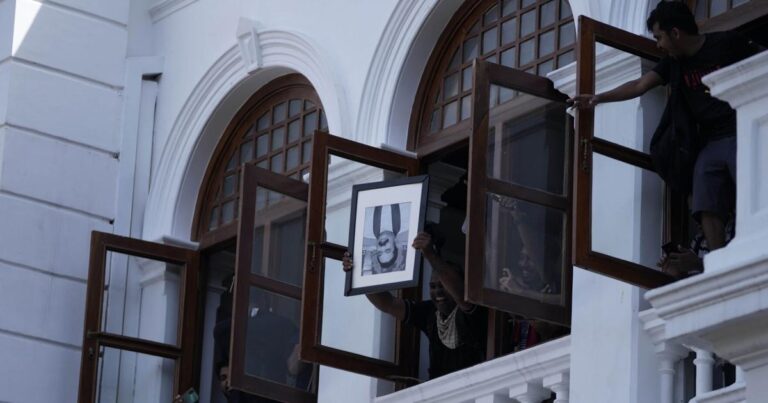
Official authorities reported that nearly 1,000 special items, including items of antique value plus files with important documents, computers, laptops and rare books have gone missing from places including the Presidential Palace and Temple Trees, which were taken over by the protesters.
According to police sources, special investigations have been started to find those items.
Information has been revealed to the investigation teams that some people have concealed and taken away parts of some antiques out of these places.
Meanwhile, it is reported that the Department of Archeology does not have any specific recorded information about the antiques, even though the Presidential Palace has been declared as a historic place through a gazette notification.
A senior official of the Department of Archeology told Sunday Lankadeepa that it will be difficult to get specific and clear information about the destroyed and missing antiques.
As the Presidential Palace had been maintained as a high-security special zone for a long time, due to the practical problems of visiting the place and gathering information, no such gathering of information has taken place.
But the archeological officials admit that there were many articles of ancient value in the Presidential Palace.
Officials of the Criminal Investigation Department said that various criminals and drug addicts have infiltrated the state buildings including the President’s House, Temple Trees, under the guise of protesters, and that these people have done most of the thefts.
Meanwhile, the government has already decided to strictly implement the law against the people who occupied government buildings under the guise of struggle.
Forensic experts and Criminal Investigations Department detectives recently moved in to investigate the damage. Police said they would make use of the CCTV footage available.
As the protestors took control, large crowds queued up to enter the building, but it is learnt that along with them several unscrupulous elements, too, had entered. With no one in control, they were a law unto themselves.
Some took pictures and selfies. But there were others who crossed the line. They slept on the beds, couches, and sofas and used the washrooms and the gymnasium.
Some people were seen pulling and touching the paintings which had remained untouched and were not even on display for the public, officials said.
The Archeology Department also expressed concern over the damage caused to the colonial-era buildings that were occupied by protesters and opened to public view.
Pointing out that archeologically important items, antiques, and cultural artifacts had been damaged in the President’s House and other state buildings that were stormed by the protesters, Archeology Department Director General Anura Manathunga called for speedy and effective measures to protect them from further damage and theft.
When the building came to be occupied, Prof Manathunga appealed to the public not to remove or damage archeologically valued objects. He warned that under the Archeology Ordinance, the department had powers to take legal action against miscreants.
However, it appears that the appeal has gone unheeded, as some valuable items have gone missing. Even the railings of a sidewalk had not been spared.
Also vandalized was the Prime Minister’s official residence Temple Trees, a British colonial-era building that was used by a colonial secretary and later by two presidents.
Senior Archeology Department officials who visited the President’s House, the Presidential Secretariat and Temple Trees said the protesters who stormed the buildings had failed to take care of the buildings and their belongings.
They said these buildings of historical value and national importance should not be subjected to vandalism.
One official said they only made observations but believed that a thorough investigation should be done to assess the full value of the damage.
Speaking on anonymity, he said the President’s House red carpet was one of the oldest red carpets and an archaeological treasure dating back to the colonial era.
He said the carpet would be beyond repair if it continued to be trampled by thousands of people. The carpets at both the Secretariat and Temple Trees, too, have similar values.
The official said chairs belonging to the Dutch period and plates and cutlery sets belonging to different colonial periods had been taken out, frames of paintings broken, windows shattered and graffiti drawn on walls.
He said in some areas walls and the floor had been damaged by people looking for hidden passageways and secret rooms.
Protesters, however, said some furniture, vases and other items were damaged because the crowd was overwhelming.
SL budget deficit widens compelling Govt to prune public spending
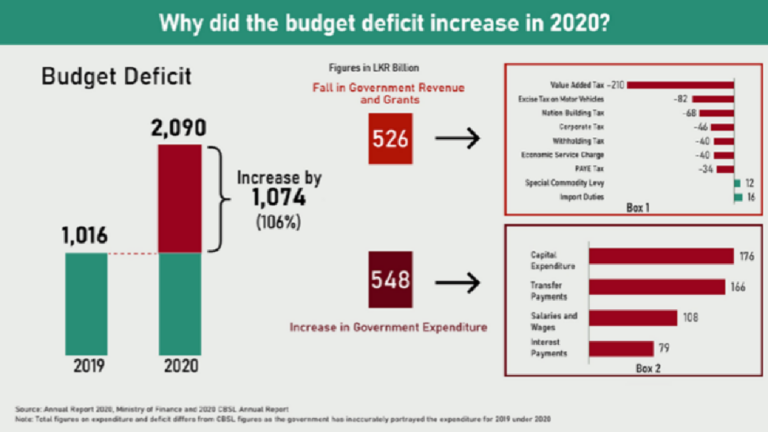
The government expenditure surpassed Government revenue by 83.0 percent resulting in a budget deficit of Rs. 524.1 billion which is 0.7 percent higher than the Rs.520.5 billion budget deficit in the same period of 2021
Considering the widening fiscal deficit, the Government has embarked on corrective measures to improve revenue from both direct and indirect taxes to contain further expansion of the budget deficit.
It has also taken measures to prune public spending by cutting down allocations to ministries, departments , state institutions and statutory bodies whie suspending ongoing unessential development projects, a senior Finance Ministry official said.
Total Government expenditure amounted to Rs. 1,155.2 billion reflecting a 15.2 percent increase in the first four months of 2022 compared to Rs. 1,002.8 billion in the same period of 2021.
This consisted of Rs.1,016.8 billion of recurrent expenditure and Rs. 138.4 billion of capital expenditure and net lending. Recurrent expenditure increased by 14.2 percent to Rs. 1,016.8 billion in the first four months of 2022, compared to Rs. 890.1 billion in the same period of 2021.
This was due to the continuation of additional livelihood support for “Samurdhi” and other welfare recipients and payment of an additional Rs. 5,000 for public servants and pensioners together with the increase in expenditure on interest payments, subsidies and transfers, salaries, and pensions
The overall revenue performance of the Government improved during the first four months of 2022 benefiting from the mobilization of both tax and non-tax revenue, compared to the subdued revenue performance of the same period in 2021.
The total government revenue including grants increased by 30.9 percent to Rs. 631.1 billion in the first four months of 2022 from Rs. 482.3 billion in the same period of 2021, which was a realization of 28.4 percent of the annual estimate of Rs. 2,223.0 billion.
Tax revenue significantly increased by 27.2 percent to Rs. 543.6 billion in the first four months of 2022 from Rs. 427.3 billion in the same period of 2021 reflecting the receipts of the first installment of Rs. 59.6 billion from one-off Surcharge Tax in April 2022.
The realization of tax revenue as against the annual estimated revenue of Rs. 1,987.0 billion was 27.4 percent in the first four months of 2022.