
April 12, Colombo (LNW): Authorities have cautioned the public to think twice before sharing their whereabouts online during the New Year holiday period, warning that careless social media use could expose homes to criminal activity.
In a recent advisory, the Sri Lanka Police highlighted how real-time posts, location tags, and check-ins can unintentionally signal that a residence has been left unattended. Officers noted that such digital footprints are increasingly being exploited by opportunistic thieves.
To counter this risk, the public has been encouraged to adopt a “later-gram” habit—waiting until they have returned home before uploading photos, videos, or travel updates. Popular platforms such as Facebook and Instagram were specifically mentioned as spaces where oversharing can create vulnerabilities.
Police further advised travellers to review privacy settings, limit public visibility of posts, and avoid broadcasting detailed travel plans.
They stressed that even seemingly harmless updates could provide enough information for criminals to identify empty properties, urging citizens to remain vigilant both offline and online during the festive season.
Police Advise ‘Later-Gram’ Approach to Social Media During Holiday Travel

Vandalism at Refurbished Pettah Bus Terminal: Suspect Arrested
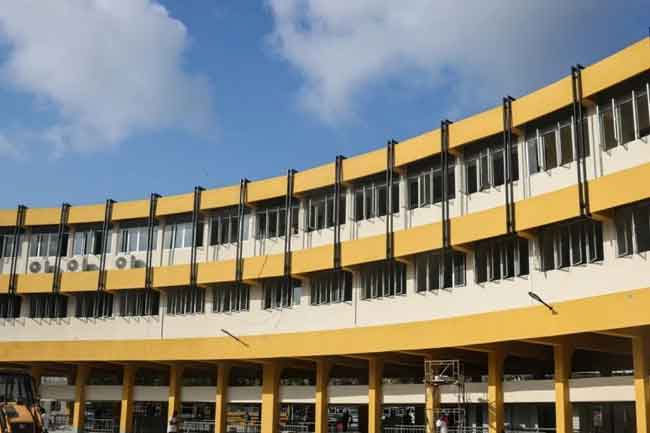
April 12, Colombo (LNW): A suspect has been taken into custody following an incident of vandalism and theft at the recently upgraded Pettah Central Bus Stand, which only resumed operations earlier this month after extensive renovations.
Police said the complaint was filed by the facility’s welfare unit after newly installed infrastructure was found damaged, raising concerns about security at the busy transport hub. The report was initially received by the Sri Lanka Police through the Pettah Police Station.
After a brief investigation, officers apprehended a 33-year-old man in the Kelaniya area on April 11. Some of the items believed to have been taken from the premises were reportedly recovered during the arrest, and further inquiries are under way to determine whether others were involved.
Authorities have also indicated that a technical evaluation of the extent of the damage will be sought from the Sri Lanka Air Force, particularly given its expertise in infrastructure assessment.
The suspect has since been produced before the Colombo Chief Magistrate’s Court and ordered to remain in remand custody until April 17, as investigations continue.
Maldivian President’s Upcoming Visit Sparks Fresh Fisheries Collaboration Talks
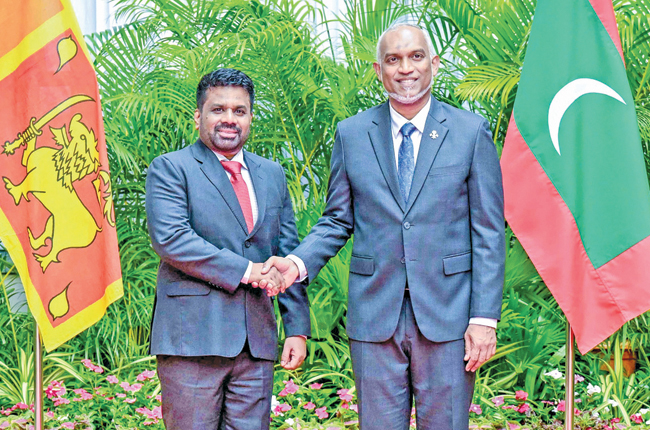
April 12, Colombo (LNW): Sri Lanka is preparing to welcome Maldivian President Mohamed Muizzu on an official visit expected next month, signalling a renewed push to deepen bilateral ties between the two island nations.
Ahead of the visit, Masood Imad met with Fisheries Minister Ramalingam Chandrasekar for discussions focused on expanding cooperation within the fisheries sector. The meeting, held at the Parliament complex, centred on identifying practical avenues for joint ventures and trade growth.
Among the proposals explored was the idea of combining the Maldives’ abundant fresh fish supply with Sri Lanka’s well-established fish processing and canning capabilities, with a view to producing competitive products for both regional and international markets.
The talks also touched on boosting value-added production within Sri Lanka specifically for Maldivian consumers, as well as enhancing technical collaboration and knowledge sharing between the two countries. Officials expressed optimism that these initiatives could pave the way for stronger economic links and greater resilience in the fisheries industry on both sides.
Public Urged to Keep New Year Festivities Daytime to Ease Power Demand
April 12, Colombo (LNW): Sri Lanka’s energy authorities have called on the public to celebrate the upcoming New Year in a more power-conscious manner, encouraging festivities to be held during daylight hours wherever possible.
The Sri Lanka Sustainable Energy Authority (SLSEA) has issued fresh guidance aimed at reducing strain on the national grid during the holiday period, when electricity consumption typically rises. Officials say limiting events to the daytime could significantly cut unnecessary energy use, particularly from lighting and sound systems.
Chairman T.M.W.J. Bandara explained that the move is part of a broader effort to ensure stable power supply while essential services continue uninterrupted during the festive season.
In addition, the Authority has advised offices and workplaces to take simple but effective steps before closing for the holidays, such as switching off electrical equipment and avoiding standby power usage. These small actions, it noted, could collectively make a meaningful difference in conserving electricity nationwide.
Spike in Fatal Road Accidents Raises Alarm Over Drug-Impaired Driving
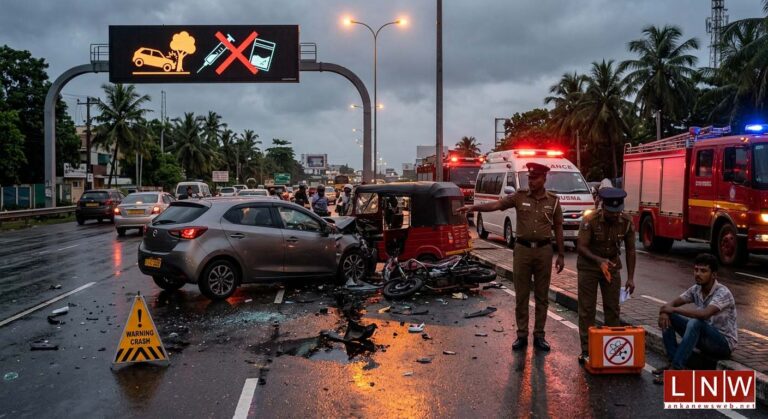
April 12, Colombo (LNW): A troubling rise in road fatalities has been recorded across Sri Lanka, with 49 people losing their lives in separate traffic incidents between April 04 and 10, according to official figures.
Addressing the media in Colombo, Transport, Highways and Urban Development Minister Bimal Rathnayaka highlighted that a significant proportion of these crashes were linked to motorists driving under the influence of narcotics. He described the trend as deeply concerning and called for stronger vigilance on the roads.
The Minister further appealed to the public to play a more active role in improving road safety, encouraging citizens to promptly report dangerous or erratic driving to the Sri Lanka Police.
He added that enhanced enforcement measures and random checks are being considered to curb irresponsible behaviour and prevent further loss of life.
Extra Transport Services Rolled Out as New Year Travel Peaks
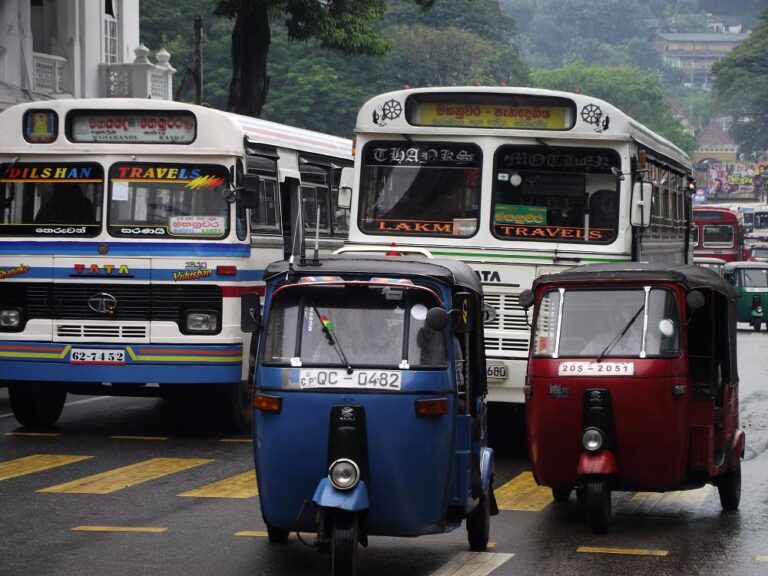
April 12, Colombo (LNW): Authorities have stepped up public transport operations across Sri Lanka as thousands of people continue to leave major cities for their hometowns in the lead-up to the Sinhala and Tamil New Year celebrations.
The Ministry of Transport, Highways and Urban Development confirmed that both bus and rail services have been expanded today to accommodate the seasonal surge in passenger numbers. Officials noted that additional buses are being deployed depending on demand, with transport hubs experiencing particularly heavy traffic.
Special long-distance services are also operating from the Makumbura Multimodal Centre, catering to travellers using the expressway network and aiming to ease congestion on conventional routes.
Amid the increased movement of passengers, Transport Minister Bimal Rathnayaka issued a firm warning to private bus operators, stressing that strict legal measures will be enforced against those found charging fares above the approved rates during the festive period.
He added that monitoring teams have been deployed to ensure commuters are treated fairly at this busy time of year.
PUCSL Rules Out Passing Coal-Related Costs to Electricity Consumers

April 12, Colombo (LNW): Sri Lanka’s electricity regulator has reaffirmed its stance that households and businesses will not be burdened with extra charges stemming from complications in the coal sector when power tariffs are revised.
In an official communication, the Public Utilities Commission of Sri Lanka made it clear that only justified expenses linked directly to the production, transmission, and delivery of electricity will be taken into account when determining pricing adjustments.
The Commission emphasised that its most recent tariff revision deliberately excluded any supplementary costs tied to coal-related issues, as well as other expenditures deemed excessive or unjustifiable. This approach, it noted, is intended to protect consumers from inefficiencies and external disruptions beyond their control.
Looking ahead, the regulator has unanimously agreed to maintain this policy, ensuring that any future revisions to electricity tariffs will similarly omit coal-related surcharges and other questionable costs. The move signals a continued effort to promote transparency and fairness in the country’s energy pricing framework.
Afternoon showers, thundershowers expected in many parts of SL (April 12)

April 12, Colombo (LNW): Showers or thundershowers will occur at several places in Western, Sabaragamuwa, Central, Southern, North-western and Uva provinces and in Ampara, Batticaloa and Polonnaruwa districts after 1.00 p.m., the Department of Meteorology said today (12).
Showers or thundershowers may occur at some places in Southern province and in Ampara, Batticaloa and Monaragala districts in the morning.
Fairly heavy falls about 75 mm are likely at some places in Western, Sabaragamuwa and Southern provinces and in Kandy and Nuwara-Eliya districts.
Mainly dry weather will prevail over the other parts of the island.
Misty conditions can be expected at some places in Central, Sabaragamuwa and Uva provinces and in Galle, Matara and Kalutara districts during the early hours of the morning.
The general public is kindly requested to take adequate precautions to minimise damages caused by temporary localised strong winds and lightning during thundershowers.
On the apparent northward relative motion of the sun, it is going to be directly over the latitudes of Sri Lanka during 05th to 15th of April in this year. The nearest areas of Sri Lanka over which the sun is overhead today (12th) are Cheddikulam, Kebithigollewa, Gomarankadawala and Nilaveli about 12:11 noon.
Marine Weather:
Condition of Rain:
Showers or thundershowers will occur at several places in the sea areas off the coast extending from Puttalam to Trincomalee via Colombo, Galle, Hambantota and Batticaloa.
Winds:
Winds will be South-westerly or variable in direction. Wind speed will be (20-30) kmph.
State of Sea:
The sea areas around the island will be slight.
Temporarily strong gusty winds and very rough seas can be expected during thundershowers.
LNW Exclusive: The 13-Billion Rupee Blindspot

By Robin Hood
The NDB Bank fraud was the largest banking fraud in the country and when the numbers finally stopped moving, the damage was not 380 million rupees. It was not even close. The true figure, once the general ledger had been properly excavated, stood at 13.2 billion rupees, roughly 44 million US dollars drained through what investigators now describe as a sustained, systematic manipulation of bank accounts.
Many people are in custody. But a few people did not create the conditions for this. Institutions did.
The first question belongs to the Board. In January, an internal probe was triggered by a multi million rupee irregularity. That probe, by any reasonable standard of governance, should have been the ignition point for a total systems audit. It was not.
Instead, what followed appears to have been a narrow, contained review, the kind of investigation designed to answer the question already asked, rather than the questions not yet imagined.
Months later, the initial public estimate of the damage came in at 380 million rupees. The actual figure was thirty-five times larger. That gap is not a rounding error. It is a diagnostic failure. It tells us that the Board either lacked the technical literacy to interrogate their own risk infrastructure, or chose not to. A board that cannot read the room when multi million rupees goes missing is a board operating on institutional faith rather than financial vigilance.
Then there is the four-eyes principle, the elementary two-person authorization requirement that governs high-value transactions in every credibly run financial institution. A junior manager-level employee reportedly bypassed this control repeatedly, at scale, over time. The principle did not fail. The culture around it did.
Rules without enforcement culture are decorations. The Board approved the framework. The Board is responsible for whether it breathed.
EY audited the books. The 2025 year-end audit, by all available accounts, did not flag the general ledger discrepancies that sit at the center of this case. This demands scrutiny that goes beyond disappointment. External auditors are not merely contract reviewers. They carry a public assurance function. When they sign off on a financial institution’s controls, depositors and counterparties rely on that signature.
The central question here is not whether EY followed its own sampling methodology. The question is whether that methodology was calibrated for comfort or for risk. Materiality thresholds, the levels below which individual entries are considered immaterial and therefore unreviewed, can, if set too generously, allow dozens of fraudulent entries to aggregate quietly into a catastrophic sum. The auditor’s relationship with the institution, particularly its tenure, warrants examination. Familiarity is the enemy of skepticism.
The Central Bank of Sri Lanka sits at the apex of this accountability architecture, and its position is the most difficult to defend. Banks report to the Bank Supervision Department regularly and in granular detail. Inter-bank settlement patterns, capital adequacy ratios, and liquidity movements all flow through that department. If a senior banker was being questioned internally in January and rumors were in circulation, the CBSL’s supervisory intelligence network should have registered pressure long before April.
Instead, the regulatory response came after the capital was already impaired, dividend suspensions and expansion halts imposed as stabilisation measures rather than preventative ones. Liquidity support extended after the damage is not oversight. It is consequence management. The distinction matters enormously.
A few individuals are in custody. That is where the legal process begins, and it should continue. But criminal accountability for the actors cannot substitute for institutional accountability for the architecture. A mid-level manager who moves 13.2 billion rupees without triggering a kill-switch is not a mastermind operating against an otherwise sound system. He is a symptom of one that was never truly sound. The board authorised the systems. The auditors declared them safe. The regulator watched from a distance.
The vault was open. The question Sri Lanka must now answer honestly is who was supposed to be watching it.
Sri Lanka Eyes $700 Million IMF Boost amid Reform Pressure
Sri Lanka is edging closer to unlocking approximately $700 million in fresh financing under its ongoing agreement with the International Monetary Fund, following a staff-level understanding on the fifth and sixth reviews of its $3 billion Extended Fund Facility. While the development signals renewed international confidence, the funding remains conditional on the Government’s ability to deliver politically sensitive reforms.
At the centre of the IMF’s conditions is the restoration of cost-reflective pricing for electricity and fuel long a contentious issue domestically. Authorities must also demonstrate continued progress in debt restructuring and secure necessary financing assurances before the IMF Executive Board grants final approval, expected in the coming months.
Officials including IMF mission chief Evan Papageorgiou indicated that Sri Lanka has already achieved notable macroeconomic improvements. The economy grew by 5% in 2025, marking a recovery from its recent crisis, while inflation rebounded modestly to 2.2% year-on-year by March 2026. Foreign reserves have also strengthened, reaching $7 billion—an important buffer against external shocks.
Hitherto beneath these headline gains lies a more fragile reality. The IMF has cautioned that both domestic and global risks continue to threaten stability. Rising energy prices linked to geopolitical tensions in the Middle East have increased import costs, while disruptions to tourism and worker remittances are straining foreign exchange inflows. Additionally, post-disaster reconstruction following Cyclone Ditwah is placing new pressure on public finances.
Fiscal discipline remains a key test. Although tax revenues have improvedparticularly through vehicle imports—the IMF has urged the Government to deepen reforms by expanding the tax base, tightening compliance, and curbing leakages. Public spending must also be carefully managed, with an emphasis on transparency and efficiency under existing financial regulations.
Equally critical is the Government’s handling of social protection. Cost-reflective pricing, while necessary for fiscal sustainability, risks burdening lower-income households. The IMF has therefore stressed the importance of targeted welfare measures to cushion vulnerable groups, highlighting gaps in coverage and effectiveness within existing safety nets.
The broader reform agenda extends beyond fiscal measures. Strengthening central bank independence, maintaining exchange rate flexibility, and addressing weaknesses in the financial sector particularly non-performing loans are all seen as essential to sustaining recovery.
Governance reforms also feature prominently. The IMF has welcomed Sri Lanka’s anti-corruption initiatives but emphasised that implementation will be the true measure of credibility. Structural changes in trade policy, digitalisation, and labour markets are likewise viewed as necessary to secure long-term, inclusive growth.
The Government, led by President Anura Kumara Dissanayake, now faces a delicate balancing act: meeting IMF benchmarks to unlock funding while managing domestic political and social pressures. Whether Sri Lanka can sustain reform momentum will determine not only the release of the next tranche, but also the durability of its economic recovery.