Home Blog Page 2206

A special discussion between all party leaders and Prime Minister Ranil today

0

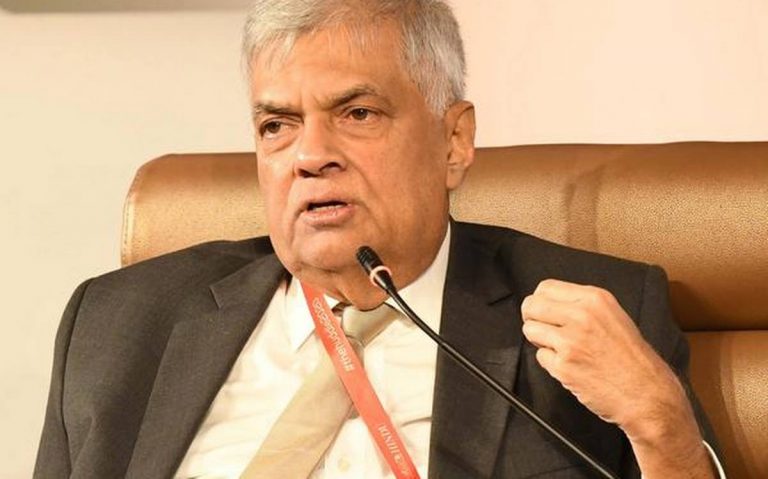
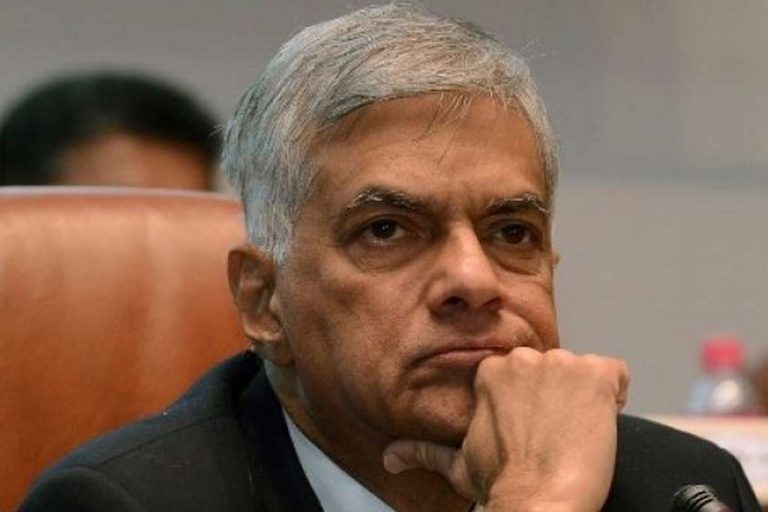
A special discussion between Prime Minister Ranil Wickremesinghe and all party leaders in Parliament is scheduled to be held today (03).

Accordingly, this discussion will be held at the Prime Minister’s Office at 3.30 pm today.

The 21st Amendment to the Constitution will be discussed at this meeting and it is said that an agreement will be reached between all parties today before presenting the bill to the Cabinet next Monday.

Imran Khan is jeopardising Pakistan’s attempts to fix its economy

0

Once or twice a year, the approaches to Islamabad, Pakistan’s staid, leafy capital, start to resemble a jumbled cargo port. Piles of shipping containers sprout up at motorway junctions on the outskirts of the city and at strategic crossroads inside it. Lines of riot police stand guard. Residents grumble, knowing traffic will get choked, schools will close and getting to work will take twice as long.

The appearance of the barriers, put there by police, signals that the city of 1m is under siege from one of the country’s “long marches”. These are more aptly described as long drives: convoys of protesters travel in cars and minibuses from cities such as Lahore and Peshawar, a few hours away by road. These ritualised displays of street power, in which political parties rally their supporters and lead them towards the capital, are a favourite tactic for anyone trying to rattle the government.

No one is keener on them than Imran Khan (pictured, centre), the cricketer-turned-populist who leads his own Pakistan Tehreek-e-Insaf (pti) party. Since being ousted from his job as prime minister in a no-confidence vote in April, he has refused to leave the pitch. Instead he has taken to street protests, threatening to bring down the new government.

He blames his inauspicious exit on a conspiracy between the opposition and America, which he claims was keen to see the back of him because he refused to pander to America’s foreign-policy demands. America says this is nonsense. Mr Khan’s supporters have lapped it up anyway. Over the past few weeks, huge crowds have rallied to him, demanding new elections to kick out the “imported” government. They have also criticised the armed forces, whose support is essential for any government, in unusually explicit terms.

Mr Khan’s latest hurrah came on May 25th, when he urged supporters to march on the capital and stage a sit-in until new elections are held. But turnout was unimpressive. In the end, he scrapped the plan as the protesters reached central Islamabad and skirmished with security forces, who fired tear gas. He announced a fresh deadline of May 31st for elections to be called and warned of more marches if the government does not comply.

There has been much speculation about why the march was dispersed. Mr Khan says he wanted to prevent bloodshed. His opponents say he was disappointed with the size of the turnout. pti insiders claim that the march was halted after the generals gave assurances that elections, at present scheduled for late 2023 when the current parliament’s term ends, would be brought forward to this year.

Mr Khan’s latest deadline came and went. He had not called a new march by the time The Economist went to press. Some observers suspect that he may need time to rally his supporters after the anticlimactic ending to his last push on the capital. His allies think he is unlikely to return to Islamabad imminently.

It is hard to see why the new prime minister, Shehbaz Sharif, a former chief minister of Punjab and the younger brother of Nawaz Sharif, a former prime minister, would agree to call early elections. His government, less than two months old, has taken tentative steps towards repairing relations with the West. But it has not yet devised a strategy to tackle the economic crisis it inherited. In part that is because Mr Khan’s protests have kept it distracted. Mr Sharif has also failed to seize the political initiative. Last month the country watched the flailing prime minister board a plane to London to seek advice from his older brother, who lives in exile.

The country’s finances are in wretched shape. The pandemic and the fallout from the war in Ukraine have battered an economy already reeling from decades of mismanagement, outsize military spending and a focus on debt-driven infrastructure projects that generated no returns. Inflation hit 13.8% in May, driven largely by the price of food and transport. The rupee has lost 8% of its value against the dollar since early April (see chart). Foreign reserves had dwindled to $10bn by May 20th, enough to cover imports for only about six weeks.

The reserves are at their lowest level since 2019, when Pakistan last sought help from the imf. Only half the $6bn bail-out agreed at the time has been disbursed. Mr Khan, then prime minister, originally agreed to cut subsidies and reform the economy but reduced fuel prices instead. The country is running deficits on both its budget and its current account. It needs some $37bn worth of financing for the fiscal year beginning in June, reckons the finance minister.

On May 26th Mr Sharif at last seemed to act more decisively. The government announced a cut in fuel subsidies, raising prices by 20%. This won approval from the imf, which has made the resumption of its loan programme conditional on policies to stabilise the economy. The currency and the stockmarket rallied slightly in response to the move. A bail-out will also unlock credit from allies such as China and Saudi Arabia, which are unwilling to extend more help without assurances that the imf will release the bail-out money.

To obtain those, the government will have to introduce more unpopular measures. This month it is likely to announce cuts to subsidies on electricity and the passage of an austerity budget. But dissolving parliament and calling early elections would distract from the goal of improving macroeconomic stability, even though Mr Sharif could win a real mandate. The imf is unlikely to take seriously a government that may not be in power for more than a few weeks, particularly given the risk that Mr Khan might return to power. Early elections would probably need approval from the generals. No matter what pti insiders claim, this will be harder to gain than it might have been a few months ago given new hostility towards the army among Mr Khan’s supporters.

Even so, Mr Khan does not appear to be giving up hope. He is petitioning the Supreme Court to guarantee safe passage for potential follow-up marches. The coming spate of painful economic moves will supply him with plenty of excuses to paint the government as American stooges and enemies of the people. The appointment of a new army chief, due in November, will add yet more uncertainty to the political balance. To fix its economy, Pakistan badly needs stability. It will spend the coming months with anything but. ■

This article appeared in the Asia section of the print edition under the headline “Interfering Imran”

THE ECONOMIST

CBSL appeals to Sri Lankans living abroad to send remittances through the banking system

0

The Central Bank of Sri Lanka appeals to Sri Lankans living abroad to send remittances through the banking system as foreign exchange is essential to meet the daily needs of Sri Lanka such as fuel, gas, medicine and food.

Following is the statement issued by the Central Bank of Sri Lanka in this regard.

Two CID teams deployed to arrest Johnston

0

The CID says that two teams of officers are deployed to arrest former Minister Johnston Fernando.

The Attorney General had instructed the CID to arrest him in connection with the May 09 attack on the Galle Face protest site on Monday (01).

India-Sri Lanka Foundation holds its 37 Board Meeting in New Delhi

0

The 37th Board Meeting of the India-Sri Lanka Foundation was held in New Delhi on 27 under the co-chairmanship of Sri Lanka’s High Commissioner to India Milinda Moragoda and the High Commissioner of India to Sri Lanka Gopal Baglay. The Board Meeting was held in hybrid mode.

The India-Sri Lanka Foundation was established on December 28, 1998 by a Memorandum of Understanding signed between the Governments of India and Sri Lanka, with the objective of fostering Indo-Sri Lanka relations through the enhancement of economic, scientific, educational, technical and cultural cooperation and the promotion of greater understanding between the peoples of the two countries.

The board members appointed by the Government of Sri Lanka, Ambassadors and former Secretaries to the Ministry of Foreign Affairs Bernard Goonetilleke and H.M.G.S. Palihakkara attended the meeting virtually while the board member appointed by the Government of India, Chancellor of the Central University of Jammu Ambassador Gopalaswami Parthasarathy and the officials of the New Delhi and Colombo Secretariats of the Foundation were physically present at the meeting along with the two co-chairpersons.

This year, the Board Meeting was hosted by the New Delhi Secretariat of the Foundation coming under the High Commission of Sri Lanka in New Delhi. The annual board meetings are held alternately in the two capitals.

The Foundation received 64 project proposals from applicants in Sri Lanka and India, and the Board approved 22 of them. The new website of the Foundation (www.islfcolombo.com) was also launched at this Meeting.

High Commission of Sri Lanka

New Delhi

02 June, 2022

Sri Lanka is running out of time to secure an IMF bailout

0

Sri Lanka is seeking help from the International Monetary Fund (IMF) for its 17th program in seven decades, needing a bailout in place before its economy disintegrates and shortages worsen.

WHY DOES SRI LANKA NEED THE IMF’S HELP?
The country of 22 million people, located off India’s southern tip, is struggling to manage its worst economic crisis since independence in 1948.

It has a long history of rising foreign obligations, driven partly by incessant government deficits, and this has been worsened by a loss of tourism revenue in the pandemic and, this year, by surging fuel costs.

The resulting severe shortage of foreign exchange has stalled imports, including essentials such as fuel and medicines, and the country is also facing an impending food crisis.

To find a way out of the turmoil, Sri Lanka is in talks with the IMF to borrow at least $3 billion via the lender’s extended fund facility (EFF).

An IMF programme would not only give the country’s embattled government access to much-needed funds; it would also provide a pathway for Sri Lanka to eventually access international financial markets.

The country was officially declared in default for the first time ever last month after it halted debt payments.

HOW ARE THE NEGOTIATIONS GOING?
Sri Lanka’s former finance minister Ali Sabry and new central bank governor P. Nandalal Weerasinghe started talks with the IMF on April 18.

On May 9, an IMF team began technical discussions with Sri Lankan authorities, just as a wave of violence swept through the country and the prime minister stepped down, leading to the dissolution of the entire cabinet of ministers.

Sri Lanka was without a finance minister for the second time in as many months, while IMF talks led by officials concluded on April 24.

Meanwhile, the country picked Lazard and Clifford Chance as financial and legal advisers to help restructure more than $12 billion of overseas debt.

Another round of talks with the IMF is expected in early June, with a staff-level agreement possible at the end of the month.

However, an agreement that has IMF board approval will likely take at least until August, as it would require progress on a debt sustainability analysis, a structured examination of the country’s debt.

Sri Lanka’s new prime minister, Ranil Wickremesinghe, who is also serving as finance minister, would likely be part of discussions.

WHAT DOES THE IMF WANT?
An EFF programme typically requires countries to make structural economic reforms to correct deep-rooted weaknesses.

The IMF said last week it was in talks with Sri Lanka for a comprehensive reform package but did not specify what type of programme was being negotiated.

Wickremesinghe’s government already appears to be making some moves in that direction.

On Tuesday, it announced a taxation overhaul to boost revenue, lifting value-added taxes and corporate income tax and slashing the relief given to individual taxpayers.

Wickremesinghe is also working on an interim budget, to be presented within weeks, that he says will cut government expenditure “to the bone” and provide a relief package for the most economically vulnerable.

WHY THE URGENCY?
Millions of Sri Lankans have been battling shortages of essentials for weeks, including cooking gas, fuel and medicines, sometimes queuing for days to procure minimal supplies.

The dire situation has stoked public anger against President Gotabaya Rajapaksa and his family, who are accused of mishandling the economy and delaying negotiations with the IMF.

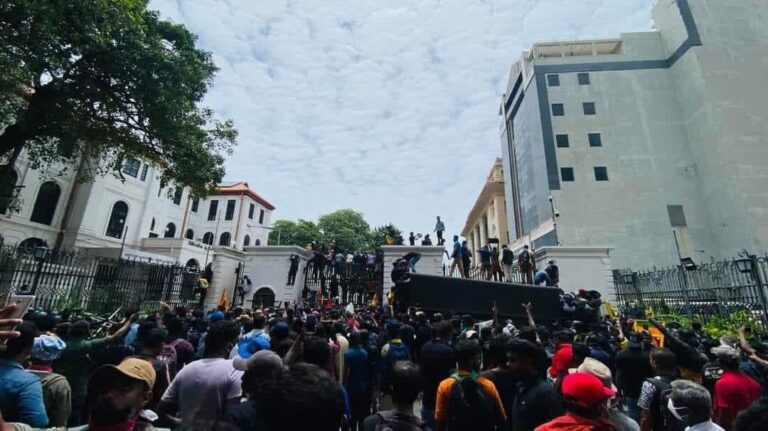
Nationwide protests morphed into violence last month, leaving nine people dead and over 300 injured.

The government has also warned of an impending food crisis, with the country’s farmers running short of fertilisers. Experts estimate food production could drop by 50%, and the shortage of foreign exchange is a threat to importation of staples.

Further unrest could lead to more political turmoil, and also potentially affect negotiations with the IMF.

Economic Times

Govt targets US $5bn this year for repayments and US $1bn to bolster reserves

0

The Prime Minister, during a meeting today (2) with representatives from the Joint Chambers, explained that the Government was targeting US $5bn this year for repayments, plus a further US $1bn to bolster the country’s reserves.

He elaborated that discussions with the IMF are proceeding and he was hopeful that negotiations would conclude by the end of the month. The Prime Minister also explained to the representatives that debt restructuring has begun, following the appointment of financial and legal advisors.

He said that any bridging finance to help alleviate the crisis is dependant on an agreement with the IMF being reached.

Commenting further, Prime Minister Wickremesinghe stated that talks were continuing with donor nations. He added that relations with Japan had broken down, and it would take a while to repair those relations and regain their confidence.

In regards to the medicine shortage, the Prime Minister explained that former President Mohamed Nasheed was leading the international appeal for urgently needed medicine supplies.

Addressing the issue of food scarcity, the Prime Minister explained that securing fertiliser and compiling a food security program were being given equal priority. He explained that in the event of any excess crops, those would be provided to vulnerable groups at a concessionary rate.

Prime Minister’s Media Division
2nd June 2022

Sri Lanka High Commission in the UK to provide Consular Services on Saturdays

0

For the convenience of Sri Lankans living in the UK and the British Sri Lankan community, the High Commission of Sri Lanka in the UK has made arrangements to provide Consular Services on Saturdays with effect from 11 June 2022.

The High Commission is introducing this service for the convenience of those who are unable to visit the Consular Section of the High Commission for their Consular needs from Monday to Friday due to work related or other reasons.

Those who wish to make use of this service are requested to visit the Consular Section with prior appointments which can be made online at the link https://hclappointments.embassyonline.lk

RW leaves his responsibilities in UNP to Second tier Leadership for full commitment to Country

0

Prime Minister Ranil Wickremesinghe has relinquished all of his responsibilities as the Leader of the United National Party (UNP) for full commitment to the country in a move to save it from the prevailing crisis.

Accordingly, Wickremesinghe has left his responsibilities to the Second tier Leadership of the Party.

His decision has been announced during a meeting with the Party seniors at Sirikotha UNP Headquarters. All political affairs have been handed over to Party Secretary Palitha Range Bandara. The reorganisation affairs have been handed over to former MP Ruwan Wijewardena.

It is said that Wickremesinghe will no longer be involving in any UNP-led activities.

MIAP

Trooping the Colour kick-starts Platinum Jubilee celebrations

0

Crowds covered in Union Jack flags have gathered early on The Mall today to secure a prime spot for the biggest royal celebration in decades – as four days of events finally begin with Trooping the Colour.

Royal superfans have adorned themselves in red, white and blue blazers, flags and hats as they lined The Mall this morning to watch the Queen’s historic birthday parade kick off at 10am.

Trooping the Colour is a ceremony performed by regiments of the British Army. It has been a tradition of British infantry regiments since the 17th century, although its roots go back much earlier.