Home Blog Page 2212

It’s time to reconcile energy policy with long term generation plan

0

WIND POWER PROJECT  it says Wind project
Energy is a vital factor for any country’s economy and in Sri Lanka there is much public focus on the subject because of the power cuts the people are experiencing every day. The power cuts have an impact on every home, people’s life style and children’s education, especially in the post-COVID environment where many are learning online. 

On the economic front it affects all businesses while its impact on production is severe because factories and their supply lines are affected in many ways. Here I am talking mostly on the supply side of energy. Energy must be available continuously for people to maintain their living standards as well as for country’s economic progress. 

Then the other important thing about energy is basically it has to be environment friendly. From time to time there have been many global discussions and agreements on the subject such as Earth Summit and Tokyo Declaration which talks about the carbon footprint. 

They focused on reducing global warming in different ways, but my main emphasis here is environmental impact of energy and pricing because it needs to be affordable. Lower energy costs also make a country’s manufacturing industries competitive. Sri Lanka’s energy costs have been high and that is why we are not very competitive in the industrial sector. 

“By about 1996, Sri Lanka fulfilled its energy requirements with nearly 100% renewable energy. Over a period of time we have moved away from that and now we are heavily dependent on thermal energy as well. Now the main sources of energy are our major hydros, renewable, liquid fuel and coal”

Need for renewable energy

By about 1996, Sri Lanka fulfilled its energy requirements with nearly 100% renewable energy. Over a period of time we have moved away from that and now we are heavily dependent on thermal energy as well. Now the main sources of energy are our major hydros, renewable, liquid fuel and coal. 

If we look at the production of our energy major hydros give about 25-30%, renewable is about 15%, coal is about 25-30% and the balance is from liquid fuel. Main point here is major hydros and renewable sources produce 50% or below while the majority 50-55% is thermal which is coal and liquid fuel. So that is not satisfactory both on cost side and in terms of protecting our environment. 
On the cost side there are huge variations in the cost of a unit kilo watt hour. In hydro it is about Rs. 7 or 8 a unit, renewable is between Rs. 15 to 20 per unit, coal is about Rs. 50 and if you take liquid fuel it is about Rs. 100 or more so that you can see the huge price differential. 

Significance of energy policy

That is one of the big issues facing Sri Lanka and the country needs an energy policy as well as an energy generation plan. The energy policy must be driven by the government and unfortunately in our country some people seem to think that Ceylon Electricity Board (CEB) should decide the energy policy. 
Government decides the energy policy and CEB has to prepare the long-term energy generation plan to suit that policy. In doing so government has to take into account economic reasons but unfortunately some sidetrack arguing that whole energy policy has to be driven technically.

Technical limitations are surely there, for example there is so much of hydro power that you can actually produce; you cannot produce more than what the nature has given you. But then the government has to decide how much is going to be thermal and how much is sustainable energy.

The incumbent President made a pronouncement that when he gets elected he would have 70% sustainable energy and he gave a time frame for it to be achieved. The long-term generation plan is normally done by the CEB for 20 years. Accordingly, they did the 2022-2041 energy plan limiting sustainable energy to 50%. 

The plan was submitted to the Public Utilities Commission of Sri Lanka (PUCSL) but they did not approve it because it was not in keeping with the government stipulated policy. The PUCSL has asked the CEB to re-produce an amended plan by June 30, 2022. In the plan they have not spoken about increasing coal power, but they talk about increasing the use of gas. 

“That is one of the big issues facing Sri Lanka and the country needs an energy policy as well as an energy generation plan. The energy policy must be driven by the government and unfortunately in our country some people seem to think that Ceylon Electricity Board (CEB) should decide the energy policy. “

Battle between CEB and sustainable energy authority

Apart from the CEB and the PUCSL there is Sri Lanka Sustainable Energy Authority and they had approved about 1374 sustainable energy projects giving them licenses to proceed. These 1374 projects were to generate about 4000 megawatts. However, these projects were stalled because the CEB refused to give them power purchasing agreements. The country has suffered as a result of the battle between these two entities.

Under the law there is provision for government to government projects, where there is an offer from a foreign sovereign government to the government of Sri Lanka for which approval of the cabinet of ministers has been obtained. In a recent project, Indian company Adani Group wanted to do a wind power project in Mannar. The question there was whether it was a government to government one and the other issue was how the pricing was to be determined. 

Whichever the project we have to look at it from the consumers’ point which means it has to be at the lowest possible price. If it is an open tender, then it is clear how the price is determined. If it is through feeder tariff scheme it also has a method to determine the price. It gets complicated when it is a large project and if there is no tender. That is an issue that needs to be sorted out. 

My focus here is not the Adani project, but I wish to make the larger point why we need renewable energy and why it needs to be at low cost. If there are large projects, they need to be ideally tendered out so there is transparency, competition and the consumer gets the best deal. 

Then I am also making the point that the CEB has to come up with a power generation plan which is in keeping with the government policy. CEB is a monopoly and therefore we need to have multiple buyers. We have many producers, but we only have a single buyer. That is why even though sustainable energy authority gave licenses for people to produce energy they could not go ahead with it because they need to sign a power purchasing agreement with the CEB which is a monopoly. Clearly from the consumers’ point of view we have to question that. 

“The other issue that has come up recently in the public domain is why emergency power purchases are often resorted to. There are also allegations that water levels in the reservoirs are reduced and then emergency power is procured”

Need for multi buyer models

Now there is a need for multi-buyer models as well particularly in buying corporate clean energy. The purchaser should have the option to buy from any one while the seller also should have the option to sell to anyone.

Today, there are sophisticated product buyers who want to see whether the producers are using clean energy. Twenty years ago, they were checking whether factories producing the garments were using child labour. Now it has moved to another stage where they want to know what kind of energy was used whether it was clean energy or energy creating global warming. 

So, the factories using clean energy will have the advantage because some of the buyers may stipulate what kind of energy use they prefer. So, there are multi buyer models all over the world and we also need to open ourselves to looking at that and opening it out. 

Then the other issue that has come up recently in the public domain is why emergency power purchases are often resorted to. There are also allegations that water levels in the reservoirs are reduced and then emergency power is procured.
People have serious doubts because politicians and public officials at higher levels are probably corrupt. An independent audit needs to be done over these allegations. CEB’s promises to conduct internal audits will not be good enough and we need external parties to confirm that as well. 

Some of the regulatory functions originally vested with the CEB have been later placed under the PUCSL by subsequent legislation such as Sri Lanka Electricity Act while Sri Lanka Sustainable Energy Authority also has been given certain powers. PUCSL has the authority to act as the economic, technical and safety regulator for the electricity industry in Sri Lanka. The provisions of these laws need to be properly adhered to ensure a proper energy mix for Sri Lanka and an efficient energy administration. The author is a former VP, Citibank and Director/CEO, National Development Bank
Daily Mirror

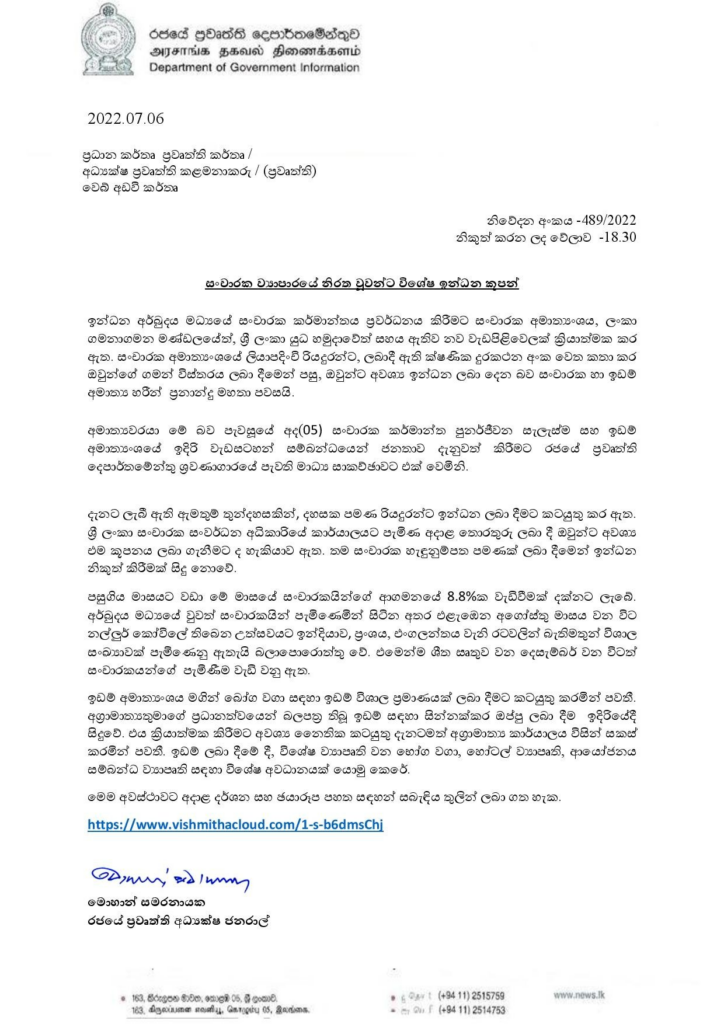
Special fuel coupons to be issued to those involved in Tourism Industry

0

Special fuel coupons will be issued to those involved in the Tourism Industry, said Tourism and Land Minister Harin Fernando.

The announcement is revealed in a press release issued by the Department of Government Information.

Accordingly, the necessary volumes of fuel will be supplied to the registered drivers of the Ministry of Tourism after receiving their itinerary by calling the provided hotline numbers, the Minister said.

These coupons can also be obtained after visiting the Office of the Sri Lanka Tourism Development Authority (SLTDA) and providing relevant information, he added.

MIAP

All-Party Protesters enter Convention to Win People’s Protest with Opposition

0

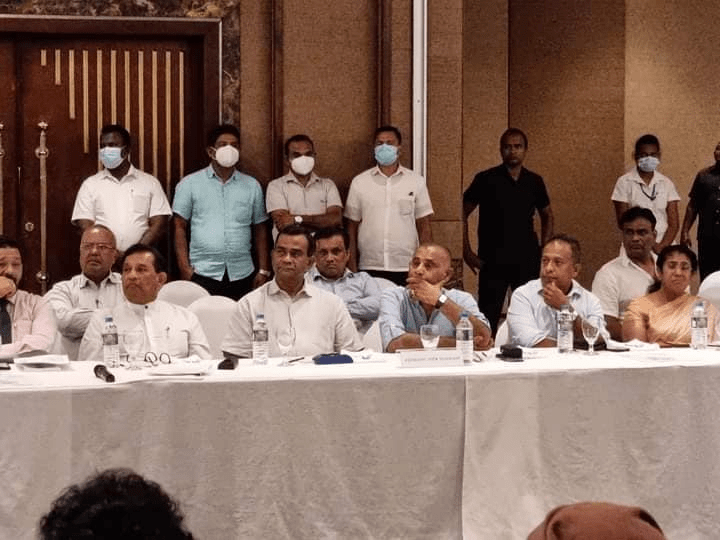
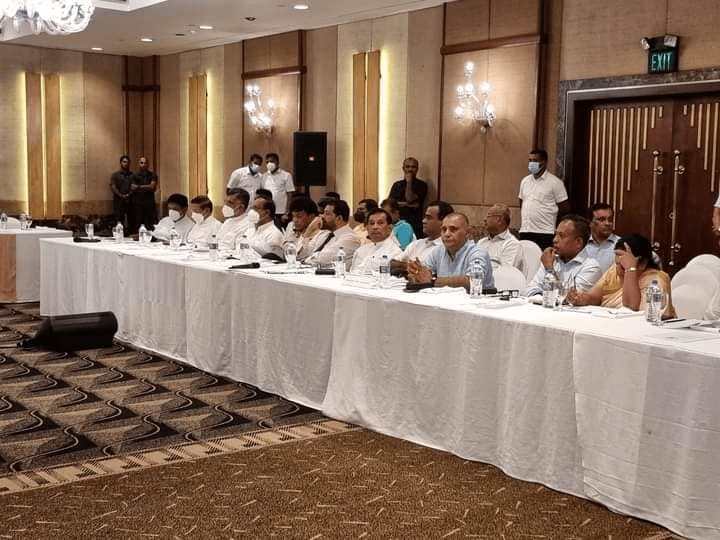
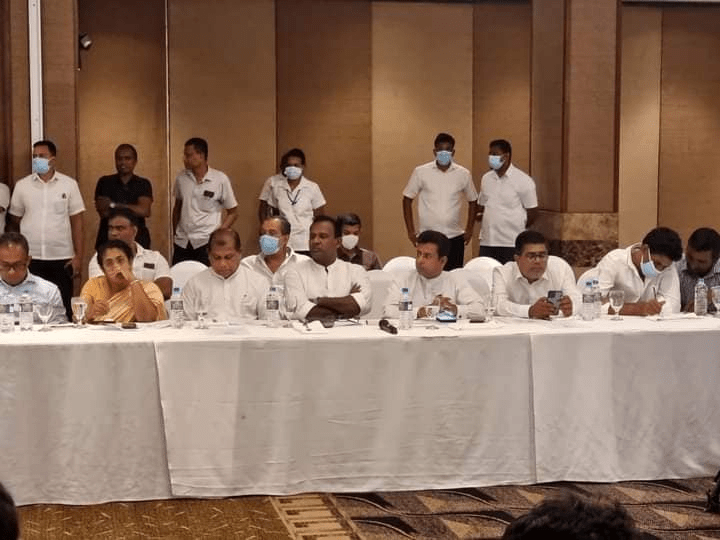
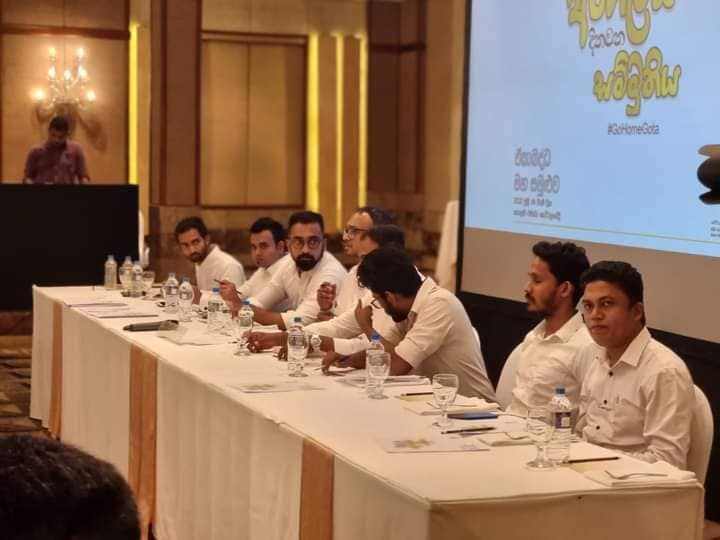
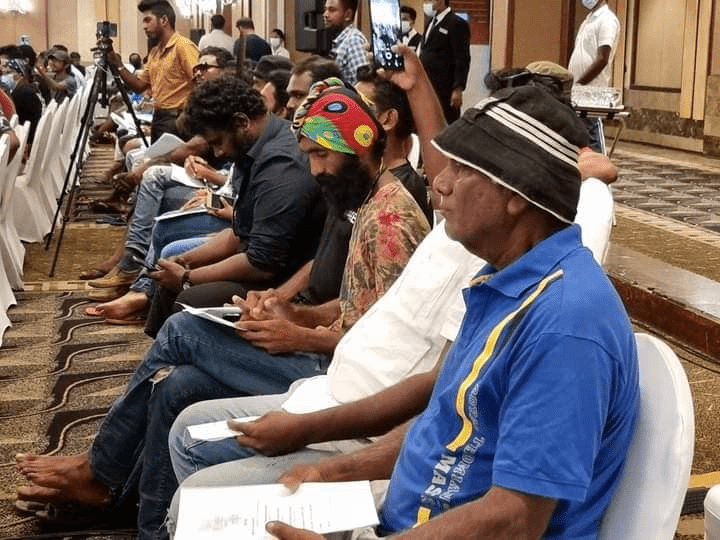
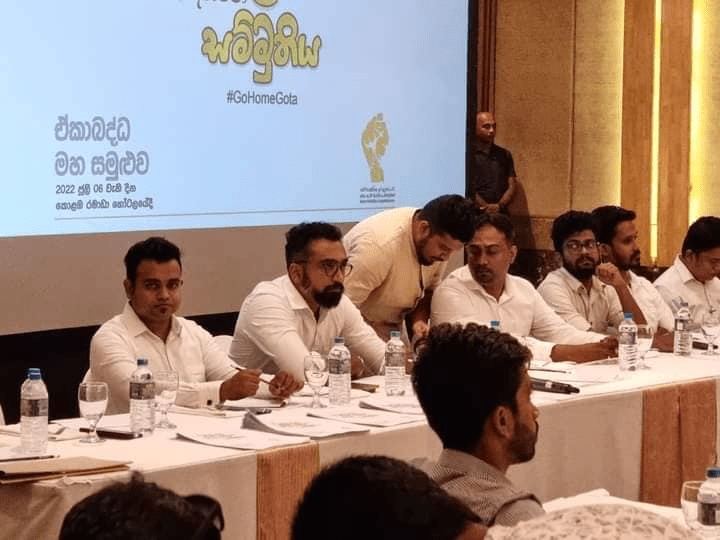
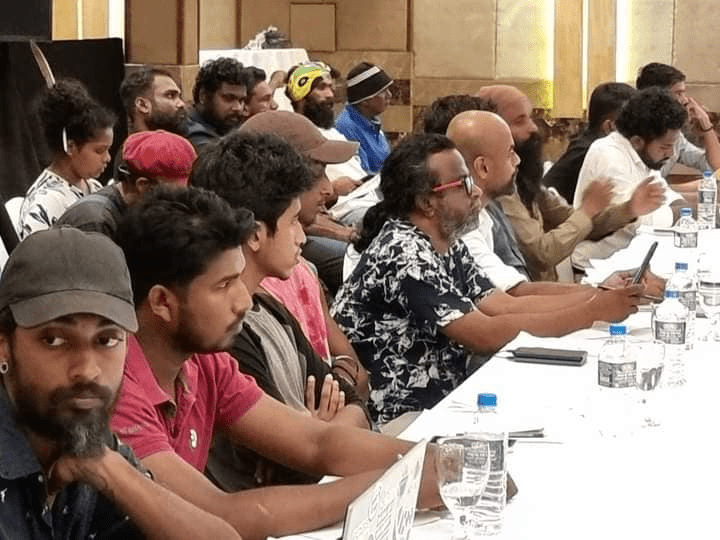
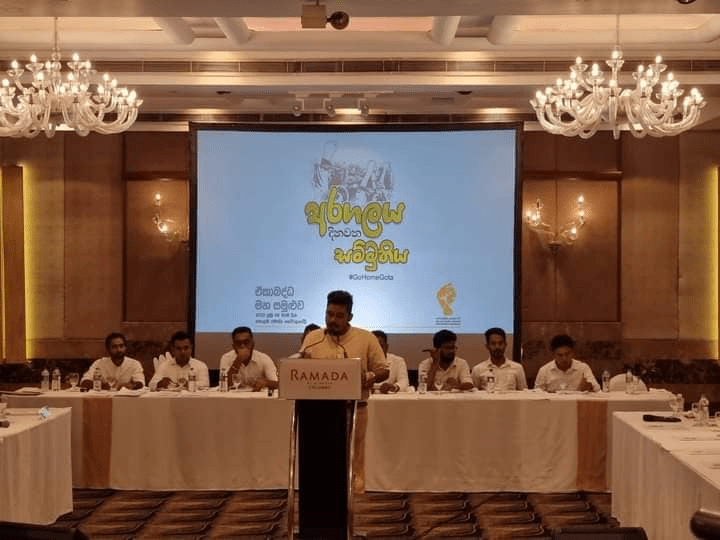
The All-Party Protesters (Sarwa Pakshika Aragalakaruwan) and political representatives of the Opposition entered a common convention to win the People’s Protest yesterday (06).

Held in Colombo, the ‘Convention to Win the People’s Protest’ was attended by Leader of the Opposition Sajith Premadasa, former President Maithripala Sirisena, Secretary General of the Sri Lanka Freedom Party (SLFP) Dayasiri Jayasekara and MPs Anura Priyadarshana Yapa, Chandima Weerakkody, Patali Champika Ranawaka, Mano Ganeshan, Palani Digambaran and Azath Salley.

A consensus consisting of four major points was revealed by the All-Party Protesters and approved by all those present.

MIAP

Sri Lankan Food Product Companies Participate in the SAITEX Trade Show 2022 South Africa

0

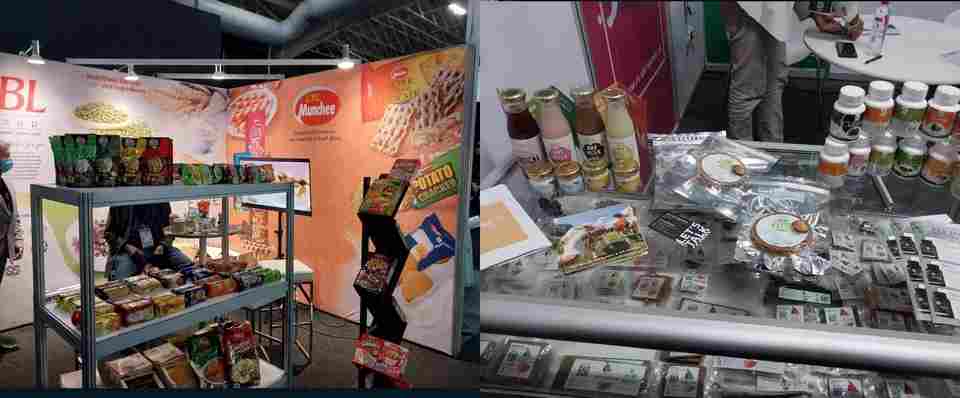
Two leading Sri Lankan food product companies participated in the South African multi-sector trade-show (SAITEX), held at the Gallagher Convention Centre in Johannesburg, South Africa from 19 – 21 June 2022. SAITEX has, over the past 27 years, brought local and international importers and exporters to take advantage of inbound and outbound trade opportunities within the African Region and facilitates international and local trade relationships, whilst providing a platform for the private sector to demonstrate the innovations, solutions and services they have to offer Africa.This year, 150+ exhibitors from 25 countries participated at SAITX attended by 4900 attendees representing importers, wholesalers, retailers, product manufacturers, distributors, agents, government bodies, and entrepreneurs.The Sri Lanka High Commission in Pretoria, South Africa facilitated the participation of the Sri Lankan companies at SAITEX.

Ceylon Biscuits Limited (CBL) promoted a wide range of confectioneries including biscuits and crackers, chocolates, coconut products, soy products, organic fruits and spices, nutri foods and cereals. These included CBL name brands Munchee, Ritzbury, Revello, Sera, Samaposha, and Lankasoy. CBL currently exports their products to 60 countries including South Africa, Ghana and Angola. CBL is now exploring expanding to South Africa, Zambia, Zimbabwe, Malawi and Mozambique in East Africa.

Silk Foods Ceylon (Pvt) Ltd exhibited their state-of-the-art vegan products, sustainable products from natural Nutraceuticals, spices, tea, and coconut related products. Novel products that attracted many visitors were Ceylon Tea Kombucha (adrink made using tea and yeast with added coconut sugar), vegan burger patty, dairy free yoghurt, plant based cheese, and oat & rice milk. The vegan food market is fairly niche in South Africa, but it has a wide prospect in next 10 -15 years acquiring a considerable share of the market.  

At a reception for officials of these companies hosted by the High Commissioner, Prof. Gamini Gunawardane, both companies reported success at the trade show, particularly CBL which reported trade inquiries and offers from six African countries and one Latin American country. The High Commissioner expressed appreciation of the country for the entrepreneurship of the two companies and their efforts, at their cost, to expand exports and earn much needed foreign exchange for Sri Lanka.

High Commission of Sri Lanka

Pretoria

06 July, 2022

How did Sri Lanka default by not paying USD 78 mn, while working on a Forex inflows “pipeline” of USD 10,700 mn?

0

There were many media reports (not contradicted by any official source) that stated that the Sri Lanka’s Central Bank Governor Dr. Nandalal Weerasinghe and Treasury Secretary Mahinda Siriwardena had announced “bankruptcy” because the Government was unable to pay a loan installment of USD 78 million to a creditor.

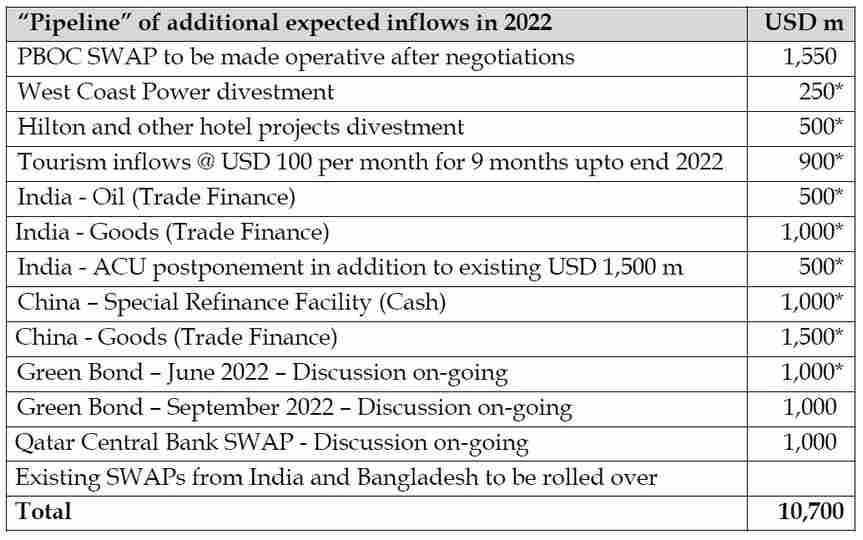
However, information is now surfacing that even while the “Default” was being announced by the above duo, the Central Bank and Ministry of Finance were working on a series of sources to obtain “bridging finance” and other inflows of a massive USD 10,700 mn.

The forex inflows in the “pipeline” for the year 2022 was as follows, (as per information at the end March 2022):

In addition, the CBSL was also expecting to absorb around USD 300 million per month through the “mandatory” surrender of the 25% of net export procedures being collected by the CBSL through the commercial banks. That would have meant that a further USD 2,700 million would have been available over the 9 months ending December 2022.

Unfortunately, the sudden “default” announcement completely disrupted all the above expected inflows, with the possible exception of the roll-over of the SWAPs that had been previously negotiated, and the surrender proceeds from the commercial banks. Of the above pipeline of items, the items marked with (*) totaling around USD 7,150 million were highly likely to materialize over the short term, and hence the decision to default payment was inexplicable and utterly reckless. That irresponsible and arguably illegal decision plunged Sri Lanka into a serious chasm of economic and financial isolation as a “bankrupt” nation, with severely damaging repercussions that will haunt the nation for many years to come.

Cricket is ‘mental healing’ for many in crisis-hit Sri Lanka

0

Sport becomes a welcome distraction for Sri Lankans looking for a break from the effects of the economic crisis in the country.

The sport of cricket has become a welcome distraction for Sri Lankans looking for a break from the effects of the economic crisis in the country – long lines to buy fuel and cooking gas and school and work disrupted because there is little access to public transport.

The cricket-crazed South Asian island nation is facing its worst economic crisis in recent memory, enduring acute shortages of food, fuel and medicine. The government has shut schools and universities and has limited fuel supplies.

“Yes, there is a problem in the country – people have become poor and helpless with all kinds of problems. We have been living a monotonous life and sometimes spent five, six, seven days in fuel lines,” said Ujith Nilantha, who watched the first test between Sri Lanka and Australia with his 10-year-old son last week in the southern city of Galle.

“There is no happiness for children, and we can’t provide what the child needs. When we watch this [cricket] it brings a mental healing,” added Nilantha, whose livelihood in the tourism sector has been disrupted after arrivals fell with the energy crisis.

Nilantha said he had planned to suggest his son play cricket, an expensive game by Sri Lanka’s standards, but his life changed quickly with the economic crisis and his plans were shattered.

“We love cricket but we can’t spend all our time on cricket, with the employment problems and all of that. But I expect to get some relief from the pressures by watching cricket.”

‘Only have cricket in times of sadness’

Cricket, a legacy from British colonisers, has become part of the local culture in Sri Lanka as in many South Asian and Caribbean nations. It has been looked upon as a unifying factor in a country torn apart by racial, religious and political discord.

Even a bloody quarter-century civil war did not hamper the progress or the following of the sport in Sri Lanka.

The now-defeated Tamil Tiger rebel group which fought for an independent state silenced their arms for the 1996 World Cup final, when Sri Lanka beat Australia to win the title.

Teenager Theekshana Nethumaksila was at the scenic cricket ground in Galle, having travelled from the neighbouring city of Matara by train.

Sri Lanka economic crisis
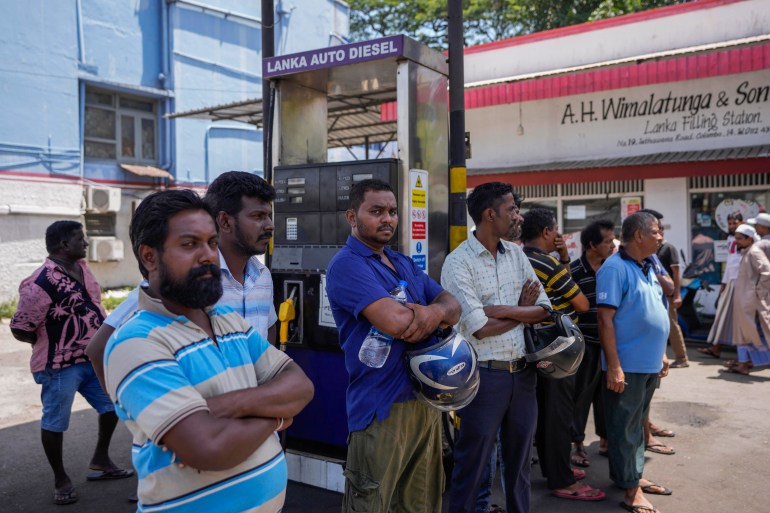
People wait to buy fuel at a fuel station in Colombo [File: Eranga Jayawardena/AP]

The 16-year-old Nethumaksila is scheduled to sit for public exams this year but is unable to prepare properly because the schools are closed.

“We only have cricket in times of sadness,” he said. “We come here to watch cricket to get it off our minds.”

Before going ahead with the tour, the Australian cricket team had to contemplate whether it was ethical to travel to Sri Lanka and play when local people were struggling even for basic needs.

The tour involved a three-game Twenty20 International (T20I) series, won by Australia, and a five-match One Day International (ODI) series, won 3-2 by Sri Lanka.

The Australian team’s decision to go ahead with the tour earned them admiration from fans who turned up at the fifth one-day match last month dressed in yellow – the colour of Australia’s ODI uniform – to thank them for entertaining them and sending a positive message about Sri Lanka to the world.

Some of the Australian players returned the favour. Led by captain Pat Cummins, many used social media to say they appreciated the outpouring of support they had received from the Sri Lankan fans.

Australia won the first Test match by 10 wickets, leaving Sri Lanka with a chance to square the series when the tour concludes with the second Test starting on Friday, also at Galle.

Source: AP

Promotional Event on “Golden Paradise Visa Scheme and Other Visa Facilities in Sri Lanka”, held in Tehran

0

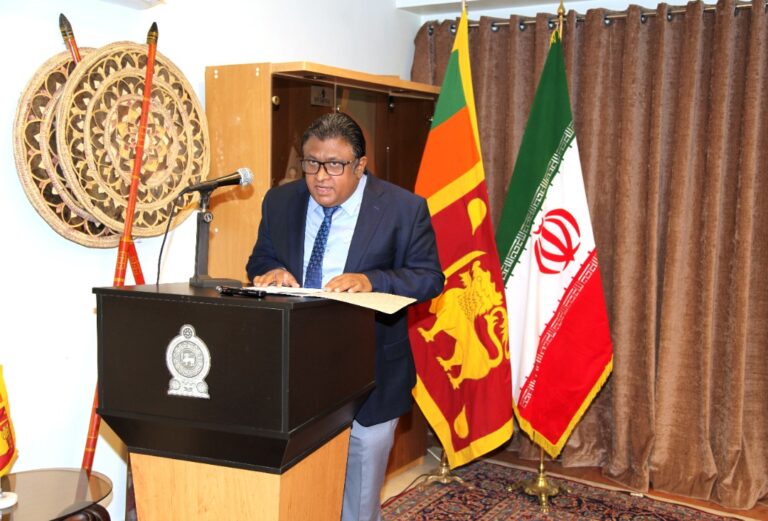
The Sri Lanka Embassy in Tehran, in collaboration with the Department of Immigration and Emigration in Sri Lanka, organized a promotional event on “Golden Paradise Visa Scheme and Other Visa Facilities of Sri Lanka” at the Chancery premises on 27 June 2022.Over 50 invites including representatives from Chambers of Commerce, key investors, prominent business personnel, leading travel agents and tour operators, airline representatives, media personnel and other invitees attended. The objective of the event was to brief invitees on the “Golden Paradise Visa Scheme and Other Visa Facilities in Sri Lanka”.

In his opening remarks, the Ambassador of Sri Lanka to the Islamic Republic of Iran, Vipulatheja Wish wanath Aponsustated that Sri Lanka welcomes foreign investors and business people to invest in Sri Lanka and provides them with the required infrastructure. He highlighted the investments and diverse tourism opportunities offered by Sri Lanka. The Sri Lankan Envoy said that the Government of Sri Lanka was focused on promoting the investment and tourism sectors through infrastructure development and liberalization of visa regimes. Contributions by foreign investors and businessmen will help rebuild the economy of Sri Lanka.

During the comprehensive presentation on visa facilities in Sri Lanka, the Ambassador stated that Sri Lanka has recently launched the “Golden Paradise Visa Scheme” for interested foreign investors and business personnel to invest, live and study in Sri Lanka. He highlighted that the “Golden Paradise Visa Program” is a long term residence visa scheme dedicated to investors and their family members to enjoy the benefits of Sri Lanka and under the Visa Scheme.

At the interactive session, the Ambassador expressed that Iranian business partners in humanitarian trade could bring their business engagements beyond Iran and West Asia to South Asia, particularly Sri Lanka, by utilizing the “Golden Paradise Visa Scheme” and other visa facilities. He also thanked all stakeholders of the Iran tourism sector for their support to retain tourist arrivals from Iran to Sri Lanka.    

While thanking the Sri Lanka Ambassador for his invitation to participate in the visa promotional event at the Embassy, prominent Iranian investor and businessman Alireza Bardaei expressed that the event was an opportunity for interested investors and tourists to sort out their issues and obstacles. On behalf of all participants, he assured to disseminate the Sri Lanka’s visa liberalization regimes among the relevant sectors in Iran encouraging them to utilize the Golden Paradise Visa.

The participants were treated to a high tea while a documentary titled the “Best Destination in Asia” was also screened.

Sri Lanka Embassy

Tehran

06 July, 2022

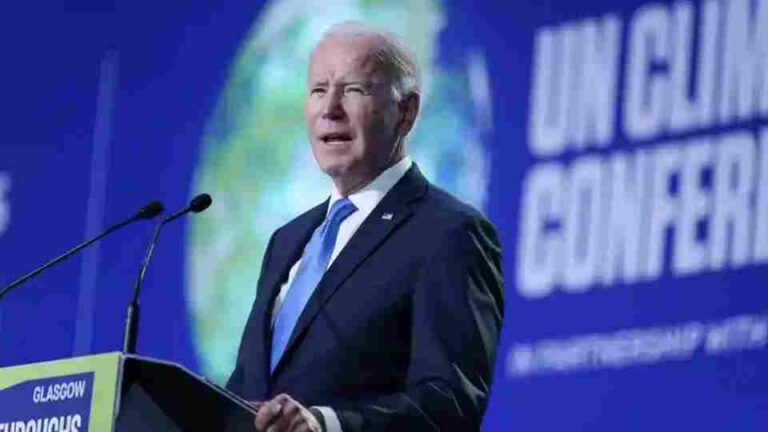
Global dismay as supreme court ruling leaves Biden’s climate policy in tatters

0

Joe Biden’s election triggered a global surge in optimism that the climate crisis would, finally, be decisively confronted. But the US supreme court’s decision last week to curtail America’s ability to cut planet-heating emissions has proved the latest blow to a faltering effort by Biden on climate that is now in danger of becoming largely moribund.

The supreme court’s ruling that the US government could not use its existing powers to phase out coal-fired power generation without “clear congressional authorization” quickly ricocheted around the world among those now accustomed to looking on in dismay at America’s seemingly endless stumbles in addressing global heating.The US supreme court has declared war on the Earth’s future | Kate Aronoff

The decision “flies in the face of established science and will set back the US’s commitment to keep global temperature below 1.5C”, said Saleemul Huq, director of the International Centre for Climate Change and Development in Bangladesh, in reference to the internationally agreed goal to limit global heating before it becomes truly catastrophic, manifesting in more severe heatwaves, floods, droughts and societal unrest.

“The people who will pay the price for this will be the most vulnerable communities in the most vulnerable developing countries in the world,” Huq added.

The “incredibly undemocratic Scotus ruling” indicates that “backsliding is now the dominant trend in the climate space,” said Yamide Dagnet, director of climate justice at Open Society Foundations and former climate negotiator for the UK and European Union. António Guterres, the secretary general of the United Nations who has called new fossil fuel infrastructure “moral and economic madness”, said via a spokesman that the ruling was a “setback” at a time when countries were badly off track in averting looming climate breakdown.

In the 6-3 ruling, backed by the rightwing majority of justices, the supreme court did not completely negate the US Environmental Protection Agency’s (EPA) ability to regulate emissions from coal plants. But it did side with Republican-led states in stating that the government could not set broad plans to shift electricity generation away from coal because of the nebulous “major questions doctrine” that demands Congress explicitly decide on significant changes to the US economy.

“The court appoints itself, instead of Congress or the expert agency, the decision-maker on climate policy,” wrote justice Elena Kagan in an unusually blunt dissenting opinion. “I cannot think of many things more frightening.”

Al Gore, the former US vice-president said the ruling was the “result of decades of influence and coordination by the fossil fuel lobby and its allies to delay, obstruct, and dismantle progress toward climate solutions”.

For Biden, who called the ruling “devastating”, the court’s decision is just the latest crushing jolt to what was billed as a “climate presidency” when he was elevated to the White House.

Landmark legislation to bolster clean energy has stalled in Congress, largely due to the opposition of Joe Manchin, a centrist Democrat who has a coal-trading firm, and is perilously close to not being resurrected in time before midterm elections later this year in which Democrats are expected to lose their tenuous hold on Congress. The US, almost uniquely among major democracies, still has no national climate or energy policy in place.

Biden’s promise to end oil and gas drilling on public land has been unfulfilled, while Russia’s invasion of Ukraine has caused gasoline prices to leap, prompting the president to urge oil companies to ramp up production, to the horror of climate campaigners.

The president has vowed that the US will cut its emissions in half by 2030 but this goal, and America’s waning international credibility on climate change, will be lost without both legislation from Congress and strong executive actions. Both of these factors remain highly uncertain, with the supreme court’s ruling sharply restricting the latter option. Gina McCarthy, the White House’s top climate adviser, has admitted the administration will have to get “creative” in forcing down emissions.

“Congress acting on climate was important before this decision, now it’s even more important,” said John Larsen, partner at Rhodium group, a climate and energy analysis organization. According to Rhodium, the supreme court ruling is not fatal to US climate targets but there are still 1.7bn to 2.3bn tons of greenhouse gases that will need to be prevented on top of current policy if the 2030 goal is to be met.

“The EPA still has authority, although it is more narrow than it was, so they need to get moving and crank out some rules because there’s not a lot of time left,” Larsen said.

“It’s entirely possible the US will meet its emissions target but we have just eight years until 2030. The ball needs to start rolling very fast, very soon, if we are to get there. Everyone needs to really step up and start delivering.”

COPE to take stringent action against state officials failed to obey orders

0

Stringent disciplinary action is to be taken against officials of state institutions who have failed to abide by the orders given by the Committee on Public Enterprises (COPE).

The COPE has compiled a report on the investigations carried out by the members of the committee.

This report on the orders and decisions related to several state institutions including SriLankan Airlines, Central Bank of Sri Lanka, State Timber Corporation, People’s Bank, Development Lotteries Board, Building Materials Corporation, Litro Gas Lanka Limited and Litro Gas Terminal Lanka (Private) Limited was presented on Tuesday 04.

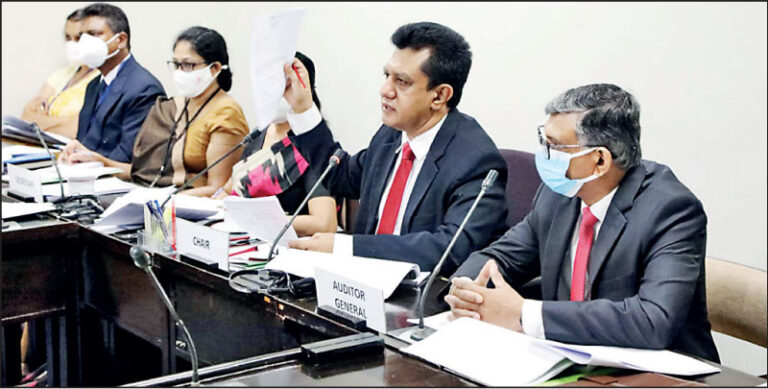
The Chairman of the Committee on Public Enterprises (COPE) and Member of Parliament (Prof) Charitha Herath said that the Parliament will focus on taking special measures against officials who do not implement the recommendations and decisions made by COPE.

He mentioned this at a special meeting of the Committee on Public Enterprises which was held in Parliament yesterday (04).

The meeting was held especially with the participation of the members of the committee and the views of its members on 3 main issues were obtained, the statement said.

Accordingly, the review of the progress made pertaining to COPE investigations conducted during the period from February 23rd, 2022 to date was considered at the meeting.

Accordingly, the Chairman of COPE stated that the investigations carried out during this period have been complied into a report and copies of the report have been given to the members of the committee.

The chairman of the committee further pointed out that certain reports related to certain decisions given by the committee have not yet been given to the committee by these institutions.

The Members of Parliament who were present, pointed out that strict action should be taken against the officials who do not implement these decisions. They pointed out that the Parliament and the committee should intervene further regarding the matter.

The members further said that the public should be aware that this is a place which performs important functions going beyond media shows or restricting itself to simple chatter.

Thus, the Chairman of the Committee stated that the Committee is working according to the legislative powers received in terms of the Standing Orders and the Constitution.

He also pointed out that identified important institutions will be called back and special measures will be taken as Parliament in the future.

Furthermore, COPE decided the dates related to the meeting aimed at specifically discussing the implementation of public debt and financial policies of the Central Bank.

Accordingly, COPE decided to hold a special meeting to discuss on this regard on the 19th, 20th, 21st and 22nd of this month. The mutual agreement resulted in the summoning of officials including the former Governors of the Central Bank, former secretaries of the Ministry of Finance.

Furthermore, it was decided to have a special meeting of COPE on August 02, 03, 04 and 05 to look into the electricity generation, purchase, distribution and projects of the Ceylon Electricity Board.

In addition, it was also decided in this meeting to call the Ceylon Petroleum Corporation to the COPE on the 7th of this month.

Airport and Aviation Services Ltd reduces losses amidst economic challenges

0

State-run Airport and Aviation Services (Sri Lanka) Ltd entrusted with the task of Airport operations is running at a total loss of Rs. Rs. 755 million last year as the country gradually opens up for international traffic.

Coupled with the reduction of administrative cost and Net Finance cost, the bottom-line impact of the AASL shows an improvement in 2021 having a reduction of total loss to Rs. 755 million in 2021 from the loss of Rs. 3,733 million in previous year, the company balance sheet showed.

Operational revenue of the Airport and Aviation Services (Sri Lanka) Limited (AASL) has declined by 5 percent to Rs. 7.4 billion in 2021.

The revenue streams of AASL mainly comprise the aeronautical operations and non-aeronautical activities amounted to Rs. 2.3 billion and Rs. 5.1 billion, respectively in 2021.

However, the other operational income of AASL in 2021 has shown a trivial declined to Rs. 3.8 billion compared to Rs. 3.9 billion in 2020.

Airport and Aviation Services (Sri Lanka) Limited Airport operation is one of the key industries which facilitates for connecting people, countries, and cultures, providing access to global markets by generating trade and tourism, and forging ties between developed and developing countries.

Minister of Ports, Shipping and Aviation Nimal Siripala de Silva noted that the will initiate action to expand aviation sector by allowing new companies to operate domestic flights in the country.

He noted that the Airport Aviation Services Sri Lanka Limited has been entrusted with the task of selecting these companies after calling expressions of interest .

AASL will have to generate its own income by implementing projects aimed at developing the aviation sector he added.

The year 2020 and 2021 proved difficult for the aviation industry’s existence due to the global spread the COVID-19 disease.

Majority of aircraft operations around the world have been constrained or grounded, with very few flight movements recorded over the years.

According to the International Air Transport Association (IATA), net industry losses approximated to US $ 51.8 billion in 2021, demand was around 40 percent of 2019 levels in 2021, total passenger numbers were around 2.3 billion in 2021.