Home Blog Page 2218

Chen Duxiu – Co-Founder and First General Secretary of the Chinese Communist Party (CCP)

0

Compiled by Lionel Bopage
27 May 2022

Was His Expulsion the Greatest Miscarriage of Justice in the history of the CCP?


Chen Duxiu was a revolutionary socialist, educator, philosopher and author, who with Li Dazhao co-founded the Chinese Communist Party (CCP) in 1921. From 1921 to 1927, he served as the first General Secretary of the CCP. Chen was a leading figure in both the Xinhai Revolution that overthrew the Qing dynasty and the May Fourth Movement for scientific and democratic development in the early Republic of China. He studied French, English, and naval architecture and went to Japan under a government scholarship. While in Japan, socialist ideas and the growing Chinese dissident movement influenced him. Chen helped setting up two radical political parties there, but refused to join a Revolutionary Alliance, which he considered as narrowly racist.

In the late 19th century China, Government corruption was rampant and led to an economic crisis and widespread impoverishment. He was critical of the corrupt bureaucracy and became increasingly influential within the revolutionary movement, which was agitating against imperialism as well as against the Qing government. He founded the Anhui Patriotic Association in 1903, the Yue Fei Loyalist Society in 1905 and became an outspoken writer and political leader during the time of the 1911 Wuchang Uprising. This uprising started the Xinhai Revolution that led to the collapse of the Qing Dynasty. In 1912, Chen became secretary general to the new military governor of Anhui, while serving as the dean of a local high school. There he contributed to establishing a student organization, pro-rebel Qing soldiers and secret society members.

Chen established the influential Chinese periodical New Youth for this purpose. Believing social progress cannot be achieved without accurately reporting on the prevailing social issues and deficiencies. Chen introduced many new ideas into popular Chinese culture. Confucianism was unacceptable to him because it preached orthodoxy of thought, while rejecting freedom of thought and expression. It advocated submissive compliance to the inequitable status quo. Chen rejected the concept that the individual was the basic unit of society. Instead of Confucianism, Chen advocated progressive social and political values; independence instead of servility; cosmopolitanism instead of isolationism; utilitarian beliefs instead of impractical traditions; and scientific knowledge instead of visionary insight.

In January 1917, Chen joined the Peking University as its dean. As a professor and dean, he pursued his anti-Confucianism modern ideas with vigour. For Chen “socialism is a theory of social revolution succeeding political revolution; its aim is to eliminate all inequality and oppression.” In 919, conservative opponents at the university forced him to resign. He was jailed for three months by the Peking authorities for distributing “inflammatory” literature that demanded the resignation of pro-Japanese ministers, and government guarantees for the freedoms of speech and assembly.

Chen became a Marxist, being impressed that the Russian Revolution of 1917 as a way of modernizing an underdeveloped country. In May 1920, with a handful of followers, Chen founded a communist group and prepared to establish the CCP. The first representative conference of the CCP was held in July 1921. Chen was elected as secretary general and remained so as the undisputed leader for seven years. He was often regarded as “China’s Lenin”. Chen developed a cooperative, which later became a troublesome relationship with the Communist International (Comintern). Over the next decade, the Comintern sought to use the CCP as a tool of Soviet foreign policy, leading to policy disagreements between CCP leaders and Comintern advisors.

Chen was not confident of the advantage of collaborating with the Kuomintang, but he had to reluctantly carry out the Comintern’s instructions to do so. He was even elected to the Central Committee of the Kuomintang. Nevertheless, Chen came into conflict with Mao Zedong in 1925 over Mao’s essay “An Analysis of Classes in Chinese Society”. While Chen believed that the focus of revolutionary struggle in China should primarily be about workers, Mao placed primacy on peasants. During the last years of his life, Chen denounced Stalin’s dictatorship, and held that various democratic institutions including independent judiciary, opposition parties, free press, and free elections were important and valuable. Because of Chen’s opposition to Mao’s interpretation of Communism, Mao believed that Chen was incapable of providing a robust historical materialist analysis of China. This dispute would eventually lead to the end of Chen and Mao’s friendship and political association.
In 1927, Chen with other high-ranking Communists, including Mao Zedong and Mikhail Borodin, closely collaborated with the Nationalist government in Wuhan. Under this influence, the Wuhan government subsequently carried out certain land reform policies. However, considering this as a provocation, various Kuomintang aligned generals attacked the regime.

Chen was forced to resign as General Secretary in 1927, due to his public dissatisfaction with the Comintern’s order to disarm. This order led to the deaths of thousands of Communists, and is known as the Shanghai massacre of 1927. Also, Chen disagreed with the Comintern’s new focus on peasant rebellions.

After the CCP – Kuomintang collaboration fell apart in 1927, the Comintern blamed Chen, and systematically removed him from all positions of leadership. In 1929, he was expelled from the CCP. Later on, he became associated with the International Left Opposition of Leon Trotsky. Like Chen, Trotsky opposed many of the policies of the Comintern, and publicly criticized the Comintern’s effort to collaborate with the Nationalists. Chen eventually became the voice of the Trotskyists in China, attempting to regain support and influence within the party, but failed. Chen and Trotsky started a complex relationship that was not known in the west, which revealed the developments of Trotskyism in China. Currently there is a revived interest into this interesting relationship.

In 1932, Chen was arrested by the government of the Shanghai International Settlement, where he had been living since 1927, and extradited to Nanjing. In 1933, he was sentenced to 15 years in prison by the Nationalist government, but was released on parole in 1937 after the outbreak of the Second Sino-Japanese War. Chen was one of the few early leaders of the CCP to survive the turmoil of the 1930s, but he was never able to regain any influence within the party he had founded. During the last decade, he had to spend an obscure life. During the long March 0f 1934-35, the Communists had to flee the cities where China’s fledgling industrial working class was concentrated and seek refuge in remote rural areas. There they were able to mobilize the support of peasants. This was naturally taken as vindicating Mao’s position in his debate with Chen.

During the Long March, Mao Zedong emerged as the leader of the CCP.
When Chen was released from prison, he refused multiple offers of positions by the Kuomintang. He said, despite the importance of the war effort “Chiang Kai-shek killed many of my comrades. He also killed my two sons. He and I are absolutely irreconcilable”. Afterwards, Chen met with the heads of the Nanjing Office of the CCP. An attempt was

Lanka SSL sweeps four gold awards at the National Convention on Quality and Productivity

0

Photo Caption:

  1. Seen here are the teams at Lanka SSL with their awards

Lanka Special Steel Limited (Lanka SSL), a trusted name in wires and a fully owned subsidiary of E.B. Creasy & Company PLC, continued its winning streak with its teams Awanetha, Target, Shakthi, and Verge taking home four coveted gold awards at the recent National Convention on Quality and Productivity (NCQP) 2021.

Organized annually by the Sri Lanka Association for the Advancement of Quality and Productivity (SLAAQP), the event was held under the patronage of His Excellency the Ambassador of Japan to Sri Lanka Mizukoshi Hideaki. Other dignitaries include Dr. Sunil Jayantha Nawaratna, Sunil G Wijesinha, and the President of SLAAQP Vipul Kularatna.

The event saw the participation of over 250 teams from across the country competing with their presentations, showcasing the various activities done to improve efficiency and productivity. The four teams at Lanka SSL proved their exceptional strengths and values in these areas, and their confidence, hard work, and dedication was awarded with the highest recognition.

The members who participated and represented Lanka SSL include Madusanka, Chamara, Kosala and Dinesh (Team Awanetha), Nifran, Susantha and Oshan (Team Target), Amith, Premarathna, and G T Madusanka (Team Shakthi), and Sagara, Supun, Gihani, Asanka, Kasuni and Sachini (Team Vager).

Lanka Special Steels has a good track record of participating in conventions both locally and internationally over the last 10 years. We are extremely proud to see the enthusiasm and the commitment of our valuable employees, especially at the shop floor level, and their initiatives to willingly contribute towards continuous improvement leading to productivity by working together with their supervisors.

The outcome of winning four awards at this convention is something commendable and it is something we should be proud of. The achievement comes bigger this year around, having won just one gold award at the last year’s edition of the National Convention on Quality and Productivity,’ said Director / CEO Pravin De Silva.

Lanka SSL, the only manufacturer for SLS certified hot-dipped galvanized (Gi) wire and barbed wire in Sri Lanka, is consecutively recognized for its efforts in quality, innovation, and excellence. Earlier this year, the company was awarded the first runner-up in the Large Category at the National Business Excellence Awards 2021 and was named Winner in the Manufacturing– Other Sector. Last year, it won the National Gold Award- Extra Large Category (Manufacturing Sector) and the Top Ten Award at the CNCI Achiever Awards 2020 for Industrial Excellence

Major Shipping Lines evade  Colombo Port in political crisis  

0

Major international shipping lines have removed the Colombo Port from the list of its service ports following the failure to provide required services for ships arriving at the Port on May 11  due to workers strike and the ongoing  political crisis.   

Due to the ongoing political unrest in Sri Lanka, shipping lines are going for transshipment routes that do not pass through the port of Colombo for transport of goods to and from Chattogram port

.

The main line operators are now looking to ports in India, Singapore and Port Kelang.

Meanwhile, feeder vessel operators who still use Colombo port have said the volume of goods transported through this port has decreased significantly, and it might drop further in future.

Colombo port was temporarily closed on  May 10 due to the recent political unrest in Sri Lanka. Unable to dock at Colombo port, five mother vessels of Mediterranean Shipping Company (MSC) docked at Ennore Port in India.

Main liner operators such as YML – SNS and PS Service, EMC – AEF Service and WHL CI6 have stopped services to Colombo Port after port operations halted on  May11, owing to the political crisis, according to port authority  sources.

On May11 , these vessels experienced a delay and had diverted to Ennore Port,India after being unable to dock in the Colombo Port.

It was also announced that OOCLand CMA CIX3 services will continue operations, but the carrier may decide to cancel services at any given moment. “We are closely following with carrier ad-hoc basis and will ensure to inform regarding any service changes or cancelation the liners,” they announced.

Sri Lanka Port’s Authority (SLPA) trade unions said that some main liners left Colombo Port as a precautionary measure following their joint announcement on launching a strike on  May11 if President Gotabaya Rajapaksa does not step down. 

About five ships diverted, General Secretary of the All Ceylon General Port Employee Union, NiroshanGorakanage said. According to reliable sources, even MSC skipped two vessels from calling port at Colombo two weeks ago.

SLPA Chairman Dr. Prasantha Jayamanna confirmed that this did happen on  May 11exactly till noon, but assured that operations at the terminals were now smooth.  

In the meantime, a joint statement by SLPA and its stakeholders said that the Port being identified as an essential service, catering to vital transshipment, exports, imports and related logistics services is receiving .

It is assured of an uninterrupted supply of electricity and fuel. Shipping services are essential and contribute immensely to the Sri Lankan economy and hence the shipping community stresses the importance of Colombo Port as a regional transshipment hub.

Inter-terminal trucking and transport for logistics services to move domestic laden and empty containers are receiving priority and connections for transhipment containers are able to make their targeted on carriers without misses. 

Clearance of imports and export shipments are moving at desired levels notwithstanding delays in the clearance of some import cargoes due to a shortage of foreign currency.

Trade unions acknowledge the vital importance of the sector for economic sustenance and revival and the Management of SLPA and the private terminals, CICT and SAGT are confident they would be in a position to meet the economic challenges and ensure service delivery to customers.

In terms of performance, Colombo Port continues to grow and figures for the first four months up to April 2022 reflect an overall growth in volumes of 100,356 TEU (4.3 per cent) and in transhipment 92,099 TEU (five per cent) over the same period of 2021.

It was  recording steady progress while continuing to play a pivotal role as a regional transhipment hub with strategic intent and plans being developed to expand capacity and services to evolve to a regional shipping second to none, the joint statement said.

Further, the Management of SLPA assures global shipping lines and operators of container and conventional services of operations will be carried out uninterrupted, normally and in expected levels at the Port of Colombo despite the economic and political crisis situation, the statement added. 

Central Bank  takes Extraordinary Measures to support the Banking Sector

0

The Central Bank, considering the prevailing macroeconomic conditions and its impact on the banking sector, has decided to implement the following regulatory measures to support the banking sector to facilitate effective financial intermediation and the flow of credit to the economy, whilst ensuring the soundness of the banking sector.

Sri Lankan banking sector maintains a Capital Conservation Buffer (CCB) of 2.5% to ensure that banks have an additional layer of usable capital that can be drawn down during stress times. 

An industry wide flexibility is granted for banks to drawdown the CCB (up to 5%), if needed, subject to restrictions on distribution to shareholders/ repatriation of profits and submission of a capital augmentation plan to rebuild CCB during a period up to three years.

The current deadline for licensed banks to meet the enhanced minimum capital requirement (31.12.2022) is extended up to 31.12.2023. 

Licensed banks which are unable to meet the minimum capital requirement by 31.12.2022, need to submit their capital augmentation plan, including plans to consolidate or merge with suitable financial institutions, by 12.2022 and these licensed banks too shall refrain from distribution of dividends/ repatriation of profits until the minimum capital requirement is met.

Licensed banks are encouraged to move to approaches such as The Standardised Approach (TSA) or alternative TSA for computation of risk weighted assets for operational risk for the purposes of computing the Capital Adequacy Ratio, subject to supervisory

Licensed banks are given the flexibility to stagger the unrealised mark to market loss on Government Securities denominated in LKR on account of the recent interest rate hike for Capital Adequacy purposes until Q2 of 2024, subject to Licensed banks are granted flexibility on the treatment for Other Comprehensive Income (OCI) for Capital Adequacy purpose .

The deadline for licensed banks to submit the document on Internal Capital Adequacy Assessment Process (ICAAP) for 2022, to the Central Bank of Sri Lanka is extended by one month, until 30.06.2022.

As a short-term measure to support licensed banks to adjust their liquidity profiles, licensed banks are provided with the flexibility to operate maintaining the Liquidity Coverage Ratio (LCR) and Net Stable Funding Ratio (NSFR) not lower than 90% up to 09.2022.

Furthermore, the Central Bank of Sri Lanka, on 06 May 2022 decided to restrict certain discretionary payments of licensed banks, such as declaring cash dividends and repatriation of profits, until the financial statements for the year 2022.

These measures  are audited by its External Auditor, engaging in share buy backs, increasing management allowances and payments to the Board of Directors until 31 December 2022 with a view to strengthening the liquidity and capital positions of licensed banks under these exceptional circumstances.

It was introduced with the aim of providing the licensed banks with more flexibility and opportunities to operate in these challenging conditions and support economic recovery, while taking measures to improve their safety and soundness. 

The Central Bank will periodically review the implementation of these policy measures and expects licensed banks to avail these measures in the best interest of the customers and the economy at large, while supporting the banking sector to remain resilient.

UK begins talks with Paris Club on Sri Lanka Debt Restructuring   issue 

0

Sri Lanka is getting ready for its debt restructuring process with bond holders following the appointment of international financial and legal advisors Lazard and Clifford Chance to negotiate  debts  with them.

Cabinet of Ministers has given its approval to hire this firm by paying a massive fee of US$ 5 -6 million at time of severe dollar crisis as the country needs to restructure its massive debt of $ 6.9 billion this year and it has paid $ 500 million in January  2022   

The United Kingdom (UK) is in talks with Paris Club members on potential solutions to Sri Lanka’s unsustainable debt.The Paris Club is a group of officials from major creditor countries whose role is to find co-ordinated and sustainable solutions to the payment difficulties experienced by debtor countries

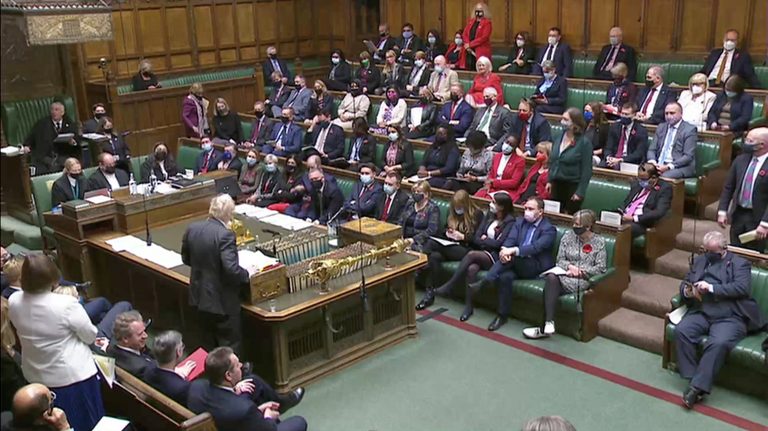
UK Parliamentary Under-Secretary at the Foreign, Commonwealth and Development Office, Vicky Ford said the UK Government is closely monitoring the situation in Sri Lanka including food security and livelihoods.

“We encourage a peaceful, democratic, and inclusive approach to resolving the current political and economic challenges,” she told the UK Parliament yesterday (Wednesday).

She said that in April, the World Bank (WB) agreed to provide US Dollars 600 million in financial assistance, and the UK understands there are discussions to extend this support.

“The UK is a major donor to the WB and continues to engages with international financial institutions on Sri Lanka’s economic situation,” she said.

She also said that the UK welcomes the start of in-depth discussions with the International Monetary Fund (IMF) on the reforms needed to bring the economy back to a sustainable path.

“These negotiations are likely to take up to 6 months. Sri Lanka has requested support from the IMF, however, at present no Sri Lanka proposal has been shared with members. 

When one is made available, we will scrutinise it carefully against the IMF criteria alongside other IMF members. 

In the meantime, discussions are underway with several countries to obtain bridge financing in order to maintain flows of essential imported goods. 

The UK is also working closely with fellow Paris Club members to discuss potential solutions to Sri Lanka’s unsustainable debt levels in the event that an IMF programme is agreed,” Vicky Ford said.

Sri Lanka’s 2022 debt service payments are 6,919 million dollars of which 2.72 billion US dollars are owed to domestic holders close to 40 percent of total payments.

It has to pay 6,919 million US dollars in interest and capital payments of foreign currency debt in 2022 out of which 4,197 million was due to foreign holders.

About 2,722 million dollars are owed to domestic holders including in Sri Lanka Development Bonds, foreign currency banking unit borrowings and domestic holdings of international sovereign bonds.

A 500 million US dollar bond was repaid in January 18 and was also planning to repay a billion US dollar bond falling due in July 2022

New administration begins feasibility study at Mannar basin for oil exploration

0

The new administration has taken a major step towards oil exploration in the Mannar basin by advertising identified plots for further studies on oil exploration based on the research concluded in the area last year.

It is planning to undertake a feasibility study on oil exploration in the Mannar Basin, a shallow bay part of the Laccadive Sea in the Indian Ocean, which has about 5 trillion cubic feet of natural gas, enough to meet the energy needs of the island nation for the next six decades, a media report has said.

A natural gas field was reportedly discovered for the first time in 2011, but the country has not yet capitalised on this treasure trove, which could potentially solve Sri Lanka’s energy requirements, official sources said.

Sri Lanka will auction an oil block in the Mannar basin where traces of natural gas had already been found in early 2022, Energy Ministry said.

Cairn Lanka, a unit of Cairn India, found the presence of natural gas in two exploration wells labelled Dorado and Barracuda, but did not declare a commercial discovery to develop. LNG prices at the time were lower than now. Sri Lanka was also working with Schlumberger, an oil and gas services company, to re-analyze M2 oil exploration data.

“This is at no cost to the government,” the Ministry said. The petroleum exploration office had engaged an experienced consultant to prepare a feasibility report on the Dorado well.

The Dorado-91H/1z well was drilled to 4741 metres and had found 24 metres of hydrocarbon-bearing Cretaceous sandstone in three zones between the depths of 4067 metres and 4206 metres.

They were said to be gas bearing with some liquid hydrocarbon potential. Barracuda-1G/1 was drilled to a depth of 4741 metres and had fond 24 metres of hydrocarbon-bearing Cretaceous sandstone in three zones between the depths of 4067 metres and 4206 metres.

The reservoirs are mostly gas-bearing with some additional liquid hydrocarbon potential.

Power and Energy Minister Kanchana Wijesekera announced that the Petroleum Resources Development Secretariat (PRDS) would soon advertise the identified plots in Mannar basin for exploration activities.

According to PRDS, there were estimated 5 billion barrels of fuel and about 5 trillion cubic feet of natural gas in the Mannar basin.

It is sufficient to meet the country’s fuel requirement for about 60 years, and which could be utilised to increase the country’s power supply to 1130 kilowatts.

The natural gas production alone is estimated to bring approximately US$ 200 billion to the country in various sectors within a span of 25 years.

Although, there’s a possibility of finding economically viable deposits, Wijesekera noted that no assurance could be given in that regard.

Despite calling for proposals multiple times, PRDS is yet to find a reliable investor for the identified petroleum plots in the Mannar basin.

‘China has always come to Sri Lanka’s aid in times of need’:envoy

0

Editor’s note:
China and Sri Lanka have long maintained a close relationship of mutual support and understanding, regardless of how the international situation changes. In recent years, the two countries have seen steady development in bilateral economic and trade cooperation, especially under the Belt and Road Initiative (BRI). However, since Sri Lanka fell into an economic crisis, some Western forces have been seeking to undercut China-Sri Lanka bilateral ties with the “debt trap” and other narratives. In an exclusive interview with the Global Times (GT), Sri Lanka’s Ambassador to China Palitha Kohona (Kohona) debunked such narratives and talked about China’s assistances to his country during such a difficult time and future bilateral cooperation. 

GT: News coverage of Sri Lanka’s economic crisis has attracted global attention. And the government previously said that the crisis would last at least two more years. How serious is the current situation in Sri Lanka? What does the country need the most at the moment? What are the main reasons for the crisis?

Kohona: Sri Lanka is confronting an unprecedented crisis at present. International media have given this crisis a wide coverage, including in China. The current situation in Sri Lanka has been precipitated largely by the COVID-19 pandemic, which has negatively impacted many other countries. 

The pandemic resulted in shrinking Sri Lanka’s tourism industry substantially, which had been contributing 12-15 percent of the national income. It also resulted in the contraction of our export markets, mainly in Western countries and China. Over 60 percent of our garment production was exported to Europe and the US. The Pandemic also caused a reduction of the remittances of Sri Lankan workers abroad. These were compounded by inflation and shortages of fuel, cooking gas, food and medicines, which are sourced from abroad.  

This cocktail of negative factors resulted in widespread disenchantment, which in turn gave rise to a raucous demand for the resignation of the government, including the President. In the last two weeks, the prime minister and the government have resigned and a new prime minister and a cabinet have been appointed. We hope that the situation will return to normalcy quickly.

At the moment, the country critically needs petrol, diesel, cooking gas, food items and medicines. Speeding up the renewable energy program of the government will assist substantially to address energy shortages, and the renewable energy targets of the government.

GT: In terms of emergency financial assistance from the IMF, how much does the Sri Lankan government need to overcome current difficulties? In what areas the assistance will be used?

Kohona: Sri Lanka has approached the IMF for relief and discussions have commenced. It’s difficult to say how much by way of international funding will be required by Sri Lanka. The figure of at least $5 billion has been mentioned. Immediately, Sri Lanka needs funding to cover essential imports and to meet its debt repayment commitments. China, being a key member of the IMF, will be significant factor in Sri Lanka’s approach to the IMF.

GT: The China International Development Cooperation Agency vowed in April to offer emergency humanitarian assistance to Sri Lanka. What kind of assistance will the agency provide? What is your assessment of the significance of China’s assistance to Sri Lanka?

Kohona: The China International Development Corporation Agency (CIDCA) has offered 500 million yuan as emergency assistance. The proposed items to be covered by this package will include diesel, fertilizer, food and medicine. All Sri Lankans are grateful for this offer. We hope that larger amounts will be forthcoming given severity and urgency of the problem. The CIDCA has become a major player in South-South Cooperation and we look forward to working with the CIDCA in addressing our crisis.

GT: Some Western media outlets said that Sri Lanka has been caught in a “debt trap” by China. What is your response to such claims?

Kohona: The new Prime Minister Ranil Wickramasinghe has expressed his gratitude to China for the offer of assistance. China has always come to Sri Lanka’s aid in times of need and this is undoubtedly one of those times. China stood by us when Sri Lanka was threatened by a blood thirsty terrorist group and later when the epidemic threatened to spin out of control. Today, thanks to Chinese assistance, the pandemic is substantially under control. China also made the key contribution when we were seeking to recover economically after the terrorists were defeated. We are confronting an existential threat to the state now. We need China’s helping hand. The prime minister is likely to reach out to China again.

With regard to the claims of Chinese “Debt Trap Diplomacy,” one needs to distinguish between self-serving propaganda and reality. Only around 10 percent of Sri Lanka’s external debt is owed to China. The rest is owed to other bilateral donors, international financial institutions and multinational agencies. In the circumstance, if there is a trap, one cannot say that it was China which set the trap. Chinese loans were obtained at concessional rates. It is to be remembered that it was Sri Lanka which approached China for funding assistance to develop its infrastructure. In any event the current crisis did not result from a commitment to pay back money owed to China.

GT: Sri Lanka is a popular place, attracting hundreds of thousands of Chinese people working and studying there. What will the Sri Lankan government do to protect their safety amid the current turmoil?

Kohona: It is true that a large number of Chinese people are living, working, and studying in Sri Lanka. There is no threat posed to them. The Chinese workers are contributing to build up Sri Lanka’s infrastructure. It is also to be remembered that no foreigner has been harmed during the current unrest. It is unlikely that foreigners, including the Chinese, will come under any threat.

GT: China’s investment in Sri Lanka has seen rapid growth in recent years. According to China’s Ministry of Commerce, the value of newly signed engineering contracts by Chinese enterprises in Sri Lanka was $3.73 billion in 2021, a year-on-year increase of 257.2 percent. How do you view China’s investment in the country? What will the Sri Lankan government do to keep Chinese assets and projects in the country safe?

Kohona: Chinese funded projects have contributed significantly to Sri Lanka’s economic development. Among others, Chinese funding helped us to build the Katunayake Expressway, the Southern Expressway, Outer circular Highway, the Lak Vijaya Power Plant, etc. If not for the current financial crisis, precipitated largely by external factors, infrastructure development in Sri Lanka would have progressed further. The Hambantota Harbor, which was criticized at the beginning, is now experiencing considerable growth in cargo volumes. 

A number of Industrial projects have commenced in the Hambantota Industrial Processing Zone, including the manufacture of tyres, yachts, cement and steel. A major Chinese steel manufacturer has expressed interest in establishing a plant in Hambantota. If not for the current unrest in and around Colombo, a number of large companies had committed to begin investing in the Colombo Port City. 

None of the Chinese funded development projects have come under threat. It is acknowledged that FDI will bring much needed economic advantages, as well as foreign exchange to Sri Lanka. The country desperately needs the infusion of large quantities of foreign exchange.

GT: Some Western media outlets said that China’s investment in the Colombo Port City and Hambantota Port projects has “eroded” Sri Lanka’s sovereignty. What are your thoughts on this?

Kohona: It is simple propaganda used by interested parties to paint Chinese investments in the Colombo Port City and the Hambantota Port in a negative light and as having eroded Sri Lanka’s sovereignty. We must separate the mischief making propaganda from reality. These projects will make a valuable contribution to Sri Lanka’s economic development. They have in no way eroded Sri Lanka’s sovereignty. Sri Lanka maintains complete control over the developments.

GT: Sri Lanka suspended a China-invested power plant project a month ago, and it is reported that the project has been awarded to India. What is your response to those media reports, and how will China-invested projects being carried out in Sri Lanka?

Kohona: The projects which were suspended were extremely small and limited to three tiny islands in the North. I do not believe that the companies involved would have even felt the impact of the projects Beijing awarded to someone else. It is the people of those islands who will miss access to cheap electricity. It is important to remember that Sri Lanka needs investments, particularly into larger projects and in renewable energy.

GT: On May 8, the Sri Lankan Ministry of Finance announced that the AIIB will consider providing Sri Lanka with $100 million in emergency assistance. Can you tell us more about that? How helpful do you think AIIB’s assistance will be in solving Sri Lanka’s current debt problem?

Kohona: The AIIB repurposed an existing loan for emergency medical supplies. The medical supplies are required urgently. The Embassy has very close relations with the AIIB and their ready willingness to assist us is appreciated very much. But we require much bigger infusions of aid and investments at the moment. We will continue to talk to the AIIB, specially for assistance in the renewable energy area. Sri Lanka has a target of converting 70 percent of its energy needs to renewable energy by 2030.  Not only is this important in our efforts to meet the challenge of climate change, it will also make tremendous economic sense, given the drain on our financial resources caused by the reliance on imported fossil fuel.

GT: In recent years, China and Sri Lanka have cooperated closely. Chinese-funded enterprises have carried out many projects in Sri Lanka, including BRI projects. Will the current situation in Sri Lanka affect the China-Sri Lanka cooperation projects? 

Kohona: It is highly unlikely that the current tensions will affect the Chinese funded projects in Sri Lanka, the investments or the personnel involvement in those projects.  The government of Sri Lanka has endorsed the BRI and looks for Chinese investments to assist us in our efforts to develop rapidly.

The BRI will result in the investment of $4-8 trillion to build a region of shared prosperity. Sri Lanka certainly hopes that it will be a part of this region of shared prosperity. The current crisis will only be temporary and, with friends like China extending a helping hand, Sri Lanka will recover sooner than later.

GLOBAL TIMES

PM calls on agriculture officials to look into the food shortage

0

The Prime Minister met with representatives of the agriculture sector today (27) to discuss the food shortage in the country.

During the discussion, the Prime Minister stated that US $ 600 million is required to ensure an adequate supply of fertilizer. The officials then informed that if the banks issue dollars, the fertilizer companies will be able to supply the required amount of fertilizer.

The Prime Minister also explained that a new bill called the Essential Agriculture Supply Act will be introduced in Parliament to ensure the continuous supply and distribution of agricultural commodities.

He stated that the world is facing a shortage of wheat and fertilizer due to the ongoing war in Ukraine.

He explained that as the deficit increased, Sri Lanka’s food supply would deteriorate if immediate remedial action was not taken.

The Prime Minister instructed the officials to identify cultivable utility lands in urban areas. He said the country was in a dangerous situation and a concerted effort was needed to recover.

Shashi Weerawansa sentenced to two years in prison

0

Wimal Weerawansa’s wife Shashi Weerawansa has been sentenced to two years imprisonment with hard labor.

The verdict in the case filed against Weerawansa for obtaining a diplomatic passport by giving false information was announced today. Colombo Chief Magistrate Buddhika Sri Ragala pronounced the verdict.

In addition to the imprisonment, she was also fined Rs. 100,000 and if she does not pay the fine, the sentence will be extended to two and a half years.

Basil obstructing the 21st Amendment

0

The ousted Finance minister Basil Rajapakse has mounted a massive campaign to prevent the 21 st amendment seeing the light of day. His mouth piece Sagara Kariyawasam who blindly supports the disposed former minister, who is largely responsible for destroying his once popular brother Mahinda Rajapakse and their family name, does all the speaking on behalf of Basil Rajapakse .  

Basil must know that the IMF managing director kristalina has gone on record,  something top global Diplomats won’t do by clearly pinning the economic crisis on mismanagement of the Rajapakses. What more?Basil Rajapakse was the finance minister. Until he was forced out few weeks ago. Basil must know the next time people get on to the streets neither he or his family members will be able to stay in Sri Lanka.

They will be driven away from Sri Lanka. He must count his lucky stars that he did not have to run away like Mahinda Rajapakse and hide. Basil according to sources has launched a protests campaign against PM Ranil Wickramasinghe who is fully committed to usher in the changes to the executive presidency and abolish the 20 th amendment. If Basil has an iota of intelligence he will go to the USA whilst the environment has got better for him to come out in public .

Without further risking the ire of the public. His attempt to undermine the government will destroy the economy that has already been destroyed by the likes of him and PB Jayasundara. Basil Rajapakse may think that the Sri Lankan public is stupid for him to continue to play his game.

He is certainly risking what ever little that is left of the Rajapakses and the country. He will never be forgiven if he destroys the last ounce of the economy in the name power and greed. He will not be able to even hide in the USA.

Adolf