Home Blog Page 2220

People’s Leasing joins Beddagana Wetland Park as a conservation partner

0

People’s Leasing and Finance PLC has joined hands with the Management of Beddagana Wetland Park and installed awareness boards on environment and biodiversity based on a need identification.

Through this environmental initiative, People’s Leasing and Finance PLC collaborated with the Beddagana Wetland Park as a partner in conservation with the primary objective of assisting in achieving the United Nations Sustainable Development Goals and educating locals and foreign visitors about the biodiversity and ecosystems, the company said.

The boards were unveiled for public display by Ms. Chandana Kalupahana, Director – Environment and Land Scape Division in the Urban Development Authority in the presence of Shamindra Marcelline, Chief Executive Officer/General Manager, People’s Leasing and Finance PLC and Laksanda Gunawardene, Deputy General Manager (Operations), People’s Leasing and Finance PLC on March 10. Along with this occasion, tree planting was held to symbolise this event.

Beddagana Wetland Park is a key flood detention area and a nature park with scenic beauty. It has a high biodiversity value as the park is located within the declared Kotte Bird Sanctuary. The park is managed by the Environment and Land Scape Division of the Urban Development Authority.

The Wetland Park is a home to many birds, other animals and insects such as butterflies, dragonflies and mammals out of which some are endemic to Sri Lanka. Further, there is also a wide variety of plants and trees to be found at the Beddagana Wetland Park.

In an attempt to introduce more leisure opportunities to the public, the Government has taken steps to revamp the Beddagana Wetland Park into a public attraction. This new development is set to give the people of Colombo and its suburbs the opportunity to see rare species of plants and animals without having to travel far.

The project comes under a larger development initiative conducted by the Urban Development Authority (UDA) to renovate and maintain all of Sri Lanka’s leisure parks. The initiative is carried out under the instructions of Prime Minister Mahinda Rajapaksa, in his capacity as the Minister of Urban Development, Water Supply, and Housing, who also recently expedited its progress.

“Under this programme, the Beddagana Wetland Park, a wetland park with rare fauna and flora close to Colombo, has been declared an ideal place for the public to come and relax with their families.”

The wetland park was initially constructed back in 2014 spreads over an area of 20 hectares and is located in close proximity to the Sri Jayewardenepura Kotte Bird Sanctuary and the Parliament Complex.

The park is home to a wide variety of flora and fauna, including rare wetland plants like white lilies and induru.

Kalupahana stated that housing such a rare ecosystem and being located close to Colombo, the park has the unique ability to facilitate both schoolchildren and university students on research matters.

“The Beddagana Wetland Park has been set up in such a way that people can use it for both relaxing as well as for research purposes, given its abundance in flora and fauna.”

Wetland ecosystems are considered rarities around the world, especially in urban settings such as this. However, she explained that Colombo is fortunate enough to host several wetland parks within its city limits and suburbs.

“There are a large number of wetlands in urban Sri Lanka. With the current rate of urbanisation seen in the world, there is a decrease in such open spaces, making the presence of these wetlands in an urban city very special. In this context, both Colombo and Kotte have the fortune of hosting several wetland ecosystems.

Govt seeks bilateral donor aid  specially from India offering state assets        

0

The Sri Lanka Government is approaching bilateral partners for assistance to deal with the current economic crisis in the form of loans and currency swap facilities,Finance Ministry sources said.   

Bangladesh has extended US$ 200 million currency swap facility. China extended US$ 1.5 billion swap facility. 

Sri Lanka has also received US$ 700 million from China Development Bank. India has so far committed financial assistance to the tune of US$ 2.4 billion.

 It includes: (a) US$ 400 million under the SAARC currency swap arrangement; (b) deferral of A.C.U. settlement of US$ 515.2 million by two months; (c) US$ 500 million for importing fuel from India; and (d) US$ 1 billion for importing food, essential items, and medicine.

 In addition to this, Indian Oil Corporation has supplied 40,000 Metric Tonnes of fuel on 60 days credit.

 As part of the financial assistance package, India has also agreed to positively contribute to enhance Sri Lanka’s energy security by signing an MoU to jointly develop the Trincomalee oil tank farms.

Indian government will be  providing all kinds of assistance to tap Indian tourists for strengthening Sri Lanka’s tourism sector as well as enhancing Indian investments in Sri Lanka.

 Pakistan and Qatar have also agreed to provide assistance. Pakistan has agreed to extend US$ 200 million credit lines to import cement, basmati rice and medicines manufactured in Pakistan. 

Details of these assistance  are yet to be finalized between the two countries. Reportedly, the Central Bank has commenced discussions with the Qatar Central Bank to obtain a swap of over US$ 1 billion.

One agreement entered into in Colombo on Friday is a Joint Venture and Shareholders’ Agreement (JVSHA) for the Trincomalee Power Company Ltd (TPCL) through which National Thermal Power Corporation (NTPC) Ltd from India and the Ceylon Electricity Board (CEB) will develop a 100MW solar power plant at Sampur in Trincomalee.

While it was not announced, the CEB also signed a Memorandum of Understanding with India’s Adani Green Energy Ltd to develop a 500MW wind power project in Mannar with  an investment fo around US$ 500 milion . 

. It is already in a joint venture with the Sri Lanka Ports Authority and John Keells Holdings to develop and operate the West Container Terminal in the Colombo Port.

The Sampur JVSHA is an amended version of the JV agreement signed between the NTPC and the CEB in 2011 for setting up the Trincomalee Coal Power Plant to build and operate the now-cancelled Indian coal power plant in Sampur.

India has called for a road map from Sri Lanka on how it is going to overcome its economic crisis in the long term while also making a long list of economic cum strategic demands for implementation in the North and the East of Sri Lanka.

These demands involve a string of maritime security agreements that will strengthen India’s strategic interests, particularly around the Eastern Trincomalee harbour. 

These include Donier surveillance aircraft for the Sri Lanka Air Force and a ship repair dock for Sri Lanka Navy in Trincomalee

One of the key pressure points from the Indian Government was to start a solar power project in Sampur. 

India also wants to enter into the renewable energy field in the Delft islet after it scuttled a Chinese company securing the project following an Asian Development Bank (ADB) tender procedure.

SL faces looming food crisis triggered by backfiring state policies    

0

As Sri Lanka struggles with increasing inflation and depleting foreign reserves, the government unveiled a new scheme recently to tackle skyrocketing essential commodity and food prices. 

The country’s retail inflation hit a new high of 15.1 percent while fod inflation spiked to 25.7 percent  in  February – the highest in a decade , owing mostly to governments ad hoc policy decisions and patch work .

These back firing policies have wreaked havoc on the country’s tourism and migrant worker remittance -dependent economy. 

The government enforced import bans and raised fuel prices earlier to shore up its currency reserves, resulting in shortages and spiking costs of essential items.

Many goods and medicines have increased by around 30 percent, with some essential items  growing even more.

Trade Minister Bandula Gunawardena recently disclosed that “ the ministry is  introducing a new system to prevent consumers from paying black market prices for in-demand commodities.”

Import restrictions and increased fuel prices have been implemented by the government, resulting in shortages of essential  food and non food items.

He said“To meet the shortage, the government has imported rice, which is now being sold at Rs140) per kilo in all trade outlets, compared to the market price of Rs240 per kilo.” Traders and the government should work together to alleviate the hardships of the common man.”

Retailers, on the other hand, believe they have little alternative but to boost prices since rising fuel prices have disrupted supply lines. 

Delivery from adjacent villages has practically come to a standstill, according to vegetable dealers in Colombo, who claim that 75 percent of their supply has not made it to the capital city Colombo’s  market places.

Sri Lanka National Medicine Regulatory Association (NMRA) has given permission to raise drug prices by 29 percent on the request of private importers due to steep depreciation of rupee against the US dollar.

Meanwhile, the Federation for Health Professionals (FHP) said, state hospitals are experiencing a shortage of more than 50 essential drugs and specialists have had to plan their treatments with just a few of the more affordable substitute medicines.

“The NMRA is a farce. It is a dangerous farce. If the rulers want to keep prices down, not only of drugs but of all goods, first follow prudent monetary and fiscal policies that allows for exchange rates to be stable” several eminent economists said.

The Essential Foods Importers’ Association says that the prices of many essential food items have increased by 30 to 40 percent .

Its media spokesperson, Nihal Seneviratne stated that the price increases were caused due to the prevailing dollar crisis.

Prices of many items were increased last Friday (10) and Sunday (13), with an increase in bus fares and three wheeler fares on  Tuesday (15).

Ceylon Petroleum Corporation raised fuel prices by about 75 percent. While a kilo of wheat flour price was raised by Rs.35, price of a loaf of bread went up by Rs.110 to 130, indicating a rise of about 60 to 70 percent. 

Private bus owners have  increased bus fares with the initial fare at Rs.20 while three wheeler drivers have jacked up fares to Rs 60 per kilometer and the fare of first kilometer fixed at Rs.80.    .

When these price hikes took place, the cost of food had already gone up by 25 percent.

Container transporters’ association announced a 60 percent hike in transport hires. With such heavy increases in transport cost, all items including consumer goods will see an increase of about 40 percent or more in prices this week. 

With price controls removed, prices of goods in the coming weeks will be decided by the dollar crisis in foreign exchange. That would also decide scarcities of goods in the market.

Making commitments should be initiated by rulers: Opposition Leader

0

The example of making commitments should be set by the rulers instead of urging the public to make commitments, said Leader of the Opposition Sajith Premadasa, speaking at the occasion of donating computer and digital equipment to Wimalawansa Junior School, Bopitiya, Akuressa to create digital classrooms two days ago (18) under the islandwide ‘Sakwala’ initiative undertaken by the Samagi Jana Balawegaya (SJB) to develop digital skills of the younger generation in Sri Lanka.

The only way out the crisis befallen the country would be through digital and information technology as well a programme that focuses on that sector, the Opposition Leader emphasised.

“As a country we are in a very difficult situation. The country is heading towards devastation due to the incompetence, arrogance and hypocrisy of the current regime. The dollar reserves of the country have plummeted. “

“As a country we are in a very difficult situation. Today the country is heading towards destruction due to the incompetence, arrogance and hypocrisy of the present government. The country’s dollar reserves have plummeted. A vicious circle has been created. Go to the capital market and get a low interest dollar loan. A vicious circle has been created. The revenue dropped due to the tax concessions given. As a country, we cannot reach out the international capital markets and borrow dollars at low interest rates,” the Opposition Leader noted.

He went on: “In the backdrop, there are no dollars to purchase oil. When there is no oil the electricity is cut off. When the power goes off, factories become dysfunctional. When the factories become dysfunctional, the production of export goods in our country drops. Then we may lose the export markets as we are not able to supply the products requested by the export market on time. As the exports are dropped, so are the dollars. This is the vicious cycle. The vicious cycle has led to the country’s toxic cycle. There is a solution to this. The rulers should be initiating the making of commitments. They should be exemplary characters.”

MIAP

NPP to hold massive rally in Nugegoda on March 23

0

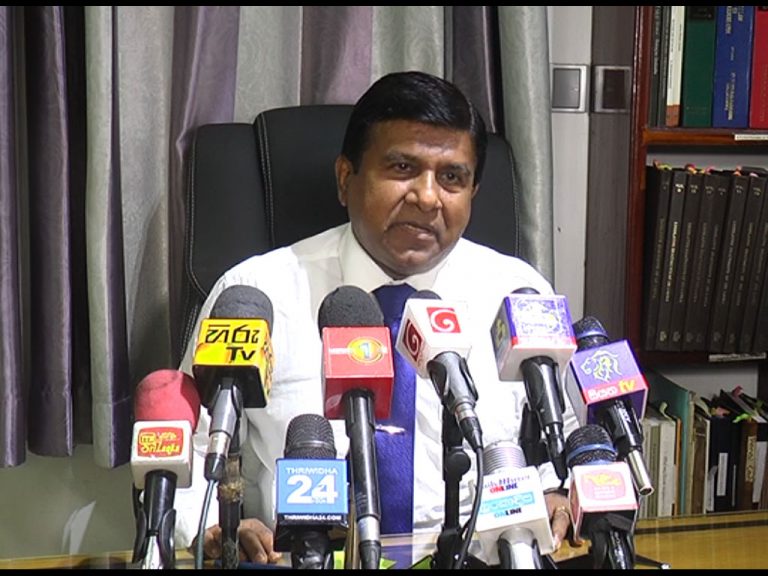
The National People’s Power (NPP) is scheduled to hold a massive rally in Nugegoda on March 23, in objection to the repressive administration of the government, said Party Leader MP Anura Kumara Dissanayake.

The entire economy has collapsed due to the Sri Lankan Rupee being depreciated sharply against the US Dollar leading to a black economy, MP Dissanayake pointed out, adding that the suffering of the people has doubled and even tripled amidst the situation.

The JVP and NPP Leader also noted that the government has failed to provide the people with essential commodities and essential services at reasonable prices, adding that the percentage by which the commodity prices are surged and the rate of increase in prices have gone up more than ever.

Ousting the repressive regime, a people’s government should be established and the NPP is ready to give leadership to it, he further noted.

MIAP

Former MP Ranjan Ramanayake admitted to National Hospital

0

Former MP Ranjan Ramanayake who was in the Welikada Prison Hospital has been transferred to the National Hospital in Colombo for further treatments.

Ramanayake was admitted to the orthopaedic clinic of the National Hospital this (20) morning and doctors have recommended that the former MP be given residential treatment.

Accordingly, the former MP is being treated under the care of prison officials, reports added.

MIAP

Another person dies at a fuel queue

0

A person has died during a fuel queue. The death was reported from a petrol station in Kadawatha.

The victim, 71, was a resident of Makola and suddenly fell while waiting in line to get petrol, Police said.

He was rushed to the Ragama Hospital after which his death was pronounced.

A similar death was reported at a petrol shed in Kandy yesterday.

A similar death was reported at a petrol station in Kandy yesterday.

Price of a bottle of water soared by 30%

0

The price of bottled water in the market has surged, reports said. A 1.5 litre bottle of water which was sold for Rs. 90 has gone up to Rs. 120, a surge of approximately 33 per cent.

This comes in following the price hike designated to almost every essential and non-essential items in all categories in the market. The ongoing dollar deficit and the depreciation of the Sri Lankan Rupee is attributed to the crisis.

The depreciation of the Sri Lankan Rupee has a direct impact on the importation of commodities, but the prices of locally produced goods being risen in the same manner would be a serious problem.

People are wondering how the dollar crisis affects drinking water bottles in a country with so much drinking water.

Meanwhile, the prices of imported milk powder have increased and the prices of local milk powder have also been increased.

Reports said that the manufacturers and importers have also decided to increase the the prices of face masks by 30 per cent.

MIAP

Laugfs Gas price skyrocketed. Litro remains unchanged!

0

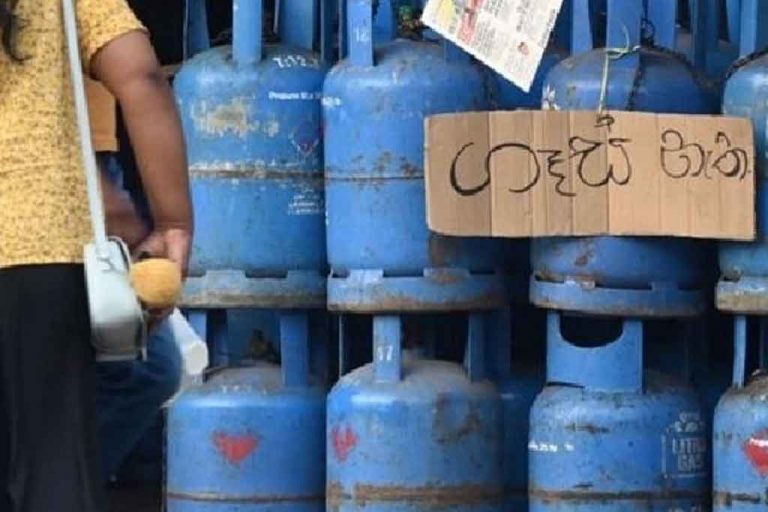
The Laugfs Gas company has reportedly surged their LP gas prices. Accordingly, the price has surged by Rs. 1,359, making the new price of a 12.5 kg domestic gas cylinder Rs. 4,199.

However, there is no revision of gas prices allowed for LITRO at the moment, according to reports.

Laugfs revised the price of a 12.5 kg cylinder in August, 2021 increasing the figure from Rs. 1,493 to Rs. 1,856. The figure was revised again in October to Rs. 2,840.

In the latest strike, the figure has surged up to Rs. 4,199.

It would be questionable as to why Laugfs has been allowed a price hike when LITRO, which supplies gas at current prices and even has issued statements about the grave economic risk befallen it, is not.

Commenting on the situation, the Movement to Protect LITRO questioned who is fulfilling their personal needs over gas by shutting down all industries that depend on gas and disrupting the lives of the people, while losing dollars to the country.

Litro Price index

The above action further proves the attempt by certain parties to destroy LITRO, they alleged.

Pasha Lee went from Ukrainian screen idol to volunteer

0

ON THE VERY day that Russia invaded, February 24th, Pasha Lee left his job and went to enlist with the Territorial Defence Forces of Ukraine. He might well have been recognised as he signed up and took the oath to defend the motherland, because his face was famous. It was bright and handsome, with a quiff of well-gelled black hair and a delicate line of beard, and with an oriental cast from his half-Korean father.

His looks had turned him into a boy idol of a sort, and his Instagram page showed him living the dream: buffing his smooth, hard pecs at the gym, sipping coffee in bed in a luxury hotel, posing in sexy shades against backgrounds of soaring skyscrapers or foaming water, adjusting the cuffs of beautiful jackets. Even in more everyday gear, like his smiley-face sweatshirt, he was clearly in love with his phone and himself.

The job he had walked away from was as a presenter on the Dom (“Home”) TV channel—specifically, presenter of a popular new show called “Day at Home”, and glitzier bits of programming such as “Star Factory” and “X-Factor”. But through the neon and glitter there was also politics here. Dom had been set up in 2020 to broadcast in both Russian and Ukrainian to Russian-occupied Donetsk and Luhansk in the east, as well as to Crimea. “Do you want to know the truth?” shouted billboards and phones all over the country when they had their big audience drive; “Watch Dom TV.“ President Zelensky himself had said he wanted two or three more channels like Dom, to tell people cut off from their own country’s media, already at war for years, what was really going on.

This work struck a chord because Pasha was from Crimea himself, from Yevpatoriya, a resort town on the Black Sea famous for healing water and mud cures. But eventually, especially after the Russian annexation in 2014, it was healthier to leave. So at some point he moved to Irpin, a city just outside Kyiv to the north-west, across the Irpin river. This too sold itself as a health resort and a great place for sport; even better, it had an annual film festival and was really close to the capital, where he could pursue his acting. He became a regular performer at the Koleso theatre in Kyiv, a gem of a building recently rescued from being Soviet-era flats. It was tiny, with a company of 16 and space on the first floor for only 70 people, crammed almost up to the stage. On the ground floor was a space where the audience could take part in plays themselves, professionals and amateurs together.

Acting had bitten him early. At 17 he made his first film, a horror-thriller called “Shtolnya” (The Pit), in which a group of students uncovered a pit, left from the second world war, with terrible secrets at the bottom of it and no obvious means of escape. His more natural slot was in comedy-horror, where a few hapless students would be chasing girls one minute and devils the next. In “Unforgotten Shadows” (2013), an accident at a university released demons who would kill the whole campus unless he and his mates could find the Carpathian warlocks who had originally locked them up. Only slightly more seriously, in “#SelfieParty” (2016) he played a policeman trying to shut down a drunken orgy and find out, from four semi-conscious students, how a dead body had turned up next morning on the lawn. His most sober film was “The Fight Rules” (2016), in which a boxer, his friend, tried to resist the mobsters who were pressing him to throw a fight. “There’s a single rule in life and in the fight,” the boxer bravely told one villain: “you win or you lose.” “It’s not like that in life,” the villain sneered back.

Many Ukrainians knew his voice better than his face. He dubbed the Ukrainian versions of “The Hobbit” and the remake of “The Lion King”, both stories of reclaiming lost treasure and lost ancestral lands. In the Hobbit he was Bilbo Baggins, another confused and fearful character who steadily grew in courage and in the end defeated Smaug, a terrifying dragon who had ravaged the land with fire. Bilbo dreamed and sang of green meadows on his journey. Pasha’s profile picture, as the Russian threat drew nearer, was a yellow Ukrainian field.

In 2021 he had actually been making a war film, set in Luhansk and called “Mirny (Peace)-21”. When he turned up at the TDF office in Irpin he looked much less good at fighting. He had hardly ever handled weapons, unless you counted the baseball bat with which he whacked half-visible demons in mystical forests in “Shadows”, or his fake police pistol in “#SelfieParty”. Luckily, his main job would be to help the proper army behind the lines. With tens of thousands of others, housewives, lawyers, shopkeepers, footballers, he now spent his days learning basic first aid, how to make up emergency bags and the safe evacuation of buildings. He was also taught the basics of knife fighting and the use of RPG-7 anti-tank launchers, and did drills with wooden rifles in the snow. But as the publicity for “The Fight Rules” ran, “Your Spirit is your Weapon.” On Instagram he urged everyone to UNITE! And volunteer.

The lessons were needed quickly. Within days, the Russians began their bombardment of Irpin. On March 1st he posted a grim and resolute photo of himself in military gear, his hair flattened by an army cap, with the Ukrainian flag folded before him. On March 4th, after 48 hours of shelling, he posted a merrier image and message. “We are smiling because we will manage!” he told his followers. “Everything will go Ukraine’s way. WE ARE WORKING!”

By then the city had been without heating, water or power for three days. Hundreds of citizens were streaming towards the bridge over the Irpin river, hoping to cross towards Kyiv. But Ukrainian forces had destroyed it to slow the Russian advance, rigging up instead a perilous crossing of narrow planks and ropes. As evacuees tried to cross in terrified groups, the Russians shelled them. His job was now to shield the evacuees and carry their loads, shepherding them out of danger and plunging back in again. When his body was found, seven days later, it emerged that he had taken off his bulletproof vest to give it to a child he was carrying.

It was an elementary mistake for a man in uniform to make. But then he had never meant to be a soldier.

The Economist