Home Blog Page 2232

Healthy planet needs ‘ocean action’ from Asian and Pacific countries

0

Armida Salsiah Alisjahbana

As the Second Global Ocean Conference opens today in Lisbon, governments in Asia and the Pacific must seize the opportunity to enhance cooperation and solidarity to address a host of challenges that endanger what is a lifeline for millions of people in the region.

If done right ocean action will also be climate action but this will require working in concert on a few fronts.

First, we must invest in and support science and technology to produce key solutions. Strengthening science-policy interfaces to bridge practitioners and policymakers contributes to a sound understanding of ocean-climate synergies, thereby enabling better policy design, an important priority of the Indonesian Presidency of the G20 process. Additionally policy support tools can assist governments in identifying and prioritizing actions through policy and SDG tracking and scenarios development.

We must also make the invisible visible through ocean data: just three of ten targets for the goal on life below water are measurable in Asia and the Pacific. Better data is the foundation of better policies and collective action. The Global Ocean Accounts Partnership (GOAP) is an innovative multi-stakeholder collective established to enable countries and other stakeholders to go beyond GDP and to measure and manage progress towards ocean sustainable development.

Solutions for low-carbon maritime transport are also a key part of the transition to decarbonization by the middle of the century. Countries in Asia and the Pacific recognized this when adopting a new Regional Action Programme last December, putting more emphasis on such concrete steps as innovative shipping technologies, cooperation on green shipping corridors and more efficient use of existing port infrastructure and facilities to make this ambition a reality.

Finally, aligning finance with our ocean, climate and broader SDG aspirations provides a crucial foundation for all of our action. Blue bonds are an attractive instrument both for governments interested in raising funds for ocean conservation and for investors interested in contributing to sustainable development in addition to obtaining a return for their investment.

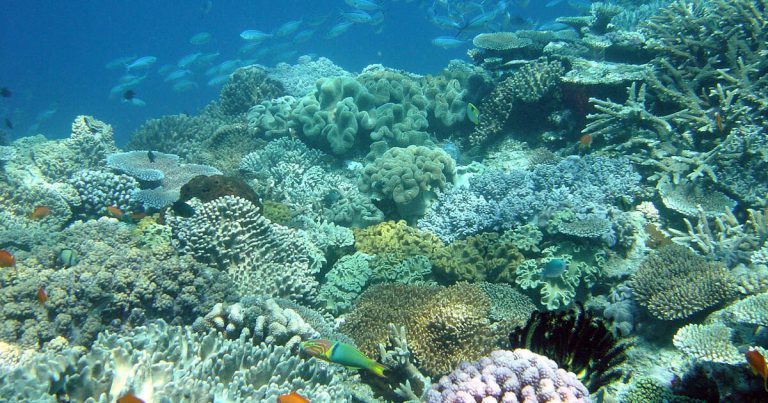
These actions and others are steps towards ensuring the viability of several of the region’s key ocean-based economic sectors, such as seaborne trade, tourism and fisheries. An estimated 50 to 80 per cent of all life on Earth is found under the ocean surface. Seven of every 10 fish caught around the globe comes from Pacific waters. And we know that the oceans and coasts are also vital allies in the fight against climate change, with coastal systems such as mangroves, salt marshes and seagrass meadows at the frontline of climate change, absorbing carbon at rates of up to 50 times those of the same area of tropical forest.

But the health of the oceans in Asia and the Pacific is in serious decline: rampant pollution, destructive and illegal fishing practices, inadequate marine governance and continued urbanization along coastlines have destroyed 40 per cent of the coral reefs and approximately 60 per cent of the coastal mangroves, while fish stocks continue to decline and consumption patterns remain unsustainable.

These and other pressures exacerbate climate-induced ocean acidification and warming and weaken the capacity of oceans to mitigate the impacts of climate change. Global climate change is also contributing to sea-level rise, which affects coastal and island communities severely, resulting in greater disaster risk , internal displacement and international migration.

To promote concerted action, ESCAP, in collaboration with partner UN agencies, provides a regional platform in support of SDG14, aligned within the framework of the UN Decade of Ocean Science for Sustainable Development (2021-2030). Through four editions so far of the Asia-Pacific Day for the Ocean, we also support countries in identifying and putting in place solutions and accelerated actions through regional dialogue and cooperation.

It is abundantly clear there can be no healthy planet without a healthy ocean. Our leaders meeting in Lisbon must step up efforts to protect the ocean and its precious resources and to build sustainable blue economies.

—————-

Armida Salsiah Alisjahbana is an Under-Secretary-General of the United Nations and Executive Secretary of the Economic and Social Commission for Asia and the Pacific (ESCAP)

U.S. grants $5.75 Mn to help hardest hit in Sri Lanka’s economic crisis

0

The government of the United States has announced the third tranche of new funding today to address the immediate needs of people hardest hit by the economic crisis in Sri Lanka.

This humanitarian assistance, totalling USD 5.75 million, will provide cash assistance, short-term jobs, and agriculture supplies such as seeds directly to crisis-affected people to meet their basic needs, the U.S. Embassy in Colombo said.

This new grant funding through the U.S. Agency for International Development (USAID) builds on last week’s announcement of USD 6 million in grants through USAID and USD 120 million in new loans through the Development Finance Corporation (DFC) to meet the needs of Sri Lankans during the economic crisis.

“The recent United Nations appeal to international donors warned of an ‘unfolding multidimensional food security crisis’ in Sri Lanka,” explained U.S. Ambassador to Sri Lanka Julie Chung. 

 She said “The new assistance that we’re announcing today will address some of those complex issues.  We are working hard to ensure that these funds directly reach the Sri Lankans who have been most severely affected by this crisis.”

The funding announced today will also support microenterprises in communities that traditionally experience high poverty rates and are especially impacted by the crisis. 

In addition, it will provide for community-based disaster management committees to help prepare for, respond to, and ultimately recover from crises. 

Over the coming months, the United States plans to add to its significant ongoing investments and assistance projects in Sri Lanka that help the people of Sri Lanka meet their immediate and long-term needs, the embassy said further.

These efforts build on six decades and over USD 2 billion of foreign assistance from the American people that have strengthened tourism, small businesses, renewable energy, climate adaptation, and civil society in Sri Lanka

Finance Minister of India assures her fullest support to the economic recovery process in Sri Lanka

0

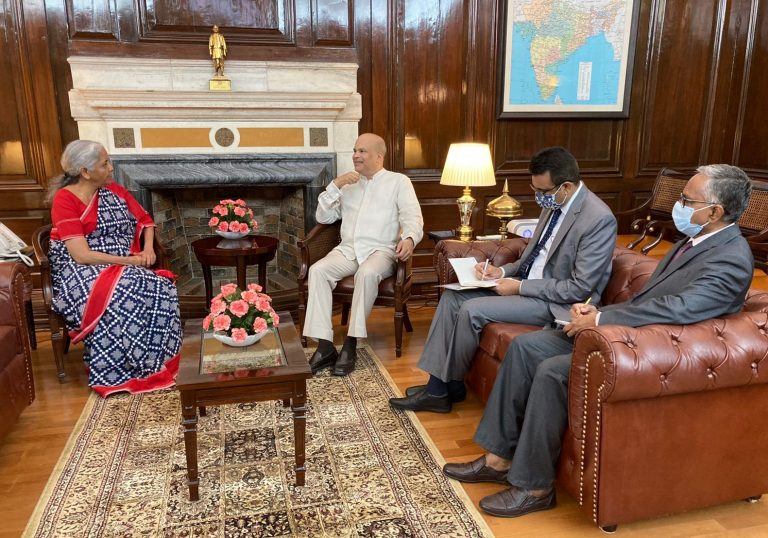
Finance and Corporate Affairs Minister of India  Nirmala Sitharaman assured the High Commissioner of Sri Lanka to India, Milinda Moragoda of her fullest support and cooperation in the process of economic recovery in Sri Lanka.

The Finance Minister of India gave this assurance when High Commissioner Moragoda called on her on 21 June at the Ministry of Finance in New Delhi.

This was the latest of a series of meetings High Commissioner Moragoda has had with Minister Sitharaman on Indian economic cooperation and assistance to Sri Lanka in the context of the present crisis. He had last met her on 27 May.

High Commissioner Moragoda once again thanked Minister Sitharaman for the continued assistance that India is extending to Sri Lanka, and particularly for expeditiously arranging a separate line of credit of 55 million USD, granted on 10 June to import 65,000 MT of urea required for the present cultivation season in Sri Lanka.

Minister Sitharaman expressed hope that Sri Lanka would recover very soon given the resilience of her people.

Earlier, High Commissioner Moragoda had also met with the External Affairs Minister of India Dr. S. Jaishankar to discuss the way forward with regard to Indian assistance in stabilizing and recovering the ailing Sri Lankan economy.

SL  Inflation Hits a Record high of  45.3  percent as  food and fuel Shortages Persist

0

Sri Lanka’s headline inflation has surged more than expected in May 2022  to 45.3 percent from 33.8 percent  in April 2022 amid continuing food and fuel shortages, even as the country struggles to lift itself out of its worst economic crisis, Central Bank announced. 

The Central Bank, which this month left borrowing costs steady while letting previous increases filter through the economy, had predicted price gains to touch 40 percent  amid a shortage of essentials in the absence of dollars to pay for imports.

A sharp fall in the Sri Lankan rupee and heightened global uncertainty also stoked prices. After having lost more than 40 percent  following a devaluation in March, the currency has slowed its decline against the dollar since mid-May.

The country, battling its worst economic crisis since independence, needs $4 billion in emergency funds this year but a deal with the International  Monetary Fund for rapid aid remains elusive. 

Securing an aid from the IMF would require structural reforms such as raising taxes and pruning expenditure, steps that could further aggravate pain for its citizens, political analysts said. 

Headline inflation, as measured by the year-on-year (Y-o-Y) change in the National Consumer Price Index (NCPI, 2013=100)1 increased to 45.3 percent  in May 2022 from 33.8 percent  in April 2022 , Central Bank data showed. 

This increase in Yo-Y inflation was driven by the monthly increases of both Food and Non-Food categories. Accordingly, Food inflation (Y-o-Y) increased to 58.0percent  in May 2022 from 45.1percent  in April 2022, while Non-Food inflation (Y-o-Y) increased to 34.2percent  in May 2022 from 23.9 percent  in April 2022. 

Monthly change of NCPI recorded at 9.67 percent  in May 2022 due to price increases observed in items of both Food and Non-Food categories which were 5.41 percent  and 4.26percent , respectively. 

Accordingly, within the Food category, prices of rice, milk powder, vegetables, fresh fish and bread recorded increases during the month. 

Further, within the Non-Food category, increases were observed in prices of Transport (Petrol, diesel and bus fare), Housing, Water, Electricity, Gas and Other Fuel (Materials for maintenance/reconstruction and LP gas), Furnishing,

 Household Equipment and Routine Household Maintenance, and Miscellaneous Goods and Services (Car insurance and soap) subcategories during the month. Meanwhile, annual average inflation rose to 16.3percent  in May 2022 from 13.0 percent  in April 2022. 

The core inflation (Y-o-Y), which reflects the underlying inflation in the economy increased to 37.7 percent   in May 2022 from 27.9 percent  in April 2022, while annual average core inflation increased to 13.0 percent  in May 2022 from 10.2 percent  in April 2022.

Central Bank launches  new International Data Collection System

0

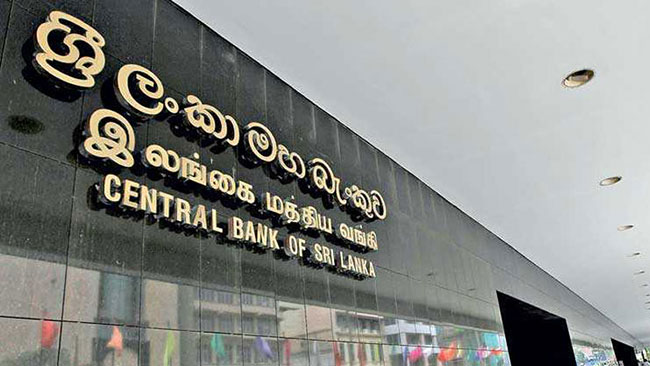
The Central Bank has implemented a new data collecting system known as the International Transactions Reporting System (ITRS) with the participation of Licensed Commercial Banks (LCBs) and Licensed Specialised Banks (LSBs).

 This was  of  recognising the need to implement a comprehensive cross border transactions and domestic foreign currency transactions monitoring system as a key national priority, CB sources said 

The ITRS is a comprehensive data gathering system on cross border transactions and domestic foreign currency transactions and is aimed at filling a multitude of existing data gaps. 

It will help policy formulation in many aspects by providing valuable inputs for both statistical and regulatory purposes. 

The ITRS system will serve a number of purposes, including the enhancement of Balance of Payments Statistics, including export proceeds, imports, services account transactions such as IT/BPO transactions, workers’ remittances, financial account transactions, and many other statistical data inputs. 

It will also serve the purpose of data reporting by banks for regulatory requirements. 

Data from the ITRS system is also used as supporting information for future policy decisions, such as origins of foreign currency outflows from the country for education, medical, tourism and other purposes. 

This system will also centralise information gathering by the Central Bank enabling a more convenient data reporting by banks. 

The Phase 1 of the ITRS goes live from 21 June 2022. The system is also expected to facilitate further centralised data reporting of the Central Bank in the next phases of the project. 

All banks are required to report information related to transactions in the Phase 1 of the project as detailed in ITRS Interphase Requirements, through the ITRS ‘Web Application’, developed by the Central Bank. 

The ITRS Monitoring Unit, established at the Central Bank, will closely work with banks on a daily basis to ensure the accuracy, timeliness and the coverage of the data provided.

These reporting requirements are exercised based on the powers conferred by the Monetary Law Act, No. 58 of 1949, Banking Act No. 30 of 1988 and Foreign Exchange Act No. 12 of 2017.

Embilipitiya Paper Mill restructures  to a dollar saver 

0

The defunct State-run Embilipitiya paper mill  is set  to revive via a fresh Public-Private-Partnership (PPP) with Korean Spa Packaging Ltd in a joint venture with an investment of US$ 16 million, BOI sources said.  

Although the Cabinet of Ministers had approved a previous proposal submitted In March 2022  to formally lease 111 acres, two roods and 33 perches of  this National Paper Company on a 30-year lease to Korean Spa Packaging Ltd., the decision could not be implemented as the said land was not regularised properly.

.The Embilipitiya Paper Mill was first set up in 1978, closed in 2003 and resumed in 2011. However, after brief operations, it was closed again in 2012 to date.

Korean SPA Packaging (Pvt.) Ltd. (KSPA), recently signed an agreement with the Board of Investment (BOI) with respect to the resumption of the operation at the defunct Embilipitiya Paper Mill

The project, which is a US$ 16 million-investment in its first phase, aims at manufacturing industrial grade papers for the direct and indirect export market by upgrading machinery and infrastructure.

Subsequently, the factory was up for sale and this is when the KSPA decided to resurrect this giant corporation through a Public Private Partnership (PPP) amid a spate of hurdles. Accordingly, the investment agreement was signed recently, with the BOI making it a backward integration, to manufacture paper for the corrugated industry.

Commenting on the project, BOI Chairman Raja Edirisuriya said “It seems that the KSPA is taking the paper industry to a next level with its new project and it is commendable that the industry is in safe hand,”

“It has to be said that the KSPA is setting an example for the entire business community where they manifest the actual role to be played by the private companies, at a juncture where the country is standing at a crossroads. Mr. Edirisuriya added.

Meanwhile, BOI Director General Renuka M. Weerakone, pointed out “This is a timely undertaking by the KSPA given the rising paper prices in the world market and current scarcity of paper due to the dollar crisis in the country,”

”KSPA should be felicitated for their initiative to take up a massive challenge to resume the operations of the abandoned Embilipitiya Paper Mill, which is slated to generate nearly 1,000 direct and indirect job opportunities and boost the livelihood of the people in Embilipitiya. 

The new venture will also save extensive outflow of dollars,” Ms Weerakone stated.

Expressing his sentiments, KSPA and Anunine Holdings Chairman, Mr. Anurath Abeyratne spelled out “that he has  decided to take up the challenge to resume the production at the defunct state paper mill at Embilipitiya to prevent dollars from flowing out of the country, generate job opportunities and giving a hand to uplift the economy at large,”

Mr. Abeyratne also disclosed his vision and commitment to bringing the paper mill to its full functionality by 2023. Elaborating further on his vision for this mega-project, 

Mr. Abeyratne hinted at a planned second phase with an addition of a pulp mill to recycle waste paper and produce wet pulp which will be exported to international markets to generate forex.

KSPA is 100% Sri Lankan owned, BOI accredited portfolio company of Anunine Holdings; a highly diversified, privately held, family-owned group of companies;

It is active in the fields of packaging, tire manufacturing, sugar manufacturing, renewable energy, trading, plastic and waste recycling, garment accessories manufacturing, agriculture, nanotechnology, and blockchain technology with a thirty year history in the export sector and over two thousand direct employees.

The enjoining order issued against the expulsion of Nimal Siripala extended

0

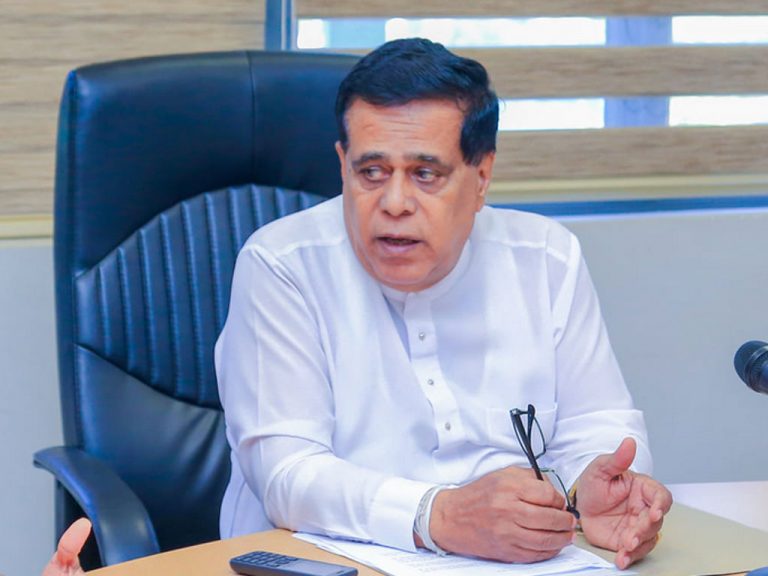
The Colombo District Court today extended the enjoining order preventing the removal of Minister Nimal Siripala de Silva from the posts of the Sri Lanka Freedom Party.

The petition filed by Nimal Siripala against the SLFP’s decision to remove him from office was called before Colombo District Judge Purnima Paranagama today. The judge adjourned the case till tomorrow and extended the enjoining order till tomorrow.

Attorney-at-Law Faizer Mustapha, appearing for SLFP chairman Maithripala Sirisena, who has been named as a defendant in the petition, said discussions were underway to resolve the issue.

The lawyer also asked the court to give him a date to file objections to the extension of the enjoining order.

Dhammika Perera says that he could overcome this challenge by fulfilling his role (VIDEO)

0

MP Dhammika Perera said that he came to Parliament because there is a problem in the country and what needs to be done now is to find an answer to that problem.

He was speaking to the media outside Parliament after being sworn in as a Member of Parliament.

Dhammika Perera said that he could overcome the challenge by fulfilling his role and that he was not going to board a sinking ship but a fast-moving ship and that he would be able to stop that swing.

He said that based on his experience as the Chairman of the Board of Investment during the war, he was confident that the country would be able to bring in the required investments at this time as well.

Sri Lanka: Open Letter to the Prime Minister on Sri Lanka’s Economic Crisis

0

Amnesty International wrote to the Sri Lankan Prime Minister in the context of the serious economic crisis that is having devastating consequences on people’s lives and livelihoods in the country. Amnesty International is particularly concerned about the government’s response to the crisis that may result in further erosion of economic and social rights.

Download PDF

Several GGG activists arrested!

0

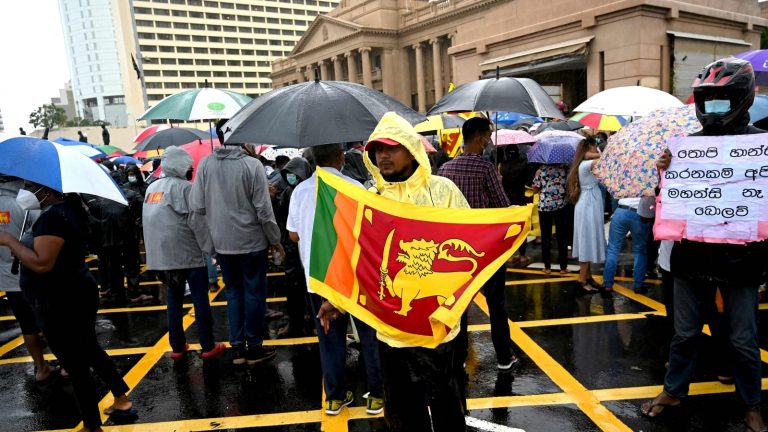
Ratta alias Rathindu Senaratne, Lahiru Weerasekera, Eranga Gunasekera, Rathkarawwe Jinaratana Thera, Dhammika Munasinghe, Jagath Manuwarna and Jehan Appuhamy have been arrested by the Maradana Police.

They have been arrested in connection with two protests that took place on June 09th and 10th.

They were arrested after surrendering to the police this morning (22) along with a large number of protesters.