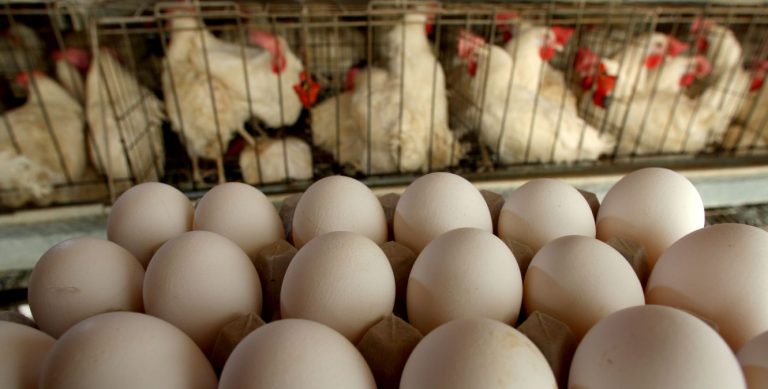
The Sri Lankan poultry industry is on the verge of collapse due to 30 percent drop in production this year as high feed costs hit farms.
Local Consultant Athula Mahagamage noted that the layer industry is feeling the most impact, with many farms shutting. “Feed costs are up 300-400 percent year-on-year making it difficult to maintain chicken farms countrywide,” he added.
Sri Lanka’s chicken meat production has collapsed 30 percent and egg output 40 percent as a currency collapse pushed up costs and feed imports were blocked by foreign exchange shortages, an industry official said.
The country is now going through the worst currency crises triggered by the island’s Latin America style intermediate regime central bank set up by a US money doctor in 1950.
“Small and medium farmers are leaving the business due to feed shortages and because big poultry companies are stopping buy back schemes,” Ajith Gunasekera, President of the All Island Poultry Association said.
Broiler meat output has fallen 30 percent to 12,000 metric tonnes a month from 18,000 metric and prices have shot up, he said.
A kilo of chicken is around 1,200 rupees from 460 rupee levels before economists started to print money to target an output gap by mis-targeting interest rates, and official inflation rose 39 percent in the year to May 2022.
The Central Bank printed money for over two years to mis-target interest rates and collapsed the currency to Rs. 360 to the US dollar from Rs200, in a failed attempt to float the currency with a surrender requirement (forced sale of dollars to the central bank).
The current economic problems come from applying floating rate monetary policy (liquidity injections or printing money from open market operations for stimulus) to a reserve collecting peg (flexible exchange rate).
Inflation and currency depreciation created by the central bank have put protein in particular out of reach of the less affluent pushing up malnutrition as had happened when the country’s economists who favour collapsing soft-pegs printed money in earlier occasions.
Eggs which were around 18 to 25 rupees before the latest money printing bout have now shot up to 43 to 50 rupees.Egg production has collapsed 40 percent, amid feed shortages.
Gunasekera said daily egg production which was around 700,000 to 800,000 and now fallen to around 400,000.
“Chicken are also laying fewer legs due to nutrition problems,” Gunasekera said “A chicken will usually lay about one egg a day but without proper feed they will lay fewer eggs.”
Egg prices are up partly due to high transport costs from Kuliyapititya where most of the large egg farms are located to Colombo, he said. About 73 percent of the cost of raising broilers was feed.
Maize which was 40 to 45rupees a kilogram has now gone up to 80 to 90 rupees a kilogram but there was no supply with the domestic Maha season harvest having failed due to a fertilizer ban.
Due to reduced paddy milling, rice polish is also not available.Forex shortages from the non-credible peg has made it difficult to import maize or soya meal.The industry is hoping to get some inputs from the Indian credit line.
Sri Lanka’s poultry production about to crash due to high feed costs
Heated exchange between Dudley and Mithrapala over Rice Control Price (VIDEO)

A heated exchange has occurred between Dudley Sirisena and Owner of the New Ratna Sahal Rice Company Mithrapala during a briefing held on the rice control price yesterday (22).
The heated exchange has occurred due to the comment made by the New Ratna Sahal Owner saying that Nadu rice cannot be sold for the control price declared by the government and that its price should be soared.
Sirisena, who is one of the key players of rice monopoly in Sri Lanka, went on emphasising that rice should be sold at the control price declared by the government and that further soaring of rice prices shall not be accepted.
Temper grown, Sirisena added that the point in which the ‘rice mafia’ existed up to this point can now be identified.
Despite the disagreements between the two rice tycoons on control price, it was well-evident during the briefing that the people are the ultimate victim of the games played between politicians and businessmen.
MIAP
Sri Lanka liquor demand down by 30 percent but revenue up
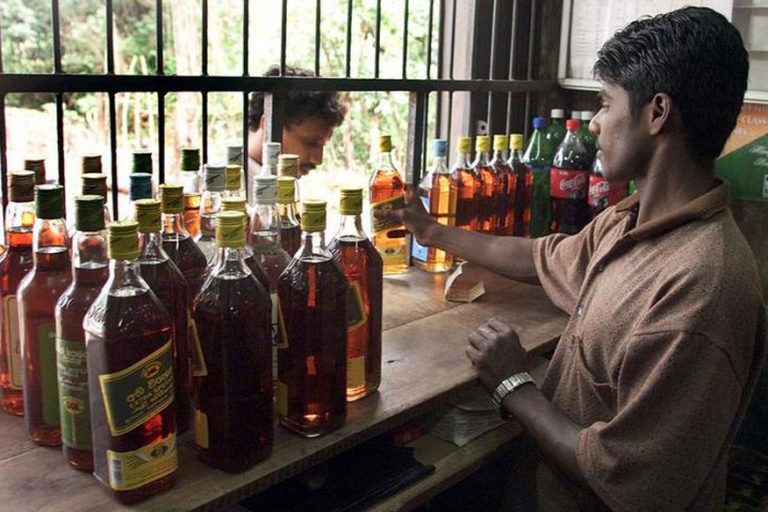
Sri Lankans demand for liquor has decreased by about 30percent due to the recent increase in the price of liquor and the decrease in the income of the people of the country,. the Committee on Public Finance (COPF) revealed.
This was transpired at a recent meeting of the Committee on Public Finance chaired by Member of Parliament ighted Anura Priyadarshana Yapa.
Officials representing several institutions were contacted online to discuss plans to increase government revenue and their current status.
Accordingly, officials representing the Ministry of Finance, Economic Stabilization and National Policies, the Inland Revenue Department, the Sri Lanka Excise Department and the Sri Lanka Customs were contacted online.
The officials said that there were several problems in the Sri Lanka Excise Department reaching the target revenue due to the limited quantity of ethanol available for the production of liquor, limited number of diesel and fuel and distribution problems.
They also pointed out that the demand for alcohol has decreased by about 30percent due to the increase in the price of alcohol and the economic hardships faced by the people.
It was also stated that due to the sudden price hike there is a tendency to increase the production of illicit liquor.
Sri Lanka’s Excise Department is in the process of enhancing revenue collection and strengthening tax administration with the aim of contributing much needed cash for state coffers in the severe economic crisis, top official of the department said.
It has collected Rs. 80 billion up now this year from the set target of Rs.180 billion even during the period of economic difficulty tiding over the present crisis, Commissioner General of Excise M.J. Gunasiri disclosed.
The Department has been able to increase its revenue to Rs.140 billion in 2021 from Rs.121 billion in 2020; he said adding that the tax administration has been strengthened.
The Excise Department chief stated that the increase in excise duty which was proposed in the 2022 budget is effective from today November 13 2021.
The government has decided to withdraw the special Goods and Services Tax (GST) aimed at simplifying the existing tax structure and consolidating several taxes as a single tax following the Supreme Court’s decision of requiring a two-third majority and referendum to enact it as a law, Finance Ministry sources said.
The Court observed that several clauses of the bill are inconsistent with some of the articles of the country’s constitution.
The Special GST consolidates several taxes on liquor, cigarettes, telecommunications, betting and gaming and vehicles. The Attorney General had cleared the draft law.
This legal issue has prompted the Finance Ministry find an option to re-introduce the SGST and one of the options is to withdraw the tax and allow the previous taxation system with some revisions to relevant taxes to continue,a senior official said
.
Hirunika responds to Social Media trolling on her body parts being exposed

Former MP Hirunika Premachandra responded to Social Media trolling on her breasts being exposed as she was picketing in front of Prime Minister Ranil Wickremesinghe’s residence yesterday (22) in a Facebook statement, saying that while trolls were busy making her breasts the centre of attention, another man has died at a queue.
“I am proud of my breasts! I breastfed three beautiful kids. I nurtured them, comforted them and dedicated my whole body for them,” the former SJB MP wrote.
She added: “I am sure people who make fund of my exposed breasts (due to the clash with the police) also sucked their mothers nipples until its raw when they were infants.
Anyway when you are done talking, making memes and laughing about my breasts, there was ANOTHER civilian died in a cue… Just so you know!“
MIAP
SL to convene a donor conference with 3 main lending countries – PM
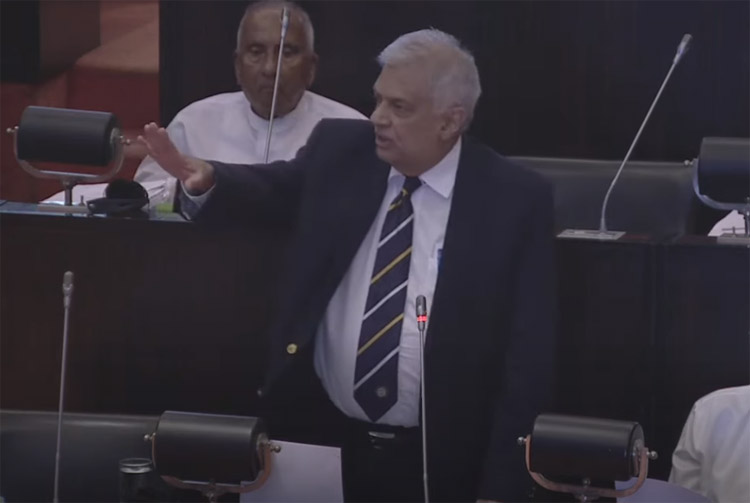
Sri Lanka will convene a donor conference with the participation of representatives of China, India and Japan to mobilise more foreign assistance and present an interim budget in August prime minister Ranil Wickremasinghe divulged on Wednesday, amid ongoing negotiations with the International Monetary Fund (IMF).
He disclosed that a staff-level agreement with the International Monetary Fund (IMF) and the programme for a bailout package would be finalized by the end of July
The country needs the support of India, Japan and China who have been historic allies. We plan to convene a donor conference with the involvement of these countries to find solutions for Sri Lanka’s crisis,” Wickremesinghe told parliament.
“We will also seek help from the U.S.,” he said, adding that his administration will use US$70 million from the World Bank for buying cooking gas, which has been in short supply, setting off sporadic protests.
A high-level delegation from India will arrive on Thursday for talks on additional support from New Delhi, and a team from the U.S. Treasury will visit next week, Wickremesinghe revealed.
India has so far provided around $4 billion worth of assistance, the prime minister said, including a $400 million swap and credit lines totalling $1.5 billion.
China, which has traditionally jostled with New Delhi for influence over the Indian Ocean island, is considering an appeal from Sri Lanka to renegotiate the terms of a yuan-denominated swap worth $1.5 billion to fund essential imports.
An interim budget will be presented in August, seeking to put public finances on a more sustainable path and increase funds to the poor who have been hardest hit he divulged.
“The interim budget will set the path forward. This, together with an IMF programme and debt sustainability, will lay the foundation for Sri Lanka to return to economic stability,” he said.
Negotiations with an IMF team, which arrived in Colombo this week, have made progress, with a staff-level agreement with the lender likely by the end of the month, Wickremesinghe said.
“We have discussed multiple points including fiscal policy, debt restructuring and direct cash transfers,” he said.
“Parallel to this we have also started talks on a debt restructuring framework, which we hope will be completed in July.”
Sri Lanka, which suspended payment on $12 billion of foreign debt in April, is seeking around $3 billion from the IMF to put its public finances on track and access bridge financing.
PrIme Minister Wickremesinghe said that once an agreement with the IMF was reached, his government would focus on a plan to increase Sri Lanka’s exports and stabilise the economy.
“It is no easy task to revive a country with a completely collapsed economy,” he said, calling for opposition support for his economic recovery plan.
Ferdinando summoned to CoPE again!
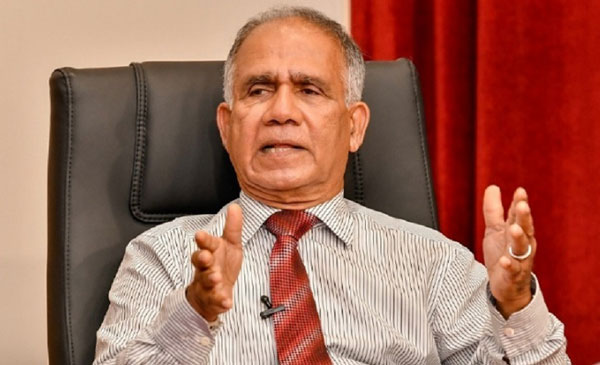
Former Chairman of the Ceylon Electricity Board (CEB) M.M.C. Ferdinando has been summoned to appear before the Committee on Public Enterprises (CoPE) today (23).
Accordingly, Ferdinando is expected to appear in the Committee today at 11 am.
Ferdinando’s comments at CoPE on an early occasion (June 10) raised controversy and the letter submitted by the former CEB Chief regarding the withdrawal of his comments was tabled by the CoPE Chairman recently.
Based on the letter, the CoPE concluded that Ferdinando be summoned to the Committee today.
Nevertheless, CoPE member SJB MP S.M. Marikkar told media that there is no legal validity to a statement made before the Committee being withdrawn via a letter.
MIAP
Colombo Port City to feature prominently at CHOGM in Rwanda this week

The Colombo Port City will feature prominently at the year’s Commonwealth Heads of Government Meeting taking place in Rwanda this week.
This is the project’s first international forum since completion of land reclamation in January 2019, and the Port City
Economic Commission Act that was passed in May last year. 54 member countries in the Commonwealth will participate at the forum, whilst the 36 other nations too will be present at the event in Kigali, Rwanda.
The Project Company is also a Strategic Partner to the Commonwealth Enterprise and Investment Committee, whereby it receives a dedicated slot as a knowledge partner for the Commonwealth Business Forum.
The Port City project has attracted investments for about 4.5 hectares of its entirety last year, which includes a $ 500 million investment that is billed to get underway before the end of the year.
CHEC Port City Colombo Deputy Managing Director Thulci Aluwihare revealed the Project’s Managers are sticking to the timelines and plans it had originally drawn out, on the back of a roadshow done in the UK, Singapore and Dubai.
In August this year, Port City Colombo will feature at the World City Summit in Singapore, which attracts city administrators, planners and investors from around the world.
Aluwihare noted it was crucial to build awareness, as Sri Lanka is widely reputed as a tourist destination and not known for business. This is why a very progressive Special Economic Zone law with competitive business-friendly regulation is needed, he said
Aluwihare expressed hope that with the potential advent of global multinationals to Sri Lanka, who could well set up regional offices in the Port City, Sri Lankan talent would opt to work for these multinationals from here at home.
The SEZ law states that employees must be paid in dollars, so there is great opportunity and scope through this project to people and local industries, he explained.
There could be great potential for local supply chains as Sri Lankan companies and individuals of all sizes and walks could provide goods and services, which in essence serve as an export and be paid in foreign currency. That impact will definitely flow outside Port City he pointedout.
Aluwihare expressed hope that with the potential advent of global multinationals to Sri Lanka, who could well set up regional offices in the Port City, Sri Lankan talent would opt to work for these multinationals from here at home.
The SEZ law states that employees must be paid in dollars, so there is great opportunity and scope through this project to people and local industries, he explained.
SL to convene a donor conference with 3 main lending countries – PM
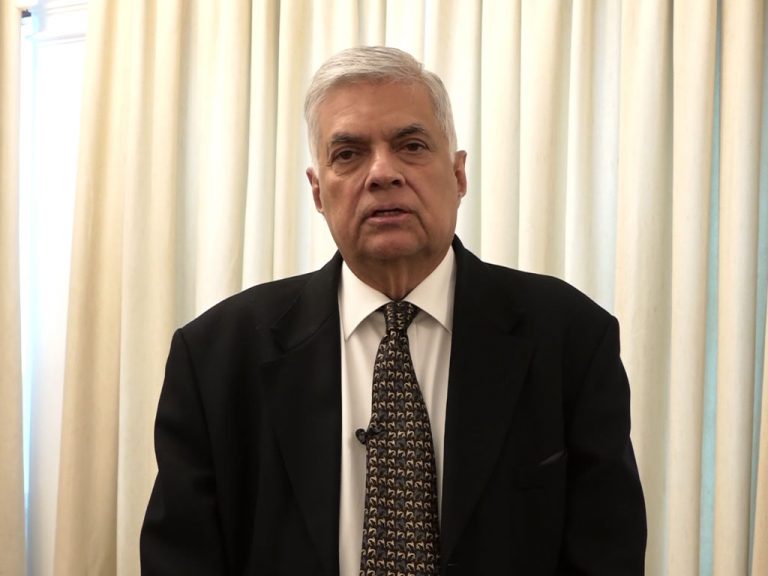
Sri Lanka will convene a donor conference with the participation of representatives of China, India and Japan to mobilise more foreign assistance and present an interim budget in August prime minister Ranil Wickremasinghe divulged on Wednesday, amid ongoing negotiations with the International Monetary Fund (IMF).
He disclosed that a staff-level agreement with the International Monetary Fund (IMF) and the programme for a bailout package would be finalized by the end of July.
The country needs the support of India, Japan and China who have been historic allies. We plan to convene a donor conference with the involvement of these countries to find solutions for Sri Lanka’s crisis,” Wickremesinghe told parliament.
“We will also seek help from the U.S.,” he said, adding that his administration will use US$70 million from the World Bank for buying cooking gas, which has been in short supply, setting off sporadic protests.
A high-level delegation from India will arrive on Thursday for talks on additional support from New Delhi, and a team from the U.S. Treasury will visit next week, Wickremesinghe revealed.
India has so far provided around $4 billion worth of assistance, the prime minister said, including a $400 million swap and credit lines totalling $1.5 billion.
China, which has traditionally jostled with New Delhi for influence over the Indian Ocean island, is considering an appeal from Sri Lanka to renegotiate the terms of a yuan-denominated swap worth $1.5 billion to fund essential imports.
An interim budget will be presented in August, seeking to put public finances on a more sustainable path and increase funds to the poor who have been hardest hit he divulged.
“The interim budget will set the path forward. This, together with an IMF programme and debt sustainability, will lay the foundation for Sri Lanka to return to economic stability,” he said.
Negotiations with an IMF team, which arrived in Colombo this week, have made progress, with a staff-level agreement with the lender likely by the end of the month, Wickremesinghe said.
“We have discussed multiple points including fiscal policy, debt restructuring and direct cash transfers,” he said.
“Parallel to this we have also started talks on a debt restructuring framework, which we hope will be completed in July.”
Sri Lanka, which suspended payment on $12 billion of foreign debt in April, is seeking around $3 billion from the IMF to put its public finances on track and access bridge financing.
PrIme Minister Wickremesinghe said that once an agreement with the IMF was reached, his government would focus on a plan to increase Sri Lanka’s exports and stabilise the economy.
“It is no easy task to revive a country with a completely collapsed economy,” he said, calling for opposition support for his economic recovery plan.
Colombo Port City to feature prominently at CHOGM in Rwanda this week

The Colombo Port City will feature prominently at the year’s Commonwealth Heads of Government Meeting taking place in Rwanda this week.
This is the project’s first international forum since completion of land reclamation in January 2019, and the Port City Economic Commission Act that was passed in May last year. 54 member countries in the Commonwealth will participate at the forum, whilst the 36 other nations too will be present at the event in Kigali, Rwanda.
The Project Company is also a Strategic Partner to the Commonwealth Enterprise and Investment Committee, whereby it receives a dedicated slot as a knowledge partner for the Commonwealth Business Forum.
The Port City project has attracted investments for about 4.5 hectares of its entirety last year, which includes a $ 500 million investment that is billed to get underway before the end of the year.
CHEC Port City Colombo Deputy Managing Director Thulci Aluwihare revealed the Project’s Managers are sticking to the timelines and plans it had originally drawn out, on the back of a roadshow done in the UK, Singapore and Dubai.
In August this year, Port City Colombo will feature at the World City Summit in Singapore, which attracts city administrators, planners and investors from around the world.
Aluwihare noted it was crucial to build awareness, as Sri Lanka is widely reputed as a tourist destination and not known for business. This is why a very progressive Special Economic Zone law with competitive business-friendly regulation is needed, he said.
Aluwihare expressed hope that with the potential advent of global multinationals to Sri Lanka, who could well set up regional offices in the Port City, Sri Lankan talent would opt to work for these multinationals from here at home.
The SEZ law states that employees must be paid in dollars, so there is great opportunity and scope through this project to people and local industries, he explained.
There could be great potential for local supply chains as Sri Lankan companies and individuals of all sizes and walks could provide goods and services, which in essence serve as an export and be paid in foreign currency. That impact will definitely flow outside Port City he pointed out.
Aluwihare expressed hope that with the potential advent of global multinationals to Sri Lanka, who could well set up regional offices in the Port City, Sri Lankan talent would opt to work for these multinationals from here at home. The SEZ law states that employees must be paid in dollars, so there is great opportunity and scope through this project to people and local industries, he explained.
Reimagining ageing: Older persons as agents of development

Armida Salsiah Alisjahbana
Older persons are highly visible across Asia and the Pacific: they work in agricultural fields producing our food supplies, peddle their wares as street vendors, drive tuk-tuks and buses, exercise in our parks, lead some of the region’s most successful companies and form an integral part of our families.
Indeed, population ageing is one of the megatrends greatly affecting sustainable development. People now live longer than ever and remain active because of improved health. We must broaden the narrow view of older persons as requiring our care to recognize that they are also agents of development. With many parts of the Asia-Pacific region rapidly ageing, we can take concrete steps to provide environments in which our elders live safely, securely and in dignity and contribute to societies.
To start with, we must invest in social protection and access to universal healthcare throughout the life-course. Currently, it is estimated that 14.3 per cent of the population in Asia and the Pacific are 60 years or older; that figure is projected to rise to 17.7 per cent by 2030 and to one-quarter in 2050. Moreover, 53.1 per cent of all older persons are women, a share tahat increases with age. Therefore, financial security is needed so older persons can stay active and healthy for longer periods. In many countries of the region, less than one-third of the working-age population is covered by mandatory pensions, and a large proportion still lacks access to affordable, good quality health care.
Such protection is crucial because older persons continue to bolster the labour force, especially in informal sectors. In Thailand, for example, a third of people aged 65 years or over participate in the labour force; 87 per cent of working women aged 65 or over work in the informal sector, compared to 81 per cent of working men in the same cohort. This general trend is seen in other countries of the region.
Older persons, especially older women, also make important contributions as caregivers to both children and other older persons. This unpaid care enables younger people in their families to take paid work, often in metropolitan areas of their own country or abroad.
Older persons should also have lifelong learning opportunities. Enhanced digital literacy, for example, can close the grey digital divide. Older women and men need to stay abreast of technological developments to access services, maintain connections with family and friends and remain competitive in the labour market. Through inter-generational initiatives, younger people can train older people in the use of technology.
We must also invest in quality long-term care systems to ensure that older persons who need it can receive affordable quality care. With the increase in dementia and other mental health conditions, care needs are becoming more complex. Many countries in the region still rely on family members to provide such care, but there may be less unpaid care in the future, and care by family members is not always quality care.
Finally, addressing age-based discrimination and barriers will be crucial to allow the full participation of older persons in economies and societies. Older women and men actively volunteer in older persons associations or other organizations. They help distribute food and medicine in emergency situations, including during the COVID-19 pandemic, monitor the health of neighbours and friends, or teach each other how to use digital devices. Older persons also play an active role in combatting climate change by sharing knowledge and techniques of mitigation and adaptation. Ageism intersects and exacerbates other disadvantages, including those related to sex, race, and disability, and combatting it will contribute to the health and well-being of all.
This week, countries in Asia and the Pacific will convene to review and appraise the Madrid International Plan of Action on Ageing (MIPAA) on the occasion of its 20th anniversary. MIPAA provides policy directions for building societies for all ages with a focus on older persons and development; health and well-being in old age; and creating enabling environments. The meeting will provide an opportunity for member States to discuss progress on the action plan and identify remaining challenges, gaps and new priorities.
While several countries in the region already have some form of policy on ageing, the topic must be mainstreamed into all policies and action plans, and they must be translated into coherent, cross-sectoral national strategies that reach all older persons in our region, including those who inhabit remote islands, deserts or mountain ranges.
Older persons are valuable members of our societies, but too often they are overlooked. Let us ensure that they can fully contribute to our sustainable future.
—————-
Armida Salsiah Alisjahbana is an Under-Secretary-General of the United Nations and Executive Secretary of the Economic and Social Commission for Asia and the Pacific (ESCAP)