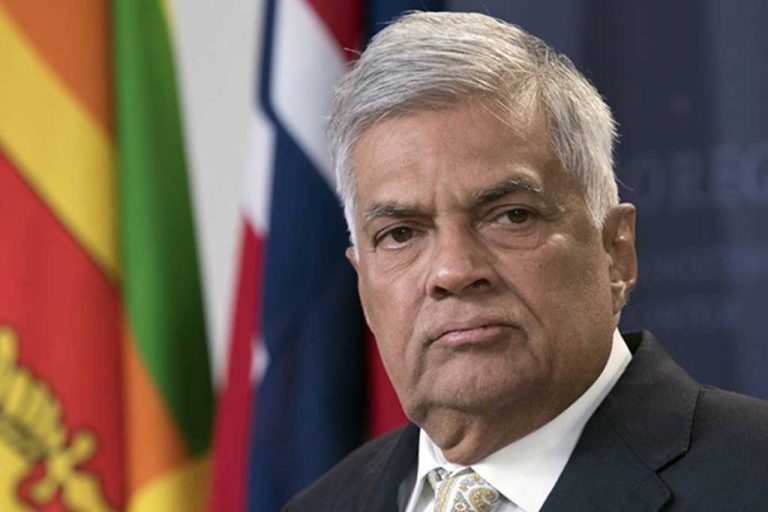
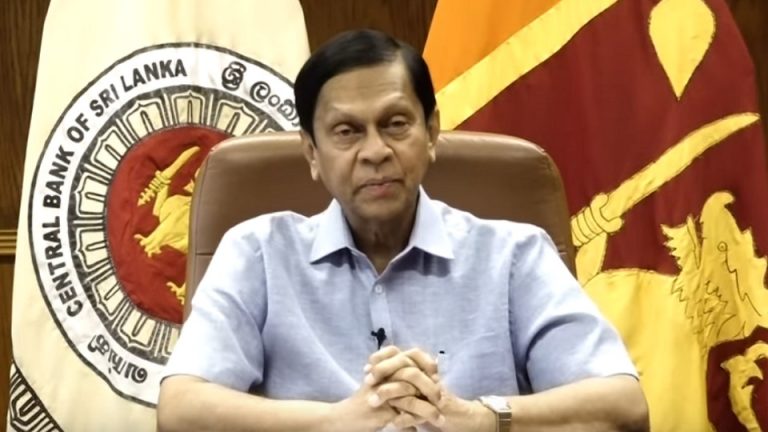
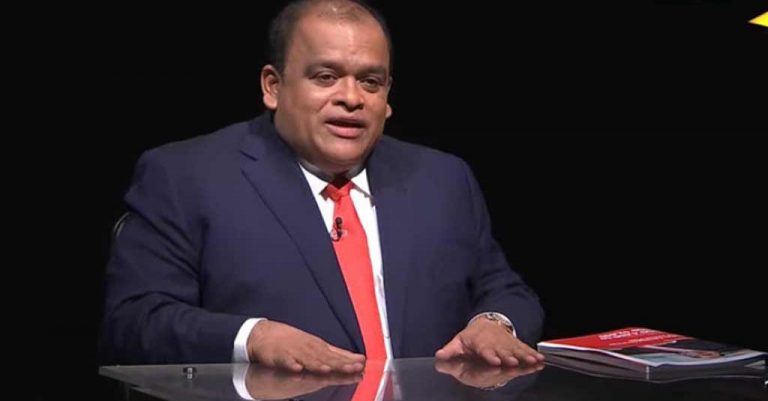
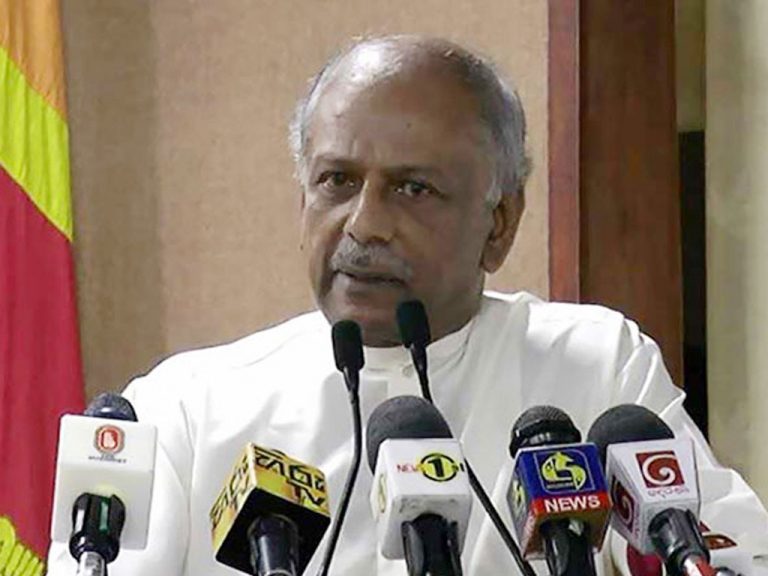
Prime Minister Ranil Wickremesinghe had made a special statement in Parliament today regarding the situation in the country and the measures being taken to alleviate the crisis.
PM has focused on 6 keys when preparing the interim budget. He says that they have also pointed out to the International Monetary Fund that this time the focus should be on the economically weaker sections of our country. And IMF has agreed to it. Accordingly, they have prepared the interim budget based on those facts.
Here below is his full speech.
I hope you all understand the situation we and our country face. We need to find new ways as an alternative to the traditional ways if we are to elevate the country from this position. We must set aside our traditional political ideologies for a short period of time and make a concerted effort to rebuild the country. The people of the whole country should play a role in this effort. We all have a part to play for the country.
Our primary focus here is on economic stability. But we cannot recover from this alone by creating economic stability.
We need to revive the economy of our country.
This is not something that can be done in two or three days. This challenge cannot be done by miracles, not from slogans, not by magic, nor emotions. Implementing intelligently thought-out projects requires hard work and dedication.
The country spends $500 million per month on fuel. It should be kept in mind that the current global crisis risks raising oil prices. Some estimate that global oil prices will rise by as much as 40% by the end of this year. In this context the idea of introducing a coupon system for fuel cannot be ruled out. Somehow we have to find $3,300 million worth of fuel for the next six months.
It costs $40 million a month to import gas. We are currently using multilateral assistance, local currency and Indian loans to import gas. We will require $250 million over the next six months for gas.
The next three weeks will be a tough time for us in regards fuel. It is time we all must use fuel and gas as carefully as possible. Unessential travel should be limited as much as possible.
Therefore, I urge all citizens to refrain from thinking about hoarding fuel and gas during this period. After those difficult three weeks, we will try to provide fuel and food without further disruptions. Negotiations are underway with various parties to ensure this happens. After these difficult three weeks, we are trying to ensure the shortage of fuel and gas will have ended. Let’s face these difficult three weeks united and patiently.
We produce some of the food we require locally. The rest are imported. Our harvest has declined in the past several months. We have to face this situation at and we have to work hard from this point onwards to ensure the next harvest is a success. That harvest, however, will be available by the end of February 2023. In terms of rice, our country’s annual rice requirement is 2.5 million metric tons. But we have only 1.6 million metric tons of rice in stock. This condition is not only restricted to paddy but many other crops. So, in a few months we will have to face serious difficulties and shortages in terms of our diets. We need to import food items to meet our daily requirements. It costs about $150 million a month.
The task of rebuilding our declining agriculture must begin immediately. We are losing the international market for our export crops. Action must be taken to prevent this. Chemical fertilizers are needed to boost local agriculture. It costs $600 million a year to import fertilizer for paddy, vegetables, fruits, other major crops as well as our tea, rubber, coconut and export crops. Since manure has to be applied from time to time from the beginning to the end of a harvest. It is essential that fertilizer is exported without any shortages. We must ensure that no money or effort will be wasted.
We are currently involved in various international assistance programs to import medicines and health equipment required for the country. It has also been planned to seek assistance from various countries. We do not need large amounts of foreign exchange for health for the next six months as those groups and countries have provided substantial support for our health system. We thank them on behalf of the health department.
In this context, we need $5 billion to ensure our daily lives are not disrupted for the next six months.
We need to strengthen the rupee in line with the daily requirements of the citizens. Another $1 billion is needed to strengthen the rupee.
That means we need to find $6 billion to keep the country afloat for the next six months.
In the midst of all this we need to develop plans to raise the average national product. We need to implement those plans. According to the central bank, the average GDP growth in 2022 will be -3.5 According to the International Monetary Fund, the situation is even worse. According to them, its growth will be -6.5 percent.
The average national output of the global economy will decline next year due to the impact of the war in Ukraine. Recovery is forecast for 2024.
We also have to face that global environment.
The government has lost Rs. 6.6 billion in revenue with the abolition of the tax system we implemented in 2019. That was the beginning of the decline of our economy. Therefore, we must immediately return to the 2019 tax system. We must begin our resurrection from where we fell.
It is a fact that we all know that money has been printed indefinitely in recent times. Rs. 2.5 billion has been released from 2020 to May 20, 2022.
Many government agencies do not have proper financial management. Therefore, new methods need to be introduced. The Road Development Authority is an example. Although they had the funds, they failed to manage those funds in accordance with Treasury regulations. In the current situation in our country, the government is unable to provide funds to cover the losses of any state-owned enterprises. That debt burden can no longer be borne by the state or state-owned banks.
We are currently in talks with the International Monetary Fund. Our discussions are based on our future economic plan. Accordingly, the year 2023 will see us face all the challenges. We need to achieve economic stability by the end of this year. Then by 2024 we will have the opportunity to create economic stimulus through financial stimulus. By 2025, our goal is to balance our budgets or create a primary surplus. This economic program must continue to move towards this long-term goal. Even if the individuals, groups and parties in power change, it is imperative that we achieve our national goals and maintain the highest level of efficiency in the country.
In our efforts we must pay close attention to our foreign relations. To increase international our support. We are becoming a marginalized country in the world due to poor foreign polices. Changing that position will not be easy. But we have to do it somehow.
I am currently in constant consultation with foreign ambassadors. I had telephone conversations with the Secretary-General of the Commonwealth, the President of the United Arab Emirates, and the Prime Minister of the United Kingdom.
Discussions were held with representatives of international organizations such as the United Nations, the United Nations Food and Agriculture Organization, the World Food Program, the United Nations Development Program and the World Health Organization.
Many representatives of these countries and international organizations have agreed to support our country during this difficult time.
The United Nations has arranged for a worldwide public appeal on the 9th of June. They are seeking support to provide humanitarian assistance to Sri Lanka. Through this project, they plan to provide $48 million over a four-month period to the food, agriculture and health sectors.
India, China and Japan are leading the list of countries that provide us with loans and assistance. Relations with these countries, which have always been strong, are now broken. Those relationships need to be rebuilt.
Some time ago we borrowed under the SWAP facility from the People’s Republic of China. There was a condition regarding that loan. We can use that money only if our country has enough foreign reserves for three months. We have not had foreign exchange reserves for three months since the loan was taken. Our former officials took loans to deceive the country. We will not be debt free under that condition. We have requested the Chinese government to consider removing that condition from the agreement that has been signed with them.
We urge the Chinese government to look into the matter favourably.
Japan is our long time friend. A nation that has helped our country greatly. But they are now unhappy with us due to the unfortunate events of the past. Our country had failed to formally notify Japan of the suspension of certain projects. Sometimes the reasons for these suspensions were not even stated. According to reports submitted by an individual, some projects undertaken by Japan in our country have been halted midway through.
Japan and India had agreed to supply us with two LNG power plants. The CEB stopped those two projects without any justifiable reason.
Japan had agreed to provide about $ 3 billion worth of projects to our country by 2019. All of these projects were put on hold for no reason.
I urge the Parliamentary Committee on Public Finance to conduct an inquiry into the suspension of such valuable projects granted to us by our longtime allies for unstated reasons.
Despite alienating these friendly nations, India offered to help us in the face of the growing crisis. We express our respect and gratitude to them during this difficult time. We are also working to re-establish old friendships with Japan.
We call on the International Monetary Fund to hold a conference to help unite our lending partners. Holding such a conference under the leadership of India, China and Japan will be a great strength to our country. China and Japan have different credit approaches. It is our hope that some consensus on lending approaches can be reached through such a conference.
We have an obligation to repay the loans taken so far. Many loan installments received from multilateral institutions have to be repaid this month. We did not pay the loan installments. In the future we will have to take new loans and we have the responsibility to repay the debt of the country.
Once we come up with a loan repayment plan for those that we have obtained from other countries, we need to focus on the personal loans our country has taken. We sough expert advice from Lezard, an international financial advisory firm, and Clifford Chance, an international legal consulting firm.
We absolutely must have foreign exchange to repay the loans that have been taken. The export economy needs to be strengthened quickly to bolster our foreign exchange. Our country is located in a strategically important position. That is a positive factor in terms of regaining a competitive advantage in the global market. Alongside the economic hubs of Singapore and Dubai, we too have the potential to grow into another economic hub. Vietnam is a great example of having undertaken such a task successfully. Different product values must be exported by integration. At the same time, we want to keep the trade surplus as low as possible in our transactions with different countries.
Our ultimate goal is to create a new economy for Sri Lanka. The goal is to transform Sri Lanka into a developed country by 2048, the centenary of Independence.
Our country is not working like a well-oiled machine, we are not sure what we should we do first. This system needs to be overhauled. That is what we are doing now. Resetting the system.
The interim budget is the first step in rebuilding the system. Once we have taken that step, we will implement a modern system and install safeguards that will protect us from future calamities. But to do all this, we need to restart the system.
That is why we are presenting an interim budget to Parliament on the basis of our future economic plan and road map. As I mentioned earlier, our hope is that this budget will lay the foundation for our economy, allowing it to stabilize and recover.
The interim budget will reduce unnecessary government spending, while controlling other costs. We will also focus on revitalizing many areas affected by the crisis. There is an urgent need to focus on many sectors such as the export economy, tourism and construction.
We have also pointed out to the International Monetary Fund that this time the focus should be on the economically weaker sections of our country. They agreed. We prepared the interim budget based on those facts.
I would like to draw your attention to some of the key areas we are focussing on.
1) Take maximum action to ensure food safety.
A recent study by the World Food Program (WFP) found that 73% of participating households reduced their diet and food intake. We will change that situation and strive to provide food without shortage as per this food security plan. We are working towards ensuring a three meal situation in the country.
2) Increase in grant limit.
While the economy is in turmoil, people are facing various hardships. We will take action to alleviate their suffering as much as possible. The current annual expenditure on providing various reliefs to the economically backward is $350 million. This amount is expected to increase to US $550 million.
3) Farmers’ loans should be written off one hundred percent.
We know that farming families who cultivate paddy on small lands are in a very precarious position. Farmers’ loans obtained by farmers with less than two hectares of land will be stopped immediately.
4) Free ownership of their lands by residents.
Earlier we had launched a program to provide free government lands to the people through guarantees like Swarnabhoomi and Mahawali. Some provincial councils opposed the move. So this did not succeed. At present, steps are being taken to give the people the right to ownership so that such protests do not arise.
5) Granting the ownership of urban flats to the occupants on concessional basis.
Families live for rent in many of the suburban apartments. There are also long-term interest payments for home ownership. We will take steps to transfer the ownership of all these houses to the residents on concessional basis.
6) Opening of flats built by China for the public.
At the request of the People’s Republic of China when I was previously the Prime Minister, they donated 1,888 apartments to our country. One hundred and eight of these houses are reserved for artists. We will take steps to provide all these houses to the deserving without any political influence. My hope is to set up a program to provide those 1,888 homes for free.
At a time when the country is in decline, we are trying to rebuild the economy and the country without putting too much pressure on the people. Our expectation is to preserve every aspect of our lives and move forward.
We can save the country if we make gradual progress. There is a dangerous situation that goes beyond being a personal issue or a party issue. Let us understand the dangers and seriousness of this. In such a situation, there is no point in looking at the past. For a while let us forget the past. In trying to renew the country, we must think only of the future.
Economic reforms alone are not enough to rebuild a country. At the same time, socio-political and public service reforms are needed. I would like to bring to your attention to an issue that was raised at a recent press conference held from the protests.
Commenting on this, artist Tamitha Abeyratne made this request to me. He appealed to the people to find a solution to this problem in the parliament and to unite the people who love the country. But the Prime Minister himself should not try to deceive the people by giving sweets.
I would like to draw the attention of all of you to this idea. The responsibility for resolving the current situation in the country rests on the shoulders of the people’s representatives in this House. We must accept that responsibility. We must fulfill that responsibility. Instead of plastering over the issues, long-term and effective solutions should be sought.
So, let’s set aside all differences and think anew for the country. Let’s start the new journey. We will initiate the necessary constitutional reforms. Let’s think differently. We can all start to change the system by thinking differently and acting differently.
Public service must be viewed from a different angle. Efficiency and productivity have fallen to a very low level due to the provision of unlimited employment in the public service. Some government employees have no obligation to their duties.
Therefore, the public sector needs to be completely restructured and reformed. Our mission is to create a public service that will enable a citizen to receive immediate and efficient services throughout their lives without any hassle.
Another important aspect to consider in this transition is to build a country free of corruption and fraud. It is mandatory. A society without theft. A country where there is no room for thieves. A regime with strong rules that can punish wrongdoers.
To this end, we expect to implement a national policy on the prevention of bribery and corruption. In 2019, a national policy to combat bribery and corruption was developed. We will take steps to hand over the draft policy to all party leaders in Parliament. Get their feedback too. Countries such as Sweden, which have successfully implemented the anti-corruption and anti-corruption mechanism, are following the example of the Hong Kong government and making the necessary structural changes. If any amendments are to be made to the present draft, necessary amendments will be made in consultation with all parties’ lawyers and experts and this National Policy will be implemented.
I therefore invite all of you in this House to support our economic, socio-political and public service reforms in rebuilding the country.
Let us build the country first. Let us protect our country from this crisis. Give your support to these efforts. After returning to normalcy in the country within the specified time frame, you may return to your traditional political activities. Implement traditional party political agendas.
I would like to conclude my statement by quoting Winston Churchill.
“The pessimist sees difficulty in every situation; the optimist sees opportunity in every difficulty.”
We take advantage of every opportunity that comes our way. We will use these opportunities to build the country with confidence.
We will all take full responsibility to bring the country back to normalcy.
Prime Minister’ Media Division
7th June 2022