Home Blog Page 2266

Janthawansa Thero swears they will ‘burn’ the Constitution at every junction in the name of people’s sovereignty (VIDEO)

0

A Buddhist Monk who attended a conference on establishing an interim-government organised by the Maha Sangha for the political parties at the Sri Lanka Foundations Institute yesterday (30) told media that any Constitution that traps the people’s representatives in Parliament only to protect their political positions endangering the people would be useless and therefore, should be burned at every junction.

“What should be noted for sure is, that this country has the people’s sovereignty. There is no legislature, executive or judiciary beyond the people’s sovereignty. We stand straight when the National Anthem is played, but we do not when the man next to us faints and falls. Having it said, Should the people’s representatives in Parliament let people die to protect their political positions due to the Constitution when the entire country has collapsed and the people are on the verge of being killed due to the absence of medicines and food, we need no such people’s representatives, nor do we need such a Constitution. We will burn this Constitution at every junction.” said Pagoda Janthawansa Thero.

As the Thero was making this comment with the reporters, Leader of the ’43 Brigade’ (Hathalis Thuna Senankaya) movement MP Patali Champika Ranawaka was also seen behind him.

MIAP

IMF,WB ,ADB and other donors ask SL to restore social stability 

0

The Ministry of Finance says international financial institutions (IFIs), including the IMF, the ADB and the World Bank, have emphasized the importance of maintaining social stability and protecting democratic institutions in the country for them to assist Sri Lanka to effectively manage the economic issues confronted by the country and the people. 

The Finance Ministry stated this in a statement issued on the meetings of the Sri Lankan delegation, led by Minister of Finance Ali Sabry, with the International Monetary Fund (IMF) and the World Bank Group held in Washington DC from 18 to 22 April 2022.

The delegation had meetings with several international financial institutions, including the IMF and the World Bank, and bilateral partners during their stay in Washington DC.

The discussions were mainly focused on the present critical situation of the Sri Lankan economy, and policies and measures to be implemented in the immediate, short, and medium- term.

The key areas discussed included (a) addressing the immediate need of restoring supply chains of essential items, including fuel, LP gas, and pharmaceuticals, (b) securing bridge financing in the interim period until IMF financing with an economic programme is finalized, and (c) implementing short to medium term policies to ensure macroeconomic stability and facilitate greener, more inclusive, sustainable, and stable growth in the country.

Views were exchanged on ways and means of supporting the people in the immediate term and the future direction of engagement with Sri Lanka on a more coherent manner.

The overwhelming support, cooperation and solidarity extended to the people of Sri Lanka by all key IFIs, other institutions/agencies and friendly nations were extremely encouraging during this critical juncture of the Sri Lankan economy.

The delegation met with the IMF’s Managing Director, First Deputy Managing Director and Deputy Managing Director overseeing Sri Lankan affairs, as well as other senior officials at the technical level.

The meetings with the IMF were mainly focused on securing an Extended Fund Facility (EFF) to overcome the current difficult situation in the Sri Lankan economy with a medium-term view, following the formal request made by Sri Lanka in mid-March 2022.

A formal request was also made for a Rapid Financing Instrument (RFI) for consideration of the IMF to obtain immediate financing into the country, which will be a bridge to the EFF. Entering into a staff level agreement on an IMF programme as early as possible is important since it will help unlock bridge financing facilities from other IFIs and bilateral partners.

Among specific topics discussed with the IMF were the debt restructuring process, revenue and expenditure measures of the government, public financial management, reforms of state-owned enterprises and energy pricing, strengthening social safety nets, monetary policy and Central Bank independence, foreign exchange management, financial sector stability and connected policies, and growth enhancing structural reforms.

An IMF mission is expected to conduct in-person and/or virtual technical meetings with Sri Lankan authorities in early May 2022 towards reaching an agreement within a short period on a programme for Sri Lanka in parallel to the debt restructuring process.

The meetings with the World Bank were focused on obtaining immediate foreign financing and providing support to the Government to identify most appropriate policies to be implemented under an IMF supported programme.

The importance of stronger social safety nets to mitigate the adverse impact of the current economic crisis on the poor and vulnerable segments was also discussed in detail. 

Huawei defeats US chip ban to post record profits

0

When the US imposed a global ban on sales of advanced semiconductor chips incorporating sensitive US-sourced technology to Huawei two years ago, Paul Trilio, head of geotechnology at Eurasia Group, described it as a “lethal blow to China’s most important technology company,” which he projected would impact all of the company’s business lines.

Notwithstanding these dire projections, Huawei’s 2021 financial results posted at the end of March demonstrate that, to paraphrase Mark Twain, the rumors of the company’s demise have been greatly exaggerated. 

Hampered by the chip ban, as well as by “supply continuity challenges” and slowing 5G (fifth-generation telecom technology) demand in China, the company’s overall revenues did decline 28.5% year on year from 891.3 billion yuan in 2020 to 636.8 billion yuan (US$96.4 billion) in 2021, marking the first drop in annual revenues for the company dating back to 2002, according to reports published by the company.

However, Huawei’s net profits surged from 64.6 billion yuan in 2020 to a record of 113.7 billion yuan ($17.22 billion) in 2021, a remarkable 75.9% jump. The company attributed the gains in profitability to investments in innovation, improvements to operating efficiency and rebalancing of its product lines to focus on more profitable business segments that are not affected by the sanctions.

The impact of the chip ban has been felt most keenly in Huawei’s smartphone business, where according to research firm Dell’Oro Group, the company’s share of the global market experienced a precipitous 81.6% decline year on year in 2021, dropping the company’s global market share to only 3%, falling well behind rivals Samsung, Apple, Xiaomi, Oppo and Vivo. 

Huawei had been ranked third globally in handset sales in 2020, shipping 170 million handsets, as the company drew down on its stockpiles of chips accumulated prior to the chip ban taking effect. Huawei spun off its budget handset unit Honor in late 2020, which also impacted smartphone sales.

Huawei retains top spot in 5G infrastructure

The focus of the chip ban, however, has always been Huawei’s 5G base-station business, which the US has targeted on the grounds that the company’s network equipment poses a national-security risk. The US has persuaded many of its allies to follow suit and ban Huawei equipment from their 5G networks. 

However, the US has never published any evidence to support the claim that Huawei has actively facilitated espionage activities by Chinese spy agencies, and critics have expressed concerns that the US campaign against Huawei may be driven principally by competitive interests, rather than national-security interests, given Huawei’s dominant position in 5G globally. 

When Huawei chief financial officer Meng Wanzhou was taken into custody in Canada at the request of US officials in December 2018, at the same time that the US was endeavoring to persuade Canada to ban Huawei 5G equipment, the Financial Times observed that her arrest risked being interpreted as “the use of American power to pursue political and economic ends rather than straightforward law enforcement.” 

The release of Meng last September, with little more than a slap on the wrist, has only reinforced these concerns. 

If the chip ban was intended to cripple Huawei’s ability to compete in the 5G infrastructure market, then it can only be viewed only as a failure to date, as the company still takes the top spot in the global rankings according to Dell’Oro Group, with a 28.7% global market share in 2021, nearly equaling the combined market share of Ericsson and Nokia, its closest two competitors. 

However, some industry analysts predict that Huawei will face increasing headwinds going forward – the company’s share of the global 5G base-station market peaked at the start of the first quarter of 2020 and experienced a marked decline through mid-2021, and signs point to the potential for further significant declines in market share outside of China as more European Union countries are expected to join the US ban of Huawei 5G equipment.

But the cost of banning Huawei is increasing. This year, the US Federal Communications Commission (FCC) reported that estimated costs for “ripping and replacing” Huawei and ZTE equipment in the US had risen from $1.8 billion to $5.6 billion. 

The ban is also impacting network coverage in rural America, where Chinese network equipment has had a 25% market share. The UK and EU are facing calls for delays in removing Huawei kit from their telecommunications networks, for similar reasons.

Even if the US-led ban among key Western countries holds, there are still many positive signs for Huawei’s 5G prospects globally. 

In June last year, London-based think-tank the Overseas Development Institute (ODI) concluded that “a common security policy towards Chinese investment in digital infrastructure is unlikely.” 

The study added that “growing concerns about technology dependence are prompting some wealthier developed countries to reassess engagement with China in digital infrastructure construction, but poorer developing countries appear reluctant to follow suit.”

ODI noted that Huawei is able to leverage its price advantage coupled with policy loans from leading Chinese banks to beat the competition in many emerging markets, citing reports, for example, that Huawei and ZTE account for up to 60% of wireless-equipment sales in Africa and the Middle East. Other analysts have similarly found that developing economies continue to welcome Huawei kit. 

As reported by Forbes, Counterpoint Research and smartphone brand Realme have projected that after 5G adoption rates in developed markets reach 80-90% in the next few years, then the next wave of dramatic growth for 5G will be driven by emerging markets with large populations of increasingly connected young consumers. These are the markets Huawei is poised to dominate.

Innovating around the chip ban

Although the chip ban still impacts Huawei’s 5G infrastructure business, base-station equipment requires fewer semiconductors than smartphones, and the company was able to stockpile sufficient components to sustain production over the short term. 

Both the Chinese government and Huawei want to achieve self-sufficiency in semiconductors, but this has proved to be an elusive goal, which cannot be attained in the near term.

However, at the recent press conference announcing the 2021 annual report, Huawei’s rotating chairman Guo Ping hinted that more innovations were in store to help mitigate the impact of the chip ban, indicating that the company would begin using advanced chip-packaging technology. Chinese industry experts at the World Semiconductor Conference held in Nanjing in June of last year had called on the company to pursue the technology. 

Speaking to the South China Morning Post, chip-packaging technology expert Wang Min explained that Huawei may be able to use one of two possible solutions to work around the US chip ban: First, the company can “use larger nodes to produce chips at the expense of power consumption,” or alternatively, it can “assemble different types of chips that can bought in an SiP [system in package] to make a complete final chip.” 

This SiP option also sacrifices power consumption, according to Wang, but it has a shorter development cycle and lower overall costs.

The natural limitations of sanctions

While such a technology work-around could circumvent the ban on Huawei’s purchases of advanced semiconductor chips, it would not address the current ban on procurement of Huawei 5G kit in much of the developed world. 

But as noted, this still leaves open the markets with the highest future growth potential in the vast majority of countries around the world that do not share the network-security concerns raised (but not publicly substantiated) by the US.

Moreover, many of these same countries view the unprecedented financial sanctions imposed on Russia by the West with increased wariness, accelerating the growing de-dollarization trend in an effort to avoid “financial excommunication” if they were to cross any of the intentionally veiled red lines set by the US. 

This in turn may make it even more challenging for the US to persuade less developed countries to join the Huawei 5G ban if this is seen as a further example of the US weaponizing its dominant position in the global system rather than functioning as a fiduciary of that system for the benefit of all market participants. 

Huawei has now demonstrated that business strategy and technical innovation can be another arrow in the sanctions countermeasures quiver at the corporate level, as the company reinvents itself to ensure that it not only can continue to survive the short-term impact of the sanctions but also position itself to thrive in the medium to longer term when market dynamics turn more to its favor.

Against that backdrop, it is perhaps noteworthy that the company’s 2021 financial results were announced by CFO Meng Wanzhou, in her first major public appearance since her release – an apt symbol of Huawei’s phoenix-like rise from the ashes of what were expected by industry experts to be ruinous sanctions. 

Far from suffering a “lethal blow” from the sanctions, by successfully negotiating its way through the sanctions minefield, Huawei may in fact have provided another demonstration of the natural limits of economic sanctions.

ASIA TIMES

Film star Jacqueline Fernandez’s assets frozen in  money-laundering case

0


Sri Lankan actress turned  Indian film star Jacqueline Fernandez’s assets worth Rs 7 cr frozen in connection with Sukesh’s money-laundering case.

 Rs 7-crore fixed deposit under actor Jacqueline Fernandez’s name has been attached as part of the investigation into the Rs 200-crore money laundering case against alleged conman Sukesh Chandrashekhar, Indian informed sources revealed.
The Enforcement Directorate has attached assets worth Rs 7.27 crore – this includes the Rs 7.12-crore fixed deposit and an amount of Rs 15 lakh that was paid by Chandrashekhar to a script writer on the actor’s behalf, the NDTV reported.

The Enforcement Directorate alleges that Chandrashekhar gave gifts worth Rs 5.71 crore to the actor from the Rs 200-crore he allegedly extorted from the family of Shivinder Singh, former owner of Ranbaxy who was jailed in 2019 in a money laundering case.

The two, Chandrashekhar has claimed, were in a relationship.The case against Chandrashekhar was registered following a complaint by Aditi Singh, wife of Shivinder Singh, who accused him of taking the money from her after promising her that he would arrange for her husband’s release.

As the investigation against Chandrashekhar widened, an uber-luxe lifestyle of a flamboyant con man came to the fore – a seaside mansion in Chennai, a fleet of 23 cars including a Ferrari, a Bentley and a Rolls Royce.

Investigators have questioned the actor over her links with the conman. She is learnt to have confessed to receiving a 1.5 lakh dollar loan from Chandrashekhar, along with gifts that included a horse worth Rs 52 lakh, a Persian cat worth Rs 9 lakh, gem-studded earrings and an Hermes bracelet. 

She reportedly also “received” a Mini Cooper car which she later returned.
The central agency, sources said, has also found that Chandrashekhar gave huge amounts to the family members of the Bollywood actress.

Earlier this year, Chandrashekhar’s lawyer released a letter he wrote inside the jail in which the conman said his gifts to the actor were normal as in any relationship.
“As I have mentioned before, I and Jacqueline were in a relationship, seeing each other, and the relationship was not based on any kind of monetary benefits like the way it’s projected, commented, and trolled in a bad light (sic),” he wrote.

“The relationship has lots of love and respect for each other without any expectations. Kindly request everyone to stop projecting her in a bad way, as it’s not easy on her, who has only loved without expecting anything. As I have mentioned before that she has no involvement in the ongoing money-laundering case,” the letter added.

“I have gifted her things and done things for her family, are normal things one would do for a loved one in a relationship.
 

It’s personal. I don’t understand why it’s being made such a big deal. At the same time, I would like to again be certain that none of this was ‘proceeds of so-called crime’. It’s all from legitimate earnings and the same would be proved in the court of law very soon,” Chandrashekhar wrote.

There will not be an all-party-government if SJB and JVP join to resolve the current political crisis

0

Sri Lanka Freedom Party (SLFP) MP Mahinda Amaraweera has stated that the proposed all party government will be formed only if the Samagi Jana Balawegaya (SJB) and the Janatha Vimukthi Peramuna (JVP) join hands to resolve the current political crisis.

He was speaking to the media after a discussion at the Foundation Institute yesterday (30) at the invitation of all religious leaders.

Amaraweera also stressed that the President and the Prime Minister should step down before the formation of an all party government.

Today is the International Labor Day…

0

Today (01) is International Labor Day – when all indigenous working people fight for their rights.

May 1, 1886, is designated as International Labor Day to commemorate the struggle of workers in Hemaquat Square in Chicago, USA, in May 1886, demanding that the working day be limited to eight hours.

Also, the red flag of the working people is symbolized in red, commemorating the march in which the workers who were killed in the police firing picked up their blood-soaked shirts and marched.

No matter how advanced the technology is, no matter how rich the world is, the living standards of working people are still very low. May Day symbolizes their continued struggle for a better standard of living.

Given the current political situation in Sri Lanka, the ruling Sri Lanka People’s Front (SLPP) will not hold a May Day rally as a party this year, while only the Samagi Jana Balawega will hold a May Day rally in Colombo among the other major parties.

The Janatha Vimukthi Peramuna (JVP) and the United National Party (UNP) have selected areas outside Colombo for the May Day celebrations this year.

Meanwhile, groups protesting against the President and the government occupying the Galle Face Green are also scheduled to hold a May Day rally at the venue.

A ‘Sangha convention’ to be formed to support the proposal of the interim government?

0

The Maha Sangha who held a Sangha convention in Colombo yesterday (30) has stated that if they do not take action to remove the Prime Minister and the Cabinet and form an interim government, they will announce a Sangha Convention and reject all politicians.

Ven. Agalakada Sirisumana Thera, Ven. Omalpe Sobhitha Thera and many other monks held this conference at the Independence Square in Colombo.

The formation of this interim government is a proposal made by the Sri Lanka Freedom Party, led by Maithripala Sirisena, who recently became independent in parliament from the current government, and former government ministers Wimal Weerawansa Udaya Gammanpila and Vasudeva Nanayakkara. Although the people of the country have taken to the streets demanding the resignation of President Gotabhaya Rajapaksa, the group of Wimal, Gammanpila, Vasu and others proposing this interim government are adamant that Gotabhaya Rajapaksa should not resign.

Accordingly, it seems that the people in the streets will not accept the proposal to remove Mahinda Rajapaksa, instead of Gotabhaya Rajapaksa and appoint a Prime Minister from the Sri Lanka People’s Front and give ministerial posts to several other parties in Parliament to form a government.

Prime Minister’s May Day Message

0

I extend my heartfelt congratulations to the dear working people who are working day and night for the betterment of all citizens.

It is no secret that you, who have been facing various economic hardships in the face of the global epidemic for more than two years, have also been affected by this economic crisis faced by the country.

Even in the face of this unexpected economic crisis, the example you set for the country by working with great commitment and restraint is not insignificant.

I have come forward with you for the workers’ struggle and I have not neglected the duties and responsibilities that must be fulfilled for your rights every time I am held accountable.

However, in order to overcome this economic crisis faced by the country, we must all work together and overcome this challenge first.

The Government is currently taking all possible measures to manage the economic crisis and is seeking the necessary support at the local and international levels.

The ultimate goal of all these efforts is to create a better country. On this International Labour Day, I respectfully recall the immense sacrifices made by the working people in this regard.

Prime Minister
Mahinda Rajapaksa
Democratic Socialist Republic of Sri Lanka

Sri Lanka’s several top corporates affect by stressed environment:

0

Some rated Sri Lankan corporates are more affected by the challenging macroeconomic environment stemming from the Sri Lanka sovereign’s distressed credit profile, Fitch Ratings announced.

Fitch in April downgraded Sri Lanka’s Long-Term Foreign-Currency Issuer Default Rating (IDR) to ‘C’. The Long-Term Local-Currency IDR was affirmed at ‘CCC’. Sri Lankan corporates are grappling with rising costs and weakening disposable incomes.

The country’s weak foreign-currency reserves will continue to pressure imports, and the unprecedented spike in interest rates will raise borrowing costs and weaken financial flexibility.

Fitch downgraded the National Long-Term Rating on Singer (Sri Lanka) PLC to ‘A+(lka) and revised the Outlook on Abans PLC’s ‘AA-(lka)’ rating to Negative as the two consumer electronics retailers are most immediately affected by the developments.

Many other corporates face revenue and margin pressure from either their exposure to imported goods, discretionary demand, Government expenditure, or high short-term debt.

However, most rated corporates have adequate headroom in terms of low leverage, sufficient interest cover and liquidity to weather challenges in the next 12 months.

Despite the challenges in the last 12 months, Fitch estimates that the aggregate leverage of rated corporates in Sri Lanka remained steady at around 1.5x in the fiscal year ended 31 March 2022 (FY22).

“We forecast the aggregate revenue of rated corporates to fall by around 5% in FY23 and EBITDAR margins to narrow by around 200bp due to weakening demand and rising costs. We expect leverage to rise to around 2.0x as a result, with EBITDAR coverage of interest and rent falling to around 4.0x from 6.5x,” Fitch said.

It said corporates with exposure to discretionary demand, imported finished goods or Government expenditure should see revenue fall by a sharper 15%-20% on average

Fitch noted that “ the expectations compare with an estimated 10% increase in revenue and 100bp squeeze in EBITDAR margins in FY22.

The performance in FY22 was supported by some issuers’ exposure to defensive demand or exports, while others operate in sectors that benefitted from a scarcity of imports and were better able to access local banks than smaller counterparts to support that demand.”

It also said many companies also cut costs and rationalised capex to preserve cash and maintain balance-sheet quality, although their ability to continue to do so may prove challenging beyond the near term.

A continued sharp decline in demand and cost inflation beyond that timeframe could exert further pressure on corporate ratings.

CB to  gradually relax forced conversion rule of export proceeds

0

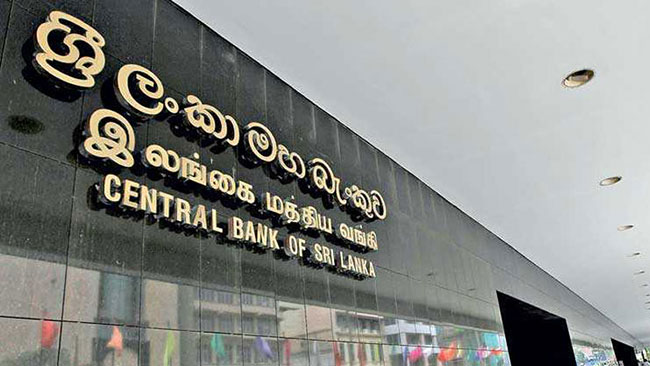
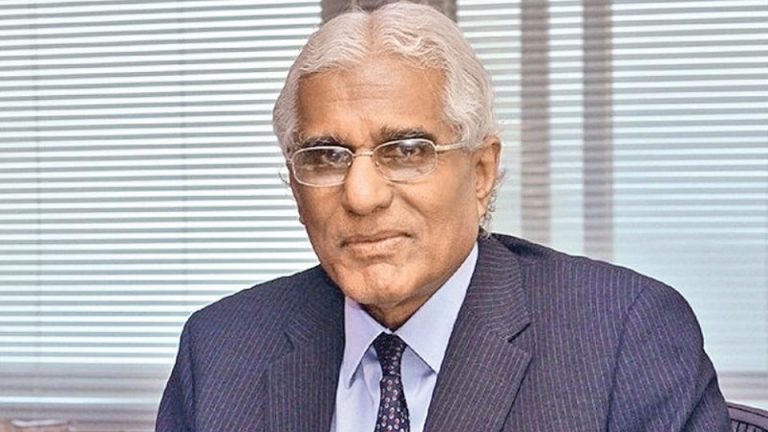
Sri Lanka plans to remove a forced conversion rule of services exports as part of plans to gradually relax controls imposed on earnings of exports  in recent months, Central Bank Governor Nandalal Weerasinghe revealed .

The Central Bank imposed a series of controls on forcing exporters of goods and services to convert dollars by force and also imposed outward exchange controls.

This was an attempt to reduce the the impact of money printing  to keep rates down over the past two years driving up credit and excess demand creating forex exchange shortages.

“In the case of services exports like IT and tourism, we will remove the mandatory conversion requirement,” the Central Bank Governor said.

“Goods imports are made through customs. We have no way to track these services. We have been told that some person are not bringing these money in at all because of the forced conversion rule,”he said adding that“We want to progressively remove this also.”

The Central Bank was also planning to relax a rule that required tourists to pay hotels in dollars only.

Governor Weerasinghe immediately slashed a surrender requirement which made banks transfer 50 percent of export and remittances to the central bank for new money, to 25 percent.

Analysts and economists have pointed out that the steep depreciation of the rupee during an attempted float (suspension of convertibility) was due to the surrender requirement .

When a third world intermediate regime central bank prints money, the controls imposed rapidly worsen the crisis. Analysts had pointed at the time that the conversion rules were similar to those imposed by Zimbabwe which was printing excess RTG dollars.

“We want to progressively remove control step by step,” Governor Weerasinghe said. “For the time being these have been done to stabilize the foreign exchange rate market.”

Governor Weerasinghe said the exchange rate was not being controlled and expatriate workers and other were getting a fair rate now.

Under Governor Weerasinghe policy rates were raised to 14.50 percent from 7.50 in a bid to end the fundamental cause of the currency crisis which is money printed to keep interest rates artificially low.

Treasuries yields have also been allowed to go up, which will drive private savings to the budget deficit instead of to areas like construction and capital goods imports, creating forex shortages for items like medicines.

There have been no major food shortage due to the use of Undiyal payments through open account imports.

Newly appointed Treasury Secretary has also ordered a temporary halt in capital expenditure which will also reduce the deficit, the need for money printing and high rates and construction related imports.