Home Blog Page 2269

Central Bank bans the inward and outward remittances from illegal channels

0

The Central Bank has taken new measures to improve the domestic foreign exchange market to present forex liquidity in local banks .

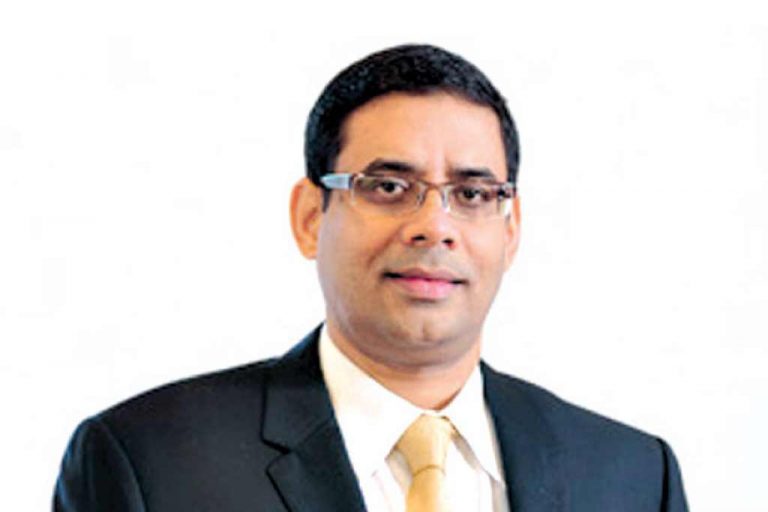
Finance Ministry will issue a new gazette notification under the Import and Export Control Act, making all payments on imports to Sri Lanka through a banking system compulsory, says the Central Bank Governor. Dr. Nandalal Weerasinghe

Addressing a special media briefing on Friday 29 , Dr. Nandalal Weerasinghe said several measures will be taken by the Finance Ministry and the Central Bank to curb the transactions in foreign exchange outside the banking system.

He noted that the reason for the foreign exchange shortage in the local banking system is the remittance of funds through informal transfer systems such as Hawala and Undiyal.

As the first step against informal fund transfer methods, a gazette notification is expected to be issued either today or tomorrow to make it mandatory that all payments for imports to the island are made through the banking system.

He also assured that the Central Bank would give its best to minimize these informal fund transfers and demand for such transfers.

If the payments are not made through the banking system, the imported items will not be cleared by the Customs, the Central Bank governor added.

He noted that going forward imports will be allowed only on the basis of Letters of Credit (LCs), Documents against Payment (DP) or Documents against Acceptance (DA) terms. Any imports other than these three methods will not be cleared by the Customs. About 20% of imports come via Open Account terms.

The move, according to the Governor, will help curtail the grey forex market as well as unofficial remittance channels such as Hawala or Undiyal which is a source to finance imports made in Open Account method.

It was pointed out that given the demand for forex by those engaged in Open Account imports, the grey market thrived with help from Hawala/Undiyal channels. This also encourages a higher premium for foreign currency via this option.

Whilst noting that the premium or the gap between rates offered by formal banking channels and grey market is reducing, Dr. Weerasinghe said the latest measure will minimise it further.

More importantly, ban of Open Account transactions will also help reduce unnecessary imports. Due to ongoing initiatives, imports in March had reduced to $ 1.7 billion from $ 2 billion in December whilst the Central Bank hopes new measures will help it to be reduced to $ 1.5 billion.

Though noting that there was a degree of overshooting of the currency or that it is overvalued, CBSL Chief urged migrant workers to channel their remittances via official banking channels.

“He recalled that the country used to get $ 500 million monthly and $ 7 billion annually in the past in the form of workers’ remittances and helping the Balance of Payments.

He dismissed the perceptions that sending money via official channels gets squandered by the Government and stressed that such a course will only help their families whilst benefiting the nation.

In response to a question on the mandatory foreign currency conversion by tourists in order to obtain goods and services, Dr. Weerasinghe said the Central Bank will look into relaxing the directive to encourage all foreign currency remittances to be routed through the banking system.

This is not good for the tourism industry and it is an inconvenience for the tourists, he added.

Meanwhile, with regard to the recruitment of debt advisors, Dr. Weerasinghe said the process is in progress and that the Central Bank expects to submit its proposals to the Cabinet of Ministers within a period of one or two weeks.

An Extraordinary Gazette Notification issued increasing the prices of 60 drugs by 40%

0

An Extraordinary Gazette Notification has been issued increasing the prices of 60 drugs by 40%.

The gazette notification was issued by the Minister of Health Channa Jayasumana yesterday (29).

VIEW THE FULL GAZETTE

Govt  to reverse present taxation system back to previous system in 2019 

0

Sri Lanka government is set to reverse the present tax structure back to the previous  taxation system prevailing in 2019.

The ruling party  has introduced  the present system soon after coming in to power in 2019.   abolishing and reducing income generating taxes for the benefit of a few under the cover of an economic stimulus package incurring  heavy loss of revenue for the treasury.

The Finance Ministry will introduce relevant tax revisions as the present taxation has failed to bring expected results , Central Bank Governor Dr Nanadalal Weerasinghe told a media conference in Colombo oN Friday 29..

He added that the Central Bank will be taking necessary action to tighten the monetary policy while the Finance Ministry is to introduce policies and systems to generate revenue while placing  social security nets.

Asa first step, the Finance Ministry will increase sales taxes as an immediate action to raise tax revenue as it has become a very difficult gigantic task after the present government’s action in 2019 to do away with a range of taxes .

The country has lost more than Rs.1 trillion in tax revenue with 33.5 percent  decline in the number of registered taxpayers (corporate and individual) in the country during the past two years  .

Finance Minister Ali Sabri noted that he has no choice but to hike the country’s sales tax as it faces its worst-ever economic crisis.

In an exclusive interview, Ali Sabry conceded the government made a mistake when it almost halved the rate of value-added tax (VAT) to 8% in 2019.

Mr Sabry says the nation needs $4bn (£3.2bn) over the next eight months to pay for imports of daily essentials.

 He added that the current level of VAT is “definitely not sustainable” for a country like Sri Lanka that is dependent on the imports of essentials and said the rate should be raised to 13% or 14%.

He also admitted that a move to cut taxes in 2019 soon after Gotabaya Rajapaksa became president was wrong, adding that the government had waited too long before calling on the IMF for help.

Mr Sabry was also cautiously optimistic that the country will be able to start paying its international creditors again by next year, 

Earlier this month, the Sri Lankan government said it would temporarily default on $35.5bn (£27.3bn) in foreign debt  to make payments to overseas creditors.

Meanwhile, India has offered a $1.5bn credit line for fuel supplies and Mr Sabry said India has agreed to another $500m credit line in principle.

Sri Lanka is set to receive $400m-$600m from the World Bank immediately, which could be used for “cash transfers and building a social safety net for the vulnerable,” Mr Sabry added.

Handing over of drugs and medical supplies

0

High Commissioner Gopal Baglay handed over a large consignment of drugs and other medical supplies to Hon’ble Channa Jayasumana, Minister of Health in Colombo on 29 April 2022. Indian Naval Ship Ghariyal was specially deployed for ensuring expeditious delivery of the medical consignment, a gift from the people of India. 

2.     These medical supplies are in response to the request from Teaching Hospital, Peradeniya. Shortage of essential supplies in the Teaching Hospitalwas noted by External Affairs Minister Dr. S. Jaishankar during his visit to Sri Lanka in March 2022.

3.     More medical consignments in response to specific requests by various medical entities operating in all parts of Sri Lanka are also being scheduled from India. In addition, USD 200 million has been earmarked for the supply of medical supplies under the USD 1 billion credit line for essential commodities like food, medicine etc. 

4.     India has been extending expeditious support to Sri Lanka in the recent past. Overall economic assistance which stands close to USD 3 billion in 2022 alone has been of various kinds – USD 1 billion credit line for essentials; USD 500 million credit line for purchase of petroleum products; USD 400 million bilateral currency swap; and over USD 1 billion under the Asian Clearing Union Framework.  The USD 1 billion credit line is operational and 16,000 MT of rice has already reached Sri Lanka, inter alia other items, under this credit line.

A meeting between Mahinda and Ranil amidst the political crisis

0

It is reported that a meeting between the Prime Minister Mahinda Rajapaksa and the former Prime Minister, UNP Leader Ranil Wickremesinghe was held yesterday (29) morning.

The two had met in Colombo and discussed the matter, but the details of what was discussed have not yet been revealed.

After the meeting, Mahinda Rajapaksa had left for Carlton House, Tangalle to spend the weekend.

Terror at Rambukkana: SSP Keerthiratne and three constables remanded

0

Kegalle SSP K.B. Keerthiratne, who was arrested in connection with the shooting death of a man during a public protest in Rambukkana, is ordered to be remanded on the 6th.

Colombo Additional Magistrate Shalani Perera visited the Narahenpita Police Hospital where he was receiving treatment.

The three police constables arrested in connection with the incident have been remanded till the 13th.

The Theldeniya Magistrate visited the Kundasale Police Hospital where the three were receiving treatment.

In addition, Kegalle Magistrate Vasana Navaratne ordered the Judicial Medical Officer of Kandy to prepare a medical report regarding the three constables receiving treatment at the Kundasale Police Hospital and submit it to the Teldeniya Magistrate’s Court and asked the Colombo Judicial Medical Officer to prepare a medical report on SSP Keerthiratne and submit it to the Colombo 03 Magistrate’s Court.

The lawyers informed the court that the Kegalle Assistant Superintendent of Police and another sergeant involved in the shooting should also be arrested and accordingly, the Magistrate ordered the arrest of any such officers.

Diplomatic briefing by Foreign Minister Peiris on post conflict reconciliation and related issues

0

At a meeting with a group of Ambassadors on 26 April 2022 Minister of Foreign Affairs Prof. G.L. Peiris outlined the progress made by the Government of Sri Lanka in addressing post conflict reconciliation related issues and further strengthening democracy and human rights.      

Foreign Minister Peiris explained the recent substantive amendments to the Prevention of Terrorism Act (PTA) and the steps being taken to draft a comprehensive counter terrorism legislation to bring it in line with contemporary dimensions of terrorism.

The Minister referred to the recent meeting the President of Sri Lanka had with the Tamil National Alliance and the steps being taken to address some of the issues affecting the people of the Northern and Eastern Provinces, including the land and PTA detainees’ issues. He also referred to the report of the Committee of Experts on drafting a new Constitution which was recently handed over to the President and assured that steps will be taken to commence broader consultations.

Referring to the Government’s commitment to strengthening the collaborative relationship with Civil Society organizations and the recent decision to bring the National NGO Secretariat under the purview of the Ministry of Foreign Affairs, Minister Peiris briefed the Ambassadors on the regular dialogue the Foreign Ministry has with Heads of NGOs and the commitment to support their work.

Minister Prof. Peiris also referred to the Government’s commitment to implement the recommendations in the Second Interim Report of the Presidential Commission of Inquiry for Appraisal of the Findings of Previous Commissions and the Way Forward.

The Minister also briefed on the prevailing situation in the country and the steps being taken to address the political and economic challenges in accordance with the Constitution.

State Minister of Foreign Affairs Tharaka Balasooriya, Foreign Secretary Admiral Prof. Jayanath Colambage and Senior Officials of the Ministry of Foreign Affairs were also present.

Insolvent Sri Lanka should swap its central bank with currency board

0

What was good for Sri Lanka under British colonial rule 75 years ago may be worth a try again. Or at least that’s what Mark Mobius, the former emerging markets guru at Franklin Templeton Investments, seems to be suggesting. To regain the confidence of investors, the bankrupt Indian Ocean island could consider swapping its central bank with a currency board, he says.

Mobius has a point. A central bank with discretionary power over domestic interest rates wields enormous power, but not all can exercise it responsibly. If powerful politicians — like Sri Lanka’s President Gotabaya Rajapaksa and his brothers — are going to wreck fiscal management with disastrous tax cuts and ruin agriculture with a ban on fertilizers, and if the monetary authority is simply going to enable that recklessness by printing money, then the country may be better off ditching the bank in favor of a set of rules.

Ultimately, that’s what a currency board boils down to: a protocol. Anything that requires judgment —  such as setting interest rates, bailing out troubled lenders, helping the government raise funds on the cheap — goes out the window. National money is backed 100 per cent (or more) with liquid, risk-free assets held in the foreign anchor currency. In other words, a pure currency board for Sri Lanka won’t resemble Argentina between 1991 and 2001: That system had too many cheat days in its diet. The right model is the Hong Kong Monetary Authority.

Even in Hong Kong, which has run a currency board since 1983, rumors of an impending demise of the peg start to swirl whenever local interbank rates go out of kilter with U.S. rates — as is the case now.

But those rumors are always exaggerated. Yes, the Federal Reserve has turned hawkish, and Hong Kong must, therefore, expect strong capital outflows in the months ahead. But it’s no big deal. The HKMA will automatically sell U.S. dollars to the banking system when the local currency drops to the weaker end of its HK$7.75-HK$7.85 convertibility undertaking, sucking out domestic liquidity so that, as Bloomberg Intelligence strategist Stephen Chiu notes, “local rates may also rise and catch up with the U.S rates, hence supporting the Hong Kong dollar eventually.” Sri Lanka, too, can adopt such a self-executing code, provided it can find the right anchor and an appropriate conversion value. Its rupee has been unofficially pegged to the U.S. dollar since October 2021. However, after dwindling foreign-currency reserves forced the previous central bank Governor Ajith Nivard Cabraal to drop the peg last month, the Sri Lankan rupee collapsed — from about 201 to the dollar to around 350.

Such volatility could be eliminated by giving the exchange rate a strong mooring — of the kind that existed in Sri Lanka’s own past.Before American economist John Exter came to Colombo to help set up a central bank — he became its first governor in 1950 — Ceylon, as the country was then known, ran a hybrid currency board. Ceylon rupees were convertible 1:1 into Indian rupees, but they were backed mainly by British pounds with some Indian currency reserves thrown in. That arrangement worked as long as the Indian currency was also linked to the pound. It started breaking down after World War II.

Newly independent India imposed exchange controls on transactions within the so-called Sterling Area. A year later Ceylon did the same. This created a paradox, as Exter noted, since a currency board couldn’t possibly work without free convertibility into its anchor currency.The lack of convertibility of the Indian rupee and the Chinese yuan is the reason why neither can be the anchor for a Sri Lankan currency board even today. China and India are the island’s top two trading partners, and both Beijing and New Delhi have a keen interest in not letting Colombo lean too much to the other side. That makes the U.S. dollar, the main invoicing currency for global trade, the obvious choice.But at what level? While the current exchange rate is a windfall for the island’s apparel and tea exporters, costlier imports are stoking Asia’s fastest inflation rate.

Prices rose nearly 19 per cent from a year earlier in March. The right level for a Sri Lankan currency board is somewhere between 200 and 350 perhaps; but it will only be known once the contours of the bailout by the International Monetary Fund become clear and uncertainty about the country’s future recedes.Currency boards are typically associated with lower inflation, higher economic growth and smaller fiscal deficits when compared with hard pegs that are supported by promises, rather than protocols. To small countries like Sri Lanka (population: 22 million), they present a legitimate alternative even to flexible exchange rates with monetary independence, which may not achieve much anyway because of political meddling. Yet life under a currency board isn’t a cakewalk. Starting in the late 1990s, Hong Kong had to put up with agonizing deflation for several years.

The city’s economy was still hemorrhaging from the 1997 Asian Financial Crisis, but the Fed raised U.S. interest rates all the way to 6.5 per cent. Hong Kong mortgages were under water; unemployment was high. Right up to its 20th anniversary in 2003, the currency board was getting a lot of flak. Yet, when asked what might happen if the Hong Kong dollar was allowed to float, Joseph Yam, the then HKMA chief, quipped: “We have no wish to find out.”Sri Lanka’s technocrats need to be similarly prepared to leave credit creation to commercial banks, growth and jobs to the government and interest rates to an algorithm. After all, a dollar-backed currency board isn’t very different from substituting the national currency with a stablecoin like Tether. But is that what the island really wants? That’s the question it needs to answer first.   

BUSINESS STANDARD

State owned Enterprises directed to remit portion of earnings to the treasury

0

Sri Lanka ‘s State owned Enterprises (SOE’s) have been directed to remita portion of their earnings to the treasury in accordance with government financial regulations and finace act.

Committee on Public Enterprises (COPE) Chairman Prof. Charitha Herath MP said that a significant amount of annual revenue earned by state institutions should be sent to the Treasury as it does not happen now.

The State Timber Corporation had earned an operating profit of Rs. 1.4 billion (1,496,155,864) for the year 2021 of which only Rs. 100 million had been transferred to the Treasury, he said adding that profit making institutions should send a significant portion of their earnings to the Treasury.

Herath made these remarks when officials of the State Timber Corporation appeared before COPE when the Auditor General’s Reports for 2019 and 2020 were evaluated by the Committee.

The Committee also noted that it had on 10 October 2012 directed that action has to be taken to amend the Corporation Act to empower the State Timber Corporation to issue a certificate for imported timber, but this has not yet been done. Officials of the Timber Corporation stated that a board paper has been submitted for this purpose, but no action has been taken since 2012 to date.

The COPE Committee inquired into the write off of Rs. 14.4 million worth of debts by the Corporation without the approval of the Treasury.

The officials said that the decision was taken by the then Acting Board of Directors in 2007 with the approval of the Corporate Audit and Management Committee.

The COPE Chairman said that since the Secretary to the Treasury is in charge of the Consolidated Fund for Public Debt, if the debtors are cut off, the Chief Accounting Officer should inform the Secretary to the Treasury and obtain permission.

The COPE chairman noted that furniture outlets owned by the Corporation as a whole have incurred huge losses.

The Auditor General stated that the wastage of large quantities of timber in the production of furniture has been observed as a reason for these losses and that by-products of discarded timber can reduce this loss to some extent.

Officials said that this was due to the lack of employees with proper knowledge of furniture manufacturing and the need to compete with the private sector in the market.

However, it was revealed that the major shortcoming of the State Timber Corporation was not producing furniture. The Chairman instructed the Secretary to the Ministry to send a report within a month on the future course of action to be taken in consultation with the relevant officials.

The Committee also noted that two advisors and a driver had been recruited to assist the Chairman of the Corporation in contravention of the circular instructions only with the approval of the Board of Directors

The recruits were paid an allowance of Rs. 2,850 per day for 270 days, a sum of Rs. 769,500, from 12 February to 3 September 2019.

Although the approval of the General Treasury was sought for this purpose, it was not received, and the COPE Chairman informed the Secretary to the Ministry to take legal action against the relevant Chairperson.

Moreover, the committee noted that the corporation had incurred a loss of Rs. 982,473 after reducing the price of items valued at Rs. 1,690,183 by more than 50 percent to Rs. 707,710 and the General Manager of the Corporation stated that this decision was taken due to the fact that the furniture was in a defective condition after being kept for too long without disposal.

First Sri Lanka Tea Shop and Cultural Centre Opened in Beijing

0

 Sri Lanka tea is being promoted in China in a big way by setting up of tea shops and carrying out promotion campaigns on the directives of the Embassy of Sri Lanka in Beijing  

Under this initiative the first Sri Lanka Tea Shop and Cultural Centre in Beijing opened on 20 April 2022 in the prestigious Xiu Shui Street, Chaoyang District.

The Embassy of Sri Lanka in Beijing in collaboration with the China Sri Lanka Association for Trade and Economic Cooperation (CSLATE) and the Beijing Wanhongtai Technology Group Co., Ltd. Company took the initive  in the setting up of this tea promotion venture. 

The shop with its large outdoor area has been made available to the Ambassador free of charge. This initiative is among a range of activities undertaken by the Embassy to commemorate the 65th Anniversary of establishing diplomatic relations and 70th Anniversary of the Rubber-Rice Pact. 

The Deputy Secretary General of the Shanghai Cooperation Organisation (SCO), Government officials, representatives from Diplomatic Missions in Beijing, and the Chinese business community attended the event.

The Ambassador of Sri Lanka to Beijing, Dr. Palitha Kohona, addressing the gathering, said that this was a pioneering initiative to promote Ceylon Tea in China and thanked CSLATE and the Beijing Wanhongtai Technology Group Co., Ltd. Company for their inspiring vision.

He also stated that this was the first Ceylon Tea Shop and Cultural Centre in China and he was hopeful that many more would follow. 

Ambassador invited the attendees to encourage their friends to visit the tea shop to taste Ceylon Tea and relax. Ceylon Tea was among the top and leading black teas in the world due to its unique flavour and scent. Second Secretary (Tea Promotion) Sampath Perera demonstrated Ceylon Tea preparation. 

He also spoke of the seven regions of Sri Lanka that produce Ceylon Tea and their distinctive taste and aroma.