Home Blog Page 2270

Sri Lanka Insurance posts record profit of Rs11.7 billion in 2021

0

Sri Lanka Insurance Corporation(SLIC) yet again recorded stellar performance in the year 2021 to record a profit before taxation of Rs. 11.7 billion for the year 2021, with a strong improvement in combined Gross Written Premium (GWP) of Rs. 43.2 billion denoting a growth of 9.7%.

Notwithstanding the stringent economic and social conditions that prevailed in the country, Sri Lanka Insurance’s asset base increased to Rs.268 billion and the Life fund to Rs. 152 billion to uphold the position as the largest and strongest insurer in the country.

Further, although placed on a negative watch as all other local insurers, due to the current economic situation of the country Sri Lanka Insurance managed to retain AA (lka) Fitch rating for long term financial stability. SLIC is the only insurer to be certified with an AA (lka) rating.

In another victorious achievement, SLIC secured the ‘Most Valuable General Insurance Brand’ and the ‘Most Loved Insurance Brand’ of the year for the 5th consecutive year by Brand Finance, reaffirming the insurer’s people-centric approaches taken over the past years.

In the year 2021 Sri Lanka Insurance reported a 14.1 % growth in life insurance premiums increasing to Rs. 21.9 billion from 19.3 billion.

Sri Lanka insurance in 2021 surpassed its own record to declare a sum of Rs.8.6 billion as a bonus to policyholders.

The cumulative life insurance bonus paid out during the past 15 years tops a massive Rs.73.2 billion making the SLIC bonus payout unmatchable.

Sri Lanka Insurance General, The number 1 General Insurance provider in the country leads the local General Insurance market by reporting a 5.4% premium growth increasing to Rs.21.2 billion.

Sri Lanka Insurance continues to explore avenues to provide protection to communities, segments and age groups and different affinity groups through product and market development initiatives, through practical and affordable insurance solutions.

The strength of its extensive branch network of 190 branches and customer service locations together with 8000 Advisor network serves beyond the mandate of insurance to provide protection to the people of this nation.

SLIC has been taking the lead and making steady progress in transforming its operational architecture and front end customer interfaces to ensure increased digital integration and the Motor claim settlement process being re-engineered to facilitate fast-track and contactless claim settlements to customers.

SLIC also accelerated the digital strategy to systematically automate the systems and processes with the ultimate aim of migrating to a paperless environment at all levels of the business.

The “Work Flow Management System” is transforming all internal manual and paper-based operations into digital-driven systemized operations.

Payments processes are also transforming towards more digital and paperless procedures to enhance efficiency as well as to reduce cost components.

Commenting on the excellence achieved during the year SLIC Chairman Eng. Vijitha Herath noted “The past year brought us countless challenges as well as opportunities to extend our service further and fulfil our duty and responsibility to the country as the protector of the nation.

Chief Executive Officer of Sri Lanka Insurance Chandana L. Aluthgama noted, “Amidst the highly competitive market conditions and dynamic consumer patterns we have yet again demonstrated our resilience and prudent strategic practices to record a phenomenal financial result for the year 2021.

Sri Lanka’s renewable energy generation faces the risk of collapse

0

Sri Lanka’s renewable energy generation is now at stake as these energy developers are currently facing financial constraints owing to non-payment of their dues for the electricity supply by Ceylon Electricity Board(CEB).

Renewable Energy Associations warned that they have no alternative other than halting their operations as they have not received any payment from the CEB since 2021.

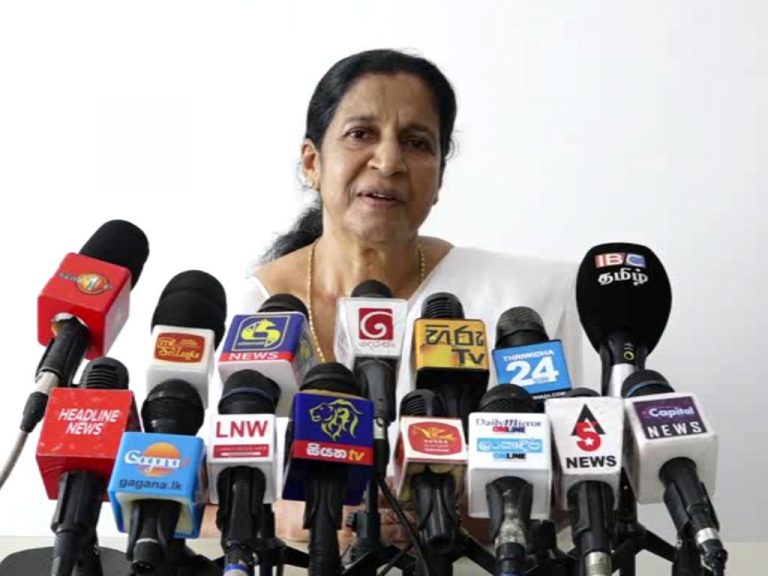
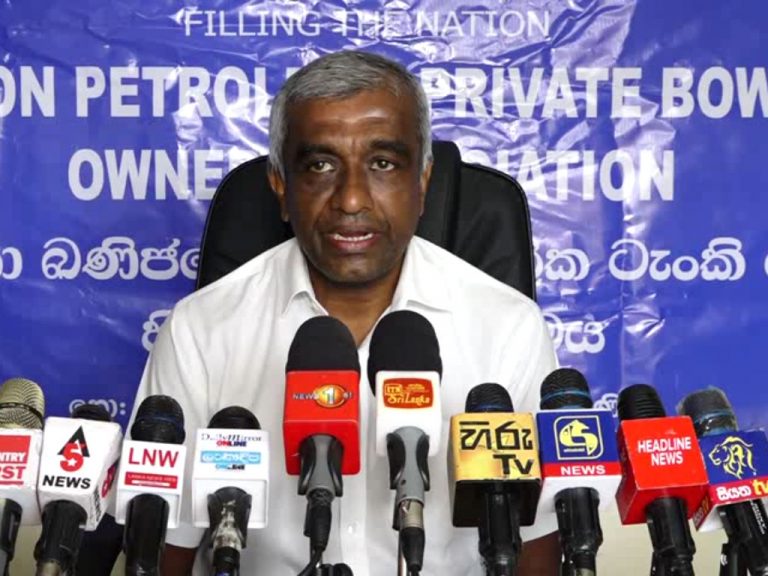
Renewable Energy Associations that include Small Hydro, Wind, Solar, and Biomass power developers, and also Solar Industries Association of Sri Lanka,have jointly announced their plight at a press conference held recently.

They noted that the national grid of Sri Lanka risks losing 1250.9 Megawatts (MW) of power generated by renewable energy developers, as the Ceylon Electricity Board (CEB) has not paid for the electricity supplied by them since August 2021.

Office bearers of the respective associations emphasized that at this critical juncture where the country is in a dire economic state, the renewable energy developers are hard-pressed to cease operations as they are unable to meet their critical payment obligations including paying employee salaries, maintenance, and debt obligations.

The net effect of this would not just be that the country would lose this mass of clean energy, but it will lead to a severe economic crisis as the alternative will be to procure thermal power burning fossil fuel at an astronomically high cost of about Rs.90/- per unit as opposed to the average cost of Rs. 15.77 paid for renewable energy. This will exacerbate the forex crisis and be unbearable to the country at this juncture.

As a whole, CEB owes approximately Rs. 22 billion to renewable energy operators. This has brought the industry to its knees, posing a serious threat of not being able to pay salaries to about 7000 employees potentially leading to a severe social crisis.

At the same time, the banks have lent about 60 billion to the industry, and servicing these loans will come to a grinding halt soon. This can impact the banking system as well.

On the other hand, there are about 550MW projects in the pipeline for impending financial closure and if those are not financed and developed, the country will turn to high-cost fossil fuels for power, further compounding its economic woes.

Sri Lanka is in a huge power deficit because of the wrong type of power plants in operation.

Renewable energy is the cheapest and cleanest option available, however, these payment defaults will seriously discourage potential investors to the sector, completely halting the country’s ambition to become a high renewable energy generating nation.

Broke, downgraded and begging: Sri Lanka pays price for missteps

0

MARWAAN MACAN-MARKAR, Asia regional correspondent

BANGKOK — Sri Lanka’s failure to settle interest payments on sovereign bonds and its subsequent ratings downgrade have drawn unflattering comparisons with the economic meltdown in Lebanon.

The South Asian nation on April 18 failed to pay interest of $78.13 million on $1.25 billion of bonds. Standard & Poor’s followed up this week with a downgrade to a “selective default” rating — the latest knife in the back of the debt-ridden economy.

Foreign investors who had bought the island’s international sovereign bonds (ISBs) were angry that they were misled by promises the debt would be paid. The principal cheerleader was Nivard Cabraal, the then central bank governor. Throughout he stood by views he had expressed to Nikkei in a February interview: “I am determined to pay [ISB holders.]”

“The market was expecting the April 18 coupon to be paid because of assurances by government officials that funds were available,” a London-based emerging markets investor holding Sri Lankan ISBs told Nikkei Asia. But it was “an illogical promise, Lebanon-level illogical,” he added, referring to the Middle Eastern nation that defaulted on its foreign loan payments in 2020.

Sri Lanka’s financial authorities informed international lenders a week before the coupon payment that the country was strapped for foreign reserves. In an $81 billion economy, those reserves had slumped to $200 million, money that is now critical to buying food and other necessities.

That made the country, which must settle foreign debt of $6.9 billion this year, a sovereign defaulter for the first time.

Through July 25, Sri Lanka is on the hook to pay off a $1 billion ISB and make interest payments on other multibillion-dollar ISBs. But since 2020, when ratings agencies downgraded the country’s debt to junk status, the familiar route of borrowing from international capital markets to pay off maturing ISBs has been shut to Sri Lanka.

By the end of that year, the country’s foreign debt was $38.6 billion, or 47.6% of the central government’s total debt, according to the International Monetary Fund.

Now new Finance Minister Ali Sabry is learning that international financial remedies can be slow and daunting. Economic analysts in Colombo, the country’s commercial capital, said the preliminary round of discussions Sabry had with IMF officials in Washington was a “reality check” for a government “not aware about a lot of things.”

These blind spots ranged from “the dangerous macro position that the economy was heading towards, the implications of taking foreign reserves to the brink … a debt default … and the time taken to get an IMF program,” said Anushka Wijesinha, co-founder of the Centre for a Smart Future, a Colombo-based public policy think tank. “The reality is certainly just sinking in, and I think everyone needs to be ready for an extended period of very challenging domestic economic conditions.”Protesters shout slogans and wave Sri Lankan flags during a demonstration in front of the Presidential Secretariat in Colombo on Monday.   © EPA/Jiji 

Sabry returned home empty-handed because the fund was requiring Sri Lanka to restore its debt to sustainable levels to qualify for a financial bailout.

“Any release of funds from the IMF is preconditioned to the fact that [Sri Lanka’s] debt needs to be sustainable,” Sabry, a senior lawyer and confidant of ultranationalist President Gotabaya Rajapaksa, told local media over the weekend, following his talks with the fund.

He had flown to the U.S. in the hope of securing $4 billion in emergency financing to help pay for enough food, fuel and pharmaceutical imports to get Sri Lanka through the year. These essentials are increasingly scarce and costly. In March headline inflation reached a record 21.5%.

Meanwhile, government policy flip-flops have left the population in economic pain, sparked unprecedented protests across the country and stirred up rage directed at the hawkish president.

While Sabry was in Washington from April 18 to April 22, the IMF gave him a list of what the government needed to do to address Sri Lanka’s twin deficits, its widening budget deficit and unbridgeable current-account deficit.

The IMF said Sri Lanka must implement a “credible and coherent strategy to restore macroeconomic stability,” Masahiro Nozaki, the IMF’s Sri Lanka mission chief, said in a statement. The strategy should also include “stronger social safety nets to mitigate the adverse impact of the current economic crisis on the poor and vulnerable.”

The government’s decisions to default on foreign loans and seek IMF assistance mark an about-face for Rajapaksa, who for months stubbornly resisted taking these steps despite repeated calls from independent economists that he do so.

While Sabry was in Washington conducting begging-bowl diplomacy, including with South Asian neighbor India, Rajapaksa admitted to making policy errors.

“During the last two and a half years we had vast challenges,” Rajapaksa said during an address to a new 17-member cabinet — the second group of appointees after his first cabinet resigned en masse in early April because of growing public anger. “[They included] the COVID-19 pandemic as well as the debt burden, and some mistakes on our part.”

The heavy economic price Sri Lanka is paying for the government’s delay has not been lost on opposition parliamentarians.

“If they went to the IMF earlier, we would not have defaulted on our loans and it would not have been so detrimental,” said Harsha de Silva, an economist and lawmaker with the opposition Samagi Jana Balawegaya party. “The people have realized the economic reality and consequence of bad policies — suffering [to] no end, no food, no fuel and no medicines.

NIKKEI ASIA

May 02nd declared as a public holiday

0

May 2 has also been declared a public holiday.

This has been announced by the Ministry of Public Administration.

Accordingly, as there is a holiday for the festival of Ramazan on the 3rd of May, it seems that the people have received a four-day long weekend holiday.

Earlier in the year, the government had announced two additional holidays in the same manner and the same week the Galle Face protest premises was filled with people.

Tourist arrivals decreased due to protests – Prasanna Ranatunga

0

Minister of Public Security and Tourism Prasanna Ranatunga says that the number of tourists has decreased due to the social problems and protests caused by the economic crisis.

The Minister states that for the first time since the resumption of the tourism industry, less than a thousand tourists have arrived daily this week.

He says the country’s economy can only be strengthened if an environment conducive to tourism is created.

Minister Ranatunga says that only through this can a solution be found to the dollar crisis.

Meanwhile, he points out that there is no possibility of resolving the current economic crisis through protests as well as riots.

President agreed to an all party government – Maithri

Former President, Sri Lanka Freedom Party leader Maithripala Sirisena says that President Gotabhaya Rajapaksa has agreed to form an interim all party government representing all parties in parliament.

He was addressing the media after a discussion with the President today.

Analysis-Complex Web of Creditors, Politics Threatens Sri Lanka Restructuring

0

By Jorgelina do Rosario

LONDON (Reuters) – Social unrest, political uncertainty and a complex web of creditors could scupper Sri Lanka’s push for a swift overhaul of its $12 billion overseas debt, analysts warn, saying the South Asian nation is fast running out of road.

A mix of Japanese, Chinese and Indian loans, a pile of bonds held by overseas investors and talks on an International Monetary Fund (IMF) bailout have added complexity to the South Asian nation’s worst financial crisis since independence in 1948.

S&P Global Ratings on Monday cut Sri Lanka’s foreign-currency debt rating to “selective default” after it missed interest payments.

In a flurry of activity over the past week, the World Bank agreed to provide $600 million to help pay for essential imports, the IMF said the government must raise interest rates and taxes and adopt flexible exchange rates, and Sri Lanka said it has begun debt-refinancing discussions with China.

“The IMF response has been very positive and the sense we get is they will try to expedite a programme within their parameters,” cabinet spokesman Nalaka Godahewa told Reuters. “We are in discussions with India, the World Bank and (Asian Development Bank) for additional support, so Sri Lanka is in a better position now to manage until IMF funds come.”

The Finance Ministry declined to comment.

The economy of the nation of 22 million people melted down after a large 2019 tax cut by President Gotabaya Rajapaksa drained government coffers and COVID-19 hit the lucrative tourism industry. Foreign reserves fell 70% over the past two years to $1.93 billion, leaving Colombo struggling to pay for such essentials as fuel, medicines and food.

Facing soaring inflation in addition to shortages, thousands have been protesting for weeks, demanding the resignation of Rajapaksa and his brother, the prime minister.

Colombo hopes it can conclude the IMF aid talks in about six months but it cannot control how long negotiations will take.

“Six months is quite ambitious,” said Guido Chamorro, emerging market portfolio manager at Pictet Asset Management, which holds the country’s bonds. “Sri Lanka resisted for years to go to the IMF, and that means that the Fund is going to ask for reforms to be completed before it provides a package.”

But investors may not be that patient.

“Waiting six months with the current state of affairs is not something viable, as we see a very fast and fluid situation on the ground,” said Joe Delvaux, portfolio manager at Amundi Asset Management, which holds the country’s bonds.

The government has yet to pick financial and legal advisers, a key step before debt talks with overseas creditors.

Godahewa, who is also the country’s media minister, said the government has had more than 50 responses to its search for financial and legal advisers, “and we will proceed quickly”.

CHINA’S ROLE

Sri Lanka is seeking about $3 billion in bridge financing. In addition to the World Bank pledge, India has committed $1.9 billion and is in talks for an additional $1.5 billion in credit for fuel and other essential imports.

Many of the government’s recent decisions have “added more pressure to the debt sustainability,” said Nathalie Marshik, head of emerging market sovereign research at Stifel.

Only recently have policymakers taken concrete steps to pave the way for the country’s 17th IMF programme, devaluing the rupee by around a third in early March and nearly doubling interest rates with a 700 basis-point hike this month.

It is not clear how Sri Lanka can ramp up revenues after posting a 2021 fiscal deficit of over 10% of GDP, given opposition to reversing tax cuts after a hike in fuel and cooking gas prices worsened public discontent.

“Measures would likely hurt the pockets of most of the population,” said Pictet’s Chamorro.

China’s influence is visible: The world’s second-largest economy has invested in such projects as highways, a port, an airport and a coal power plant.

Cabinet spokesman Godahewa said the government’s “only concern is the position of China”, adding, “We will have to use our good relationship with China.”

Sri Lanka owes Beijing some $6.5 billion in financing from development bank loans to a central bank swap, according to the Institute of International Finance (IIF).

“The IMF needs assurances that China, India and Japan will provide some type of financing,” said Sergi Lanau, deputy chief economist at the institute.

Recent talks on Suriname’s debt, with a combination of Paris Club support for an IMF programme and Chinese participation, are a “case to look at closely”, said Stifel’s Marshik.

But not all debt talks where China was a major creditor have seen quick progress recently. Beijing only last week agreed to join Zambia’s creditor committee, two years after the southern African country’s default.

And that was despite Zambia, unlike Sri Lanka, qualifying for an overhaul under the Common Framework – a G20 initiative designed to streamline restructurings for poorer nations.

Sri Lanka’s investors are in wait-and-see mode until there is more clarity on what an IMF programme would look like, but time is running out.

“Sri Lanka has a $2.5 billion gap to be filled for 2022 and 2023,” said the IIF’s Lanau, adding Sri Lanka needs at least $1 billion from the IMF. “The country needs fresh money to spend. If not, it’s going to collapse.”

(Reporting by Jorgelina do Rosario in London; Additional reporting by Uditha Jayasinghe in Colombo; Editing by Karin Strohecker and William Mallard)

Ukraine war: Next stop Moldova?

0

Though still struggling to conquer eastern and southern parts of Ukraine, Russia has indicated it wants to invade yet another former Soviet territory, this time to the west: Moldova.

The landlocked country had not been much in the news since 1990s when the then-Soviet republic declared independence from the collapsing USSR. No one paid much attention to it, least of all the newly minted Russian government headed by Boris Yeltsin. However, Soviet troops remained, under the Russian banner. 

About 1,500 Russian soldiers are still there, in a region called Transnistria, and Russia wants to link up with them by land. Last week, a Russian news outlet quoted Major General Rustam Minnekaev, who commands troops in central Russia, as declaring that a goal of the “special operation” in Ukraine is to open “another way out to Transnistria, where there are also facts of oppression of the Russian-speaking population.

As if on cue, someone shortly blew up a pair of antennas that broadcast Russian-language radio. Then a blast damaged a building that houses pro-Russian security services in eastern Moldova. The security services blamed Moldovans while Russia’s Sputnik news service said Ukrainians who “aim to drag Moldova and unrecognized Transnistria into a conflict” did it.

A supposedly oppressed Russian-ethnic minority was one of Russia’s President Putin’s declared justifications to attack Ukraine.

“I believe that the provocations … are a challenge from the Russian Federation,” former Moldovan Defense Minister Vitalie Marinuta said. “I see them building more and more facts that will give them the right to intervene in the Transnistria region. I think we have reason to worry these days.”

In Chisinau, the Moldovan capital, the government, was quick to blame Russian provocateurs. The attacks were “pretexts” meant to raise tempers, declared Moldova’s Bureau of Reintegration Policies.

On Tuesday, Moldova’s President, Maia Sandu, convened a meeting of security officials to discuss the threat and said the country was being kept in “constant turmoil.

Moldovans had hoped the Ukraine crisis would not upset their own tense pseudo-tranquility. Nonetheless, the war has had a pair of negative effects on Moldova. The Ukrainian port of Odessa – which also serves landlocked Moldova – has been mined and is closed to sea traffic. In addition, about 400,000 refugees have flooded the country.

“We are by far the most fragile neighbor of Ukraine,” Foreign Affairs Minister Nicolae Popescu said.

Russian troops in eastern Moldova have long unsettled the country. Back in the 1990s, they sided with rebellious Russian residents who mostly lived on the eastern bank of the Dniester River. The Russians wanted to remain in Moscow’s embrace. A civil war ensued. 

Ever since, despite off and on peace talks, the country has been split between about three million Rumanian-speaking Moldovans on the west side of the river and 350,000 ethnic Russians along the east bank.

Like Ukraine, Moldova has set its sights on joining the European Union, a further irritation to Putin. The Russian president would like both Ukraine and Moldova to join his alternative Eurasian Economic Market, which currently includes two Central Asian states plus Belarus, Armenia and Russia. Although Moldova relies on Russia for supplies of natural gas and petroleum, it looks West for future prosperity.

In March, Moldova joined Ukraine and Georgia to ask for expedited membership in the EU. The EU is in no hurry. Back in 2014, Moldova signed an association agreement in hopes of aligning itself with EU policies, but association included no guarantee of membership.

Moldova has long lived under implicit threats from Russia. The Russian military cohort supplements a 5,000-member Transnistria militia and about 1,000 armed Cossacks.

Two theories vie to explain Moldova’s possible value to Russian military aims. One centers on the use of Russian troops stationed in Transnistria to invade Ukraine and approach Odessa, Ukraine’s largest port, from the west.

The other centers on a possible total conquest of both Ukraine and Moldova, thus reviving the Soviet-era frontline with NATO at the borders of Romania and Poland.

The Moldovan army’s ability to defend itself is limited. Its troop strength us about 5,700; the country’s air force consists of six old MiG 29 fighter jets.

Without much muscle to back her up, President Sandu called on Russia last week to remove its troops from Moldova. Putin ignored the demand.

Even before the war got underway, the US State Department urged Americans visiting Transnistria “to depart immediately via commercial or private means.”

Ukraine rang its own alarms by banning vehicles with Transnistria license plates from entering the country. In February, the Ukrainians warned that Russia would create some sort of pretext to justify an invasion from Moldovan territory. Kyiv’s fears increased when Russia and its Transnistria allies held joint military drills in March.

Late Tuesday, Russian allies in Moldova raised tensions by directly blaming Ukraine for the attacks in Transnistria. “The traces of these attacks lead to Ukraine,” Vadim Krasnoselsky, the self-styled president of Transnistria, told Russian news agency TASS. “I assume that those who organized this attack have the purpose of dragging Transnistria into the conflict.”

In 2016, two years after Russia’s first invasion of Ukraine, a Swedish government research team visited Moldova and suggested that formal peace remained out of reach. “Though struggling to conquer eastern and southern parts of Ukraine, Russia has set its sights on invading yet another former Soviet territory, this time to the west: Moldova.”

The report explained, “The main goal in this area has been gradually reduced to one of just avoiding a new armed conflict, rather than solving the conflict and reintegrating the country,” the Swedish report said. “This approach and practice lead to the preservation of the current defective status quo and moved it even further away from a conflict settlement.”

It turns out the status quo was not just defective but also untenable.

All President’s Expenditure Heads should be suspended – A proposal to the Speaker

0

Samagi Jana Balawega MP Kumara Welgama says that all the President’s Expenditure Heads should be cut to the last rupee during the next Parliamentary session and then the President will have to resign.

He has suggested that the executive presidency should be abolished within three months after the appointment of the Chief Justice as the acting President.

He has sent a letter to the Speaker with seven proposals stating that he will not support any no-confidence motion or interim government resolution and will not support any government action while Gotabhaya Rajapaksa is in office.

The full article is below.

Distribution of Thriposha to pregnant mothers and young children terminated!

0

It is reported that the distribution of Thriposha has been stopped by the offices of the Medical Officers of Health island-wide.

For a long time, the Government of Sri Lanka has provided free Thriposha as a remedy for malnutrition in pregnant mothers and young children.

But in the face of the current economic crisis, it has stalled.

A spokesman for Lanka Thriposha had told the media that production of Thriposha had been suspended for three months now due to lack of raw materials.