Home Blog Page 229

Sri Lanka’s Aviation Sector Takes Off Amid Steady Recovery

0

Sri Lanka’s aviation industry is regaining altitude after years of turbulence, with passenger and flight movements showing robust growth through 2025, though still trailing the pre-crisis highs recorded in 2018.

According to the latest data from Airport and Aviation Services (Sri Lanka) (Private) Limited (AASL), international passenger movements rose 14.08% while international aircraft movements grew 15.35% during the first nine months of 2025 compared to the same period last year.

From January to September, 7.56 million passengers passed through the country’s three international airports Bandaranaike International Airport (BIA), Mattala Rajapaksa International Airport (MRIA), and Jaffna International Airport (JIA). Arrivals accounted for 49.15%, and departures made up 50.85% of total movements.

Transit traffic also recorded encouraging growth, with 680,821 passengers using Sri Lanka as a transit hub, reaffirming its potential role in regional air connectivity between South Asia, the Middle East, and Southeast Asia. Of total arrivals, 1.7 million were tourists, accounting for 45.9% of air arrivals, reflecting a healthy mix of international visitors and returning Sri Lankans.

While 2025 has marked a year of recovery, the AASL noted that the industry has yet to fully regain its 2018 performance levels — a peak year before the Easter Sunday attacks and the COVID-19 pandemic severely disrupted tourism and travel. In 2018, the sector handled 10.88 million international passengers, 67,351 aircraft, and 279,559 metric tons of air cargo.

After collapsing during the pandemic, the industry has been rebuilding steadily. In 2024, AASL handled 8.88 million passengers, still 18.4% below 2018 levels. However, forecasts for 2025 remain optimistic, with the total expected to reach 10.36 million passengers by year-end if the current pace continues.

AASL has already recorded 56,289 international aircraft movements in the first nine months of 2025 nearly matching the 56,286 handled in the entire previous year signaling a sharp rebound in airline operations. Cargo movement, however, has dipped by around 4%, reflecting global trade slowdowns and lower export demand.

The authority attributed the ongoing growth to the resumption of key airline services, new route expansions, and improved airport infrastructure. BIA’s modernization and terminal expansion project, set to be completed in 2026, aims to double passenger handling capacity, while MRIA and JIA are seeing rising activity from regional carriers.

Industry analysts say the outlook remains positive as Sri Lanka strengthens its position as a South Asian aviation hub. Yet, challenges such as fuel costs, airline competition, and global demand volatility continue to test the sector’s resilience.

Sri Lanka Ranked 7th for World’s Best Food in 2025 by Condé Nast Traveler

0

 Sri Lanka has been ranked 7th among the world’s best food destinations for 2025, according to the prestigious Condé Nast Traveler’s Readers’ Choice Awards, earning an impressive score of 95.56%.

This recognition places Sri Lanka ahead of globally renowned culinary hotspots such as Türkiye, France, Morocco, Colombia, Maldives, South Africa, and Greece.

In its announcement, the leading US-based travel magazine stated that “Sri Lanka is finally getting the recognition it deserves. Dishes are packed with a thrilling blend of spice, colour, and lots of coconut, and look no further than Pettah Market in Colombo to indulge yourself.”

The magazine also highlighted that much of Sri Lanka’s cuisine is rooted in home-cooked traditions, with recipes passed down through generations, adding a “loving touch that makes the food here truly special.”

From vibrant curries and hoppers to sambols bursting with flavor, Sri Lanka’s culinary identity reflects a unique fusion of spice, colour, and coconut, offering a sensory experience that captivates food enthusiasts worldwide.

Ranked alongside world-renowned food havens like Italy, Japan, Vietnam, and Spain, Sri Lanka’s inclusion firmly establishes the island as a must-visit destination for global food lovers.

For the 2025 edition, Condé Nast asked its readers to vote for destinations that best delighted their palates this year, with almost all shortlisted countries scoring above 94%.

Top 10 Countries with the World’s Best Food – 2025:

  1. Thailand – 98.33
  2. Italy – 96.92
  3. Japan – 96.77
  4. Vietnam – 96.67
  5. Spain – 95.91
  6. New Zealand – 95.79
  7. Sri Lanka – 95.56
  8. Greece – 95.42
  9. South Africa – 94.76
  10. Peru / Maldives – 94.55

No Decision to Remove Vehicle Identification Badges for Lawyers and Doctors – Health Minister

0

Health Minister Dr. Nalinda Jayatissa clarified in Parliament today that the government has not taken any decision to remove the identification badges or vehicle pass logos displayed on the vehicles of lawyers and doctors.

Responding to a question raised by MP Rohitha Abeygunawardena, the Minister emphasized that there is no intentionon the part of the government to introduce or enforce any such measure.

Dr. Jayatissa further noted that the existing system remains unchanged and that no official discussions or proposals have been made to alter the current practice.

Gazette Issued Setting Maximum Retail Prices for Imported Rice Varieties

0

The Consumer Affairs Authority (CAA) has issued a gazette notification announcing the maximum retail prices (MRP) for imported rice varieties, effective from October 21, 2025.

According to the gazette, the new MRPs are as follows:

  • Raw Rice – Rs. 210 per kilogram
  • Nadu – Rs. 220 per kilogram
  • Samba – Rs. 230 per kilogram
  • Ponni Samba (Keeri Samba equivalent) – Rs. 240 per kilogram
  • Kiri Ponni / Paal Ponni – Rs. 255 per kilogram

The CAA stated that these price controls are intended to stabilize market prices and ensure affordability for consumers amid fluctuations in global rice import costs.

Sri Lanka and Belize Establish Diplomatic Relations

0

The Governments of Sri Lanka and Belize have formally established diplomatic relations, effective from October 21, following the signing of an agreement in New York.

The agreement was signed by Ambassador and Permanent Representative of Sri Lanka to the United Nations, Jayantha Jayasuriya, and Ambassador and Permanent Representative of Belize to the United Nations, Janine Coye-Felson.

According to a joint statement issued by the two foreign ministries, the establishment of diplomatic relations will strengthen existing friendly ties and promote cooperation in political, socio-economic, and cultural fields for the mutual benefit of both nations.

Parliament Approves New Pricing Formula for Pharmaceutical Drugs

0

Parliament has passed the pricing formula for pharmaceutical drugs, paving the way for the introduction of maximum price limits across various categories of medicines.

Health and Mass Media Minister Dr. Nalinda Jayatissa said the new regulations aim to ensure fair pricing and accessibility of essential drugs to the public. “Under the new system, a maximum price limit will be introduced for each category of pharmaceutical drugs,” he stated.

Meanwhile, the Minister also assured that there will be no change to the name or colour of the ‘Suwaseriya’ Ambulance Service, reaffirming the government’s commitment to maintaining the integrity and identity of the free emergency medical service.

The low-pressure area near the northern coast expected to intensify further and move west-northwestward

0

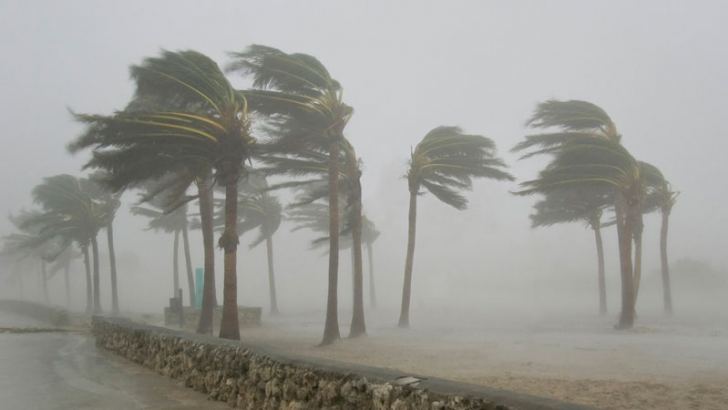
The low-pressure area located near the northern coast of the Sri Lanka is expected to intensify further and move west-northwestward. It is likely to develop into a depression over the coastal areas of northern Tamil Nadu and south Andhra Pradesh during today (22) evening.

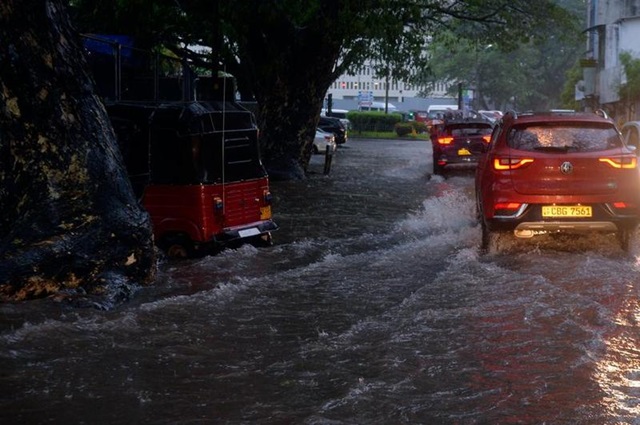
Showers or thundershowers will occur at times in Western, Sabaragamuwa, Central, North-western and Southern provinces and in Jaffna and Mannar districts. Fairly heavy falls about 75 mm are likely at some places in these areas.
Showers or thundershowers will occur elsewhere of the island after 1.00 p.m.
Fairly strong winds of about (30-40) kmph can be expected at times over Western slopes of the central hills and in Western, Northern, North-central, North-western and Southern provinces and in Trincomalee district.

The general public is kindly requested to take adequate precautions to minimize damages caused by temporary localized strong winds and lightning during thundershowers.

Port City Colombo Wins Top Asia-Pacific Investment Award

0

By: Staff Writer

October 21, Colombo (LNW): Port City Colombo has secured two major international accolades in the Global Free Zones of the Year 2025 rankings by FDI Intelligence, the Financial Times’ specialist publication on foreign direct investment. The project was named “Best Knowledge Zone Asia Pacific Region” and received a “Highly Commended” recognition for sustainability achievements that position it among the most promising investment destinations in the region.

The annual FDI Intelligence awards celebrate global free zones that demonstrate outstanding potential in attracting foreign investment, promoting innovation, and driving sustainable development. Port City Colombo’s success underscores its growing reputation as South Asia’s first world-class Special Economic Zone (SEZ) and an emerging hub for knowledge-based industries.

“Being recognised by FDI Intelligence is a testament to the strong foundations we are building at Port City Colombo not only as a centre for international business but also as a model for sustainable, knowledge-driven urban growth,” said Xiong Hongfeng, Managing Director of CHEC Port City Colombo.

Judges cited the SEZ’s progressive regulatory framework, designed to provide an investor-friendly ecosystem, as a key reason for its recognition. The zone’s combination of fiscal and non-fiscal incentives, the establishment of an International Alternative Dispute Resolution Centre, and its emphasis on sectors such as IT, professional services, maritime and logistics were highlighted as major strengths.

The “Highly Commended” sustainability award reflected Port City’s environmentally conscious master plan, which integrates green spaces, energy-efficient building designs, and coastal resilience initiatives. These measures, experts noted, align with global standards for sustainable urban development and reflect Sri Lanka’s growing commitment to balancing economic growth with environmental responsibility.

A multi-billion-dollar FDI-funded venture, Port City Colombo aims to transform a reclaimed area adjacent to Colombo’s financial district into a vibrant global business and financial hub. It offers 100 percent foreign ownership, preferential tax regimes, and international-standard infrastructure to attract multinational companies and investors seeking strategic access to South Asia.

Inspired by successful models such as Dubai International Financial Centre and Singapore’s Marina Bay, the Port City project aspires to create a world-class environment for innovation, investment, and urban living while maintaining a strong focus on sustainability and liveability.

With its latest accolades, Port City Colombo has cemented its status as a rising force in the global investment landscape, enhancing Sri Lanka’s image as a regional gateway for trade, technology, and finance.

New Hydro Power Chief Charts Course for Energy Renewal

0

By: Staff Writer

October 21, Colombo (LNW): The newly elected President of the Small Hydro Power Developers Association (SHPDA), Pathmanatha Poddiwala, has pledged to lead the association through a transformative era for Sri Lanka’s renewable energy sector, marked by both opportunity and uncertainty.

Speaking after his election, Poddiwala described it as a “great honour” to head one of Sri Lanka’s oldest renewable energy bodies, which currently supplies nearly 450 MW of firm power to the national grid among the most cost-effective sources of electricity in the country. He commended outgoing President Thusitha and the previous executive committee for their “exemplary leadership” through years of turbulence shaped by the pandemic and shifting energy policies.

Poddiwala acknowledged that small hydro developers are navigating what he called “turbulent weather.” He pointed to mounting industry challenges, including the enforcement of the new Electricity Act, the unbundling of the national utility, unconsented curtailments of power generation, and termination of power purchase agreements (PPAs) issues that have eroded investor confidence and project bankability.

“These are challenges we are facing for the first time in our history,” he said. “But renewable energy remains the cheapest and most sustainable power source, both locally and globally. That is our greatest strength.”

He underscored that Sri Lanka’s indigenous renewable resources particularly hydropower remain the country’s most valuable natural advantage. While investor activity has slowed due to tariff and regulatory constraints, Poddiwala views this as an opportunity to rethink the sector through innovation, efficiency, and technology integration.

Among his top priorities is the adoption of Battery Energy Storage Systems (BESS) to enhance grid stability and optimize hydro generation. “Storage technology will allow plants to store power during off-peak hours and release it during demand surges,” he explained, highlighting the growing link between renewable energy and emerging markets such as electric vehicles, tourism, and exports, all of which will drive future power demand.

Poddiwala outlined a forward-looking vision for a strategic, inclusive, and globally connected association. His agenda includes developing a long-term strategic plan, broadening stakeholder participation in decision-making, and building stronger ties with international renewable energy forums, financial institutions, and partners such as the ADB.

He also emphasized the importance of public communication, proposing regular briefings and an expanded media and social media presence to better showcase the sector’s contributions to the national economy. A membership expansion drive is also planned to bring in a wider spectrum of renewable energy players.

“We will hold a strategic brainstorming session to define measurable outcomes for each working group,” Poddiwala said, concluding his address with gratitude to members for their steadfast support. “With collective effort and commitment, we can help shape a resilient and forward-thinking renewable energy future for Sri Lanka.”

Sri Lanka’s Education Crisis Deepens amid Chronic Underfunding

0

By: Staff Writer

October 21, Colombo (LNW): Sri Lanka’s public education system, once considered a model in South Asia—is now facing a deepening crisis, largely due to chronic underfunding and weak fiscal management. A new report by Human Rights Watch (HRW), “Tax Giveaways, Struggling Schools,” paints a troubling picture of the country’s dwindling investment in its children’s future, linking the decline directly to inadequate tax revenue collection and misplaced spending priorities.

According to HRW, Sri Lanka spends just around 2% of its GDP on education, less than half the average for low- and middle-income countries, which stands at 4.5%. Two decades ago, the country allocated nearly 11.7% of government expenditure to education, but even then it lagged behind African peers such as Benin and Côte d’Ivoire, which dedicated close to 19%. By 2009, Sri Lanka’s ranking had slipped to among the lowest in its income group—an alarming sign for a nation that once prided itself on near-universal literacy.

The contrast in per-student spending underscores the widening gap. In 2010, Sri Lanka’s spending per primary student was just $516 (PPP)—a fraction of Morocco’s $1,278 or Bolivia’s $2,121. By comparison, the United Kingdom invested $11,192 per student, a figure that dwarfs Sri Lanka’s education allocation by more than twentyfold.

Experts say the shortfall is not merely a budgetary issue, but a reflection of structural weaknesses in Sri Lanka’s tax system. The report highlights that low tax collection—among the weakest in Asia—has forced the Government to depend heavily on borrowing, even to fund basic education infrastructure. The result has been deteriorating school facilities, teacher shortages, and widening inequalities between urban and rural areas.

“Had Sri Lanka’s tax revenues been comparable to other countries in its income bracket, it could have generated sufficient funds to guarantee the right to quality education,” HRW noted, emphasizing the need for fiscal reform over short-term borrowing.

The report also points to “tax giveaways”—generous exemptions and concessions granted to corporations and investorsthat have drained public coffers of vital revenue. Instead of fostering growth, these incentives have left essential public services starved of funding, HRW argues.

As the Government prepares its next budget cycle, education advocates are urging policymakers to rethink national priorities. They call for an increase in education spending to at least 4% of GDP—the global minimum benchmark set by UNESCO—and the phasing out of unnecessary tax holidays.

Without decisive action, HRW warns, the current generation of Sri Lankan students could face lasting disadvantages in a rapidly changing global economy.