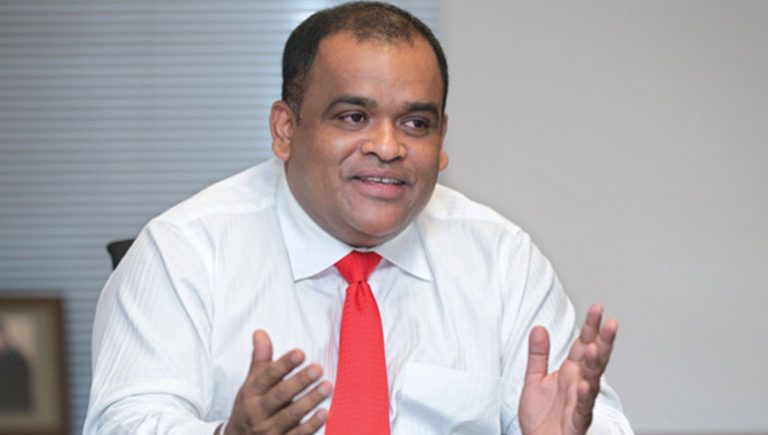
The new Cabinet line-up having the President and Prime Minister Rajapaksas intact is a game of political chairs that deceives the people, said Leader of the Opposition Sajith Premadasa, speaking exclusively to CNBC.
The no-confidence motion is being carried out against the government and the requisite numbers are expected to be achieved, Premadasa revealed clarifying the Opposition’s response to the mis-governance in the country.
Responding to the query on whether the political instability and the political crisis within the country could put the International Monetary Fund (IMF) negotiations for a bailout package at risk, the Opposition Leader clarified that irrespective of political ideology, what is of greatest importance is the country’s national interest, which gains supremacy over everything else and stands for the country’s ability to obtain financial arrangement with institutions in terms of debt standstill, debt moratorium and a scheme to achieve greater rankings in terms of international grading institutions. The ability to enter the international capital market to obtain refinancing loans, which would solve some of the problems, and bridge financing with multilateral partners are required at this point, hence the national interest, he emphasised.
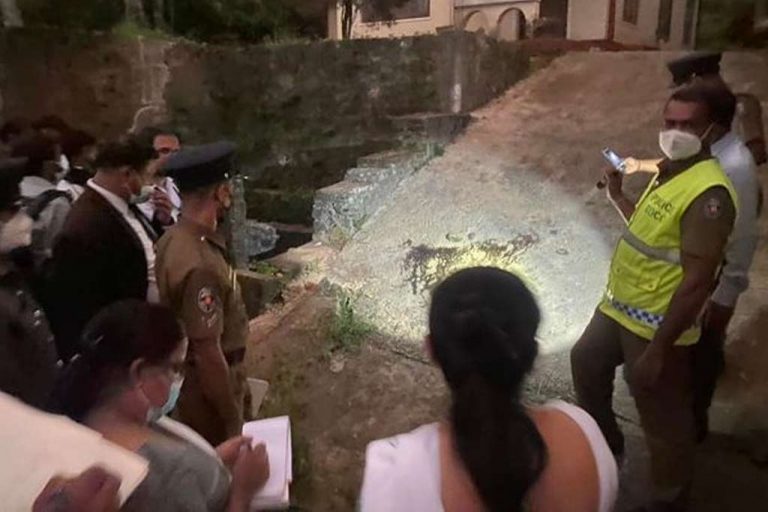
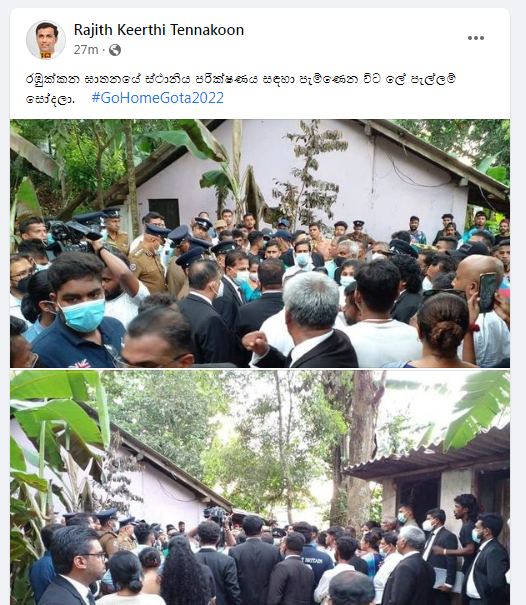
The Police report submitted to the Kegalle Magistrate Court on the shooting at Rambukkana yesterday (19) to disperse a public protest has strongly been opposed.
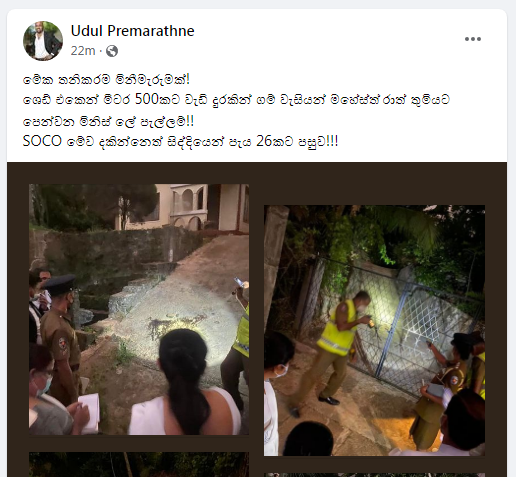
Accordingly, the Magistrate was conducting an on-site probe with the relevant officers from around 2 pm today until the evening. Reports said that the residents of the area have shown blood stains on road about half a kilometre away from the place in which the terror had occurred.
Accusations are being levelled against the Police that the blood stains near the shooting location have been washed away.
The Police were also said to be embarrassed as they were unable to produce a firm statement before the Court, especially in terms of corroborating the story with what the Police Media Spokesperson, the Senior Police Spokesperson, the Inspector General of Police and the Minister in Charge of the Police had produced to the media.
Many legal counsels attended the Court proceeding.
Meanwhile, Attorney at Law Udul Premaratne made a Social Media remark in this regard and published photographic evidence matching the residents’ version of the story.
Archbishop of Colombo His Eminence Malcolm Cardinal Ranjith speaking to media in Colombo today (20) condemned the shooting at Rambukkana and urged the government to call in an independent probe and penalise those responsible.
The Cardinal also urged the government to immediately stop the repression of innocent people who are engaged in protests due to the unbearable economic hardship by illegal means.
He also reminded that protests should be carried out in a dignified and just manner without being deceived by forces who use tactics to weaken them from within.
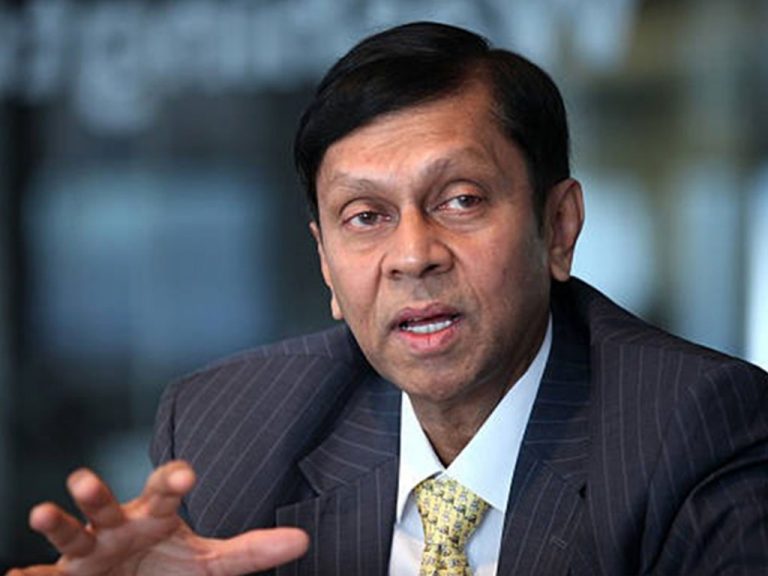
Statement by Ajith Nivard Cabraal on 20th April 2022
This statement is made by me to clarify the background of the decision to provide greater flexibility in the exchange rate as announced by the Central Bank on the 7th March 2022.
From the above it will be clear that, while the Monetary Board had, as a market guidance, expressed its “view” as to the level at which forex transactions would take place, a clear decision had been taken to allow for the flexibility of the Sri Lankan Rupee in the Forex market. It would also be noted that from 8th April 2022 onwards, the Monetary Board under the new Governor and new Secretary, Treasury have continued with the above exchange rate policy, without fixing a specified exchange rate, as was the case immediately prior to 7th March 2022.
Assange is wanted in the US over an alleged conspiracy to disclose national defence information after WikiLeaks published hundreds of thousands of leaked documents relating to the Afghanistan and Iraq wars.
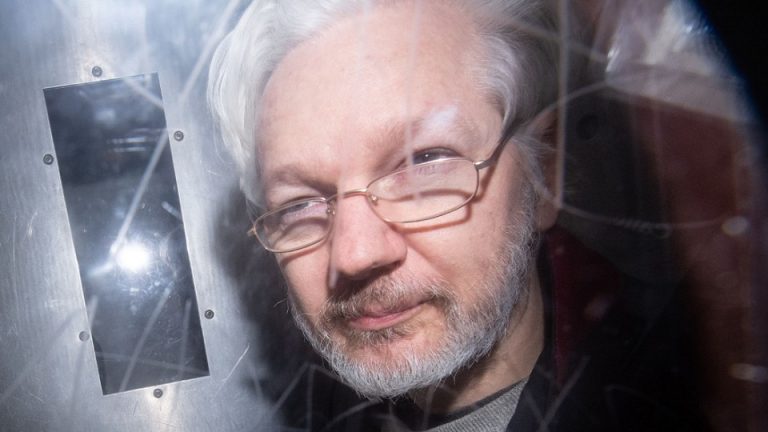
Julian Assange’s extradition to the US has moved a step closer after a court order.
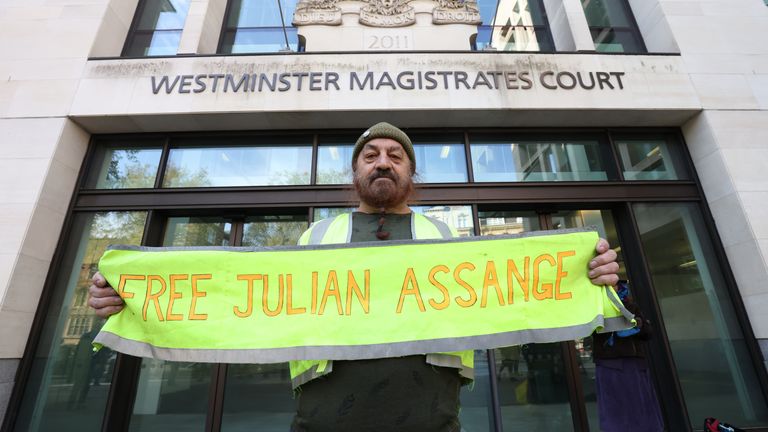
Westminster Magistrates’ Court has formally issued an order to extradite the WikiLeaks founder after years of legal toing and froing.
Home Secretary Priti Patel will need to approve the order, although defence lawyers may yet appeal to the High Court.
Image: Supporters protested the decision outside Westminster Magistrates’ Court on Wednesday
An extradition order was issued by chief magistrate Paul Goldspring during a seven-minute hearing at Westminster Magistrates’ Court on Wednesday.
Mr Goldspring said: “In layman’s terms, I am duty bound to send your case to the secretary of state for a decision.”
The extradition of Assange may yet be further delayed by an appeal.
The 50-year-old was not present in court physically and instead watched the administrative proceedings by video link from Belmarsh Prison.
At one point during the brief hearing he appeared to make a heart shape with his hands.
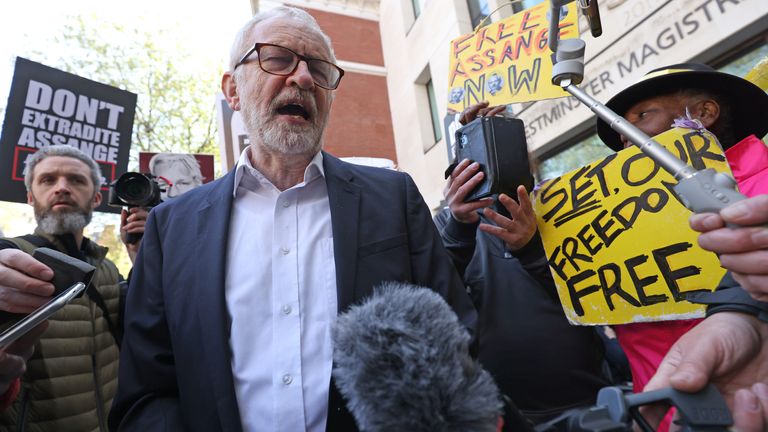
Image: Former Labour party leader Jeremy Corbyn joins supporters of Wikileaks founder Julian Assange protest outside Westminster Magistrates’ Court
Corbyn: ‘We will carry on campaigning’
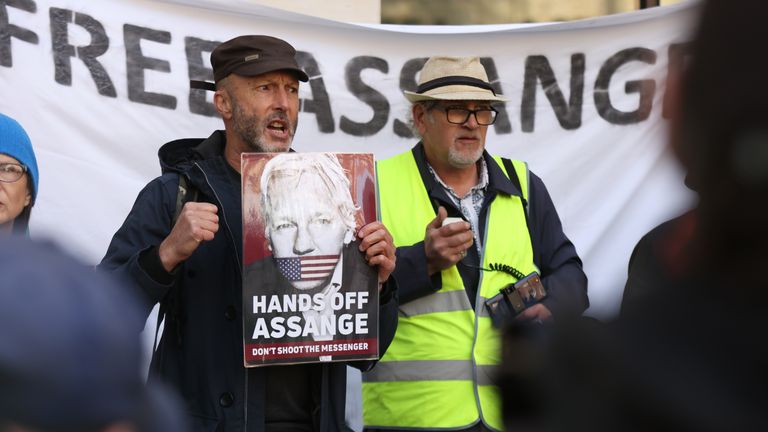
Outside the court, scores of supporters gathered carrying placards reading “don’t extradite Assange”.
Among them was former Labour leader Jeremy Corbyn, who told those assembled: “He’s done absolutely no more than telling the truth to the world.
“We will carry on campaigning.”
Assange is wanted in the US over an alleged conspiracy to obtain and disclose national defence information after WikiLeaks published hundreds of thousands of leaked documents relating to the Afghanistan and Iraq wars.
He has always denied any wrongdoing.
Image: Outside the court, scores of supporters gathered carrying placards reading “Don’t extradite Assange”.
Assange’s legal team has claimed the publication of classified documents exposed US wrongdoing and was in the public interest.
They said the prosecution was politically motivated and that he faces up to 175 years in jail.
Assange, who married his fiancée Stella Moris behind bars last month, has been held in Belmarsh prison for three years since being dragged out of the Ecuadorian embassy in London, where he took refuge in 2012 to avoid extradition to Sweden on a rape allegation he denied.
Business excellence Dhammika Perera attended a meeting at the Katunayake Bandaranaike International Airport this (20) morning, and SJB MP Asok Abeysinghe, who is a former State Minister of Transport Civil Aviation, questioned his visit in Parliament today. Certain media reports claimed that his visit was a part of his plan to purchase the BIA.
However, LNW learned that Mr. Perera joined the BIA meeting to seek the views of the Private Sector on some of the essential development initiatives to be carried out at the Airport in connection with the development of the Tourism Industry, a key area with which Sri Lanka is supposed to recover from the dollar crisis befallen the island nation.
The DP Education Co-Founder also revealed that three main issues pertaining to the matter was discussed at the meeting.
Increase the number of aircrafts that can land at BIA within 24 hours
Even when the country’s Tourism Industry was at its peak in 2018, only 94 aircrafts were able to land at the BIA in 24 hours. The meeting discussed the shortcomings that need to be addressed to increase the number of aircrafts to 250.
Attract more budget airlines (low cost carriers) to operate to Sri Lanka
Generally, by international standards, a budget airline flight should be able to return within 25 minutes of arrival at the international airport. However, according to the current situation at the BIA, it will take about 40 minutes to complete the operation. Therefore the meeting discussed measures to be taken to reduce the additional 15 minutes.
Convert the VIP Lounge and its boarding gates at BIA to normal operations
The VIP lounge at the BIA is currently being used mostly by MPs and Ministers, leaving the terminal empty without use in most cases, considered of which suggestions and ideas were exchanged on how to facilitate passengers during their arrival and departure from the terminal by charging US$ 300 per passenger.
These concerns have been brought to attention at the recent Cabinet meeting and the Ministers have even appointed a committee to seek the views of the Private Sector in this regard, Perera told LNW, adding that he as well as a number of Private Sector business figures and government officials were present at the meeting held at the BIA.
Mr. Perera also debunked the speculations that an unrest situation had occurred at the premises, revealing that all stakeholders to the event have cordially exchanged their views at this successful meeting.
He also reminded that in his 2019 Dialogue Policy Paper titled ‘Sri Lanka 2030 A Developed Nation’ proposals are made to develop the Civil Aviation Sector in Sri Lanka and that in order to achieve the target of attracting an annual incoming of 05 million tourists, the BIA must be upgraded as demonstrated above.
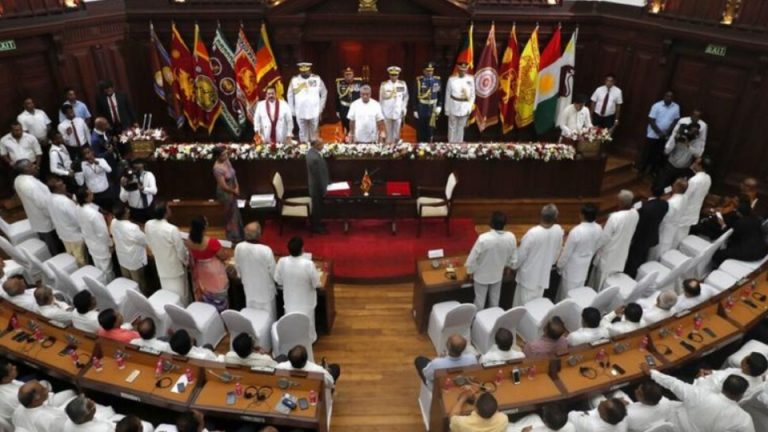
Four more state ministers have been sworn in before President Rajapaksa at the President’s House yesterday (19).
Accordingly, the following ministers have been sworn in;
State Minister of Youth and Sports – Sathasivam Viyalendran
State Minister of Rural Road Development – Sivanthurai Chandrakanthan
State Minister of Textile Industry and Local Apparel Production Promotion – Mohommed Musharuf
Meanwhile, the State Ministry appointed to Suren Raghavan, the State Ministry of Education Services and Reforms, has been amended as the State Ministry of Higher Education.
Despite President Rajapaksa’s confession on not being able to supply fertiliser to the farming community, the people will not forgive him easily, said Prof. Liynage Amarakeerthi, speaking to the public rally organised by the National People’s Power (NPP) at Lipton Circle yesterday (19).
The dagger struck on the hearts of the people by the Rajapaksas being pulled two inches back cannot be defined as progress, he emphasised, adding that this journey, nevertheless, began with the goal of pulling back all daggers struck on people’s hearts by all regimes throughout the course of time.
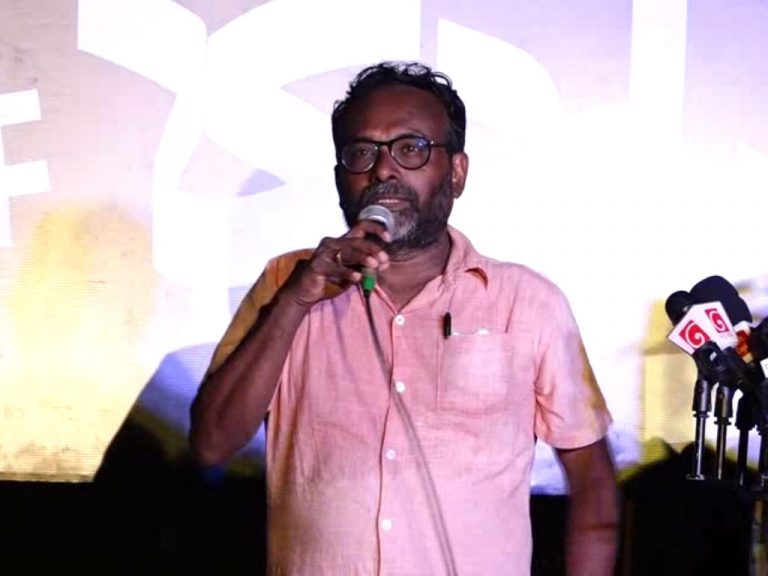
Literary critic Mahinda Prasad Masimbula addressing the public rally held at Lipton Circle yesterday (19) as part of the three-day protest organised by the National People’s Power (NPP) from Beruwala to Lipton Circle demanding the government’s stepping down delivered an artistic interpretation to the people’s struggle.
Driving through the verdant landscape of Rajanganaya, a rural district in north Sri Lanka where the hibiscus flowers pop out of rich green foliage and the mango trees are already weighed down by early fruit, it is hard to imagine this is a community in crisis. Yet for many of those who have farmed this land since the 1960s, mainly with rice and banana crops, the past year has been the toughest of their lives.
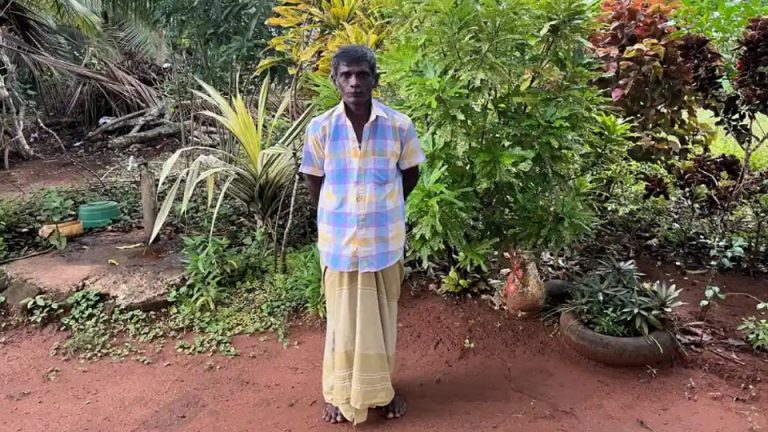
“If things go on like this, in the future it will be hard to find a farmer left in Sri Lanka,” said Niluka Dilrukshi, 34, a rice paddy farmer.
Sri Lanka is grappling with the worst economic crisis since its independence in 1948, and foreign currency reserves sit at their lowest level on record due to what many see as gross economic mismanagement by the government. There is barely a citizen of this south Asian island who hasn’t felt the bite of catastrophic inflation and fuel, food and medicine shortages in recent weeks.
For the farmers of Sri Lanka, their problems began in April last year when President Gotabaya Rajapaksa, who now stands accused of pushing the country into financial ruin, implemented a sudden ban on chemical fertilisers.
The full implications of the ill-advised policy – which has now been reversed – are only just being realised. Farmers say their livelihoods are under threat and for the first time in its modern history, Sri Lanka, which usually grows rice and vegetables in abundance, could run out of food as harvests drop and the government can no longer afford the food imports the country has become overdependent on in recent years. The rice yield dropped to 2.92m tonnes in 2021-22, down from the previous year’s 3.39m, and the speaker in parliament last week warned of imminent starvation among the island’s 22 million people.
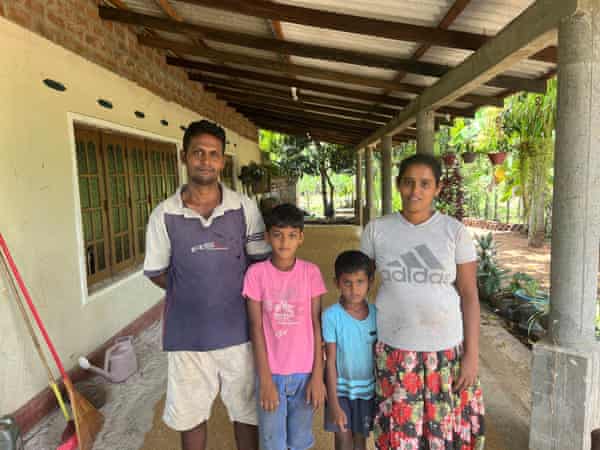
Rice farmer Niluka Dilrukshi with his wife, Milinda, and their two children. They saw their rice crop deplete by 60% in the last harvest. Photograph: Hannah Ellis-Petersen/The Guardian
“We are a tropical country full of rice paddies and banana plantations, but because of this stupid fertiliser ban, now we don’t even have enough food to feed ourselves,” said Rajith Keerthi Tennakoon, 52, former governor of the southern province. “We have had past economic crises, security crises but never in Sri Lanka’s history have we had a food crisis.”
On the face of it, a push to organic farming would be seen as laudable, given concerns over the use of chemical fertilisers. Yet it was the sudden and obtuse manner in which the ban was introduced – imposed virtually overnight and with no prior warning or training – and the questionable motives behind it, that have left even organic farming advocates furious.
Prior to the ban, successive governments had encouraged an overdependence on chemical fertilisers by the country’s farmers, who, thanks to subsidies, would receive hundreds of kilos of fertiliser. Aside from a few select farmers, most had no idea how to successfully implement organic farming practices, and in protest many refused to farm altogether. Some believe the policy was meant to save valuable foreign dollars, others believe it was part of a more sinister agenda, following a growing intervention into the farmers’ lives by the government.
“There was no proper plan, no training or education, so it’s clear to the farmers there was an ulterior [motive] here,” said Vimukthi de Silva, an organic farmer in Rajanganaya.
“Prior to this policy, the government had unsuccessfully tried to commercialise farm land, which is the biggest commercial asset the country has. So many of us think this was another way to try and get farmers to leave their land, or to weaken the farmers’ position and enable a land grab.”
In Rajanganaya, where most farmers operate on a small scale with no more than a hectare apiece, the majority of those the Guardian spoke to reported between a 50% to 60% reduction in their crop harvest. Last week, more than 300 farmers from the area staged a protest calling for Rajapaksa to resign.
“Before the ban, this was one of the biggest markets in the country, with tonnes and tonnes of rice and vegetables,” said De Silva. “But after the ban, it became almost zero. If you talk to the rice mills, they don’t have any stock because people’s harvest dropped so much. The income of this whole community has dropped to an extremely low level.”
For his whole life, 55-year-old HP Sarah Dharmasiri, had farmed udu (black gram) and rice on little more than a hectare, which was enough to feed his family and sell the rest at market to provide necessary income.
But without the chemical fertiliser he was used to, his harvest from his rice crop was so little that he didn’t even have enough to bring to the market. Meanwhile, the price of pesticides needed for his gram crop had increased in price so much that he was forced to take out a high interest loan just to afford them. By the end of the last harvest he was crippled with debt and no profits to pay it off, and he has now taken up work as a daily wage labourer.
“I don’t think I can be a farmer any longer,” he said. “We have some fruits and vegetable in the garden so we can survive for the moment but I think in the future there will be a time when we go starving.”
Several farmers told the Guardian that last season they barely sold any of the rice or vegetables they cultivated, instead keeping it just for their own consumption to ensure the family wouldn’t go starving. It was a decision that led to a drop in the amount that went to the markets to feed the rest of the country, further driving up prices for consumers on top of already sky-high inflation.
Paddy farmer Dilrukshi will only cultivate 0.2 hectares of rice this season, as opposed to the 1.6 he usually harvests. “We can’t afford the expense of cultivating any more, as the yield has gone down while prices have gone up,” he said. “We will be able to sell a little bit of that but not much, the rest we will eat ourselves.”
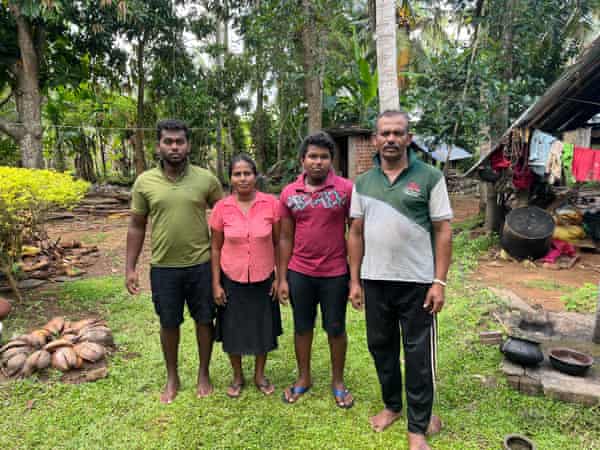
Rice paddy and banana farmer Piyasiri Atalugama and his family, who have stopped farming bananas and can barely afford to cultivate rice. Photograph: Hannah Ellis-Petersen/The Guardian
The problems have been heavily compounded by the domestic economic crisis, rising global inflation and more recently the war in Ukraine, which has sent the price of fuel, pesticides and fertiliser soaring. Seeds have tripled in price, so have become unaffordable for some, and farmers who used to rent additional land for cultivation have stopped for this coming season. Farmers rely on diesel to run their tractors to harvest the land, but prices are so high and availability so limited – some farmers have been forced to wait in queues of over 24 hour to refuel – some have had to abandon this season’s paddy cultivation or will plant late, which means a reduced crop.
The power cuts, lasting upwards of eight hours, have meant that water pumps that send water to higher areas have stopped working, cutting off the water supply for fields of vegetables and bananas. The mills, which turn the paddy into rice, also rely on power and some of the rice crop has gone bad as it couldn’t be milled in time. Farmers also don’t have the petrol or diesel to transport their crops to the market. As the next season approaches, many fear that severe crop shortages are on the horizon.
The prime minister, Mahinda Rajapaksa, announced this week the government would be reintroducing the fertiliser subsidy for farmers, but that was met with scepticism by many. “We know they don’t have the dollars to buy fertiliser,” said farmer Piyasiri Atalugama. “They think they can fool us farmers with false promises.”
In recent months, Atalugama, 49, lost most of his banana crop, which is heavily dependent on chemical fertilisers, and has now decided to stop cultivating the fruit altogether after losing 150,000 rupees (£350).
“I campaigned for Gota [Rajapaksa] – he had huge support from the farmers,” he said. “I am betrayed and sad by what he has done to us.”