Home Blog Page 2303

Only the UNP realised the risk of defaulting?

0

On April 12, the government announced that Sri Lanka would suspend foreign debt and interest payments and that Sri Lanka would no longer be able to repay its debt. The UNP responded immediately and issued a statement to that effect. The UNP has only one seat in parliament, which is represented by the former prime minister. Neither the Samagi Jana Balawegaya, the main opposition party in the country with a larger number of parliamentary seats, nor other parties, including the Janatha Vimukthi Peramuna (JVP), was seen saying anything on the day.

Over the past few months, representatives of the opposition, including Dr. Harsha de Silva, have expressed the view that a country defaulting on its foreign debt is a simple task. They have been urging the government to stop repaying foreign loans since last January.

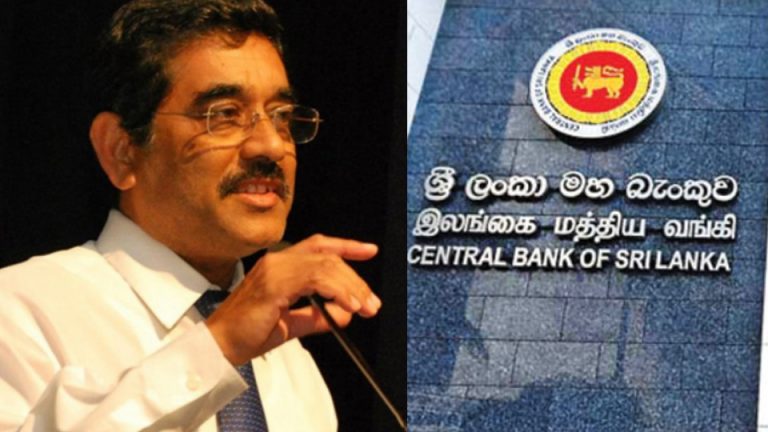
But former central bank governor Ajith Nivard Cabraal never took that step, and he continued to use his personal connections to raise money through hard work, seeking help from various countries. And debt servicing was continued.

He did not succumb to the popular notion of “Defaulting”. But the new Governor of the Central Bank, Nandalal Weerasinghe, instead of trying to raise money within four days of taking office, chose the easy, popular way of defaulting on loans.

What happens next?

What is emerging now is that no commercial bank in Sri Lanka will be able to obtain confirmation for its letters of credit (LC) from a globally recognized foreign bank. For example, if we are going to buy fuel, we must issue a letter of credit to our fuel supplier if that supplier requests confirmation from a bank in the United States for the relevant letter of credit we should provide it. Only then will the supplier accept the letter of credit and ship the fuel to Sri Lanka. In many import transactions in this way, suppliers require confirmation of our letter of credit from a foreign bank. But with the current situation, no commercial bank in Sri Lanka can obtain such confirmation for its letters of credit.

Accordingly, there is a risk that in the future that we will not be able to import any commodities including essential food items, medicines, fuel, and gas based on letters of credit. We will cover the situation on these letters of credit and their consequences in a separate article.

The people of this country will feel the seriousness of this only when the current political turmoil in the country subsides. It will be clear then why former Central Bank Governor Ajith Nivard Cabraal did not agree to default on the loans, despite months of pressure from the opposition.

If Ajith Nivard Cabraal has committed an offense against the law of the land, it should be dealt with separately. But debt repayment is not like that.

He went to foreign countries and continued to borrow and continued debt servicing. Now the new authorities have done something easier and worse. Only the UNP realized this immediately.

The UNP never proposed to default. Because they were aware of the serious consequences here as a political party that had previously ruled. Opposition MPs such as Dr. Harsha de Silva and Patali Champika Ranawaka, as well as economists on Facebook, who have repeatedly suggested to use the money for consumption except for default, will continue to say certain things when this completely crashes in the future.

It is especially important that the UNP pays immediate attention to this action and even comes forward to respond. Governing a country is not as easy as holding press conferences or speaking on stage. It could not be done through mere popularism at all.

Right to Reply –

If any relevant party wishes to make a statement in this regard. Lanka News Web is ready to publish any comment or reply respecting their right to reply, without editing.

Related Articles

http://128.199.126.103/archives/8793/debt-default-did-sri-lanka-pull-the-plug-just-for-us-78-million/

Sajith Premadasa asks the the govt. to stop using racism and extremism to suppress the protests

0

Opposition leader Sajith Premadasa has said that the government is using racism, religious bigotry and extremism to poison the protesters.

Following is the full text of the statement issued by the Leader of the Opposition.

No photo description available.

PM Mahinda Rajapaksa’s Sinhala and Tamil New Year Message

0

It is with great pleasure that we greet the dawn of the Sinhala and Tamil New Year, a proud legacy of Sri Lankans.

Sinhala and Tamil New Year is a great cultural festival for all of us, symbolizing the hope of overcoming sorrows and attaining happiness.

The New Year festival, which passes down the historical socio-cultural values based on agriculture from generation to generation, is a reminder of the past connection of the Sinhala and Tamil people.

Giving priority to auspicious rituals, we all hope to achieve good wishes in the New Year.

Despite the difficult times that exist, we must all work together, as one nation, in harmony.

The government is already putting into action the future plans needed to avoid each of the hardships we face unexpectedly in challenging times. I wish you, your family members as well as the entire country a Peaceful and Happy New Year!

Mahinda Rajapaksa
In the Democratic Socialist Republic of Sri Lanka
Prime Minister

Professional Associations unveil ways for way out of current crisis

0

 The Organisation of Professional Associations of Sri Lanka (OPA) recently expressed it was deeply concerned about the farfetched national catastrophe caused by a multitude of reasons including errors in decision-making leading, anarchy, and indecisiveness.

“We are equally concerned about the very real possibility of this situation escalating into a social and humanitarian crisis,” OPA President Dulitha Perera said at a briefing. 

OPA considers duty-bound to assist the executive and the legislature with proposals to overcome the current situation.  

It said Sri Lanka is in an economic catastrophe and people are demanding the President and all 225 Members of Parliament (MP) step down. 

While this may be the ultimate solution, from a practical standpoint, even if the President and 225 MPs step down today, it will take at least six months for the country to have fresh elections and elect its new leaders. 

Besides that, there are roadblocks in the Constitution preventing Sri Lanka from having early Presidential and Parliamentary elections.  As a nation, we cannot afford to wait that long to handle the current economic crisis and it needs to be handled immediately.

To stabilise the economy and the administrative system in the country, the OPA hereby proposes solutions to address multifaceted issues faced by the country. 

OPA is of the view that the executive and legislature encompassing all political parties’ wholehearted support is inevitable if we are to reap the maximum benefit of this proposal.

As the general public is rejecting the existing administrative system altogether with the incumbent Cabinet and MPs, fresh appointments are suggested consisting of people with subject matter knowledge based on meritocracy. 

This Cabinet should be outside of the current MPs and should consist of subject matter experts. e.g., Ministry of Power should be handled by an expert in the Power Sector and the Ministry of Finance should be handled by an expert in the Finance Sector.

The Constitution does not permit appointing non-MPs as Cabinet Ministers, therefore, first, we need to get such subject matter experts into the Parliament. 

OPA proposes that all political parties get their current national list MPs to resign and mutually agreed subject matter experts be appointed as new national list MPs. This would pave way for subject matter experts to take up appointments in the new Cabinet.

The President should allow the subject matter experts to take independent decisions in the best interest of the country. Such decisions should not be subjected to revision by the President through his executive power and such decisions of subject matter experts should be upheld. 

As a matter of urgency, the new Cabinet should negotiate with all multilateral financial institutions on debt restructuring and actively get involved in administering day-to-day affairs. 

While the discussions are ongoing with multilateral financial institutions similar process should be followed in restructuring bilateral borrowings. 

Parliamentary and Presidential elections shall be held at the earliest possible time according to the Constitution, fulfilling peoples’ desire of having a new Parliament and a new President. National lists are to be reserved for subject matter experts in the new Parliament as well.

Fitch places 13 Lankan banks on Negative Rating Watch

0

Thirteen Sri Lanka banks are facing heightened near-term downside risk stemming from constrained access  to foreign-currency funding and the resulting indications of stress experienced by the  banks in the system.

 Under these circumstances ,Fitch Ratings yesterday placed the National Long-Term  Ratings of 13 Sri Lankan banks on Rating Watch Negative (RWN). 

The banks are: People’s Bank; Commercial Bank of Ceylon PLC; Hatton National Bank PLC; Sampath Bank PLC; National Development Bank PLC; DFCC Bank PLC; Seylan Bank PLC; Nations Trust Bank PLC; Pan Asia Banking Corporation PLC; Union Bank of Colombo PLC; Amana Bank PLC; SANASA Development Bank PLC and -Housing Development Finance Corporation Bank of Sri Lanka.

Fitch said the RWN reflects heightened near-term downside risk stemming from constrained access  to foreign-currency funding and the resulting indications of stress experienced by the  banks in the system. 

This risk is exacerbated by the sovereign’s credit profile (Long-Term  Foreign-Currency Issuer Default Rating (IDR): CC, Long-Term Local-Currency IDR: CCC) and the ensuing risks to the stability of the financial system.

“Fitch believes mounting currency stress increases the likelihood of restrictions being  imposed on banks’ ability to service their obligations in foreign currency – excluding HDFC, as the bank does not have any outstanding foreign-currency obligations – and local currency in the event of a sovereign default, or prior, should confidence deteriorate,” Fitch said. 

“Its aim is to resolve the RWN in the next six months, depending on the evolution of the banks’ funding and liquidity positions, which could result in multiple notch downgrades. 

 Fitch expressed the belief  that the domestic banks’ foreign-currency funding and liquidity positions are prone  to sudden changes amid already weak creditor sentiment. Loan and deposit dollarisation  for the sector was at 18% of total loans and 17% of total deposits as at end-2021,” Fitch added. 

It said Sri Lanka’s operating environment remains challenging and Fitch’s negative outlook on the  score reflects the significant near- to medium-term downside risk presented by the  weakening sovereign credit profile, as spillover effects could damage the country’s  economic performance.

“This has lead us to revise our 2022 outlook on the banking sector to ‘Deteriorating’, from  ‘Neutral’. Macroeconomic challenges are likely to be greater than we initially anticipated  which could result in a sharp deterioration in asset quality and impaired profitability  metrics that expose the banks to capital deficiencies,” Fitch said. 

It also said the RWN on the ratings of the banks’ senior unsecured debentures, where assigned, stem  from the RWN on the corresponding banks’ National Long-Term Ratings. Sri Lanka  rupee-denoted senior debt, where applicable, is rated at the same level as the National  Long-Term Rating in accordance with Fitch criteria.

 This is because the issues rank  equally with the claims of the banks’ other senior unsecured creditors.

What’s happening in Sri Lanka and how did the economic crisis start?

0

R. Ramakumar

The island nation of Sri Lanka is in the midst of one of the worst economic crises it’s ever seen. It has just defaulted on its foreign debts for the first time since its independence, and the country’s 22 million people are facing crippling 12-hour power cuts, and an extreme scarcity of food, fuel and other essential items such as medicines.

Inflation is at an all-time high of 17.5%, with prices of food items such as a kilogram of rice soaring to 500 Sri Lankan rupees (A$2.10) when it would normally cost around 80 rupees (A$0.34). Amid shortages, one 400g packet of milk powder is reported to cost over 250 rupees (A$1.05), when it usually costs around 60 rupees (A$0.25).

On April 1, President Gotabaya Rajpaksha declared a state of emergency. In less than a week, he withdrew it following massive protests by angry citizens over the government’s handling of the crisis.

The country relies on the import of many essential items including petrol, food items and medicines. Most countries will keep foreign currencies on hand in order to trade for these items, but a shortage of foreign exchange in Sri Lanka is being blamed for the sky-high prices.

Why are some people blaming China?

Many believe Sri Lanka’s economic relations with China are a main driver behind the crisis. The United States has called this phenomenon “debt-trap diplomacy”. This is where a creditor country or institution extends debt to a borrowing nation to increase the lender’s political leverage – if the borrower extends itself and cannot pay the money back, they are at the creditor’s mercy.

However, loans from China accounted for only about 10% of Sri Lanka’s total foreign debt in 2020. The largest portion – about 30% – can be attributed to international sovereign bonds. Japan actually accounts for a higher proportion of their foreign debt, at 11%.

Defaults over China’s infrastructure-related loans to Sri Lanka, especially the financing of the Hambantota port, are being cited as factors contributing to the crisis.

But these facts don’t add up. The construction of the Hambantota port was financed by the Chinese Exim Bank. The port was running losses, so Sri Lanka leased out the port for 99 years to the Chinese Merchant’s Group, which paid Sri Lanka US$1.12 billion.

So the Hambantota port fiasco did not lead to a balance of payments crisis (where more money or exports are going out than coming in), it actually bolstered Sri Lanka’s foreign exchange reserves by US$1.12 billion.

So what are the real reasons for the crisis?

Post-independence from the British in 1948, Sri Lanka’s agriculture was dominated by export-oriented crops such as tea, coffee, rubber and spices. A large share of its gross domestic product came from the foreign exchange earned from exporting these crops. That money was used to import essential food items.

Over the years, the country also began exporting garments, and earning foreign exchange from tourism and remittances (money sent into Sri Lanka from abroad, perhaps by family members). Any decline in exports would come as an economic shock, and put foreign exchange reserves under strain.

For this reason, Sri Lanka frequently encountered balance of payments crises. From 1965 onwards, it obtained 16 loans from the International Monetary Fund (IMF). Each of these loans came with conditions including that once Sri Lanka received the loan they had to reduce their budget deficit, maintain a tight monetary policy, cut government subsidies for food for the people of Sri Lanka, and depreciate the currency (so exports would become more viable).

But usually in periods of economic downturns, good fiscal policy dictates governments should spend more to inject stimulus into the economy. This becomes impossible with the IMF conditions. Despite this situation, the IMF loans kept coming, and a beleaguered economy soaked up more and more debt.

The last IMF loan to Sri Lanka was in 2016. The country received US$1.5 billion for three years from 2016 to 2019. The conditions were familiar, and the economy’s health nosedived over this period. Growth, investments, savings and revenues fell, while the debt burden rose.

A bad situation turned worse with two economic shocks in 2019. First, there was a series of bomb blasts in churches and luxury hotels in Colombo in April 2019. The blasts led to a steep decline in tourist arrivals – with some reports stating up to an 80% drop – and drained foreign exchange reserves. Second, the new government under President Gotabaya Rajapaksa irrationally cut taxes.

Value-added tax rates (akin to some nations’ goods and services taxes) were cut from 15% to 8%. Other indirect taxes such as the nation building tax, the pay-as-you-earn tax and economic service charges were abolished. Corporate tax rates were reduced from 28% to 24%. About 2% of the gross domestic product was lost in revenues because of these tax cuts.

In March 2020, the COVID-19 pandemic struck. In April 2021, the Rajapaksa government made another fatal mistake. To prevent the drain of foreign exchange reserves, all fertiliser imports were completely banned. Sri Lanka was declared a 100% organic farming nation. This policy, which was withdrawn in November 2021, led to a drastic fall in agricultural production and more imports became necessary.

But foreign exchange reserves remained under strain. A fall in the productivity of tea and rubber due to the ban on fertiliser also led to lower export incomes. Due to lower export incomes, there was less money available to import food and food shortages arose.

Because there is less food and other items to buy, but no decrease in demand, the prices for these goods rise. In February 2022, inflation rose to 17.5%.

What will happen now?

In all probability, Sri Lanka will now obtain a 17th IMF loan to tide over the present crisis, which will come with fresh conditions.

A deflationary fiscal policy will be followed, which will further limit the prospects of economic revival and exacerbate the sufferings of the Sri Lankan people.

The Conversation

Night falls ahead of New Year, but people continue to protest (PHOTOS)

0

The anti-government public protest launched on April 09 demanding the stepping down of President Rajapaksa and the Government continues for the fifth consecutive day at Galleface.

These demonstrations grow despite adverse weather conditions or any other obstacles.

People are staging their peaceful demonstrations ahead of the Sinhala and Tamil New Year. On the night of the Old Year (Parana Awrudda), people have gathered around the Presidential Secretariat.

No description available.

Students of UOK assaulted over peaceful demonstration (VIDEO)

0

Students of the University of Kelaniya who were staging a peaceful demonstration against the government in Kiribathgoda area have been assaulted by a group of assailants this (13) afternoon.

Senior DIG Nilantha Jayawardena transferred

0

Senior Deputy Inspector General of Police in charge of the Central Province Nilantha Jayawardena has been transferred as Senior Deputy Inspector General of Police Assistant Services, the Police Media Division said.

Meanwhile, Priyantha Weerasuriya who served as the Senior Deputy Inspector General of Police Assistant Services has been appointed as the Senior DIG in Charge of the Central Province.

Jayawardena previously served as the Director of the State Intelligence Service during the Good Governance government.

MIAP

Debt Default: Did Sri Lanka pull the plug just for US$ 78 million?

0

For the first time in history, Sri Lanka yesterday (12) declared it will temporarily default on its foreign debt services in its inability to repayment.

Commenting on the situation, Governor of the Central Bank of Sri Lanka (CBSL) Nandalal Weerasinghe told media that Sri Lanka has completely lost its capacity to foreign debt repayment. He added that the plug has been pulled in the event that there is a debt due on April 18 and the consequences could be worse if it was not repaid without prior notice.

Further investigation into the event revealed that the so-called debt due on April 18 is a repayment of only US$ 78 million, behind which five instalments of, even more surprisingly, a lower value are due. A debt of heavy weight US$ 1029.38 is due on July 25.

There is no argument to the truth that US$ 78 million is a huge amount. Nevertheless, Sri Lanka is a state of twenty two million people and not one man’s business deal, considered of which there is still space for the argument that an amount of that value shall not influence such a far-fetched decision to declare debt default. Simply put, US$ 78 million does not even satisfy a week’s fuel supply to the country.

Sri Lanka has been repaying its foreign debt instalments in the manner of obtaining more debt over the recent period at least at a step behind the curtain of shame. But now that a ‘debt default’ has been announced, Sri Lanka has turned itself into an astronaut’s vessel being subjugated to self-destruct in the middle of deep space. In layman’s terms, Sri Lanka has unofficially announced itself bankrupt.

Economists of Opposition like MP Dr. Harsha De Silva and economy critics on Social Media giving popularity to the argument that money shall be used for consumption urged the government not to use them for debt repayment. The new CBSL Chief might have also endorsed this popular opinion. On the other hand, it is seemingly easier to declare that there is no money for debt repayment than to look for them somewhere.  

Had Sri Lanka repaid the US$ 78 million debt along with other instalments at least assisted by other countries and stakeholders, had it not been so quick to declare a debt default, however at submission to hardship, it might have been able to obtain the Chinese debt of US$ 2200 by July 25. Had Sri Lanka passed that hardship, we might have been able to continue our international fiscal relations as a nation free from ‘bankruptcy’. But the government’s unexpected announcement yesterday declaring a debt default stemmed the Fitch Ratings to ‘monitor the downgrading of 13 public and private banks in Sri Lanka.’ Sri Lanka is now at the verge of being sucked into a blackhole in space.

Had the government been able to reach a definite understanding with the International Monetary Fund (IMF) before such a far-reached announcement that it would suspend debt services, had it been able to negotiate with the creditors and initiate a restructuring process, the situation might have been kept above water.

But that was not what has happened.

On the other hand, the new CBSL Chief’s conduct has been appreciated by Opposition MP Dr. Harsha De Silva. If truth be told, the government over the past two months has been doing what Silva was suggesting. Therefore, it would be more appropriate for Governor Weerasinghe to take over the responsibility of the Ministry of Finance at some agreement in Parliament, instead of preaching the shortcomings pleasuring the Opposition, for the responsibility of these actions must be borne by the experts who forecast the solutions themselves.

Right-to-Reply:

Our platform is open for anyone’s comment in this regard with no censorship, should you choose to provide any, as we value the golden policy of Right-to-Reply.