COLOMBO, Sri Lanka — The mob was bashing on the gates of the Sri Lankan prime minister’s official residence, its size and fury swelling dangerously.
For weeks, Mahinda Rajapaksa, the 76-year-old prime minister, had been under pressure to resign as the economy imploded and protests erupted. The brother of the president, Gotabaya, and a patriarch of his own political dynasty, Mahinda was once hailed as appachchi, the beloved father of the people. Now he was huddled in his second-floor bedroom, accompanied by relatives who frantically called army officers, pleading to be rescued.Are you on Telegram? Subscribe to our channel for the latest updates on Russia’s war in Ukraine.
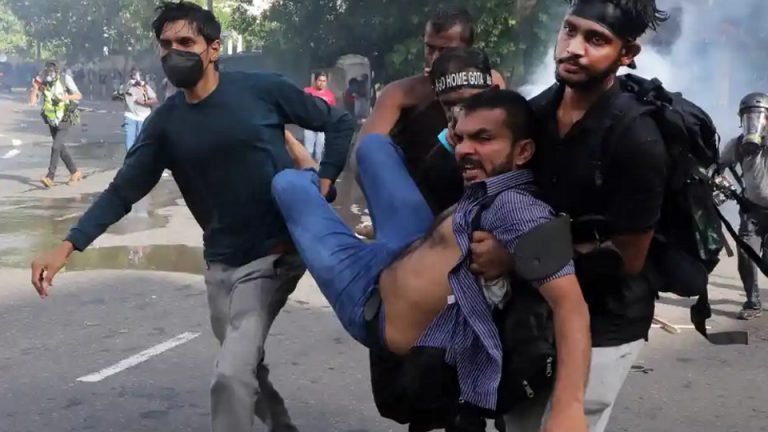
Outside the gates, anti-government protesters who had been attacked earlier by Mahinda’s supporters were taking their revenge — rioting, burning buses and torching hundreds of homes owned by allies of the Rajapaksas. A lawmaker from their party was beaten to death, his body dragged through the streets.
That day, May 9, was one of the most violent andchaotic in recent Sri Lankan history. But it was precipitated by years of turmoil inside the house of Rajapaksa.
The Rajapaksa brothers have dominated politics here for most of the last 20 years. After helping Mahinda win the presidency in 2005, his brothers Chamal, Gotabaya and Basil took over ministries that controlled three-quarters of the national budget and built popular support despite allegations of human rights abuses and corruption. But by 2019, when Gotabaya became president, the family was marred by infighting and dysfunction that would drive South Asia’s most developed nation into ruin.
In interviews, current and former ministers, foreign diplomats and Rajapaksa confidants, some of whom spoke for the first time as they saw the family splinter, said Gotabaya and Mahinda, and their respective factions, clashed over ministerial appointments and agricultural policies, investment deals and political favors. As the economy went into free fall this year, Mahinda, backed by several Rajapaksa scions, resisted Gotabaya’s wish that he step aside.
Distrust deepened to the point that members of Mahinda’s inner circle, besieged in his compound May 9, felt that the president had abandoned them. Udayanga Weeratunga, a cousin who was with the prime minister, and another family aide who was present, told The Washington Post that they suspect Gotabaya’s supporters in the army purposefully delayed coming to their aid for six hours.
Gotabaya is clinging to power after replacing his brother with a new prime minister, who revealed this week that Sri Lanka has less than $1 million in foreign reserves, dwindling medical supplies and almost no fuel.
Sri Lanka faces “total destruction,” former president Maithripala Sirisena said. “The country has learned a lesson about dynastic politics.”

The family business
When Mahinda, the son of a wealthy rice and coconut farmer who was active in politics, ran for parliament in 1970, he was following in the tradition of the few elite families that dominate Sri Lanka, a lush teardrop-shape island off the coast of India.
“You cannot win [in politics] if you’re not from an established family,” said Razeen Sally, a professor at the National University of Singapore. “So the system is left to established insiders who can pillage the state.”
The second of nine children, Mahinda was charismatic, loved crowds and stuck close to his younger brother, Basil, who is considered the family’s political strategist. Their middle brother, Gotabaya, was always different: aloof, politically inexperienced, a teetotaler and vegetarian who spent 21 years in the military. “He would visit the ancestral home only during New Year,” recalled Weeratunga, their cousin who is close to Mahinda.
The Rajapaksas ran the country like a family business during Mahinda’s 10-year presidency, starting in 2005. He named Gotabaya defense secretary while Basil and their oldest brother, Chamal, were placed in charge of irrigation and economic development. Sri Lanka enjoyed years of growth, fueled by a mountain of foreign debt.
Mahinda enjoyed the adulation of voters, who approved of his bloody but decisive victory in a 26-year civil war against Tamil rebels and his frequent appeals to Sinhalese Buddhist nationalism.
But allegations of corruption, including questionable deals with Chinese state companies and officials, swirled around Mahinda. Gotabaya was also implicated, though to a lesser extent, and faced scrutiny over the 2006 purchase of MiG fighters from Ukraine.
Sankhitha Gunaratne, deputy executive director of Transparency International Sri Lanka, said Mahinda and Basil have faced numerous accusations, including diverting tsunami relief aid and using public funds to buy land, but many cases have stalled or been withdrawn. “The alleged Rajapaksa corruption is like a large tree that provides shade to many people,” she said.
In 2021, a leaked trove of financial documents known as the Pandora Papers revealed that a niece of the Rajapaksa brothers had millions of dollars hidden in offshore accounts.
Amid growing anger over the Rajapaksas’ alleged cronyism and corruption, Mahinda lost a bid for a third term in 2015. Almost immediately, an eclectic coalition of pro-Western business executives, military hard-liners and Buddhist monks identified a new candidate: Gotabaya Rajapaksa.

The middle brother
It quickly became apparent that Gotabaya, backed by new political sponsors, would clash with Mahinda. The men rarely confronted each other directly, yet they disagreed on everything, including high-stakes political gamesmanship and petty corruption, family confidants said.
Dilith Jayaweera, a media magnate who is widely credited with launching Gotabaya’s candidacy, remembers an incident from 2018 when he was called by Mahinda to Gotabaya’s home. Mahinda had put Gotabaya’s name on the title to an illegally built resort so that a powerful monk, a political ally, could get free electricity. The scandal was about to leak and, as was often the case, Mahinda was reluctant to tell his brother, so he nudged Jayaweera to break the news to him.
Gotabaya was “livid,” Jayaweera said, and stormed off to a Buddhist temple, refusing to share a car with his brother.
In October 2018, a constitutional crisis erupted when Sirisena, then president, fired his prime minister, Ranil Wickremesinghe, and replaced him with Mahinda,who he had defeated at the polls just three years earlier. The capital was tense as both men made claims on the country’s No. 2 job and rumors swirled that Wickremesinghe might be removed by force. Fearing Mahinda and Basil were trying to outflank him and engineer their own return to power, Gotabaya secretly met Wickremesinghe to pledge his support.
Soon after, the Supreme Court ruled against Mahinda’s claim, and he backed down. The family had no option but to support Gotabaya.
In the run-up to elections, terrorist attacks by Muslim extremists rocked Sri Lanka, galvanizing Sinhalese Buddhist support around the former military man. On the campaign trail, Gotabaya spoke of security, good governance and development, pitching himself as a technocrat, and Colombo, with its emerging skyline of Indian- and Chinese-funded skyscrapers, as the next Singapore. He won in a landslide.
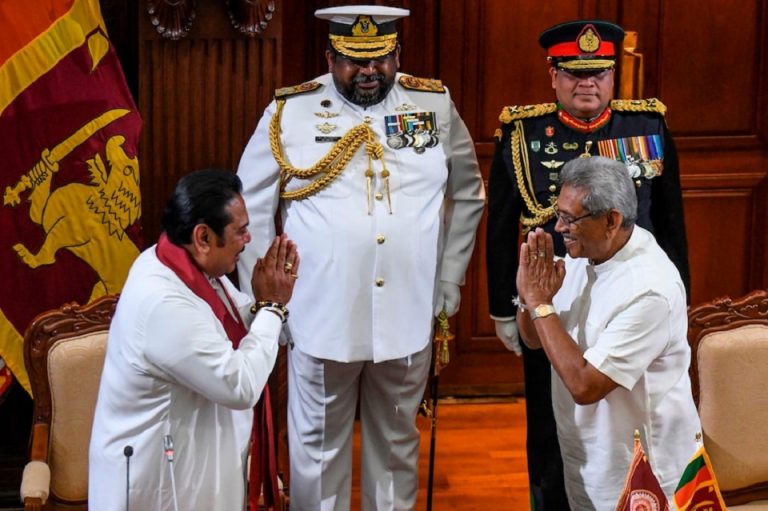
On the day of his swearing-in on Nov. 19, 2019, Gotabaya signaled a break from his family. He refused to wear a red “sataka,” the Rajapaksa clan’s signature scarf, favoring a short-sleeved shirt. Unlike Mahinda, who printed his own image on 1,000-rupee notes while he was president, Gotabaya prohibited government offices from hanging his official portrait.
But the next day was “the beginning of the downfall,” said Nalaka Godahewa, a former financial executive who was later Gotabaya’s minister of mass media.
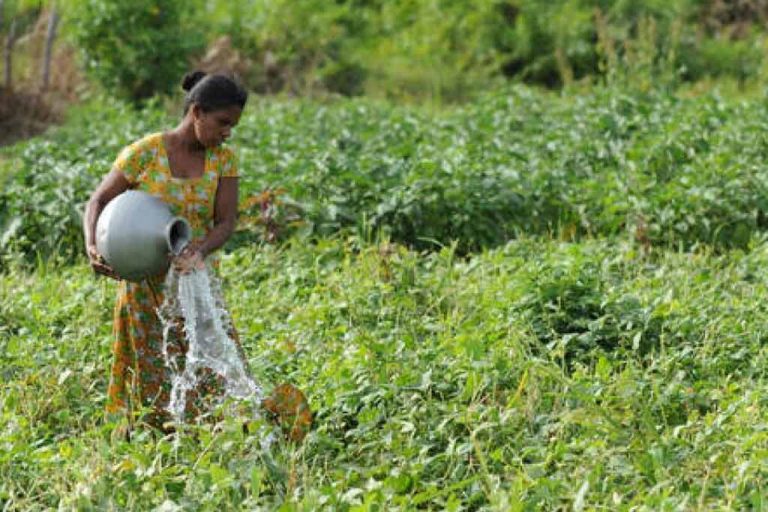
Gotabaya’s pro-Western business-sector backers had recommended a list of appointments, but when the president unveiled his first Cabinet, it was led by Mahinda as prime minister and stocked with Basil and Mahinda loyalists. They enacted steep tax cuts and argued against seeking aid from the International Monetary Fund despite mounting debt. Gotabaya personally pushed through a ban on chemical fertilizers that hurt crop yields, just as global food prices soared.
Mahinda’s supporters said they had shaped the Cabinet only to be undermined by Gotabaya’s appointments. In several instances, the government issued trade policies that were retracted within 24 hours. “You had ministers fighting secretaries,” Weeratunga said. “Fighting permeated the administration.”
The Rajapaksas were united on one issue: A constitutional amendment passed in 2020 that weakened commissions investigating corruption and granted the president far-reaching powers over the courts.

The fall
By early 2022, the economy was in free fall. Foodstuffs like rice doubled in price from a year prior. Gasoline and electricity were in short supply. Foreign currency reserves were running out.
In April, nightly demonstrations took root in the capital demanding that the Rajapaksas leave politics, and some turned violent. Gotabaya’s entire Cabinet — which included Basil, the finance minister; the elder brother, Chamal; and Mahinda’s son — resigned, giving Gotabaya a chance to form a new government. Sri Lanka needed a stable image to present to foreign lenders and negotiate an urgent bailout.
But Mahinda, the prime minister, resisted calls from the opposition and even signals from the president to quit.
Gotabaya didn’t force the issue. “G.R. would say, ‘He knows what I want,’ ” said Godahewa, who joined the Cabinet after several Rajapaksas departed. “He felt he needed the support of Basil and Mahinda.”
With pressure mounting on Mahinda, his supporters organized a May 9 rally at Temple Trees, the prime minister’s compound. The patriarch, feeling deflated and mulling resigning, suddenly seemed energized, according to two family insiders and videos of the event.
“As a leader who has always listened to the people, I now ask you: What needs to be done?” Mahinda said to thousands of supporters sitting cross-legged in a chandelier-lit hall. “You must stay!” the crowd roared. “Does that mean I shouldn’t resign?” he asked again, soaking in calls to fight on.
When the rally ended, supporters streamed out of Temple Trees with steel rods and wooden sticks, beating anti-government protesters and sparking a bloody backlash that shocked the nation.
Holed up in Temple Trees with his sons, who had urged him to stay, Mahinda told his speechwriter at 4 p.m. that he was resigning. The speechwriter spread the news to the media, but that didn’t stop the violence, said two people inside the compound. Despite the family’s pleas, the army didn’t send reinforcements until 11 p.m., after protesters had already breached a gate. At 4 a.m., Mahinda was evacuated by soldiers to a military base.
“Mahinda understood this stalling was deliberate,” said Weeratunga, who accused Gotabaya of trying to intimidate his brothers. But two ministers who were by the president’s side that day said he furiously called military officers to no avail.
“He could neither control the army nor police,” Godahewa said.
Godahewa and foreign diplomats said army commander Shavendra Silva — who has been in frequent touch with Western officials — was reluctant to deploy his forces for fear of being seen as ordering a military crackdown.
The absence of the military that day widened the fissures among the brothers. In a speech to parliament this week, Chamal chastised Mahinda for not leaving politics in 2015. And at a recent meeting of the Rajapaksas’ party members, family allies angrily askedwhy they were not protected on May 9 in a rare display of discord. “How Gotabaya treats the party now will decide the direction of the people’s wrath,” Weeratunga said.
On May 12, an embattled and isolated Gotabaya named a new prime minister: Ranil Wickremesinghe, the man he secretly met with in 2018 when he first jockeyed for the position against his brother.
Four years later, Sri Lanka’s most powerful family was crumbling — maybe for good, said Jayaweera, the media magnate.
“The Rajapaksas, and Sri Lanka, ended in tragedy,” he said. “It ended because of their own doing.”