Home Blog Page 2309

Independent economists present emergency plan to tackle crisis

0

A group of independent economists have launched an emergency plan of action with the aim of stopping further collapse of the economy and to stabilise over the medium-term.

The independent group of economists highlight that macroeconomics risks will continue to worsen if immediate action is not taken.

“Sri Lanka has run dangerously low on foreign reserves and faces the spectre of a ‘disorderly default’ on its debt obligations. Although a default may cause legal complications in debt restructuring negotiations and reputation damage for the future, much of the economic consequences of a sovereign default are already here.“

Therefore, the group of economists urge the Government to take the necessary steps to achieve this outcome immediately. Key signatories of the emergency plan further argue that a staff-level “agreement with the IMF can establish market confidence and help unlock bridge financing”.

The independent economists who are signatories to the document are Aneetha Warusavitarana, Anushka Wijesinha, Anushka Wijesinha, Asanka Wijesinghe, Chayu Damsinghe, Daniel Alphonsus, Deshal de Mel, Naqiya Shiraz, Rehana Thowfeek, Shiran Fernando, Thilina Panduwawala and Umesh Moramudali.

The economists said the emergency plan was due to Sri Lanka’s usable reserves dropping to levels of about $ 150 million. Additionally, acute shortages of essentials ranging from fuel to medicine have become prevalent. Increasing public discontent amidst increasing prices and shortages has led to large protests all across the country.

The country has reached a position where the country is unable to import essential fuel without the help of credit lines from bilateral partners. As the crisis reaches such depths, the Government and the administration have failed to come up with a credible economic plan capable of taking Sri Lanka out of a fully blown out economic collapse.

EU urges Sri Lanka to start in-depth discussions with the IMF

0

The Delegation of the European Union in Sri Lanka has urged the authorities to start in-depth discussions with the International Monetary Fund (IMF) on the reforms needed to bring the Sri Lankan economy back to a sustainable path.

The EU issued the statement together with the diplomatic missions of the EU Member States [Germany, France, Italy, the Netherlands, Romania] and with the diplomatic missions of Australia, New Zealand, Norway, Switzerland, and the United Kingdom.

“Freedom of assembly and freedom of expression are pillars of any democratic society, when they remain peaceful. We therefore encourage all parties to continue acting with restraint. We consider the end of the state of emergency as a positive step,” the EU said.

The EU also called on all parties to explore constructive and democratic ways out of the current crisis that has taken its toll on the Sri Lankan people.

The EU stressed the extreme urgency of the situation, which requires the authorities to start in-depth discussions with the International Monetary Fund on the reforms needed to bring the Sri Lankan economy back to a sustainable path.

UN experts urge SL govt to engage in constructive, open dialogue with people

0

UN human rights experts have urged the Sri Lankan Government to guarantee the fundamental rights of peaceful assembly and of expression during peaceful protests, amid the country’s severe economic crisis.

“We are gravely concerned by the recent proclamation of a state of emergency as well as the order that blocked access to social media platforms,” the experts said.

“These measures seem aimed at discouraging or preventing peaceful protests in the wake of the worsening economic crisis and the lack of access to fuel, electricity, medicines and essential food items.

“We condemn the excessive use of teargas and water cannon to disperse protesters, as well as the recent block of social media platforms. 

We urge the Sri Lankan Government to allow students, human rights defenders and others to protest in a peaceful manner, and to freely share their political views and express their discontent, both online and offline.” 

Sri Lanka’s population has been hit by rising inflation, shortages of fuel and essential goods and prolonged power cuts as a result of a scarcity of foreign exchange. The economic crisis has aggravated an already dire situation on access to food and health, causing difficulties for millions of persons living in poverty and for persons with serious medical conditions to access medicines or hospitals.

On 31 March 2022, hundreds of people gathered in front of the president’s residence, demanding his resignation over his handling of the crisis, in an initially spontaneous and peaceful demonstration. Security forces fired teargas and water cannon to disperse the crowd, prompting clashes. Nearly 50 people were injured, including several journalists, and there were more than 50 arrests.

The compounded impact of foreign debt, corruption and the COVID-19 crisis, has affected the country’s economy. Experts called on the government to ensure that all human rights be respected and protected.

Thousands of people have since joined the daily protests, calling for political and economic reforms. The government imposed nationwide curfews from 2 to 4 April, arresting over 600 people found in violation of the curfew. 

On 2 April 2022, the president declared a nationwide public state of emergency, that has since been revoked, empowering him to override most laws with the exception of the constitution, while the government blocked access to several social media platforms. Access to these platforms was later restored.

The experts called on the authorities to engage in constructive and open dialogue with the Sri Lankan people.

“Peaceful protests and voices of legitimate dissent should not be met with unnecessary and excessive use of force by authorities,” the experts said. “Resorting to use of force against protesters will only jeopardize avenues to express discontent peacefully, risking instead an escalation of tensions.

“We urge the Sri Lankan Government to seek an open and genuine dialogue with peaceful demonstrators on political reforms and means to lessen the impact of the economic crisis.”

Taxes and fuel prices will have to be increased further in the next 6 months – Finance Minister

0

Taxes and fuel prices are set to rise further in the next six months, Finance Minister Mohamed Ali Sabri said.

He has stated that although these are not popular decisions, there is no other option to rebuild the country in the current situation.

He also said that the country needs another US $ 3 billion in foreign aid to import food, fuel and medicine in the next six months, adding that it would be extremely difficult to obtain it.

Finance Minister Mohamed Ali Sabri made the remarks in an interview with Reuters, the world’s leading international news agency.

President holds discussions with independent MPs

0

The government has decided to hold further discussions with the group of 11 parties currently operating in Parliament as an independent group and the group of parliamentarians who are independent of the SLPP. Accordingly, President Gotabhaya Rajapaksa has invited the two groups to attend a discussion.

The discussion is scheduled for this afternoon.

The two independent groups had earlier submitted a series of 11 proposals to the President to form an interim government, which will be discussed further today.

The current government, which had a two-thirds majority in parliament, has lost that two-thirds majority and is in danger of losing a simple majority in parliament. At present, the ruling party has less than 120 seats.

Meanwhile, the support of independent groups is crucial for the government as they are preparing to table a no-confidence motion in parliament.

Imran Khan ousted as Pakistan’s leader following vote of no-confidence

0

Pakistan’s Prime Minister Imran Khan has been ousted as the country’s leader following a vote of no confidence over allegations of economic mismanagement and mishandling of the country’s foreign policy, bringing an end to his tumultuous term in office.

The parliamentary vote, held Sunday, saw the former cricket star defeated. The opposition needed a minimum of 172 votes out of the 342 member assembly to oust him.

The vote of no confidence was backed by an alliance of politicians including more than a dozen defectors from Khan’s own political party.

The vote took place after Pakistan’s Supreme Court ruled Thursday a decision to block a previous vote of no confidence against Khan over allegations of economic mismanagement was unconstitutional.
In its decision, the Supreme Court also quashed Khan’s earlier order to dissolve parliament and call for early elections, calling it of “no legal effect.”

The speaker of the National Assembly will now send a notice to Khan and call for a fresh session of parliament to elect a new prime minister.

In an address to the nation Friday night, Khan repeated unverified claims the vote of no confidence was the result of a “foreign conspiracy” connected to the United States.

The shortage of medicines and equipment is serious – Sri Lanka Medical Association

0

The Sri Lanka Medical Association (SLMA) says that many hospitals have decided to perform only emergency surgeries as the shortage of medicines and medical equipment is getting worse.

“There is a shortage of anesthetics these days, especially those used to inactivate muscles and then reactivate muscles. Therefore, many hospitals have decided to perform only emergency surgeries, ”said Ishan de Zoysa, Secretary of the Sri Lanka Medical Association.

“The next three months will be very important and challenging for us. Some plan must be built. The first thing you can’t find is expensive drugs. There are also drugs that we use that are cheaper and more commonly used in smaller quantities. Babies less than 28 weeks of age need an ET tube. We also give them a compound called surfactan because they do not breathe properly. So they are definitely needed. Without them, low birth weight babies will die. At present we are informed that there is a shortage of them, ”said the Vice President of the Sri Lanka Medical Association Surantha Perera.

Representatives of the Sri Lanka Medical Association stated this addressing a media briefing held yesterday (09).

Finance Minister Ali Sabri to leave for Washington to hold talks with IMF

0

A delegation including Finance Minister Mohamed Ali Sabri is scheduled to leave for Washington on April 18 to hold talks with the International Monetary Fund.

Governor of the Central Bank Nandalal Weerasinghe and Secretary to the Ministry of Finance Mahinda Siriwardena are also scheduled to attend.

It was also reported that the IMF round of talks would be held over five days.

CB increases policy rate by 700bps for the first time to tackle  inflation

0

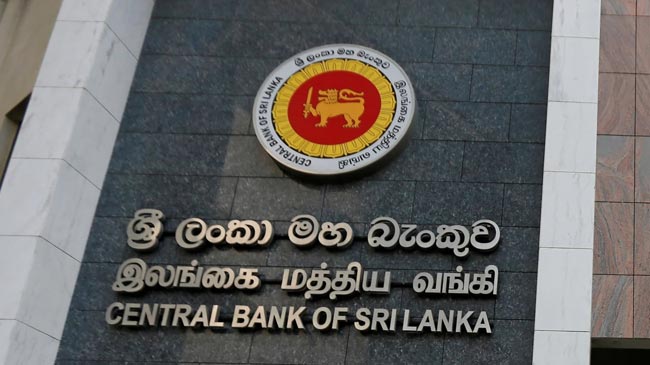
The worsening economic crisis has forced the Monetary Board to effect a historic monetary tightening with the new Central Bank Governor justifying the move as critical to ensure macroeconomic stability.

The Monetary Board at its meeting under new Governor Dr. P. Nandalal Weerasinghe decided to increase the Standing Deposit Facility Rate (SDFR) and the Standing Lending Facility Rate (SLFR) of the Central Bank by 700 basis points to 13.50% from 6.50% and 14.50% from 7.50%, respectively with immediate effect.

“This is the highest ever policy rate hike and tightest monetary policy action in the history of the Central Bank of Sri Lanka and this critical decision was after a honest and realistic assessment by the Monetary Board,” Dr. Weerasinghe told journalists at a late evening briefing following the Monetary Board meeting.

He also described the Monetary Board move as “proactive”, implying that some of the decisions in recent times had not been so, hence the ongoing crises in the country.  

In its brief statement, the CBSL said the Monetary Board noted the inflationary pressures that could further intensify in the period ahead, driven by the build-up of aggregate demand, domestic supply disruptions, exchange rate depreciation and the elevated prices of commodities globally.

It was of the view that a substantial policy response is imperative to arrest the build-up of added demand driven inflationary pressures in the economy and pre-empt the escalation of adverse inflationary expectations, to provide the required impetus to stabilise the exchange rate and also to correct anomalies observed in the market interest rate structure.

Dr. Weerasinghe also told journalists that the decisive monetary policy action will send a strong message to markets and investors that the new leadership at CBSL is taking corrective action to ensure macroeconomic stability and confidence. “When the markets open on Monday we also expect the banking and financial community to respond positively,” he added.

He said the move will help suppress excessive demand, curb imports thereby reduce pressure on forex reserves, reign-in a higher inflation in the medium term.

 However, he cautioned that proper beneficial impact of yesterday’s decision will be felt only in three to six months and in the interim inflation is forecast to rise from current 17.5% to over 25% due to past policy slips.

“It is not an easy situation. We can’t turn around a crisis caused by two years within two days. However I am confident in Central Bank playing its part for an early turnaround,” the new Governor added. 

Dr. Weerasinghe also said that whilst tighter monetary policy and other planned measures including an IMF support program along with a foreign debt restructuring strategy and prudent fiscal policy can help towards creating a conducive environment, for greater macroeconomic stability, the ongoing political crisis and social unrest must end.

“The pace of turnaround (with new CBSL measures and IMF support) and an end to sufferings of the people depends on restoration of political stability and normalcy,” he added. 

The new Governor also promised to restore the independence and credibility of the CBSL. “An independent Central Bank is the only way to ensure prudent policies irrespective of politics. 

existing Monetary Law Act provides for such independence. I will not tolerate political interference during my tenure and I have the fullest support of the Government, the Opposition and the public,” he said.

“CBSL is accountable and responsible to the people not a political party. I have to live up to public expectations of ensuring  CBSL independence and credibility,” added Weerasinghe, who was previously a Senior Deputy Governor and took early retirement in October 2020 after he was side-lined in the early part of the Gotabaya Rajapaksa administration.  

Canada  expresses deep concern on the situation in Sri Lanka

0

Canada says it is deeply concerned about the deteriorating economic situation and civil unrest in Sri Lanka.

Canadian Minister of Foreign Affairs, Mélanie Joly said that it is essential that the right to peaceful protest be respected.

“We stand in solidarity with the peoples of the island during these difficult times,” she tweeted.

Multiple countries, including Canada, have issued travel warnings for Sri Lanka as a result of ongoing protests.

Canada noted that on April 1, 2022, the President declared a nationwide state of emergency following protests in Colombo. 

The state of emergency will give local authorities the power to arrest individuals without a warrant. Further protests are planned in Colombo and across the country in the coming days. Curfews may be imposed on short notice, particularly in Colombo.

Canadians have been told  to expect a heightened security presence, monitor local media to stay informed on the evolving situation, avoid areas where demonstrations and large gatherings are taking place and follow the instructions of local authorities.