Sri Lanka has defaulted on its debt for the first time in its history as the country struggles with its worst financial crisis in more than 70 years.
By Peter Hoskins
It comes after a 30 day grace period to repay $78m (£63m) of unpaid debt interest payments expired on Wednesday.
The governor of Sri Lanka’s central bank said the country was now in a “pre-emptive default”.
Defaults happen when governments are unable to meet some or all of their debt payments to creditors.
It can damage a country’s reputation, making it harder to borrow the money it needs on international markets, which can further harm confidence in its currency and economy.
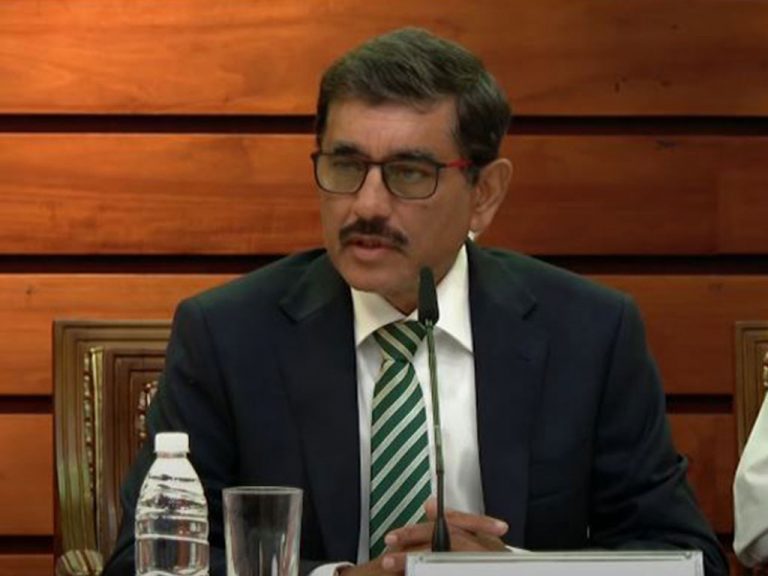
Asked whether the country was now in default, central bank governor P Nandalal Weerasinghe said: “Our position is very clear, we said that until they come to the restructure, we will not be able to pay. So that’s what you call pre-emptive default.
“There can be technical definitions… from their side they can consider it a default. Our position is very clear, until there is a debt restructure, we cannot repay,” he added.
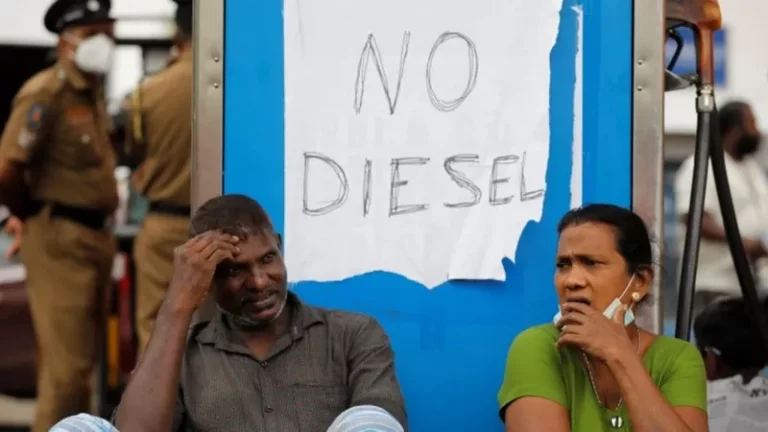
Sri Lanka’s economy has been hit hard by the pandemic, rising energy prices, and populist tax cuts. A chronic shortage of foreign currency and soaring inflation had led to a severe shortage of medicines, fuel and other essentials.
In recent weeks, there have been large, sometimes violent, protests against President Gotabaya Rajapaksa and his family due to the growing crisis.
The country has already started talks with the International Monetary Fund over a bailout and needs to renegotiate its debt agreements with creditors.
The government has said previously that it needs as much as $4bn this year.
Mr Weerasinghe also warned that Sri Lanka’s already very high rate of inflation was likely to rise further.
“Inflation obviously is around 30%. It will go even [higher], headline inflation will go around 40% in the next couple of months,” he said.
He was speaking after Sri Lanka’s central bank held its two key interest rates steady following a seven percentage points rise at its last meeting.
The country’s main lending rate remained at 14.5%, while the deposit rate was kept at 13.5%
Fitch Ratings lowered its assessment of the South Asian nation, saying “a sovereign default process has begun”.
S&P Global Ratings made a similar announcement and said that a default is now a “virtual certainty”.
Credit ratings are intended to help investors understand the level of risk they face when buying a financial instrument, in this case a country’s debt – or sovereign bond.
After being contacted by the BBC on Thursday, major credit ratings agencies Moody’s and Fitch said that they did not have any new updates at this time.
S&P Global Ratings did not immediately respond to a request for comment from the BBC.
Last week, President Rajapaksa’s elder brother Mahinda resigned as prime minister after government supporters clashed with protesters. Nine people died and more than 300 were wounded in the violence.
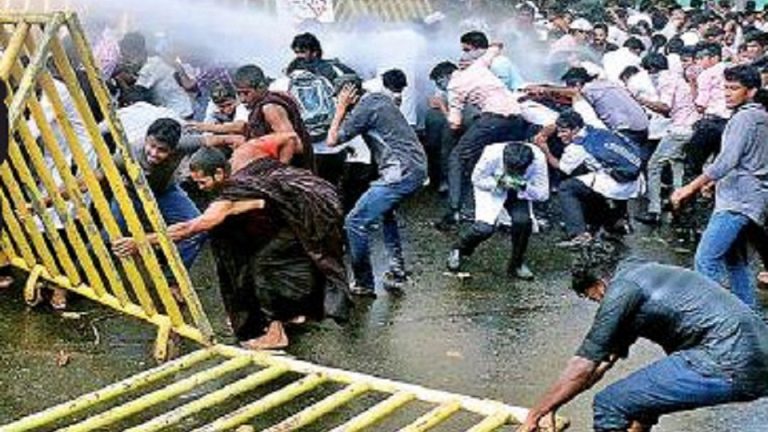
Police threw tear gas and water cannon at the Inter University Students Federation (IUSF) protest today (19).
The protest was commenced from the Nelum Pokuna and the Police acted in repressing the protest as the demonstrators tried to enter the Bank of Ceylon Road near the Colombo Centre, clearing roadblocks.
The Police had obtained a court order against the walk and accordingly, many roads belonging to the Colombo Fort Police Division were closed.
The Police used tear gas and water canons to dissolve the protest as the protestors neglected the order and walked forward.
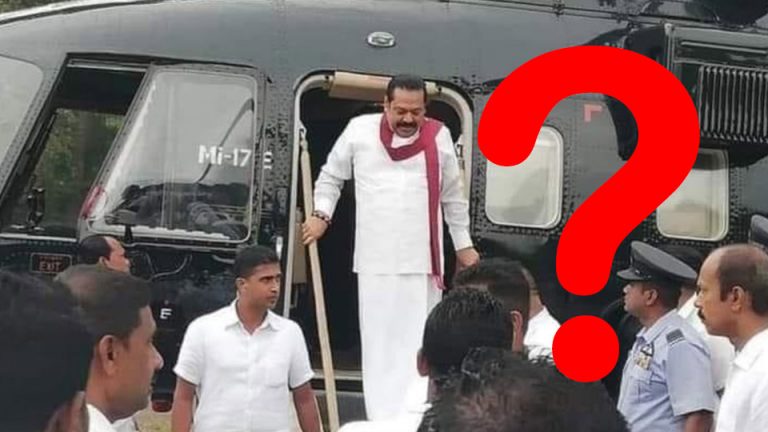
Who authorised Helicopter tours to former Prime Minister and his family to travel spending Taxpayers Money? Entire nation is suffering without Fuel and many deaths were reported in queues and severe unrest in the island with our fuel.
Tankers are waiting in our waters accumulating demurrages since the Government does not have Dollars to pay for those to unload fuel, whilst the former Strongman along with his big family enjoys helicopter travels.
Residents living adjacent to the Ratmalana Airport are complaining that there is an increase in Air traffic (Helicopters), seems that many rejected Politicos are using them to travel around since they cannot travel by road, after igniting the violence on the 9th of May.
Resigned Prime Minister with his family was packed off to Trincomalee in an Air Force Helicopter. Again he has come out of his hiding direct to the Parliament with his son brought back to Colombo by a Helicopter.
Who is authorising these wasteful trips?
Gossip says it is the Air Force Commander who instruct and approves all these trips for this strongman, after all this may be his showing of gratitude for approving him a Brand new Defender worth over Rs. 100M.
During Prime Minister’s last tenure as president prior to 2015 also they left SLAF an unpaid Helicopter travel bill running to Millions of Rupees. These rascals are wasting and enjoying with poor tax payers money and depriving the nation of their basic needs.
Whoever authorising these trips should know that they are violating the basic fundamental and human rights of the island nation and they shall be brought to justice and country must recover the cost from their personal wealth.No politician shall be given an Air lift unless they pay for those before a trip
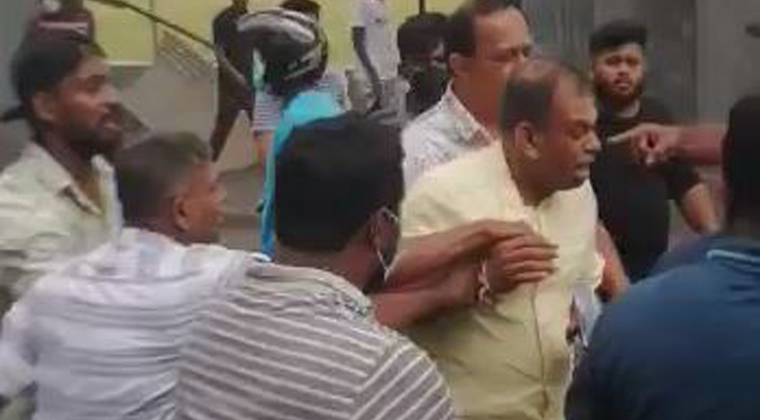
Three suspects arrested and remanded over the allegation of assaulting three persons including Senior Deputy Inspector General of Police Deshabandu Thennakoon have been released on bail as per the order of Fort Magistrate Thilina Gamage.
The suspects were granted bail on the condition that there were not enough evidence to substantiate the allegations for a prison sentence under the Public Property Act.
The Magistrate also stated that there was no evidence to confirm whether the vehicle that carried the SDIG was attacked and damaged.
The price of a 450g loaf of bread will increase by Rs. 30 from midnight today (19), said the All Ceylon Bakery Owners Association.
President of the Union N.K. Jayawardena said that the price of bread had to be increased given that the two companies that import wheat flour to Sri Lanka have increased the price of flour.
Following the last price revision on bread, an average loaf of bread was sold for Rs. 110 – 120.
Accordingly, a loaf of bread will be sold for prices ranging from Rs. 140 – 150 with the latest revision.
Anura Dissanayake has been appointed as the President’s Chief of Staff, bestowing full powers on him.
Dissanayake previously served as the Prime Minister’s Secretary and had to resign from his post with Mahinda Rajapaksa’s resignation.
Following Gotabaya Rajapaksa’s coming as the President, Dissanayake was to be appointed as the Secretary to the President, but was denied due to strong opposition from the family members. P.B. Jayasundara got the job upon the pressure exerted by the Rajapaksa family and was replaced with Gamini Senarath thereafter.
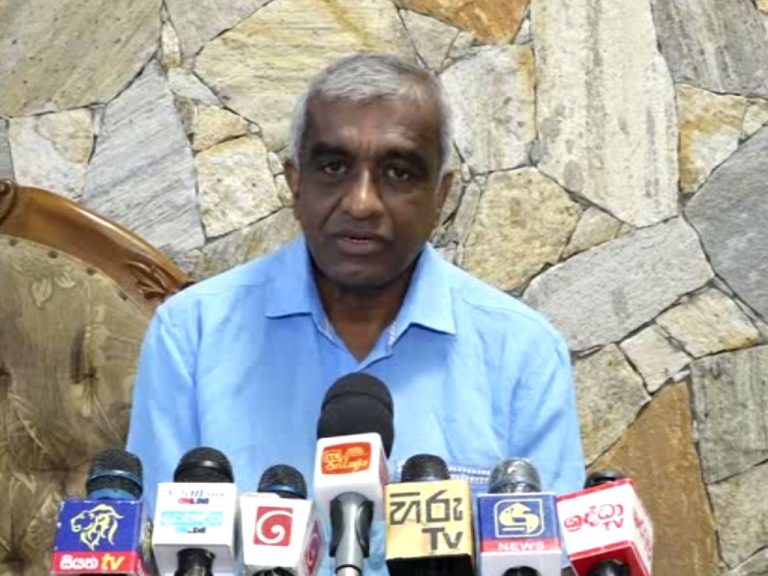
There is progress in the path in which the country moves forward in comparison with the political instability occurred earlier, said Governor of the Central Bank of Sri Lanka (CBSL) Dr. Nandalal Weerasinghe, speaking to a briefing held today (19).
Accordingly, the CBSL Chief stressed that he believes that he will be able to work more successfully.
“Was the political instability that existed at the time I spoke last time to continue, whatever policies the Central Bank implements may have not worked successfully. Then it would be hard for anyone to continue, not just me. So in that case, I was compelled to warn. That was what I said at the time. In view of the situation then and now, a Prime Minister of some kind has been appointed in Parliament. There was no Cabinet then and the Prime Minister had also resigned. As of today, a legal system of some kind can be enforced. Violence in the country has completely disappeared and there is peace. As of now, I see that there is progress on a certain path. So, a lot of people have asked me not to go. I had that in my mind too. Therefore, I am confident that I will be able to continue my work successfully,” Dr. Weerasekara said.
The CBSL Chief had earlier stated that he may resign from his post should the political instability caused by the unrest in the country on May 09 continue.
The Court denied a request made by the Police to issue an order barring the protest to be held by the Inter-University Students Federation (IUSF) at the Parliament entrance and Poldumba Junction.
The request was made by the Welikada Police before Colombo Additional Magistrate Harshana Kekunawala in the justification that protests near the Parliament entrance could be obstructing the entry of ministers and MPs in a violation of their privileges, thereby urging the Court to issue an order barring the holding of such protests.
However, the Additional Magistrate denied the Police’s request and stated that the Police can act in accordance with their powers at any event of a disturbance in the area.
People’s congestion at fuel stations for diesel may end today or tomorrow, but there is no point in wasting time for petrol as there is still no definite situation regarding the distribution of petrol, said Co-Secretary of the Ceylon Petroleum Private Tanker Drivers’ Association Shantha Silva, speaking to media today (19).
The Union Co-Secretary confessed that he is not aware of any possibility of distributing petrol as they are not informed whether the petrol ship unloaded the stocks yesterday.
As of now, petrol are distributed only for essential services, he went on, adding that the distribution of petrol will be possible at any time upon the unloading of the stocks.
For the past 15 years, India and China have vied for favourable diplomatic and trade relations with Sri Lanka thanks to its strategic location in the Indian ocean.
While popular perception indicated China had outpaced India, the recent economic and political turmoil in Sri Lanka seems to have given India’s foreign policy a fresh lease of life in the island nation.
Sri Lanka is in the middle of its worst economic crisis since independence from Britain in 1948. The country has been rocked by protests as people seethe with anger over soaring prices and shortages of food and fuel.
Last week, Mahinda Rajapaksa resigned as prime minister after his supporters clashed with peaceful protesters, sparking a deadly night of violence on 9 May.
Ranil Wickremesinghe, who took over as PM, said the country’s economic problems would get worse before getting better.
He appealed for outside financial help, including from India.
India has never been a major lender to Sri Lanka, unlike China which by the end of 2019 owned a little over 10% of Sri Lanka’s outstanding foreign debt stock.
In early 2021, with the economic crisis looming, the Sri Lankan government had also obtained a 10bn yuan ($148m; £119m) currency swap facility from China to tackle its foreign exchange shortage.
But now, India is slowly emerging as one of the biggest providers of aid to Sri Lanka.
Colombo has racked up $51bn (£39bn) in foreign debt. This year, it will be required to pay $7bn (£5.4bn) to service these debts, with similar amounts for years to come.
The country is also seeking emergency loans of $3bn to pay for essential imports such as fuel.
While the World Bank has agreed to lend it $600m, India has committed $1.9bn and may lend an additional $1.5bn for imports.
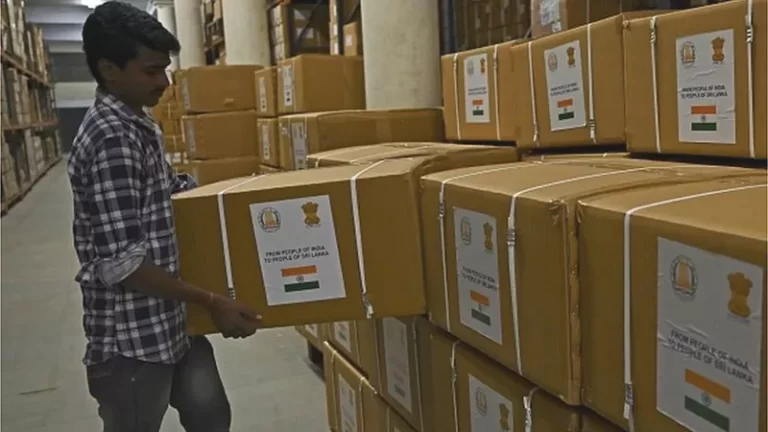
Delhi has also sent 65,000 tonnes of fertiliser and 400,000 tonnes of fuel, with more fuel shipments expected later in May. It has committed to sending more medical supplies too.
In return, India has clinched an agreement which allows the Indian Oil Corporation access to the British-built Trincomalee oil tank farm.
India also aims to develop a 100MW power plant near Trincomalee.
Mixed feelings over Indian help
Many in Sri Lanka feel that India’s growing presence in Colombo could mean a “dilution of sovereignty”.
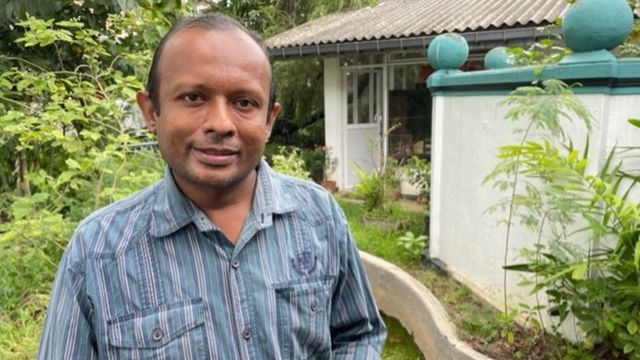
“For the past year and a half, there has been a crisis in Sri Lanka and we believe India has used this to serve its own interests. Yes, they gave some credit, some medicines and food but [they are] not being a friend. There is a hidden political agenda,” said Pabuda Jayagoda of the Frontline Socialist Party.
Image caption, Pabuda Jayagoda of the Frontline Socialist Party sees a hidden political agenda in India’s aid for Sri Lanka
But others are more accepting of Indian help.
“Let’s not blame India for our woes,” says V Ratnasingham, an onion importer in Colombo. “We are still getting onions from India at a decent price and they are giving us credit in times of crisis. It’s the Sri Lankan government’s failure that onion prices have trebled.”
The suspicion over India’s intentions right now comes against the backdrop of Sri Lanka’s ties to China.
After Mahinda Rajapaksa took charge as president in 2005, Sri Lanka’s drift towards China was believed to be a preference for a “more reliable partner enabling domestic economic development”.
More and more infrastructure projects – including the multi-billion dollar Hambantota port and the Colombo-Galle expressway – were awarded to China.
Chinese President Xi Jinping’s maiden visit to Colombo in 2014 was also a clear diplomatic signal to Delhi.
Hambantota is nowadays commonly referred to as a “white elephant” which bled Sri Lanka’s economy. So are several other expensive projects which led Sri Lanka into a huge Chinese debt-cycle.
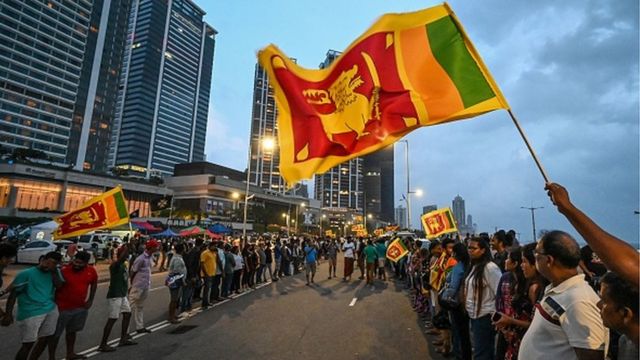
Many anti-government protesters at Colombo’s Galle Face Green are convinced that this push to modernise fast led Sri Lanka to its current situation.
The country owes China $6.5bn and talks are being held on restructuring the debt.
While China had earlier agreed to bolster Sri Lanka’s foreign currency reserves by swapping the rupee for the yuan, it has since signalled displeasure over Colombo approaching the International Monetary Fund (IMF) for help.
Noora Noor, 44, has been camping at Galle Face along with her family, demanding President Gotabaya Rajapaksa, the younger brother of Mahinda, resign.
“All Chinese money that came in was never accounted for, right? Why else would my country have defaulted on payments? Now all supplies are coming from India, so my question is who should we trust – China or India?” she asks.
Still, there are some optimists who feel diplomacy will help.
Image caption, Many anti-government protesters are convinced that the push to modernise fast led Sri Lanka to its current situation
“Is Sri Lanka being placed on a collision course with China? If so, we need to avoid such an eventuality due to other negative situations that may arise. Balancing relationships is a must,” Austin Fernando, Sri Lanka’s former high commissioner to India, wrote in The Island newspaper.
India’s efforts
India has tried hard to match up to the growing Chinese clout in what it sees as its neighbourhood.
After President Xi’s visit in 2014, Indian Prime Minister Narendra Modi not only visited Colombo the next year but also claimed to be “the best of friends” while addressing the Sri Lankan parliament.
Arjuna Ranatunga, a former Sri Lankan cricketer who went on to become a cabinet minister, recalls India being generous when he was in office.
“I was handling both the petroleum and port ministries in 2015 and we were struggling to construct the Jaffna airport for a lack of funds. I went to Delhi seeking help. PM Modi’s government offered a subsidised loan and later converted it into a grant. What else do you want from a neighbour?”
The return of the Rajapaksas to power in 2019, this time with Gotabaya president and Mahinda prime minister, also made India realign its foreign policy options and new agreements over oil and food commodities were signed hastily.
State visits followed between Colombo and Delhi without eliciting much response from China.
The question of Sri Lanka’s Tamil minorities and their demand for rights has been at the forefront of the diplomatic negotiations with India.
After the civil war ended in 2009, India extended support to the Sri Lankan government.
Sri Lanka is, however, yet to implement the 1987 India-Sri Lanka Peace Accord which promised to devolve powers to all provinces, including where the Tamils were in a majority.
The current economic crisis, however, has certainly leapfrogged over any other political concerns between the two nations.
There has been a shift in public perception in Sri Lanka – which was seen as anti-India and pro-China – thanks to consistent supplies from India of essential commodities.
“India did lose out to China about 15 years ago but is trying hard to make a decent comeback,” says Bhavani Fonseka, a senior researcher at the Centre for Policy Alternatives in Colombo.
“Ethnic minorities in Sri Lanka have always looked up to India to champion their demands for equal rights, whereas the Sinhalese majority still has a mixed perception,” she says. “Some also worry over India’s interference in internal matters. But I feel the last few weeks have changed this completely.”