The Central Bank of Sri Lanka (CBSL) has stated that the decision to increase the percentage of foreign exchange earned in foreign exchange from 25% to 50% is only applicable to banks.
The Central Bank emphasizes that this decision does not apply to the exchange earnings of migrant workers and the export earnings of exporters.
An earlier order had mandated the sale of 25% of the dollar reserves to commercial banks to the Central Bank, which had decided to increase that percentage to 50% with effect from March 21. The decision was taken as a solution to the huge dollar crisis facing the country.
The Big Apple’s population has been hollowed out during the COVID-19 pandemic — with Manhattan suffering the biggest population decline among all US counties, according to grim census data released Thursday.New York County saw its population plunge by 110,958 or 6.9% between July 2020 and July 2021 — coinciding with the coronavirus pandemic.
New York City accounted for four of the top US counties with population losses.
Hudson County in neighboring New Jersey also landed in the top 10, which means the NY metropolitan region accounted for five of the top 10 counties with population losses.
Brooklyn’s population declined by 86,341 residents or 3.5%, the sixth worst percentage in the nation.
The number of residents in “the boogie down” Bronx sunk by 41,490 or 3.2% — the eighth highest percentage drop.
Queens County followed in ninth place with a 3.1% decrease, or 64,648 population loss.
New York City saw a decline in population from July 2020 to July 2021.New York County saw its population plunge by 110,958 between July 2020 and July 2021.
Only Staten Island, Richmond County, escaped the top ten list.
Meanwhile 20,192 people fled Hudson County, or 3.1%. During the 12-month period, the city’s population as a whole plummeted by 3.5 percent or 305,665 people.
Gotham’s one-year population loss erased nearly half of the 629,057population increase it gained the previous decade, noted E.J. McMahon, an analyst for the Empire Center for Public Policy.
Los Angeles County, the nation’s largest county with 9.8 million residents, had the largest numerical loss of people, 159,620.
New York City’s decline was largely driven by residents who moved elsewhere during the worst of the COVID-19 outbreak — a domestic migration outflow of 342,449 people — more than triple its annual migration losses from 2010 to 2020, McMahon’s analysis found. Offsetting that decline was a small “natural increase” of 29,000 people.
Even during the pandemic, births slightly outnumbered deaths in the city.
Manhattan had the worst population decline among all US counties, per the data.
In many US counties with older populations, deaths had outnumbered births. The city also gained 12,695 immigrants during this period — a tiny bump compared to pre-pandemic years.
“Consistent with news accounts of New Yorkers flooding into the Hamptons, Suffolk County had the largest net domestic migration inflow in absolute terms, gaining 2,138 residents (1.4 per 1,000) after experiencing an annual net migration outflow of 8,000 in the previous decade,” McMahon said.
McMahon said the city’s post-pandemic future will depend on whether certain trends during the COVID-19 outbreak take hold, such as remote work instead of going to the office. More city firms are posting remote jobs where employees can work from anywhere.
“Will New York’s post-pandemic population trends become permanent, pointing to a new era of decline for New York City and a mix of modest growth and stagnation elsewhere? Will remote working lead to a repopulation of previously shrinking rural communities in New York?” he asked.
Many people from NYC moved into Suffolk County on Long Island.
“Those remain open questions. No doubt some New York City residents flocking to suburbs and rural counties between 2020 and 2021 were already mulling such moves before the pandemic hit, then accelerated their plans when COVID-19 lockdowns began. If that was the case, Census estimates in the next two years will reflect much smaller changes.”
The Empire Center’s analysis shows that more city residents move to neighboring states such as New Jersey and Connecticut than relocated north to the Catskills and mid-Hudson Valley.
Many other Big Apple residents moved further away, to metropolitan areas of the southeast and west that already were growth hot spots, he said.
New York City gained 12,695 immigrants, a small increase compared to pre-pandemic years.
The new Census data highlighted the growth of smaller, less expensive metro areas at the expense of bigger cities such as New York and Los Angeles and San Francisco.
San Francisco County had the second highest percentage loss afterManhattan — 6.7%
But smaller New York’s upstate metro areas have not benefited from the exodus of people from the nation’s most densely populated city.
“The benefits of this trend seem to be eluding the metro areas of upstate New York. While rural communities in some regions have rebounded, the more developed counties containing the cities of Albany, Buffalo, Rochester and Syracuse — and, for that matter, Binghamton, Niagara Falls and Utica — did not grow at all last year,” McMahon said.
WASHINGTON, March 24 (Reuters) – Donald Trump on Thursday sued his rival in the 2016 U.S. presidential election, Hillary Clinton, and several other Democrats, alleging that they tried to rig that election by tying his campaign to Russia.
The lawsuit covers a long list of grievances the Republican former president repeatedly aired during his four years in the White House after beating Clinton, and comes as he continues to falsely claim that his 2020 election defeat by Democratic President Joe Biden was the result of widespread fraud.
“Acting in concert, the Defendants maliciously conspired to weave a false narrative that their Republican opponent, Donald J. Trump, was colluding with a hostile foreign sovereignty,” the former president alleged in a 108-page lawsuit filed in a federal court in Florida.
The suit alleges “racketeering” and a “conspiracy to commit injurious falsehood,” among other claims.
A Clinton representative did not respond to a request for comment.
The suit seeks compensatory and punitive damages. Trump said he was “forced to incur expenses in an amount to be determined at trial, but known to be in excess of twenty-four million dollars ($24,000,000) and continuing to accrue, in the form of defense costs, legal fees, and related expenses.”
Jeff Grell, a lawyer who specializes in racketeering cases, said Trump may have waited too long in bringing his racketeering claims. Civil racketeering claims are governed by a four-year statute of limitations, Grell said, but there is usually a big dispute about when that four-year period begins to run.
Grell said defendants may also argue various defenses, such as that Trump’s lawsuit ignores the immunity granted to government agents, the lawsuit doesn’t set forth a pattern of racketeering — which is required for liability — or the lawsuit seeks to chill the exercise of free speech.
Such defenses are usually resolved only after protracted litigation, Grell said.
The defendants in Trump’s lawsuit include Christopher Steele, a former British intelligence officer.
A dossier written by Steele, which was circulated to the FBI and media outlets before the November 2016 election, set out unproven assertions that Russia had embarrassing information about Trump and some of his Republican campaign’s advisers and that Moscow was working behind the scenes to defeat Clinton.
A 966-page report issued by a Republican-led U.S. Senate committee in 2020 concluded that Russia used Republican political operative Paul Manafort and the WikiLeaks website to try to help Trump win the 2016 election.
Manafort worked on Trump’s presidential campaign for five months in 2016.
Russia’s alleged election interference, which Moscow denies, sparked a two-year-long U.S. investigation headed by Special Counsel Robert Mueller.
In 2019, Mueller released an exhaustive report that detailed numerous links between the Russian government and the Trump campaign but did not charge any Trump associate with a criminal conspiracy.
Mueller said in his report that “the Russian government perceived it would benefit from a Trump presidency and worked to secure that outcome, and that the campaign expected it would benefit electorally from information stolen and released through Russian efforts.”
RegisterReporting by Jan Wolfe in Washington and Jonathan Stempel in New York Editing by Scott Malone, Chris Reese and Leslie Adler
The Attorney General’s Department has informed the Gampaha High Court today (25) that it will not hold further hearings in the case against Finance Minister Basil Rajapaksa on buying a plot of land in the Malwana Mapitigama area in Malwana, Dompe and constructing a huge house on it and embezzling government funds.
Addressing the court, Deputy Solicitor General Shanil Kularatne said that the decision was taken on the basis that the first witness had not lodged a complaint with the Financial Crimes Investigation Division and that the signature on the statement given was not acceptable.
Accordingly, the Deputy Solicitor General has stated that no evidence will be taken in this case in the future and that the case will be closed.
The witnesses who appeared before the High Court on summons have been released by the High Court. The President’s Counsel, who appeared for the suspects, has requested that his clients be acquitted as the plaintiff has concluded the case and the verdict on that request is due on May 13.
Former Member of Parliament Ranjan Ramanayake, who is currently serving a prison sentence, informed Supreme Court today(25) that he is expecting to make a special regret on his utterances that caused contempt towards the Supreme Court.
The case was taken up before a panel of Supreme Court judges comprising Buwaneka Aluvihare, Gamini Amarasekera and L.T.B. Dehideniya.
The case has been filed against former parliamentarian Ranjan Ramanayake for contempt of court at the Supreme Court premises.
The Sri Lankan rupee has depreciated by 26% against the US dollar since January 1, says the world-renowned economist Steve Hank of the University of Johns Hopkins in his official Twitter account.
It said Sri Lanka was mired in an economic crisis due to rising fuel prices and unbalanced debt repayments.
The message further stated that a Currency Board should be established in Sri Lanka as was the case in 1884-1950 to alleviate this situation.
Meanwhile, it is reported that Sri Lanka is seeking World Bank’s assistance for Sri Lanka’s rural development, renewable energy, and digitization projects, and also Sri Lanka is seeking around $ 1 billion in financial assistance from the World Bank for those projects.
Australia’s Great Barrier Reef is being devastated by another mass bleaching event, officials have confirmed.
It is the fourth time in six years that such severe and widespread damage – caused by warm sea temperatures – has been detected.
Only two other mass bleaching events have ever been recorded.
Scientists say urgent action on climate change is needed if the world’s largest reef system is to survive.
There are particular concerns that this bleaching event has occurred in the same year as a La Niña weather phenomenon. Typically in Australia, a La Niña brings cooler temperatures.
Scientists are now fearful of the damage that could be caused by the next El Niño.
The declaration was made by the Great Barrier Reef Marine Park Authority which has been conducting aerial surveys.
Recently it warned that water temperatures in parts of the reef had been up to 4C above the March average.
The announcement comes as two scientists are in Queensland for a UN monitoring mission.
The first mass bleaching event was seen in 1998. It was again observed in 2002, 2016, 2017 and 2020.
Asela Sampath, President of the All Ceylon Restaurant Owners’ Association, says that many people who dine at restaurants are buying cheaper foods such as paratha and wade. The reason for this is that people cannot afford the minimum price of a parcel of rice.
At present the price of a parcel of rice with vegetables alone has exceeded Rs. 200. A parcel of rice with chicken has gone up to Rs. 300 and a parcel of rice with fish has gone up to Rs. 240. Asela Sampath points out that due to this many people find it difficult to buy a parcel of rice.
Asela Sampath says that people have to make ends meet with low-cost snacks instead of rice, which shows how difficult it is for ordinary people to quench their hunger.
Restaurant owners point out that the prices of food items such as wheat flour, coconut oil and other foods could increase further and as a result, people will not be able to afford the prices of foods such as wade and paratha in the future.
North Korea says it test-fired its biggest intercontinental ballistic missile (ICBM) on the orders of leader Kim Jong Un to boost its defences and prepare for a “long confrontation” with the United States, state media reported on Friday.
Kim, dressed in a black leather jacket and sunglasses, oversaw the Thursday launch of what was described as a “new-type” of ICBM, the Hwasong-17.
The first full ICBM test by nuclear-armed North Korea since 2017 drew swift condemnation from South Korea and Japan, as well as the US. United Nations chief Antonio Guterres condemned the launch as a “clear violation” of Security Council resolutions.
According to state media, the weapon was launched from Pyongyang International Airport, travelled up to a maximum altitude of 6,248 km (3,880 miles) and flew a distance of 1,090 km (680 miles) during a 67-minute flight before falling into the Sea of Japan.
Kim ordered the test because of the “daily-escalating military tension in and around the Korean peninsula” and the “inevitability of the long-standing confrontation with the US imperialists accompanied by the danger of a nuclear war,” the official news agency for North Korea, KCNA, reported.
“The emergence of the new strategic weapon of the DPRK would make the whole world clearly aware of the power of our strategic armed forces once again,” Kim said.
“Any forces should be made to be well aware of the fact that they will have to pay a very dear price before daring to attempt to infringe upon the security of our country,” he added, according to KCNA.
The Hwasong-17 was launched from the Pyiongyang International Airport, and flew more than 1,000 kilometres, state media said [KCNA via KNS / AFP]
North Korea has carried out nearly a dozen missile tests since the start of the year that analysts say are aimed at forcing the US to accept North Korea as a nuclear power and remove the international sanctions that had crippled the economy even before Pyongyang sealed its borders because of the coronavirus pandemic.
“South Korea has already launched missiles in response, and the US and South Korea are expected to respond to North Korea’s provocations through military exercises,” Kim Jong-ha, a security analyst at Hannam University in South Korea, told Al Jazeera. “As a result, inter-Korea and US-North Korea relations will be strained for the time being.”
Yoon Suk-yeol, South Korea’s newly-elected conservative president who has promised a more robust policy towards Pyongyang, is due to take office in May, while the attention of the US, the South’s key ally, is focused on Russia’s invasion of Ukraine.
“The Kim regime is determined not only to keep South Korea hostage to military threats that can evade Seoul’s missile defenses and preemptive strike capabilities; it aims to expand its nuclear reach over the American homeland to deter Washington from coming to the defense of U.S. allies,” Leif-Eric Easley, associate professor of international studies at Ewha Womans University in Seoul, said in an email. “North Korea is nowhere near initiating aggression on the scale of Russia’s invasion of Ukraine. But Pyongyang’s ambitions likewise exceed self-defense as it wants to overturn the postwar security order in Asia.”
The UN Security Council is expected to hold an emergency meeting on the test on Friday, but condemnation or new sanctions could be hard to achieve amid divisions over Russia’s invasion of Ukraine and Russia’s veto.
Late on Thursday in the US, Washington announced new sanctions in relation to North Korea’s illicit weapons programme, targeting two Russian companies, a Russian and a North Korean, as well as North Korea’s Second Academy of Natural Science Foreign Affairs Bureau.
“These measures are part of our ongoing efforts to impede the DPRK’s ability to advance its missile program and they highlight the negative role Russia plays on the world stage as a proliferator to programs of concern,” US State Department spokesman Ned Price said in a statement.
The missile was launched from the international airport in Pyongyang and travelled more than 1,000 kilometres (621 miles) before falling into the Sea of Japan [KCNA via KNS/AFP]
Believed to be about 25 metres (82 feet) long, the Hwasong-17 was first revealed in a military parade in October 2020. North Korea’s longest-range weapon and, by some estimates, the world’s biggest road-mobile ballistic missile system, Thursday’s launch was its first full-range test.
South Korea’s military estimated its range as 6,200 kilometres (3,800 miles), further than the Hwasong-15 that was the last ICBM to be tested in October 2017.
KCNA called the successful test a “striking demonstration of great military muscle”, while Kim said it was a “miraculous” and “priceless” victory by the Korean people.
Analysts say the drive for a successful launch of the weapon is probably part of Pyongyang’s preparations to mark the 110th anniversary of the birth of founder Kim Il Sung on April 15.
North Korea typically celebrates such key anniversaries with weapons tests and parades of military might.
“Kim Jong Un wants to ultimately establish himself as a leader who has successfully developed both nuclear weapons and ICBMs,” Ahn Chan-il, a North Korean studies scholar, told the AFP news agency.
“He is almost desperate as without such military achievements, he really hasn’t done much.”SOURCE: AL JAZEERA AND NEWS AGENCIES
Colombo, Sri Lanka – Tourism in Sri Lanka just can’t seem to catch a break.
Three years ago, the number of tourists was down 18 percent following the Easter Sunday bombings in April 2019. The coronavirus pandemic that followed in 2020 was particularly bad. Arrivals fell drastically and there were no signs of recovery until November 2021, when the government removed all quarantine requirements for fully vaccinated tourists, encouraging vacationers to come to the island state.
It was a welcome change as tourism is the third-largest source of foreign exchange for the country – behind worker remittances and the apparel industry – a large employer and an important source of dollars that help the government run the country.
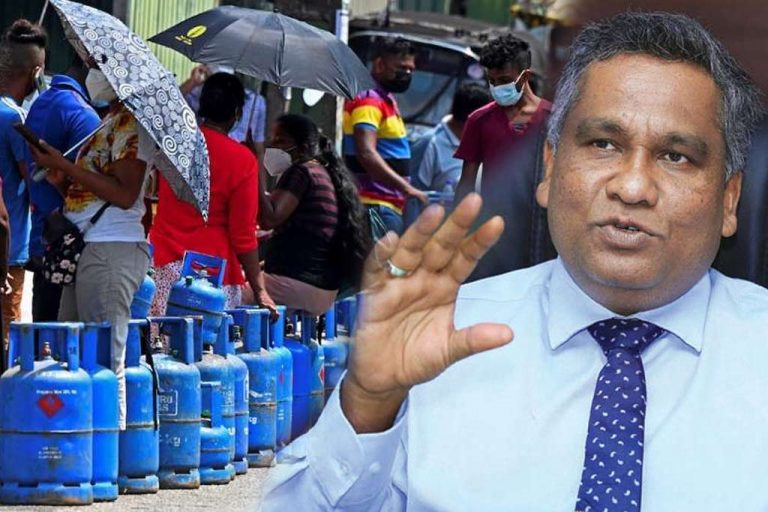
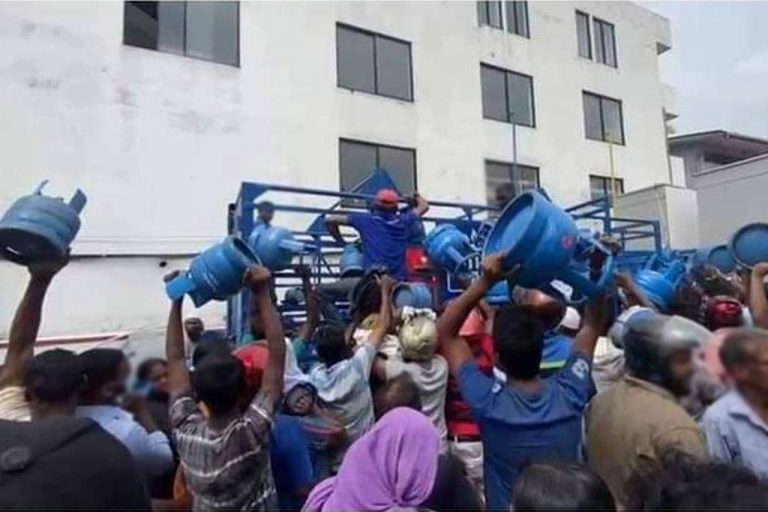
But now as Sri Lanka grapples with the worst financial crisis the country has ever faced, there are daily power cuts and people are forced to stand in kilometres-long queues to buy fuel and cooking gas. Inflation was 17.5 percent in February and the government has further tightened its restrictions on imports, exacerbating shortages. All of this is once again keeping tourists away – at a time when the government is scrambling to find ways to repay an overwhelming amount of foreign loans and needs those tourist dollars.
“We need to find solutions for these people as soon as possible,” President Gotabaya Rajapaksa said in his national address on Sri Lanka’s independence day earlier in February. “As such, whilst strictly adhering to health recommendations, we have acted to restart the tourism industry in a phased manner.”
Worsening economic conditions
“Business has been fantastic the last few months,” said Kate Hopkinson, a foreign national who owns a restaurant and a bed and breakfast in Weligama, a popular coastal town in the south of the country. The prevailing economic conditions, however, are making it extremely tough for her to keep her business running.
“Due to the gas shortage, we have to buy on the black market, food prices are skyrocketing, [and] flour and imported goods are getting harder and harder to source. We run an Italian restaurant and we need cheese, but that is in short supply because of the import restrictions and local alternatives are getting pricier due to the milk shortage,” Hopkinson said.
Sri Lanka is facing a serious gas shortage [File: Dinuka Liyanawatte/Reuters]
Hopkinson is not the only one suffering. Restaurant owner Rasika Lakmal and lifestyle and travel ambassador Paloma Monnappa operate tourism businesses in the popular coastal towns of Galle and Unawatuna.
“We are facing four- to seven-hour-long power cuts daily. Fishermen are forced to cut back on fishing due to the fuel shortage, [and] shipping containers with essential items are stuck at the port because the country doesn’t have the money to pay for them”, said Monnappa.
“Every time you think of a possible solution you’re faced with a new issue or obstacle. You buy a generator but there’s no diesel to run it. We are desperate for tourists, but how do we cater to them? My Sri Lankan friends tell me the economy wasn’t this bad even during the war,” she said.
While some restaurants are buying gas from other cities like Colombo and Matara, Lakmal says that’s not an option for him. “If we do that then it costs about 10,000 Sri Lankan rupees ($35), more than double the normal price. We can’t afford that,” he said.
Locals buy gas on the black market or from other cities, when available [Courtesy: Paloma Monnappa]
Spillover from the Russia-Ukraine war
Sri Lanka’s usual top tourism source markets are India, China, the United Kingdom and Germany, but since tourism’s reopening, many visitors have been coming from the Eastern bloc, with Russia and Ukraine bringing in 25 percent of arrivals between January and mid-February, partly on the back of active marketing by the tourism authorities targeting those regions.
However, Western sanctions on Russia like the ban on the SWIFT international payment system have now spilled over onto Sri Lanka as well. “Inquiries from Ukraine and Russian nationals came to a complete halt,” Dimitra Fernando, who manages a chain of villas for tourists to rent, told Al Jazeera. “We had Russian guests who were already in the country, but they cancelled all their bookings with us because they did not have money to pay. They couldn’t use their cards, nor could they withdraw money.”
But the main issue continues to be Sri Lanka’s own economic situation. The UK government, for instance, updated its travel advisory for Sri Lanka and warned travellers of shortages and power outages. “Inquiries from the UK and Middle-Eastern market have slowed down so much after the travel advisories,” said Fernando. “We manage eight villas, but we have not had even one booking since.”
Nuwan Amarasuriya, who works for a travel agency that gets most of its business from travellers from the UK, told Al Jazeera that the agency’s clients are “very concerned” about the ongoing shortage of fuel and other essentials, “so we are constantly in touch with them to reassure them”.
Authorities have ensured that tourism vehicles would be given priority in fuel queues, but this has caused anger among locals who are forced to queue for hours. A heated argument broke out in a town in Colombo this week when police officers attempted to allow a tourist coach to pump fuel ahead of others.
Labour shortages
Immediate problems aside, the industry must also address its labour shortage.
Although tourism has been growing in significance for the Sri Lankan economy, it struggled with labour shortages long before COVID-19. In 2018, Malik Fernando, head of the industry body the Tourism Skills Committee, told a roomful of tourism stakeholders that the country needs 100,000 more tourism sector employees within the next three years. “Yet, we only train about 10,000 each year,” he said.
Lakmal has been struggling to find staff for his restaurant in Unawatuna most of whom have “moved on” to other occupations and industries after the last couple of bad years. “They are not interested in working in the tourism industry anymore,” he said.
With the ongoing economic crisis the skills shortage is likely to become more acute as many tourism workers are looking at moving overseas or are not interested in returning to an uncertain industry.
“The issue with the Sri Lankan tourism industry is the pay structure,” said Ahamed Nizar, a tourism consultant. “There is a low basic pay which is topped up with service charges and tips, but that depends on how well the property is performing. So obviously without any tourists, workers were earning next to nothing the last few years and it was very difficult to survive.”
Nizar says he’s seen many skilled tourism workers migrate while the unskilled workers have found alternate options with stable pay. One of his clients doesn’t offer a dinner service any more because of the shortage of staff, while another is making do with a skeletal staff, he said.
A bumpy road ahead
While COVID-19 appears to be in the rearview mirror as far as Sri Lanka is concerned, the worsening economic situation has cast a heavy shadow on tourism. The government’s attempt to preserve what little foreign exchange reserves it has with measures like restricting imports of food items has had a severe impact on the availability of essential goods.
“Some restaurants have had to close for days because of the gas shortage; some have had to remove or reduce their menu offerings due to the import bans and rising cost of local food items. The power cuts are very difficult to explain to tourists. They do empathise with our plight, but nobody wants to come on holiday and sit in the darkness and the heat,” sighs Nizar.SOURCE: AL JAZEERA