BOI chief calls on all EPZ workers protect SL’s only’ forex earning sector
We need to safeguard the foreign investors that have kept their trust in Sri Lanka and created employment for thousands of people in this country. Exports are the only sector that has continued to keep the economy afloat from COVID to-date.
It also means over three million engaged in the sector also being unemployed leading to a major economic catastrophe,” he said.
India contempletes currency trading with Sri Lanka
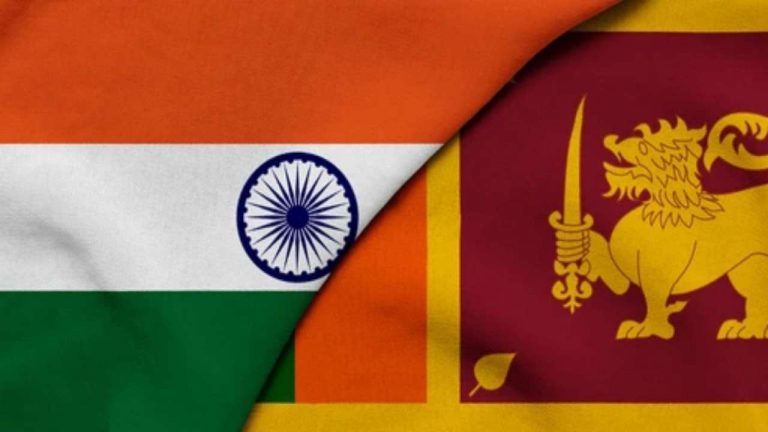
In the guise of protecting Sri Lanka’s crashing economy,an attempt is being made to introduce a common currency between India and Sri Lanka through currency meger at a time the island nation is facing an unprecedented socio-economic crisis, informed sources revealed.
Ajay Sahai, director general and chief executive officer, Federation of Indian Export Organisations (FIEO), said a proposal for local currency trading was deliberated by the government.
In exactly a year since April 2021, the Sri Lanka government’s decision to peg its currency to the US dollar has come back to haunt the island nation.
International Monetary Fund (IMF) data shows the economy’s net international reserves have been negative since December last year, and in this fiery April, Sri Lanka has less than a month’s reserve of forex to service a debt of US $7 billion.
India stepped in to assist Sri Lanka at this critical and crisis- surrounded juncture by extending US$ 3 billion as its economic assistance so far this year thereby being instrumental in addressing diverse needs of the Government and the people who have now fallen from the frying pan into the fire.
Sri Lanka is going through its worst financial crisis since its independence in 1948. Tourism is the third largest source of foreign exchange for Sri Lanka, behind remittances and apparel exports.
While Covid badly hit tourist inflows, the government’s decision last year to switch to organic farming by stopping usage of chemical fertilisers disrupted traditional farming. This led to sky-rocketing inflation.
Sri Lanka’s usable foreign exchange reserves have slipped to US $ 50 at present which is barely sufficient for one month of imports from $ 103 at the beginning of April this year finance ministry data highlighted.
In this critical juncture some economic advisers in the government are advocating the currency merger as a solution to overcome the current financial debacle.
However India does not find local currency trading feasible with Sri Lanka under the current circumstances. This is because there’s no demand for Indian goods at present, except for essential items that India is supplying under humanitarian grounds.
Ajay Sahai, director general and chief executive officer, Federation of Indian Export Organisations (FIEO), said a proposal for local currency trading was deliberated by the government.
“In fact, we proposed trading in local currency. We said that since the balance of trade is in India’s favour, we will have a situation where money is lying in our account. Since a lot of companies are looking at investment opportunities in Sri Lanka also, that money can be used by them for investment there
However, we understand that this is a crisis we are dealing with and our focus should be on humanitarian issues. Business can take place later,” he added.
India is currently contemplating local currency trading with Russia as Western nations imposed economic sanctions after Russia invaded Ukraine. Most of Russia’s banks have been cut off from the Society for Worldwide Interbank Financial Telecommunication (SWIFT) messaging system.
However, unlike with Russia, India had a trade surplus of about $3.8 billion with Sri Lanka in 2021. India’s exports were $4.8 billion and imports stood at $979 million.
India has responded to urgent requests from Sri Lanka with assistance worth $ 3 billion since January. A line of credit of $500 million has been provided by Exim Bank for petroleum products. Another $1 billion for food, medicine and essential items has also been signed.
The Reserve Bank of India (RBI) has also extended a currency swap of $400 million and deferred $500 million due for settlement through the Asian Clearance Union.
SL Exporters lose confidence in economic down turn
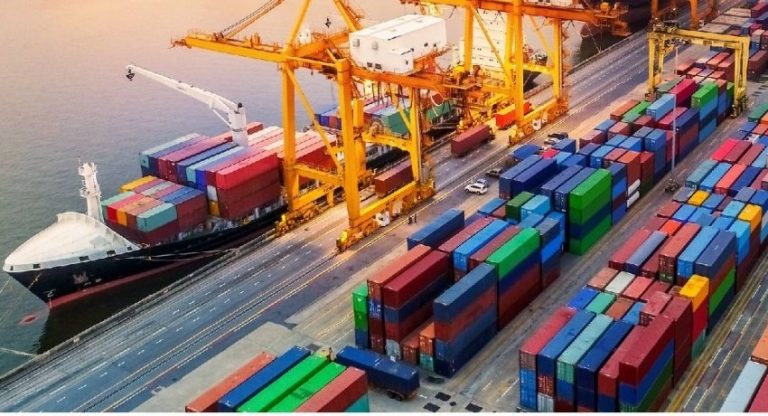
Sri Lanka exporters are facing difficulties in getting raw materials, suppliers are losing confidence due to delayed payments and exporters may face dwindling orders as delivery deadlines are not met, latest bi-annual Export Barometer Survey divulged.
Findings from the latest bi-annual Export Barometer Survey indicate that exporters are losing confidence in the industry’s outlook, as firms face mounting challenges posed by increasing local and global economic risks.
This survey was conducted by the Ceylon Chamber of Commerce (CCC) and the United States Agency for International Development (USAID)’s Partnership for Accelerating Results in Trade, National Expenditure and Revenue (PARTNER) project.
.The survey, compiled in February-March 2022, received responses from 173 exporters of goods and services, including small and medium enterprises (SMEs) and women-owned and/or led enterprises. The findings drawn from the survey indicate a fall in confidence in exporter outlook for the first half of 2022 as a result of these challenges. The key insights of the survey are as follows:
A majority of exporters saw an increase in revenue during the second half of 2021, in line with the strong export performance recorded by the country during the period. However, there was an increase in underutilized capacity during the second half of 2021, compared to the first half of the year.
Due to the foreign exchange shortage, exporters faced difficulties in sourcing production and service input, with 72% of export firms having lost suppliers or faced delays in sourcing. The majority of firms, particularly SMEs, were concerned about their ability to export in the future, due to production/service delays or losses in suppliers resulting from forex shortages.
A significant number of exporters are considering cost-cutting measures, such as reduction in hiring and freezing contract/part-time employment, due to the ongoing economic climate. Despite this sentiment, most firms in the second half of 2021 have retained their employees, while keeping training budgets unchanged.
Most exporters continued export orders on the Business-to-Business (B2B) model, compared to Business-to-Consumers (B2C). Similar to the previous survey’s findings, firms are leveraging online channels to drive sales, although they continue to provide less than 25% of total revenue for the majority of firms. As such, there has not been a significant improvement in the utilization of the digital landscape for exports during the last six months of 2021.
Only 60% of firms have found new export opportunities, compared to 75% in the previous survey. However, both SMEs and women-owned and/or led businesses have found new opportunities, and this number is higher compared to the previous survey.
Exporters stated that they require market access support and improvement in the regulatory process and recommended that a market-determined exchange rate be allowed to facilitate export competitiveness.
A fall in confidence in export outlook can be observed, compared to the previous survey. However, exporters continued to be more confident about the growth of their export business in the first half of 2022 than in the economic outlook. This export growth is expected to be driven by significantly higher unit prices of export orders.
Sri lanka food prices soar close to 50 percent
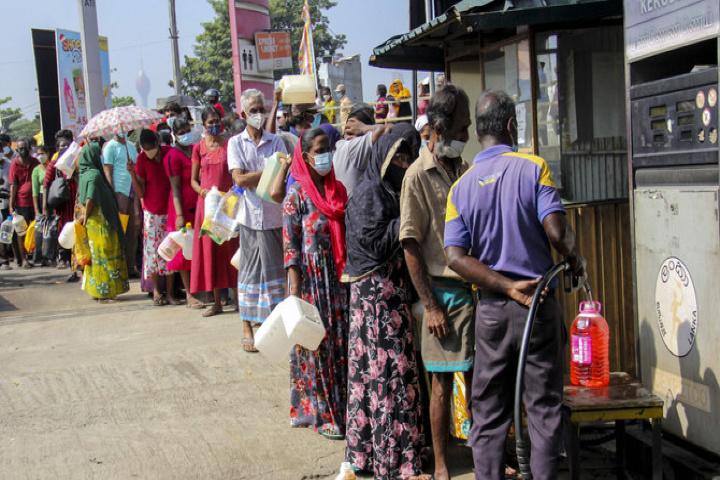
Sri lanka food prices skyrocketed due to shortage and high import costs of imported food items including wheat, sugar and essential commodities in the dollar crisis and the devastation of agriculture following the government’s organic farming strategy.
In this backdrop an independent policy think tank based in Colombo Advocata in its latest survey revealed that Year on Year food price increase is now close to 50 percent.
The Sri lankan economy was in danger well before Russian tanks began rolling into Ukraine. Burdened by foreign debts and squeezed by the effects of the pandemic on its tourist receipts, the Rajapaksa government’s inconsistent short sighted and crazy policies including the going for organic farming overnight has destroyed the local agriculture creating food shortage, economic analysts said.
Now a devaluation of the currency and the impact of the war on commodity markets is sending consumer prices soaring.
Troops have been deployed to calm the crowds queuing for fuel, and a debt default may be unavoidable. As the prices of everything from oil and gas to corn and wheat surge prompting people to take the streets.
Advocata’s Bath Curry Indicator (BCI) , which tracks the monthly changes in the retail price of food, recorded an increase of 14% from March 2022 to April 2022. This is a year on year increase of 49% for this basket of food.
This is driven primarily by prices of dhal and samba rice being the highest recorded by the BCI. A kilo of Dhal in April 2021 was Rs 178, a year later it costs Rs 466. A kilo of samba in April 2021 was close to Rs 130, a year later this costs Rs 210. With food prices increasing at this rate, a family of four to spend on the BCI basket of food would have to pay approximately Rs 560 more for a week.
The Colombo consumer price index recorded a similar rate of 47% year on year increase in food inflation. Comparing supermarket food prices from March 2021 to 2022 there has been an increase of close to 40%.
This drastic increase in food prices in 2022 is a result of macroeconomic instability within the country. Although global prices have increased due to the pandemic and issues with supply chains, global prices have not increased as fast as the prices in Sri Lanka.
In Sri Lanka in addition to the global pandemic related issues, we are currently facing shortages of foreign currency which impacts local supply chains. This impact has also been exacerbated by consistent import restrictions, both causing shortages. These shortages compounded by the fact that the value of the currency has been falling steeply have all contributed to food prices rising faster and faster in 2022.
The BCI tracks the weekly retail prices in the Colombo market of the most commonly consumed food ingredients that might be used in a typical Buth curry meal. The prices are collected from the “Weekly Indicators” that the Central Bank publishes.
The government’s independent group decides to support the no-confidence motion
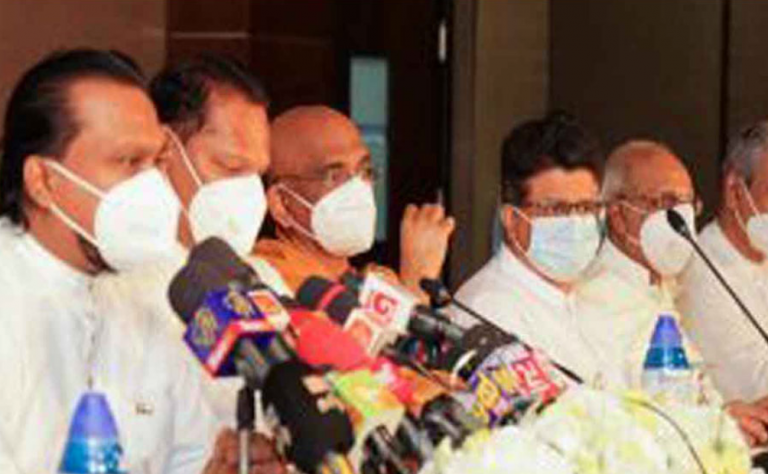
An independent group of parliamentarians has decided to support the no-confidence motion submitted to the Speaker by the Samagi Jana Balawegaya.
The agreement was reached during a discussion convened by the group today.
The group continued to call for the immediate intervention of the caretaker Prime Minister in resolving the political crisis.
The state of emergency was imposed to ensure political stability
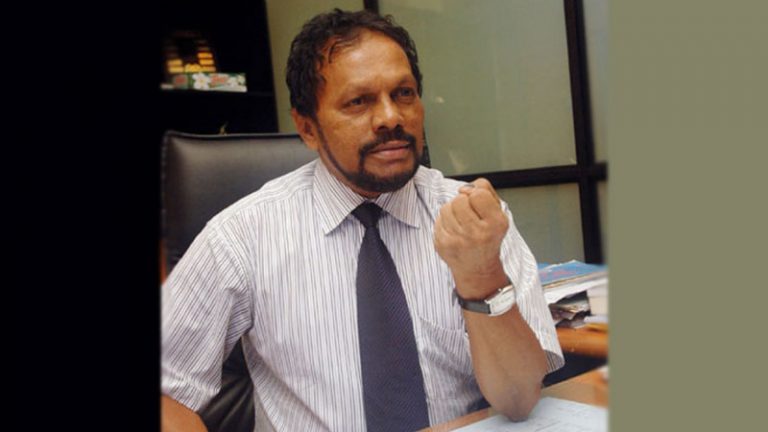
It is said that the government has declared the Emergency Act, which came into effect yesterday (May 06), with the aim of ensuring political stability and the smooth running of the people, which is essential for the reforms that need to be made to overcome the current economic and social crisis.
Following is the statement issued by the Director General of Government Information, Mohan Samaranayake.


Operational details of USD 1 billion credit line
In order to strengthen Sri Lanka’s food, health and energy security, the Government of India extended a concessional loan of USD 1 billion to the Government of Sri Lanka, through the State Bank of India, on March 17, 2022. The Facility is operational and food items like rice, red chillies have already been supplied under it. Several other Contracts for supply of sugar, milk powder, wheat, medicines, fuel and industrial raw materials, based on the priorities of the Government and people of Sri Lanka, have been included under the Facility.
2. SBI has released details on the operational aspects of the Facility, which is available at the following link:
Press Freedom is under attack
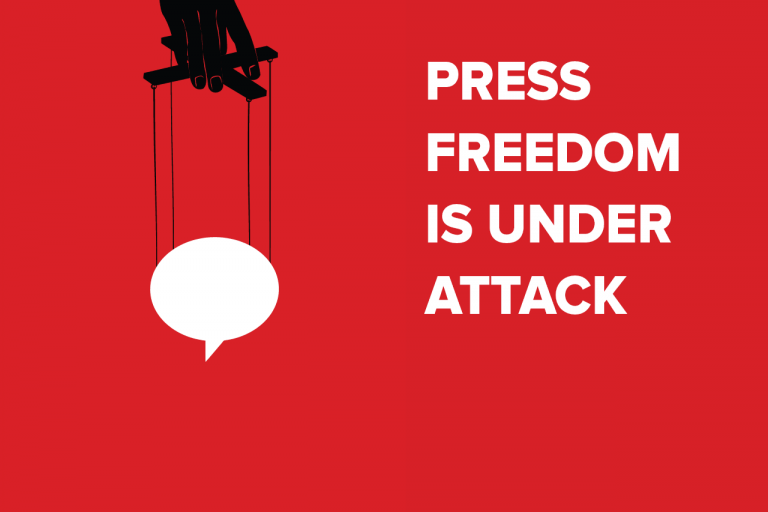
Olga rudenko has a litany of worries as editor of the Kyiv Independent, an online newspaper in Ukraine. Since the Russian army invaded in February, more than 20 journalists have been killed. Throwing aside international conventions, the Russians are targeting reporters. Insurance for local correspondents is prohibitively expensive, and the paper is struggling to get hold of helmets, satellite phones and bulletproof vests. “We are being invaded by people who hate journalists,” she says.
It’s a triumph that Ms Rudenko and her team are working at all. Last year they were worrying about a threat less dramatic than Russian bombs, but still insidious: a reorganisation of the paper which they believed would undermine their editorial independence. The Kyiv Independent was born after the staff of the Kyiv Post, Ukraine’s largest English-language newspaper, suspected that the wealthy owner was seeking to influence coverage under pressure from the authorities, an accusation he denied. When they protested, he fired the whole staff in early November. Around 30 journalists, led by Ms Rudenko, decided to launch an independently funded news outlet. The Kyiv Independent has far exceeded their expectations. Since Russian missiles began hailing down on Ukraine, readers across the globe have been counting on it. As the war began and interest peaked, some 630,000 visitors a day were reading the Kyiv Independent. It has raised almost $2m in crowdfunding.

(V-Dem) Research ProjectGlobally, press freedom is in retreat. Around 85% of people live in countries where it has declined over the past five years, according to analysis by unesco of data on freedom of expression from the Varieties of Democracy (v-dem) Institute. v-dem gives each country a score from 0 (least free) to 1 (most free). The global average weighted by population peaked at 0.65 in the early 2000s, and then again in 2011, before falling to 0.49 in 2021. This is the worst score since 1984, when the cold war was raging and the two sides were propping up dictators on every continent.The sharpest decline has come in the past decade, and has included several of the most populous countries. China declined from very bad (0.26) in 2011 to atrocious (0.08) in 2021. India fell from 0.85 to 0.55; Turkey from 0.54 to 0.15; Egypt from 0.58 to 0.14; Indonesia from 0.83 to 0.68 and Brazil from 0.94 to 0.57. Russia plunged from 0.51 to 0.31 even before the war prompted President Vladimir Putin to crack down more harshly. Ethiopia opened up after 2018, but a civil war means its score for 2022 will be woeful.
Several states still deploy old-fashioned brute force against journalists. In 2021, 488 were behind bars, according to Reporters Without Borders, a non-profit group. Many more were subject to intimidation. “Government agents raided my house and threatened to kill me,” says Lucy Kassa, an Ethiopian journalist reporting on atrocities in Tigray. Ms Kassa fled Ethiopia, and, like Ms Rudenko and others, she had no choice but to try new ways of doing journalism. She is continuing to report on Tigray from exile. “I have a strong belief that the truth will find ways to reveal itself, will fight for itself,” Ms Kassa says. “And I consider myself as an instrument of that.”

Even as press freedom has declined over the past decade, the number of journalists killed on the job has also fallen, from 76 in 2011 to 46 in 2021. That may be because authoritarian leaders are finding they can control the news in less grisly ways. To direct the flow of information, many use state funding and laws purportedly meant to guard state security or even to protect the truth. They often pretend to allow a free press, and tolerate some independent voices to reinforce this claim. But they use all the power of the state, including new powers granted by advancing technology, to ensure that these voices are barely audible, while pro-regime media are lavishly favoured and funded.For such leaders, the covid-19 pandemic has been handy. New rules in countries such as Bolivia, Russia and the Philippines punish the spread of “false information” about the virus with jail time. Brazil has restricted access to government data. And reporters working from home, often on unprotected personal devices, are more vulnerable to cyber-attack. A study covering 144 countries suggests that pandemic policies have been used to justify curbs on press freedom in 96 of them.Financial pressure on independent media can be effective not least because the news industry has been in decline since the 1980s. Advertising has followed readers online, where the duopoly of Google and Meta laps up half of all revenues. PwC, a consultancy, predicts that global newspaper advertising, in print and online, will fall by about 20% between 2019 and 2024.

Source: Zenith
Against that backdrop, governments can cripple critical outlets by withholding advertising and leaning on private firms to do likewise. Meanwhile, they subsidise more servile competitors. In Mexico President Andrés Manuel López Obrador has squeezed local media by slashing the government advertising budget. The money the state does spend is concentrated with friendly outlets: more than half of its advertising goes to ten media groups, according to one analysis of the 2020 budget. In India advertisers are often frightened to back outlets critical of the ruling party.Another common trick is for regimes to nudge friendly plutocrats, who often depend on official patronage for their fortunes, to buy up independent media and neuter them. This has happened in Russia, Turkey and Hungary, among other countries. Since Viktor Orban, Hungary’s prime minister, took office in 2010, his cronies have snapped up private media groups and turned them into ruling-party mouthpieces. Some have donated their media holdings to a pro-government organisation run by former lawmakers for Mr Orban’s Fidesz party. Called the Central European Press and Media Foundation (kesma), this conglomerate now controls over 500 outlets. Mr Orban won a fourth term in office last month, thanks in no small part to his grip on the public’s understanding of reality. The opposition got almost no airtime, except to be denounced as stooges of a Jewish billionaire supposedly conspiring against the Hungarian way of life.Hungary’s journalists have not given up. Telex, a news site, has a similar origin story to the Kyiv Independent. It was founded in Budapest two years ago when more than 80 staff jumped ship from a media group run by an Orban ally. “We knew that we cannot rely on advertising revenue, because of the political influence of the advertisement market,” says Veronika Munk, co-founder of Telex. “So we decided, ‘OK, let’s turn to our readers.’”
Telex appealed for donations via YouTube, and to build trust with its audience it began sharing detailed information on revenues and spending online. In the run-up to the recent election, Telex reporting stood in stark contrast to that by government-led groups. Mr Orban’s team didn’t share details about his campaign events with independent media. It painted the prime minister as a man of the people, posting videos of him pushing his way through crowds of fans, glad-handing. Telex reporters asked readers who learned of coming campaign events to tip them off, then lingered outside. They captured images of Mr Orban driving through empty streets, closely guarded by security, to speak at tiny invitation-only gatherings.Hungary shows how press freedom can be curtailed in a country that is still, more or less, a democracy—critical voices such as Telex reach far fewer people than state-backed propaganda outlets. In truly authoritarian regimes such as China the muzzle is far tighter. Technology has allowed the Communist Party to snoop and censor on a scale and with a precision that would have been extremely hard to achieve without more brute force even a few years ago. It is not just criticism of officials that is off limits. Topics like racism and feminism can be as well. Members of the public can be terrified to speak to reporters. And when reporters and their sources put themselves at risk to produce investigative journalism, sharing those stories can be near impossible. In the midst of a covid lockdown in Shanghai in April, Caixin, a Chinese media group, posted an article exposing hidden deaths at the city’s largest elderly-care hospital. It lasted online for just an hour, then vanished.This climate of fear is now enveloping Hong Kong, which until recently allowed relatively free speech. A “national security” law introduced in June 2020 threatens severe penalties, including life sentences, for vaguely defined crimes, such as subversion, that journalists might consider just doing their job. “To simply continue at the moment feels like a revolutionary act,” says Tom Grundy, editor of the Hong Kong Free Press, the last independent English-language news outlet there. The effect, he says, can be insidious. “You get intrusive thoughts when it comes to, you know, self-censorship,” he says. “You can’t help it. Just cringing when you press publish.”

The Hong Kong authorities’ campaign to shut down Apple Daily, a pro-democracy tabloid, and silence its billionaire owner, Jimmy Lai, has provided a template for repressive regimes everywhere. The attack was financial, legal and technological.Mark Simon, an aide to Mr Lai, says the harassment began more than 20 years ago. The authorities pressed local businessmen to stop advertising with Apple Daily. Other independent news outlets were gradually bought out by pro-Beijing tycoons. Executives’ emails were repeatedly hacked. But the real crackdown came with the national security law. Mr Lai was charged with “foreign collusion” and arrested. Police flooded the Apple Daily newsroom, seizing laptops and hard drives. The death knell came in June, when the group’s bank accounts were frozen. “It wasn’t death by a thousand cuts,” Mr Simon says. “It was ten whacks.”The reporters at Apple Daily found creative ways to resist, though only for a while. When the Hong Kong police swooped into the newsroom and demanded staff tell them where the servers were, they were infuriated by the response: “in the cloud”. The IT team weren’t joking. Apple Daily had switched to a secure cloud-based publishing system managed by the Washington Post. Meanwhile, female staff took advantage of the fact that the cops were all men, rushing to the restroom and sending the day’s stories to editors in Taiwan via Facebook. But then the bank accounts were frozen, and Apple Daily folded. When the final issue was printed, Hong Kongers queued at the newsstands and bought a million copies, more than ten times the usual sales.Another threat to press freedom is common even in places where journalists are generally respected, such as western Europe. Rich and powerful folk with things to hide have found that overstrict libel laws and vaguely drafted privacy rules can be used to deter nosy journalists. “Strategic lawsuits against public participation”, or slapps, are claims that aim to exhaust publications’ time and resources. Those unable to meet legal costs are forced to take down content and often stop reporting on the individuals suing them.
“This was only designed for one thing: to intimidate my family into shutting up”
Daphne Caruana Galizia, a Maltese investigative journalist known as a “one-woman WikiLeaks” for her coverage of corruption and money-laundering, spent almost every day of the last year of her life in court. Even the car-bombing that assassinated her in 2017 did not stop the harassment. Her son, Matthew Caruana Galizia, who with the rest of the family inherited the cases, recalls a hearing just a few days after Ms Galizia died, when the courtroom was filled by top officials; some of them had brought cases against his mother for her reporting. “This was only designed for one thing: to intimidate my family into shutting up,” Mr Galizia says.In a push to stop such misuse of the legal system, the European Commission sketched out new rules in April that would allow reporters to appeal to the courts to have bogus cases thrown out. In European countries, which lag behind places like Canada, Australia and some American states in the development of anti-slapp legislation, a group of non-profit groups identified around 570 such potential cases filed between 2010 and 2021. The list is not exhaustive but it does point to a trend: those bringing the cases are often politicians or public servants, and they often target independent journalists.Like the law, free speech itself, augmented by technology, has been turned against journalists. Social media provide a platform for hate campaigns that can wear down the most hard-nosed correspondent. Women have it particularly bad. A survey last year found almost three-quarters of female journalists have experienced some form of online abuse, including surveillance and threats of sexual violence.Rana Ayyub, an Indian commentator who loudly admonishes Prime Minister Narendra Modi for stoking anti-Muslim violence, has endured a campaign of intimidation by his supporters. Hindu nationalist trolls have superimposed her face onto pornographic videos, called for her murder, and shared her home address online. Fear of attack has confined Ms Ayyub to her home for long spells. Unable to eat from the anxiety, she has spent days on end in bed and been fed through an intravenous drip. “It’s a living, breathing nightmare for me and my family,” she says.As journalism has moved online, governments have found new ways to censor it. China’s “great firewall” lets the Communist Party block nearly any content it dislikes. Other regimes sometimes use cruder methods. A report in mid-2021 by Freedom House, a watchdog, found that 20 out of 70 countries had shut down the internet in the previous year to keep their citizens in the dark, typically during periods of unrest. States are increasingly using digital means to snoop on reporters, too. An investigation last year revealed that almost 200 journalists had been targeted by Pegasus spyware, which is sold by an Israeli company to governments across the globe.Journalists are fighting technology with technology. They conduct interviews on encrypted messaging apps, like Signal or Telegram. To protect whistleblowers with access to important information, they rely on new sharing tools that erase files as soon as a transfer is complete. Ms Kassa, the journalist forced to flee Ethiopia, continues to report on Tigray via the internet. From her new base, which she asked to keep confidential, Ms Kassa conducts interviews with victims and witnesses of atrocities over the phone. She asks a network of locals she has developed, people who are not on the Ethiopian government’s radar, to get hold of photographs, videos and health records as evidence. In regions where there is a communications blackout, these so-called fixers go to ngo offices, which are sometimes the only buildings with Wi-Fi connections, to share documents with Ms Kassa via messaging apps. She compares each story against satellite imagery, and she has hired experts to help her spot doctored images. An article that would have taken her one week to report on the ground now takes a month. But, Ms Kassa insists, “there are always ways.”
“Don’t believe the propaganda. They are lying to you here”
Reporters can be annoying. When they bang on about freedom of the press, they might sound self-serving. But as Timothy Garton Ash, a professor at Oxford University and author of “Free Speech”, puts it, “you need these pesky, difficult people.” Research shows that where there is freedom of the press there is less corruption. When autocrats distort the news, they force their publics to live in a fantasy world.Consider Russia. Even as Mr Putin is failing in his war on Ukraine, he is succeeding in mythmaking at home. His propaganda machine is spewing lies, including that war crimes committed by his forces are hoaxes staged by actors, and he has criminalised objective reporting. Victoria Arefyeva, a photojournalist for Sota.Vision, an independent news outlet, faces constant harassment while trying to report on protests: “You begin to realise you can no longer film as before.” Those determined to challenge the state narrative must take extreme steps, like Marina Ovsyannikova, a television producer who interrupted a live broadcast on state-owned Channel One holding a sign: “Don’t believe the propaganda. They are lying to you here.”

Elena Kostyuchenko, an investigative reporter, has been beaten by thugs and has seen four colleagues murdered in her 17 years at Novaya Gazeta, a Russian newspaper. She says the new censorship laws are succeeding. Publications like hers have been forced to stop printing and to take down online articles. Even tech-savvy Russians are struggling to reach blocked content now that many Russian bank cards have been disabled, making it tricky to pay for VPN services. “ I love my country,” Ms Kostyuchenko says, when asked why she would risk jail by reporting there. “It may sound strange, but it’s still true.”Perhaps Ms Kassa is right when she says that the truth can fight for itself. But the omens are not good. As government control grows more sophisticated, even the bravest and most innovative journalists are finding it harder to do their jobs. If the steady erosion of press freedom is not reversed, governments will get away with more abuses and everyone will find it harder to understand the world as it is
■“Press freedom: what’s at stake”, a documentary film by The Economist, records our investigation into the decline of press freedom. It is available to watch here.
Bar Association urges President to withdraw emergency regulations immediately
The Bar Association of Sri Lanka requests President Gotabhaya Rajapaksa to immediately withdraw the emergency regulations that came into effect from midnight yesterday.
The union said in a statement that emergency laws should not be used to arrest or detain anti-government protesters. The statement added that the fundamental rights of the people, freedom of speech and freedom of assembly, should not be compromised in any way.
Saliya Peiris, President’s Counsel and President of the Bar Association of Sri Lanka, further stated that the use of emergency regulations to control the situation in the country is not an option but a matter of public opinion.
Sri Lanka: Rights under attack during economic crisis in the country
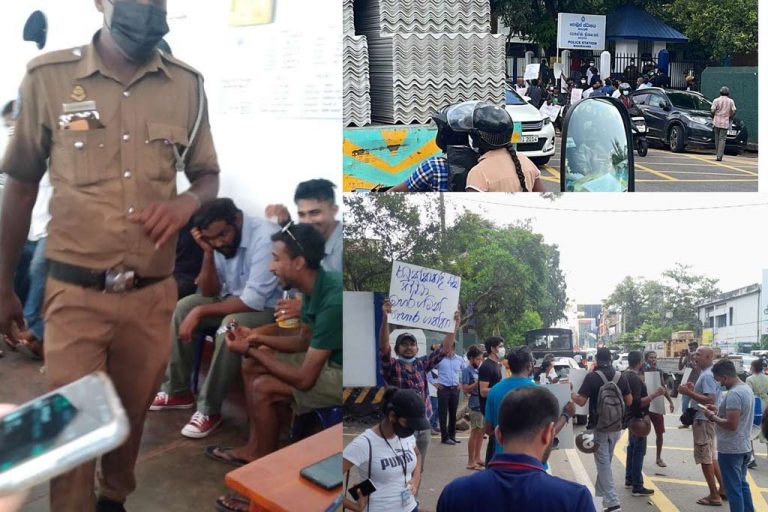
As the people in Sri Lanka are facing a catastrophic economic crisis, the government must protect the human rights of everyone and ensure an enabling environment for peacefully expressing dissent, Amnesty International said in a report released today.
In the report, ‘From Bad to Worse: Rights Under Attack During Sri Lanka’s Economic Crisis’, the organization also called for the international community to support Sri Lanka in its recovery in line with obligations around international cooperation and assistance, with a particular focus on marginalized groups who are at grave risk.
“The crisis in Sri Lanka is a prime example of the interdependence and interrelatedness of economic and social rights and civil political rights. As such, human rights must be at the heart of discussions on Sri Lanka’s economic future,” said Yamini Mishra, South Asia Regional Director for Amnesty International.
“We urge the international community to step in where possible to support Sri Lanka with necessary financial and technical assistance, such as debt relief and aid, in line with a human rights based assessment of the situation to ensure the economic crisis does not deteriorate into a humanitarian crisis.”
Sri Lanka is facing a balance of payment crisis and a severe foreign exchange shortage compounded by Covid-19 lockdowns, pre-pandemic tax cuts and loss of access to international capital markets. As it stands, foreign exchange reserves are critically low, making the import of essential medicines, food items, cooking gas and fuel, immensely difficult. This is affecting all major sectors including education, health and livelihoods.
At least five individuals have died while standing in line for essentials and to date, a total of 75 individuals have reached Tamil Nadu in India seeking economic refuge. Thousands of people in Sri Lanka have taken to the street in a show of resistance using creative slogans, art, theatre, dance, music and technology. Their demands are for the resignation of the president and the prime minister, but also include calls for accountability for wide-ranging human rights violations, inter- ethnic, religious unity and harmony. According to the information collected by Amnesty International, the protests have been largely peaceful; however, in several instances, the Sri Lankan authorities have unlawfully restricted their right to freedom of peaceful assembly including the use of force, tear gas and arbitrary detentions.
The authorities must uphold human rights to freedom of movement, liberty and security of person. Also, Sri Lanka has ratified the International Covenant on Economic, Social and Cultural Rights, and has an obligation both individually and through international assistance and cooperation, to guarantee economic and social rights. These rights include the rights to health, education, social security, adequate food, and an adequate standard of living.
In February this year, the International Monetary Fund (IMF) recommended that “social safety nets should be strengthened, by increasing spending, widening coverage, and improving targeting, to mitigate the adverse impacts of macroeconomic adjustment on vulnerable groups,” however to date, the only proposals approved by the Sri Lankan cabinet have been to provide ad-hoc handouts for a period of three months for low-income families. The government must urgently fund and expand social security systems and ensure that all people, including marginalised groups, are protected from the impacts of the crisis.
Amnesty International has observed that austerity measures introduced previously in several other countries in the context of economic crises have seriously impacted economic and social rights protections. In Greece and Spain, for example, austerity measures made healthcare less accessible and affordable, which had a disproportionate impact on those with lower incomes, and particularly on the elderly, those needing mental health care and treatment, those with disabilities, and with chronic health conditions.
“Lessons must be learnt from similar experiences from across the world to avoid serious repercussions,” said Yamini Mishra. “Any austerity measures introduced in Sri Lanka must be based on a human rights assessment, should be open for public scrutiny and feedback in an inclusive and participatory process, and all alternatives must be explored before they are introduced. Austerity measures must not disproportionately impact the marginalized groups and must be strictly temporary.”