Home Blog Page 2346

VAT soared up to 18% based on fiscal services

0

The Committee on Public Accounts has approved the addition of amendments to the value added tax (VAT), surging the tax from 15 per cent to 18 per cent based on the provision of fiscal services.

The draft bill has been formulated to implement the tax policy proposals mentioned in the Cabinet Memorandum No. MF/FP/32/CM/2021/212 dated December 14, 2021

In addition, the amendment facilitates the exemption of the VAT on donations of medical equipment, machinery and medicines made to state-run hospitals and the Ministry of Health in the event of an epidemic or public emergency.

The CoPA also approved the compact between the Government of the Democratic Socialist Republic of Sri Lanka and the Government of the Republic of Turkey on the prevention of double taxation and tax avoidance on revenue-based taxes.

Nevertheless, the aforementioned amendment is due to be tabled in Parliament on March 24.

The Committee on Public Accounts aka CoPA was convened under the patronage of its Chairman MP Anura Priyadarshana Yapa at the Parliament complex yesterday (22).

MIAP

Salley’s petition seeking compensation from NFF denied

0

The Colombo High Court today (23) denied a petition filed by former Governor of the Western Province Azath Salley seeking compensation for the damage done to him via what he claimed as a malicious complaint against him by a group of Parliament members from the National Freedom Front aka Jathika Nidahas Peramuna.

The complaint cited NFF MPs representing the Sri Lanka Podujana Peramuna (SLPP) Mohammed Muzammil, Nimal Piyatissa and Gamini Waleboda as respondents.

Salley was arrested and remanded for over eight months based on the complaint by the Ruling Party MPs alleging that the former Governor had delivered extremist ideologies about the country’s law and the Islam law. Charges against Salley were dropped by the High Court on December 02, 2021.

MIAP

Why an all-party effort is needed now

0

One of the privileges of being a government minister is that you have public servants paid by the taxpayers at your disposal to do the work that ordinary citizens have to do day in and day out. Including staying in a queue for hours to get fuel. This is very common in the developing world.

Exceptionally, you get a few politicians like the President of Uruguay Jose Mujica who drove an old Beetle along the streets of his country. Nothing changed for him as President. There have been a few others. 

Today, Sri Lanka is facing the biggest economic crisis since independence. We had a similar set back in 2001, but it was never so acute where one had to stay for hours in a queue for fuel, medicine or milk or be out of power for five hours daily. Conservative estimates are that Sri Lanka will run a deficit around $ 9 billion in 2022. Now how do we bridge this? 

Forex market

The black market for foreign exchange keeps rising despite the devastating devaluation of over 30% in a day, worse than even what the war-torn Afghanistan underwent, which was 11%, and the currency recovered fast. To add to our woes the current economic crisis can get far worse if there is an escalation of hostilities in Ukraine. So, what do we do as a country to make available the key essentials for the public? With the humongous devaluation of the LKR, prices of every item have seen an increase of over average of 30% overnight. Exams have been cancelled because of no paper. 

As the vocal economist Dr. W.A. Wijewardena points out, “The present collapse of the rupee has not been totally unexpected. For many months, independent analysts had warned the Government and the Central Bank about its insane attempt at fixing the rupee-dollar rate at 200 at mid-level without a supportive foreign exchange reserve. But the Bank had adamantly maintained and misled the President too that it had enough resources at hand to keep the rate at that level and there was no necessity for Sri Lanka to seek IMF support or work on restructuring the country’s foreign debt. Ex-Governor W.D. Lakshman ascribed this to following an alternative policy measure which only he knew of.”

Further Dr. Wijewardena notes, “If the Bank could not supply foreign exchange to the market at the given rates, the result was either the rate had to move up or allow the development of a black market dealing in foreign currencies. Since the Bank did not want a black market to develop because it is the worst enemy of a central bank, it allowed the rates to go up by widening the margin between its buying and selling rates from time to time.” This black market has now become a cancer for the financial sector. It is slowly eating into the stability of every sector.

All-party effort

Unfortunately, for the Government other than some ministers, no one has confidence the Government has the skills and competence to take Sri Lanka out of this crisis. The Opposition and the public who have spent hours on the road want the Government to go home. But this is a democratically elected government. 6.9 million voted for them. It is they who should take the responsibility. No point in blaming the Rajapaksa family. The former five times Prime Minister Ranil Wickremesinghe forewarned the Government of this crisis, on the day he entered parliament in 2021; the Government however took little notice. Instead, the public ridiculed him for not prosecuting the Rajapaksas for their excesses in the previous administration. The Easter Sunday attacks were the beginning of our misery. 

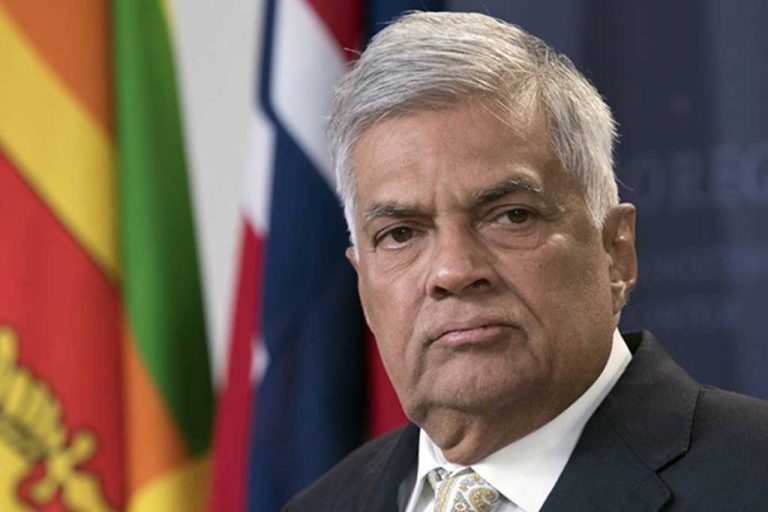
Recently Wickremasinghe has said very loudly that given the unprecedented crisis with no end in sight, that “there must be a national consensus on the basic principles needed for this. There is no national consensus in our country. One Government changes what the other Government did. If we do not look to the future and move forward there will be no future.” 

The country desperately needs an all-party council to take key decisions from now on; it cannot be left only in the hands of the Rajapaksa coterie. Our nation’s future is at stake, it is not only theirs. All political parties have failed the people, therefore at least now they must rise up and save the day for our future generations. It is no longer the “job” that should matter to our politicians.

IMF bailout

So, what do we do? Going to the IMF would provide us an opportunity that would allow the country to seek the assistance of other friendly foreign nations and agencies who are willing to help, but who want a structure and good governance; they are not interested in propping up personalities who have failed the people on all sides. We need all our political parties working together to take measures to revive our failed economy. Including the setting up of an international development forum. We need to negotiate an immediate financial facility with the IMF, that cannot wait any longer given the situation we are currently in, we need to increase interest rates to manage the forex market and manage inflation and our tax structure needs order. 

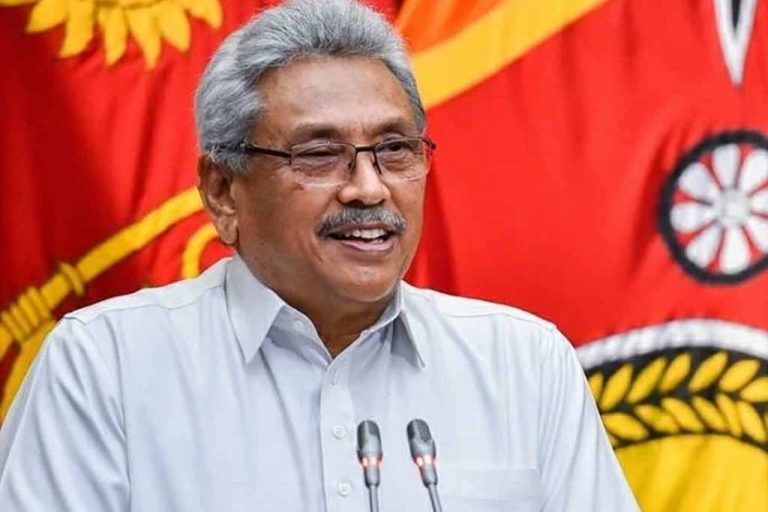
As Dr. Wijewardena points out, “President Gotabaya Rajapaksa last week was vague about the Government’s seeking a funding facility from the IMF immediately. That confusion will make the foreign investors more confused. It could not make a significant turnaround in the falling prices of ISBs out there in the market.”

The generous Indian bail out will be good for one or two months given that we celebrate the New Year next month. Ironically, what happens when that money runs out? Run to China? Japan? USA? Therefore, given the current public sentiment, it is important for national consensus to be reached now and an economic recovery program signed by all political groups, to prevent one or two people taking decisions anymore; we cannot be at their mercy anymore.

DailyFT

AG agrees to settle arrears payments entitled to Dr. Shafi

0

The writ petition filed by Dr. Shafi Sahabdeen of the Kurunegala Teaching Hospital seeking an order to settle the arrears payments entitled to his employment during his suspension of services on the false charge of performing ‘sterilising procedures’ on Sinhalese Buddhist mothers was called before the Appeal Court today (23).

The petition was taken up before the Appeal Court Bench comprised of Justices Sobhitha Rajakaruna and Dhammika Ganepala.

Additional Solicitor General Sumathi Dharmawardena appearing for the Attorney General told the Court that steps will be taken to pay all the arrears of salaries and allowances entitled to Dr. Shafi.

A letter issued by the Director General of Establishments of the Ministry of Public Administration in this regard has also been submitted to the Court.

The letter reveals that all the arrears of salaries, allowances, cost of living allowances and interim allowances entitled to Dr. Shafi during the period of his suspension will be paid off.

The plaintiff in his petition also stated that he was protesting against the Director of the Kurunegala Hospital, Chandana Kendagamuwa, who carried out the disciplinary inquiry against him. Additional Solicitor General Dharmawardena, on the other hand, stated that he was against it.

MIAP

SL requests Australia to provide a loan of US $ 200 million

0

Sri Lanka has requested the Australian Government to provide a loan facility of US $ 200 million. This loan facility is required to obtain essential food items.

Trade Minister Bandula Gunawardena confirms that the loan request was made.

Under this loan facility, food items including milk powder and dhal will be imported.

Sri Lanka bondholders tap legal adviser for sovereign-debt restructuring talks

0

A group of investors in Sri Lanka’s sovereign bonds has hired law firm White & Case LLP to advise on debt negotiations as the indebted island nation contends with a severe economic downturn and growing political unrest, said people familiar with the matter.

The ad hoc group includes bondholders from BlackRock Inc. and Ashmore Group PLC, the people said. The group has yet to hire a financial adviser, said another person.

Sri Lanka is facing a balance of payments crisis as the country’s foreign-exchange reserves have declined by more than half since the beginning of the COVID-19 pandemic. The nation spends foreign exchange to import many of the goods it needs to power its economy.

Revenue from tourism, one of the country’s most important sources of foreign exchange, has declined in large part due to the pandemic. Meanwhile, remittances from Sri Lankans living abroad have dropped while a black market for foreign currencies has grown, economists say.

The Sri Lankan Government owed more than $ 16 billion to international bondholders as of April 2021, according to Government data. It also owed around $ 3 billion directly to China as well as to Japan, and around $ 1 billion to India. 

Sri Lanka also has outstanding debt to institutional creditors such as the World Bank and the Asian Development Bank. In total, Sri Lanka’s public debt to gross domestic product ratio in 2021 hovered at just below 120%, according to International Monetary Fund projections.

The country’s leaders stated for months that despite the runoff in foreign-exchange reserves, it had no plans to restructure its debts.

Sri Lanka faces about $ 7.5 billion in domestic and foreign debt payments this year, according to the federal government’s 2022 budget. Roughly $ 4 billion of that includes payments on foreign debts, including the $ 500 million bond it has already paid in January and the $ 1 billion bond maturing in July. 

However, the country’s foreign-currency reserves totalled $ 2.31 billion as of February, according to central bank data, and analysts have questioned whether some of that total can even be used for external debt payments, such as swap lines from the People’s Bank of China. Sri Lanka’s debt has traded at distressed levels for months as the country’s reserves have progressively dwindled.

Sri Lanka is looking at alternative strategies to raise funds from investors to deal with its coming debt payments. Recently, Sri Lankan officials have met with bankers from Rothschild & Co. and Lazard to discuss financing proposals. 

The country is also exploring a debt financing package that would be secured by remittances of foreign exchange into the country, according to one of the people familiar with the matter.

On Wednesday, President Gotabaya Rajapaksa announced that the country was in early discussions with the IMF and other creditors on a plan to manage the country’s debt burden, following a day of anti-Government protests against goods and fuel shortages and inflation in the country’s capital. 

The IMF recently called the country’s public debts unsustainable, adding that pre-pandemic tax cuts plus the impact of COVID-19 had put the country’s financial wherewithal in jeopardy.

Depleting foreign-exchange reserves have recently led to severe shortages in Sri Lanka, given limits on the country’s ability to import essential goods, and stoked inflation. Sri Lanka’s power grid instituted rolling blackouts in February amid persistent fuel shortages, worsened recently by the surge in oil and gas prices following Russia’s invasion of Ukraine.

In response to growing inflation and pressure on the rupee, Sri Lanka’s Central Bank announced in early March an increase in interest rates and devalued its fixed exchange rate, likely in a bid to curb the amount of currency entering the black market, analysts said. 

US dollar rises to 292-299 rupees in some banks

0

Today (23) the selling price of a US dollar in some commercial banks has risen to 292 – 299 rupees.

NDB බැංකුව
අමානා බැංකුව
සෙලාන් බැංකුව
ලංකා බැංකුව

SL inflation increases to  17. 5 percent in February

0

Headline inflation shot up to 17.5% in February up from 16.8% in January, as the National Consumer Price Index (NCPI) went past the Colombo Consumer Price Index (CCPI) which showed inflation at 15.8% for the same month. 

Listing contributions to the current inflation rate, the latest release from the Department of Census and Statistics found year-on-year food inflation at 24.7% in February, whilst the non-food group contribution was 11%. 

The CCPI measures inflation in urban areas of the Colombo District, whilst the NCPI is measured compiling prices collected from all nine provinces. 

Accordingly, the NCPI now sitting higher than the CCPI is telling of the cost of living and price pressures weighing on average citizens around the island. 

Core inflation, which reflects underlying inflation excluding volatile items of food, energy and transport increased to 14.1% in February this year, up from 12.9% in January. 

Price increases of food items were reported once again for rice, Mysore dhal, milk powder, fresh fruits, coconuts, chilli powder, wheat flour, red onions, coconut oil, fresh fish, dried fish, dried chilies, chicken, curry powder, bread, sugar, and infant milk powder. 

Reductions were recorded in index values for vegetables, eggs, limes, green chilies, big onions and potatoes, the Department of Census and Statistics said. 

The increases in index values of non-food groups in February over the previous month was mainly due to price increases in items such as alcoholic beverages, tobacco and betel leaves, clothing and footwear, housing, water, electricity, gas and firewood, furnishing, household equipment and maintenance, transport costs, recreation and culture, restaurants and hotels and miscellaneous goods and services. 

The price indices for health, communication and education remained unchanged during the month

Would an international bailout save Sri Lanka’s economy?

0

International rating agencies warn the island nation is on the verge of defaulting on its debt.

Sri Lanka is facing its worst economic crisis since independence in 1948.

International rating agencies have warned that the island nation is on the verge of defaulting on its debt.

Its usable foreign currency reserves have plunged below $1bn, limiting Sri Lanka’s ability to repay loans.

Traders can’t access dollars to buy imports.

So what does this all mean for Sri Lankans?

Presenter: Adrian Finighan

Guests:
Nishan de Mel – Executive director and head of research at Verite Research

Jabin Jacob – Associate professor at the Department of International Relations and Governance Studies at Shiv Nadar University

Bhavani Fonseka – Senior researcher and attorney at law with the Centre for Policy Alternatives

The first step to a national government: All party conference to be held today!

0

The All-Party Conference convened by President Gotabhaya Rajapaksa is scheduled to be held today (23).

It is being held at the Presidential Secretariat and is aimed at consulting all parties to find a solution to the current economic crisis.

However, the main opposition is Samagi Jana Balawega and its affiliates, as well as the Janatha Vimukthi Peramuna (JVP) and the Janthika Jana Balwegaya (JNP) have stated that they will boycott the Conference.

Although Wimal Weerawansa and Udaya Gammanpila’s government coalition parties have criticized the convention, two or three of them have decided to attend.

It is noteworthy that the TNA has decided to participate in the conference while the main opposition political parties in the South are boycotting the conference. Political analysts point out that the decision of the Tamil National Alliance (TNA) to attend the summit, which has been out of politics in the South for decades, is a positive sign for the country’s future politics.

Meanwhile, UNP leader Ranil Wickremesinghe has also stated that he will definitely attend the conference.

Lanka News Web has made several revelations in the past about a forthcoming national government and the establishment of a mechanism such as an interim government will be a top priority if the proposals and agreements of the All-Party Conference are to be implemented in the same manner. As we mentioned there, while the main sections of the opposition are avoiding this, it shows that the UNP and the TNA have already come forward for a national consensus.