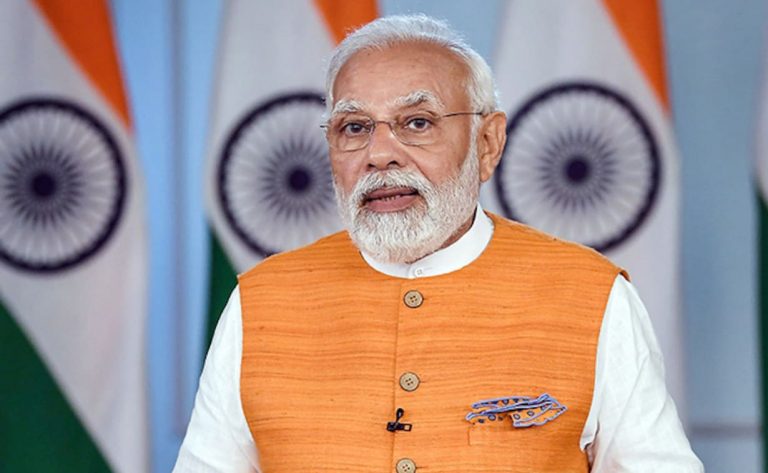
Indian Prime Minister Narendra Modi’s visit to Sri Lanka scheduled for the end of this month has been canceled. Indian authorities have not yet commented on the reason.
The Indian Prime Minister was scheduled to arrive in Sri Lanka from the Palaly Airport in Jaffna and was scheduled to attend several events in the North, including the opening of the Jaffna Cultural Center.
It was reported that he would then address the BIMSTEC Summit in Sri Lanka.
However, the Indian Prime Minister has decided to suspend his visit and address the BIMSTEC summit online.
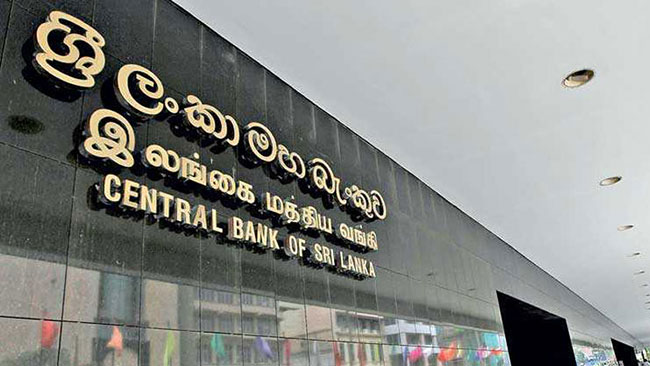
The Central Bank of Sri Lanka (CBSL) says the government has decided not to implement the proposed scheme for additional incentives for remittances by expatriate workers and net earnings of exporters.
In a statement, the CBSL says the exchange rate seems to have now reached a level surpassing the level of incentives that was intended to stimulate expatriate workers’ remittances and conversion of export earnings, as a result of its decision.
Accordingly, the current exchange rate provides a higher return on the foreign exchange remittances of expatriate workers and a higher rupee value on the net earnings of exporters.
In view of these recent developments, the government decided not to implement the proposed scheme for additional incentives, the CBSL said further.
“With the notable upward adjustment in the exchange rate, the conversion of foreign exchange earnings through formal channels by expatriate workers and exporters has already shown a marked increase during March 2022, according to the latest official data.
Remittances by Sri Lankans employed abroad have been an important flow of foreign exchange into the country, with an annual average value of over US dollars 7 billion in the past five years.
Considering the importance of this steady non-debt inflow, the Government and the Central Bank of Sri Lanka (CBSL) are in the process of taking steps to ensure that remittances reach their full potential in a manner that is beneficial to the worker as well as to the country.
In this regard, the CBSL is currently working in collaboration with the Ministry of Labour, State Ministry of Foreign Employment Promotion and Market Diversification and Sri Lanka Bureau of Foreign Employment, the banking sector and several other stakeholders to introduce an incentive package for migrant workers, which includes pension/superannuation benefits, accident/life insurance benefits, banking facilities including low interest loans for housing and / or self-employment on return to Sri Lanka, and enhanced duty-free concessions.
In order to ensure that the country reaps the intended benefits of providing such incentives, this package of benefits would be made available only to those who remit their earnings to Sri Lanka through the formal banking system or any other formal money transfer system routed through banking channel.
The incentives are expected to be linked to the amount of foreign exchange so remitted to Sri Lanka. Operational details of proposed incentive package will be informed to the public in due course, in consultation with relevant Government authorities and the banking sector.
In the meantime, the CBSL urges the Sri Lankan community living abroad to ensure that their remittances to Sri Lanka are being made through formal banking channels to a designated bank account in Sri Lanka so that the value of foreign exchange so remitted to Sri Lanka could be easily tracked for the above mentioned purpose
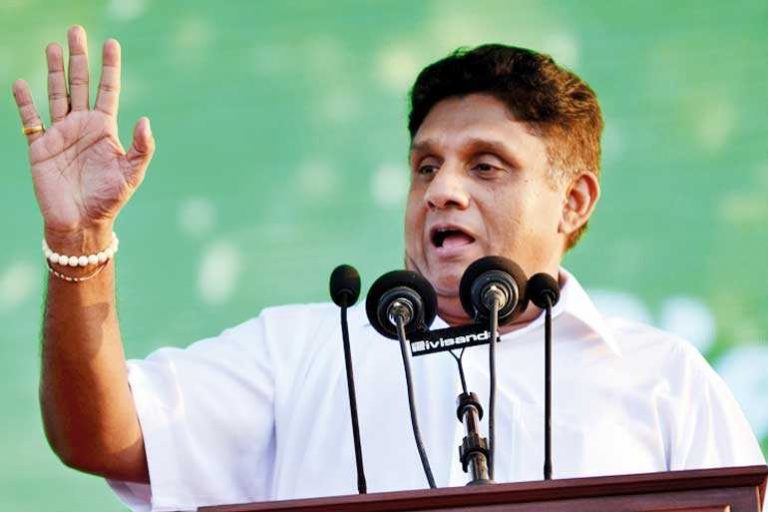
Opposition leader Sajith Premadasa has said that the country needs a government that does not sleep and that only a working government can recover from the current situation in the country.
He said that the task of building the country should begin with a continuous service to the people, adding that the government was only playing with the lives of the people.
The Leader of the Opposition said that no matter how much the government lied, the turn of the people would come soon and he was sure that the people would teach the government the right lesson.
Premadasa said this addressing a farmers’ meeting held at Kamburupitiya yesterday (18) afternoon.
Each day brings new horrors to Ukraine, where Russian artillery fire echoes like thunder across cities and towns. The metropolis of Kharkiv lies in ruins, victim of two weeks of bombardment. Mariupol, on the coast, has been destroyed.
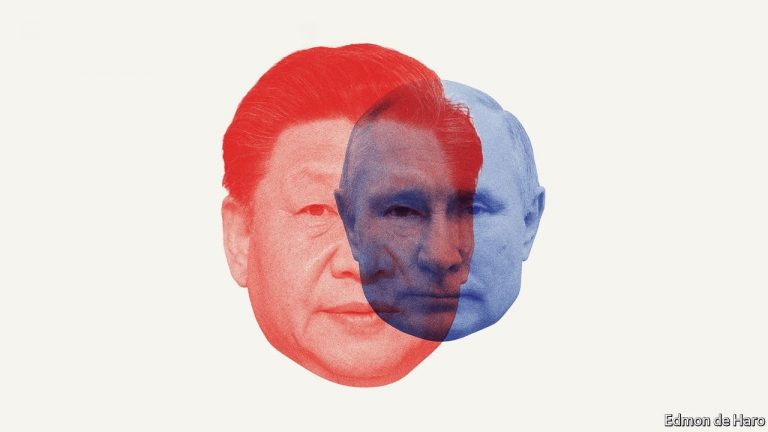
It is too soon to know if a winner will emerge from the fighting. But, on the other side of the planet, the world’s emerging superpower is weighing its options. Some argue that China will build on a pre-war friendship with Russia that knows “no limits”, to create an axis of autocracy. Others counter that America can shame China into breaking with Russia, isolating Vladimir Putin, its president. Our reporting suggests that neither scenario is likely. The deepening of ties with Russia will be guided by cautious self-interest, as China exploits the war in Ukraine to hasten what it sees as America’s inevitable decline. The focus at all times is its own dream of establishing an alternative to the Western, liberal world order.
Both China’s president, Xi Jinping, and Mr Putin want to carve up the world into spheres of influence dominated by a few big countries. China would run East Asia, Russia would have a veto over European security and America would be forced back home. This alternative order would not feature universal values or human rights, which Mr Xi and Mr Putin see as a trick to justify Western subversion of their regimes. They appear to reckon that such ideas will soon be relics of a liberal system that is racist and unstable, replaced by hierarchies in which each country knows its place within the overall balance of power.
Hence Mr Xi would like Russia’s invasion to show up the West’s impotence. If the sanctions on Russia’s financial system and high-tech industry fail, China will have less to fear from such weapons. If Mr Putin lost power because of his miscalculation in Ukraine, it could shock China. It would certainly embarrass Mr Xi, who would be seen to have miscalculated too, by allying with him—a setback when he is seeking a third term as Communist Party leader, violating recent norms.
For all that, however, Chinese support has its limits. The Russian market is small. Chinese banks and companies do not want to risk losing much more valuable business elsewhere by flouting sanctions. A weak Russia suits China because it would have little choice but to be pliant. Mr Putin would be more likely to give Mr Xi access to northerly Russian ports, to accommodate China’s growing interests in, say, Central Asia, and to supply it with cheap oil and gas and sensitive military technology, including perhaps the designs for advanced nuclear weapons.
Furthermore, Mr Xi seems to believe that Mr Putin does not need to win a crushing victory for China to come out ahead: survival will do. Chinese officials confidently tell foreign diplomats that Western unity over Russia will splinter as the war drags on, and as costs to Western voters mount. China is already trying to prise apart Europe and America, claiming that the United States is propping up its power while getting Europeans to foot the bill for high energy prices, larger armies and the burden of hosting over 3m Ukrainian refugees.
China’s approach to the Russo-Ukraine war is born out of Mr Xi’s conviction that the great contest in the 21st century will be between China and America—one he likes to suggest that China is destined to win. For China, what happens in Ukraine’s shelled cities is a skirmish in this contest. It follows that the success of the West in dealing with Mr Putin will help determine China’s view of the world—and how it later has to deal with Mr Xi.
The first task is for nato to defy Chinese predictions by sticking together. As the weeks turn into months that may become hard. Imagine that the fighting in Ukraine settles into a grim pattern of urban warfare, in which neither side is clearly winning. Peace talks could lead to ceasefires that break down. Suppose that winter draws near and energy prices remain high. Ukraine’s example early in the war inspired support across Europe that stiffened governments’ sinews. The time may come when political leaders will have to find the resolve within themselves.
Willpower can be linked to reform. Having defended democracy, Western countries need to reinforce it. Germany has decided to deal with Russia by confronting it, not trading with it. The European Union will need to corral its Russia sympathisers, including Italy and Hungary. The British-led Joint Expeditionary Force, a group of ten northern European countries, is evolving into a first responder to Russian aggression. In Asia, America can work with its allies to improve defences and plan for contingencies, many of which will involve China. The joined-up action that shocked Russia should not come as a surprise to China if it invaded Taiwan.
And the West needs to exploit the big difference between China and Russia. Three decades ago their two economies were the same size; now China’s is ten times larger than Russia’s. For all Mr Xi’s frustration, China has thrived under today’s order, whereas Russia has only undermined it. Obviously, Mr Xi wants to revise the rules to serve his own interests better, but he is not like Mr Putin, who has no other way of exerting Russian influence than disruptive threats and the force of arms. Russia under Mr Putin is a pariah. Given its economic ties to America and Europe, China has a stake in stability.
Shanghai on the Dnieper
Rather than also push China “outside the family of nations, there to nurture its fantasies, cherish its hates and threaten its neighbours”—as Richard Nixon wrote years before his famous trip to Beijing five decades ago—America and its allies should show that they see the rising superpower differently. The aim should be to persuade Mr Xi that the West and China can thrive by agreeing where possible and agreeing to differ where not. That requires working out where engagement helps and where it threatens national security.
Might China yet start down this path by helping bring the war in Ukraine to a swift end? Alas, barring the Russian use of chemical or nuclear weapons, that looks unlikely—for China sees Russia as a partner in dismantling the liberal world order. Diplomatic pleading will influence Chinese calculations less than Western resolve to make Mr Putin pay for his crimes. ■
This article appeared in the Leaders section of the print edition under the headline “The alternative world order”
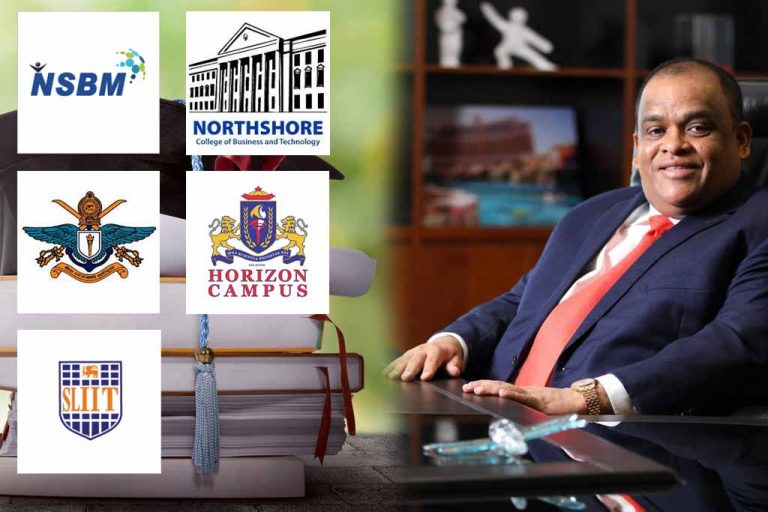
In another move to solve the prevailing forex crisis in Sri Lanka, renowned businessman Dhammika Perera has tendered a proposal to the government to declare the National School of Business Management (NSBM), the Kothalawala Defence University (KDU), the Sri Lanka Institute of Information Technology (SLIIT), the Northshore University and the Horizon University as ‘universities.’
The number of students who have applied to study at foreign universities amid the crisis situation in the country has increased to about 30,000 and the number of Sri Lankan students who are already spending their first and second years in foreign universities are about 50,000.
Estimatedly, Sri Lanka spends about US$ 2 – 2.5 billion a year on these 80,000 some students. Another huge portion of dollars is being paid to foreign countries to pursue courses at foreign universities and the aforementioned private institutions of higher education in Sri Lanka.
Given attention to the above circumstance, Mr. Perera has proposed that the name ‘university’ be officially bestowed upon these institutions in order to retain this huge portion of dollars in Sri Lanka, whilst giving Sri Lankan students the opportunity to pursue foreign university courses in the country as well as bringing in foreign students and earning a dollar-based income through it.
It is hoped that these five private institutions of higher education may receive the approval of the University Grants Commission (UGC) as well as the opportunity to initiate new private universities with that approval, making the ultimate goal of converting Sri Lanka into a hub of higher education a reality.
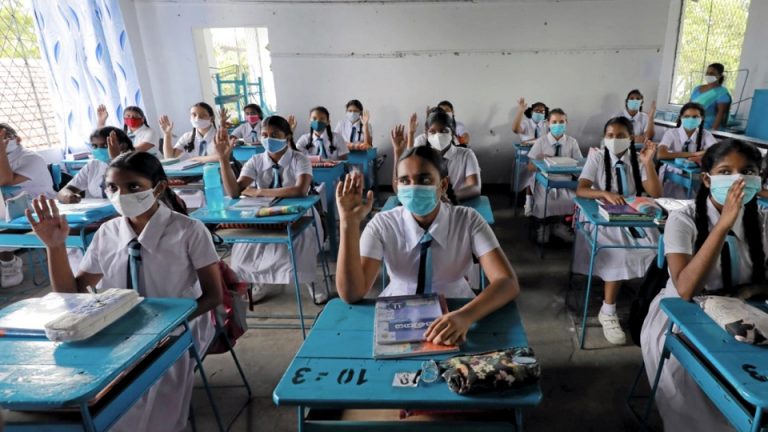
Sri Lanka cancelled exams for millions of school students as the country ran out of printing paper with Colombo short on dollars to finance imports, officials said Saturday.
Education authorities said the term tests, scheduled a week from Monday, were postponed indefinitely due to an acute paper shortage as Sri Lanka contends with its worst financial crisis since independence in 1948.
“School principals cannot hold the tests as printers are unable to secure foreign exchange to import necessary paper and ink,” the department of Education of the Western Province said.
Official sources said the move could effectively hold up tests for around two thirds of the country’s 4.5 million students.
Term tests are part of a continuous assessment process to decide if students are promoted to the next grade at the end of the year.
A debilitating economic crisis brought on by a shortage of foreign exchange reserves to finance essential imports, has seen the country run low on food, fuel and pharmaceuticals.
The cash-strapped South Asian nation of 22 million announced this week that it will seek an IMF bailout to resolve its worsening foreign debt crisis and shore up external reserves.
The International Monetary Fund on Friday confirmed it was considering President Gotabaya Rajapaksa’s surprise Wednesday request to discuss a bailout.
Around $6.9 billion of Colombo’s debt needs to be serviced this year but its foreign currency reserves stood at about $2.3 billion at the end of February.
Long queues have formed across the country for groceries and oil with the government instituting rolling electricity blackouts and rationing of milk powder, sugar, lentils and rice.
Sri Lanka earlier this year asked China, one of its main creditors, to help put off debt payments but there has been no official response yet from Beijing.
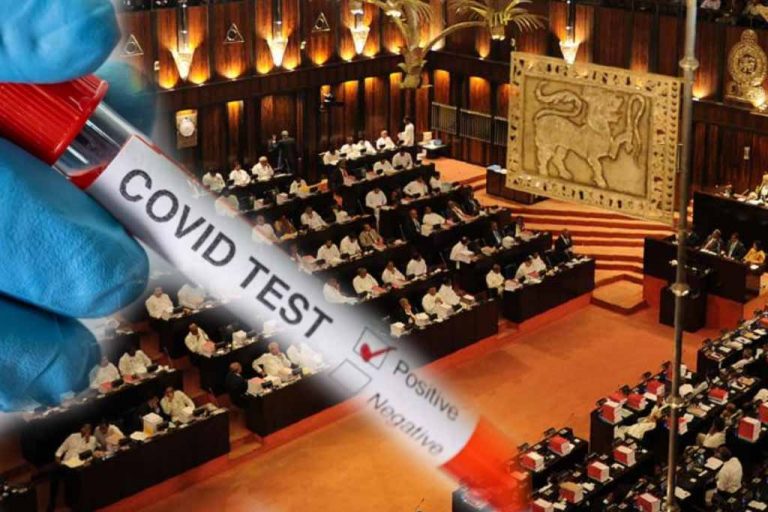
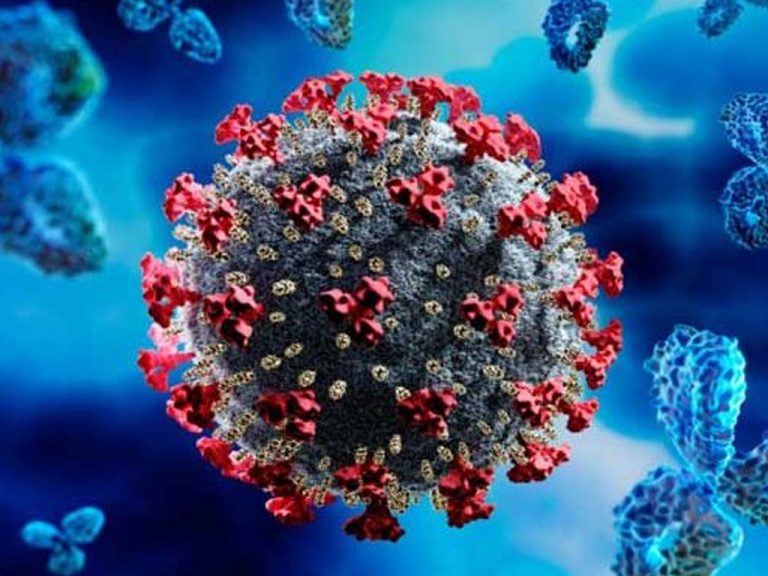
There is still a possibility of new variants of the Covid-19 virus being developed, warned the Health Ministry.
Director of the Health Promotion Bureau Dr. Ranjith Batuwanthudawa pointed out that the contagion has not been eradicated fully from the country and that there is a possibility of new variants being developed.
Only 53 per cent of the target group had received the booster dose of the vaccine against the virus, he added.
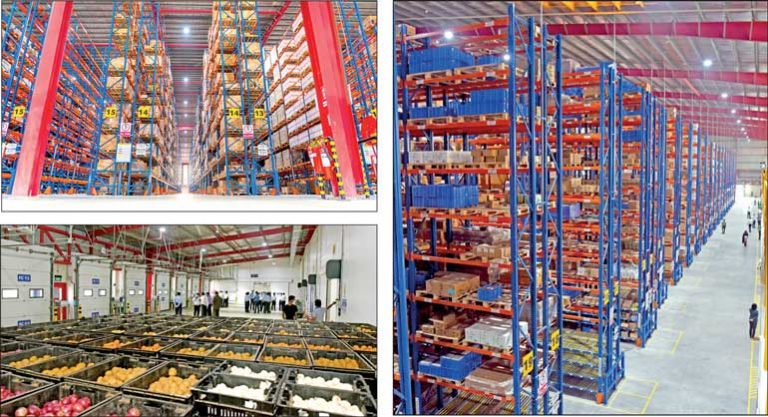
Keells Supermarkets recently opened its Rs. 4.6 billion, state-of-the-art centralised distribution centre (DC) in the industrial zone in Kerawalapitiya.
The facility is equipped with the latest cutting-edge technology and systems on par with global retail giants.
This will serve as Keells Supermarkets’ first owned and operated DC and is a testament to their commitment to product and service excellence.
The 260,000 square feet facility occupying nine acres will make it the third largest warehouse facility in the country and the largest technologically advanced distribution facility in the modern retail sector in the country.
The initiative was initially set in motion five years ago after undertaking a comprehensive study on global best practices and the growing needs of the expanding supermarket chain.
The initiative was materialised consolidating Keells Supermarket’s three warehousing facilities into one centralised warehouse with operations in the dry, fresh and chilled categories.
This in turn now provides all our suppliers the ability to just deliver to one location cutting down on logistical time and costs and benefits particularly the smaller suppliers.
The facility is equipped to handle over 100,000 kg of fresh produce daily, and the temperature-controlled space will ensure the cold chain is not compromised.
This is vital to ensure the freshness is retained from the farm gate to store providing customers freshest of produce as well as an assurance of better product availability overall.
The roof space spanning 200,000 square feet would be set up with solar panels that will have an installed capacity of approximately 800 KW.
With this, the total solar power installed capacity of the chain would increase to approximately 12 MWs, making Keells Supermarket chain one of the leading brands in Sri Lanka generating renewable energy.
John Keells Group Chairman Krishan Balendra said: “The state-of-the-art Distribution Centre is a significant step towards achieving our core purpose at Keells, of ‘improving the quality of life for the nation.’ As a responsible corporate citizen that prioritises national interest, we believe that this is also a move towards advancing the nation’s food security ambitions led by a private sector entity.
Further, this cutting-edge facility which has embedded the highest global standards of technology will support our outlet expansions, catering to a wider consumer base across the country and providing growth opportunities for the stakeholders in our value chain.
Employing over 500 team members, this facility will allow our supermarket business to provide good quality products at the right time resulting in the best offering for consumers at the stores”.
The state-of -the-art distribution centre will enable Keells to create efficiencies across its entire supply chain from farmers, manufacturers and distributors, small and large, and no doubt raise the industry standards while serving as a model for modern trade retailers.
In particular, given the current environment where global and local supply chains are faced with disruptions affecting product prices, investments such as this, will prove to reinforce and support the economy and support Sri Lankan consumers.