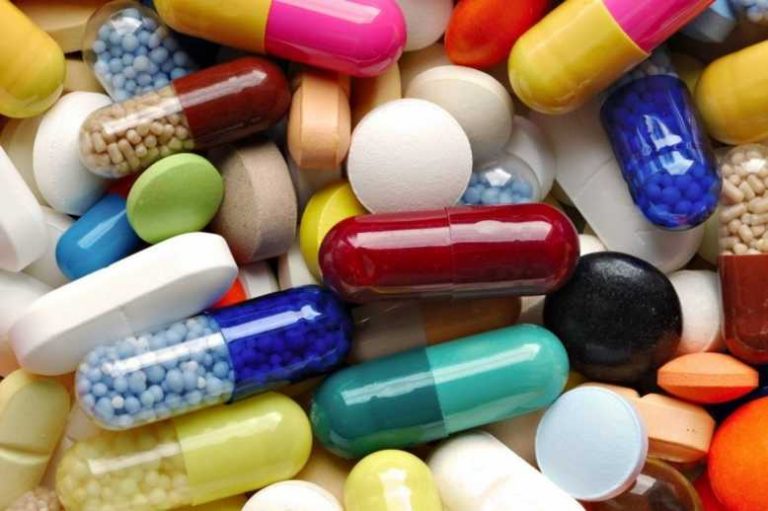
Sri Lanka’Medicines Regulatory Authority is compelled increase the prices of medicinal drugs as it has no option due to step depreciation of the rupee to the dollar amidst dwindling foreign reserves , official sources said.
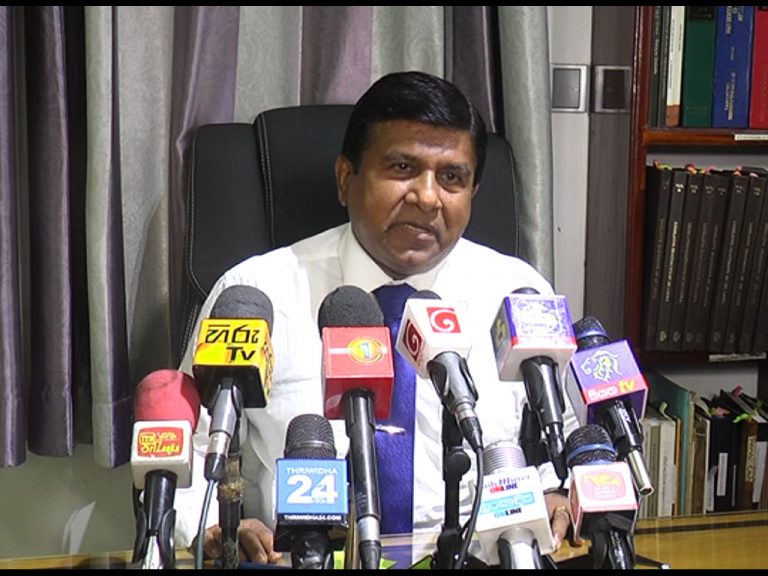
Prices of Pharmaceuticals have been controlled and regulated when the US dollar was trading at around Rs. 170 and after the floating of the rupee it has increased to around 254 the prices cannot be controlled any more , State minister Channa Jayasumana said.
This exchange rate is expected to go much higher in the event of the dollar being allowed to float.No industry, even one as powerful as the pharmaceutical industry can absorb that kind of loss of profit.If the Maximum Retail Price (MRP ) of medicines are not allowed to be adjusted in accordance with the exchange fluctuation, no importation of medicines will be possible in the future. This will have an immediate and irreversible effect on the health of the entire population as more than 85% of all medicines used in the country are imported.
Therefore he said approval has been granted by regulatory authority to increase the price of pharmaceuticals by 29%, making medicines one of the latest items to go through a price hike.
According to State Minister of Pharmaceutical Production, Supply and Regulation Channa Jayasumana, the National Medicines Regulatory Authority (NMRA) has approved the price hike for pharmaceuticals.
“The National Medicines Regulatory Authority is the only body legally allowed to control the price of pharmaceuticals in Sri Lanka. It has a price control committee, chaired by renowned medical expert Dr. Palitha Abeykoon,” Jayasumana said.
He explained that the NMRA’s price control committee consists of 13 experts representing various organisations. The committee considers factors like currency fluctuation to decide if the price of pharmaceuticals should be revised.
The State Minister explained that several requests have been made to increase the price of medicines, given the depreciation of the rupee. However, Jayasumana emphasised that the decision on price hikes is not made by importers or pharmacy owners, but the NMRA.
Pharmaceutical industry source said that the industry has always had the interests of our patients as the foremost consideration. In consequence the industry is against a haphazard price increase which will leave the patients at the mercy of unscrupulous elements.
What the industry suggests is a Pricing Mechanism that is equitable, fair and easy to implement. It should take into consideration the rising costs and exchange fluctuation but should still have patient welfare at its core.
The industry has actually taken legal action requesting such a pricing mechanism and the judiciary has dictated that the authorities must discuss this with the stakeholders and arrive at such a mechanism. Unfortunately, the industry has not yet been consulted and a mechanism has not materialised.
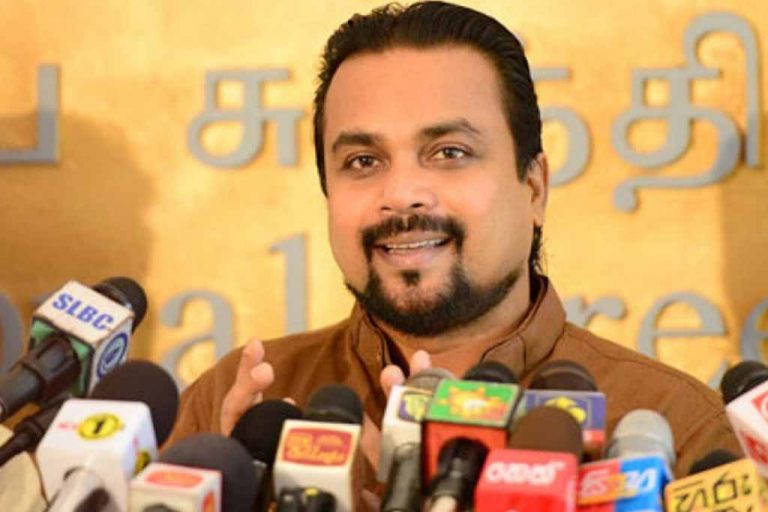
Wimal Weerawansa’s statement made during the last Presidential election that Gotabhaya Rajapaksa is like Lee Kuan Yew and Mahinda Rajapaksa is like Mahathir Mohamad – drew the attention of many in this country and the relevant statement has come to the fore again with the removal of Wimal Weerawansa from the post of Minister.
Weerawansa was asked about this in an interview with a weekend newspaper.
Responding to this, Weerawansa has said that Lee Kwan Yew is dead. Weerawansa further states that Mahathir Mohamad has gone home and that the reason for all the problems and setbacks of the government is the inaction of Lee Kuan Yew and Mahathir Mohamad that the people had hoped for.
Wimal Weerawansa points out that he made that statement at that time and fought hard within the government to make that statement a reality. He says that he had to quit the government as a result of that struggle. He also says he is now ready to fight from the outside.
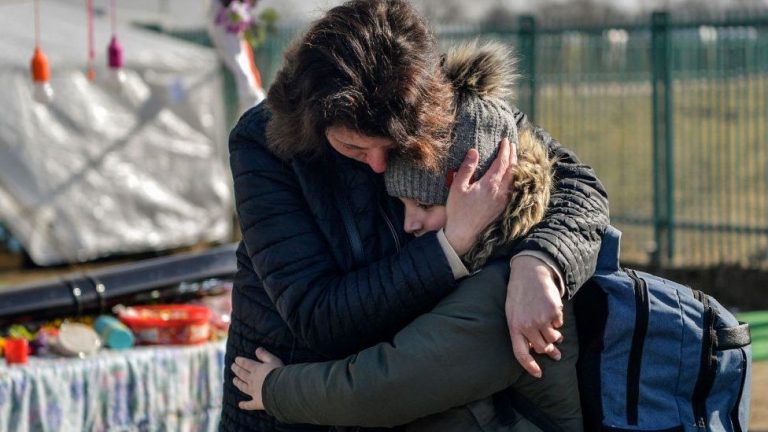
UK households who open their homes to refugees from Ukraine are to be given £350 a month to do so.
The government’s Homes for Ukraine scheme calls on people to offer a spare room or an empty property to a refugee for a period of at least six months.
But the Refugee Council said it was worried about the level of support available to those coming to the UK.
Labour said there many unanswered questions, and accused the government of “dragging its feet” over the crisis.
More than two million people have fled Ukraine because of Russia’s invasion in what the UN has called the fastest-growing refugee crisis since World War Two.
Announcing the new scheme, Levelling Up Secretary Michael Gove urged people to join the “national effort” and give a safe home to those in need.
It will launch on Monday, and will initially enable someone – a sponsor – to nominate a named Ukrainian individual or family to stay with them in their home, or in a separate property, for six months.
Sponsors won’t be required to know them in advance – they might find them, for example, through posts on social media.
Applications would be made online, with both sponsors and refugees having to go through a home office vetting procedure. The sponsor would get a “thank you” payment of £350 a month.
In a later phase, organisations such as charities and churches will be able to do the same, though there is no start date for this yet.
Announcing the plan, Mr Gove said: “The crisis in Ukraine has sent shock waves across the world as hundreds of thousands of innocent people have been forced to flee their homes, leaving everything they know and love behind.
“The UK stands behind Ukraine in their darkest hour and the British public understand the need to get as many people to safety as quickly as we can.”
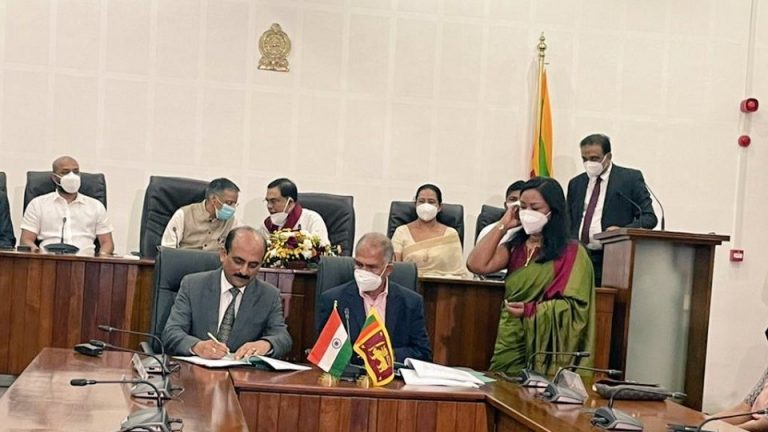
On 11 March 2022, High Commissioner of India to Sri Lanka, H.E. Gopal Baglay attended the signing ceremony of the Joint Venture & Shareholders’ Agreement (JVSHA) for the Trincomalee Power Company Limited (TPCL) which is a joint venture between NTPC Limited from India and the Ceylon Electricity Board (CEB) for developing a 100 MW Solar Power Plant at Sampur in Sri Lanka.
2. The signing ceremony took place at the Ministry of Finance of Sri Lanka in presence of the Minister of Finance, Hon. Basil Rajapaksa; Minister of Power, Hon. (Mrs.) Pavithradevi Wanniarachchi; State Minister of Aviation and Development of Export Zones, Hon. D.V. Chanaka; and State Minister of Solar, Wind and Hydro Power Generation Projects Development, Hon. Duminda Dissanayake. The signatories to this tripartite document included Mr. Narinder Mohan Gupta, Head of International Business Development, NTPC; Mr. M.M.C. Ferdinando, Chairman of the CEB; and Mr. N.S. Ilangakoon, Vice-chairman (CEB) and Chairman TPCL.
3. It may be recalled that during the visit of Minister of Finance of Sri Lanka, Hon. Basil Rajapaksa, to India last year, both sides had resolved to enhance investments from India in various sectors in Sri Lanka that would contribute to growth and expand employment. The Sampur Solar Power Project is an important step in this direction.
4. Signing of this JVSHA demonstrates yet again, India’s ability to respond to Sri Lanka’s priorities in a comprehensive and mutually beneficial manner. We will continue to encourage and facilitate the expedited and effective implementation of this project.
5. India is committed to expanding the role of renewable energy and helping build cleaner, greener and climate resilient societies. At the international level India has provided institutional solutions such as the International Solar Alliance and the Coalition for Disaster Resilient Infrastructure for Climate Adaptation. Our cooperation with Sri Lanka in this domain will only become stronger with the implementation of the US$ 100 million Line of Credit offered by India to Sri Lanka for development of solar power projects in Sri Lanka. Similarly, there is significant interest among private sector on both sides for cooperation in renewable energy which is likely to increase in the coming years.
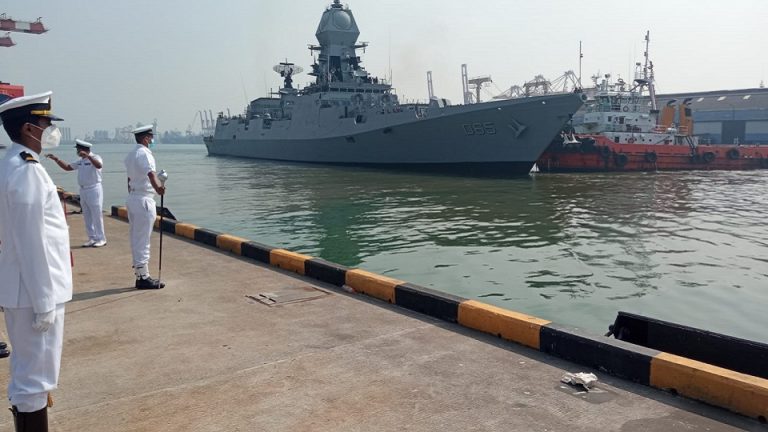
In continuation of Indian Navy’s endeavour to build ‘Bridges of Friendship’, four ships of the Western Fleet of Indian Navy under the charge of Flag Officer Commanding Western Fleet (FOCWF), Rear Admiral Sameer Saxena visited Sri Lanka from 09-12 March 2022. The indigenous guided missile frigate BRAHMAPUTRA along with frigate TALWAR entered Hambantota port while advanced indigenous destroyer INS CHENNAI and frigate TEG entered Colombo harbour. The ships were warmly welcomed in both these places by the Sri Lanka Navy in accordance with naval traditions.
2. High Commissioner of India , H.E. Gopal Baglay hosted a reception onboard INS Chennai on 10 March 2022. Hon’ble Foreign Minister Prof G.L Peiris represented H.E Gotabaya Rajapaksa, President and Defence Minister of Sri Lanka at the event. Hon’ble Speaker Mahinda Yapa Abeyawardena also graced the occasion.
3. Welcoming the guests, High Commissioner Gopal Baglay highlighted the importance of oceans and how they bind the two countries to achieve common prosperity, security and also health in the present scenario. He reiterated the commitment of Government of India to stand shoulder to shoulder with Sri Lanka in addressing these common challenges. He also highlighted that Colombo Security Conclave is a significant initiative in this field and cooperation through the forum needs to be developed further. In his remarks, FOCWF highlighted the historic bonds of friendship between the two navies and emphasised the need for cooperative efforts to ensure Security and Growth for All in the Region (SAGAR).
4. Hon’ble Foreign Minister Prof G.L Peiris who spoke on the occasion lauded Prime Minister Narendra Modi’s ‘Neighborhood First’ policy. He appreciated the fact that Finance Minister of India had assured priority to Sri Lanka in the sphere of economic cooperation. Prof. Peiris also called for deeper people to people ties, development of ports and harbours, cooperation in oil and gas, tourism and increased investments from India. He further emphasised that the future of the world lies in Indo- Pacific and BIMSTEC region and thus, through platforms like IORA and Indian Ocean Conference Sri Lanka strives to establish a ‘Rule Based Order’ for continued peace in the region. He also welcomed more such visits by the Indian Navy in future.
5. On 10-11 March, FOCWF made courtesy calls on the Foreign Secretary, Chief of Defence Staff & Commander of Sri Lanka Army and Commander of Sri Lanka Navy. Further, the visiting ships carried out various mutually beneficial training activities with the Sri Lanka Navy and other social engagements.
6. The visit of the Western Fleet to Sri Lanka strengthens the close bonds of friendship between the two navies and helped achieve greater interoperability through the conduct of various activities in harbour and at sea as part of Maritime Partnership Exercise including Flying Operations, replenishment approaches and tactical manoeuvres.
Neither Basil Rajapaksa, nor the government is at the capability to administer this country anymore and a new force, therefore, should be formed by the people, said Ruling Party MP Wijedasa Rajapaksa, speaking to media in Colombo today (12).
The MP went on saying that every promise made before the 6.9 million mandate and the international community has been broken by the government and asked the audience to name one promise that was ever fulfilled.
Alleging that the President has now become a puppet in the palm of Basil Rajapaksa, the MP added that Mahinda Rajapaksa has become weak, resembling him to a snakegourd.
MP Rajapaksa also confessed that he regrets for voting in favour of the 20th Amendment to the Constitution, adding that he is suffering the consequences of trusting the President.
The Ceylon Petroleum Corporation (CEYPETCO) has decided to go ahead with a fuel price surge, starting from midnight Friday (11).
Accordingly, the state-run CEYPETCO has increased the price of 92 octane petrol by Rs. 77 per litre, the price of 95 octane petrol by Rs. 76 per litre, the price of super diesel by Rs. 95 per litre and the price of auto diesel, Rs. 55 per litre.
The new price of 92 octane will be Rs. 254 per litre, 95 octane petrol Rs. 283 per litre, super diesel Rs. 254 per litre and auto diesel, Rs. 176 per litre.
US could be turning the corner on the pandemic, but not if you are one of the many people who has lost loved ones or is suffering post-coronavirus symptoms known as long Covid
Pamela Swan Addison keeps hearing the same phrases over and over. People are tired. They are tired of wearing masks, tired of getting vaccinations, tired of their lives being disrupted. Addison is tired too. But she’s tired of different things. She’s tired of listening to people complain about masks and vaccinations and disrupted lives when she knows her life will never be the same again.
She’s tired of the inevitable question people ask her whenever they discover her husband Martin died of Covid early in the pandemic aged 44: did he have an underlying health condition? He didn’t, as it happens, but why do they have to be so insensitive?
She’s tired of the conspiracy theories and fabrications. “One person commented my husband didn’t die of Covid, the hospital was paid to lie to me to inflate the numbers. How could someone say that to a widow who was grieving?”
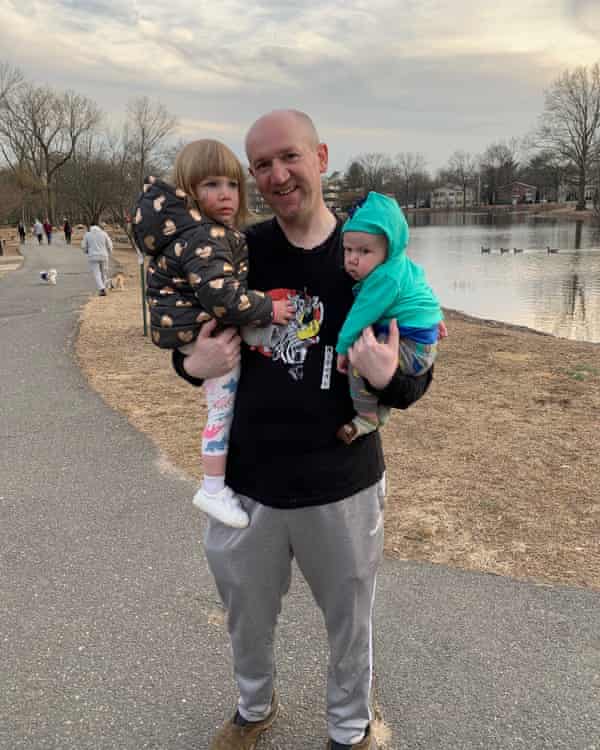
She’s tired of the thought that her husband, a frontline health worker who died in April 2020, has been all but forgotten. He gave his life serving his patients in a New Jersey hospital like a soldier who falls in battle, leaving her to care alone for their two-year-old son Graeme and three-year-old daughter Elsie, but where is the recognition?
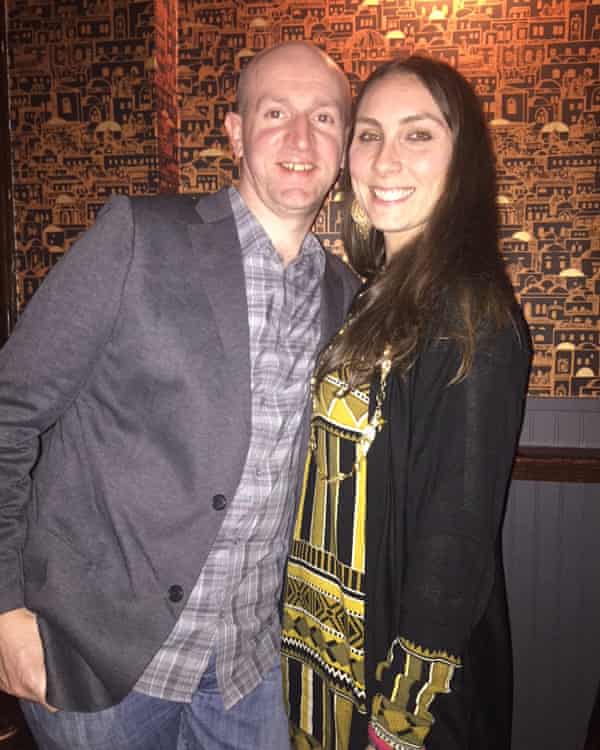
Martin Addison and Pamela Addison. Photograph: Pamela Swan Addison
All of this negativity frustrates and saddens her. She set up a group for young widows and widowers of Covid-19 so that others could share their experiences, and they all say the same things.
“We talk about how ignored we feel, how our kids are the forgotten grievers. People keep saying this disease is not so serious. But it is. It has killed almost a million people.”
Two years ago Sars-Cov-2 penetrated the United States, tentatively at first and then with a terrifying roar. On 11 March 2020 the World Health Organization declared Covid a pandemic, and two days later Donald Trump announced a national emergency, adding the memorable disclaimer: “I don’t take responsibility at all.”
Now two years into the global pandemic, hope is in the air that the US might finally be turning the corner. The Omicron surge is abating, mask mandates are being scrapped and vaccination requirements lifted even in Democratic states where public safety stances have been most stringent. Music festivals are being planned this summer with no Covid restrictions.
But the more the Covid cloud appears to be clearing, the more it becomes apparent that the consequences of the virus are likely to stick around. As Addison said, it’s hard to put behind you a disease that has killed almost 1 million people in America alone.
Ashton Verdery, a sociologist at Pennsylvania state university, created with colleagues a bereavement multiplier that estimates how many people in the US have lost a close relative to Covid. Given the paucity of historical demographic data for Hispanic and Asian Americans, they based their calculations on population statistics for white and Black Americans though they are confident their conclusions apply broadly to all US residents.
Verdery was taken aback by the findings. The number affected by Covid bereavement was much larger than he had expected.
Verdery and the team concluded that for every person who dies of Covid in the US there are almost nine people in their immediate kinship group left bereaved. For every grandparent who dies there are on average four grandchildren mourning them, every parent two children, every sibling two brothers or sisters left behind.
That amounts to a total pool of Covid bereaved people in the US of about 8.5 million, including almost 4 million Americans who have lost a grandparent and more than 2 million who are grieving the loss of a parent.
Verdery told the Guardian that he had been particularly struck by the large numbers of people who lost a grandparent. “Many children will remember for the rest of their lives that they lost a grandparent in the pandemic.”
The implications are especially acute when children lose a parent – a position that now applies to more than 200,000 under-18s.
“That’s going to have big consequences,” Verdery said. “Children who lose a parent have a greater likelihood of dropping out of school, not attending college, criminal justice involvement, lower earnings and higher mortality in later life.”
The US could conceivably be turning the corner on the pandemic, but not if you are one of the many people suffering post-coronavirus symptoms known as long Covid.
There is so much we don’t know about long Covid, not least how many of the almost 80 million people in the US who have been infected with the virus are suffering the most common symptoms of prolonged disease – tiredness, breathing problems, joint or muscle pain, and difficulties with concentrating.
Eric Topol, professor of molecular medicine at Scripps Research in San Diego, said that the number of US residents suffering enduring problems is likely to be more than 10 million. Some of his medical colleagues who contracted the virus in the early days of the pandemic are still very debilitated, he said.
“This is going to be one of the lingering profound results. We are in the dark, we have no idea where this will end. We have no treatment that is effective, and there’s been not nearly enough given the millions of people adversely affected.”
For Topol, the story of the past two years has been that of the extremes of American capability. On the one hand, there is the story of the lightning-fast development of vaccines, which he calls “historic, momentous, the greatest biomedical triumph yet”.
A timeline he put together on his Twitter feed makes the point. The Sars-Cov-2 virus was genetically sequenced on 10 January 2020 – two months before Trump announced his “no-responsibility” national emergency.
Five days later the first mRNA vaccine was designed by the US National Institutes of Health in partnership with Moderna. Two months after that a trial began of a vaccine that has proven to be remarkably resilient at withstanding the mutational dexterity of this virulent disease.
Compared with this unparalleled example of scientific speed and ingenuity, Topol despairs at how the vaccines and boosters have been put to use. Or not put to use. “We botched the whole booster program in the US,” he said.
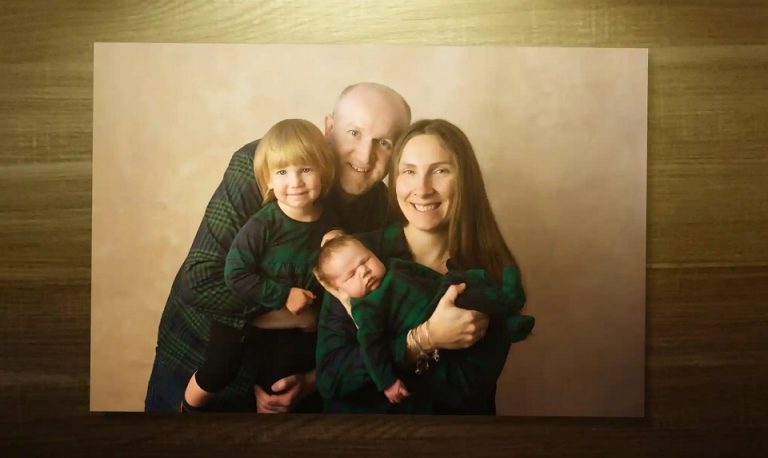
Martin Swan Addison with his two children Elsie and Graeme. Photograph: Pamela Swan Addison
Americans have taken up booster shots at a dramatically lower level than other wealthier countries despite the relative ease with which they can be obtained. The latest estimate from the Kaiser Family Foundation (KFF) is that booster coverage is as low as 42%.
Expressed as a league table of countries, the US now ranks 67th for the proportion of its population that is fully vaccinated and 54th for boosters. “We should see those rankings and have a sense of blatant failure,” Topol said. “We had reasons to be the leader in vaccine use and yet we slumped into being a world laggard.”
The consequences of that failure continue to be felt in the US despite the leavening mood. Thousands of Americans are still dying each week, deaths which Topol believes are almost entirely preventable given the efficacy of boosters at mitigating the deadliness of the virus.
He sees the continuing costs of failure too in the burnout within his profession. “Colleagues are going for early retirement because they can’t take it any more, people are changing careers, we’re losing nurses. It’s palpable, the disenchantment. It’s not just burnout – it’s burnout squared.”
As Topol suggested, the problem is especially acute among nurses. The American Nurses Association has said it expects more than half a million experienced registered nurses to retire this year, adding to a shortage projected to exceed 1 million.
That leaves a healthcare system whose flaws have been amply displayed during the pandemic even more vulnerable should the virus mutate again into a new aggressive variant.
Danielle Allen, a Harvard professor and national policy leader on the Covid response, told the Guardian that the pandemic has exposed other fundamental fault-lines that have been festering in American society for the past 50 years. In her new book, Democracy in the Time of Coronavirus, she explores how the country’s flailing approach was in significant part rooted in its gaping wealth inequality.
She notes how at the start of the pandemic affluent Americans retreated to their vacation homes and Zoom bubbles, “much as ancient Romans and early modern British aristocrats used to retreat to villas and country estates in the face of plague”. Meanwhile, low-income workers in essential frontline jobs – large proportions of whom were African American and Hispanic – were forced to turn up for work in person, prompting Covid case and death rates to match.
That core disparity is reflected in the latest statistics. KFF reports that two years on the racial gulf in Covid experiences remains huge: when data is age-adjusted it shows that Hispanic, Black, and Native American and Alaska Native people are twice as likely to die from Covid as their white counterparts.
“The pandemic has been an X-ray on who holds power and the vast separation between those elites and everybody else,” Allen said.
Allen recalls vividly the initial shock of the pandemic as it swooped down on her community. “It felt like falling off a cliff with no bungee cord. There was a plunge into hunger, and we had one of the highest mortality rates in the country among older people even though we have one of the crown jewels of biotech right here in Massachusetts.”
That dichotomy spoke volumes to her. “We were one of the richest states in the richest country in the world – and people felt abandoned.”
Abandoned. That’s the word that Allen kept hearing from people describing their plight.
It leads her to draw a highly sobering conclusion in her book, that Covid taught the US a very dark truth about itself: “We don’t know, in conditions of emergency, that we will be OK together.”
Too many people, she argues, “were willing to abandon our elders” to the virus. Too many people were willing to abandon essential workers, young people, people of colour, rural Americans.
For Allen, hard questions hang in the air even as the pall of the pandemic dissipates. The hardest question of all is stated bluntly in her book.
“If, in conditions of emergency, we cannot count on support from one another, then how do the institutions we share together have any legitimacy?”
That’s another potential long-term legacy of the virus in the US – its impact on democratic institutions. Around the first anniversary of the pandemic Ashley Quarcoo, a non-resident scholar at the Carnegie Endowment, assessed the situation and came up with some reasons to be cheerful.
In an article for the Council on Foreign Relations she pointed to new methods of voting, particularly voting by mail, that contributed to a historic turnout in the 2020 presidential election. She also highlighted the eruption of new forms of civic activism that reached a peak in the summer of protests following the police murder of George Floyd.
“There may be a silver lining that could strengthen US democracy in the longer-term,” she wrote then.
What a difference a year can make. The Guardian went to Quarcoo and asked her whether, on the second anniversary of the pandemic, she was still optimistic.
“There’s been a backlash to the huge election turnout in 2020, with many states passing laws to restrict voting by mail,” she said. “There’s also been a decline in confidence about our election integrity provoked by Donald Trump’s claims of election fraud.”
She still sees residues of the collective activism that the pandemic helped unleash, but there’s less consensus around the search for solutions. “That sense of social solidarity and coming together in the summer of 2020 has given way to mistrust, both about how things work and between citizen and citizen.”
As America scrambles to get back to a “normal” that perhaps never existed, Quarcoo warns that the wounds of these brutal two years run deep. “The social fabric of the US is more brittle, fissures are more deeply exposed and starkly clarified.”
That poses a challenge, she said. She gave it a name: the long Covid of our democracy.
Deputy High Commissioner of India in Sri Lanka Shri Vinod K. Jacob highlighted the strong people to people and cultural ties between India and Sri Lanka ensuring that these ties will be further strengthened. .
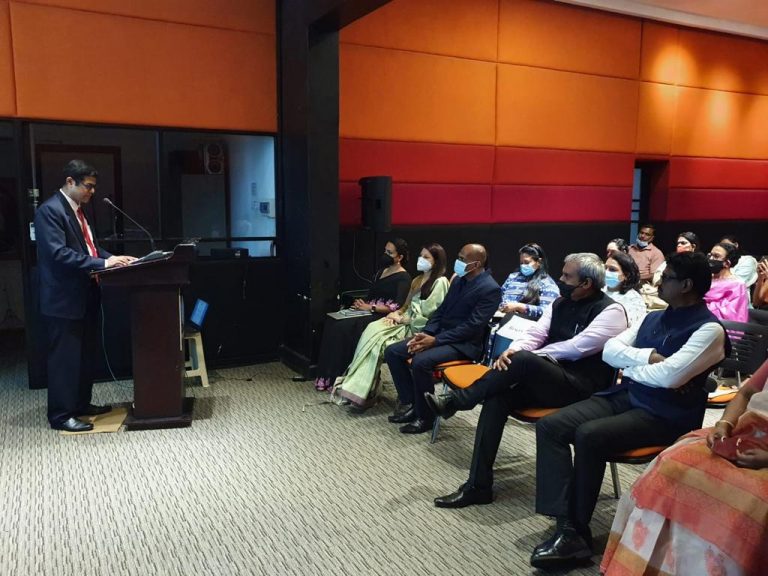
Deputy High Commissioner, Shri Vinod K. Jacob spoke at the presentation on Ramayana Trails organised by Sri Lanka – India Society and Sri Lanka Tourism Promotion Bureau at Swami Vivekananda Cultural Centre, Colombo on 10th March 2022.
In this connection, he mentioned the establishment of the air bubble arrangement between India and Sri Lanka in April 2021, holding of the third Joint Working Group Meeting on Tourism and the inaugural flight from Sri Lanka to Kushinagar airport in October 2021.
India is ready to welcome tourists again and considers Sri Lanka as an important source market for tourism. To encourage tourism, Government of India had recently suspended the RT-PCR test requirement for travellers who are fully vaccinated and announced the resumption of international commercial flights from 27th March 2022. He noted that despite the COVID related restrictions in 2021, 1.94 lakh tourists arrived in Sri Lanka, out of which 56,268 were from India which translates into about 29% of total arrivals. However, it was highlighted that efforts should be made by the Sri Lankan side to increase these numbers.
Deputy High Commissioner said that in the last two months, 7,682 tourists from Sri Lanka had visited India, while 196 had travelled for medical purposes. The objective of reaching the record of 3 lakh tourists to India in 2019 should be pursued. He also said that it was a good time for Sri Lankans in all walks of life to benefit from opportunities available in India; and in this regard, referred to examples of Sri Lankan cricketers in the Indian Premier League, artists in Bollywood and other creative personalities and investors.
The programme included presentation to audience on prominent sites linked with Ramayana in Sri Lanka, which would be of interest to Indian tourists.
The daughter of Sergei Lavrov’s alleged mistress should be among the family members of Vladimir Putin’s associates targeted with sanctions, MPs and campaigners have said.
The Russian foreign minister’s “second family”, including Svetlana Polyakova, his alleged mistress, and Polina Kovaleva, her 26-year-old daughter, were identified as among those officials should look at, the Daily Telegraph reported.
As Roman Abramovich was added to the sanction list on Thursday, MPs questioned why the government’s list was still dwarfed by the hundreds of individuals and entities sanctioned by the EU and the US.
Layla Moran MP, the Liberal Democrat spokesperson for foreign affairs and international development, told the Daily Telegraph: “The government is still way behind the EU and the US. The legislation hasn’t passed yet, so if they can act against Abramovich now, why not the others?”
Moran called for action against 35 named “key enablers” of Putin in the House of Commons last month, including Abramovich and Oleg Deripaska, who was also added to the UK sanction list on Thursday.
But many others on that list have been sanctioned in the EU or US but not in the UK.
This includes Viktor Zolotov, the head of Russia’s national guard whose family is one of the richest in Russia in the real estate sector; Anton Vaino, Putin’s chief of staff; and Mikhail Mishustin, the Russian prime minister.
Moran told the Telegraph that officials should also look at “the family and friends” of Putin’s associates, as “one of the ways that they get around sanctions is to transfer funds and assets to family members”.
“They should be included in the list and ideally it should be automatic,” she said.
Maria Pevchikh, the head of investigations at Alexei Navalny’s Anti-Corruption Foundation, named members of Lavrov’s family including Polyakova and Kovaleva, who owns a flat in Kensington, west London, as those who should have their assets frozen, the Telegraph reported. Her calls were backed by MP Chris Bryant.
Polyakova, an actor and restaurateur, is reported to have been in a relationship with Lavrov since the early 2000s and documents unearthed by the foundation show she has been abroad with the foreign minister more than 60 times, including on diplomatic missions.
Her family’s lifestyle and growing multi-million-pound property portfolio is alleged to have been bankrolled by her lover. Kovaleva’s now-deleted Instagram account shows her relaxing on a yacht owned by Deripaska.