Home Blog Page 2396

Singapore contributes US$ 100,000 as humanitarian aid for Sri Lanka

0

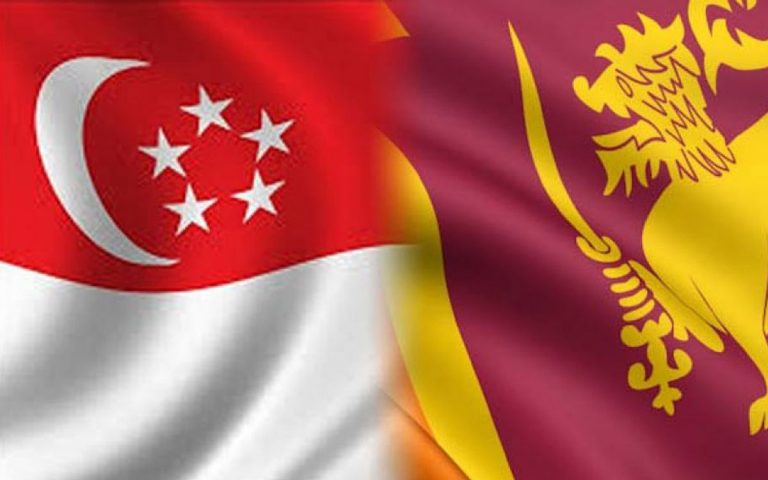
The Singapore Government will contribute USD 100,000 as seed money to support the Singapore Red Cross’ (SRC) public fundraising efforts for Sri Lanka’s vulnerable communities.

In a statement on Friday (Apr 15), the Singaporean Ministry of Foreign Affairs (MFA) said that the move would supplement SRC’s earlier commitment pledge.

On Wednesday, the SRC committed USD 100,000 for urgently-needed medical supplies and other basic necessities in aid of vulnerable communities in Sri Lanka.

This was in response to Sri Lanka’s economic and humanitarian crisis, which has led to widespread resource shortages across the country, said the SRCsaid. .

Citing the Sri Lanka Medical Association, SRC said that all hospitals in Sri Lanka lack access to imported emergency drugs and medical equipment, leading to the cessation of surgeries at several hospitals.

“The situation has compelled health authorities to curtail the operations in hospitals and also limit the issuance of medications to patients, which could result in an unprecedented humanitarian crisis in the country,” said SRC.

It also launched a public fundraising appeal to rally donations to support these communities with medical drugs and equipment.

Sri Lanka is in the grip of its worst economic crisis since independence in 1948, with severe shortages of essential goods and regular blackouts causing widespread hardship.

Demonstrations have raged across Sri Lanka for weeks as people angered by prolonged power cuts and shortages of fuel and medicine demand President Gotabaya Rajapaksa’s resignation.

An internal memo from a major state-run hospital in Colombo revealed that only emergency, casualty and malignancy surgeries would be conducted from Apr 7 onwards because of a lack of surgical supplies.

Sri Lankans are also struggling with rocketing inflation that has hit middle-class families, with citizens overseas urged to send home money to help pay for desperately needed food and fuel after the country announced a default on its US$51 billion foreign debt.

Russia’s debt default will be one of the hardest in history to resolve and could see the US seize the central bank’s assets, economist says

0

Harry Robertson

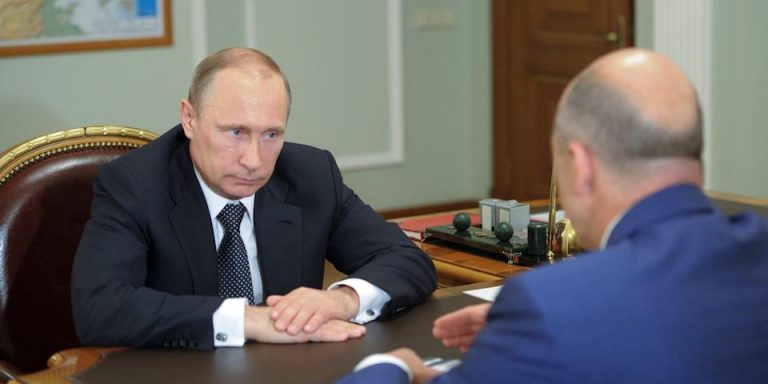
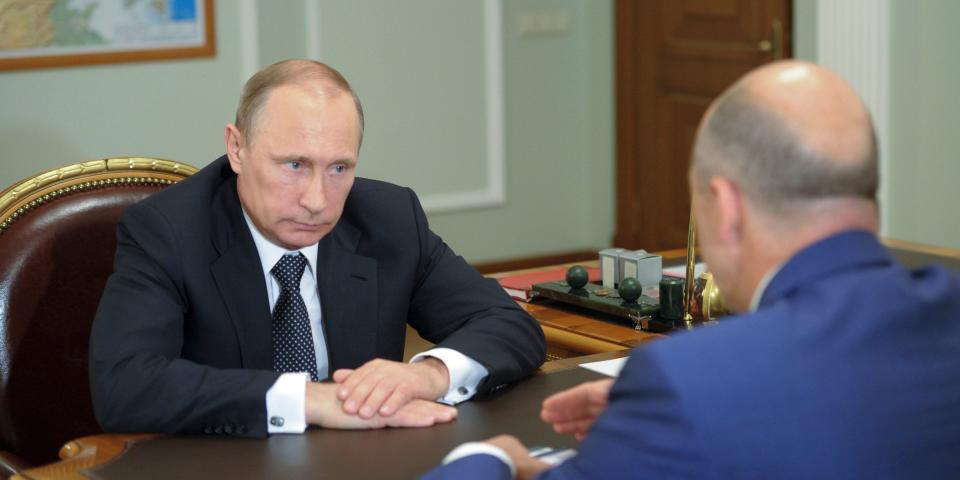
Russian President Putin speaks with Finance Minister Siluanov during their meeting at the Novo-Ogaryovo state residence
Russian President Vladimir Putin speaks with Finance Minister Anton Siluanov.RIA Novosti/Reuters
  • The impending Russian debt default is likely to be one of the most difficult in history to resolve, Oxford Economics has said.
  • It could even result in the US seizing the Russian central bank’s frozen assets, the consultancy’s Tatiana Orlova said.
  • Russia still has a grace period in which to make dollar payments on its foreign bonds, but analysts say a default is likely.

The impending Russian debt default is likely to be one of the most difficult in history to resolve, and could even lead the US to permanently seize assets from the country’s central bank, according to a report from the consultancy Oxford Economics.

Russia is facing its first default on its foreign-currency debt since the aftermath of the Bolshevik revolution in 1918.

The US Treasury earlier this month blocked Russia from paying $650 million due on two bonds using funds held at American banks. Russia has instead tried to pay in rubles, but credit ratings agencies have said this would constitute a default.

Russia has a 30-day grace period from April 4 in which to pay in dollars. But thoughts are now turning to the next steps, and how bondholders might recoup their money.

Tatiana Orlova, lead emerging markets economist at Oxford Economics, said investors face a “very long and difficult” legal road. “Russia’s debt crisis will be among the most difficult in history to resolve, since the default has its roots in politics rather than finance,” she wrote in a report that was sent to clients Thursday.

One of the key problems is that political and financial relations between Russia and the West have completely broken down. That makes the usual default process, whereby bondholders and the government enter negotiations and thrash out a deal, seem unlikely to happen.

Orlova said another problem for bondholders is that Ukraine may lay a claim to Russian assets in international courts to pay for the rebuilding of the country. In that case, investors would have to weigh up whether they want to compete with the Ukrainian government for Russian assets.

The economist said the US might eventually end up seizing the money from the Russian central bank’s foreign currency reserves. Western governments have already frozen the bulk of the roughly $600 billion stockpile.

President Joe Biden earlier this year ordered that half of Afghanistan’s central bank reserves, which were also frozen, be made available as possible compensation for victims of 9/11 and to fund humanitarian support in the country.

“The US administration could possibly find a stronger moral cause for splitting the US-denominated portion of Russia’s FX reserves between Ukraine and bondholders,” Orlova said.

Russia’s Finance Minister Anton Siluanov has said the government has fulfilled its obligations by paying in rubles. He said last week Western governments are forcing Russia into a default and threatened to take legal action.

It’s not just holders of Russian sovereign debt who may have to take to the courts to try to get their money.

Orlova’s report said there is likely to be an “avalanche” of Russian corporate debt defaults, given that the US is taking a hard line and banning American banks from processing payments.

An international committee of banks last week deemed state-owned Russian Railways to be in default, after sanctions stopped the company from making bond payments.

There were roughly $98 billion of Russian corporate foreign-currency bonds outstanding as the war began in February, according to JPMorgan, with $21.3 billion owned by foreign investors.

YAHOO NEWS

Sri Lanka begins negotiations with IMF to avert economic crisis  

0

Sri Lanka is now in a very weak position when they start negotiations with the International Monetary Fund (IMF)on Monday18 for a bailout package and support for its debt restructuring process.

This weak situation became worse following the downgrading of the country on its Long-Term Foreign-Currency Issuer Default Rating (IDR) by Fitch rating agency recently. 

 Fitch Ratings has downgraded Sri Lanka’s Long-Term Foreign-Currency Issuer Default Rating (IDR) to ‘C’ from ‘CC’. The issue ratings on foreign-currency bonds issued on international markets have also been downgraded to ‘C’ from ‘CC’. 

The Long-Term Local-Currency IDR has been affirmed at ‘CCC’ and the Country Ceiling at ‘B-’. A full list of rating actions is at the end of this rating action commentary.Fitch typically does not assign modifiers for sovereigns with a rating of ‘CCC’, or below.

:

The downgrade of Sri Lanka’s Long-Term Foreign-Currency IDR reflects Fitch’s view that a sovereign default process has begun. 

This reflects the announcement by the Ministry of Finance on 12 April 2022 that it has suspended normal debt servicing of several categories of its external debts, including bonds issued in the international capital markets and foreign currency-denominated loan agreements or credit facilities with commercial banks or institutional lenders. 

The statement applies only to the government’s external debt obligations. Fitch understands from the announcement that locally issued government debt, whether in local or foreign currency, is not affected and assumes service on this will continue.

:

Sri Lanka has an ESG Relevance Score of ‘5’ for Political Stability and Rights as well as for the Rule of Law, Institutional and Regulatory Quality and Control of Corruption, as is the case for all sovereigns. 

These scores reflect the high weight that the World Bank Governance Indicators have in our proprietary Sovereign Rating Model. Sri Lanka has a medium World Bank Governance Indicator ranking in the 46th percentile, reflecting a recent record of peaceful political transitions, a moderate level of rights for participation in the political process, moderate institutional capacity, established rule of law and a moderate level of corruption, Firch analysis statement  read

Sri Lanka has an ESG Relevance Score (RS) of 5 for Creditor Rights as willingness to service and repay debt is highly relevant to the rating and is a key rating driver with a high weight. The downgrade of Sri Lanka’s rating to ‘C’ reflects Fitch’s view that a default-like process has begun.

Bankrupt Sri Lanka looks to expand airline fleet

0

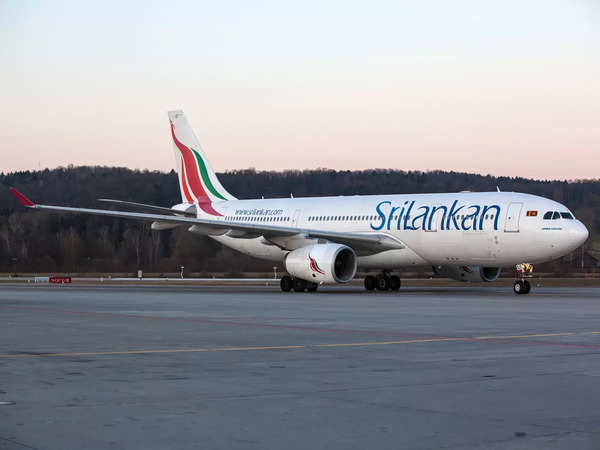
Cash-strapped Sri Lanka’s loss-making national carrier revealed plans Thursday to lease up to 21 aircraft, just two days after the government announced a default on its $51 billion foreign debt.

The island nation is in the grip of its most painful economic downturn since independence in 1948, with severe shortages of essential goods and regular blackouts causing widespread misery.

Huge protests have called for the resignation of the government, which has begged Sri Lankans abroad to send cash home to help pay for essential imports.

Despite the crisis, state-owned Sri Lankan Airlines has unveiled plans to expand its fleet from 24 to 35 planes in the next three years and replace some of its ageing jets.

“Sri Lankan Airlines has issued four requests for proposal to lease up to 21 aircraft to support its long-term business strategy,” it said in a brief statement.

The announcement came after the government suspended repayment of all its foreign borrowings, ahead of negotiations for a debt restructure with the International Monetary Fund next week.

The national carrier did not say how it planned to finance the leases, with its balance sheet showing a $1.7 billion debt and a carried forward loss of $1.56 billion in March 2020.

It also came the same day international ratings agency Fitch downgraded $175 million in bonds issued by the airline from C to CC, suggesting the carrier was “near default”.

Fitch said the airline’s new rating, on debt due in June 2024, was in line with Sri Lanka’s default announcement.

The IMF has repeatedly urged Sri Lanka to privatise the airline, saying it was a white elephant the country cannot afford.

The airline was profitable before the government cancelled a management agreement with Emirates of Dubai in 2008, following a personal dispute with current Prime Minister Mahinda Rajapaksa.

The carrier had refused to bump fare-paying passengers and give their seats to members of Rajapaksa’s family, who were returning from a holiday in London.

Rajapaksa removed the Emirates-appointed chief executive of Sri Lankan Airlines and made his brother-in-law Nishantha Wickremasinghe head of the company.

An earlier plan to lease eight Airbus A350 jets during Rajapaksa’s tenure is subject to an ongoing criminal investigation.

The airline’s then-chief executive Kapila Chandrasena and his wife were arrested two years ago after an international investigation found they received at least $2 million in kickbacks over the order.

ECONOMIC TIMES

Police interferes the Galle protest which was held in support of the protest at Galle Face (VIDEO)

0

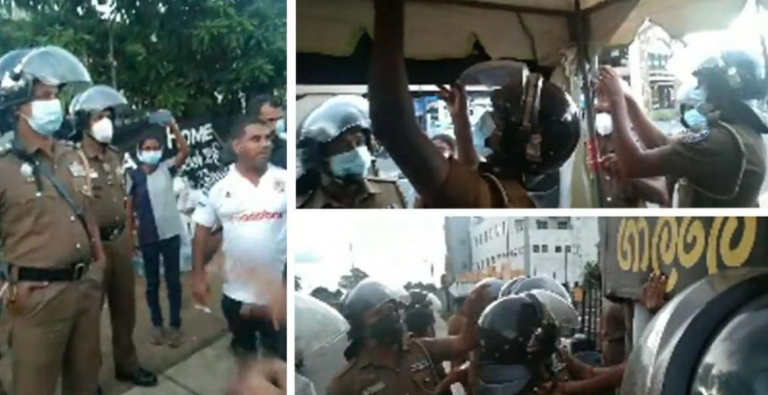
Police are reported to have interfered a protest in Galle this morning (17) which was held in support of the ongoing protest by the people near the Galle Face against the President and the government.

A large number of officers of the Police Riot Control Unit have come and removed the tent of the protesters.

PM Mahinda Rajapaksa prepares to resign from the post

0

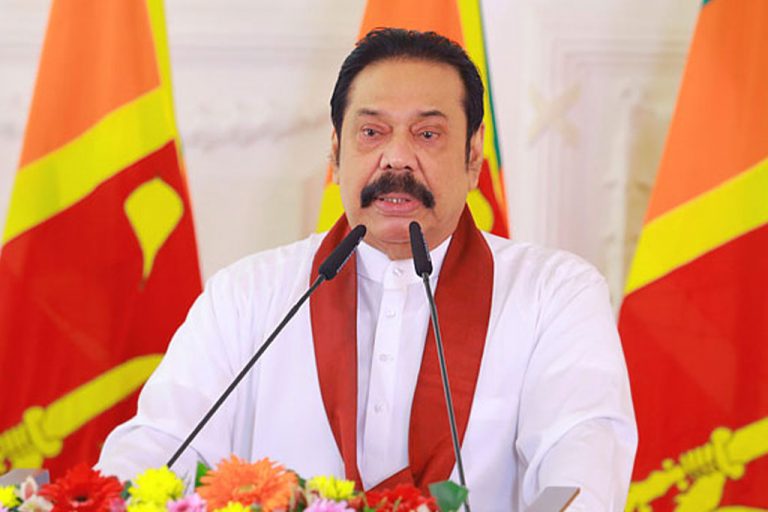
Sources say that Prime Minister Mahinda Rajapaksa is preparing to resign from the post.

Sources say that considering the public protests in the country and the situation in Parliament, he will often give the post of Prime Minister to a young politician and he will resign.

It is said that if Mahinda Rajapaksa resigns, the post of Prime Minister will probably be given to his son Namal Rajapaksa and the names of former Ministers Ramesh Pathirana and Dullas Alahapperuma have also been proposed for this purpose.

Sources close to President Mahinda Rajapaksa said that he was hoping to step down as Prime Minister in the current situation.

He had earlier agreed to resign from the post of Prime Minister on April 03, but later changed his mind following pressure from a group of ministers.

Prasanna, Bandula and Mahindananda refuse to accept posts in the new cabinet

0

Sources say that Johnston Fernando will be given a ministerial post in the new cabinet to be sworn in.

It is said that the new cabinet which was originally proposed to be limited to 15 ministerial posts has now been increased to 22.

However, former ministers Prasanna Ranatunga, Bandula Gunawardena, and Mahindananda Aluthgamage have reportedly refused to accept new cabinet posts.

Sources further said that although the government is ready to give the post of Sports Minister to Jeewan Thondaman, he has refused to accept the post and has promised not to sign the no-confidence motion against the government.

SRI LANKA: Can Sri Lanka rise from its constitutional limbo?

0

Can Sri Lanka rise from its constitutional limbo? When Mr. Nandalal Weerasinghe accepted to take over as the Head of the Central Bank, in one of his early statements, he said that he would be able to do the expected job if there is no interference from outside. The demand for non-interference is today one of the key issues that is being demanded in terms of restoring public life and getting the public institutions to work in the interest of the nation.

However, the issue of non-interference from outside is alien to the kind of constitutional setting that Sri Lanka has. The 1978 Constitution was made with the design that the Executive President could and should interfere into everything and that he should be the king over all public institutions. The popular name that is given to this interference is called “politicization”. Politicization simply means that the Executive President or his/her agents could interfere into the working of any of the public institutions, directly or indirectly.

A rule written into the workings of rule of law based institutions is that every institution should work according to the legal mandates given to such institutions and that the individuals who carry out these mandates should also obey the legal rules above anything else. Implied in this doctrine is that nothing other than legally valid considerations should weigh on anybody who exercises functions within the State. This applies both to the institutions as well as to the individuals who perform the duties.

The popular conversation today, involving many persons like various kinds of experts as well as media personnel and other opinion makers, is around the manner in which Sri Lanka could emerge out of the present political limbo. It looks like a completely paradoxical situation, where, on the one hand, the popular demand is for the resignation of the Executive President and the response to that by the Government is one of complete refusal. On the other hand, there is a demand that while the Executive President remains with all his powers given under the Constitution, there should be a kind of an interim Government composed of persons from all of the political parties and even including experts who have credibility in the country. However, this situation, from the point of view of the exercise of power as envisaged within the 1978 Constitution creates almost an impossible situation to achieve. However credible, well intentioned and committed the persons appointed as the interim Government, they have to work within a power arrangement which is determined by the Constitution. The Constitution makes the Executive President the ultimate source of power in dealing with any matter or with anyone. So long as the President and the interim Government do not agree on any matter, the ultimate capacity to annul any action is in the hands of the President. Whatever he does in terms of that, will be constitutionally valid.

Thus, there is as a core, a constitutional deadlock. If an interim Government or any other arrangement is made within that constitutional deadlock, there is no ground to believe that any such arrangement could practically work.

Thus, the central issue of the constitutional debate should be to resolve this deadlock. The Executive President, by remaining in power under these circumstances, has become, the grave obstacle to resolving these problems of how to govern the country. If the country needs to be governed with a framework of governance that will be, first of all, acceptable to the people and also international organizations with which the ultimate solution to these problems also lies, this means that the constitutional issue needs to be resolved.

Leaving apart any considerations about the individual who holds the Executive President’s position, the issue now is an objective: How to continue to govern the country when the existing Presidency in terms of the constitutional framework, has become the main obstacle for running a rational form of governance? This problem cannot simply be ignored.

Many arguments can be made by anyone but all the arguments will be of a circular nature. Going round this whole issue of establishing a rationally functioning Government with a constitutional framework which is totally irrational – this is not merely a problem of an individual but an inherent problem which has been there within the 1978 Constitution from its initiation. Now that from an economic, social and cultural point of view, the country has reached the very bottom, this contradiction needs somehow to be resolved. There is no other way to resolve it in the immediate future with a quick possibility of finding a solution other than the President himself taking the initiative to end this deadlock and thereby allowing the system of governance to run in a manner that is acceptable to the people and also to the international community.

Even otherwise, the major problems that need to be addressed to resolve the present crisis are those that the present Executive President will oppose. First of these is the ending of corruption. The ending of corruption requires a considerable capacity for the law enforcement to function without any interference. The law enforcement collapsed under the 1978 Constitution because of the inference into the law enforcement agencies which are today being paralyzed in order to just keep law and order.

Thus, the central issue is as the present Central Bank Chief has seen, is how to ensure that public institutions function without interference. This is not possible so long as measures are taken to ensure that the Executive President no longer has that capacity of interference into all affairs. Thus, everything depends on a sober, well considered, thoughtful and responsible decision on the part of the Executive President to end this deadlock.

Asian Human Rights Commission

Sri Lanka stares at bankruptcy or redemption

0

Ahilan Kadirgamar

All eyes are on Sri Lanka as it endures its worst economic crisis since Independence. Millions of families are struggling to put food on the table. Long lines of people queuing for fuel or gas are a common sight across the country. Sri Lanka’s doctors are running out of medicines for patients. Schools have run out of paper to conduct examinations. The large majority of the people are protesting with single focus, demanding the Rajapaksa brothers, who are in power, go home.

The Rajapaksas indeed must take the lion’s share of the blame. It was their authoritarian rule, arrogance and myopic policymaking that aggravated the economic downturn. The Government recently announced two major decisions — one, to default on its U.S.$51 billion external debt, in the process tainting the country’s unblemished record, and two, negotiate a support package with the International Monetary Fund (IMF) as the country “restructures” its debt.

Policy choices too

How did this situation come about? Sri Lanka is in crisis, not only because of the blunders of the Rajapaksa government but also because policy choices over decades have left the economy with little strength and resilience to bounce back. The Sri Lankan elite wanted the country to become a Singapore, but today the country is begging to put meals on people’s plates. This is a national shame that must shake the ruling establishment. And yet, the country is once again opting for the same, formulaic remedies, showing no indication of having learnt any lessons from its disastrous path of unrestricted imports and rolling over debt with more borrowings. In fact, Colombo’s economic top brass seem rather pleased with themselves, for pushing a debt default and restructuring through an IMF agreement that the Government has now made its chief responses.

Amidst the great upheaval with the protests to dislodge the ruling regime, the elite opposed to the regime are thinking primarily of constitutional and legal solutions, with no serious economic alternative beyond an IMF package that might, at best, bring in a few billion dollars in the short term. But the real cost of such a “reform” package will be much higher, and invariably borne by the working people.

While it is economic hardship that has brought the masses out on the streets, the Government’s next moves in line with the IMF only foretell greater economic agony for the poor, as taxes rise and social spending for public goods and services face the axe. As seasoned technocrats take up the reins to work with the IMF, there is no recognition that it was lopsided development and glaring inequalities in access to resources, income generation and wealth that resulted in dangerous political consequences for the country.

Defaulting, debt restructuring

Sri Lanka’s strategy of defaulting on its external debt, timed less than a week before negotiations with the IMF in Washington, could not have come about without the Fund’s nod. Default not only taints the country in the international lending scene but also creates a desperate reliance on the IMF, giving it all the power to unilaterally determine loan conditions. In effect, the IMF is in the driving seat to steer the economy or, Sri Lanka will see a deadly crash with bankruptcy.

There is no guarantee that an IMF agreement will lead to even financial stability, going by Sri Lanka’s past engagement as well as the volatility of financial markets today. The logic of default and debt restructuring with austerity is bound to face many hurdles. Financial markets are far too erratic to accept so-called orderly defaults, and the weeks ahead are likely to be tumultuous. Sri Lanka may find it hard to make international financial transactions including those for imports of essential goods. Certainly, the neoliberal dream of accessing international capital markets again to continue the binge of commercial borrowings is a tall order, as default has made the country far less creditworthy.

Explained | Understanding the sovereign debt crisis in Sri Lanka

The IMF Staff Report, that was made public in March 2022, outlines a number of recommendations likely to be entrenched in the upcoming agreement: revenue-based fiscal consolidation through increasing tax rates and energy pricing reforms; restoring debt sustainability; near-term monetary policy tightening towards inflation targeting; a market-determined and flexible exchange rate; and targeted social safety nets.

Significantly, many of these recommendations are already being implemented by Sri Lanka. The exchange rate has been floated, passing on the higher costs of imports to the consumers; interest rates have been doubled to 14%, putting at risk small business and the livelihoods of rural producers, and energy price hikes, for example of petrol and cooking gas, have been transferred to consumers.

The most stringent of those conditions to come are also mentioned in the IMF Report, which calls for “growth-enhancing structural reforms, including increasing female labour force participation, reducing youth unemployment, liberalising trade, developing a wide-reaching and coherent investment promotion strategy, and reforming price controls and state-owned enterprises”. Forcing women into the workforce, further liberalising trade, removing price controls and privatising state-owned enterprises where public services become unaffordable, are going to stifle households and tear apart the social fabric.

Technocratic solutions

During its postcolonial history, Sri Lanka has gone through 16 IMF agreements, most recently an Extended Fund Facility of U.S.$1.5 billion in June 2016. Before this it was a Standby Arrangement of U.S.$2.6 billion two months after the civil war ended in May 2009. These recent agreements were crucial for Sri Lanka to undertake commercial borrowings; for example in July 2016, a month after the last IMF agreement, Sri Lanka borrowed U.S.$1.5 billion in sovereign bonds; U.S.$500 million of that was just repaid in January this year.

In this context, the reforms in the upcoming IMF agreement are likely to be far more impactful and perhaps on the order of the Structural Adjustment Program taken forward after 1977 with the IMF. The launch of those neoliberal policies, called the “open economy” reforms locally, set off policies that are in fact the long underlying causes of the current crisis.

In Colombo’s elite circles, the refrain now is that “we will have to go through much suffering before it gets better”. But, the elite will be the last to suffer as austerity will mostly hit Sri Lanka’s working people. In fact, the IMF agreement in bailing out external lenders is also bailing out the elite classes in Sri Lanka, as much of the external debt and the related projects and conspicuous consumption served them more than anyone else.

The proposed solution is about being able to borrow more in the capital markets after the green light of the IMF agreement; but that, if achieved, will only increase the debt stock, making a future crisis inevitable. The other more contentious move will be to sell the family silver, in the form of privatising state enterprises and institutions built over the decades to pay up the external debt.

Start with a wealth tax

The idea that, somehow, Sri Lanka can get through this crisis in a short period of say a year, and that the people who are already in dire straits can take on more economic suffering in the months ahead are likely to backfire. While the spotlight is on growth and recovery, Sri Lanka’s worst fear at the moment is a likely food crisis, where starvation or even a famine are real possibilities.

The neoliberal technocrats are proposing to buy over people affected by austerity measures with cash transfers. However, working people are far more committed to their social welfare entitlements as evident from how they have fought hard to protect free education and universal health care over the decades. Indeed, there will be tremendous resistance to privatising state services and utilities. If anyone has to pay for this crisis, it must obviously be the wealthier classes in the country; the imposition of a wealth tax, for example on property and vehicles accumulated over the years, would be a starting point.

The great democratic strivings of the people, both in the electoral realm and through the extra-constitutional means of protests, have ensured that repressive regimes and oligarchies have been consistently overthrown in Sri Lanka. It is the failures of Sri Lanka’s elite for their narrow interests that have allowed for polarising and destructive regimes to emerge time and again. The IMF agreement, its conditionalities and its fallout, are going to be a central point of contention between the elite who are trying to manoeuvre this crisis and the working people who have generated this political opening. It is such ideological and political struggles amidst this crisis that will determine whether Sri Lanka chooses bankruptcy or redemption.

Ahilan Kadirgamar is a political economist and Senior Lecturer, University of Jaffna, Sri Lanka

The Hindu
Bandu Samarasinghe not appointed Consul General in Milan

0

The Ministry of Foreign Affairs wishes to categorically state that Mr. Bandu Samarasinghe will not be appointed the Consul General in Milan.

Ministry of Foreign Affairs

Colombo

16 April, 2022