Home Blog Page 241

Authorities Warn of Potential Flood Risk as River Levels Continue to Rise

0

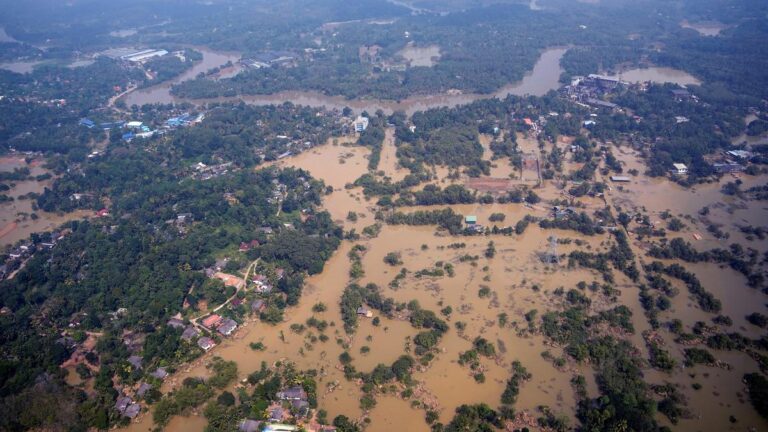
October 21, Colombo (LNW): The Department of Irrigation has urged residents in vulnerable areas to remain alert, as flood warnings remain in place for several river basins following days of persistent heavy rainfall across parts of the country.

The public, especially those living near rivers and reservoirs, have been advised to take precautionary measures as water levels continue to rise.

L.S. Sooriyabandara, Director of Hydrology and Disaster Management at the Department, stated that river systems such as the Maha Oya and Deduru Oya are currently experiencing high water volumes, raising concerns of possible flooding in adjacent low-lying regions. These alerts are expected to remain in effect until conditions begin to stabilise.

Among the areas most affected by the current weather conditions is Baddegama, which recorded the highest rainfall with 172 millimetres in a 24-hour period. The situation is particularly concerning in zones surrounding several key river basins, including the Kelani, Kalu, Gin, Attanagalu Oya, and Nilwala rivers. Ongoing rainfall in these catchment areas could lead to further complications if it persists.

Director Sooriyabandara also highlighted increased water inflows into the Kirindi Oya and Lunugamvehera reservoirs, noting that rising reservoir levels could further intensify the risk downstream, especially if additional rainfall necessitates water release.

Officials have advised local authorities to be on high alert and have urged the public to follow guidance issued by disaster management units and remain informed through official weather updates.

New Crime Division Launched to Enforce Asset Recovery Law in Sri Lanka

0

October 21, Colombo (LNW): Sri Lanka has formally launched a new investigative body to tackle illicit wealth and criminal enterprises, marking a major step in the government’s fight against organised crime, corruption, and drug trafficking.

The Proceeds of Crime Investigation Division (PCID) was inaugurated yesterday at the old Police Headquarters in Colombo, with top government and law enforcement officials in attendance.

Speaking at the opening ceremony, Public Security and Parliamentary Affairs Minister Ananda Wijepala emphasised that while legislation is important, real progress depends on swift and effective enforcement. “Laws alone do not bring change. The public must see justice being done—and being done without delay. That is when laws become deterrents,” he said.

The PCID has been established under the newly enacted Proceeds of Crime Act 2025, a sweeping piece of legislation designed to identify, freeze, and reclaim assets obtained through unlawful means. The Minister hailed the Act as a landmark in Sri Lankan legal history, describing it as a comprehensive tool that empowers authorities to act decisively against economic crimes.

Under the new law, authorities can initiate both criminal and civil proceedings against individuals and entities suspected of acquiring assets illegally. The PCID is authorised to cooperate with 34 government agencies in order to trace and recover such wealth. Moreover, it is empowered to accept complaints from the public, freeze suspicious assets for up to 30 days, and bring civil claims to recover unlawfully obtained property.

Senior DIG Asanga Karawita has been appointed as the Director General of the Division for a three-year term, with approval from the National Police Commission. A Deputy Director General has also been appointed to support the Division’s operations.

The Minister noted that although additional laws are being drafted—particularly those targeting organised crime, terrorism, and online safety—the existing framework already provides sufficient authority to act decisively. He stressed that illegal enrichment and the accumulation of wealth through criminal means can be intercepted even without new legislation, as long as the current laws are applied with determination.

Amendments to the Online Safety Act are also underway, being drafted by a multi-ministerial committee involving representatives from the Justice, Public Security, Mass Media, and Foreign Affairs ministries. The proposed changes are expected to be tabled in Parliament within the next two months.

Additionally, Minister Wijepala revealed that steps are being taken to review and ultimately replace the Prevention of Terrorism Act (PTA). A legal committee, led by the Attorney General’s Department, has been tasked with drafting new legislation that aligns with contemporary security challenges and international human rights standards.

Inspector General of Police Priyantha Weerasooriya, also speaking at the event, acknowledged that the current legal system has suffered due to a failure to enforce existing laws properly. He welcomed the creation of the PCID and the Proceeds of Crime Act, noting that police officers have now been granted greater legal authority than ever before—but urged them to wield that power responsibly and in the public interest.

He also noted that a Bill specifically targeting organised crime is being finalised for presentation in Parliament and stressed the need to close longstanding legal loopholes that have hindered enforcement efforts.

One key feature of the new Act is its retroactive application. The law enables action to be taken based on past audit reports, with the Auditor General granted expanded authority to forward findings directly to the Commission to Investigate Allegations of Bribery or Corruption (CIABOC).

President Urges University Academics to Chart Plan for Timely Graduation and Stronger Research Output

0

October 21, Colombo (LNW): President Anura Kumara Dissanayake has called on the Federation of University Teachers’ Associations (FUTA) to develop a comprehensive strategy aimed at expediting the completion of undergraduate degree programmes without compromising academic standards.

The proposed plan is also expected to address the growing backlog of academic work and promote more robust research and development initiatives across the university sector.

The directive was issued during a meeting held at the Presidential Secretariat yesterday (20), where FUTA representatives raised concerns over persistent delays in completing degree courses and highlighted the challenges currently faced by academic staff in the public university system.

These delays, which have become more frequent in recent years, have been attributed to a range of administrative and systemic factors, including limited resources and disruptions to academic calendars.

Dissanayake assured the delegation that the Government stands ready to provide the necessary infrastructure, funding, and institutional support required to put such a plan into action. He emphasised the importance of delivering timely, high-quality education while also enhancing the nation’s capacity for research and innovation.

The discussion also turned to broader structural issues within the higher education sector, including the urgent need to attract and retain qualified academic staff. Both parties acknowledged that the quality of teaching and research is inextricably linked to the well-being and professional development of university academics.

Among those present at the meeting were Prime Minister and Minister of Education, Higher Education and Vocational Education Dr Harini Amarasuriya; Minister of Ports and Civil Aviation Anura Karunathilaka; and Labour Minister and Deputy Minister of Finance and Planning Dr Anil Jayantha Fernando. The FUTA delegation was led by Chairman Professor P.R. Weeratunga and Secretary Charudaththa Illangasinghe.

Foreign Investment in Sri Lanka Sees Sharp Rise as Confidence Grows Among Investors

0

October 21, Colombo (LNW): Sri Lanka has recorded a significant surge in foreign direct investment (FDI) into projects approved by the Board of Investment (BoI), with inflows reaching US$ 827 million between January and September 2025.

The figure represents a striking 138 per cent increase compared to the same period in the previous year, underscoring renewed investor confidence in the country’s economic landscape.

According to the BoI, the uptick in investment has been driven by a combination of fresh capital inflows, reinvested profits, and strategic borrowings by foreign-owned enterprises. The composition of the total includes US$ 133 million in direct equity contributions, US$ 132 million in reinvested earnings, US$ 231 million in intra-company loans directed toward investment, and US$ 331 million obtained through long-term foreign commercial borrowing.

Of the total FDI reported for the period, US$ 124 million came from new project agreements signed in 2025, while the majority—over 85 per cent—was derived from existing companies reinvesting or expanding their operations.

Officials at the BoI attribute the positive performance to sustained improvements in the investment climate, including regulatory reforms, enhanced investor services, and political stability. They note that the latest figures signal not only a rebound in investor sentiment but also a willingness among established enterprises to deepen their footprint in the country.

This level of capital inflow is being seen as a vote of confidence in Sri Lanka’s long-term economic prospects, especially in sectors such as manufacturing, services, logistics, and renewable energy—areas that have seen rising interest from both regional and global investors.

Sri Lanka Clinch Narrow Win Over Bangladesh as World Cup Action Moves to Colombo

0

October 21, Colombo (LNW): As the ICC Women’s Cricket World Cup 2025 continues to captivate fans around the globe, attention now turns to Colombo where Pakistan will face South Africa in a much-anticipated group-stage clash. The match is scheduled to commence at 3:00 p.m. Sri Lanka Time at the R. Premadasa International Cricket Stadium.

Meanwhile, Sri Lanka delivered a spirited performance in Navi Mumbai to secure a thrilling victory over Bangladesh, edging their opponents by just seven runs in what proved to be a tightly contested 21st match of the tournament.

Opting to bat first after winning the toss, Sri Lanka looked to establish a solid platform. Captain Chamari Athapaththu opened the innings alongside Vishmi Gunaratne, though the latter fell early without scoring. Hasini Perera then joined Athapaththu at the crease, and together they forged a crucial 72-run stand that steadied the innings and frustrated the Bangladeshi bowlers.

Athapaththu, long regarded as one of the leading figures in women’s cricket, added another feather to her cap during the innings by becoming the first Sri Lankan woman to surpass 4,000 runs in One-Day Internationals. The milestone places her among an elite group, being only the fourth woman from Asia to achieve the feat. She contributed 46 runs to the total before being dismissed.

It was Hasini Perera who truly shone with the bat, notching up her first half-century in ODIs with a composed and determined 85, the highest score of the match. Despite her efforts, Sri Lanka were eventually bowled out for 202 in 48.4 overs, a total that left the match finely balanced at the halfway mark.

Bangladesh’s reply got off to a shaky start, with three wickets tumbling for just 44 runs. A resilient partnership between Nigar Sultana and Sharmin Akter then revived their hopes, adding 82 valuable runs. Sultana led from the front with a well-crafted 77, while Akter remained unbeaten on 64, anchoring the innings to the very end.

However, Sri Lanka’s bowlers held their nerve in the closing stages. Chamari Athapaththu, demonstrating her all-round prowess, delivered a decisive bowling spell, claiming four wickets for 42 runs. Her timely breakthroughs tilted the contest in Sri Lanka’s favour, as Bangladesh finished their 50 overs at 195 for 9—just short of the target.

Government Cloud Services Restored After Extended Outage

0

October 21, Colombo (LNW): Digital services provided by numerous state institutions in Sri Lanka have returned to normal following a technical failure that disrupted access for over a week.

According to the Information and Communication Technology Agency (ICTA), the issues affecting the Lanka Government Cloud (LGC) infrastructure have now been fully addressed, and all systems are functioning reliably.

The LGC, which forms the backbone of the government’s online operations, encountered a significant malfunction that led to interruptions across a wide range of digital platforms. As a result, citizens faced difficulties accessing various public services, including administrative, regulatory, and information portals.

The disruption impacted approximately 34 government departments and institutions, affecting services that are increasingly relied upon for day-to-day transactions.

A spokesperson for the ICTA confirmed today (21) that the necessary technical rectifications had been completed and that the cloud system’s stability had been verified. Measures have been implemented to prevent similar incidents in future, while affected services are being restored in stages to ensure consistency and performance.

Authorities acknowledged the inconvenience caused to the public and have assured that contingency plans are being developed to improve response times and system resilience.

President Issues Fresh Gazette Reallocating Ministerial Duties After Cabinet Reshuffle

0

October 21, Colombo (LNW): A newly released government gazette has officially redefined the responsibilities and areas of oversight for multiple ministries.

The changes, which come into immediate effect, were authorised by President Anura Kumara Dissanayake, reflecting the outcomes of a recent reshuffle within the Cabinet.

The updated distribution of duties among ministries is expected to address emerging national priorities, optimise coordination between departments, and align governmental operations with the administration’s evolving policy direction.

Prevailing low-level atmospheric disturbance still persists: Heavy falls above 100 mm expected (Oct 21)

0

October 21, Colombo (LNW): The prevailing low-level atmospheric disturbance to the east of the island still persists, and it is likely to develop into a low pressure area within the next 24 hours, the Department of Meteorology said in its daily weather forecast today (21).

Under the influence of this system, cloudy skies are expected over most parts of the island.

Showers or thundershowers will occur at times in Western, Sabaragamuwa, Central, North-western, Southern and Northern provinces. Heavy falls above 100 mm are likely at some places in these areas.

Showers or thundershowers will occur elsewhere of the island after 1.00 p.m.

The general public is kindly requested to take adequate precautions to minimise damages caused by temporary localised strong winds and lightning during thundershowers.

Marine Weather:

Naval and fishing communities engaged in fishing and naval activities in the deep and shallow sea areas around the island are requested to be vigilant in this regard.

Condition of Rain:
Showers or thundershowers will occur at times in the sea areas off the coast extending from Kankasanthurai to Pottuvil via Mannar, Colombo, Galle and Hambanthota. Showers or thundershowers will occur at several places in other sea areas around the island during the afternoon or night.

Winds:
Winds will be south-westerly or variable in direction and speed will be (25-35) kmph. Wind speed can increase up to (55-60) kmph at times in the sea areas off the coast extending from Galle to Pottuvil via Matara and Hambantota. Wind speed can increase up to 50 kmph at times in the sea areas off the coast extending from Trincomalee to Galle via Kankasanthurai, Mannar and Colombo.

State of Sea:
The sea areas off the coast extending from Galle to Pottuvil via Matara and Hambantota will be rough at times. The sea areas off the coast extending from Trincomalee to Galle via Kankasanthurai, Mannar and Colombo will be fairly rough at times. The other sea areas around the island will be slight to moderate.

Temporarily strong gusty winds and very rough seas can be expected during thundershowers.

Was CBSL Borrowings Under Indrajith: The Root Cause of Sri Lanka’s Bankruptcy?

0

By Adolf 

Sri Lanka’s economic meltdown in 2022 did not happen overnight. It was the result of a series of decisions—short-sighted, politically expedient, and economically reckless—that left the country dangerously exposed to global capital markets. Chief among them was the Central Bank’s policy of aggressive commercial borrowing between 2015 and 2019, under successive administrations, and most significantly, during the tenure of Dr. Indrajith Coomaraswamy as Governor.

Between 2015 and 2019, Sri Lanka issued seven International Sovereign Bonds (ISBs) amounting to nearly USD 10 billion, at interest rates ranging between 5.5% and 8.9%. The timeline tells its own story:

• 27 Oct 2015 – USD 1.5 billion (10-year)

• 11 July 2016 – USD 500 million (~5.5-year)

• 18 July 2016 – USD 1 billion (10-year)

• 11 May 2017 – USD 1.5 billion (10-year)

• 18 April 2018 – USD 1.25 billion (10-year)

• 7 March 2019 – USD 2.4 billion (5-year + 10-year tranches)

• 24 June 2019 – USD 2 billion (5-year + 10-year tranches)

In less than five years, the country’s external commercial debt stock ballooned from USD 5 billion to over USD 15 billion, while the maturity profile shortened dangerously. In essence, Sri Lanka borrowed short-term, high-cost money to fund long-term fiscal gaps and recurrent expenditure.

These borrowings were often defended by the Central Bank as part of “liability management exercises” — a euphemism for rolling over maturing debt with fresh, more expensive loans. The claim was that refinancing would “smoothen the maturity profile.” In reality, it merely postponed the crisis, piling up obligations on future governments while doing little to strengthen reserves or expand export capacity.

By the time the bond spree ended in 2019, Sri Lanka’s external debt service obligations exceeded USD 4 billion per year, while annual export earnings hovered around USD 11 billion. This mismatch was unsustainable. The foreign reserves, which stood at USD 8.2 billion in 2014, fell to USD 7.6 billion by end-2019 — despite billions borrowed.

The real tragedy was that none of these funds were directed toward growth-enhancing investments. Instead, they were used to prop up the rupee, fund public sector salaries, and pay off older loans. The government’s failure to pursue fiscal reforms — especially broadening the tax base and curbing subsidies — meant the country was trapped in a vicious cycle of debt rollover.

Dr. Coomaraswamy, while respected for his professionalism, also conferred Deshamanaya by President Sirisena ,  presided over one of the most imprudent borrowing phases in post-independence history. His administration failed to challenge the Treasury’s excessive appetite for external debt, even when the macro fundamentals did not justify it. The result was a debt profile heavily tilted toward commercial borrowings, with over 50% of foreign debt in ISBs by 2019 — a level of exposure that would later prove fatal.

When the COVID-19 pandemic struck and global markets tightened, Sri Lanka’s access to refinancing vanished overnight. With no fallback reserves and no IMF arrangement in place, default was inevitable. The first missed ISB payment in April 2022 marked the country’s first-ever sovereign default since independence — a direct consequence of the 2015–2019 borrowing binge.

In hindsight, the Central Bank’s strategy under Indrajith and his successors was fundamentally flawed on three counts:

1. Overreliance on commercial debt: Instead of mobilising cheaper, long-term concessional financing from multilaterals and bilateral partners, Sri Lanka chose to rely on volatile capital markets.

2. Poor debt management coordination: The Central Bank and Treasury operated in silos, with little medium-term fiscal strategy to manage repayment risk.

3. Lack of accountability: Borrowings were presented as “routine” or “market-friendly,” without adequate parliamentary scrutiny or public disclosure of repayment implications.

The outcome was predictable. By 2020, nearly half of Sri Lanka’s external debt was owed to private creditors, leaving the country with little room to negotiate or restructure quickly. The steep depreciation of the rupee, soaring inflation, and collapse in investor confidence were all symptoms of the same underlying disease: fiscal indiscipline compounded by monetary complacency.

The painful lessons of this period must not be lost on policymakers. Sri Lanka cannot afford to repeat the mistakes of 2015–2019 — where technocratic convenience and political expedience replaced prudent economic judgment. The Central Bank’s independence must be matched by accountability, and every dollar borrowed must be linked to measurable economic outcomes.

If there is one truth the bankruptcy laid bare, it is this: a nation cannot borrow its way to prosperity. Borrowing, when not anchored to reform, only delays the reckoning. Sri Lanka’s road to recovery must therefore begin not with more loans, but with institutional discipline, transparency, and a commitment to live within its means.

Sri Lanka’s Growing Crypto Market Faces Regulatory Uncertainty

0

By: Staff Writer

October 20, Colombo (LNW): A quiet financial revolution is unfolding in Sri Lanka. As the rupee weakens and inflation erodes savings, thousands of citizens from tech-savvy youth to small business owners — are increasingly turning to cryptocurrency as an alternative store of value. What began as a niche experiment has grown into a widespread movement taking place largely beyond the reach of the country’s financial regulators.

A recent South Asian Journal of Finance study estimates that more than 320,000 Sri Lankans currently hold some form of cryptocurrency. International data provider Datawallet projects this figure could exceed 1.16 million by 2026, suggesting that crypto adoption could rival that of regional peers.

For many, digital assets like Bitcoin and Ethereum are seen less as speculative plays and more as protection against inflation and rupee depreciation. “Young professionals and small investors are quietly moving into crypto to preserve value,” said a Colombo-based financial analyst. “It’s happening under the radar outside banks and the stock market — but the momentum is real.”

Despite this surge, crypto trading in Sri Lanka remains legally unregulated. The country has yet to license any local exchanges, forcing most transactions onto offshore platforms or peer-to-peer networks, where oversight is minimal. This leaves investors exposed to fraud, hacking, and market manipulation without any legal protection.

The Central Bank of Sri Lanka (CBSL) has repeatedly cautioned the public about the risks of virtual currencies. Governor Dr. Nandalal Weerasinghe reaffirmed that the Sri Lankan rupee remains the only legal tender, warning that crypto investments are neither regulated nor guaranteed. “We are not banning crypto holdings,” he clarified, “but no one should believe crypto is a safe investment. Transparency and oversight are critical.”

In an effort to close the regulatory gap, the CBSL has proposed amendments to the Financial Transactions Reporting Act (FTRA). The changes would require Virtual Asset Service Providers (VASPs) to register with the Financial Intelligence Unit (FIU), bringing them under anti-money laundering and counter-terrorism financing (AML/CFT) supervision. Once enacted, the rules would force crypto intermediaries to report suspicious or large-value transactions, similar to banks and finance companies.

Meanwhile, the global crypto market continues to soar. Bitcoin recently crossed US$109,000, up more than 60% since late 2024, driven by U.S. regulatory reforms and institutional buying. Analysts predict it could hit US$150,000 by 2025, drawing even more attention from Sri Lankan investors seeking quick returns.

However, legal experts warn that without local regulation, the risks far outweigh the rewards. “If your crypto vanishes from an offshore exchange, there is no legal remedy in Sri Lanka,” said a financial lawyer.

As economic pressures mount, crypto’s rise reflects the public’s search for financial autonomy. Whether Sri Lanka integrates digital assets into its formal economy or continues to let them thrive in the shadows will determine if this digital boom becomes a success story or a cautionary tale.