By: Staff Writer
October 20, Colombo (LNW): Sri Lanka is taking a major step to safeguard its most famous export — Ceylon Tea — by applying for Geographical Indication (GI) status from the European Union, a move aimed at protecting authenticity, curbing counterfeits, and boosting export value. The initiative, supported by a €1 million French-funded program, is expected to give Ceylon Tea stronger legal recognition and market advantage across Europe and beyond.
Sri Lanka Tea Board Chairman Raaj Obeysekere described the certification drive as a landmark effort to preserve the tea’s identity and enhance its global profile. Speaking at a forum in Colombo on “Perspectives on Geographical Indication in Sri Lanka,” Obeysekere said GI registration would strengthen brand credibility and reward the country’s tea producers.
“GI status is a powerful tool that safeguards the origin of Ceylon Tea, combats imitation, and positions it as a premium global product,” he said. “It ensures fair value for our producers and long-term benefits for rural communities.”
The certification initiative is being financed through a €1 million grant from Agence Française de Développement (AFD), France’s development agency, which has helped similar projects in nearly 20 countries.
AFD Country Director Yazid Bensaïd said the initiative reflects France’s long-standing commitment to promoting sustainable trade and quality assurance. “Tea is Sri Lanka’s second-largest export and employs more than one million people. The GI process here has been deeply participatory, involving over 500 stakeholders to define quality standards and establish a robust control system,” he noted.
The technical groundwork was led by France’s Agricultural Research Centre for International Development (CIRAD), which also assisted Sri Lanka in securing GI recognition for Ceylon Cinnamon in 2022. CIRAD Legal Researcher Dr. Delphine Marie-Vivien said the process was rooted in collaboration and trust.
“Defining rules collectively is essential to protecting a product’s reputation,” she said. “The strength of this project lies in the strong commitment and shared motivation of Sri Lankan partners.”
Plantations Minister Samantha Vidyaratne acknowledged France’s support since 2021, emphasizing that Ceylon Tea’s global reputation must now be reinforced through international standards. “Ceylon Tea has been synonymous with Sri Lanka for 150 years,” he said. “In today’s competitive markets, GI recognition is not just a label it’s a necessity. Our application has been submitted, and I am confident of its approval.”
French Ambassador to Sri Lanka Rémi Lambert said the GI recognition would put Ceylon Tea among the world’s most prestigious regional products. “Once registered, Ceylon Tea will join the global family of certified products whose heritage and quality are protected,” he said. “Just as Champagne and Piment d’Espelette represent France, Ceylon Tea will stand as a proud symbol of Sri Lanka.”
Sri Lanka Seeks EU GI Tag to Protect Ceylon Tea
Vehicle Registrations Surge to 48,708 in September Currency Risk Looms
By: Staff Writer
October 20, Colombo (LNW): Sri Lanka recorded a sharp uptick in vehicle registrations in September 2025, with total units reaching 48,708, a 27 % increase from August.
Cars rose to 4,268 from 2,329, while SUVs and crossovers surged to 5,813 from 3,800. Motorcycles alone accounted for 32,626 registrations, up from 27,585, and three-wheelers jumped to 3,015 from 2,497.
This sharp expansion is being driven by the lifting of import curbs and a pent-up demand for personal mobility. The government is benefiting from high taxes on vehicle imports, which generate significant rupee tax revenue.
But that benefit comes with a major trade-off: each imported vehicle draws down foreign currency reserves, putting pressure on the external sector and the Sri Lankan rupee.
Analysts estimate that only about one-third of the retail price of imported cars and crossovers impacts the foreign exchange market because duties and taxes are paid in rupees but the rest still translates into dollars leaving the country.
With cars and crossovers in September reaching pre-crisis levels totaling 10,081 units up from 6,137 in August the scale of dollar outflow is beginning to rival other large import categories.
If an average import cost per car/SUV is US$20,000 (a conservative estimate given higher-end import vehicles), then 10,081 units translate into roughly US$201 million and potentially more dollars flowing out in one month.
Over a nine-month period, assuming similar pace, this could add up to US$1.6–2 billion, magnifying the risk to the country’s balance of payments.
On the revenue side, heavy taxes mean the state pockets large sums in rupees upfront, but the revenue cannot fully offset the foreign exchange impact. With external reserves tight and the rupee facing depreciation pressures partly driven by imported goods that draw on scarce dollars — the vehicle boom could undermine macro stability even as it boosts short-term revenue.
The key challenge for policymakers is balancing the immediate revenue wind-fall from vehicle import taxes against long-term currency stability and external sector resilience. Unless matched with export growth or foreign-exchange-earning measures, the surge in imports risks turning a Treasury win into a broader economic vulnerability.
Electrical Engineers Warn unbundling of CEB risks Operational Breakdown
By: Staff Writer
October 20, Colombo (LNW): In a stark warning to Parliament, the engineers’ union of the Ceylon Electricity Board (CEB) has raised grave concerns over the government’s move to un-bundle the utility into separate generation, transmission and other successor companies.
The union says the approved “Preliminary Transfer Plan” (PTP) lacks fundamental information on how assets, liabilities, cash-flows and operations will be divided threatens to undermine the continuity of electricity supply.
The CEB Engineers’ Union (CEBEU), in a letter to the Sectoral Oversight Committee on Infrastructure and Strategic Development, states that when CEB is split the PTP fails to detail how loans will be shared or how cash will flow from the distribution company via Power Purchase Agreements to enable the generation entity to service debt.
It also says there is no clarity on how the generation, transmission and the proposed National System Operator will work together operationally.
The letter points to a host of statutory violations: for example no valuation of land, plant and machinery by the chief valuer as required under Section 39.1(b), and absence of inter-company reconciliation of receivables and payables, inventories and stocks (Sections 18.2(a), 18.3(b)).
It also highlights that only four of the six intended successor companies have been incorporated despite the law requiring six, including a trustee/pension fund company and a residual entity. These omissions, the union argues, breach Section 17.2, 18.3(d), 18.3(e) and others of the Sri Lanka Electricity Act, No. 36 of 2024.
The union further complains that the PTP was circulated only to selected management in CEB on 25 September 2025 and that it had already been forwarded to the Ministry of Finance, Sri Lanka for approval the same day, with Finance Minister’s approval dated 11 October 2025, despite the very short window for comment and without full employee or trade-union input.
With no operational agreements crafted between the successor companies, no clear Power Purchase Agreements, Transmission Service Agreements or draft licences for the National System Operator or National Transmission & National Supply entities, the union argues the reform may collapse the entire sector “not because of the employees of CEB, but entirely due to the Ministry’s reckless and irresponsible handling of the process.”
The unbundling process is part of a larger reform agenda tied to the country’s committed programme with the International Monetary Fund (IMF) to restructure state-owned enterprises and open the electricity sector to private investment, improve transparency and attract financing.
But the engineers’ union’s letter suggests that the reform’s legal and operational foundations are not yet in place.
The union is urging the parliamentary committee to review the reform process urgently, summon relevant officials for clarification, permit the union to present its professional observations and proposals, and ensure the transition is implemented strictly according to law, transparency and accountability.
Sri Lanka Launches Dedicated Unit to Tackle Illicit Asset Accumulation
October 20, Colombo (LNW): The Sri Lanka Police officially unveiled the Proceeds of Crime Investigation Division (PCID) today (20), marking a significant move in the country’s efforts to clamp down on financial crime and unlawful asset accumulation. The newly established division, created under the provisions of the Proceeds of Crime Act No. 05 of 2025, is expected to play a pivotal role in tracking, investigating, and disrupting the flow of illicit wealth.
The PCID will operate from the old Police Headquarters in Colombo and was ceremonially inaugurated by Public Security Minister Ananda Wijepala. The unit has been specifically designed to probe cases involving the illegal acquisition of money, property, and other financial assets, extending its reach beyond criminal proceedings to civil action where necessary.
Unlike traditional criminal investigations, the PCID will also be empowered to initiate legal steps in instances of suspicious asset accumulation even when a direct criminal offence cannot be established. This broader civil authority is seen as a crucial mechanism for recovering wealth gained through unlawful means while closing loopholes often exploited by financial offenders.
Senior Deputy Inspector General of Police Asanka Karawita has been appointed as the Director General of the PCID for a three-year term, pending confirmation by the National Police Commission. SDIG Karawita concurrently heads both the Criminal Investigation Department (CID) and the Financial Crimes Investigation Division (FCID), bringing significant expertise to his new role.
A Deputy Director General will manage the division’s operational activities, with the PCID expected to work in close coordination with 34 government institutions, as outlined in the new legislation. These include agencies overseeing finance, public administration, law enforcement, and regulatory affairs.
Under its mandate, the division has been granted powers to temporarily freeze or seize assets suspected to be unlawfully acquired for a period of up to 30 days—an interim measure that allows time for further investigation while preventing the movement or disposal of those assets.
IMF Urges Sri Lanka to Stay Committed to Reforms for Lasting Economic Recovery
October 20, Colombo (LNW): The International Monetary Fund (IMF) has called on Sri Lanka to remain steadfast in implementing its ongoing economic reform programme, emphasising that sustained commitment is key to securing long-term economic stability and growth.
Speaking during a media briefing in Washington, D.C., where the IMF presented its latest regional economic outlook, Deputy Director Thomas Helbling acknowledged the considerable progress Sri Lanka has made since emerging from its worst economic crisis in recent history.
He noted that following a deep contraction, the country saw a robust rebound last year, recording an impressive growth rate of 5 per cent, with growth projections for the current and coming year estimated at around 4.2 per cent. Looking ahead, Sri Lanka’s potential growth rate is expected to settle around 3 per cent.
Helbling stressed that these gains are largely the result of the government’s determination to implement far-reaching reforms under the IMF-supported programme. “Sri Lanka has made meaningful strides, but to secure these achievements and unlock further progress, it is crucial to maintain momentum. Continued implementation will allow the country to reap the full benefits of the reforms,” he said.
He also highlighted the importance of safeguarding macroeconomic stability through institutional strengthening, prudent fiscal policy, and improved public sector management. “Key to this journey will be fiscal consolidation and ensuring the financial sustainability of state-owned enterprises. These areas carry significant fiscal risks if left unaddressed,” Helbling explained, adding that reforming public investment and maintaining discipline in public finances are central to building a stable economic foundation.
Electricity pricing reforms were also flagged as a critical area under the programme, particularly the commitment to cost recovery. Helbling acknowledged that price adjustments must account for external variables such as energy markets and climate impacts, but reiterated the importance of aligning tariffs with actual costs to reduce pressure on public finances.
He noted that Sri Lanka’s government has demonstrated strong support for these reforms thus far and encouraged authorities to “stay the course,” regardless of external challenges or political pressures.
Krishna Srinivasan, Director of the IMF’s Asia and Pacific Department, echoed this sentiment, commending Sri Lanka for the difficult choices already made. “The country has come a long way from where it stood just a few years ago. The difficult part has been done. Now, it is about staying committed to the path of reform. The benefits are already visible, and more will follow with consistency and resolve,” he said.
As the global economic environment remains uncertain, the IMF’s message to Sri Lanka was clear: perseverance in reform is not just advisable — it is essential to protect and expand the hard-won progress already made.
Sri Lanka at the Crossroads: Reform, Reconciliation, and Renewal: An Era of Integrity, Inclusion, and National Reawakening
By Roger Srivasan
Date: October 2025
Author’s Note: This edition reflects the growing national unity and confidence under the National People’s Power (NPP) government. It highlights the administration’s unprecedented popularity among the Tamil community in the North and its genuine commitment to anti-racist governance, equality, and inclusive development. The essay offers an optimistic yet balanced portrait of a nation redefining patriotism through justice and integrity.
After decades of disillusionment, deceit, and division, Sri Lanka once again finds herself at a moral and political crossroads. The rise of the National People’s Power (NPP) government has rekindled hope in a nation long fatigued by corruption and sectarianism. For years politicians waxed eloquent about purging the nation of the drug menace, yet their resolve never rose above a velleity. The first year of this administration has revealed not a miracle, but something rarer — a disciplined restoration of integrity in public life. Gone is the era of impunity when power was a licence for plunder. The new dispensation has shown that honesty, diligence, and thrift can govern a nation as effectively as cunning and deceit once did.
Governance and Accountability
No transformation is ever complete, yet the signs are unmistakable. Ministries once notorious for patronage now function under audit, transparency, and merit. The President’s emphasis on probity has percolated through the ranks, signalling that governance is no longer a theatre of privilege but a service to the people. Reform is not rhetoric — it is visible in procurement, appointments, and the re-awakening of civic conscience. The nation, for the first time in memory, is being re-governed rather than merely ruled.
Equality and Inclusion
Perhaps the most profound departure from the past lies in the NPP government’s unwavering commitment to equality among all races and communities. For too long, unity was preached but never practised; the word reconciliation was brandished at international forums while discrimination thrived at home. That hypocrisy has ended. Racism is no longer policy, nor pretext — it is an offence against the Republic. Tamil, Sinhalese, Muslim, and Burgher citizens now stand on an equal constitutional footing, not as concessions to diversity but as affirmations of a single national identity. “This is not a government of one race ruling over another,” as one minister aptly put it, “but of all Sri Lankans reclaiming the Republic together.” Such a philosophy is not cosmetic; it is the cornerstone of modern nationhood.
Justice, Devolution, and Healing
Healing the wounds of the past requires more than token gestures. The NPP administration recognises that reconciliation cannot be legislated — it must be lived. The return of land, the right to remembrance, and the representation of minorities in decision-making bodies signal a government willing to listen rather than lecture. In provinces long alienated from Colombo, the language of governance has changed: from suspicion to trust, from surveillance to inclusion. What once was an ethnic frontier is slowly becoming a national bridge.
Economic Reform and the Moral Economy
Economically, Sri Lanka continues to tread a narrow path between austerity and compassion. The government’s fiscal discipline, its insistence on transparent borrowing and domestic productivity, has restored confidence among international partners. Yet the heart of reform lies not in balance sheets but in ethics: the refusal to mortgage sovereignty for survival. Reform without relief is cruelty; relief without reform is folly. The NPP’s approach blends both — a steady hand that tempers efficiency with empathy.
External Relations and Geopolitical Poise
In foreign policy, the government has adopted a principled pragmatism — neither subservient to any bloc nor hostile to any partner. The island’s renewed outreach to the West, balanced engagement with India, and pragmatic dealings with China reflect a sovereign maturity absent for decades. This recalibration of diplomacy underscores a simple truth: Sri Lanka’s strength lies not in choosing sides, but in standing tall.
Water, Environment, and National Responsibility
The NPP’s environmental stewardship marks another quiet revolution. Programmes on water security, renewable energy, and waste management are no longer ceremonial slogans but tangible national missions. In a country where water has too often divided communities, it is now a symbol of shared survival — pure, equitable, and accessible to all. Water security is paramount in ensuring sustainable access to adequate quantities and quality of water for health, livelihoods, ecosystems and production.
Public Confidence and the Northern Reawakening
The government’s inclusive policies are beginning to reshape not only public discourse but also electoral realities. Based on the current trajectory, the NPP is poised to secure an overwhelming victory in the forthcoming elections, sweeping nearly all seats that are up for contest. What is most remarkable is the surge of support from the Tamil-majority North, a region long estranged from Colombo’s politics. This transformation is not the product of propaganda but of performance — visible fairness, equitable development, and genuine engagement with local communities. For the first time in decades, the North no longer feels like a political outpost; it feels part of the Republic’s beating heart. The NPP’s message of integrity and equality has transcended old divides, converting scepticism into solidarity.
A Republic Reawakened
Sri Lanka’s journey is far from over. The remnants of corruption, the inertia of bureaucracy stifling innovations, and the scars of past injustice still linger. Yet for the first time in a generation, the moral direction of the state is correct. The government’s commitment to treat all races as equal, its genuine anti-racist policies, and its intolerance of graft have redefined patriotism as public virtue. “The ballot was not a blank cheque but a moral covenant,” as the President remarked. “We must now prove that decency can govern.” If that covenant is honoured, Sri Lanka will not merely recover — she will renew herself, rising as a model of how integrity and inclusion can rebuild a wounded nation.
Public discourse is central to a democratic society enabling citizens to voice concerns, consider different perspectives and hold the leaders accountable. Today, the tide has unmistakably turned. After decades in which corruption and narcotics flourished under political patronage, a new era of accountability has dawned. Sri Lanka has long been a fertile ground for the drug menace, where drug barons-once operating with the furtive blessings of politicians-are now skedaddling as the NPP government systematically annihilated their operations and hideouts.
Opposition Leader Urges Nation to Embrace Deepavali as a Triumph of Truth and Virtue
October 20, Colombo (LNW): Opposition Leader Sajith Premadasa, in his message marking Deepavali, has called upon the people of Sri Lanka to treat the Festival of Lights as more than a celebration — urging citizens to see it as a call to overcome darkness, injustice, and ignorance through conscious action and compassion.
Reflecting on the deeper meaning of the occasion, Premadasa encouraged individuals across all communities to use the moment to turn away from symbols of evil and instead shine light through virtuous deeds and ethical living.
“What we must do on this Diwali day is to conquer evil and usher in the dawn of goodness,” he stated, highlighting the festival as an opportunity to reaffirm values of justice, truth, and collective responsibility.
He went on to stress that Deepavali’s true power lies not just in lamps and rituals, but in the inner awakening it should inspire — a commitment to moving from falsehood to truth, and from ignorance to knowledge.
“Our greatest enthusiasm during this celebration,” he said, “should be in dedicating ourselves to the mission of awakening the light that leads society from falsehood to truth and from ignorance to knowledge, so that a virtuous and enlightened society may prevail.”
Mount Lavinia Court Assault: New CCTV Footage Emerges
October 20, Colombo (LNW): Newly emerged CCTV footage has shed further light on a controversial incident that occurred at the Mount Lavinia Magistrate’s Court last week, allegedly showing a police constable physically assaulting a junior lawyer within the court premises.
The footage, which began circulating on social media platforms in recent days, appears to capture the moment tensions escalated following a verbal dispute between the two individuals. Senior attorney-at-law Gunaratne Wanninayake has confirmed the authenticity of the video and stated that it clearly depicts the officer striking the young lawyer, reportedly over a disagreement related to court premises parking.
The altercation is said to have taken place on October 10, when the lawyer confronted the constable about a prison transport vehicle obstructing access to the court entrance. Eyewitnesses claimed at the time that the situation turned physical, and the newly released video seems to support those accounts.
The constable in question was arrested shortly after the incident and produced before the court. He was initially remanded until October 13 and has since been released on bail. While the Police and the Ministry of Public Security have announced the launch of an internal disciplinary inquiry, an official statement regarding the content of the CCTV footage has yet to be issued.
Severe Rainfall Claims One Life and Affects Over 500 Across Multiple Districts
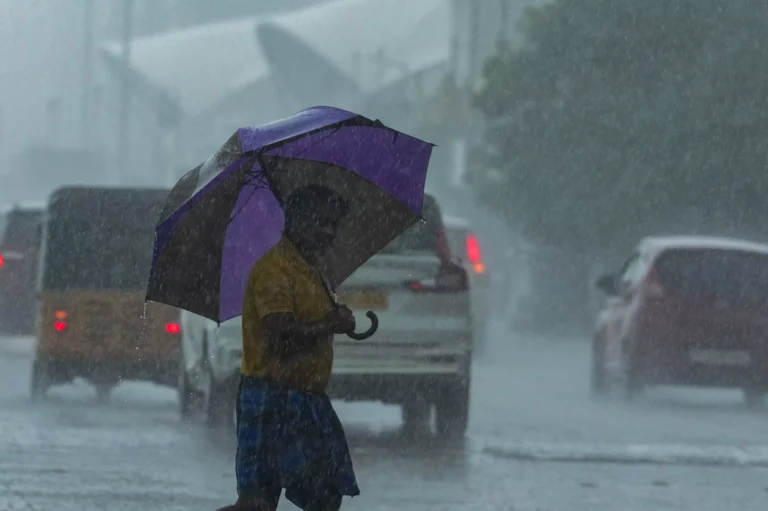
October 20, Colombo (LNW): Heavy downpours over the past 24 hours have caused widespread disruption across several parts of Sri Lanka, resulting in one fatality and impacting more than 500 people, according to the Disaster Management Centre (DMC).
A total of 512 individuals from 123 families have been affected by the adverse weather conditions, which have particularly struck the districts of Kurunegala, Anuradhapura, and Gampaha.
The DMC reported that 111 houses have sustained partial damage due to flooding and related incidents such as falling trees and landslides. In response to rising risks in certain areas, authorities have relocated 10 individuals from three families to temporary safe shelters.
Emergency services are continuing relief and response operations, while residents in affected districts have been urged to remain cautious, especially in areas prone to flooding and landslides. Further rainfall is expected in some regions, and the public is advised to closely follow official updates and safety instructions.
Spill Gates Opened at Multiple Reservoirs as Rainfall Swells Water Levels
October 20, Colombo (LNW): The Department of Irrigation has announced the release of water from six major reservoirs across the island, as continuous heavy rainfall has caused a significant rise in water levels.
Spill gates have been opened at Rajanganaya, Angamuwa, and Kala Wewa reservoirs in the Anuradhapura District, while the Deduru Oya reservoir in Kurunegala has also begun releasing excess water. In the central hills, both the Ibbankatuwa reservoir in Matale and the Polgolla reservoir in Kandy have been similarly adjusted to prevent overflow.
Authorities say the decision was taken as a precautionary measure to manage pressure on reservoir dams and prevent potential flooding in surrounding areas. Communities living downstream of these reservoirs are urged to remain vigilant, particularly those in low-lying regions where sudden water surges may occur.