There has been a lot of talk in the country recently about unpaid water and electricity bills by MPs and ministers. It was reported that some ministers had not paid bills up to tens of millions of rupees.
The Water Supply and Drainage Board states that the total value of water bills defaulted by current and former ministers is Rs. 16 million. It is reported that about 20 former ministers and MPs who have not paid their water bills have passed away.
The Water Supply and Drainage Board states that action will be taken to recover water bills defaulted by former ministers through their respective ministries.
The External Affairs Minister of India, Dr. S. Jaishankar will be paying a two-day official visit to Sri Lanka next week, says the Indian High Commission in Colombo.Thereby, Dr. Jaishankar is expected to be here from the 28th to 30th of March.
His visit to the country will be significant at a time where Sri Lanka and India have finalised the inking of three maritime security agreements which will be of Indian strategic interests in the Southern Indian Ocean region amid China’s growing inroads,
According to a statement issued by the Indian External Affairs Ministry, Dr. Jaishankar is visiting Sri Lanka and the Maldives at the respective invitations of his counterparts of the two island nations, Abdulla Shahid and Prof. G.L. Peiris, from the 26th to 30th of March.
His visit to Addu city in the Maldives is taking place this weekend (March 26-27). He is scheduled to call on President Ibrahim Mohamed Solih and hold discussions with the Minister of Foreign Affairs Abdulla Shahid.
Following his arrival in Sri Lanka on Monday (March 28), Dr. Jaishankar will participate in the BIMSTEC Ministerial Meeting in Colombo the next day.
Dr. Jaishankar’s visit to Sri Lanka next week follows the visits to India by Minister of Finance Basil Rajapaksa in December 2021 and earlier this month and that of Foreign Affairs Minister Prof. G.L. Peiris in February 2022. “The bilateral meetings and interactions which EAM will have in Sri Lanka highlight the priority that Sri Lanka occupies for India,” the statement read further.
The Indian External Affairs Ministry said, “Both Maldives and Sri Lanka are India’s key maritime neighbours in the Indian Ocean Region and occupy a special place in Prime Minister’s vision of ‘SAGAR’ and Neighbourhood First. EAM’s visit is testimony to the importance that India attaches to its close and friendly relations with the Maldives and Sri Lanka.”
The visit comes at a time when the island nation is grappled with an ongoing economic and power crisis and shortages of fuel, LP gas, and other essential items.
Eyeing to secure its strategic interests in the Southern Indian Ocean region amid China’s growing inroads, New Delhi is exploring with Colombo three maritime security agreements that will strengthen India’s interests, particularly around the eastern Trincomalee harbour.
This mechanism include supply of Donier surveillance aircraft for the Sri Lanka Air Force, a ship repair dock for the Sri Lanka Navy in Trincomalee and suggestion to post a Sri Lankan Navy officer at the Intelligence Fusion Centre, a Bahrain-based intelligence sharing office which is a US Navy initiative to combat international terrorism, the narcotics trade and ensure safe maritime passage for commercial vessels in the region,.
India is also keen to start a renewable energy (solar power) project in and around Sampur near Trincomalee and some of the economic projects which were discussed when Sri Lankan Finance Minister visited India recently. to fine tune one bn usd Line of Credit to boost the economy of the island nation.
The International Monetary Fund (IMF) says Sri Lanka needs to implement a credible and coherent strategy covering both the near- and medium-term to restore macroeconomic stability and debt sustainability.
In its Staff Report for the 2021 Article IV Consultation with Sri Lanka, the IMF recommended a comprehensive set of policies with specific measures.
The IMF noted that reforms should focus on strengthening VAT and income taxes through rate increases and base-broadening measures.
Fiscal adjustment should be accompanied by energy pricing reforms to reduce fiscal risks from loss-making public enterprises, the IMF said further, adding that institutions building reforms, such as revamping the fiscal rule, would help ensure credibility of the strategy.
The IMF also suggested that near-term monetary policy tightening is needed to ensure that the recent breach of the inflation target band is only temporary. Recent welcome steps to gradually unwind the Central Bank’s large treasury bill holdings should continue through close coordination with the Ministry of Finance.
It also recommended the gradual restoration of a market-determined and flexible exchange rate. “To avoid disorderly movements in the exchange rate, the transition should be carefully sequenced and implemented as part of a comprehensive macroeconomic adjustment package.”
Social safety nets should be strengthened, by increasing spending, widening coverage, and improving targeting, to mitigate the adverse impacts of macroeconomic adjustment on vulnerable groups, the IMF said further.
In a one page statement the Central Bank (CBSL) has clarified its stance on the International Monetary Fund’s 95 page Article IV Staff Report on Sri Lanka.
“With the Government indicating that it is seeking a closer engagement with the IMF, the CBSL stands ready to cooperate in such an engagement,” the statement read.
It also noted that some of the recommendations made by the IMF have already been implemented by the Finance Ministry and the Central Bank.
These include monetary policy tightening since August 2021, allowing exchange rate flexibility, removing restrictions on foreign exchange market transactions, implementing envisaged revenue-enhancing measures, and allowing market-based price adjustments to key commodities.
The Central Bank said it has tightened the monetary policy since August 2021, allowed exchange rate flexibility, removed restrictions on foreign exchange transactions, implemented envisaged revenue-enhancing measures, and allowed market-based price adjustments to key commodities.
The Central Bank also stated that it has continued to publish its analysis, in addition to providing further in-depth analysis on policy matters to the government and engaging in a continued close dialogue with the government on the same.
In what is seen as the latest move to extend relief to the pandemic-affected borrowers, the Central Bank is likely to direct the banks to extend the pause on the recovery actions on loans and leases further period after the expiry of current moratorium on March 31.
The Central Bank will be requesting the banks “to suspend all types of recovery actions, including parate execution and forced repossessions of leased assets, Finance Ministry sources said.
The broader businesses and individuals are under payment holiday now for around two years while the tourism sector has been under the relief scheme from as way back as in April 2019.
In the road map, the Central Bank said it would replace the moratoria with a liquidity support scheme worth of Rs.15 billion to facilitate financing of the interest accrued in loans that have been under moratoria to enable financial institutions to deal with the effect of the moratoria in a sustainable manner.
As per the Central Bank estimates the ongoing debt moratoria by banks and non-bank financial institutions amounts to Rs.780 billion. This is in addition to Rs.165.5 billion by way of concessionary working capital under the COVID-19 Saubagya Refinance Scheme.
However Sri Lankan banks face added asset-quality pressure from their government securities holdings, particularly those denominated in foreign currency which accounted for around 6.5 percent of banks’ total 2021.
As it is the declared balance sheets of all licensed commercial banks in Sri lanka has shown a tremendous growth in profits compared to previous years , but it is not the actual correct position.
This moratorium facilitated a breather for the borrower to operate and sustain the business but, unfortunately due to external factors beyond the control of the businesses and individuals normalcy never returned and the environment for conducive situation has become a day dream due to the actions monetary and fiscal authorities.
This situation of moratorium was due to all commercial banks booked all interest following the facilities extended as income received even though in actual it was not received, fiscal analysts said.
This was done as per CBSL guidelines for financial reporting and accepted financial practices. As result banks have been able to declare a high percentage of profits even though the country’s economy was on a downward spiral.
The effects of this moratorium and the repercussions of accounting interest due as profits will be felt only after the lifting of this moratorium. To understand this one will have to understand the procedure of accounting and how facilities are categorized.
Under normal circumstances if any credit facility has not been serviced (interest/capital not paid) for three (03) months its categorized as non performing and the interest due on such facility is accrued and not taken into income earned (profit).
After three (03) months from thereon the facility becomes overdue and is categorized as bad debts and another three (03) months from thereon this facility is transferred to recoveries for legal action and for parate execution against the mortgage.
So in other words the banks have booked and declared high profits even though the actual is far from it they said adding that after the moratorium is lifted and three mnths from there when these facilities have still not been serviced the banks will be compelled to reverse these already booked in profits.
This will reflect in the balance sheets of the banks as a negative figure and in turn will drive the profits down drastically. This scenario is also going to have a knock on effect which will effect the stock market and drive down further the country’s economy, they pointedout.
The Government of Sri Lanka will host the Bay of Bengal Initiative for Multi-Sectoral Technical and Economic Cooperation (BIMSTEC) Summit in Colombo in hybrid mode next week from 28-30 March 2022.
The Senior Officials and the Foreign Ministers of Bangladesh, Bhutan, India, Nepal, and Thailand will arrive in Sri Lanka for the BIMSTEC Senior Officials’ Meeting and Ministerial Meeting scheduled to be held on the 28 and 29 March, 2022 respectively while the Foreign Minister of Myanmar will participate virtually.
The President of Sri Lanka will chair the 5th BIMSTEC Summit on 30 March, 2022 with the virtual participation of leaders of Bangladesh, Bhutan, India, Nepal and Thailand. Myanmar will be represented by the Foreign Minister of Myanmar at the Summit.
During the Summit and preceding meetings, the delegates will discuss the progress of the BIMSTEC as a regional group.
The Summit is also expected to adopt the BIMSTEC charter and sign several legal agreements.
I have penned this article with the view to enlightening the political leaders of the country and those who express ideological views and are interested in the subject, the need for having an objective and pragmatic program for overcoming the crisis facing Sri Lanka and rescuing the country from falling into a state of anarchy. As a political critic who has foreseen this crisis beforehand and written extensively about it before it burst out, I feel that I am obliged to explain the reality of the situation as I see it, and suggest the course of action to be taken to overcome the crisis.
Also, I am writing this article at a time when the spiraling journey of the country towards anarchy has intensified its whirl in a new round. Obviously, this situation does not seem to have come to the serious attention of the rulers or the opposition political parties in the country. As long as the feeling that nothing effective is being done to end the crisis persists in the society, the crisis will invariably drive the country towards anarchy. The schools have been compelled to suspend term tests due to the lack of papers to print question papers. The Lotteries Board has suspended the sale of lotteries due to the shortage of papers. The Electricity Board has encountered a crisis of not being able to issue monthly bills because of the paper problem. The country, knowingly or unknowingly, is heading for anarchy. Bertrand Russell, a well-known British philosopher and social critic was of the view that anarchy is worse than dictatorship. The pressure exerted by the crisis on the people seems to have made the people act aggressively. The issue of the country moving towards anarchy does not appear to have been taken seriously by the leaders of the government or opposition. It is very dangerous to play with the crisis except finding real and sustainable remedies to solve it.
Approaching the IMF
The decision of the government though belated to seek advice and loan relief from the International Monetary Fund to resolve the balance of payments crisis can be considered a right approach. If this decision was taken soon after the pressure of the balance of payments crisis was felt, which is not so easy to resolve, the price Sri Lanka had to pay would not have been so big. When the exchange rate which had been controlled artificially for a long period of time was suddenly allowed to float, inevitably there would be a huge increase in the commodity prices causing an unbearable pressure on the people. Although the government has a responsibility to take necessary steps to alleviate the burden it makes on the people, the government did not possess the necessary strategic vision to do it. Consequently, the extent of suffering the general public had to undergo has been enormous. It must be said that there was a huge confusion in the way the government used to perceive things. The extent of damage done to Sri Lanka’s agriculture by banning the import of chemical fertilizers and pesticides under the guise of rescuing Sri Lanka from chronic kidney disease was huge. Despite all these serious mistakes, approaching the International Monetary Fund to resolve the balance of payments crisis, though it could be a painful experience, can be considered as a right decision taken by the President and the government. There is no doubt that the government in its attempt to keep the Dollar Rupee exchange rate at an artificially lower level despite facing a dollar deficit, the cost incurred to maintain that in terms of Dollars might have been huge .But it is right to abandon it rather than moving forward relying on that stupid and destructive policy any longer. The balance of payments crisis is only one among several explosive aspects of the crisis facing Sri Lanka. There is also a crisis in the socio-political system and the State itself and all are linked together. In addition to seeking advice and credit facilities from the International Monetary Fund to overcome the balance of payments crisis, adopting a reform program to make a true transformation of the country to overcome the other crises as well, which are intermingled, can be considered as an indispensable condition for the country at this moment. It must be a program acceptable to all political parties and groups, including the government, public organizations and the public, and especially the international community. It must be a practical program with a specific time frame leading to overcome the crisis facing the country and bring about a genuine and profound change in the State, the socio-political system and the economy.
Getting the government involved
Perhaps, the idea that the government which at present has provoked strong public anger and opposition should also be involved as a partner in the proposed reform program, could be a source of provocation, strong opposition and debate. Therefore, it is pertinent to explain as to why I should say so. For the practical advancement of the proposed reform program, it is essential to have statutory recognition for it and that is why the Government should be a partner in it. What we have is not a government of a parliamentary system that is easy to be overthrown but a government of a presidential system that cannot be overthrown. The conditions applicable for impeaching a President which can be considered the only way to remove a President who commits serious offenses have been designed in such a way that an incumbent President cannot be removed even by impeachment. Neither the 19th Amendment nor any of the previous government’s reform programs had a vision to formalize the impeachment process. In the end, Sri Lanka has maintained the presidential system up to now without having a formal and practical methodology to remove even a President who commits serious offenses, from his/her office except in a presidential election; there is no other formal procedure to remove a president from his office prior to the next presidential election. Accordingly, it is easy to understand how obsolete is the vision of the constitutional reform process in our country? According to the constitution, even in the event of a resignation of the incumbent president a presidential election will not be held to elect a new president. In such an eventuality, the Prime Minister or the Speaker of Parliament will be appointed to the post of President. The president will not lose office even if the government is defeated in a no-confidence motion against the government. These realities must be taken into account in a program designed to overcome the crisis. If the government is not made a partner of the reform program, it will have to wait until a new government comes to power to implement the reforms. The next presidential election is nearly three years away from now; there is a real danger of the country going bankrupt and plunged into anarchy if the crisis is not resolved soon. If the country finds itself in such a situation, it could lead to a major constitutional crisis that is not easy to resolve. Despite all these arguments, the question of whether the President and his government could be trusted might arise. That is a very important issue to consider. But by making the United Nations an observer of this reform program, a credible atmosphere among all stakeholders contributing to the program could be created. It will also be possible to obtain expert assistance and technical guidance needed to implement the program successfully. At the same time, the reform program will gain international recognition automatically.
Reform Program
The responsibility of drafting a new constitution and implementing the reform program, and its authority should be assigned to a Constitutional Council composed of people’s representatives. The constitution should be drafted in accordance with the methodology adopted in the participatory model of constitution making which has been accepted by the United Nations as well. When a Constitution is made by a public Constitutional Council, the power it needs to function has been granted by an Interim Constitution passed exclusively for the purpose. The reform program must also be based on consensus. Before proceeding to draft a New Constitution, a general consensus must be reached on the principles of the Constitution which is expected to be formulated. In addition to the reforms that are being implemented on the recommendations of the International Monetary Fund to resolve the balance of payments crisis, a reform program should be put in place to overcome the stagnation and breakdown of the socio-political system and the state with the following objectives.
(a) Investigate the causes of the breakdown of the social order and establish necessary reforms to build the Sri Lankan nation on the basis of human dignity and equal rights for all communities.
(b) Introduce reforms to replace the existing corrupt, inefficient and authoritarian system of governance with a better democratic system of governance based on the rule of law.
(c) Introduce reforms that will help rescue the State of Sri Lanka, which at the moment is in a state of decadence and failure from this ugly situation and create a modern state which is efficient, free from corruption and acceptable to all citizens and leading to the dignity of everyone.
(d)Introduce necessary reforms to establish an effective and independent judiciary while investigating the causes of the decline of the judiciary and granting it complete power of review and making the maintenance of the system of governance of the country at an efficient level, protection of the rights of the people, provision of necessary guidance to carry out the activities of the country according to the rule of law when necessary and conduct the hearing of cases of litigation without delay, its primary responsibility.
(e) Investigate the root cause of corruption that has plagued the state and its institutions like a terrible cancer, and come up with effective practical reforms that help eradicate corruption.
(f) A foreign policy must be formulated taking into account the country’s location, geopolitical and global political realities so that it will ensure the security, dignity and independence of the country.
The consensus needed to abolish the old constitution and adopt a new constitution must be obtained through a referendum held simultaneously after the new constitution is drafted. During the interim period it is the Interim Constitution and not the Republican Constitution of 1978 that should be regarded as the basic law of the country. Like in India, amendments to the Constitution which would weaken or distort the basic structure of the Constitution should be outlawed. Deliberate violation of the Constitution should be made a punishable offense. Public representatives elected by the people or public officials transacting business with the government directly or indirectly, misappropriation of public property and making decisions that cause damage to the government should be made punishable offenses.
In addition to the above reforms, those who have lost their jobs in the present crisis should be provided with alternative means of livelihood enabling them maintains at least a minimum level life until the country recovers from the crisis. The highest potential for this is available in the agricultural sector. A land reform program that makes beneficial changes in the land use and provides land to those who do not have lands but interested in cultivating could be introduced for this purpose. If a policy that provides land to those who are interested in cultivation can be devised, perhaps it may bring about a major revolution in agriculture with the educated youth getting engaged in the field of agriculture at this moment. Cultivation of cannabis needs to be reconsidered. Restrictions on growing cannabis are being lifted even in European countries. Shouldn’t Sri Lanka take advantage of that opportunity? All land that was taken over by the security forces from the Tamil people in the North during the war and have not yet been returned to their former owners should be returned to them. According to the estimates of the government, the damage caused to the agricultural crops by wild animals is as big as 40%. The tolerance level of damage should be between 8%-10% only. Only a policy of strict control of wildlife such as monkeys, peacocks and wild boars can bring about 30 percent growths in rural agriculture. If the rice needed for the country could be produced in the dry zone, the land used for rice cultivation in the wet zone can be used for economically more viable economic activities such as animal husbandry, fish farming and commercial cultivation. A policy that promotes beef industry could turn beef production into a lucrative industry and make the country self-sufficient in milk as well. A policy that gives prominence for the fisheries industry could help increase the income generated from fish exports. If the tea estates which are under the control of the plantation companies could be leased out to the families working in them and make them small scale tea farmers, the economic progress that could be achieved from that sector might be tremendous. Apart from that Business Process Outsourcing (BPO) or the method of subcontracting various business-related operations to third-party vendors and Knowledge Process Outsourcing (KPO) systems, scope of which includes preparation of accounts, tax returns, computer aided simulation, engineering design and development, and financial services, etc. should be strengthened. In the meantime, a mechanism should be established to look into the special grievances of the people.
Completion of the program.
The program outlined above could be implemented in two stages. The following elements can be included in the first stage. (a) reaching an agreement on the proposed reform program (b) appointing a Constitution Assembly consisting of people’s representatives (c) Identifying the areas to be investigated and set up commissions or design appropriate methods and implement them (d) to reach consensus on the amendments to be made and the principles on which the new Constitution must be based (e) Draft and adopt the interim Constitution by Parliament to empower the Constitution Assembly to implement the reform program. (f) Formulate necessary policies, and establish institutional arrangements. Thus, the first phase of the reform program may be concluded after holding an election to elect the members of the Legislature under the selected Constitution.
. The second phase of the reform program will begin with the formation of the Constitution Assembly which is composed of the representatives of the entire legislature elected under the new electoral law and the partially concluded new constitution.
From then onwards until the end of the second phase of the program, that is, until the new Constitution is passed by a referendum and enacted into law, the legislature will be responsible for completing the second phase of the reform program, as described in the Interim Constitution. A structural reform program of this nature will help overcome the degeneration of the state, socio-political system and economic stagnation and build a peaceful new country, a new state, a new socio-political system and an economy to the satisfaction and confidence of everyone.
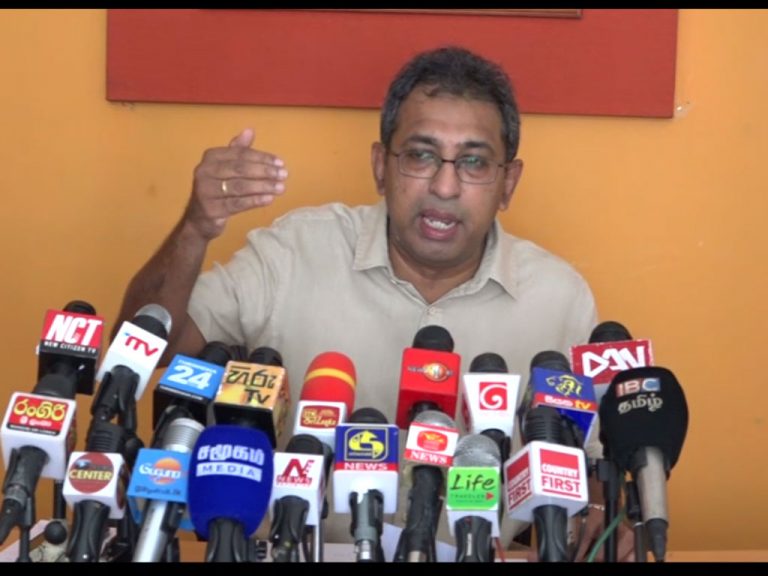
The International Monetary Fund (IMF) revealed in its report that Sri Lanka’s debt is no longer sustainable, said Samagi Jana Balawegaya (SJB) MP Harsha De Silva, speaking to a briefing held today (26).
The government was being told of the necessity of debt restructuring since November, 2020, the Opposition MP reminded.
Former Governor of the Central Bank of Sri Lanka (CBSL) Indrajith Coomaraswamy had warned not to agree to restructure the domestic debt, for any action of such nature would have affected the Employees’ Provident Fund (EPF), Dr. Silva added.
The Opposition MP further noted that most of the domestic debt exists through the EPF and that any interference would affect the money of the working people of the country. Therefore, the government should now be holding discussions for domestic debt restructuring, he added.
Sri Lanka faces “solvency” issues because of risks stemming from unsustainable debt levels that jeopardize the nation’s economy, according to International Monetary Fund staff.
“Based on staff analysis, the fiscal consolidation necessary to bring debt down to safe levels would require excessive adjustment over the coming years, pointing to a clear solvency problem,” the IMF said in its Article IV consultation report, released Friday in Washington.
The full report provides further analysis of the South Asian island nation’s debt and finances. A summary of the report released earlier in the month said Sri Lanka faced unsustainable debt levels and needed a “credible and coherent” strategy to restore stability.
The country’s “debt overhang,” along with persistent fiscal and balance-of-payments shortfalls, “will constrain growth and jeopardize macroeconomic stability in both the near and medium term,” the report said.
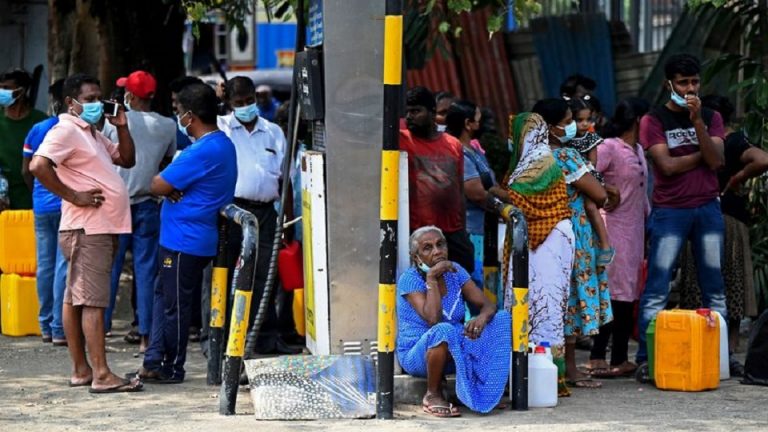
People stand in a queue to buy kerosene oil at a gas station in Colombo on March 25. Photographer: Ishara S. Kodikara/AFP/Getty Images
“Rollover risk is very high,” the IMF said. “FX debt service needs of $7 billion each year will require access to very large amounts of external financing at concessional rates and long maturities, sustained over many years.”
Since the IMF board considered the staff report in late February, a surge in oil prices and the loss of tourists because of the war in Ukraine exacerbated its foreign exchange crisis, forcing the government of President Gotabaya Rajapaksa to seek IMF aid. Negotiations on a possible aid package are expected to start in April, when Finance Minister Basil Rajapaksa, a brother of the president, travels to Washington.
The spiraling crisis has also led the country to raise interest rates, devalue the local currency and curb non-essential imports.
Sri Lanka has about $2 billion of reserves against $3.9 billion of foreign-currency debt due for the remainder of 2022, according to Bloomberg calculations based on central bank data. This includes $1 billion of sovereign bonds maturing in July.
“With the government indicating that it is seeking a closer engagement with the IMF, the Central Bank of Sri Lanka stands ready to cooperate in such an engagement,” the monetary authority said in an amended statement Saturday.
Sri Lanka has to be “prepared to manage the negatives,” central bank Governor Ajith Nivard Cabraal said on Thursday, referring to entering an IMF program, but did not elaborate.
Celebrating 183 years as the leading business Chamber of the country, the Ceylon Chamber of Commerce continues its uninterrupted record of yeoman service to Sri Lanka’s private sector.
Established in 1839, the Ceylon Chamber is among the most iconic Chambers of Commerce in South East Asia, working tirelessly to perpetuate its proud tradition as the premier representative of Sri Lanka’s private sector.
The Chamber acts as a unifying voice for the country’s business sector, facilitated by a formidable membership comprising the private sector, regional and sectoral Chambers of commerce and industry, trade and service associations, employer associations and bilateral business councils, while strategic alliances with public sector institutions add further impetus to the mandate, officials of the Chamber said.
While the challenges caused by the pandemic continued into the second year, the Chamber continued to demonstrate characteristic vision and resilience, choosing to look ahead and prepare the ground for the economic resurgence that would inevitably follow.
The Ceylon Chamber came to the forefront recently in raising the voice of the private sector on its own and together with other chambers, on how the nation could tackle the foreign exchange crisis it is currently grappling with.
The Chamber noted that many of its recommendations have now been accepted while its leadership has been accorded a place at the table by inviting them to the recently established Advisory Committee to the Economic Council.
As a series of lockdowns and border closures continued to restrict both national and international movement, the Chamber seamlessly moved its medley of services to virtual platforms.
Numerous trade promotion webinars and B2B meetings, networking sessions with overseas missions, and several Memoranda of Understanding signed with international Chambers of Commerce, were successfully conducted virtually, facilitating the exploration of opportunities for bilateral investment and trade across North and South America, Europe, Africa, Asia and Australia.
The Chamber’s Economic Intelligence Unit played a particularly important role in the face of mounting economic exigencies, disseminating critical macro-economic and sector-based market intelligence, thereby providing a roadmap for the private sector to develop sustainable business strategies.
Recommendations on national policy formulation as well as engagements with the Government on behalf of the private sector were received positively, with some recommendations being incorporated in the National Budget 2022 as well as contributing towards the resolution of certain sector specific industry concerns.
Committed to identifying and leveraging emerging and future trends to facilitate a thriving business environment, the past year has also seen continued focus on the country’s SME and startup sectors. The Council for Startups and the Centre for SMEs are Ceylon Chamber initiatives actively involved in fostering startup and entrepreneurial ecosystems, which have been identified as key drivers of economic growth.
Partnerships with international aid agencies on socio-economic development and capacity building projects, and the Chamber Academy which facilitates knowledge-transfer workshops and seminars are among other initiatives through which the Ceylon Chamber contributes to holistic development of the private sector.
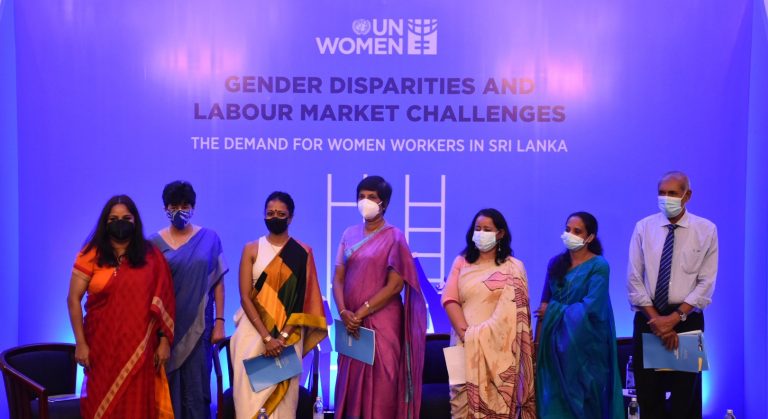
25 March 2022, Colombo, Sri Lanka – In Sri Lanka, women are denied equal access to the jobs market not just because of family or social factors, but also by employers. This is the focus of a report launched by UN Women today, titled Gender Disparities and Labour Market Challenges: The Demand for Women Workers in Sri Lanka. This report is amongst the first in the country to illustrate the largely unexplored factors on the part of employers and firms that prevent women from entering the paid workforce.
In 2019, only 36 percent of Sri Lankan women of working age were willing and able to engage in paid employment. While supply-side analyses have identified unpaid care work, skills deficits, and socio-cultural factors such as gender norms and stereotypes as underlying factors that hinder women from engaging in the formal labour force, this report meets a significant gap in our understanding on the demand-side barriers erected by employers.
For instance, new analysis from the report shows that: a) gender-based occupational segregation powerfully conditions the demand by employers for low-skilled women workers, partly because women are paid less than men; b) employers who are legally constrained from offering flexible working hours and nightwork for women, and those who could not finance maternity benefits, hired relatively fewer women; c) employers who had set ideas about the kind of jobs women can and cannot do, also hired fewer women; d) women workers in middle-level occupations are perceived as having the highest skills deficits, especially in English language skills, and in their ability to learn and solve problems; e) three-fourths of male respondents were unconsciously prejudiced against women workers and were less likely to hire women; f) employers were willing to hire women with disabilities but are constrained by lack of experience and opportunities for training them.
The findings also revealed, that unlike in other emerging economies, export orientation in Sri Lanka was not associated with an increased demand for women workers, reflecting the weak export orientation of the economy in recent times. Firms also seemed to lag in the application of digital technology in business operations to reskill workers. This was most evident when employees were constrained by limited access to IT related systems and lacked the experience and resources to work from home during the pandemic. This digital divide is a major constraint for women’s engagement in upcoming industries with potential to offer increased job opportunities.
Speaking at the launch, Hanaa Singer-Hamdy, Resident Coordinator of the UN in Sri Lanka highlighted: “The implications of low workforce participation for women and for the economy at large are serious. This is why this new research report is vital and needs to be considered in long-term economic policymaking. It provides us with a roadmap on which government and corporate policies are critical to support women’s full engagement in the labour force”.
Ramaaya Salgado, UN Women Sri Lanka’s Country Focal Point added: “Creating conditions for decent work and protecting employees from discrimination are basic human rights. Women’s ability to participate equally in existing labour markets and their ability to meaningfully participate in economic decision-making at all levels is central to realizing women’s rights and gender equality. We hope that the policy directions laid out in this study [outlined below] will serve as a guide for the government, the private sector and non-governmental organizations in taking action to increase women’s participation in the paid workforce”.
During the launch, the study was officially presented to Hon. Dr. Sudarshini Fernandopulle, State Minister of Primary Health Care, Epidemics and COVID Disease Control and Chairperson of the Women Parliamentarians’ Caucus and Kumari Jayasekera, State Secretary of the State Ministry of Women and Child Development, Pre-Schools & Primary Education, School Infrastructure & Education Services. The launch was followed by a panel discussion with key officials from the government, civil society and the private sector.
Highlighting the need to fulfil the promise of the 2030 Agenda, Kumari Jayasekera highlighted that, “As the gravity of this subject is high, we welcome all stakeholders to work in an integrated approach. Increasing the demand for women workers requires a concerted, coordinated effort by government, the private sector, and the non-government sector involving a process of raising awareness, engaging in policy dialogue and formulation, designing strategic interventions, and the implementation and monitoring of these interventions”.
To ensure that women have the choice to work for pay without discrimination or bias, UN Women is calling for better policy, action, and investment in Sri Lanka’s formal enterprises. This includes the formulation of macroeconomic, industrial and trade policies to diversify and upgrade productive structures, promote productive efficiency, and catalyse export-led economic growth, in order to help create jobs for women, especially in small economies like Sri Lanka. Further, in-light of the ongoing pandemic, it is recommended to promote digitization, automation and work-from-home arrangements, which will also help upgrade production processes.
The policy recommendations also highlight the importance of training women in middle-level occupational skills, especially in English language skills. Supportive interventions are also required to train women with disabilities in order to make employers more confident about hiring them. Promoting small and medium-sized enterprises (SMEs), female entrepreneurship, ownership, and management is also highlighted as SMEs generate more demand for women workers.
Lastly, an emphasis on the need to reform labour laws to facilitate flexible working hours and nightwork for women and setting up a social fund for maternity benefits is also recommended. Encouraging family-friendly workplace policies that support the retention of women employees even after marriage will ensure that more women are able to enter the paid workforce.
About UN Women: UN Women is the UN organization dedicated to gender equality and the empowerment of women. A global champion for women and girls, UN Women was established to accelerate progress on meeting their needs worldwide. Learn more at: asiapacific.unwomen.org
Photo 1 – (L-R) Speakers and panelists at the report launch
Photo 2 – Ramaaya Salgado, Country Focal Point, UN Women Sri Lanka handing over the report to Hon. Dr. Sudarshini Fernandopulle, State Minister of Primary Health Care, Epidemics and COVID Disease Control and Chairperson of the Women Parliamentarians’ Caucus
Photo 3 – (L-R) Ramaaya Salgado, Country Focal Point, UN Women Sri Lanka, Hanaa Singer-Hamdy, Resident Coordinator of the UN in Sri Lanka and Ms. Kumari Jayasekera, State Secretary