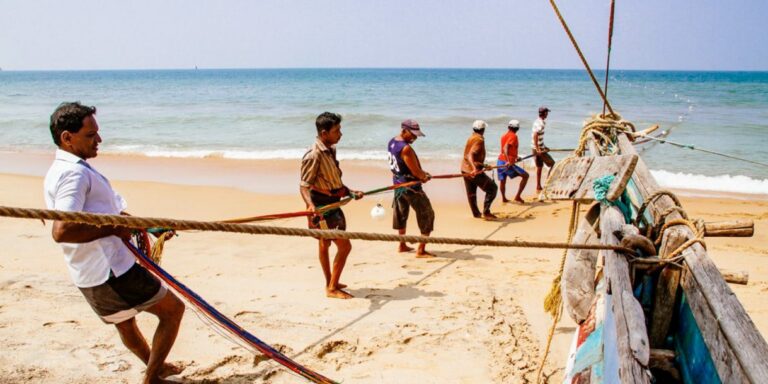
November 24, Colombo (LNW): Sri Lankan authorities have rolled out a revamped pension initiative designed to offer stronger financial security to those who make their livelihood at sea.
The Fishermen’s Pension Scheme, announced by the Agricultural and Agrarian Insurance Board, aims to provide long-term stability for workers in a profession often marked by unpredictable earnings and significant personal risk.
Under the new arrangement, fishers who keep up with their premium payments are entitled to a regular pension once they reach 60 years of age. Even those who have managed to contribute only three-quarters of the required amount will still qualify for a modest monthly income linked to their contributions, ensuring they are not left without support in later life.
Participants who have paid between a quarter and three-quarters of their required total can reclaim their full contributions, along with the appropriate interest.
The scheme also includes a range of protections for unforeseen circumstances. Individuals who suffer disabilities before reaching pensionable age may receive either a gratuity or a pension once they become eligible, depending on the nature of the condition.
In cases of permanent disability, a payment of up to Rs. 50,000 may be granted, either in one go or spread out over several instalments.
Family members are similarly safeguarded. If a contributor dies in an accident before qualifying for their pension, the nominated heir can claim the accumulated payments, plus interest, after a year. Should a pensioner pass away while receiving benefits, their spouse may continue collecting the monthly payment until turning 80, or opt for the remainder as a lump-sum settlement. Lapsed contributors, meanwhile, can reactivate their membership by settling overdue premiums and interest.
Unveiled at the Lotus Tower in Colombo on the 22nd, the scheme was introduced under the auspices of Minister Lal Kantha, who noted that the programme is intended to give coastal communities a greater sense of financial assurance amid the challenges of a demanding profession.
New Pension Plan Casts Safety Net for Sri Lanka’s Fishing Community
UAE Voices Support for Sri Lanka After Deadly Landslide
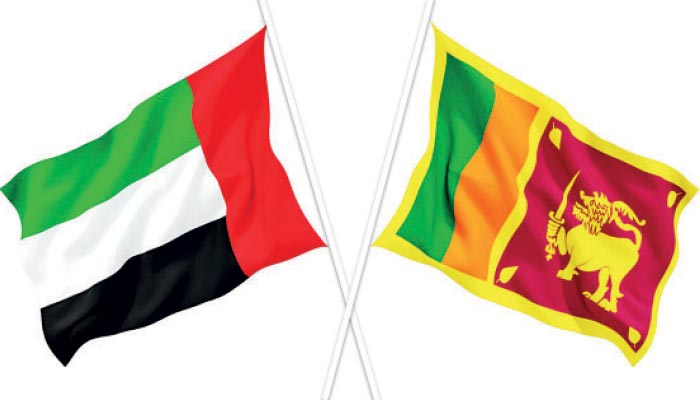
November 24, Colombo (LNW): The United Arab Emirates has conveyed its heartfelt support to Sri Lanka following a devastating landslip in the country’s central highlands that left at least four people dead over the weekend.
Days of unrelenting rain have saturated the steep terrain, heightening the danger of further ground movement and prompting officials to maintain alerts across multiple districts.
In a message released by the Ministry of Foreign Affairs, the UAE extended its deepest sympathies to the families who lost loved ones, as well as to the Sri Lankan government and its citizens.
Emirati officials noted that such disasters underscore the vulnerability of communities living in mountainous regions, especially during periods of prolonged monsoon weather.
Local rescue teams, meanwhile, have been working under difficult conditions as rain continues to hamper access to remote areas. Authorities have urged residents in high-risk zones to remain vigilant and to follow safety advisories until the weather stabilises.
President AKD Marks His 57th Birthday
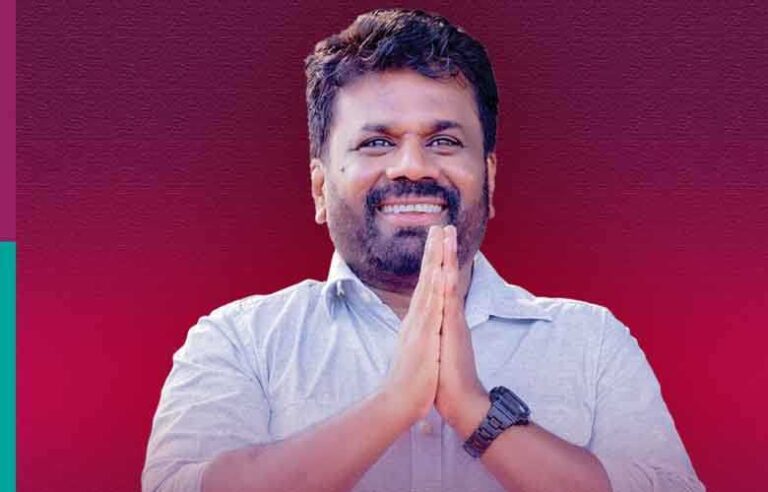
November 24, Colombo (LNW): Sri Lanka’s President, Anura Kumara Dissanayake, turns 57 today (November 24), marking the occasion as both a personal milestone and a moment of reflection on a political career that has steadily reshaped the country’s left-leaning landscape.
Born in 1968, Dissanayake’s path into public life began far from the centres of power. He grew up in Thambuttegama, where he attended both the local primary school and later the central college, distinguishing himself particularly in mathematics during his advanced level studies. His academic journey continued at the University of Kelaniya, where he pursued a degree in science, graduating in 1995.
It was during his university years that Dissanayake first immersed himself in political activism. Joining the Socialist Students’ Union in the late 1980s, he found himself at the forefront of student-led opposition to the Indo-Lanka Accord. Those early experiences would quietly set the foundations for a political career anchored in grassroots mobilisation and ideological conviction.
With the Janatha Vimukthi Peramuna (JVP) re-organising itself in the early 1990s after years of upheaval, Dissanayake stepped into active politics in 1993. His rise within the party was swift: by 1997 he had become the National Organiser of the Socialist Students’ Union and joined the JVP Central Committee, progressing to the Politburo the following year. His first attempt at electoral politics came in 1999, when he stood as the JVP’s Chief Ministerial candidate for the Central Province. A year later, he entered Parliament through the national list.
His parliamentary tenure gained momentum after the 2004 general election, when he topped the preferential vote count in the Kurunegala District and took charge of a broad ministerial portfolio covering agriculture, lands, irrigation, and livestock under the UPFA government. Over the years, he frequently returned to the legislature, whether through the national list or direct election, representing constituencies including Colombo.
Dissanayake’s influence within the JVP continued to grow, culminating in his election as party leader in 2014. Five years later, he played a key role in establishing the National People’s Power (NPP), a coalition bringing together political movements, civil society groups, and activists in an ambitious bid to reshape national politics.
That long-term effort reached a historic turning point on September 21, 2024, when voters elected him as Sri Lanka’s ninth Executive President—a victory that signalled a decisive shift in public sentiment and placed him at the helm during one of the country’s most challenging periods.
As he celebrates his birthday this year, Dissanayake does so not merely as a long-time parliamentarian or party leader, but as a president tasked with steering a nation eager for stability, reform, and renewed hope. LNW wishes happy birthday to President Anura Kumara Dissanayake.
Low-Level Atmospheric Disturbance to Develop into a Low-Pressure System: Prevailing Showery Conditions Likely to Continue (Nov 24)

November 24, Colombo (LNW): The low-level atmospheric disturbance in the vicinity of Sri Lanka is likely to develop into a low-pressure system by tomorrow (25), and therefore, the prevailing showery conditions over the island are expected to continue during the next few days, the Department of Meteorology said in its daily weather forecast today (24).
Cloudy skies can be expected over most parts of the island.
Showers or thundershowers will occur at times in Northern, North-central and Eastern provinces. Showers or thundershowers will occur in the other areas of the island after 1.00 p.m.
Heavy falls above 100 mm are likely at some places in Northern and Eastern provinces. Fairly heavy falls above 75 mm are likely at some places in the other areas of the island.
The general public is kindly requested to take adequate precautions to minimise damages caused by temporary localised strong winds and lightning during thundershowers.
Marine Weather:
A low-pressure area has formed over South Andaman Sea area. It is likely to move west-northwestwards and intensify into a depression over South-east Bay of Bengal today (24). Navel and fishing communities are requested to be attentive to the future forecasts and bulletins issued by the Department of Meteorology in this regard.
Condition of Rain:
Showers or thundershowers will occur at several places in the sea areas around the island.
Winds:
Winds will be North-easterly or Variable in direction and speed will be (25-35) kmph. Wind speed can increase up to (50-55) kmph at times in the sea areas off the coast extending from Trincomalee to Chilaw via Kankasanthurai and Mannar.
State of Sea:
The sea areas off the coast extending from Trincomalee to Chilaw via Kankasanthurai and Mannar will be fairly rough at times. The other sea areas around the island will be slight to moderate.
Temporarily strong gusty winds and very rough seas can be expected during thundershowers.
MP Jeevan Thondaman Weds in Traditional Ceremony in Chennai

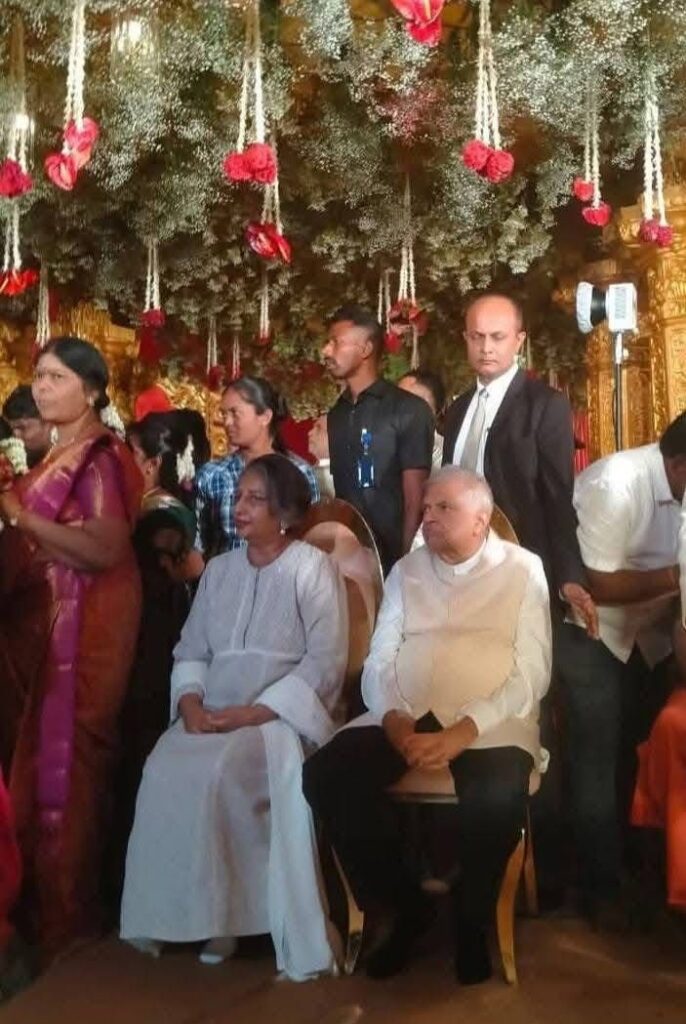
November 23, Colombo (LNW): Ceylon Workers Congress (CWC) General Secretary and parliamentarian Jeevan Thondaman tied the knot today (23) in Chennai, India, marking the occasion with a traditional and widely attended celebration.
He married R. Seethasree Nachiyar, with the ceremony held at the Arumugam Pillai Seethai Ammal College grounds, which had been transformed for the event with elaborate cultural décor and ceremonial rituals.
The wedding drew a distinguished gathering, including former Sri Lankan President Ranil Wickremesinghe, several Sri Lankan MPs, and notable figures from India’s political, business and film spheres.
Representatives of the Ceylon Workers’ Congress were also present, reflecting the close ties between the families and the organisation.
LNW adds congratulations to the newly wedded couple!
Casting the Net Wider: Sri Lanka’s Need for World-Class Ambassadors

By Roger Srivasan
Since independence from Britain, Sri Lanka has rarely witnessed a government whose rise has been greeted with such palpable relief as that led by Anura Kumara Dissanayake. To many citizens, this administration represents not merely a political transition, but a long-awaited return to integrity, accountability, and competence.
In this spirit of national renewal, it is imperative that Sri Lanka recalibrates its foreign policy ethos. Diplomacy, at its core, is the fine art of fostering understanding between nations — the subtle craft of negotiation, persuasion, and representation. A diplomat is therefore the nation’s face and voice abroad: an emissary entrusted to articulate national interests with clarity, tact, and intellectual finesse.
Why Diplomats Cannot Be Chosen Lightly For too long, appointments to diplomatic posts have been clouded by political patronage, where loyalty to personalities eclipsed loyalty to the nation. But diplomacy is not a ceremonial afterthought; it is the frontline of national reputation, investment, defence partnerships, and global engagement. To select diplomats carelessly is to weaken the very architecture of the state.
A modern Sri Lanka must choose its representatives with surgical precision. The world of international relations demands individuals who are:
• Impeccably educated, widely read, and globally aware
• Eloquent and articulate, especially in English
• Debonair in presence, persuasive in manner, and composed under pressure
• Fluent in foreign policy concepts and geopolitical dynamics
• Uncompromisingly loyal to the state, not to a party or faction
The truth is stark: home-grown candidates alone may not always possess the full suite of attributes required for the diplomatic stage. Sri Lanka must therefore widen its search — not confine itself to a narrow pool of local hopefuls or party faithful. The government must cast its net globally, seeking those with the education, exposure, and professional maturity to represent the country with distinction.
The Ideal Ambassador An ambassador is the living embodiment of a nation’s dignity — a rapier concealed in a velvet glove: refined in tone, ruthless in precision. He or she must combine intellect with charm, firmness with courtesy, and patriotism with cosmopolitan insight. A single envoy can open doors — or close them morever. Therefore… If Sri Lanka is to reclaim its rightful place in the community of nations, it must adopt a diplomatic philosophy rooted in merit, excellence, and global competence. Only then will the government’s foreign policy — and the country’s reputation — stand on a foundation worthy of a modern, forward-looking Sri Lanka.
Massive Cannabis Plantations Destroyed in Yala Sanctuary

November 23, Colombo (LNW): Police have uncovered and dismantled three extensive cannabis plantations in the Gonagan Ara region of the Yala Sanctuary during a four-day operation, officials confirmed.
Authorities reported seizing more than 200,000 cannabis plants along with over 50 kilograms of processed cannabis. The illegal crops had reportedly spread over areas measuring five acres, three acres, and two acres within the protected wildlife reserve.
All three sites were completely eradicated during the raid, with officers emphasising that the operation formed part of ongoing efforts to curb illegal drug cultivation in environmentally sensitive areas.
Sri Lanka Seeks Stronger Ties with China Amid Global Uncertainty
November 23, Colombo (LNW): Sri Lanka is prepared to strengthen its partnership with China on the principles of equality and mutual respect, Foreign Minister Vijitha Herath has said.
Speaking at a special event in Colombo, Minister Herath emphasised the country’s desire to expand bilateral cooperation in ways that deliver tangible benefits for both nations, particularly in the context of a rapidly changing global landscape.
The Foreign Minister also commented on China’s 15th Five-Year Plan, noting that its recommendations provide a clear roadmap for the country’s next phase of development and have boosted international confidence.
“China’s remarkable progress in areas such as poverty alleviation, scientific innovation and industrial upgrading demonstrates the value of long-term planning and consistent policy implementation,” Herath stated.
He added that Sri Lanka looks forward to translating these lessons into practical cooperation, recognising the significance of China’s steady economic growth and technological achievements as a model for future development initiatives at home.
Nine Reported Dead as Heavy Rains Trigger Floods and Landslide Alerts Across Sri Lanka
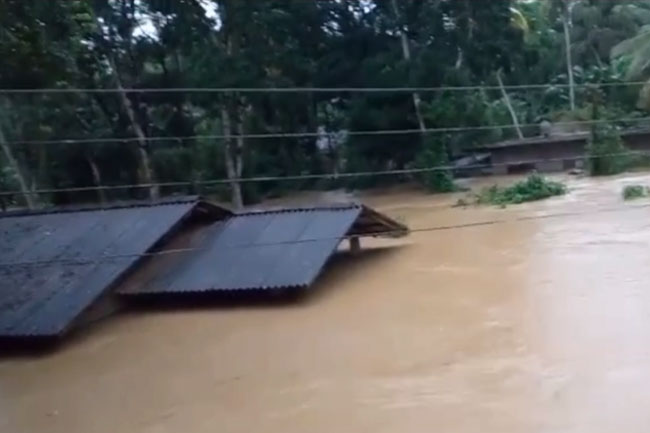
November 23, Colombo (LNW): The Disaster Management Centre (DMC) has reported that the death toll from ongoing severe weather has climbed to nine, as widespread rainfall continues to disrupt life across the country.
DMC Director Pradeep Kodippili said the prolonged downpours have caused flooding in multiple areas, while numerous incidents of rocks tumbling onto roads have been reported, creating hazards for motorists and residents alike.
Meanwhile, the National Building Research Organisation (NBRO) has extended landslide warnings for ten districts. Senior Geologist Dr Wasantha Senadeera confirmed that alerts remain in effect for several Divisional Secretariat Divisions in Colombo, Kalutara, Galle, Kandy, Kegalle, Matara, Ratnapura, Badulla, Hambantota, and Nuwara Eliya.
The Meteorological Department noted that persistent atmospheric disturbances have brought continuous rainfall to many parts of the island, with heavy showers expected to continue into the evenings. Strong winds have also caused trees to topple onto power lines along the Mapalagama–Galle main road, resulting in traffic disruptions in Nagoda.
In Matara district, flooding was reported across several areas of Deniyaya town, prompting security forces to assist residents whose daily routines were interrupted. The Baddanwala section of the Matara–Kotapala road was completely submerged, blocking passage. The Uruboku Oya also overflowed near Katuwana town overnight, inundating the town and surrounding communities.
The Matara District Relief Services Centre reported that 363 people from 100 families have been affected by the adverse weather. Additional low-lying areas and roads in Bulathsinhala, Kalutara, have also been submerged, compounding the impact of the ongoing heavy rainfall. Authorities continue to monitor the situation closely and advise residents to exercise caution.
“Nation United” Anti-Drug Raids Net Over 1,000 Arrests in a Single Day
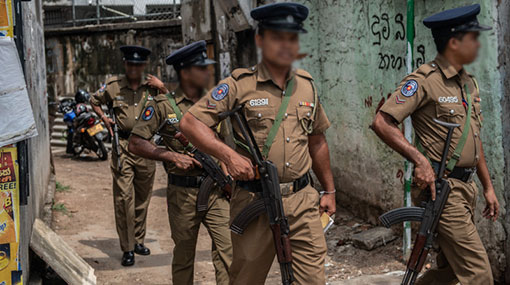
November 23, Colombo (LNW): More than a thousand people were taken into custody across the island yesterday (23) as part of the Government’s intensified “Nation United – National Drive” campaign, a sweeping operation aimed at eliminating the illegal drug trade.
According to police, the coordinated raids—carried out in multiple districts over several hours—resulted in the seizure of a significant haul of narcotics. Officers recovered around 319 grammes of heroin, over 1.5 kilogrammes of crystal methamphetamine (‘Ice’), approximately 2.5 kilogrammes of hashish, as well as quantities of cocaine and various other illicit substances.
Twenty-one suspects have been placed under detention orders to facilitate extended investigations, while a further twenty-nine individuals have been directed to rehabilitation programmes.
Police officials noted that similar operations will continue in the coming weeks as part of a sustained national effort to curb drug-related crime and strengthen community safety.