November 23, Colombo (LNW): Prevailing showery condition over the island is expected to continue further during the next few days, the Department of Meteorology said in its daily weather forecast today (23).
Showers or thundershowers will occur at times in Northern and North-central provinces and in Trincomalee and Batticaloa districts. Showers or thundershowers will occur in the other areas of the island after 1.00 p.m.
Heavy falls above 100 mm are likely at some places in Western, Sabaragamuwa, North-western, Northern and Southern provinces and in Kandy and Nuwara-Eliya districts. Fairly heavy falls about 75 mm are likely at some places in the other areas.
The general public is kindly requested to take adequate precautions to minimise damages caused by temporary localised strong winds and lightning during thundershowers.
Marine Weather:
A low-pressure area has formed over South Andaman Sea area. It is likely to move west-northwestwards and intensify into a depression over South-east Bay of Bengal around 24th November 2025. Navel and fishing communities are requested to be attentive to the future forecasts and bulletins issued by the Department of Meteorology in this regard.
Condition of Rain:
Showers or thundershowers will occur at several places in the sea areas around the island.
Winds:
Winds will be North-easterly or Variable in direction and speed will be (20-30) kmph. Wind speed can increase up to 40 kmph at times in the sea areas off the coast extending from Trincomalee to Puttalam via Kankasanthurai and Mannar.
State of Sea:
The sea areas off the coast extending from Trincomalee to Puttalam via Kankasanthurai and Mannar will be moderate at times. The other sea areas around the island will be slight.
Temporarily strong gusty winds and very rough seas can be expected during thundershowers.
Prevailing showery condition expected to continue: Heavy falls above 100 mm likely to occur (Nov 23)

Sri Lankans Turn to Crypto amid Regulatory Uncertainty

A quiet but powerful financial shift is taking root across Sri Lanka. As inflation bites and the rupee continues to lose ground, a growing number of citizens from tech savvy youth to small business owners are turning to crypto currencies in search of value and stability outside the formal banking system.
A recent study in the South Asian Journal of Finance estimates that more than 320,000 Sri Lankans currently hold some form of crypt ocurrency, while international data provider Datawallet projects this number could rise to 1.16 million by 2026.
For many, digital currencies have become more than speculative bets; they are viewed as shields against inflation and currency depreciation.
“Young professionals and small investors are quietly exploring crypto as a way to preserve value,” noted a Colombo based financial analyst. “It’s happening under the radar beyond banks and the stock market but it’s growing every day.”
Most of these transactions take place on offshore exchanges or peer to peer trading platforms, as Sri Lanka has yet to license any local crypto service providers.
This means the activity exists in a regulatory grey zone, unrecognised by law and beyond the Central Bank’s protective reach.
The Central Bank of Sri Lanka (CBSL) has repeatedly warned the public against the risks of virtual currencies.
Governor Nandalal Weerasinghe recently reaffirmed that only the Sri Lankan rupee is legal tender. “We are not banning crypto holdings,” he clarified, “but we must ensure transparency and prevent misuse. No one should believe crypto is a safe investment.”
To strengthen oversight, the CBSL has proposed amendments to the Financial Transactions Reporting Act (FTRA), requiring virtual asset service providers (VASPs) to register with the Financial Intelligence Unit (FIU).
Once approved, these amendments will bring crypto intermediaries under anti money laundering and counter terror financing (AML/CFT) supervision, forcing them to report suspicious or large transactions just as banks do.
Meanwhile, the global crypto market has surged to record highs. Bit coin, the world’s largest crypto currency, is trading around US$109,000, up 62.7 percent since late 2024.
Analysts predict it could reach $150,000 before the end of 2025, buoyed by regulatory reforms in the United States and rising institutional interest.
Yet, Sri Lankan investors remain exposed. Without domestic legal recognition, victims of hacked wallets or collapsed offshore exchanges have little recourse. “If your crypto vanishes, you have no protection under Sri Lankan law,” cautioned a financial lawyer.
Despite the warnings, crypto’s rise mirrors a growing public desire for financial autonomy amid economic uncertainty.
Whether Sri Lanka chooses to regulate digital assets or leave them underground will determine if this quiet revolution becomes a legitimate part of the nation’s financial future or a cautionary tale of unchecked risk.
Dormant State owned Enterprises Emerge as a Major Accountability Crisis

Sri Lanka’s much-publicised state-sector reform agenda is now under serious scrutiny, as the latest audit by the Auditor General’s Department reveals a catalogue of stalled closures, missing data and mounting hidden liabilities in the state -owned enterprise sector.
As of 30 July 2024, the government records list 10 public companies and 2 public corporations officially designated as “non-operative”. Thus far remarkably, basic information such as their formal resolutions, current financial statements and even full identity remains elusive effectively turning them into untracked fiscal liabilities.
According to the report, for example the Sri Lanka Rubber Manufacturing & Export Corporation (SLRMEC) has been shuttered and its Elpitiya foam-rubber factory leased out; and the Co‑operative Wholesale Establishment (CWE) voluntarily retired all its staff by 30 September 2023.
But critically, no formal liquidation process has yet been initiated for several of these dormant entities.
The audit illustrates a dual failure: on one hand, government boards of the defunct firms have approved liquidation or voluntary dissolution as strategy responses yet by 31 July 2024 only four of the twelve entities had begun formal liquidation, leaving six with no visible action at all.
Attempts to identify the full list of the 12 entities face significant information gaps. Publicly available sources name some: for example, lists of dormant SOEs include the Janatha Estates Development Board (JEDB) and Sri Lanka State Plantations Corporation (SLSPC) among long-non-viable commercial entities.
Other lesser-known entities such as Lanka Cement Corporation Ltd, Selendiva Investments Ltd and Magampura Ports Management Company (Pvt) Ltd are awaiting for their closure.
The auditor’s findings set off urgent governance alarm bells: one official study cited in the audit reports that 20 state-owned enterprises (SOEs) incurred combined losses of approximately Rs 850 billion, and if even a portion of that reflects the non-operating firms, the fiscal drag remains substantial.
As the Auditor General’s Department emphasises, “these firms are not inert they continue to carry costs, liabilities and opportunity losses”.
Moreover, the Ministry of Finance is described as bearing a “huge responsibility” in resolving this issue, but the sustained delays “speak volumes” about implementation failure.
But as Sri Lanka seeks to restore fiscal credibility and unlock resources for productive investment, some recommendations from the auditor are clear:
1. Disclose a complete and updated list of dormant entities, including the latest financials.
2. Assign each entity a definitive exit status whether to revive, merge or liquidate with formal timelines.
3. Initiate the liquidation or closure processes without further delay.
Until these actions are taken, the “ghost” enterprises of the state sector will remain a stealth burden on the nation’s finances—and a potent symbol of reform inertia.
Japan Cooperation Agency- Dialog Digital Push Poised to Transform Sri Lanka

Sri Lanka’s digital and social development drive is set for a major boost following the renewal of the strategic partnership between Dialog Axiata PLC and the Japan International Cooperation Agency (JICA). The strengthened collaboration aims to unlock long-term socio-economic benefits by accelerating digital inclusion, empowering vulnerable communities, and supporting national development priorities at a time when the country is rebuilding from prolonged economic challenges.
Under the renewed agreement, Dialog and JICA will expand support across critical sectors including digital transformation, financial inclusion, education, gender equality, agriculture, and disaster risk reduction. These areas have become increasingly vital as Sri Lanka prioritises digital governance, rural connectivity, and climate resilience in its recovery strategy.
A key feature of the partnership is its focus on delivering scalable technology-driven solutions, such as expanding digital financial services to underserved groups, digitising agricultural value chains, and improving access to online learning platforms for students in remote regions. With more Sri Lankans moving toward cashless transactions and e-government portals, enhanced digital infrastructure supported through this partnership is expected to reduce costs, increase efficiency, and widen economic opportunities particularly for low-income households.
Since 2023, JICA has also played a central role in strengthening Dialog’s Diversity, Equity and Inclusion (DEI) initiatives, supporting programs that promote equal opportunities and digital literacy among women and youth. The renewed collaboration will take these efforts further by expanding women-led entrepreneurship programs, improving access to digital tools, and encouraging technology-based employment in rural areas. These initiatives are expected to bolster participation in the labour force, especially among women affected by economic hardship.
Looking forward, the partnership will also widen efforts in renewable energy, including rural solar power solutions and energy-efficient digital infrastructure reducing national energy expenditure and supporting Sri Lanka’s commitment to a greener economy. The two organisations will additionally work together on projects aimed at combating gender-based violence through awareness campaigns and technology-enabled reporting mechanisms, contributing to a safer and more equitable society.
Commenting on the partnership, JICA Sri Lanka Office Chief Representative Kenji Kuronuma said the collaboration blends JICA’s global development experience with Dialog’s technological strength to “deliver scalable, people-focused solutions” to Sri Lanka’s most urgent socio-economic challenges. Dialog Axiata Group CEO Supun Weerasinghe highlighted that the renewed partnership reinforces a shared mission to “strengthen essential services, expand opportunities, and improve everyday lives” nationwide.With this expanded partnership, Dialog and JICA signal a long-term commitment to driving inclusive growth, poverty alleviation, and national resilience positioning digital innovation as a cornerstone of Sri Lanka’s future development
Oman Opens Doors to Sri Lanka as Trade, Investment Prospects Rise
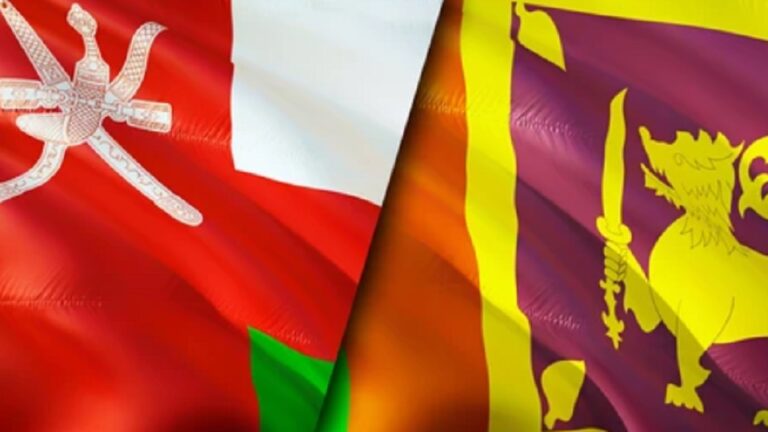
Oman is intensifying efforts to draw foreign investment under its Vision 2040 economic transformation agenda creating a growing window of opportunity for Sri Lankan businesses, professionals and educators.
Omani Ambassador to Sri Lanka Ahmed Ali Said Al Rashdi says the Sultanate’s accelerated diversification drive is already strengthening bilateral ties, with investment, tourism, industrial cooperation and education emerging as priority areas.
Tourism remains one of Oman’s fastest-expanding sectors. The country welcomed 3.9 million visitors in 2024, up from 3.7 million in 2023, with targets to increase arrivals by one million annually.
To meet this demand, Oman plans six new airports, upgrades to Salalah and Sohar, and large-scale luxury hotel projects with global brands. Sri Lanka’s Santani Group has already partnered with state-owned developer Omran to build two premium resorts in Salalah and Jabal Al Akhdar one of several early examples of Sri Lankan investment taking root.
Foreign ownership is being liberalised in selected real-estate zones such as Al Mouj, Sultan Haitham City and Al Khuwair Downtown, where multiple high-rise developments are planned.
Alongside this, Oman’s new 10-year Golden Visa for investors committing USD 500,000 offers residency and family benefits—positioning the country as one of the Gulf’s more welcoming investment destinations.
Beyond tourism and real estate, Oman is placing heavy emphasis on industrialisation. The Mada’in network manages 15 industrial estates and four free zones, offering long-term leases, tax holidays up to 30 years, 100% foreign ownership and full profit repatriation.
These incentives, combined with Oman’s strategic location and Free Trade Agreements with the US, Singapore and a pending FTA with India, position Omani-registered companies to trade across all Gulf Cooperation Council (GCC) markets as local entities.
For Sri Lanka, these openings arrive at a critical moment. Bilateral trade remains modest partly due to indirect shipping routes but continues to expand gradually. Sri Lanka exports tea, apparel and agricultural products to Oman while importing petroleum products, minerals and chemicals. Total trade has fluctuated around USD 200-250 million annually in recent years, but both sides expect this figure to climb as new partnerships deepen.
Sri Lanka is also emerging as a partner in education and human capital development. Eight Sri Lankan universities have applied for recognition in Oman, with three already approved. The Ambassador said the country is keen to welcome more Sri Lankan schools and colleges, noting that only one currently operates in Oman despite rising demand.
Oman’s state-owned giants have already established a presence in Sri Lanka. OQ, part of the Oman Investment Authority (OIA), supplies LPG to Sri Lanka, while ASYAD, the OIA-owned logistics conglomerate overseeing ports, shipping and airlines, has ongoing partnerships in energy and logistics.
In agriculture, Oman recently signed 278 new farming investment contracts, including proposals from Sri Lankan investors. New Government-to-Government MoUs in tourism and agriculture and three more in progress signal expanding cooperation. Student exchanges, university partnerships and institutional collaborations are also advancing.
Ambassador Al Rashdi emphasized that Oman’s stability maintaining the same dollar-pegged exchange rate for 55 years and its market-oriented policies make it a secure gateway for Sri Lankan companies seeking entry to the Gulf. Company registration is now fully online, 83 business activities require no additional licences, and there is no minimum capital requirement.
For Sri Lanka, the benefits are clear: access to a stable investment hub, expanded export potential, job opportunities for skilled workers, and a platform to strengthen economic resilience. With rising interest from both sides, Oman–Sri Lanka relations are poised for a more connected and investment-driven future.
Global Fuel Prices Surge Amid Sanctions and Supply Disruptions

Global fuel prices have risen sharply as a result of sanctions imposed on Russia and restrictions targeting 117 vessels involved in transporting Russian fuel. The situation has been further exacerbated by Russia’s decision to limit fuel exports following Ukrainian drone strikes on 17 of its refineries, intensifying the upward pressure on prices in the world market.
Diesel prices had already increased over the past two weeks with the onset of winter in Europe, and the upward trend has now extended to petrol, jet fuel, and kerosene.
In addition to sanctions directly targeting Russia, the European Union’s 19th sanctions package—which also affects countries importing Russian fuel, including China—has contributed to the price escalation.
The EU has issued stern warnings to “shadow ships” that transported Russian fuel while disabling their GPS systems to evade monitoring. These vessels reportedly changed their listed destinations mid-voyage. The EU has cautioned 117 such ships that they will be denied entry into European ports if they continue transporting Russian fuel.
As a result, many of these vessels have halted such operations, reducing global shipping capacity. This reduction has driven up shipping fees significantly, creating an additional layer of pressure on global fuel prices.
Due to the ongoing import challenges and supply constraints, oil prices are expected to experience a notable increase by the end of this month. Market data shows a consistent upward trend in fuel prices since June.
Court of Appeal Upholds Death Sentences in 152kg Heroin Case

The Court of Appeal yesterday upheld the death sentences imposed on five men convicted in connection with the 2019 seizure of 152 kilograms of heroin.
A Bench comprising Justice Pradeep Hettiarachchi and Justice P. Kumararatnam affirmed the judgment delivered by Colombo High Court Judge Namal Balalle on September 27, 2023. The High Court had found all five accused guilty on three counts and imposed the death penalty for each count.
The convicts — Chaminda Rohana Fernando, Anton Chrisantha Fernando, Dulaj Ravindra Perera, Liyanadurage Surange, and Tharindu Jayantha Fernando, all residents of Kattuwa, Negombo — were charged with conspiracy, trafficking, possession, and peddling of 152.341 kilograms of heroin.
They were arrested on November 2, 2019, in the southern high seas while operating a multi-day fishing trawler named Buddhima, allegedly using their cover as fishermen to transport narcotics.
Additional Solicitor General Shanil Kularatne, assisted by State Counsel Vishwa Wijesuriya, appeared for the Attorney General.
The charges were filed under Section 54A(d) of the Poisons, Opium and Dangerous Drugs Ordinance, as amended, read with Sections 102 and 113B of the Penal Code.
Pakistan and Sri Lanka Reaffirm Commitment to Strengthening Bilateral Ties

Deputy Prime Minister and Foreign Minister of Pakistan, Senator Mohammad Ishaq Dar, met with Sri Lanka’s Deputy Minister of Foreign Affairs and Foreign Employment, Arun Hemachandra, on Friday on the sidelines of the 4th EU Indo-Pacific Ministerial Forum, held from 20–21 November 2025 in Brussels.
During the discussions, both sides agreed to maintain close collaboration at the bilateral level as well as in multilateral fora.
They underscored the importance of further strengthening the longstanding fraternal relations between Pakistan and Sri Lanka through enhanced high-level engagements. The two delegations also highlighted the need to leverage the strong goodwill between the countries by expanding cooperation across a wide range of sectors, including trade and investment, tourism, culture, education, defence, agriculture, and human resource development.
Up-Country Rail Line Cleared; Night Mail Trains Resume Operations

Sri Lanka Railways announced that the obstructions along the up-country railway line have now been fully cleared, restoring the tracks to a condition suitable for train operations.
Accordingly, the Colombo Fort–Badulla night mail train (departing Colombo Fort at 8:30 p.m.) and the Badulla–Colombo Fort night mail train (departing Badulla at 6:30 p.m.) operated as scheduled yesterday (21).
However, Train No. 1007 from Colombo Fort to Badulla (9:45 a.m.) and Train No. 1008 from Badulla to Colombo Fort (10:20 a.m.) will be cancelled today (22). All other services on the up-country line will run as normal.
The night mail services had been suspended on November 19 and 20 due to ongoing repairs and clearance work following a rockfall and earth slip between Ohiya and Idalgashinna.
Train operations were disrupted earlier due to a derailment caused by fallen trees and a landslide along the stretch between the Idalgashinna and Ohiya railway stations.
Early Landslide Warnings Extended for Seven Districts

The National Building Research Organisation (NBRO) has extended the early landslide warnings issued for several areas in seven districts, due to the prevailing heavy rainfall.
The alerts, originally issued yesterday (21), will remain in effect from 4:00 p.m. on November 21 to 4:00 p.m. today (22).
A Level-1 (Yellow) Alert — advising the public to be vigilant — has been issued for the following Divisional Secretariat Divisions (DSDs) and surrounding areas:
Badulla District: Haputhale, Uva Paranagama, Kandaketiya, Haldummulla
Kalutara District: Mathugama
Kandy District: Ganga Ihala Korale, Udunuwara, Thumpane, Pasbaga Korale, Gangawata Korale, Ududumbara, Udapalatha, Pathahewaheta, Yatinuwara
Kegalle District: Aranayake, Yatiyanthota, Deraniyagala, Kegalle, Mawanella, Rambukkana, Galigamuwa, Ruwanwella, Warakapola
Kurunegala District: Mawathagama, Rideegama, Mallawapitiya
Nuwara Eliya District: Walapane, Ambagamuwa, Hangurakketha, Kotmale
Ratnapura District: Kolonna, Balangoda, Imbulpe, Kalawana, Ratnapura, Kiriella